The Second World War
1939–1945 Europe, Asia, Africa and the oceans (starting in Poland)
In short
On 1 September 1939 Nazi Germany invaded Poland, and France and Great Britain declared war on it. In 1940 Mussolini's Italy entered the war on Hitler's side, together with Japan, while the Soviet Union and the United States fought on the other side. The conflict spread to almost the whole world and hit civilians very hard, with cities bombed and populations starving. The war ended in Europe in May 1945 and in Asia in September, after the atomic bombs on Hiroshima and Nagasaki.
Why it matters It was the most destructive war in history, and after it ended the United Nations was founded to try to keep the peace.
Source: Treccani, entry “Guerra mondiale, Seconda”
Study card about 5 minutes of reading
The story
The road to war
The Second World War did not break out suddenly. It was prepared by the mistakes made after the previous war: the Treaty of Versailles of 1919 had left Germany angry and humiliated; the economic crisis of 1929 had brought millions of unemployed, and many Germans had believed the promises of Adolf Hitler, who became chancellor in 1933. Hitler wanted to rearm Germany, take back the lost territories and create a great German empire.
Little by little Hitler took everything he wanted. In 1936 he sent soldiers into the Rhineland, a demilitarised zone; in March 1938 he annexed Austria; in September 1938, at the Munich conference, he obtained from Britain and France part of Czechoslovakia, the Sudetenland, in exchange for a promise not to ask for anything more. The western governments, who wanted to avoid another war, hoped that this would be enough. It was the policy of “appeasement”, that is, giving way. But in March 1939 Hitler occupied the rest of the country.
1 September 1939
On 23 August 1939 Germany and the Soviet Union, sworn enemies, surprisingly signed a non-aggression pact, with a secret agreement to divide Poland. A week later, at dawn on 1 September, the German army invaded Poland using a very fast tactic of tanks and aeroplanes, called “lightning war” (Blitzkrieg). On 3 September Britain and France, allies of Poland, declared war on Germany. On 17 September the Soviet Union attacked Poland from the east. In less than a month Poland no longer existed as an independent state.
The war spreads
In the spring of 1940 the Germans attacked in the west: they invaded Denmark and Norway, then the Netherlands, Belgium and France. A large British and French army was surrounded on the coast at Dunkirk, and in a few days almost 340,000 soldiers were carried to safety in England by an improvised fleet of ships and small boats. France fell in June. On 10 June 1940, convinced that the war was almost won, Mussolini declared war on France and Britain.
Britain, led by Winston Churchill, stood alone. In the summer and autumn of 1940 the German air force tried to destroy the British air force and then to bomb London and other cities, but the British pilots held out: this was the Battle of Britain. Hitler gave up the invasion. On 22 June 1941 Hitler attacked the Soviet Union, despite the pact, and the war moved east with immense battles.
A world conflict
On 7 December 1941 Japan, which had been fighting in China for years, made a surprise attack on the American base at Pearl Harbor, in the Hawaiian Islands. The United States entered the war, with Britain and the Soviet Union, against Germany, Italy and Japan. It was now truly a world war, fought in Europe, Africa, Asia and the Pacific, on land, at sea and in the air.
The turning point and the end
In 1942–43 things changed: the Soviets held out and won at Stalingrad, the British at El Alamein, in Africa, the Americans at Midway, in the Pacific. In July 1943 the Allies landed in Sicily, Mussolini fell, and on 8 September the armistice, secretly signed on 3 September, was announced. The country was split in two, with Germany occupying the centre and north, while the Allies advanced in the south; the Resistance was born too. On 6 June 1944, “D-Day”, the Allies landed in Normandy, and in 1945 they crushed Germany from west and east. Hitler killed himself on 30 April, and Germany surrendered on 8 May.
In Asia the war went on until August: on 6 and 9 August 1945 the Americans dropped two atomic bombs on the Japanese cities of Hiroshima and Nagasaki. Japan surrendered and on 2 September 1945 signed the surrender. The war was over.
Why it happened
The Second World War came from the unresolved consequences of the first, from the economic crisis and from the rise of aggressive regimes, above all Nazi Germany, Fascist Italy and militarist Japan, which were determined to expand by force. The ideology of Nazism, based on racism, wanted to create “living space” for the Germans at the expense of other peoples.
The mistakes of the democracies also played a part: they did not stop Hitler when he was still weak, and the United States was undecided, choosing for many years not to take part. The pact between Hitler and Stalin made it possible to start the war without the risk of a second front.
What changed
The war caused about 70–85 million deaths (estimates vary), mostly civilians: it was the bloodiest conflict in history. The hardest hit were the Soviet Union, China, Poland and Germany. Italy had about half a million deaths. There was the extermination of six million Jews and of many other people, the Holocaust, and millions of refugees.
After the war the United Nations was founded (1945), to keep the peace, and in 1948 the Universal Declaration of Human Rights. Those responsible for the crimes were tried at Nuremberg. Europe, in ruins, was rebuilt with the help of the Marshall Plan, but it was divided into two blocs by the Cold War, between the United States and the Soviet Union, the two great powers that emerged from the war.
The conflict also changed the colonial world: the great European empires, weakened, lost their colonies in Asia and Africa over time. In Italy the monarchy and Fascism came to an end, and the Republic was born. The atomic weapon, used in war for the first time, opened an age in which humanity could destroy itself, and that is why every year the world remembers Hiroshima and Nagasaki as a warning.
Key people and places
People
- Winston Churchill
- British prime minister (1874–1965): he led the country during the war.
- Franklin Delano Roosevelt
- President of the United States (1882–1945): he led the country until the eve of victory.
- Joseph Stalin
- Leader of the Soviet Union (1878–1953): he led the country in the war against Germany.
- Adolf Hitler
- Leader of Nazi Germany (1889–1945): he started the war and was responsible for the Holocaust.
- Dwight Eisenhower
- American general (1890–1969): supreme commander of the Allies in Europe.
Places
- Danzig and Westerplatte, Poland
- Where the first shots of the war were fired on 1 September 1939.
- Normandy, France
- The beaches of the Allied landing of 6 June 1944.
Good to know
- The war lasted from 1 September 1939 to 2 September 1945, six years and a day.
- At Dunkirk, in 1940, about 340,000 soldiers were carried to safety by a fleet of ships and boats.
- The Normandy landing of 6 June 1944 is called “D-Day”.
- On 25 April 1945 northern Italy was liberated by the partisans and the Allies.
- The United Nations was born in 1945, to prevent new wars.
Find out more
- Wikipedia, “World War II” en.wikipedia.org
- Wikipedia, “Causes of World War II” en.wikipedia.org
- The National WWII Museum, New Orleans nationalww2museum.org
Related events
- The First World War1914–1918 · Early 20th centuryThe Second World War came from the consequences of the First.
- The Shoahabout 1941–1945 · Early 20th centuryDuring the war the Nazis carried out the Holocaust.
- The Italian Resistance1943–1945 · Early 20th centuryIn Italy the Resistance fought against the German occupation.
- The fall of the Berlin Wall1989 · TodayThe Cold War, born of the war, ended in 1989 with the fall of the Wall.
Before and after, in the era “Early 20th century”
Event 16 of 25
 BeforeThe first powered flight1903
 BeforeSpecial relativity1905
 BeforeMaria Montessori's Children's House1907
 BeforeAbstract artabout 1910
 BeforeMarie Curie and her two Nobel Prizes1911
 BeforeThe First World War1914–1918
 BeforeThe Russian Revolution1917
 BeforeRadio for everyoneabout 1920
 BeforeJazz spreadsabout 1920
 BeforeInsulin against diabetes1922
 BeforeTotalitarian regimes in Europe1922
 BeforeTalking pictures1927
 BeforeThe discovery of penicillin1928
 BeforeThe Great Depression1929
 BeforePicasso's Guernica1937
- You are hereThe Second World War1939–1945
 AfterThe Shoahabout 1941–1945
 AfterAnne Frank writes her diary1942
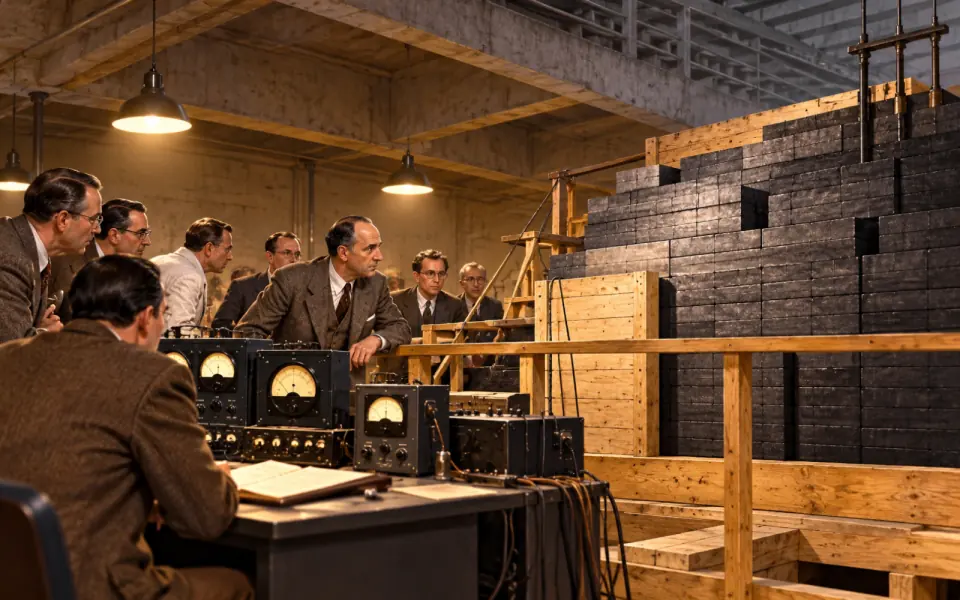 AfterFermi and the first atomic pile1942
 AfterThe Italian Resistance1943–1945
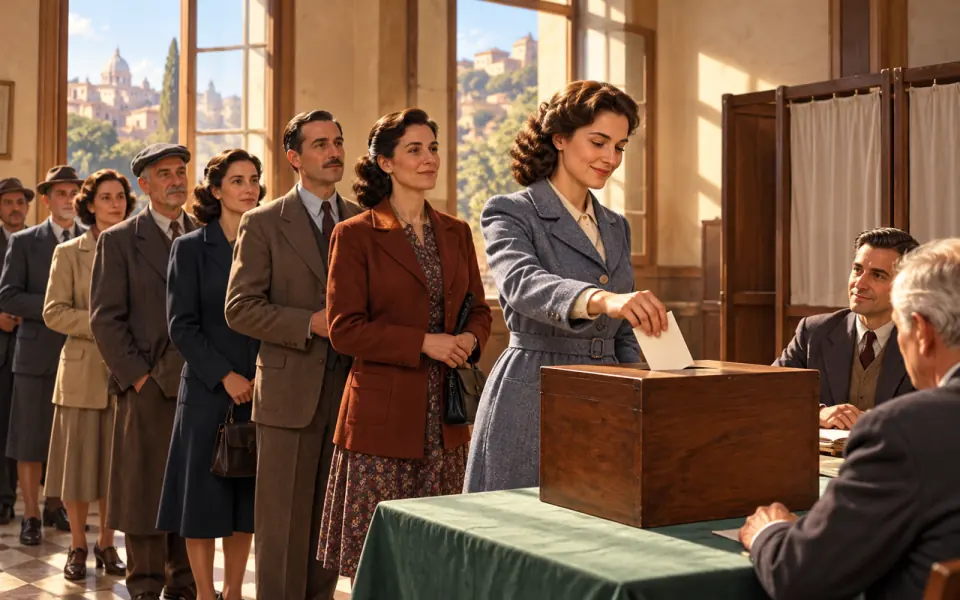 AfterThe Italian Republic and votes for women1946
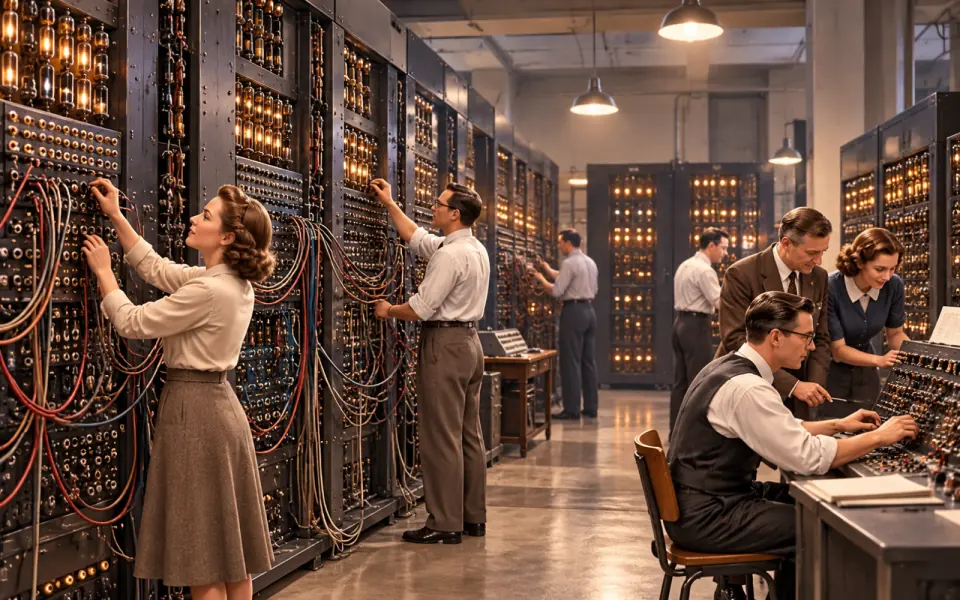 AfterThe first general-purpose electronic computer1946
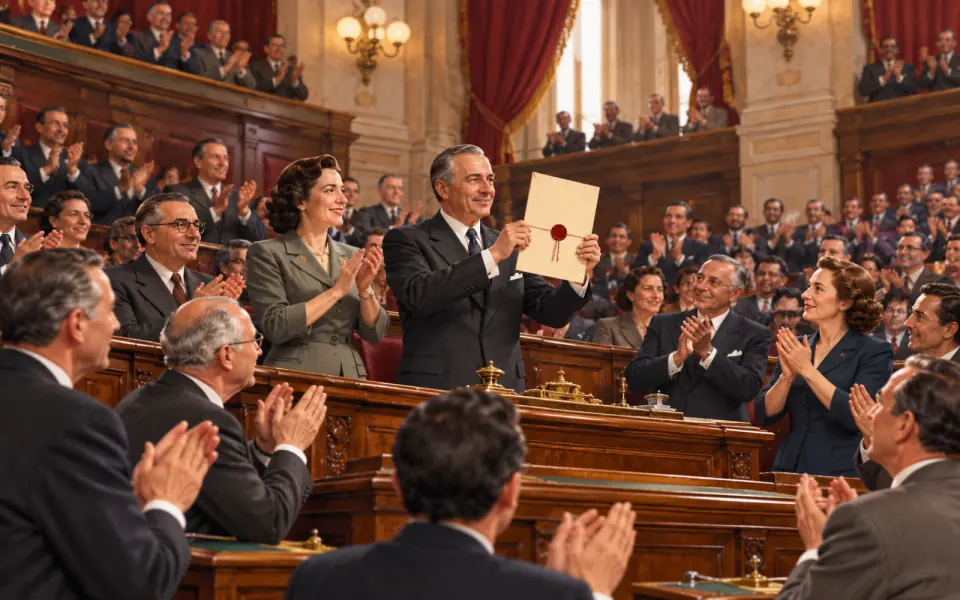 AfterThe Italian Constitution1948
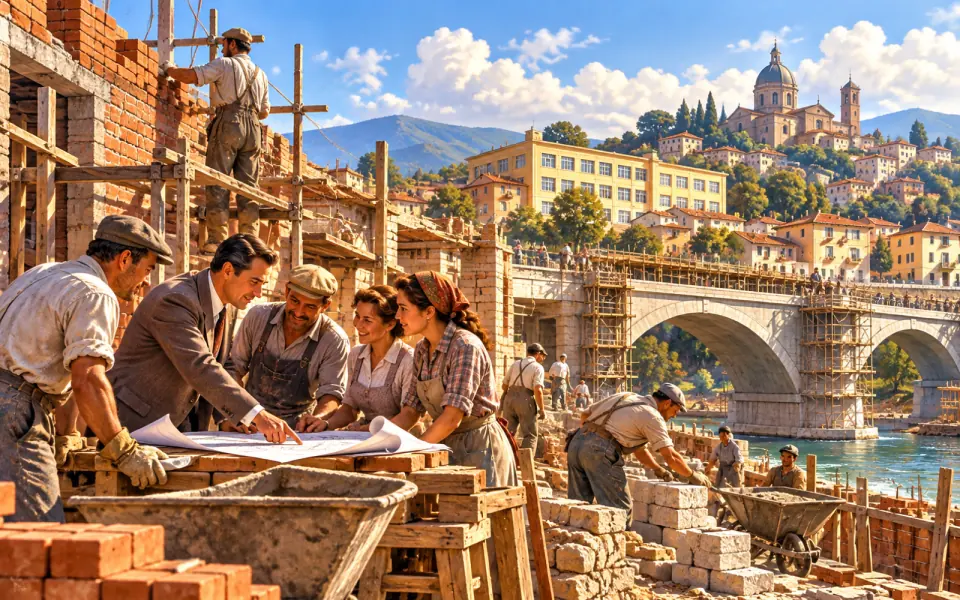 AfterPost-war rebuildingabout 1948
 AfterTelevision spreadsabout 1950
Listen / Read next
- Music to read by: Cinematic JourneyEpic film-style music, no lyrics, by Ciro Simone IrmiciSpotifyYouTube Music
Meanwhile, elsewhere in the world
Other events of the era “Early 20th century”
- The first powered flight
- Special relativity
- Maria Montessori's Children's House
- Abstract art
- Marie Curie and her two Nobel Prizes
- The First World War
- The Russian Revolution
- Radio for everyone
- Jazz spreads
- Insulin against diabetes
- Totalitarian regimes in Europe
- Talking pictures
- The discovery of penicillin
- The Great Depression
- Picasso's Guernica
- The Shoah
- Anne Frank writes her diary
- Fermi and the first atomic pile
- The Italian Resistance
- The Italian Republic and votes for women
- The first general-purpose electronic computer
- The Italian Constitution
- Post-war rebuilding
- Television spreads
