Anne Frank writes her diary
1942 Amsterdam, Netherlands
In short
For her thirteenth birthday, on 12 June 1942, Anne Frank was given a diary. A few days later her Jewish family had to go into hiding in Amsterdam, in a secret annexe behind the offices of her father's company, to escape Nazi persecution. For more than two years Anne wrote down her thoughts, fears and hopes. In 1944 the hiding place was discovered; Anne died in a concentration camp in 1945, and her father Otto, the only member of the family to survive, had the diary published.
Why it matters The Diary of Anne Frank, read all over the world, gives a voice and a face to the millions of victims of the Shoah.
Source: Anne Frank House, Amsterdam

Study card about 5 minutes of reading
The story
A girl from Frankfurt
Anne Frank was born in Frankfurt, Germany, on 12 June 1929, into a well-off Jewish family: her father Otto, her mother Edith, and her older sister Margot. When Hitler came to power in Germany in 1933 and the persecution of Jews began, the family realised there was no future for them there and moved to the Netherlands, to Amsterdam, where Otto opened a company selling ingredients for making jam. Anne, lively, curious and chatty, settled in quickly: she spoke Dutch, had lots of friends, went to school, played ping-pong and loved the cinema.
But in May 1940 Nazi Germany invaded the Netherlands, and there too rules against Jews began: they could no longer go to cinemas, parks or swimming pools, ride on trams, or do their shopping except at certain hours, and they had to wear a yellow star sewn onto their clothes. Jewish children were sent to separate schools.
A red checked diary
On 12 June 1942 Anne turned thirteen. Among her presents was a notebook with a red-and-white checked cover, fastened with a little lock, which she had chosen in a shop a few days earlier. She decided to use it as a diary and to write as if she were talking to a friend, and she gave it a name, Kitty. “I hope I will be able to confide everything to you, as I have never been able to do with anyone,” she wrote. She described school, her classmates, the boys she liked, the little arguments with her parents.
In hiding
A few weeks later, in July 1942, Margot received a summons: Jews were being ordered to report to be deported to a labour camp. Otto had already prepared a hiding place: a secret apartment at the back of his office, on the upper floors of a house on the Prinsengracht canal, with the entrance disguised by a revolving bookcase. On 6 July the family vanished, wearing as many clothes as they could. They were soon joined by another family, the van Pelses, with their son Peter, and then by a dentist, Fritz Pfeffer: eight people in just a few rooms.
Living in hiding was hard. They could not speak loudly, flush the toilet or walk in shoes during the day, so as not to be heard by the workers in the warehouse below. The windows stayed blacked out. Helping them were some of Otto's employees, Miep Gies, Bep Voskuijl, Johannes Kleiman and Victor Kugler, who brought food, books and news, risking their lives. Anne wrote a great deal, filling notebooks, and studied, read, and dreamed of becoming a journalist and a writer. She longed to go out and breathe the open air, and the end of the war seemed close, but it never came.
4 August 1944
After two years and a month in hiding, on 4 August 1944 the secret police and some Dutch policemen arrived, tipped off by someone who still has not been identified with certainty. The eight people in hiding were arrested and taken away. After a period in the Westerbork camp, they were deported by train to Auschwitz. Anne and Margot were then moved to the Bergen-Belsen camp in Germany, where typhus spread in the winter of 1944–45. Margot and Anne died a few days apart, in February or March 1945, a few weeks before the camp was liberated. Anne was fifteen. Of everyone in the hiding place, only Otto survived.
The diary comes home
After the arrest, Miep Gies and Bep Voskuijl went into the hiding place and found Anne's diary and papers scattered on the floor. Miep picked them up and kept them in her desk drawer, without reading them, hoping to give them back to Anne one day. When, in the summer of 1945, it became certain that Anne would not return, she gave them to Otto. Otto read the diary with great emotion, discovering a daughter he had not known: he realised how mature she was and how well she wrote.
At the urging of friends, Otto decided to publish it. The book came out in the Netherlands in 1947, with the title “Het Achterhuis”, “The House Behind”. It was a huge success and has now been translated into more than seventy languages, and sold tens of millions of copies.
Why it happened
Anne Frank's story comes from the Nazi persecution of the Jews. After the occupation of the Netherlands, the Nazis organised the deportation of almost all Dutch Jews: about a hundred thousand people, 75% of them, were killed. Those who managed to hide depended on the courage of those who helped them.
But there is also a simpler reason for the diary's success: Anne's talent. She was not a professional writer, and yet with clear and frank words she managed to describe the fears, hopes and everyday little things of a girl who is growing up.
What changed
Anne Frank's diary has become one of the most widely read books in the world: it gave a face to millions of victims of the Holocaust and made many young people understand that behind the numbers there are people. A line in the diary has become famous: “In spite of everything, I still believe that people are really good at heart.”
The house in Amsterdam is now a museum, the Anne Frank House, open since 1960 and visited every year by more than a million people. You can still see the hiding place. The diary has been included by UNESCO among the documents to be preserved for humanity.
Her message is as relevant as ever: it reminds us of the dangers of racism, the courage of those who help, and the importance of freedom of thought and expression. Many schools, in Italy and around the world, bear her name.
Key people and places
People
- Anne Frank
- German Jewish girl (1929–1945): author of the diary written in hiding in Amsterdam.
- Otto Frank
- Anne's father (1889–1980): the only survivor of the hiding place, he published the diary.
- Margot Frank
- Anne's older sister (1926–1945): she died at Bergen-Belsen a few days before her.
- Miep Gies
- Otto Frank's Dutch employee (1909–2010): she helped the family and kept the diary.
- Peter van Pels
- Jewish boy (1926–1945): he lived with the Franks in the hiding place.
Places
- Prinsengracht 263, Amsterdam
- The address of the house where the Frank family stayed hidden for two years.
- Bergen-Belsen, Germany
- The camp where Anne and Margot died in 1945.
Good to know
- Anne's diary had a red-and-white checked cover and a little lock.
- Anne gave her diary a name, Kitty, and wrote as if she were talking to a friend.
- The Frank family stayed hidden for two years and a month, eight people in a few rooms.
- The diary has been translated into more than seventy languages.
- The Anne Frank House in Amsterdam has been a museum since 1960.
Find out more
- Anne Frank House, Amsterdam annefrank.org
- Wikipedia, “Anne Frank” en.wikipedia.org
- Wikipedia, “The Diary of a Young Girl” en.wikipedia.org
Related events
- The Shoahabout 1941–1945 · Early 20th centuryAnne Frank's story is part of the Holocaust.
- The Second World War1939–1945 · Early 20th centuryAnne wrote the diary during the Second World War.
- Malala wins the Nobel Peace Prize2014 · TodayLike Anne, Malala, also very young, used her voice to defend education.
- The Italian Resistance1943–1945 · Early 20th centuryWhile Anne was writing in Amsterdam, the Resistance was fighting in Italy.
Before and after, in the era “Early 20th century”
Event 18 of 25
 BeforeThe first powered flight1903
 BeforeSpecial relativity1905
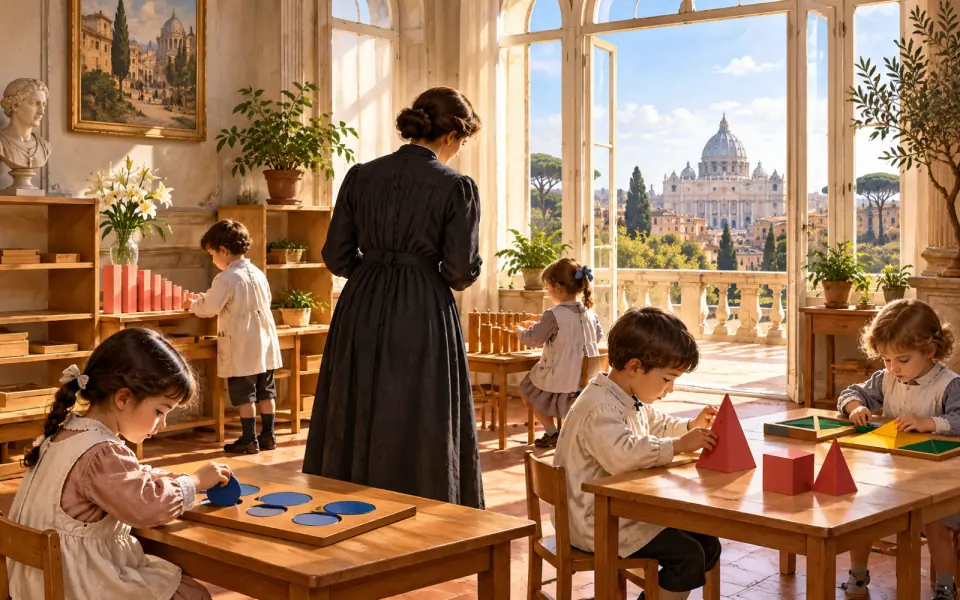 BeforeMaria Montessori's Children's House1907
 BeforeAbstract artabout 1910
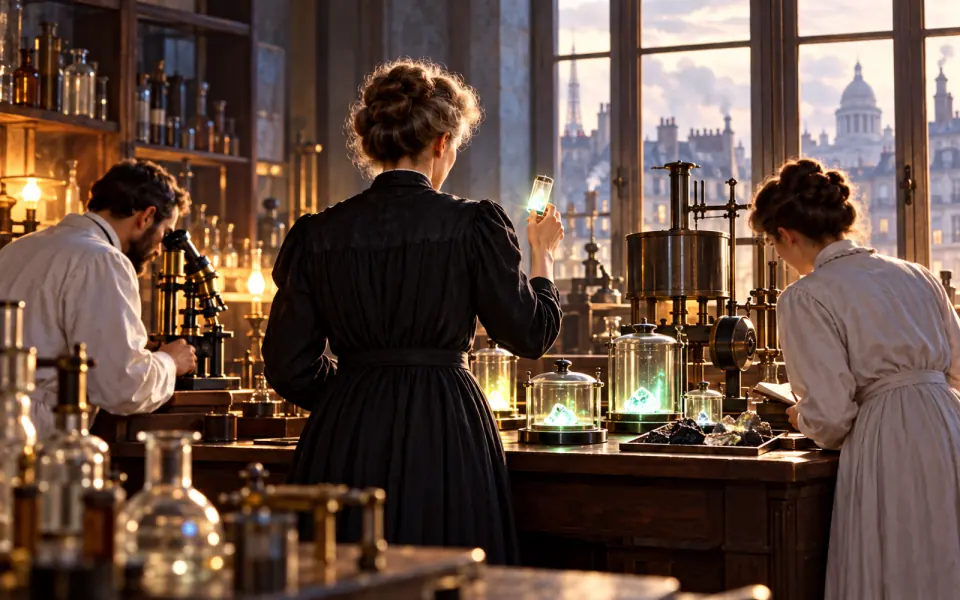 BeforeMarie Curie and her two Nobel Prizes1911
 BeforeThe First World War1914–1918
 BeforeThe Russian Revolution1917
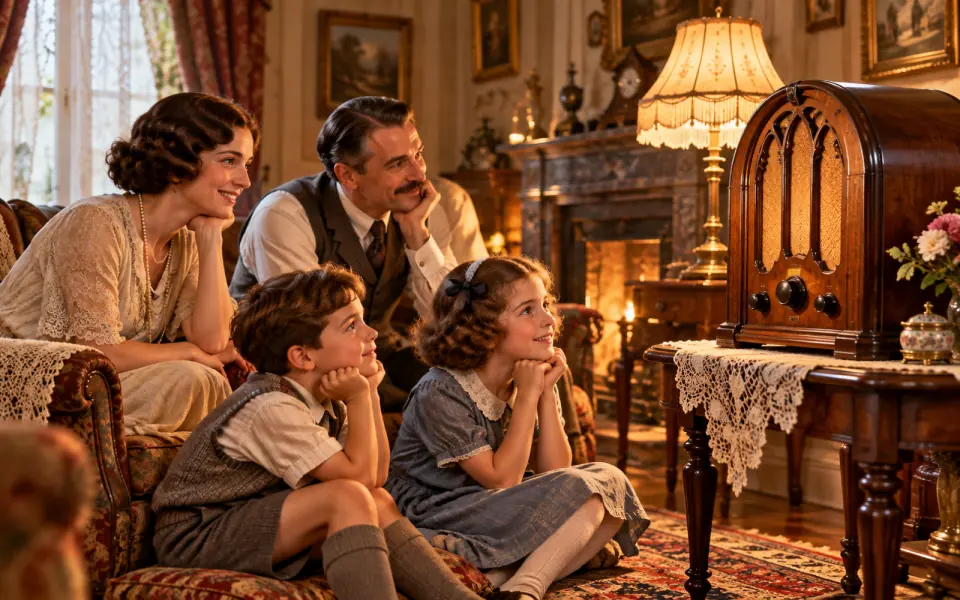 BeforeRadio for everyoneabout 1920
 BeforeJazz spreadsabout 1920
 BeforeInsulin against diabetes1922
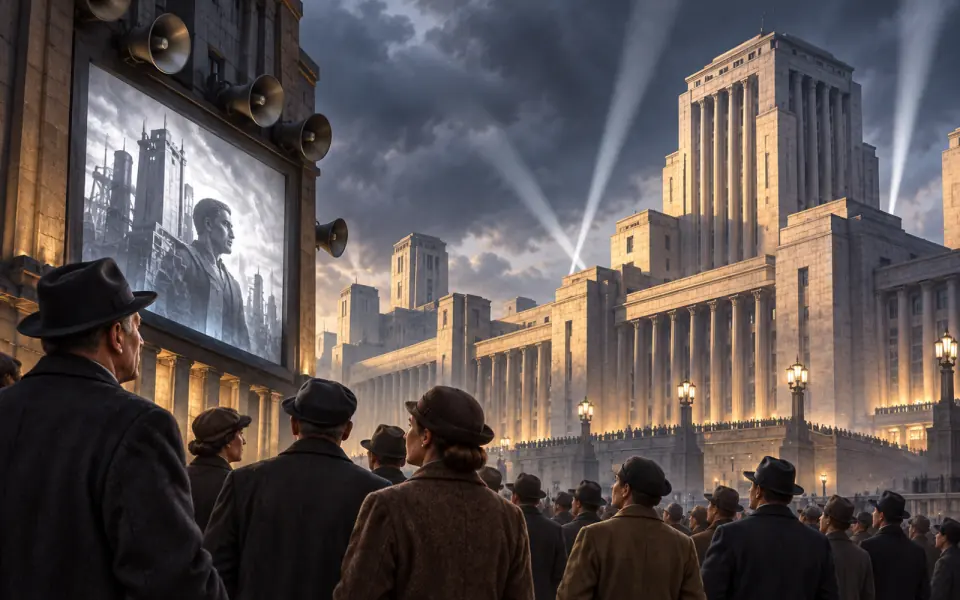 BeforeTotalitarian regimes in Europe1922
 BeforeTalking pictures1927
 BeforeThe discovery of penicillin1928
 BeforeThe Great Depression1929
 BeforePicasso's Guernica1937
 BeforeThe Second World War1939–1945
 BeforeThe Shoahabout 1941–1945
- You are hereAnne Frank writes her diary1942
 AfterFermi and the first atomic pile1942
 AfterThe Italian Resistance1943–1945
 AfterThe Italian Republic and votes for women1946
 AfterThe first general-purpose electronic computer1946
 AfterThe Italian Constitution1948
 AfterPost-war rebuildingabout 1948
 AfterTelevision spreadsabout 1950
Listen / Read next
- Music to read by: Cinematic JourneyEpic film-style music, no lyrics, by Ciro Simone IrmiciSpotifyYouTube Music
Meanwhile, elsewhere in the world
Other events of the era “Early 20th century”
- The first powered flight
- Special relativity
- Maria Montessori's Children's House
- Abstract art
- Marie Curie and her two Nobel Prizes
- The First World War
- The Russian Revolution
- Radio for everyone
- Jazz spreads
- Insulin against diabetes
- Totalitarian regimes in Europe
- Talking pictures
- The discovery of penicillin
- The Great Depression
- Picasso's Guernica
- The Second World War
- The Shoah
- Fermi and the first atomic pile
- The Italian Resistance
- The Italian Republic and votes for women
- The first general-purpose electronic computer
- The Italian Constitution
- Post-war rebuilding
- Television spreads
