Malala wins the Nobel Peace Prize
2014 Swat Valley, Pakistan (prize presented in Oslo)
In short
Malala Yousafzai grew up in the Swat Valley, in Pakistan, where an armed group wanted to stop girls going to school. While still a child she began explaining in a blog and in interviews how important it was to study. In 2012 she was seriously wounded in an attack, but she recovered and carried on her fight. In 2014, aged 17, she received the Nobel Peace Prize together with Kailash Satyarthi from India, who protects children from exploitation.
Why it matters She is the youngest person ever to receive a Nobel Prize, and her story reminds us that education is everyone's right.
Source: The Nobel Prize, “Malala Yousafzai – Facts”
Study card about 5 minutes of reading
The story
The school in Mingora
Malala Yousafzai was born on 12 July 1997 in Mingora, the main town of the Swat Valley, a beautiful region of mountains and lakes in northern Pakistan. Her father, Ziauddin, was a teacher and ran a small private school. For him, and for her, learning to read and write was a joy, and girls had the same right to study as boys. Malala was clever, curious and liked to talk: even as a little girl she gave speeches to her classmates.
When she was ten, the valley changed. The Pakistani Taliban, a group inspired by a very strict interpretation of Islam, took control of many villages in Swat. They banned music, television and dancing, and imposed very harsh rules on women. Above all, they said that girls could no longer go to school. In 2008 the Taliban announced that all girls' schools would be closed in January 2009. In those months hundreds of schools were destroyed with bombs.
The diary of “Gul Makai”
At that point Malala, who was only 11, decided to tell what was happening. A BBC journalist was looking for a schoolgirl to write a diary about life under the Taliban. To be safe, she used a made-up name, “Gul Makai”, which means “cornflower”. In the diary she described the fear of going to school, the banned music, the sound of gunshots at night, and said that she hid her books under her shawl. Then, when the Pakistani army took back control of the valley in 2009, she and her father began to speak openly, on television and in the newspapers, in favour of education for girls.
9 October 2012
This courage was dangerous. On 9 October 2012 Malala was 15. She was on her way home from school on a minibus when an armed man climbed on board and asked who Malala was: then he shot her in the head. Two of her friends, Shazia and Kainat, were wounded. The Taliban claimed responsibility for the attack, saying they would kill her again if she survived.
She was flown by helicopter to a military hospital and then, in a coma, to England, to the hospital in Birmingham, where she was operated on several times. A whole country and many people around the world followed her condition anxiously. Malala recovered: part of her skull was rebuilt, and after a few weeks she could speak again. She stayed in England with her family, because in Pakistan she was no longer safe, and started studying again.
“One child, one teacher, one book, one pen”
On 12 July 2013, her sixteenth birthday, Malala spoke at the United Nations in New York. She said she felt no hatred for the man who had shot her and added: “One child, one teacher, one book and one pen can change the world”. With her father she founded an organisation, the Malala Fund, to support girls' education around the world, and she wrote a book, “I Am Malala”, which was translated into many languages.
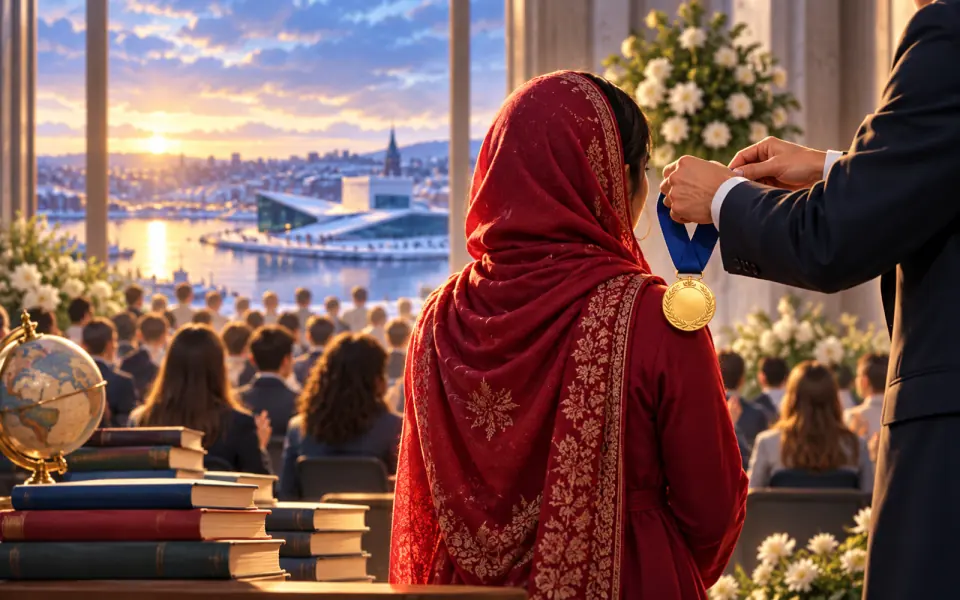
On 10 December 2014, aged 17, she received the Nobel Peace Prize in Oslo together with the Indian Kailash Satyarthi, who has for years fought against child labour: she is the youngest person ever to have received this prize. Then she went on studying, and graduated from the University of Oxford in 2020.
Her commitment continued after the prize: she has visited schools and refugee camps in many countries, met girls who could not study, and asked heads of government to invest more in education. In 2017 the United Nations named her a “Messenger of Peace”, the youngest person ever to receive this role.
Why it happened
The Taliban thought it dangerous for girls to study: for them, girls' education threatened their control of society. In many poor regions of the world, moreover, families prefer their daughters not to study, for reasons of money, tradition or safety.
What made Malala a special voice was her age, her frankness and the support of her father, who encouraged her to make herself heard. She knew that her struggle concerned not only her valley, but millions of girls.
What changed
After the attack, Malala's story went around the world and made many people understand the importance of girls' education. Many governments announced commitments and funds, and the United Nations dedicated “Malala Day” to her on 12 July 2013, her birthday. The Malala Fund supports activists and schools in many countries, including Pakistan, Afghanistan, Nigeria and Brazil.
But the problem is still huge: according to UNESCO, there are more than a hundred million girls in the world who do not go to school. In Afghanistan, since 2021, the Taliban have again banned girls from attending secondary school. Malala is one of the strongest voices calling for this to change.
Her story says that even a young person can make their voice heard, and that education is the first step towards changing the life, and the future, of a person and of a country.
Key people and places
People
- Malala Yousafzai
- Pakistani education activist (born 1997): Nobel Peace Prize in 2014, at the age of 17.
- Ziauddin Yousafzai
- Pakistani teacher, Malala's father: he ran the school and supported her in her campaign.
- Kailash Satyarthi
- Indian activist (born 1954): he fights against child labour; Nobel Peace Prize in 2014 with Malala.
- Shazia Ramzan and Kainat Riaz
- Two of Malala's schoolmates, wounded in the attack of 2012.
- Benazir Bhutto
- The first woman to lead a government in a Muslim-majority country, Pakistan (1953–2007): she was a role model for Malala.
Places
- Mingora, Swat Valley (Pakistan)
- Malala's home town, in northern Pakistan.
- Birmingham, England
- Where Malala was treated and where she lives and has studied.
Good to know
- Malala was 11 when she began writing her diary for the BBC, under the made-up name “Gul Makai”.
- On 12 July 2013, Malala's birthday, the United Nations dedicated that day to her as “Malala Day”.
- At 17 Malala was the youngest person ever to receive the Nobel Prize.
- The book “I Am Malala” has been translated into dozens of languages.
- According to UNESCO, more than a hundred million girls in the world do not go to school.
Find out more
- The Nobel Prize, “Malala Yousafzai – Facts” nobelprize.org
- Malala Fund malala.org
- Wikipedia, “Malala Yousafzai” en.wikipedia.org
- Wikipedia, “Swat District” en.wikipedia.org
Related events
- Martin Luther King and civil rights1963 · TodayMartin Luther King fought for civil rights with the force of nonviolence.
- Nelson Mandela becomes president1994 · TodayMandela, like Malala, received the Nobel Peace Prize.
- Compulsory primary school (Coppino law)1877 · Age of revolutionsIn Italy the Coppino law made elementary school compulsory.
- The World Wide Web1991 · TodayThe Internet today lets girls like Malala make their voices heard.
Before and after, in the era “Today”
Event 21 of 25
 BeforeThe double helix of DNA1953
 BeforeThe polio vaccine1955
 BeforeBirth of the European Community1957
 BeforeThe first artificial satellite1957
 BeforeThe first human in space1961
 BeforePop artabout 1962
 BeforeThe Beatles1963
 BeforeMartin Luther King and civil rights1963
 BeforeThe Moon landing1969
 BeforeThe internet's first ARPANET links1969
 BeforeEarth Day and the environmental movement1970
 BeforeThe personal computer1977
 BeforeThe fall of the Berlin Wall1989
 BeforeThe World Wide Web1991
 BeforeThe European Union1993
 BeforeNelson Mandela becomes president1994
 BeforeThe International Space Station1998
 BeforeEuro notes and coins arrive2002
 BeforeThe modern smartphone2007
 BeforeThe global financial crisis2008
- You are hereMalala wins the Nobel Peace Prize2014
 AfterThe Paris Agreement on climate2015
 AfterThe first image of a black hole2019
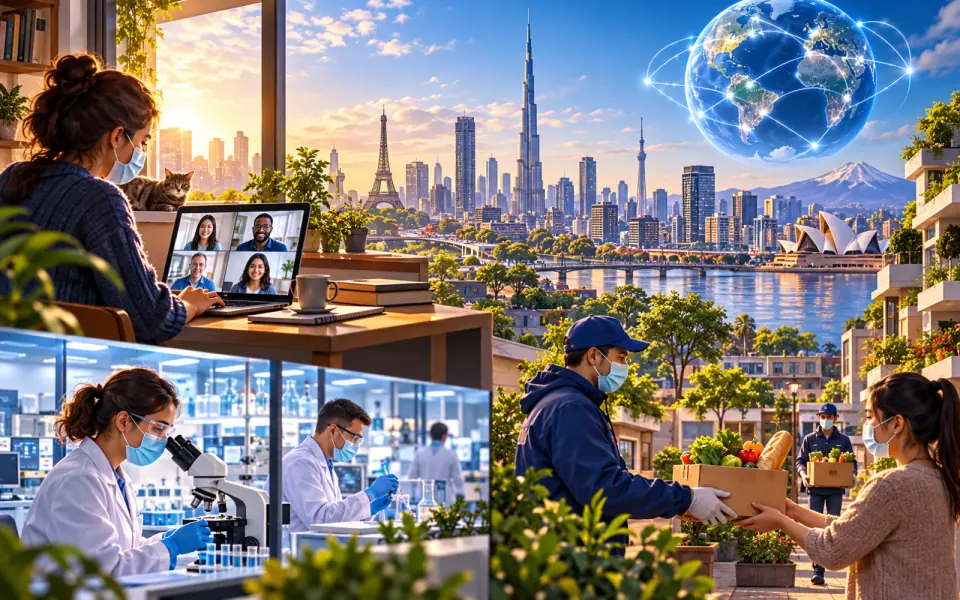 AfterThe COVID-19 pandemic2020
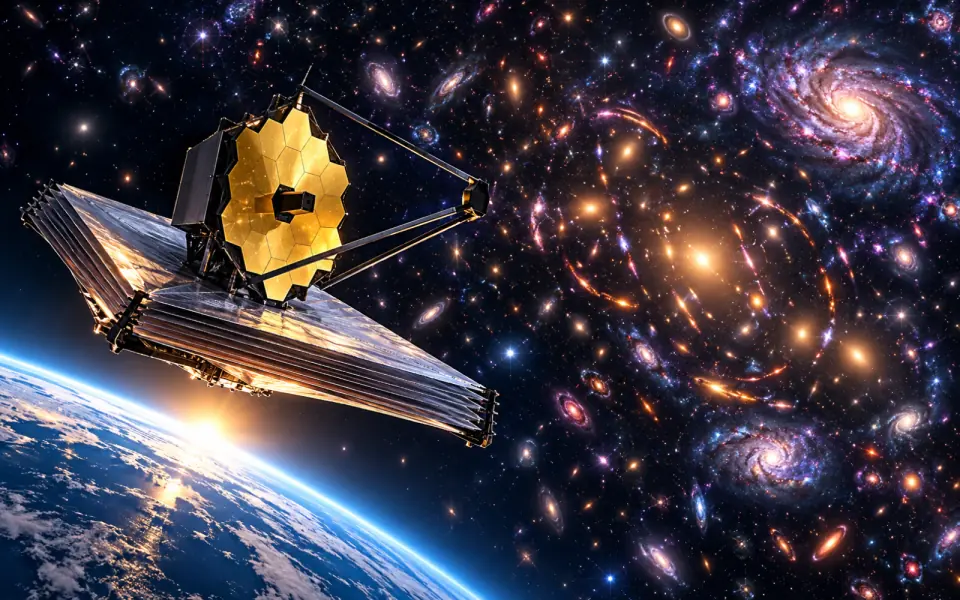 AfterThe Webb telescope starts observing2022
Listen / Read next
- Music to read by: Cinematic JourneyEpic film-style music, no lyrics, by Ciro Simone IrmiciSpotifyYouTube Music
Meanwhile, elsewhere in the world
Other events of the era “Today”
- The double helix of DNA
- The polio vaccine
- Birth of the European Community
- The first artificial satellite
- The first human in space
- Pop art
- The Beatles
- Martin Luther King and civil rights
- The Moon landing
- The internet's first ARPANET links
- Earth Day and the environmental movement
- The personal computer
- The fall of the Berlin Wall
- The World Wide Web
- The European Union
- Nelson Mandela becomes president
- The International Space Station
- Euro notes and coins arrive
- The modern smartphone
- The global financial crisis
- The Paris Agreement on climate
- The first image of a black hole
- The COVID-19 pandemic
- The Webb telescope starts observing
