The Paris Agreement on climate
2015 Le Bourget, Paris, France
In short
On 12 December 2015, at the climate conference in Paris, representatives of almost every country in the world approved an agreement to limit global warming. The aim is to keep the rise in average temperature well below 2 degrees compared with pre-industrial times, while trying not to go above 1.5 degrees. Each country decides its own commitments to cut greenhouse gases and must update them every five years. The agreement came into force in November 2016.
Why it matters It is the first climate pact involving almost all nations, rich and poor together.
Source: United Nations (UNFCCC), “The Paris Agreement”
Study card about 5 minutes of reading
The story
A planet that is heating up
When we burn coal, oil and gas to make electricity, move cars and heat homes, an invisible gas, carbon dioxide, ends up in the air. Together with other gases, it forms a sort of blanket around the Earth: it lets the Sun's light through but traps some of the heat. This is the “greenhouse effect”. Without it the Earth would be freezing; but if the blanket becomes too thick, the planet gets too hot.
Since industrialisation began, the amount of carbon dioxide in the air has risen by about a half, and the Earth's average temperature has gone up by about 1.2 degrees compared with the second half of the 19th century. It sounds like little, but a few degrees are enough to change the climate: glaciers melt, the sea rises, and heatwaves, droughts and floods become more frequent and stronger.
Scientists had known this for some time. In 1988 the United Nations had created a group of experts, the IPCC, to study the climate and report to governments. In 1992, in Rio de Janeiro, almost all countries signed a convention to protect the climate. In 1997 the Kyoto Protocol was signed, which set limits on emissions for rich countries but not for developing ones, and was only partly applied. In 2009 the Copenhagen conference ended without a real agreement.
In those years attention also grew among people who were not scientists. In June 2015, a few months before Paris, Pope Francis published the encyclical “Laudato si'”, a long letter about how to take care of our “common home” and about the link between the environment and justice for the poor, who are often the first to suffer from droughts and floods. That document was read by many non-believers too.
Two weeks in Paris
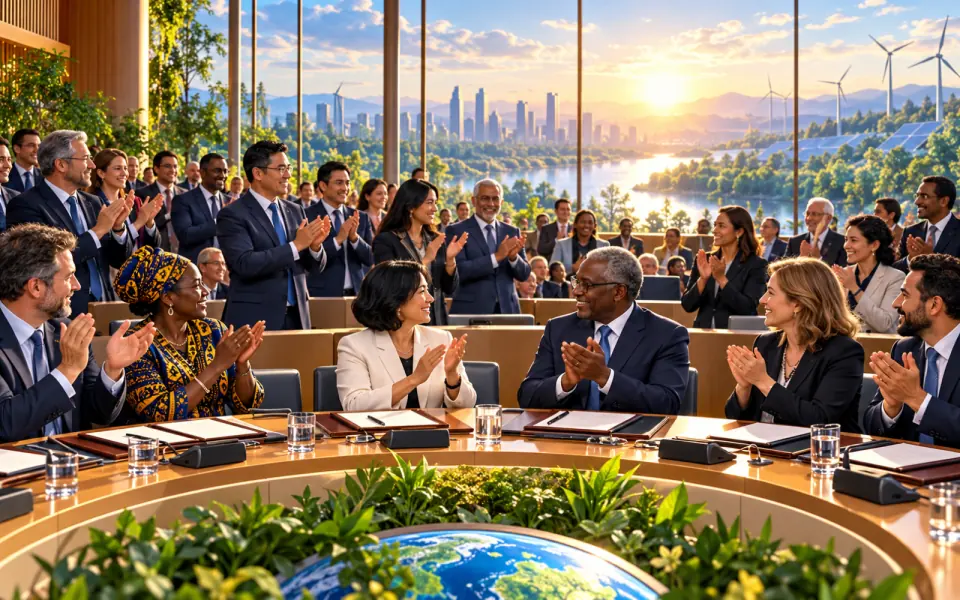
In December 2015, in Paris, in the Le Bourget area, representatives of 195 countries met for the twenty-first United Nations climate conference, COP21. It was chaired by the French foreign minister, Laurent Fabius, who for months had been travelling the world to find a compromise. After days of night-time negotiations, on 12 December the president of the conference brought his gavel down on the table: the Paris Agreement was approved, by consensus, by everyone present. Applause broke out in the hall.
The agreement set a common goal: to keep the rise in average temperature “well below 2 degrees” compared with pre-industrial times, and to do everything possible to stop at 1.5 degrees, the threshold beyond which the risks grow a great deal. This time every country, rich or poor, had to do its part, presenting its own plan, called a “nationally determined contribution”, and updating it every five years with ever more ambitious goals. Rich countries pledged to help poor ones with 100 billion dollars a year, to adapt to climate change and switch to clean energy.
On 22 April 2016, on Earth Day, more than a hundred and seventy countries signed the agreement at the United Nations in New York. The agreement came into force on 4 November 2016, much earlier than expected, because enough countries, responsible for over half of emissions, had ratified it.
Promises and facts
The United States, the second-largest emitter of greenhouse gases, announced in 2017 that it was leaving the agreement, then rejoined in 2021 and in 2025 announced its exit again. Many countries, from China to Europe, have chosen to reach “climate neutrality”, that is, to emit no more greenhouse gases than can be absorbed, by 2050 or 2060. In 2024, for the first time, the average temperature of a whole year exceeded the pre-industrial level by more than 1.5 degrees, according to the European Copernicus service.
Why it happened
The Paris Agreement came from an accumulation of scientific evidence and of phenomena visible to everyone: ever hotter summers, retreating glaciers, violent fires and hurricanes. Scientists had explained that human activity is the main cause of the change under way.
After the failure of Copenhagen, France and the United Nations chose a different method: instead of imposing identical goals on everyone from above, to let each country decide its own commitments, within a common system of rules and checks. The push from public opinion and from young people, and from many businesses and cities that wanted change, also counted.
What changed
The agreement has created a common framework for the climate work of almost every country. Since 2015 solar and wind energy have cost less and less, and today in many places they are the cheapest source of electricity. Many countries have passed climate laws, and in Europe a big plan, the “Green Deal”, has been launched.
But the results are still not enough. Global emissions have not fallen enough, and countries' current pledges would lead to warming of about 2.5 degrees, not 1.5. Experts point out that every tenth of a degree less helps avoid damage, and that change requires strong choices in transport, industry, agriculture and energy.
Many young people have mobilised, like the millions of young people who since 2018 have gone on strike for the climate, inspired by the Swede Greta Thunberg. The story of Paris shows that it is possible to reach agreement at world level, but also that the hardest step is keeping the promises.
Key people and places
People
- Laurent Fabius
- French politician (born 1946): president of COP21 and architect of the compromise.
- Christiana Figueres
- Costa Rican diplomat (born 1956): she led the UN climate secretariat from 2010 to 2016.
- Ban Ki-moon
- South Korean diplomat (born 1944): UN Secretary-General in 2015.
- Pope Francis
- Pope from 2013 to 2025 (1936–2025): in 2015 he wrote the encyclical “Laudato si'” on caring for our common home.
- Greta Thunberg
- Swedish activist (born 2003): since 2018 she has led young people's climate strikes.
Places
- Le Bourget, Paris (France)
- The conference centre on the edge of Paris where COP21 was held.
- UN headquarters, New York
- Where the countries signed the agreement on 22 April 2016.
Good to know
- The Paris Agreement was approved on 12 December 2015 by 195 delegations, by consensus.
- The goal is to limit warming to “well below” 2 degrees, and if possible to 1.5 degrees.
- Every country must present its own climate plan and update it every five years.
- The agreement came into force on 4 November 2016, less than a year after its approval.
- In 2024 the average temperature of the year exceeded pre-industrial levels by more than 1.5 degrees.
Find out more
- Wikipedia, “Kyoto Protocol” en.wikipedia.org
- Wikipedia, “Paris Agreement” en.wikipedia.org
- Copernicus, “Climate Change Service” climate.copernicus.eu
Related events
- Earth Day and the environmental movement1970 · TodayEarth Day in 1970 paved the way for modern environmentalism.
- Newcomen's steam engine1712 · Age of revolutionsThe steam engine began the age of coal, from which the warming began.
- The Moon landing1969 · TodayPhotos of the Earth from space changed the way we look at the planet.
- The COVID-19 pandemic2020 · TodayThe 2020 pandemic showed how a global problem requires shared responses.
Before and after, in the era “Today”
Event 22 of 25
 BeforeThe double helix of DNA1953
 BeforeThe polio vaccine1955
 BeforeBirth of the European Community1957
 BeforeThe first artificial satellite1957
 BeforeThe first human in space1961
 BeforePop artabout 1962
 BeforeThe Beatles1963
 BeforeMartin Luther King and civil rights1963
 BeforeThe Moon landing1969
 BeforeThe internet's first ARPANET links1969
 BeforeEarth Day and the environmental movement1970
 BeforeThe personal computer1977
 BeforeThe fall of the Berlin Wall1989
 BeforeThe World Wide Web1991
 BeforeThe European Union1993
 BeforeNelson Mandela becomes president1994
 BeforeThe International Space Station1998
 BeforeEuro notes and coins arrive2002
 BeforeThe modern smartphone2007
 BeforeThe global financial crisis2008
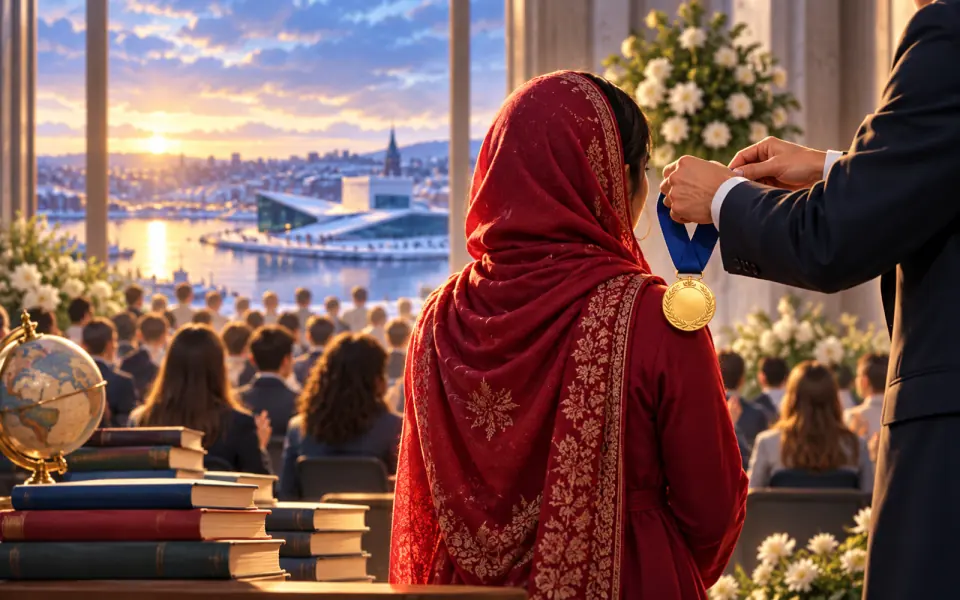 BeforeMalala wins the Nobel Peace Prize2014
- You are hereThe Paris Agreement on climate2015
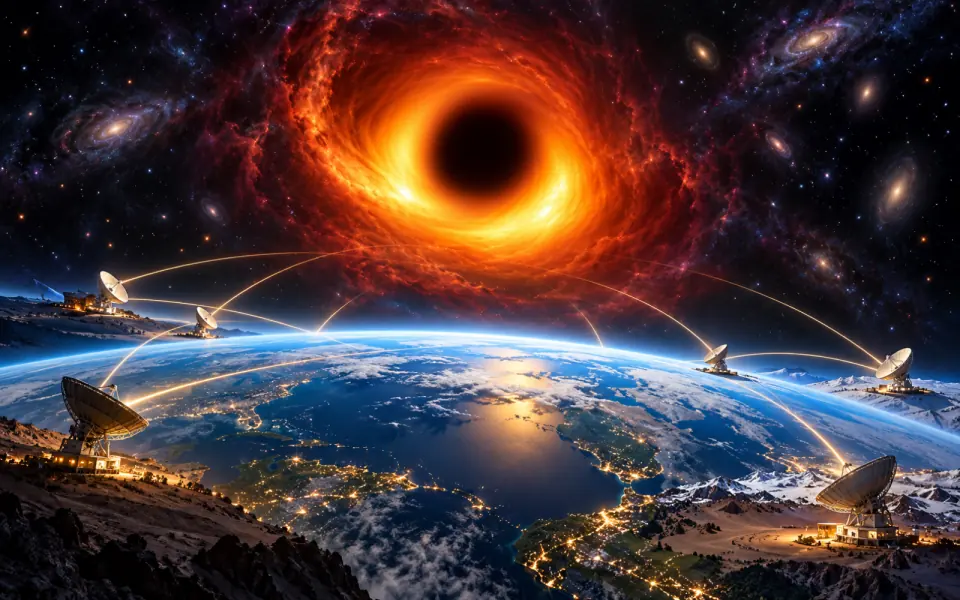 AfterThe first image of a black hole2019
 AfterThe COVID-19 pandemic2020
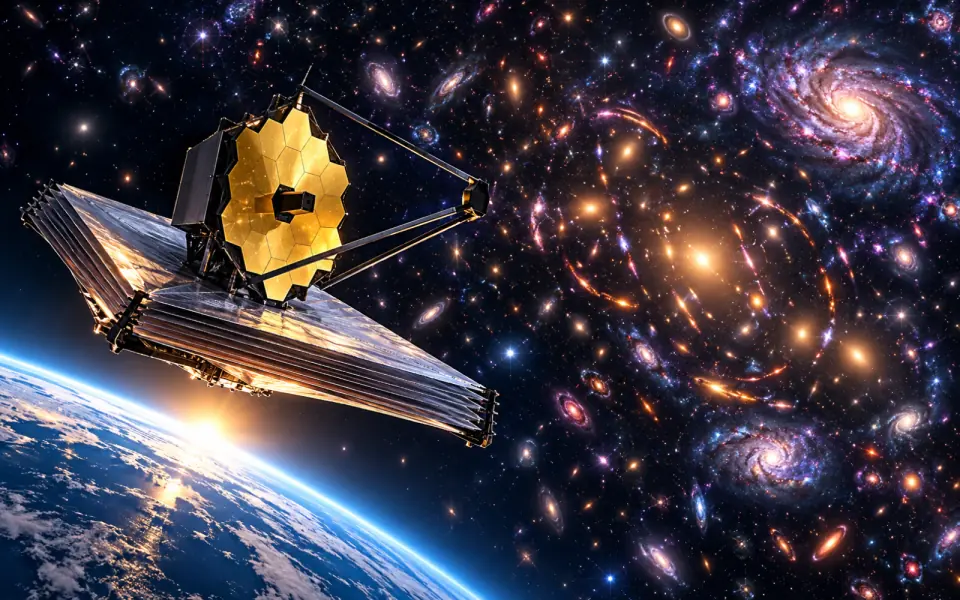 AfterThe Webb telescope starts observing2022
Listen / Read next
- Music to read by: Cinematic JourneyEpic film-style music, no lyrics, by Ciro Simone IrmiciSpotifyYouTube Music
Meanwhile, elsewhere in the world
Other events of the era “Today”
- The double helix of DNA
- The polio vaccine
- Birth of the European Community
- The first artificial satellite
- The first human in space
- Pop art
- The Beatles
- Martin Luther King and civil rights
- The Moon landing
- The internet's first ARPANET links
- Earth Day and the environmental movement
- The personal computer
- The fall of the Berlin Wall
- The World Wide Web
- The European Union
- Nelson Mandela becomes president
- The International Space Station
- Euro notes and coins arrive
- The modern smartphone
- The global financial crisis
- Malala wins the Nobel Peace Prize
- The first image of a black hole
- The COVID-19 pandemic
- The Webb telescope starts observing
