Earth Day and the environmental movement
1970 United States, then the whole world
In short
On 22 April 1970, in the United States, about 20 million people took part in the first Earth Day, with marches, lessons in schools and clean-ups of parks and rivers. The idea came from Senator Gaylord Nelson, who was worried about air and water pollution. In the following years laws were passed to protect the environment, and the first big international environmental organisations were founded. Today the day is celebrated in almost every country in the world.
Why it matters It made millions of people realise that the health of the planet also depends on each person's choices.
Source: EARTHDAY.ORG, “The History of Earth Day”
Study card about 5 minutes of reading
The story
A river on fire
In June 1969, in Cleveland, in the United States, something incredible happened: a river caught fire. The Cuyahoga River was so polluted with industrial waste, oil and chemicals that its surface burst into flames. It was not the first time, but this time the news, told by newspapers and magazines, went all round the country. A few months earlier, off the coast of California, at Santa Barbara, an oil well had spilled tens of thousands of barrels of crude oil into the sea, covering the beaches and killing birds and dolphins.
In those years the air of the big American cities was full of smog, factories dumped waste into rivers, oil polluted the coasts and insecticides such as DDT poisoned birds and other animals. As early as 1962, a biologist, Rachel Carson, had described all this in a book called “Silent Spring”, which explained how a poisoned world risked becoming mute, with no more birdsong. The book caused a stir and opened many people's eyes.
A day for the Earth
A senator from Wisconsin, Gaylord Nelson, had an idea: why not organise a great day of study about the environment at universities, like the ones students organised against the war? He asked a young student, Denis Hayes, to be the organiser, and together they chose a date, 22 April 1970, a day when classes had not yet ended and the weather was usually good.
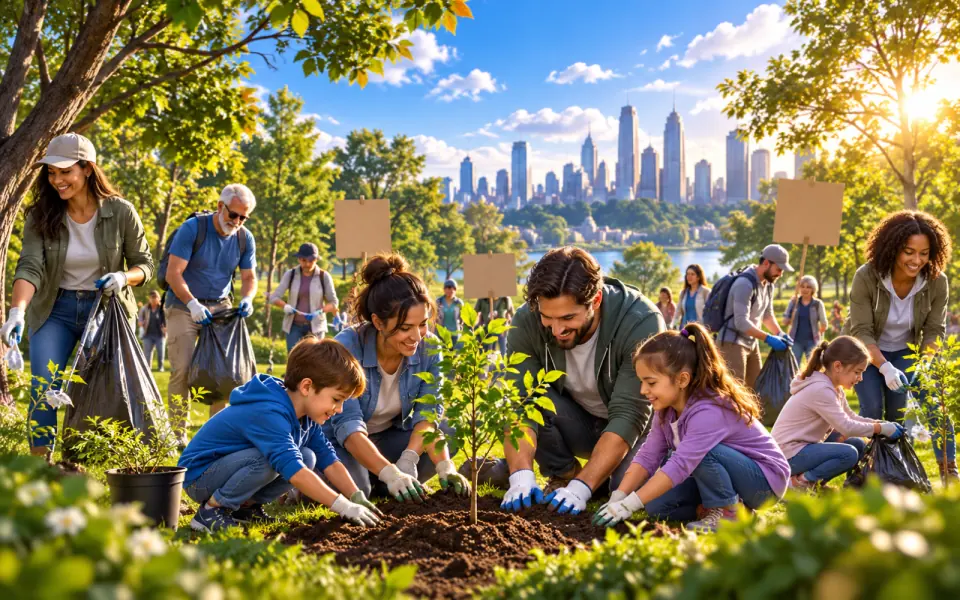
The success was enormous. About twenty million Americans, around a tenth of the population at the time, took part in thousands of schools, universities, streets and parks: there were parades, speeches, clean-up days and tree planting. In New York a famous street, Fifth Avenue, was closed to cars. For the first time, people from different parties and with different ideas came together for the same purpose: saving the environment.
In many schools students collected rubbish along rivers and roads, planted trees and discussed air, water and endangered animals with their teachers. In some cities certain streets stayed closed to cars for a day, and in front of government buildings politicians from every party gave speeches. The central organisation was small: the ideas spread by themselves, thanks to newspapers, radio and word of mouth among students, and surprised the organisers themselves.
New laws
The American government was pushed to act. At the end of 1970 the EPA, the federal Environmental Protection Agency, was created, and the Clean Air Act was passed, followed by the Clean Water Act (1972) and the law to protect endangered species in 1973. The use of DDT was banned too. Many American cities began to clean up their rivers and to check factories.
In the rest of the world the movement soon spread. In 1972 the United Nations held the first great conference on the environment in Stockholm. In Italy the WWF had existed since 1966, and in 1980 Legambiente was founded. In 1990, for the twentieth anniversary, about two hundred million people in 141 countries took part in Earth Day. Today, according to the organisers, the event involves over a billion people every year, in about 190 countries. Since 2009 the United Nations has celebrated 22 April as International Mother Earth Day.
Another image helped to change the way people looked: the photograph taken on 24 December 1968 by the astronaut William Anders during the Apollo 8 mission, “Earthrise”, the Earth rising above the horizon of the Moon. For the first time, everybody could see the whole planet, small and fragile in the darkness.
Why it happened
Earth Day came from a real worry: pollution was there for everyone to see, and it was also making people ill. At the end of the 1960s many young people, in America and in Europe, were asking for a fairer society, more careful of nature, and the protests for civil rights and against the war had shown the strength of mass movements.
Books and images mattered too: Rachel Carson's “Silent Spring”, photographs of oil-covered coasts and news of burning rivers, and pictures of the Earth from space. They showed that the problems were not far away, but affected everyone.
What changed
Earth Day showed that the way countries are governed can change when many people ask for it together. In the United States and Europe the air and water are much cleaner today than fifty years ago, and species such as the American bald eagle, which were in danger of disappearing, have been saved.
Environmentalism has become a political and cultural force: green parties, associations, schools that teach recycling and saving energy. Over time attention has shifted from polluted rivers to global problems, such as climate change and the loss of biodiversity, which call for agreements among all countries, such as the Paris Agreement of 2015.
There is still a long way to go. The day of 22 April reminds us that caring for the environment is not only up to governments, but also a matter of everyday choices: how much energy we use, what we buy and how much waste we produce.
Key people and places
People
- Gaylord Nelson
- American senator (1916–2005): he came up with Earth Day.
- Denis Hayes
- American activist (born 1944): he coordinated the organisation of the first day.
- Rachel Carson
- American biologist (1907–1964): with “Silent Spring” (1962) she exposed the damage done by insecticides.
- William Anders
- American astronaut (1933–2024): he took the “Earthrise” photograph from Apollo 8.
- Richard Nixon
- American president (1913–1994): in 1970 he created the EPA and signed the Clean Air Act.
Places
- Cleveland, Ohio (United States)
- The polluted Cuyahoga River caught fire in 1969.
- Santa Barbara, California (United States)
- Here in 1969 an oil disaster at sea fouled the beaches for kilometres.
Good to know
- In 1969 the Cuyahoga River in Cleveland caught fire because of the industrial waste floating on its surface.
- About twenty million Americans took part in the first Earth Day, in 1970.
- The “Earthrise” photograph, taken by Apollo 8 in 1968, shows the Earth rising over the horizon of the Moon.
- The book “Silent Spring” takes its title from the silence of fields with no more birdsong.
- Since 2009, 22 April has been International Mother Earth Day, recognised by the United Nations.
Find out more
- EARTHDAY.ORG, “The History of Earth Day” earthday.org
- Wikipedia, “Earth Day” en.wikipedia.org
- Wikipedia, “Rachel Carson” en.wikipedia.org
- United Nations, “International Mother Earth Day” un.org
Related events
- The Paris Agreement on climate2015 · TodayIn 2015 the Paris Agreement, signed on 22 April 2016, renewed the commitment on the climate.
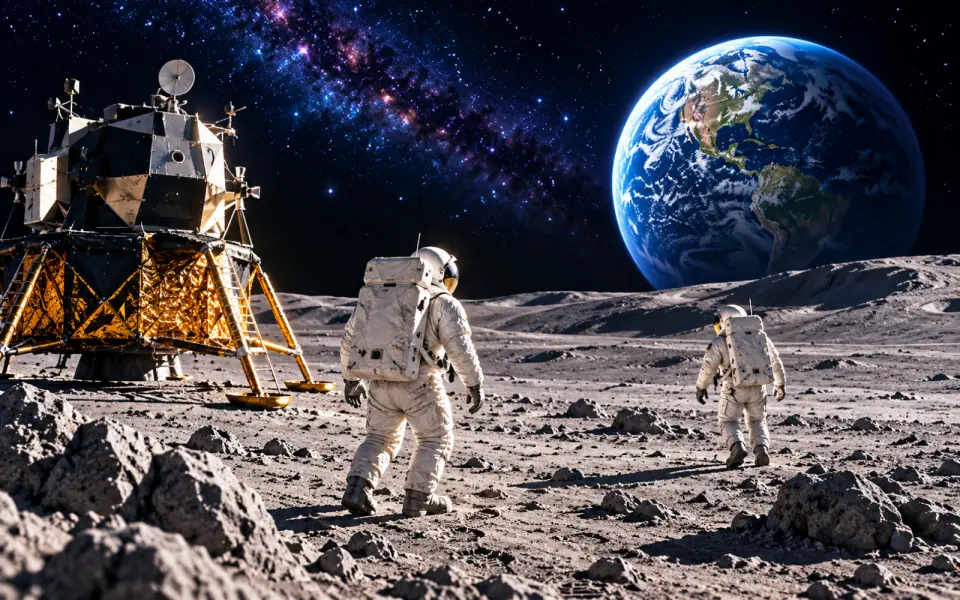
- The Moon landing1969 · TodayPhotographs of the Earth from space changed the way we look at the planet.
- Martin Luther King and civil rights1963 · TodayLike civil rights, the environment too came out of a citizens' movement.
- A practical electric light bulb1879 · Age of revolutionsThe light bulb and electricity opened the age of the energy that we now want to make cleaner.
Before and after, in the era “Today”
Event 11 of 25
 BeforeThe double helix of DNA1953
 BeforeThe polio vaccine1955
 BeforeBirth of the European Community1957
 BeforeThe first artificial satellite1957
 BeforeThe first human in space1961
 BeforePop artabout 1962
 BeforeThe Beatles1963
 BeforeMartin Luther King and civil rights1963
 BeforeThe Moon landing1969
 BeforeThe internet's first ARPANET links1969
- You are hereEarth Day and the environmental movement1970
 AfterThe personal computer1977
 AfterThe fall of the Berlin Wall1989
 AfterThe World Wide Web1991
 AfterThe European Union1993
 AfterNelson Mandela becomes president1994
 AfterThe International Space Station1998
 AfterEuro notes and coins arrive2002
 AfterThe modern smartphone2007
 AfterThe global financial crisis2008
 AfterMalala wins the Nobel Peace Prize2014
 AfterThe Paris Agreement on climate2015
 AfterThe first image of a black hole2019
 AfterThe COVID-19 pandemic2020
 AfterThe Webb telescope starts observing2022
Listen / Read next
- Music to read by: Cinematic JourneyEpic film-style music, no lyrics, by Ciro Simone IrmiciSpotifyYouTube Music
Meanwhile, elsewhere in the world
Other events of the era “Today”
- The double helix of DNA
- The polio vaccine
- Birth of the European Community
- The first artificial satellite
- The first human in space
- Pop art
- The Beatles
- Martin Luther King and civil rights
- The Moon landing
- The internet's first ARPANET links
- The personal computer
- The fall of the Berlin Wall
- The World Wide Web
- The European Union
- Nelson Mandela becomes president
- The International Space Station
- Euro notes and coins arrive
- The modern smartphone
- The global financial crisis
- Malala wins the Nobel Peace Prize
- The Paris Agreement on climate
- The first image of a black hole
- The COVID-19 pandemic
- The Webb telescope starts observing
