The Beatles
1963 Liverpool, England
In short
The Beatles were four young men from Liverpool, in England: John Lennon, Paul McCartney, George Harrison and Ringo Starr. In 1963 their first album came out and their songs took Britain by storm, with concerts where the fans screamed so loudly they drowned out the music. The following year they went to the United States, where millions of people saw them on television. They wrote many of their own songs and experimented with new sounds in the studio.
Why it matters They are among the most famous and most imitated bands of all time, and they changed pop music and youth culture.
Source: Encyclopaedia Britannica, “the Beatles”
Study card about 5 minutes of reading
The story
Four lads from Liverpool
Liverpool is a port city in the north of England. In the 1950s, in its working-class streets, many boys played the guitar, copying the rock and roll that came from America. On 6 July 1957, at a church fête, a sixteen-year-old called John Lennon was playing with his band, the Quarrymen. In the audience was a fifteen-year-old boy, Paul McCartney, who could tune a guitar better than he could. After that meeting Paul was invited into the group; soon afterwards George Harrison, the youngest of them all, joined too.
The three boys changed their name several times, and in the end they chose “The Beatles”, a play on words between “beetles” and “beat”, the rhythm. A series of musicians took turns on the drums, until in the summer of 1962 Ringo Starr arrived, whose real name was Richard Starkey. This was the line-up the world would come to know: Lennon, McCartney, Harrison, Starr.
The Hamburg school and the Cavern
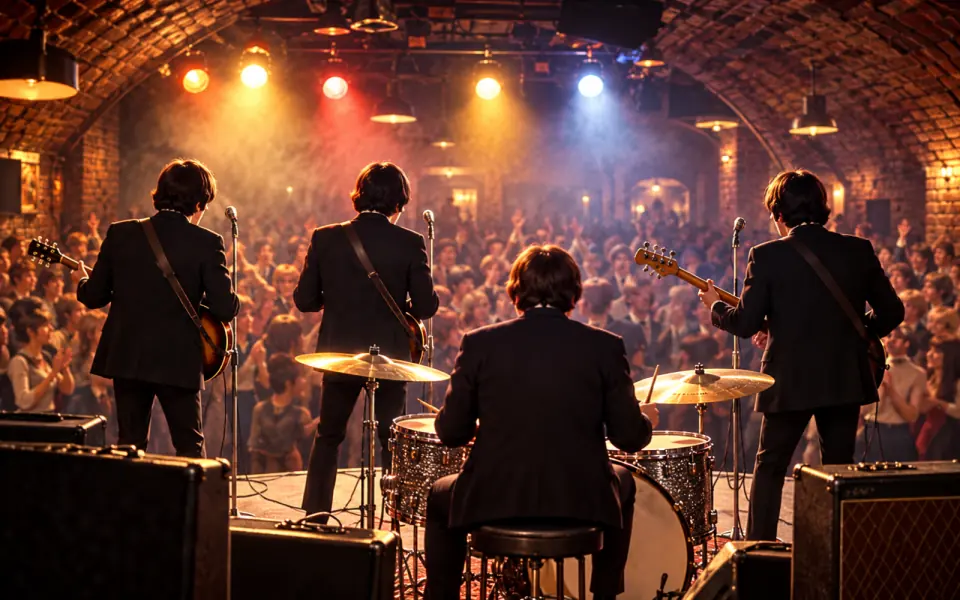
Before becoming famous, the Beatles spent months playing in clubs in Hamburg, in Germany, in the port district. They played for many hours every night, even eight, in small crowded clubs: it was a real school, which made them a tight and tireless band. Back in Liverpool, they played at the Cavern Club, a damp cellar with an arched ceiling, where a queue formed to get in every day.
It was there that, in 1961, they were noticed by Brian Epstein, the young manager of a record shop. Struck by their energy, he became their manager: he persuaded them to wear matching jackets and to move politely on stage. Soon afterwards they met a record producer, George Martin, who knew how to give order to their experiments. In October 1962 their first record came out, “Love Me Do”.
1963: “Beatlemania”
The real breakthrough came in 1963. The single “Please Please Me” climbed to the top places of the British charts. In February the Beatles recorded almost all of their first album, “Please Please Me”, in a single day, in about ten hours, with an energy you can still hear today. Then came “From Me to You” and “She Loves You”, which became the best-selling song of that year in England. The chorus, with its shouted “yeah, yeah, yeah”, stuck in the heads of millions of people.
From 1963 girls and boys waited for them in crowds outside hotels, screamed at concerts so loudly that they drowned out the music and chased the cars in which the band travelled. The newspapers coined a word: “Beatlemania”, the craze for the Beatles. On 4 November 1963 they played in front of the royal family, and Lennon joked with the audience: “Those in the cheaper seats, clap your hands. The rest of you, just rattle your jewellery.” In February 1964 they appeared on American television, on the Ed Sullivan Show, and were watched by about seventy million people. It was the “British Invasion”: after them, other English bands, such as the Rolling Stones, conquered the United States.
From music to cinema, and beyond
The Beatles were not content with repeating the formula for success. They made films, such as “A Hard Day's Night” (1964), with the pace of a comedy, and from 1965 they experimented with new sounds, Indian instruments such as the sitar, tapes edited backwards and an orchestra in the studio. In 1967 they released “Sgt. Pepper's Lonely Hearts Club Band”, considered one of the most influential records in history. In 1965 they also played in Italy, in eight concerts in three cities: Milan, Genoa and Rome. In 1970 the band split up, but each of them carried on making music. John Lennon was killed in New York in 1980, George Harrison died in 2001.
Why it happened
The Beatles' success came from the meeting of many things: Lennon and McCartney's talent for writing songs, their skill at playing, the training in Hamburg, a capable producer and a clever manager. On top of that, they arrived at just the right moment: the young people of the 1960s, born after the war, were more numerous and had more money to buy records and transistor radios.
It was also a time when music was spreading by new means: 45 rpm records, radio, television. A band could become famous all over the world in a few months, and young people found in rock a language all of their own, different from their parents'.
What changed
The Beatles changed popular music. They showed that a band could write its own songs, invent new sounds in the studio and make the album, and not just the single, into an art form. Many musicians since then have followed their example.
With their hair, their clothes and their way of speaking, they also influenced the fashion and customs of the 1960s: in schools all over the world, boys copied their haircut. Their songs, such as “Yesterday” and “Let It Be”, have been reinterpreted by countless artists.
The phenomenon also showed, for the first time, the power of the young audience: anti-war songs, mass concerts and the youth culture of the following years were born in that climate. Today, more than sixty years later, the Beatles are still among the most listened-to artists.
Key people and places
People
- John Lennon
- English singer and guitarist (1940–1980): co-founder of the Beatles and writer of many of their songs.
- Paul McCartney
- English singer and bass player (born 1942): co-writer of the Beatles' songs.
- George Harrison
- English guitarist (1943–2001): he brought the sound of the Indian sitar into the band.
- Ringo Starr
- English drummer (born 1940): he joined the Beatles in 1962.
- Brian Epstein
- English manager (1934–1967): he discovered the Beatles and led them to success.
Places
- Liverpool, England
- The Beatles' home city, with its port and the Cavern Club.
- Hamburg, Germany
- Where the Beatles played for months in the clubs of the port district, between 1960 and 1962.
Good to know
- The Beatles' first album, “Please Please Me”, was recorded almost entirely in a single day, 11 February 1963.
- The name “Beatles” is a play on words between “beetles” (the insects) and “beat” (rhythm).
- In February 1964 about 70 million Americans watched the Beatles on the Ed Sullivan television show.
- Ringo Starr's real name is Richard Starkey: “Ringo” comes from the rings he wore on his fingers.
- The Beatles played in Italy in 1965, with eight concerts in Milan, Genoa and Rome.
Find out more
- Wikipedia, “The Beatles” en.wikipedia.org
- Wikipedia, “Beatlemania” en.wikipedia.org
- The Beatles, official site thebeatles.com
- Wikipedia, “Please Please Me” en.wikipedia.org
Related events
- Pop artabout 1962 · TodayWarhol's pop art was born in the same world of consumption and popular images.
- Television spreadsabout 1950 · Early 20th centuryTelevision brought the Beatles into millions of homes.
- Jazz spreadsabout 1920 · Early 20th centuryDecades earlier, jazz had been the music that revolutionised young people's tastes.
- Martin Luther King and civil rights1963 · TodayIn the same years young people were also protesting for civil rights.
Before and after, in the era “Today”
Event 7 of 25
 BeforeThe double helix of DNA1953
 BeforeThe polio vaccine1955
 BeforeBirth of the European Community1957
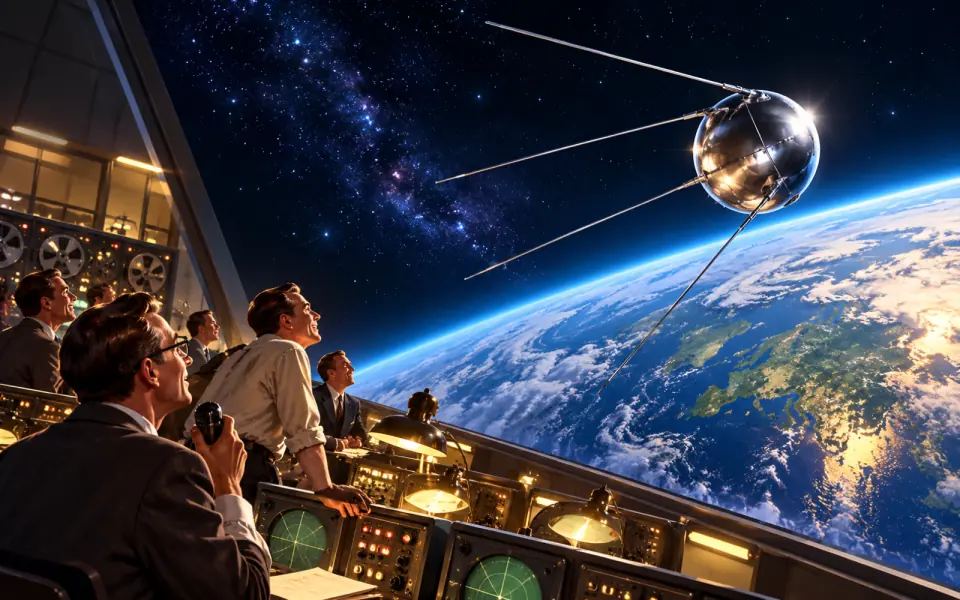 BeforeThe first artificial satellite1957
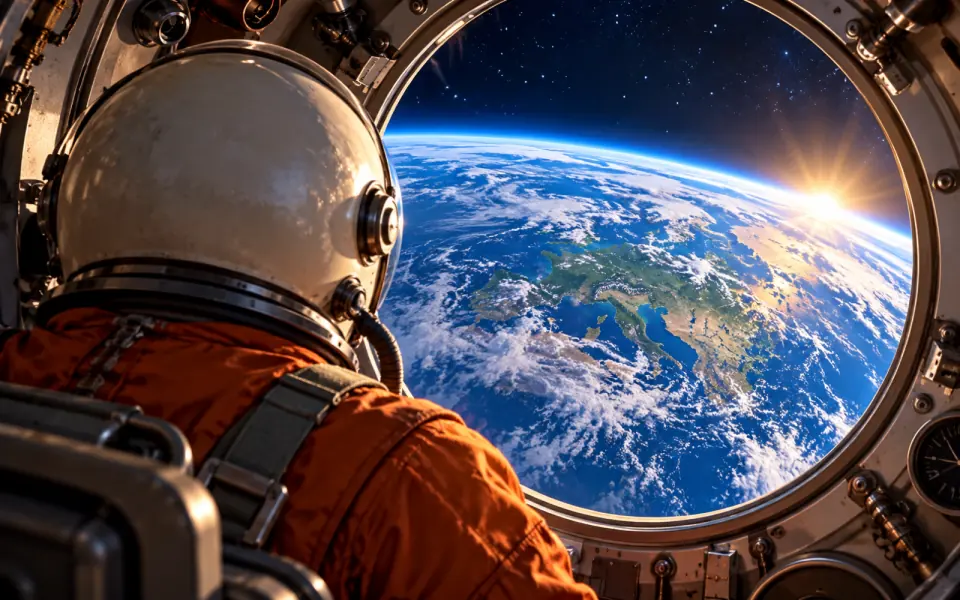 BeforeThe first human in space1961
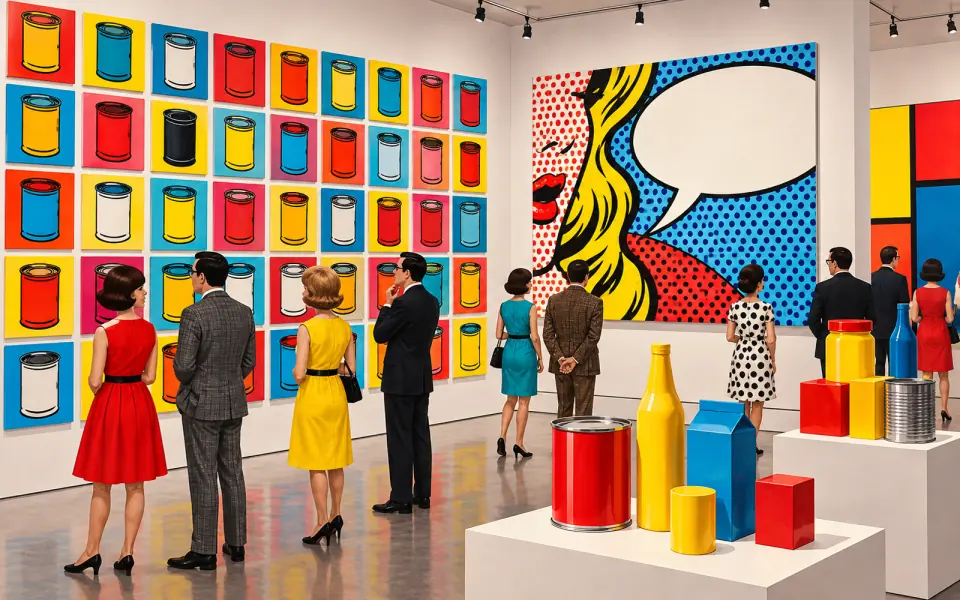 BeforePop artabout 1962
- You are hereThe Beatles1963
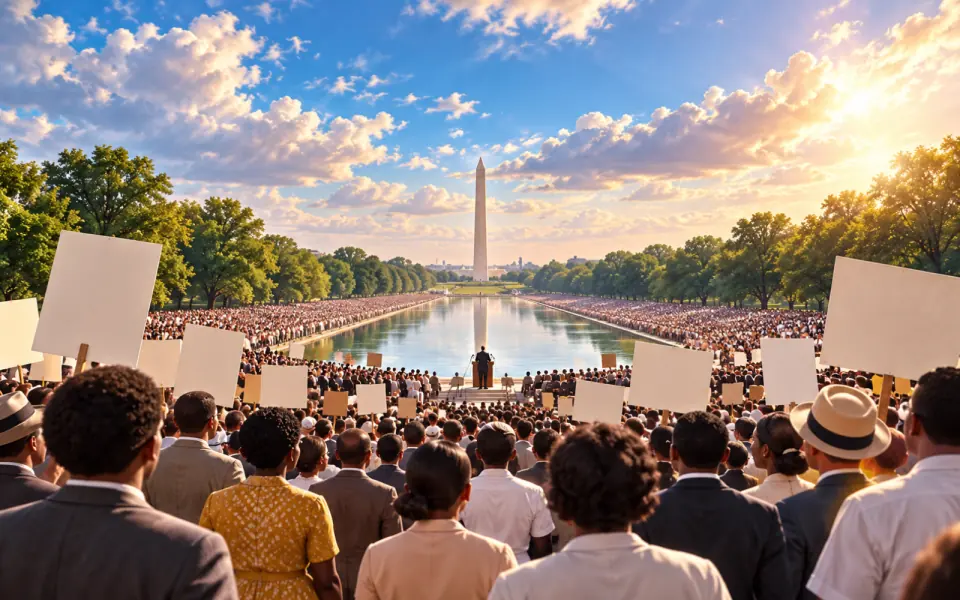 AfterMartin Luther King and civil rights1963
 AfterThe Moon landing1969
 AfterThe internet's first ARPANET links1969
 AfterEarth Day and the environmental movement1970
 AfterThe personal computer1977
 AfterThe fall of the Berlin Wall1989
 AfterThe World Wide Web1991
 AfterThe European Union1993
 AfterNelson Mandela becomes president1994
 AfterThe International Space Station1998
 AfterEuro notes and coins arrive2002
 AfterThe modern smartphone2007
 AfterThe global financial crisis2008
 AfterMalala wins the Nobel Peace Prize2014
 AfterThe Paris Agreement on climate2015
 AfterThe first image of a black hole2019
 AfterThe COVID-19 pandemic2020
 AfterThe Webb telescope starts observing2022
Listen / Read next
- Music to read by: Cinematic JourneyEpic film-style music, no lyrics, by Ciro Simone IrmiciSpotifyYouTube Music
Meanwhile, elsewhere in the world
Other events of the era “Today”
- The double helix of DNA
- The polio vaccine
- Birth of the European Community
- The first artificial satellite
- The first human in space
- Pop art
- Martin Luther King and civil rights
- The Moon landing
- The internet's first ARPANET links
- Earth Day and the environmental movement
- The personal computer
- The fall of the Berlin Wall
- The World Wide Web
- The European Union
- Nelson Mandela becomes president
- The International Space Station
- Euro notes and coins arrive
- The modern smartphone
- The global financial crisis
- Malala wins the Nobel Peace Prize
- The Paris Agreement on climate
- The first image of a black hole
- The COVID-19 pandemic
- The Webb telescope starts observing
