The double helix of DNA
1953 Cambridge and London, England
In short
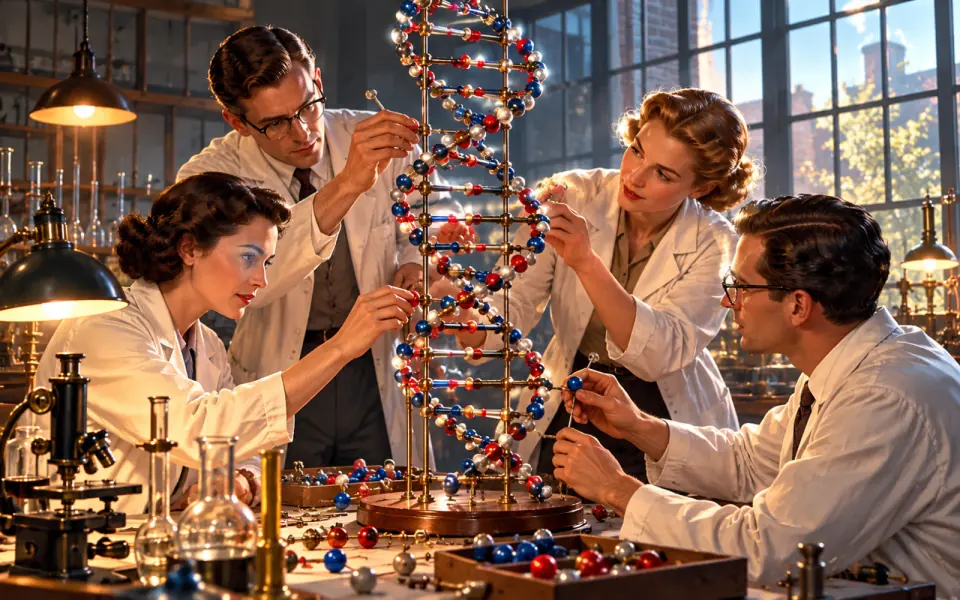
DNA is the molecule that holds the instructions for building and running every living thing. In 1953, in Cambridge, in England, James Watson and Francis Crick worked out that it is shaped like a spiral staircase, the double helix. A key step was an X-ray photograph taken in London in the laboratory of Rosalind Franklin, whose contribution was only fully recognised much later. The two strands can be separated and copied: that is how information passes from one cell to another.
Why it matters Understanding DNA opened the way to modern genetics, medical tests and new treatments.
Source: Encyclopaedia Britannica, “DNA”
Study card about 5 minutes of reading
The story
The instruction manual of life
Every living thing, from a bacterium to a whale, begins as a tiny instruction manual written inside its cells. At the start of the 20th century scientists knew this manual existed: they called it “heredity”, because it explained why children look like their parents. But they did not know what it was made of, or how it could be copied from one generation to the next.
An important clue came in 1944, when a group of researchers in New York led by Oswald Avery showed that the thing passing on characteristics was a molecule called DNA, short for deoxyribonucleic acid. It had been known since 1869, when a Swiss doctor, Friedrich Miescher, found it in the pus on used hospital bandages. Many scientists did not believe it, though: a molecule with only four kinds of building blocks seemed far too simple to hold all the instructions of life. In 1950 the chemist Erwin Chargaff noticed a curious rule: in any DNA, the amount of block A was always equal to the amount of T, and the amount of G equal to that of C.
A race between London and Cambridge
In the early 1950s, finding the shape of DNA had become a real race. In London, at King's College, Maurice Wilkins worked alongside Rosalind Franklin, a chemist who was an expert on crystals. They used X-rays: you shine a beam through a fibre of DNA, and from the pattern of dots on a photographic plate you can work out how the atoms are arranged. In May 1952 Franklin and her student Raymond Gosling took a very clear picture, known as “Photograph 51”. It showed a big “X” of dots: the typical sign of a spiral.
In Cambridge, at the Cavendish Laboratory, two other researchers were chasing the same answer with a different method: building models. They were the American James Watson, only 25 years old, and the Briton Francis Crick, 36 and still without a doctorate. They did not do X-ray experiments: they tried to fit together other people's data using pieces of metal and cut-out cardboard until everything matched. Their first model, in 1951, was wrong, and Franklin smiled at it. Even the famous American chemist Linus Pauling, who would later win a Nobel Prize (in 1954), suggested a three-stranded structure: that was wrong too.
At the start of 1953 Watson and Crick were able to see Franklin's results: Wilkins showed them Photograph 51, and a Medical Research Council report reached them through a colleague. Franklin did not know, and only many years later did people realise how decisive that data had been. With this information, and with Chargaff's rule, the two built the right model.
The spiral staircase
DNA is made of two very long strands twisted around each other, like a spiral staircase. The sides of the staircase are chains of sugars and phosphates; the steps are pairs of building blocks, which today we call bases: A (adenine) always pairs with T (thymine), and G (guanine) always with C (cytosine). That is why the amounts of A and T are equal, as Chargaff had seen. Above all, this shape explained how the manual is copied: you just open the staircase down the middle, like a zip, and each half becomes the mould for rebuilding the other. Two identical copies, from just one.
On 25 April 1953 the journal Nature published Watson and Crick's article, little more than one page long. The same issue also carried studies by Wilkins and by Franklin with Gosling, which confirmed the structure. In 1958 two American researchers, Matthew Meselson and Franklin Stahl, showed with an experiment that DNA really does copy itself in that way.
The Nobel Prize and a forgotten name
In 1962 the Nobel Prize in Medicine went to Watson, Crick and Wilkins. Rosalind Franklin had died in 1958, aged only 37, of cancer: Nobel Prizes are not awarded to people who have died. For many years her contribution was little known; today she is remembered as a scientist who was essential to this discovery, although historians still argue about how fairly her data was used.
Why it happened
DNA was discovered long before 1953, but nobody knew its shape. Three things made the solution possible: the 1944 experiments pointing to DNA as the molecule of heredity, the X-ray technique applied to crystals, already used to study molecules such as insulin, and Chargaff's rule about the amounts of the bases.
The mood of the time mattered too. After the Second World War, biology attracted physicists and chemists who brought new ideas: Crick himself was a physicist who had moved into biology. Several groups, in England and the United States, were also working on the same problem, and the competition made everyone faster.
What changed
The double-helix structure opened the way to molecular biology. In the 1960s scientists cracked the genetic code: three bases in a row, like three letters, say which building block to add to proteins, the molecules that make the body work. People finally understood how the instruction manual is read and turned into a living organism.
From 1990 to 2003 a huge international project, the Human Genome Project, read all of the roughly 3 billion base pairs in human DNA. Today we can compare the DNA of people, animals and plants, discover inherited diseases, identify a culprit from a tiny trace of blood, or work out how species are related.
In recent years new techniques, such as CRISPR, even make it possible to “edit” DNA in the laboratory: Emmanuelle Charpentier and Jennifer Doudna won the Nobel Prize in Chemistry in 2020 for this. These are extraordinary possibilities, and they raise ethical questions too: how far is it right to change the manual of life? It is a question that must now be answered not only by scientists, but by all citizens.
Key people and places
People
- James Watson
- American biologist (born 1928): he was 25 when he built the DNA model with Crick; Nobel Prize in 1962.
- Francis Crick
- British physicist and biologist (1916–2004): with Watson he proposed the double-helix structure; Nobel Prize in 1962.
- Rosalind Franklin
- English chemist (1920–1958): her “Photograph 51” of DNA was a decisive piece of evidence for the model.
- Maurice Wilkins
- New Zealand-born physicist and biologist (1916–2004): he studied DNA with X-rays at King's College London; Nobel Prize in 1962.
- Erwin Chargaff
- Austrian biochemist (1905–2002): he found that in DNA, A and T, and G and C, are present in equal amounts.
Places
- Cavendish Laboratory, Cambridge
- The University of Cambridge physics laboratory where Watson and Crick built their model.
- King's College London
- Where Franklin and Wilkins studied DNA with X-rays and where Photograph 51 was taken.
Good to know
- Watson and Crick's famous DNA article was little more than a page long and appeared in the journal Nature in 1953.
- Watson and Crick's first model was wrong; when they showed it to Rosalind Franklin, she spotted the mistakes at once.
- If you unrolled all the DNA in a single human cell, it would be about two metres long.
- Any two people have almost the same DNA: the difference is about one letter in every thousand.
- DNA was already discovered in 1869 by Friedrich Miescher, who found it in the cells of pus.
Find out more
- Nobel Prize in Physiology or Medicine 1962, official site nobelprize.org
- Wikipedia, Watson and Crick's 1953 paper en.wikipedia.org
- Wikipedia, “Rosalind Franklin” en.wikipedia.org
- Wikipedia, “DNA” en.wikipedia.org
- National Human Genome Research Institute, “Human Genome Project” genome.gov
Related events
- The discovery of penicillin1928 · Early 20th centuryX-ray crystallography also revealed the structure of penicillin, thanks to Dorothy Hodgkin.
- Darwin publishes On the Origin of Species1859 · Age of revolutionsDarwin explained evolution without knowing how traits are passed on: the answer lies in DNA.
- The World Wide Web1991 · TodayToday genome data is shared around the world thanks to the Web.
- The COVID-19 pandemic2020 · TodayThe DNA (and RNA) of viruses was read within days during the pandemic.
Before and after, in the era “Today”
Event 1 of 25
- You are hereThe double helix of DNA1953
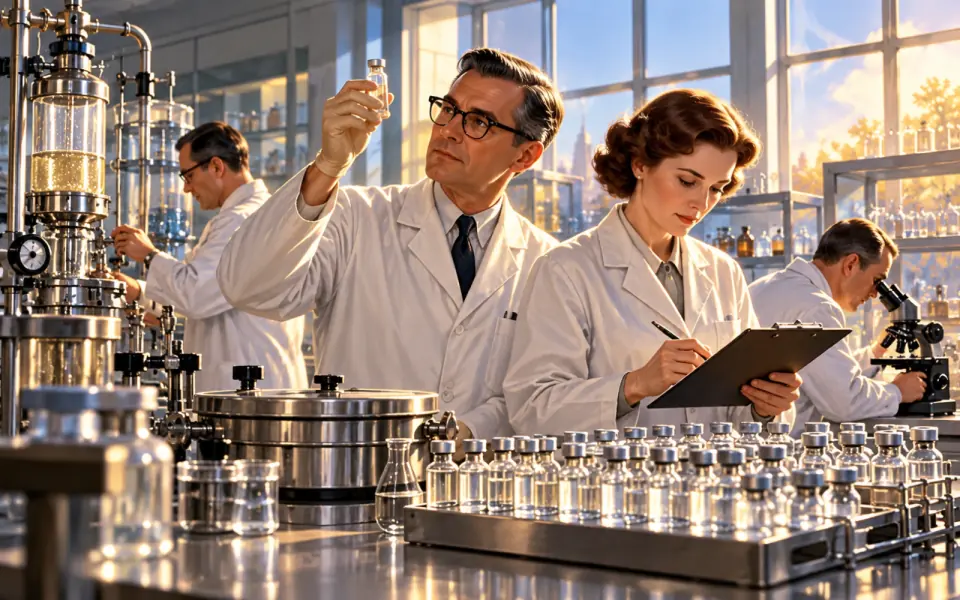 AfterThe polio vaccine1955
 AfterBirth of the European Community1957
 AfterThe first artificial satellite1957
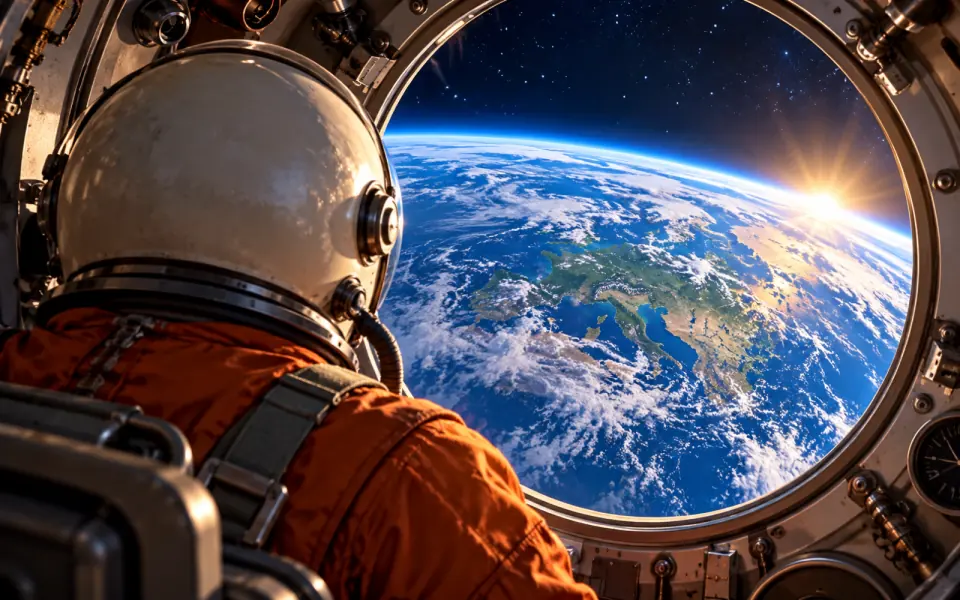 AfterThe first human in space1961
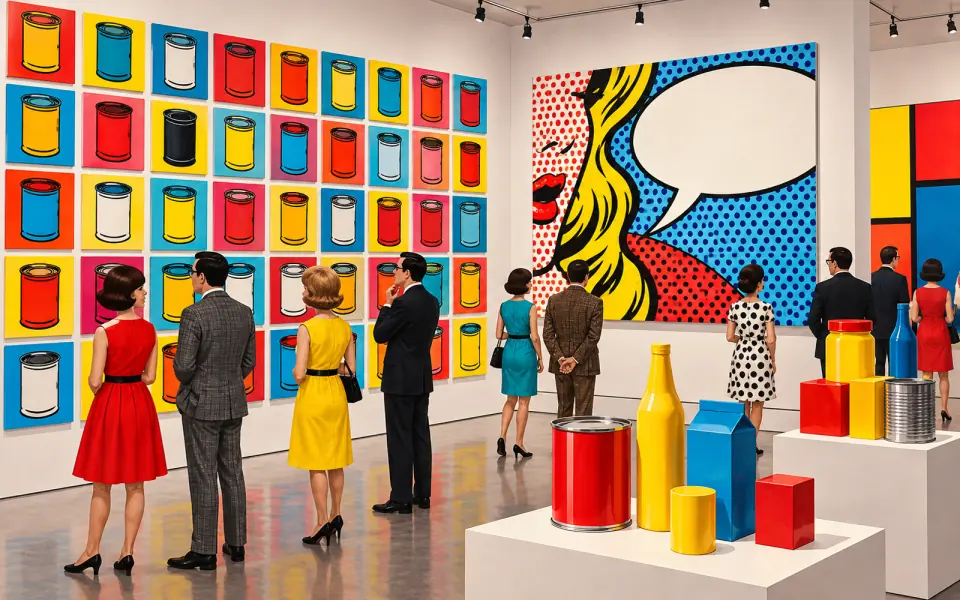 AfterPop artabout 1962
 AfterThe Beatles1963
 AfterMartin Luther King and civil rights1963
 AfterThe Moon landing1969
 AfterThe internet's first ARPANET links1969
 AfterEarth Day and the environmental movement1970
 AfterThe personal computer1977
 AfterThe fall of the Berlin Wall1989
 AfterThe World Wide Web1991
 AfterThe European Union1993
 AfterNelson Mandela becomes president1994
 AfterThe International Space Station1998
 AfterEuro notes and coins arrive2002
 AfterThe modern smartphone2007
 AfterThe global financial crisis2008
 AfterMalala wins the Nobel Peace Prize2014
 AfterThe Paris Agreement on climate2015
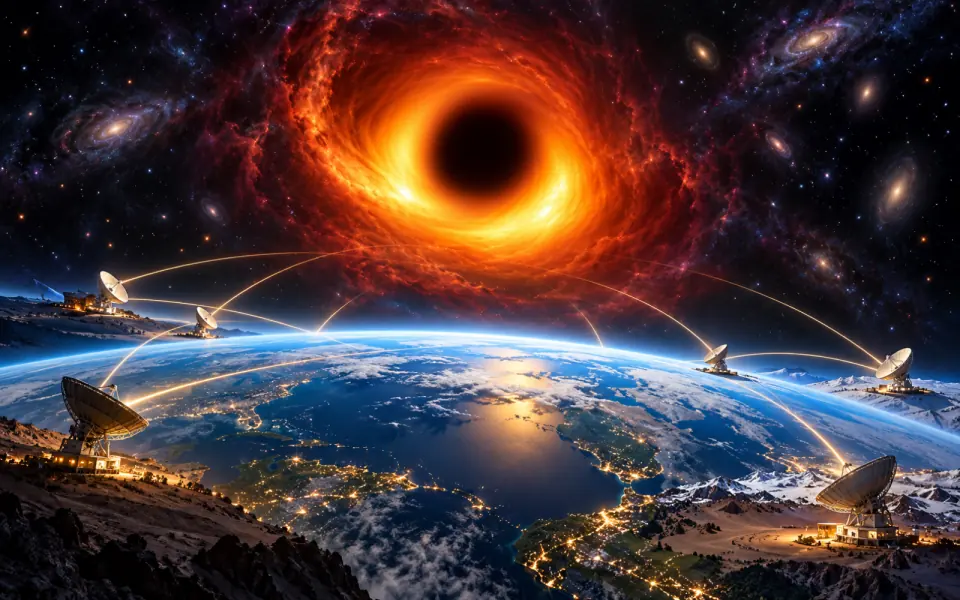 AfterThe first image of a black hole2019
 AfterThe COVID-19 pandemic2020
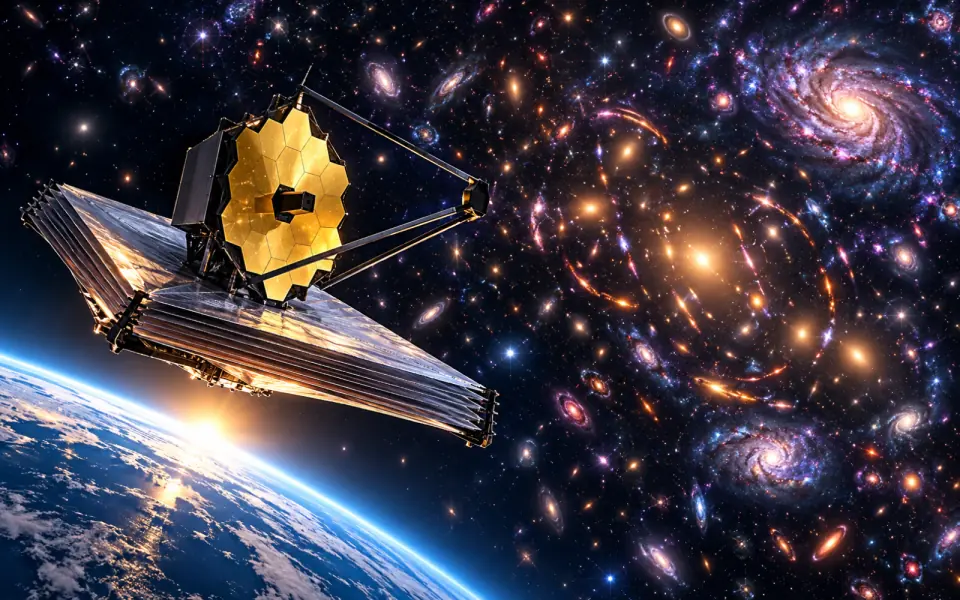 AfterThe Webb telescope starts observing2022
Listen / Read next
- Music to read by: Cinematic JourneyEpic film-style music, no lyrics, by Ciro Simone IrmiciSpotifyYouTube Music
Meanwhile, elsewhere in the world
Other events of the era “Today”
- The polio vaccine
- Birth of the European Community
- The first artificial satellite
- The first human in space
- Pop art
- The Beatles
- Martin Luther King and civil rights
- The Moon landing
- The internet's first ARPANET links
- Earth Day and the environmental movement
- The personal computer
- The fall of the Berlin Wall
- The World Wide Web
- The European Union
- Nelson Mandela becomes president
- The International Space Station
- Euro notes and coins arrive
- The modern smartphone
- The global financial crisis
- Malala wins the Nobel Peace Prize
- The Paris Agreement on climate
- The first image of a black hole
- The COVID-19 pandemic
- The Webb telescope starts observing
