The polio vaccine
1955 Pittsburgh, United States
In short
Polio is a disease caused by a virus that struck mainly children and could leave them paralysed. The American doctor Jonas Salk, at the University of Pittsburgh, prepared a vaccine with inactivated viruses, made harmless. In 1954 it was tested on almost two million children, and on 12 April 1955 it was announced that it worked. Salk chose not to patent it. A few years later Albert Sabin created a vaccine to be taken by mouth, often on a sugar lump.
Why it matters Thanks to vaccines polio has almost disappeared from the world, and it has not circulated in Europe since 2002.
Source: World Health Organization (WHO), “Poliomyelitis”
Study card about 5 minutes of reading
The story
Summers of fear
Until about seventy years ago, the arrival of summer brought a very particular fear to many families. With the heat, polio came back; doctors also called it “infantile paralysis”. It was a disease caused by a virus, the poliovirus, which spreads through unclean water and food and dirty hands. In most cases it caused nothing more than a little fever, but in a small number of people it attacked the nerves that control the muscles: arms, legs and sometimes even the muscles used for breathing were left paralysed, often for ever.
It struck mostly children, and it spared nobody: even Franklin Roosevelt suffered from it. In 1921, as an adult, he lost the use of his legs, and he later became President of the United States. Hospitals filled with children strapped into “iron lungs”, big metal cylinders that pushed air into the lungs of people who could no longer breathe on their own. In 1952 almost 58,000 people in the United States fell ill, and about three thousand died. Parents kept their children away from swimming pools and crowded cinemas, but there was no sure protection.
The race for a vaccine
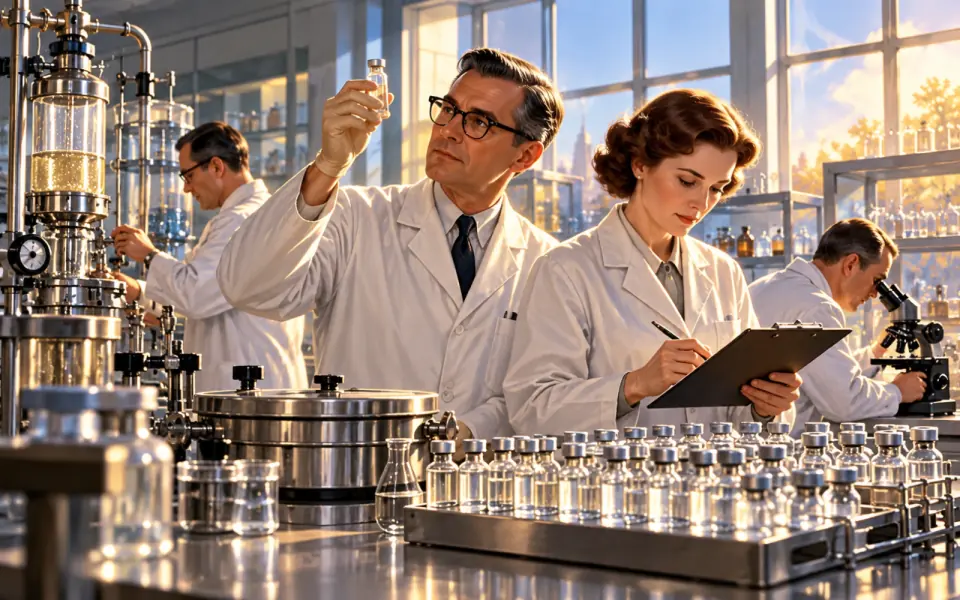
Vaccines work by training the body: it is shown a harmless version of a germ, so that its defences learn to recognise it and are ready when the real one arrives. Against polio, an American doctor and researcher named Jonas Salk took up the fight at the University of Pittsburgh. Salk chose a cautious path: he grew the viruses in the laboratory and killed them with a chemical, formaldehyde, so that they could no longer make anyone ill but stayed similar enough to teach the body how to defend itself.
The research was expensive, and it was mostly ordinary people who paid for it. In the United States an organisation founded by Roosevelt, the “March of Dimes”, asked everyone to send in a ten-cent coin, a “dime”: millions of people, children included, answered. In 1954 the biggest trial ever held for a vaccine was organised: about 1.8 million primary-school children, called “polio pioneers”, took part in the trial: some received the vaccine or a fake liquid, without even the doctors knowing which. This was needed to find out, in a truly scientific way, whether it worked.
12 April 1955
The results were announced on 12 April 1955, exactly ten years after Roosevelt's death, in a hall at the University of Michigan. The man in charge of the trial, Dr Thomas Francis, said that the vaccine was safe and effective. It was a moment of celebration across the whole country: bells rang, and shops put up thank-you signs. A journalist asked Salk who owned the patent on the vaccine. Salk gave an answer that became famous: “Well, the people, I would say. There is no patent. Could you patent the sun?”
A few days later, though, there was a serious accident. In some batches made by one company, Cutter, the virus had not been completely killed: over a hundred people, vaccinated children and their relatives (about 200 by some estimates), were left paralysed and ten died. The authorities stopped the vaccinations, checked everything and brought in stricter rules for production. After the checks the vaccinations started again, and in the United States the number of cases plunged: from about 58,000 in 1952 to about 5,500 in 1957.
A vaccine you drink
A few years later a second vaccine arrived, invented by the Polish-American doctor Albert Sabin. It was “alive but weakened” and was taken by mouth, often on a sugar lump: easier to give to children, with no needles, and better at stopping the virus from spreading. It was tested on millions of children in the Soviet Union, with the help of local researchers, and in the 1960s it spread to many countries.
In Italy, vaccination against polio became compulsory in 1966. People who are now over sixty still remember the sugar lump. Almost a whole generation had been protected from a disease that had been a nightmare for their parents.
Why it happened
Polio had become more dangerous precisely because the world had become cleaner. In the past almost all children met it when they were very small, when the disease is often mild, and they stayed protected. With modern hygiene many children met it later, and then it could be much more serious: this is why the big epidemics broke out mostly in the first half of the 20th century.
Teamwork was needed too: scientists had learned to grow viruses in cells kept in the laboratory (a technique that won John Enders and his colleagues the Nobel Prize in 1954), and ordinary people paid for the research. Without that technique it would not have been possible to make enough vaccine for millions of children.
What changed
Where almost the whole population was vaccinated, polio disappeared within a few years. In 1988 the World Health Organization and other bodies launched a worldwide campaign to wipe it out completely. At that time there were about 350,000 cases a year in more than a hundred countries; today cases have fallen by over 99%. Two of the three types of wild poliovirus have been declared eliminated from the Earth, and the third still circulates in only a very few places, including parts of Afghanistan and Pakistan.
The method of mass vaccination, tested with polio, was later used against other diseases, and it helped to wipe out smallpox in 1980. It also showed something important: a vaccine does not protect only the person who receives it, but also those who are more vulnerable, because if viruses find nobody to infect they stop circulating.
The story of polio is also a reminder that vaccines need trust and organisation: where vaccinations stop, because of wars or because of fear, the virus can return, as has happened again in some areas in recent years.
Key people and places
People
- Jonas Salk
- American doctor and researcher (1914–1995): he created the first effective vaccine against polio.
- Albert Sabin
- Polish-American doctor (1906–1993): he invented the oral vaccine, made with weakened viruses.
- Franklin D. Roosevelt
- American president (1882–1945), struck by polio as an adult: he founded the organisation that paid for the research.
- John Enders
- American scientist (1897–1985): he taught scientists to grow viruses in the laboratory; Nobel Prize in 1954.
- Thomas Francis Jr.
- American doctor (1900–1969): he led the great trial of 1954 and announced the results.
Places
- University of Pittsburgh, United States
- Here Salk and his team worked on the first vaccine.
- Ann Arbor, Michigan, United States
- On 12 April 1955, at the University of Michigan, the results of the great trial were announced.
Good to know
- The iron lung was a machine as big as a bed that let people whose muscles were paralysed by polio breathe.
- The American campaign against polio was called the “March of Dimes”: a dime is a ten-cent coin.
- Salk did not patent the vaccine: he gave up the money he could have earned.
- The Sabin vaccine was taken by mouth, often on a sugar lump.
- In 1988 there were about 350,000 cases of polio a year in the world: today there are only a few dozen.
Find out more
- World Health Organization, “Poliomyelitis” who.int
- Global Polio Eradication Initiative polioeradication.org
- Wikipedia, “Jonas Salk” en.wikipedia.org
- Wikipedia, “Polio” en.wikipedia.org
Related events
- Jenner's vaccine1796 · Age of revolutionsJenner's smallpox vaccine was the first in history: polio carried on along its path.
- The discovery of penicillin1928 · Early 20th centuryAntibiotics cure bacteria, while vaccines mostly prevent diseases caused by viruses.
- The COVID-19 pandemic2020 · TodayThe COVID-19 pandemic brought vaccines back to the centre of attention.
- Television spreadsabout 1950 · Early 20th centuryTelevision brought news of the vaccine and prevention campaigns into people's homes.
Before and after, in the era “Today”
Event 2 of 25
 BeforeThe double helix of DNA1953
- You are hereThe polio vaccine1955
 AfterBirth of the European Community1957
 AfterThe first artificial satellite1957
 AfterThe first human in space1961
 AfterPop artabout 1962
 AfterThe Beatles1963
 AfterMartin Luther King and civil rights1963
 AfterThe Moon landing1969
 AfterThe internet's first ARPANET links1969
 AfterEarth Day and the environmental movement1970
 AfterThe personal computer1977
 AfterThe fall of the Berlin Wall1989
 AfterThe World Wide Web1991
 AfterThe European Union1993
 AfterNelson Mandela becomes president1994
 AfterThe International Space Station1998
 AfterEuro notes and coins arrive2002
 AfterThe modern smartphone2007
 AfterThe global financial crisis2008
 AfterMalala wins the Nobel Peace Prize2014
 AfterThe Paris Agreement on climate2015
 AfterThe first image of a black hole2019
 AfterThe COVID-19 pandemic2020
 AfterThe Webb telescope starts observing2022
Listen / Read next
- Music to read by: Cinematic JourneyEpic film-style music, no lyrics, by Ciro Simone IrmiciSpotifyYouTube Music
Meanwhile, elsewhere in the world
Other events of the era “Today”
- The double helix of DNA
- Birth of the European Community
- The first artificial satellite
- The first human in space
- Pop art
- The Beatles
- Martin Luther King and civil rights
- The Moon landing
- The internet's first ARPANET links
- Earth Day and the environmental movement
- The personal computer
- The fall of the Berlin Wall
- The World Wide Web
- The European Union
- Nelson Mandela becomes president
- The International Space Station
- Euro notes and coins arrive
- The modern smartphone
- The global financial crisis
- Malala wins the Nobel Peace Prize
- The Paris Agreement on climate
- The first image of a black hole
- The COVID-19 pandemic
- The Webb telescope starts observing
