Jenner's vaccine
1796 Berkeley, England
In short
Smallpox was a very serious disease that struck millions of people. The English doctor Edward Jenner noticed that milkmaids who caught cowpox, a mild disease, did not catch human smallpox. In 1796 he took a little material from a milkmaid and put it into the skin of an eight-year-old boy, James Phipps, who then turned out to be protected. The word ‘vaccine’ comes from the Latin vacca, meaning ‘cow’.
Why it matters Thanks to vaccines, smallpox has been wiped out on Earth, as the World Health Organization declared in 1980.
Source: World Health Organization (WHO), “Smallpox”
Study card about 5 minutes of reading
The story
A disease that marked lives
Until two centuries ago, one of humankind's greatest fears was smallpox. It was a highly contagious disease caused by a virus: it brought a high fever and covered the body in painful pustules. About one in three people who caught it died; those who survived carried the marks for the rest of their lives, scars on the face, and sometimes were left blind. In the 18th century in Europe smallpox killed hundreds of thousands of people every year, especially children. Kings and queens were not safe: many died of it, among them Louis XV of France.
It was already known that anyone who survived smallpox did not catch it again. For centuries, in China, India and Africa, people had tried to make use of this fact with “variolation”: the skin of a healthy person was scratched with a little material taken from someone with a mild case. That way they caught a lighter form of the disease and stayed protected. In 1721 an English noblewoman, Lady Mary Wortley Montagu, who had seen the practice in Constantinople, had her daughter inoculated and promoted the method in England. It was a risky method, though: a small share of those who were variolated became seriously ill, and could infect others.
The milkmaids
Edward Jenner was born in 1749 at Berkeley, a village in the west of England, the son of a vicar. He became a country doctor. When he was a boy, so the story goes, a milkmaid told him: “I can't catch smallpox, because I've had cowpox”. Cowpox was a mild disease of cows, which could pass to the hands of the people who milked them, causing a few pustules. In the countryside it was said that anyone who had caught it was protected from real smallpox, but nobody had proved it.
Jenner, who was curious and methodical, spent years observing his patients, collecting cases and asking questions. He was a friend of John Hunter, a great surgeon who had taught him an important principle: don't just think, try things and run experiments.
14 May 1796
On 14 May 1796 Jenner carried out his test. A young milkmaid, Sarah Nelmes, had cowpox pustules on her hand, which she had caught from a cow called Blossom. Jenner took a little fluid from a pustule and, with a small scratch, put it into the arm of James Phipps, an eight-year-old boy, the son of his gardener. The boy had a mild fever and a few pustules, and recovered in a few days.
On 1 July Jenner carried out the decisive test: he inoculated James with material from real smallpox. The boy did not fall ill: he was protected. Jenner repeated the experiment with others, and in 1798 he published the results in a book. The method was called “vaccination”, from the Latin “vacca”, meaning cow. Today we know that this test would be forbidden, because it was done on a child without the safety guarantees that are now compulsory; but at the time it opened the way to one of the great achievements of medicine.
A discovery that travels
Vaccination spread quickly. There were sceptics, and cartoonists who drew people with cow horns, but the results were plain to see. In 1800 in Milan the doctor Luigi Sacco began to vaccinate and spread the vaccine across Italy. Napoleon had his soldiers vaccinated. In 1803 a Spanish expedition, led by Francisco Balmis, set out with twenty-two orphans as “carriers” of the vaccine: since there was no way to keep it, they were infected one after another in turn during the crossing, in order to bring the vaccine to the Spanish colonies in America and Asia.
The eradication of smallpox
During the 19th century vaccination became compulsory in many countries. In 1967 the World Health Organization launched a worldwide campaign to eliminate smallpox, with teams that searched for the sick and vaccinated those around them, in remote villages in Africa and Asia. The last natural case was in Somalia, in 1977. On 8 May 1980 the WHO declared smallpox “eradicated”: it is the only human disease wiped from the Earth.
Why it happened
Jenner's discovery came from careful observation, curiosity and experiment, in an age when the scientific method was taking hold. He did not yet know what viruses were or how immunity worked: scientists such as Louis Pasteur would work that out many decades later.
The huge need also mattered: smallpox was so feared that people were ready to accept a new method, and the practices of variolation, already known, had prepared the way.
What changed
Jenner's vaccination was the first great weapon against infectious diseases. Louis Pasteur, in 1881, extended the principle to other diseases, and in Jenner's honour called any substance used to immunise a “vaccine”. Today vaccines protect against diseases such as measles, polio, tetanus, hepatitis, diphtheria, the papillomavirus and COVID-19.
In the 20th century smallpox killed, according to estimates, about three hundred million people; its elimination, in 1980, is considered one of humankind's great successes. But it also showed that vaccines work best when they reach many people: when almost everyone is protected, the disease does not circulate and we also protect those who cannot be vaccinated.
Jenner's work still inspires: research on vaccines goes on, and today vaccines are being studied against cancer and against new epidemics. The day smallpox was declared beaten is remembered as an example of cooperation between countries.
Key people and places
People
- Edward Jenner
- English doctor (1749–1823): he devised vaccination against smallpox.
- James Phipps
- English boy (1788–1853): the first person vaccinated, in 1796.
- Mary Wortley Montagu
- English writer and noblewoman (1689–1762): she promoted variolation in England.
- Luigi Sacco
- Italian doctor (1769–1836): he spread vaccination in Lombardy and across Italy.
- Louis Pasteur
- French chemist and biologist (1822–1895): he extended the principle to other diseases and coined the word “vaccine”.
Places
- Berkeley, Gloucestershire (England)
- The village where Jenner was born, lived and carried out his experiment; today his house is a museum.
- Milan, Lombardy
- The city where Luigi Sacco began vaccinating in 1800.
Good to know
- The word “vaccine” comes from the Latin “vacca”, cow.
- The first person vaccinated, James Phipps, was eight years old.
- The last natural case of smallpox was in Somalia, in 1977.
- On 8 May 1980 the WHO declared smallpox eradicated.
- Smallpox is the only human disease completely wiped from the Earth.
Find out more
- World Health Organization, “Smallpox” who.int
- Wikipedia, “Edward Jenner” en.wikipedia.org
- Wikipedia, “Smallpox” en.wikipedia.org
- Wikipedia, “Luigi Sacco” en.wikipedia.org
Related events
- The polio vaccine1955 · TodayAfter Jenner, Salk's vaccine defeated polio.
- The discovery of penicillin1928 · Early 20th centuryAntibiotics cure bacteria, while vaccines prevent diseases caused by viruses.
- The COVID-19 pandemic2020 · TodayAgainst COVID-19 the vaccines were developed in less than a year.
- The European Enlightenmentabout 1720 · Age of revolutionsThe Enlightenment pushed people to check everything against experience.
Before and after, in the era “Age of revolutions”
Event 9 of 25
 BeforeNewcomen's steam engine1712
 BeforeThe European Enlightenmentabout 1720
 BeforeDiderot's Encyclopédie1751
 BeforeWatt's steam engine1769
 BeforeThe American Revolution1776–1783
 BeforeThe first hot-air balloon flight1783
 BeforeThe French Revolution1789–1799
 BeforeThe metric system1795
- You are hereJenner's vaccine1796
 AfterVolta's battery1800
 AfterNapoleon becomes emperor1804
 AfterThe Congress of Vienna1815
 AfterThe first public steam railway1825
 AfterNiépce's photographabout 1826
 AfterManzoni's The Betrothed1827
 AfterThe electric telegraph1844
 AfterThe revolutions of 18481848
 AfterDarwin publishes On the Origin of Species1859
 AfterThe Expedition of the Thousand1860
 AfterThe unification of Italy1861
 AfterThe labour movementabout 1864
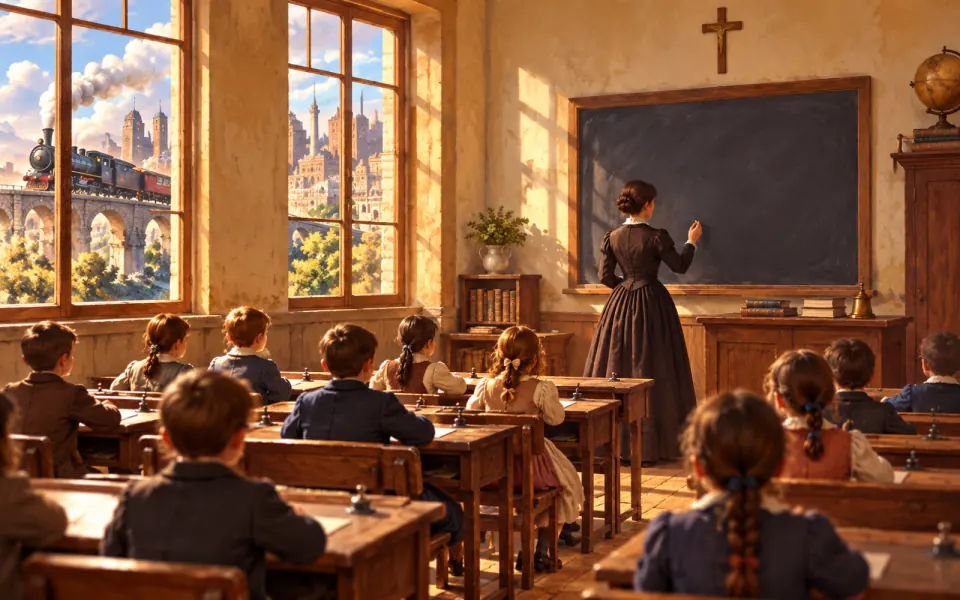 AfterCompulsory primary school (Coppino law)1877
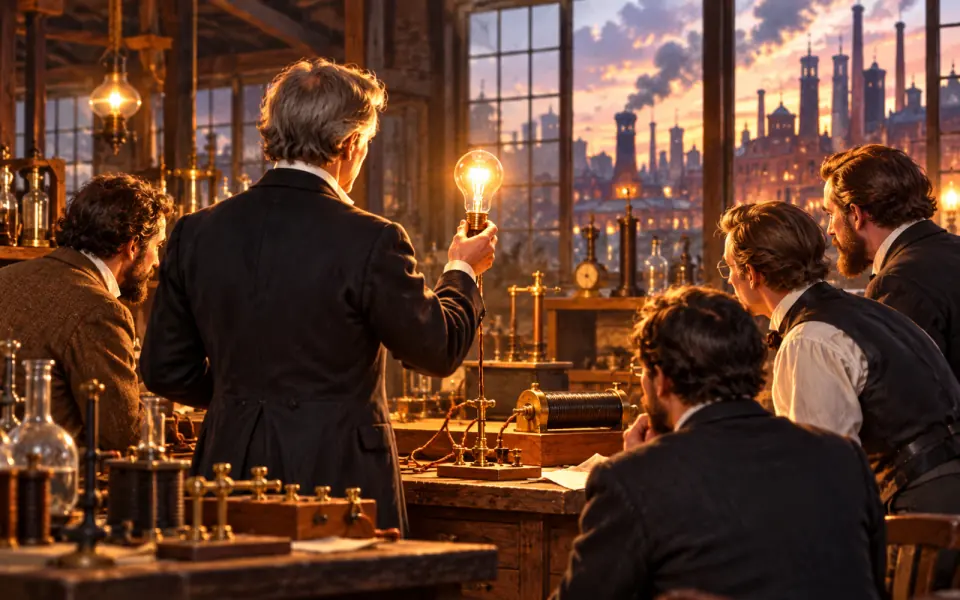 AfterA practical electric light bulb1879
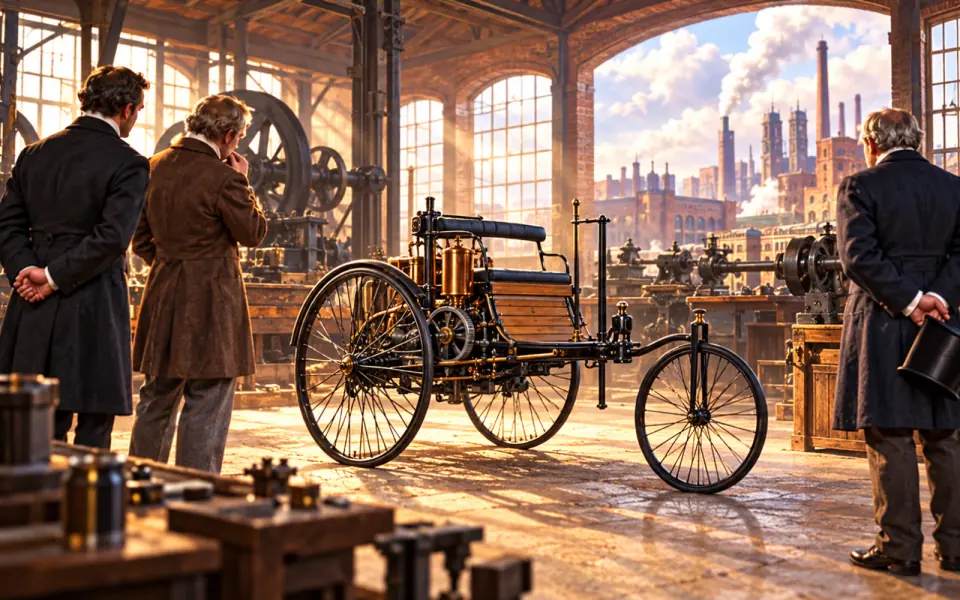 AfterThe first modern motor car1886
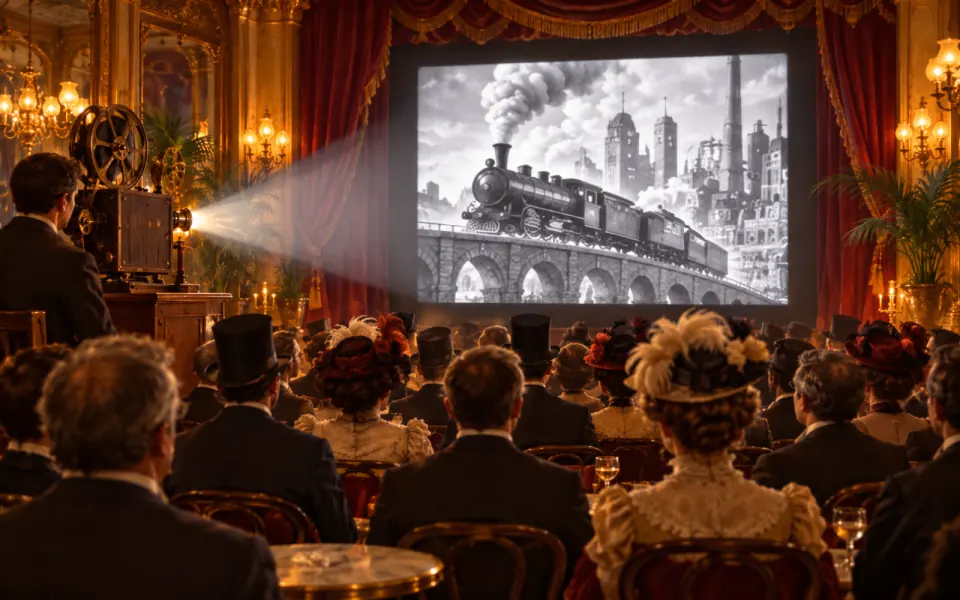 AfterThe Lumière brothers' cinema1895
Listen / Read next
- Music to read by: Cinematic JourneyEpic film-style music, no lyrics, by Ciro Simone IrmiciSpotifyYouTube Music
Meanwhile, elsewhere in the world
Other events of the era “Age of revolutions”
- Newcomen's steam engine
- The European Enlightenment
- Diderot's Encyclopédie
- Watt's steam engine
- The American Revolution
- The first hot-air balloon flight
- The French Revolution
- The metric system
- Volta's battery
- Napoleon becomes emperor
- The Congress of Vienna
- The first public steam railway
- Niépce's photograph
- Manzoni's The Betrothed
- The electric telegraph
- The revolutions of 1848
- Darwin publishes On the Origin of Species
- The Expedition of the Thousand
- The unification of Italy
- The labour movement
- Compulsory primary school (Coppino law)
- A practical electric light bulb
- The first modern motor car
- The Lumière brothers' cinema
