Napoleon becomes emperor
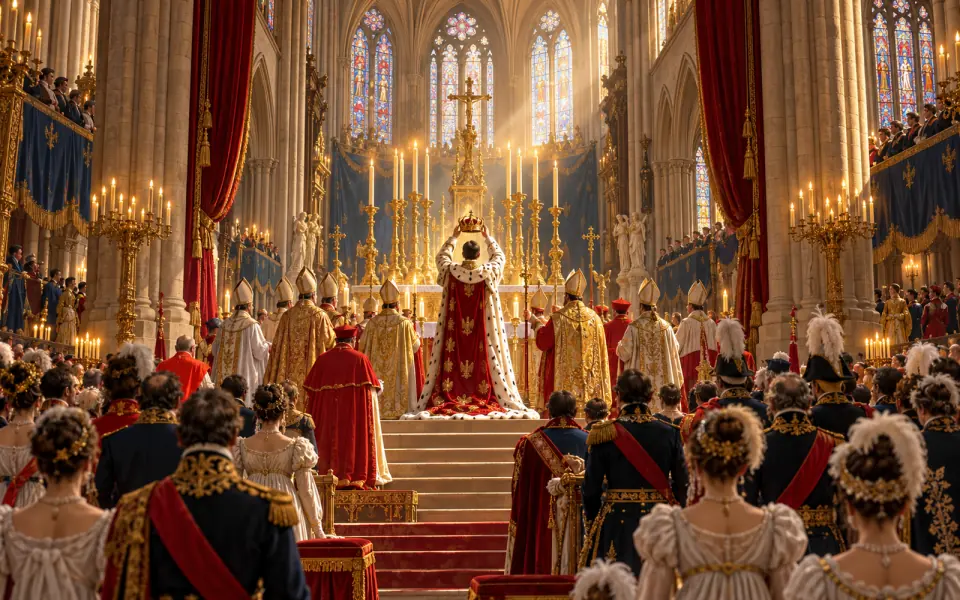
1804 Notre-Dame, Paris, France
In short
Napoleon Bonaparte, a general born in Corsica, became famous by winning battles in Italy and Egypt, and in 1799 he seized power in France. On 2 December 1804, in Notre-Dame Cathedral in Paris, he was crowned emperor: with the Pope looking on, he placed the crown on his own head. With his wars he conquered much of Europe, Italy included. He also had the Civil Code written, a collection of laws that were the same for all citizens.
Why it matters His empire spread laws and ideas born with the Revolution across Europe, but at the cost of long wars.
Source: Treccani, entry “Napoleone I”
Study card about 6 minutes of reading
The story
A young Corsican officer
Napoleon Bonaparte was born in 1769 at Ajaccio, in Corsica, an island that had passed to France only a few months earlier, having belonged to Genoa before. He studied at a military school in France and became an artillery officer. He was shy, studied hard, read a great deal, and spoke French with a strong Italian accent. He had great ambitions. The French Revolution, which stripped nobles of their privileges and opened careers to the ablest, was an opportunity for him: at twenty-four, at Toulon, an artillery plan of his made it possible to retake the city and made him a general.
In 1796 the government of the French Republic sent him to command the army in Italy. With tired and badly clothed soldiers, in a few weeks Napoleon defeated the Austrians and the Piedmontese in a series of quick, brilliant battles, at Lodi, Arcole and Rivoli. He entered Milan in triumph. In Italy, with French backing, new republics were born, such as the Cisalpine Republic, and with the Treaty of Campo Formio, in 1797, the ancient Republic of Venice came to an end. Then he went to Egypt, where his soldiers found the “Rosetta Stone”, which made it possible to decipher hieroglyphs.
The coup
When he returned to France, in the autumn of 1799, the government was weak and discredited, and many people wanted a “strong man”. On 9 November 1799 (18 Brumaire, by the revolutionary calendar), with the help of some politicians and his soldiers, Napoleon carried out a coup and took power as “First Consul”. He was thirty. In 1802 he had himself made consul for life.
Napoleon governed with energy and restored order in the country. He founded the Bank of France, reformed schools with the lycées, created the Legion of Honour to reward merit, and made peace with the Church through an agreement with the Pope, the Concordat of 1801. His most lasting work was the Civil Code, promulgated in 1804 and called the “Napoleonic Code”: a set of clear laws, the same for everyone, which established equality before the law, private property, freedom of work and civil marriage. It was still a code very harsh on women, who remained under their husbands' authority.
The emperor
On 2 December 1804, in the cathedral of Notre-Dame in Paris, in a grand ceremony in the presence of Pope Pius VII, Napoleon crowned himself emperor of the French. He took the crown from the Pope's hands and put it on his own head, to show that his power came from himself. Then he also crowned his wife Josephine. The following year, in Milan Cathedral, he had himself crowned King of Italy, with the words: “God gave it to me, woe to anyone who touches it”.
The wars went on. In December 1805, at Austerlitz, in Moravia, Napoleon won his finest victory against the armies of Austria and Russia. Prussia was defeated in 1806, and Russia was forced to make peace in 1807. In 1806 the Holy Roman Empire, which had lasted a thousand years, came to an end. In 1810 the French empire included much of Europe. Napoleon placed brothers and relatives on the thrones of Europe, and introduced his code in many regions, abolished feudal privileges and created more modern schools and administrations.
The fall
But there were problems. Great Britain, strong at sea, was never defeated: the French fleet was destroyed at Trafalgar, in 1805, by Admiral Nelson. Napoleon tried to strangle Britain with a blockade of trade, but this harmed the countries of Europe. In Spain, from 1808, the population rose up in a long and hard war. Many peoples, even those who had first welcomed the French as liberators, began to see him as a ruler imposed on them, with heavy taxes, forced conscription and the plundering of art.
In 1812 Napoleon invaded Russia with an army of six hundred thousand men. He reached Moscow, but the Russians set it on fire, and without food or shelter, in the freezing winter, the retreat was a disaster: only a small part of the soldiers came back. After the defeat at Leipzig in 1813, he was forced to abdicate in 1814 and was sent into exile on the island of Elba. In March 1815 he escaped and returned to France, and took power again for a hundred days, but on 18 June 1815 he was defeated at Waterloo, in Belgium, by the British under Wellington and the Prussians. He was exiled for ever on the remote island of Saint Helena, in the Atlantic, where he died on 5 May 1821.
Why it happened
Napoleon rose to power thanks to the chaos of the Revolution and the need of French society for order. His intelligence, his energy and his military talent did the rest.
His successes also depended on an army unlike those of the old regime: it was made up of citizens fighting for their homeland and in which one could get ahead by merit, and it used fast, daring tactics.
What changed
Napoleon changed Europe. He carried, by force of arms, the ideas of the French Revolution: equality before the law, the end of feudal privileges, freedom of religion, written laws and codes. Many states kept some of these reforms even after his fall.
In Italy his conquests gave rise to a new idea of nation: territories divided for centuries were joined under common governments, and in the Kingdom of Italy (1805–1814) the tricolour flag appeared, together with the feeling of being one people. Roads were built, such as the Simplon road, and schools. But Italy also suffered plunder and requisitions, and many works of art were taken to France.
The Congress of Vienna (1814–1815) tried to undo many of his changes, but the ideas he had spread were by then deeply rooted. Napoleon remained a controversial figure: for some a warmongering tyrant, for others a great reformer. Contrary to what is often said, he was not short: he was about one metre sixty-eight, average for his time.
Key people and places
People
- Napoleon Bonaparte
- French general and emperor (1769–1821): he ruled France from 1799 to 1814.
- Josephine de Beauharnais
- Empress of the French (1763–1814): Napoleon's first wife.
- Pius VII
- Pope from 1800 to 1823 (1742–1823): he signed the Concordat and was present at the coronation.
- Horatio Nelson
- English admiral (1758–1805): he defeated the French fleet at Trafalgar.
- Duke of Wellington
- British general (1769–1852): he defeated Napoleon at Waterloo.
Places
- Ajaccio, Corsica
- Napoleon's home town.
- Saint Helena, Atlantic Ocean
- The island where Napoleon lived in exile and died in 1821.
Good to know
- Napoleon crowned himself emperor, taking the crown from the Pope's hands.
- The Civil Code of 1804 is also called the “Napoleonic Code”.
- Napoleon was about one metre sixty-eight tall, not short for his time.
- In 1812 he invaded Russia with about six hundred thousand men, but only a small part came back.
- In 1805 he was crowned King of Italy in Milan Cathedral.
Find out more
- Wikipedia, “Napoleon” en.wikipedia.org
- Wikipedia, “Napoleonic Code” en.wikipedia.org
- Wikipedia, “Napoleonic Wars” en.wikipedia.org
- Fondation Napoléon napoleon.org
Related events
- The French Revolution1789–1799 · Age of revolutionsNapoleon rose to power at the end of the French Revolution.
- The Congress of Vienna1815 · Age of revolutionsAfter his fall, the Congress of Vienna redrew Europe.
- The metric system1795 · Age of revolutionsHe inherited the decimal metric system born with the revolution.
- The unification of Italy1861 · Age of revolutionsIn Italy his reforms prepared the idea of a nation.
Before and after, in the era “Age of revolutions”
Event 11 of 25
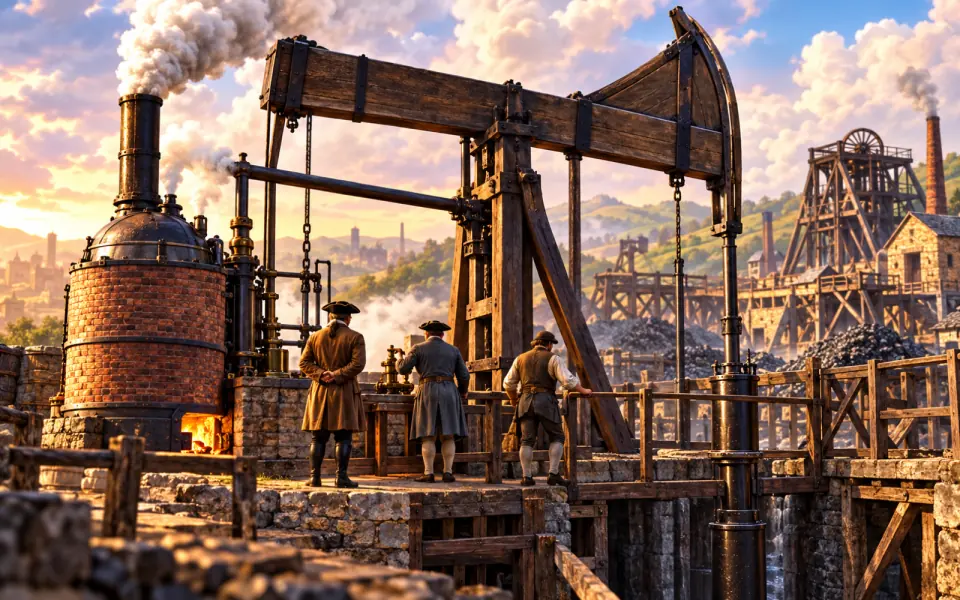 BeforeNewcomen's steam engine1712
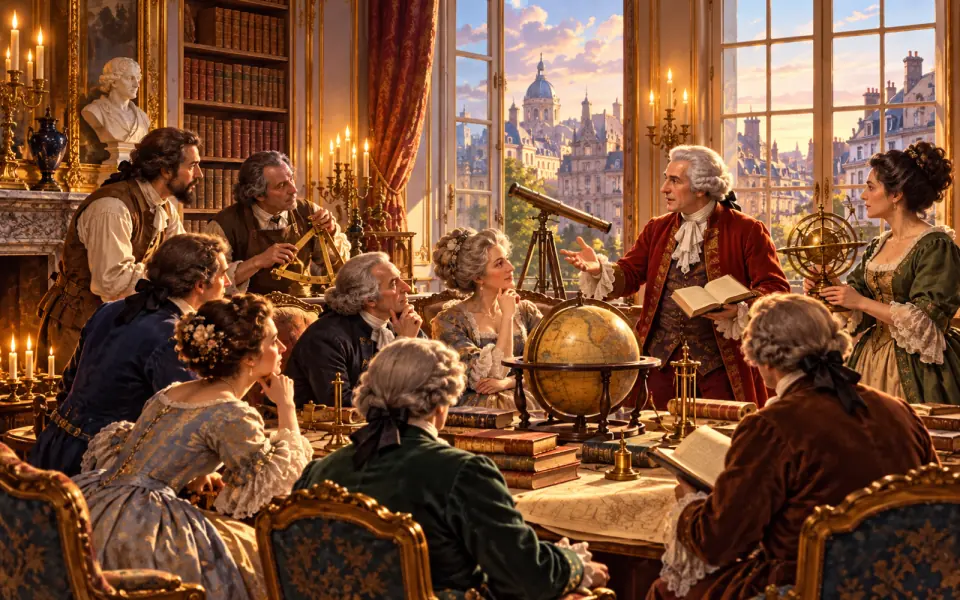 BeforeThe European Enlightenmentabout 1720
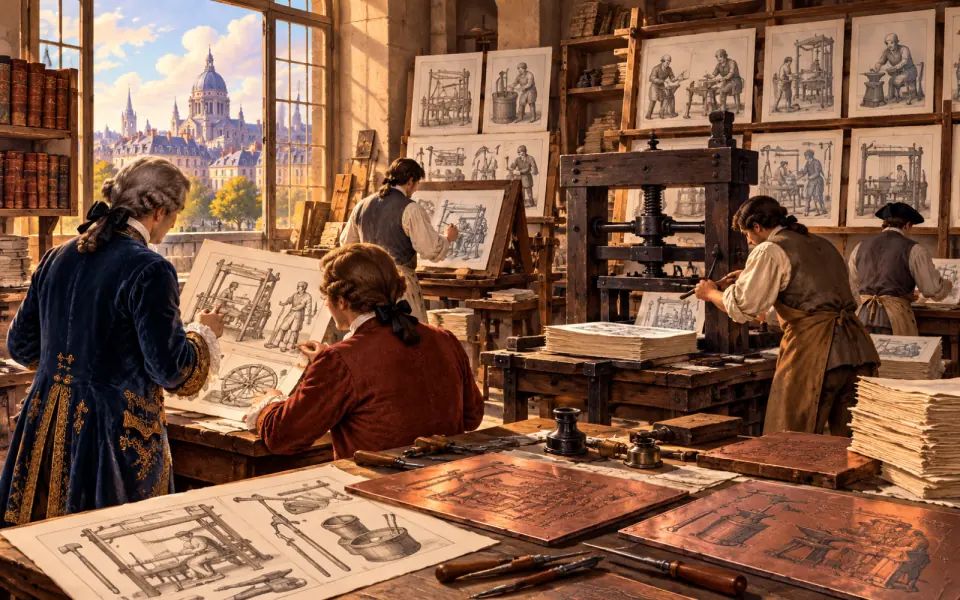 BeforeDiderot's Encyclopédie1751
 BeforeWatt's steam engine1769
 BeforeThe American Revolution1776–1783
 BeforeThe first hot-air balloon flight1783
 BeforeThe French Revolution1789–1799
 BeforeThe metric system1795
 BeforeJenner's vaccine1796
 BeforeVolta's battery1800
- You are hereNapoleon becomes emperor1804
 AfterThe Congress of Vienna1815
 AfterThe first public steam railway1825
 AfterNiépce's photographabout 1826
 AfterManzoni's The Betrothed1827
 AfterThe electric telegraph1844
 AfterThe revolutions of 18481848
 AfterDarwin publishes On the Origin of Species1859
 AfterThe Expedition of the Thousand1860
 AfterThe unification of Italy1861
 AfterThe labour movementabout 1864
 AfterCompulsory primary school (Coppino law)1877
 AfterA practical electric light bulb1879
 AfterThe first modern motor car1886
 AfterThe Lumière brothers' cinema1895
Listen / Read next
- Music to read by: Cinematic JourneyEpic film-style music, no lyrics, by Ciro Simone IrmiciSpotifyYouTube Music
Meanwhile, elsewhere in the world
Other events of the era “Age of revolutions”
- Newcomen's steam engine
- The European Enlightenment
- Diderot's Encyclopédie
- Watt's steam engine
- The American Revolution
- The first hot-air balloon flight
- The French Revolution
- The metric system
- Jenner's vaccine
- Volta's battery
- The Congress of Vienna
- The first public steam railway
- Niépce's photograph
- Manzoni's The Betrothed
- The electric telegraph
- The revolutions of 1848
- Darwin publishes On the Origin of Species
- The Expedition of the Thousand
- The unification of Italy
- The labour movement
- Compulsory primary school (Coppino law)
- A practical electric light bulb
- The first modern motor car
- The Lumière brothers' cinema
