The French Revolution
1789–1799 Paris, France
In short
In 1789 France was deep in debt and the common people, who paid almost all the taxes, were going hungry. King Louis XVI called the Estates General, but the representatives of the Third Estate declared themselves the National Assembly. On 14 July the people of Paris stormed the Bastille, a prison that stood for the king's power. In August the Assembly approved the Declaration of the Rights of Man and of the Citizen. Years of great reforms followed, but also of violence, wars and the end of the monarchy.
Why it matters Its ideas of liberty, equality and fraternity changed politics across the whole of Europe.
Source: Treccani, entry “Rivoluzione francese”
Study card about 6 minutes of reading
The story
A society divided into three
In France in 1789 society was divided into three “estates”. The first was the clergy, that is, the bishops and priests; the second was the nobility; the third estate was everyone else: peasants, craftsmen, merchants, lawyers, doctors and workers, about ninety-seven per cent of the population. The first two estates had many privileges: they did not pay most of the taxes, and they received honours and offices. The third estate worked and paid almost everything, without counting for anything in decisions. At the top was an absolute king, Louis XVI, who lived with his court in the palace of Versailles.
The country was in crisis. Wars, including the one to help American independence, had emptied the state's coffers. In 1788 a bad harvest pushed up the price of bread, the staple food of the poor, which in Paris could cost more than half, up to almost nine tenths, of a worker's wages. While the people went hungry, the court spent lavishly. Meanwhile, in salons and newspapers, the ideas of the Enlightenment were explaining that all men have the same rights, and that power belongs to the people.
The Estates-General and the oath
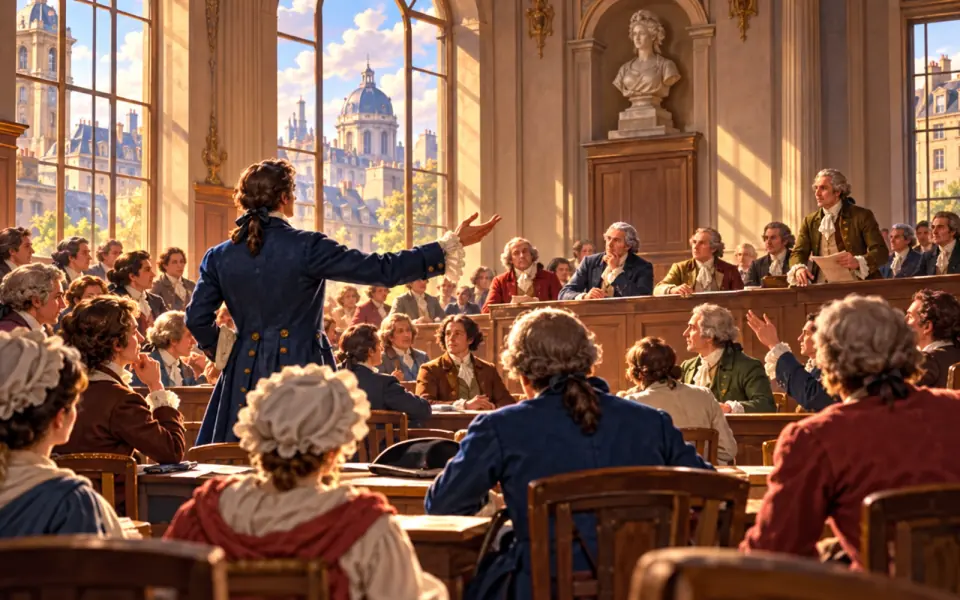
To find money, the king, who could not make nobles and clergy pay taxes, called the Estates-General in 1789, the assembly of the three estates, which had not met for a hundred and seventy-five years. It opened at Versailles on 5 May. But a dispute arose at once: should voting be by estate, so that the first two would always outvote the third, or by head, in which case the third estate, which was larger, would count for more?
On 17 June the representatives of the third estate, backed by some priests and nobles, declared themselves the “National Assembly”, that is, the representatives of the whole nation. Three days later they found their hall locked and met in a nearby one, the Tennis Court, where they swore not to separate until they had given France a constitution: this is the “Tennis Court Oath”.
14 July 1789
The king gathered soldiers around Paris and dismissed a popular minister. In Paris people, frightened that the king wanted to break up the Assembly by force, armed themselves. On 14 July a crowd stormed the Bastille, an old fortress used as a state prison, to seize the gunpowder and weapons stored there and because it was the symbol of absolute power. There were only seven prisoners inside, but its fall had enormous meaning: the people of Paris had defied the king. 14 July is now the French national holiday.
In the countryside the “Great Fear” broke out: peasants, afraid of plots by the nobles, attacked castles and burned the registers of feudal debts and taxes. On the night of 4 August the Assembly abolished feudal privileges.
The rights of man
On 26 August the Assembly approved the “Declaration of the Rights of Man and of the Citizen”, which began with famous words: “Men are born and remain free and equal in rights”. It listed liberty, property, security and resistance to oppression; it declared that sovereignty belongs to the nation, that the law is the same for everyone and that no one may be arrested without cause. It was an extraordinary text that would travel around the world, even if it did not apply to everyone: women and slaves in the colonies were left out. In 1791 Olympe de Gouges wrote a “Declaration of the Rights of Woman”.
On 5 and 6 October thousands of Parisian women, driven by hunger, marched to Versailles and forced the king and his family to move to Paris.
From monarchy to republic
In the following months France changed: the system of departments was introduced, there was freedom of the press, and Church property was sold. In 1791 a constitution was approved that limited the king's power. In June 1791 the king tried to flee abroad, but was recognised at Varennes and brought back to Paris: from then on many people no longer trusted him. In 1792 France went to war against Austria and Prussia, which wanted to stop the revolution. On 21 September 1792 the monarchy was abolished and the Republic proclaimed. Louis XVI, after a trial, was guillotined on 21 January 1793.
During this period, to defend the revolution from threats within and without, the government, led by Maximilien Robespierre and the Committee of Public Safety, set up the “Terror”: anyone suspected of being an enemy was arrested and often sentenced to death by the guillotine. About seventeen thousand people were executed according to the official trials, and many more died in prison or in the crackdowns. In July 1794 Robespierre himself was overthrown and guillotined.
Why it happened
The revolution broke out for a combination of reasons: an unjust society, with privileges for a few; a serious financial crisis and a bread crisis; Enlightenment ideas, which questioned the king's authority; and the government's inability to make the necessary reforms.
The growth of the middle class, wealthy and educated but shut out of power, also played a part, as did the fact that the example of the American Revolution showed that a people could change its government.
What changed
The French Revolution changed the history of Europe and of the world. It abolished privileges and the society divided into orders, and it declared equality before the law, the sovereignty of the people and the rights of man. Its motto, “Liberty, equality, fraternity”, is still France's today. Symbols such as the tricolour flag and the anthem, the “Marseillaise”, were born.
Its ideas spread with the French armies, particularly in Italy, where the “Jacobin” republics were born and, in 1797, the tricolour flag, ancestor of the Italian one, was adopted at Reggio Emilia. The revolution also saw the invention of the metric system, and in 1794 slavery was abolished in the colonies, although Napoleon restored it in 1802.
There was also violence and war, and after the Terror France went through the Directory and, in 1799, Napoleon Bonaparte's coup. Historians still debate whether the revolution kept its promises. But the fact remains that ideas like liberty and equality, which became everyone's heritage, are the starting point of today's democracies.
Key people and places
People
- Louis XVI
- King of France from 1774 to 1792 (1754–1793): guillotined during the revolution.
- Marie Antoinette
- Queen of France (1755–1793): wife of Louis XVI, of Austrian birth.
- Maximilien Robespierre
- French lawyer and politician (1758–1794): he led the Committee of Public Safety during the Terror.
- Marquis de Lafayette
- French general and politician (1757–1834): a hero of two revolutions, the American and the French.
- Olympe de Gouges
- French writer (1748–1793): author of the “Declaration of the Rights of Woman” of 1791.
Places
- Bastille, Paris
- The old fortress-prison stormed on 14 July 1789, now replaced by a square.
- Versailles, France
- The palace of the kings of France, where the Estates-General opened and where the oath was taken in the Tennis Court.
Good to know
- The Estates-General of 1789 had not met since 1614: 175 years had gone by.
- On 14 July 1789 there were only seven prisoners in the Bastille.
- The Italian tricolour was born in 1797 at Reggio Emilia, inspired by the French one.
- “Liberty, equality, fraternity” is the motto of France.
- 14 July is now the French national holiday.
Find out more
- Wikipedia, “French Revolution” en.wikipedia.org
- Wikipedia, “Declaration of the Rights of Man and of the Citizen” en.wikipedia.org
- Wikipedia, “French Revolution” en.wikipedia.org
- Wikipedia, “Olympe de Gouges” en.wikipedia.org
Related events
- The European Enlightenmentabout 1720 · Age of revolutionsThe Enlightenment prepared the ideas of the revolution.
- The American Revolution1776–1783 · Age of revolutionsThe American Revolution came a few years before it.
- Napoleon becomes emperor1804 · Age of revolutionsNapoleon Bonaparte took power at the end of the revolution.
- The metric system1795 · Age of revolutionsThe revolution introduced the metric system.
Before and after, in the era “Age of revolutions”
Event 7 of 25
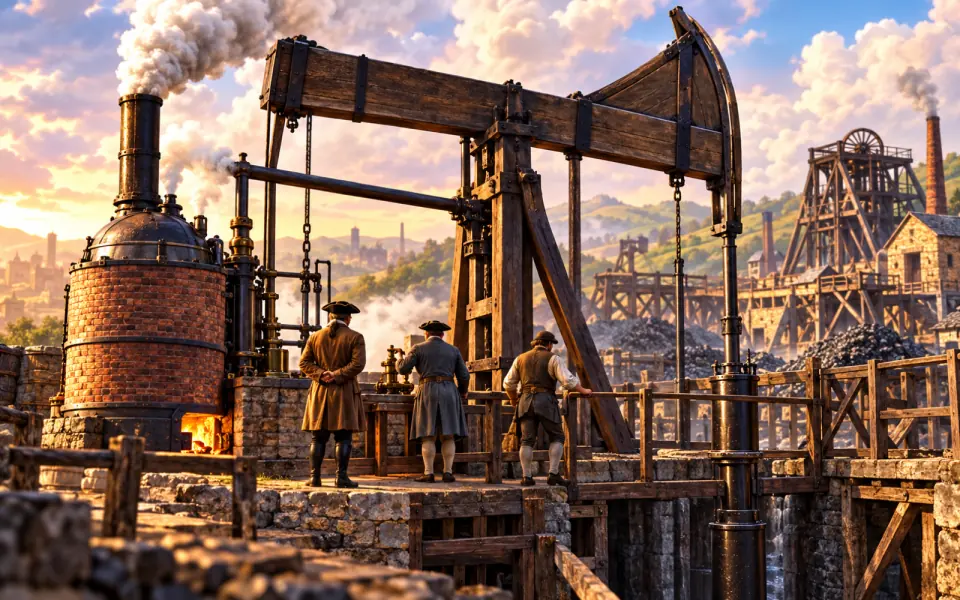 BeforeNewcomen's steam engine1712
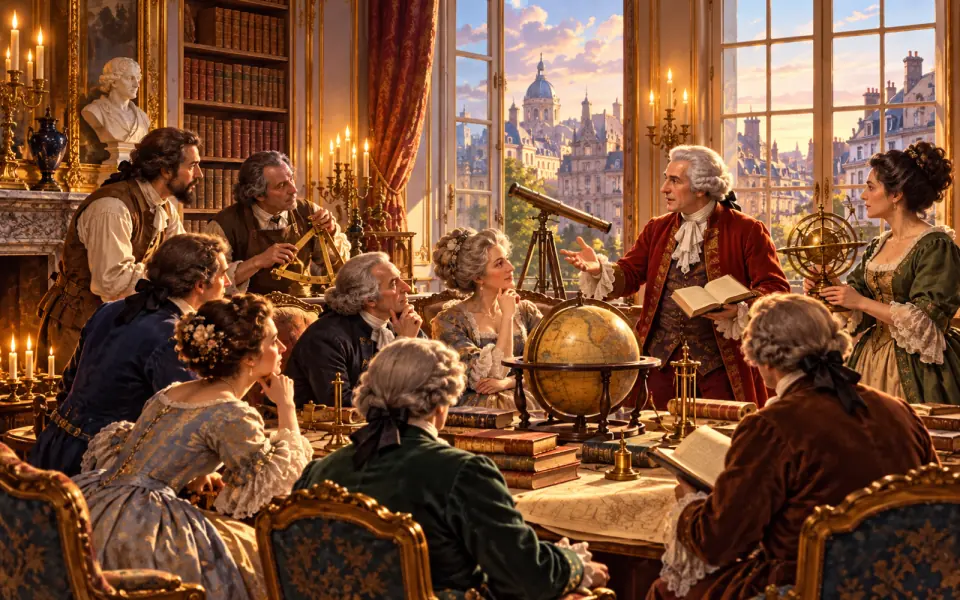 BeforeThe European Enlightenmentabout 1720
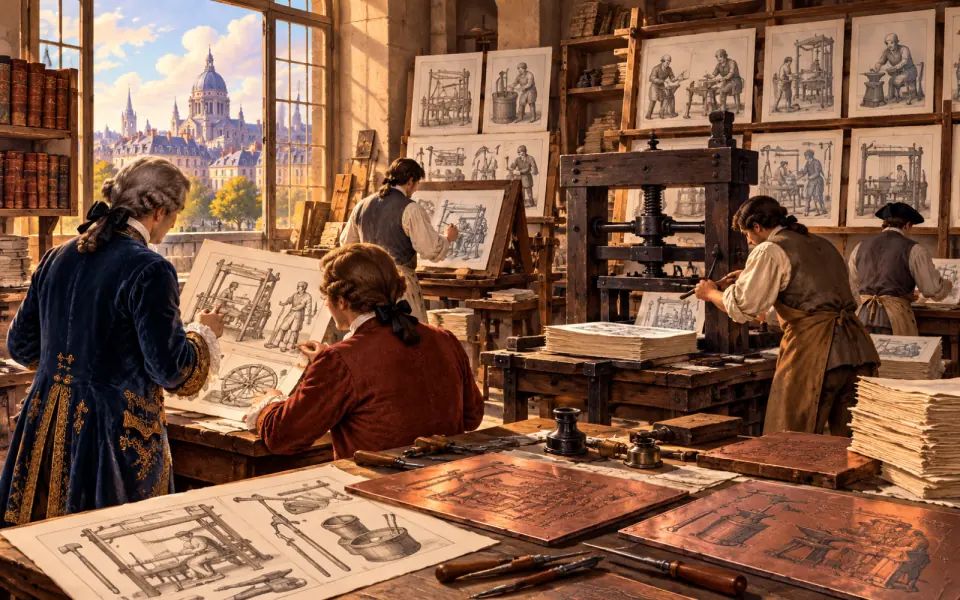 BeforeDiderot's Encyclopédie1751
 BeforeWatt's steam engine1769
 BeforeThe American Revolution1776–1783
 BeforeThe first hot-air balloon flight1783
- You are hereThe French Revolution1789–1799
 AfterThe metric system1795
 AfterJenner's vaccine1796
 AfterVolta's battery1800
 AfterNapoleon becomes emperor1804
 AfterThe Congress of Vienna1815
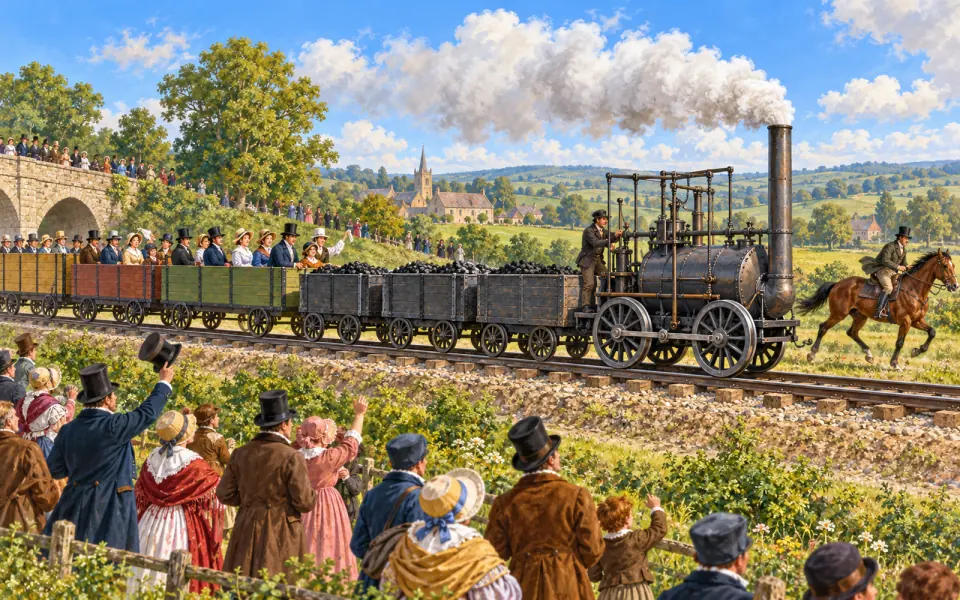 AfterThe first public steam railway1825
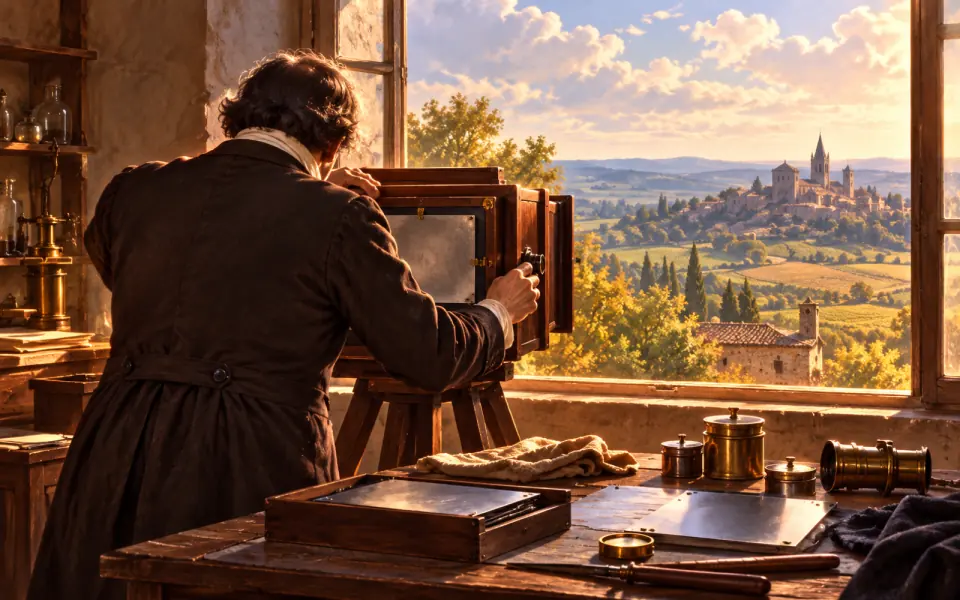 AfterNiépce's photographabout 1826
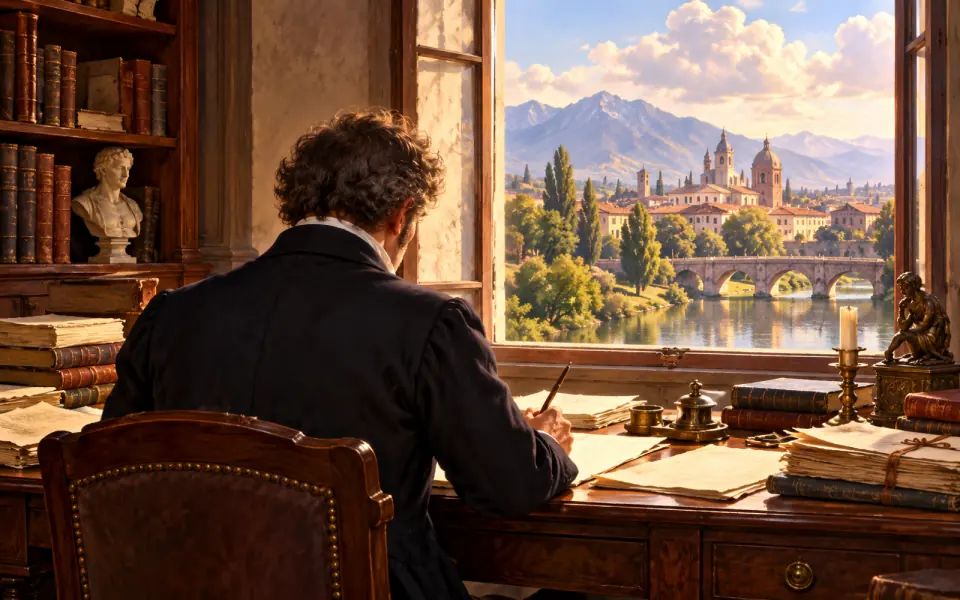 AfterManzoni's The Betrothed1827
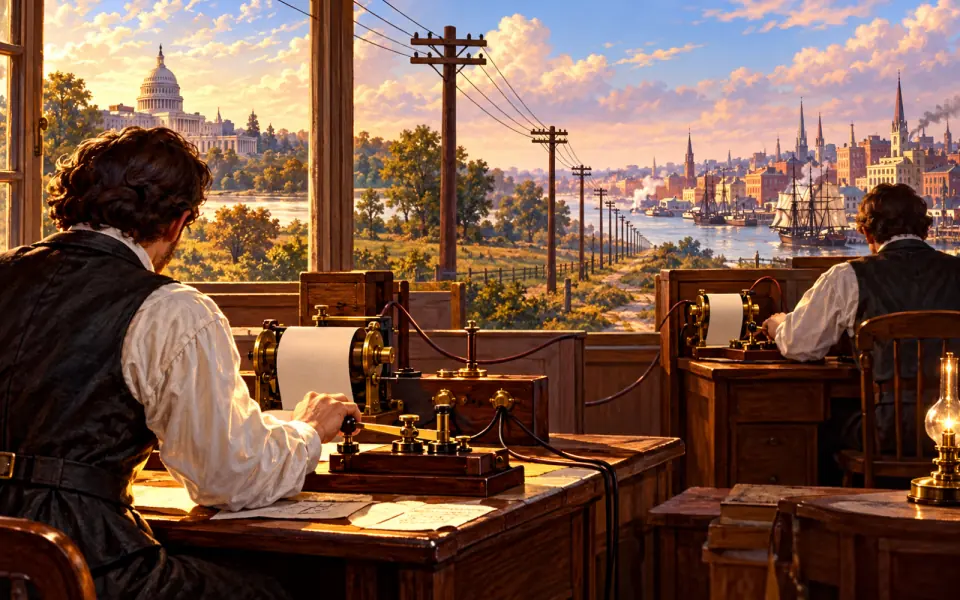 AfterThe electric telegraph1844
 AfterThe revolutions of 18481848
 AfterDarwin publishes On the Origin of Species1859
 AfterThe Expedition of the Thousand1860
 AfterThe unification of Italy1861
 AfterThe labour movementabout 1864
 AfterCompulsory primary school (Coppino law)1877
 AfterA practical electric light bulb1879
 AfterThe first modern motor car1886
 AfterThe Lumière brothers' cinema1895
Listen / Read next
- Music to read by: Cinematic JourneyEpic film-style music, no lyrics, by Ciro Simone IrmiciSpotifyYouTube Music
Meanwhile, elsewhere in the world
Other events of the era “Age of revolutions”
- Newcomen's steam engine
- The European Enlightenment
- Diderot's Encyclopédie
- Watt's steam engine
- The American Revolution
- The first hot-air balloon flight
- The metric system
- Jenner's vaccine
- Volta's battery
- Napoleon becomes emperor
- The Congress of Vienna
- The first public steam railway
- Niépce's photograph
- Manzoni's The Betrothed
- The electric telegraph
- The revolutions of 1848
- Darwin publishes On the Origin of Species
- The Expedition of the Thousand
- The unification of Italy
- The labour movement
- Compulsory primary school (Coppino law)
- A practical electric light bulb
- The first modern motor car
- The Lumière brothers' cinema
