The first hot-air balloon flight
1783 Paris, France
In short
The brothers Joseph and Étienne Montgolfier, who made paper in Annonay, in France, noticed that hot air made light bags rise. They built a large balloon of cloth and paper, heated by a fire lit under the opening. On 21 November 1783 two men, Pilâtre de Rozier and the Marquis d'Arlandes, flew over Paris for about 25 minutes. It was the first time human beings had travelled freely through the air.
Why it matters It made an ancient human dream come true and began the history of flight.
Source: Encyclopaedia Britannica, “Montgolfier brothers”
Study card about 5 minutes of reading
The story
Two paper-making brothers
Joseph-Michel and Jacques-Étienne Montgolfier were two brothers who ran a paper mill, that is, a paper factory, in Annonay, a small town in south-eastern France. They belonged to a large and enterprising family: Joseph, the elder, was an imaginative inventor who often let his mind wander from business; Jacques-Étienne, the younger, had studied architecture in Paris and was practical and well organised. Together they made a perfect team.
In 1782, looking at washing hung up near the fireplace, Joseph noticed that when the fire blazed under a sheet of cloth, the cloth swelled up and rose. He thought it was the smoke pushing it upwards, and that this could be put to use. In fact it was not the smoke but the hot air, which is lighter than cold air and so rises, like the bubbles in a pot of boiling water. The brothers did not know this yet, but the idea was right.
Bigger and bigger tests
They began with small tests: balloons of paper and cloth, filled with hot air above a fire of damp straw and wool, which rose to the ceiling. Then they built bigger and bigger ones. On 4 June 1783, in the square at Annonay, in front of the town's notables, they showed a cloth balloon about eleven metres wide, lined with paper: filled with hot air, it rose more than a kilometre high and stayed in the sky for about ten minutes, then drifted gently down more than two kilometres away. The news reached Paris, and the Academy of Sciences invited the brothers to give a demonstration in front of the king.
19 September 1783
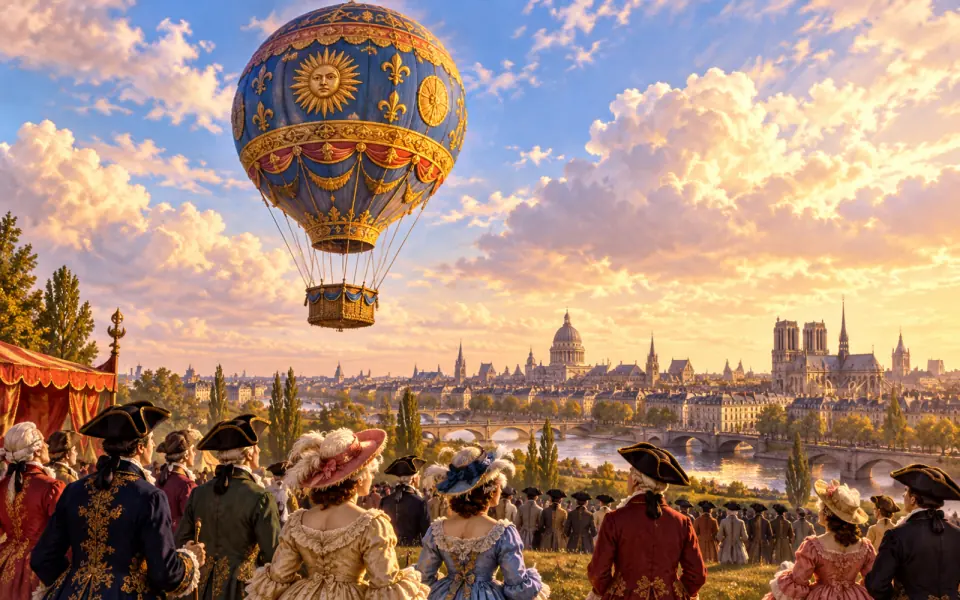
On 19 September, in the grounds of the palace of Versailles, in front of King Louis XVI, Queen Marie Antoinette and a huge crowd, the Montgolfiers showed a balloon decorated in blue and gold, with the king's emblem. They did not know what would happen to a living creature at that height: to be safe, a sheep, a duck and a rooster were put in the basket hanging underneath. The balloon rose to about 500 metres, covered about three kilometres in eight minutes and came down in a nearby wood. The animals were fine: the sheep, called Montauciel, was calmly grazing on the grass. It was proof that people could breathe up high.
The first flight by people
On 21 November 1783, in Paris, from the garden of a château, the Château de la Muette, a big balloon rose with two men aboard: the physicist Jean-François Pilâtre de Rozier and an army officer, the Marquis d'Arlandes. It was the first free flight with people on board. Under the balloon was a brazier, which the two men kept feeding with straw to keep the fire going, and they had to watch out for sparks, which could burn the fabric. They flew for about twenty-five minutes, passing over Paris at a height of about nine hundred metres, for nine kilometres, and landed among the windmills on the edge of the city. Thousands of Parisians watched them, amazed and afraid.
A rival with hydrogen
A few days later, on 1 December, the physicist Jacques Charles and a builder, Nicolas-Louis Robert, made another flight in Paris with a different kind of balloon: filled with hydrogen, a gas much lighter than air, made by pouring acid onto iron filings. Its fabric was silk, made waterproof with rubber, and it had a valve to let gas out and sandbags to throw overboard in order to climb. It flew for more than two hours and covered about thirty kilometres. This design of balloon was close to modern ones.
A craze for balloons
France and Europe caught a real “craze”. In 1785 the Frenchman Jean-Pierre Blanchard and the American John Jeffries crossed the English Channel by balloon, from Dover to Calais. Pilâtre de Rozier, on the other hand, died trying to do the same when his balloon caught fire: he was one of the first victims of flight. In Italy, Paolo Andreani from Milan was the first Italian to fly, in March 1784, near Monza; and Vincenzo Lunardi, from Lucca, made a celebrated flight in England.
In 1794 the French army used a balloon to watch enemy troops during the battle of Fleurus: the first military use of the air.
Why it happened
The Montgolfier brothers' invention came from curiosity: they watched an everyday happening and imagined a use for it. The progress of science at the time, with the study of gases, counted, and so did the mentality of the Enlightenment, which pushed people to experiment.
Another spur was the desire to fly, as old as humankind: from Daedalus and Icarus to the drawings of Leonardo da Vinci. At last knowledge made it possible to try for real, without excessive danger.
What changed
The flight of 21 November 1783 was the first time that human beings left the ground and travelled through the air. It was an event that thrilled the whole of Europe: balloons became fashionable, appearing on fabrics, plates and hats, and inspiring artists and poets.
Hot-air and gas balloons were used for scientific observations at altitude, to measure air pressure and temperature, and in war to watch the enemy. In the 19th century people began to build airships, balloons with engines and rudders, such as those of Count Zeppelin, right into the 20th century.
The next step, more than a century later, would be the aeroplane of the Wright brothers. Today hot-air balloons still fly for sport and tourism in the skies all over the world, even in great colourful gatherings.
Key people and places
People
- Joseph-Michel Montgolfier
- French inventor (1740–1810): with his brother he built the first hot-air balloon.
- Jacques-Étienne Montgolfier
- French inventor (1745–1799): Joseph's younger brother and collaborator.
- Jean-François Pilâtre de Rozier
- French physicist (1754–1785): the first person to fly, on 21 November 1783.
- Jacques Charles
- French physicist (1746–1823): he built the first hydrogen balloon and flew in it.
- Vincenzo Lunardi
- Italian balloonist (1754–1806): he made famous balloon flights in England.
Places
- Annonay, France
- The small town where the Montgolfier brothers had their paper mill and gave the first public demonstration.
- Château de la Muette, Paris
- The place from which, on 21 November 1783, the first flight with people on board set off.
Good to know
- The first “crew” of a balloon was a sheep, a duck and a rooster, on 19 September 1783.
- The first flight with people on board, on 21 November 1783, lasted about twenty-five minutes.
- Jacques Charles's balloon, in 1783, used hydrogen instead of hot air.
- In 1785 two balloonists crossed the English Channel by balloon.
- Paolo Andreani was the first Italian to fly in a balloon, in 1784.
Find out more
- Wikipedia, “Montgolfier brothers” en.wikipedia.org
- Wikipedia, “Hot air balloon” en.wikipedia.org
- Wikipedia, “Montgolfier brothers” en.wikipedia.org
- Wikipedia, “Jean-François Pilâtre de Rozier” en.wikipedia.org
Related events
- The first powered flight1903 · Early 20th centuryMore than a hundred years later, the Wright brothers invented the aeroplane.
- The French Revolution1789–1799 · Age of revolutionsA few years later the French Revolution broke out.
- The European Enlightenmentabout 1720 · Age of revolutionsThe Enlightenment pushed people to experiment.
- The Moon landing1969 · TodayThe dream of flying led, two centuries later, all the way to the Moon.
Before and after, in the era “Age of revolutions”
Event 6 of 25
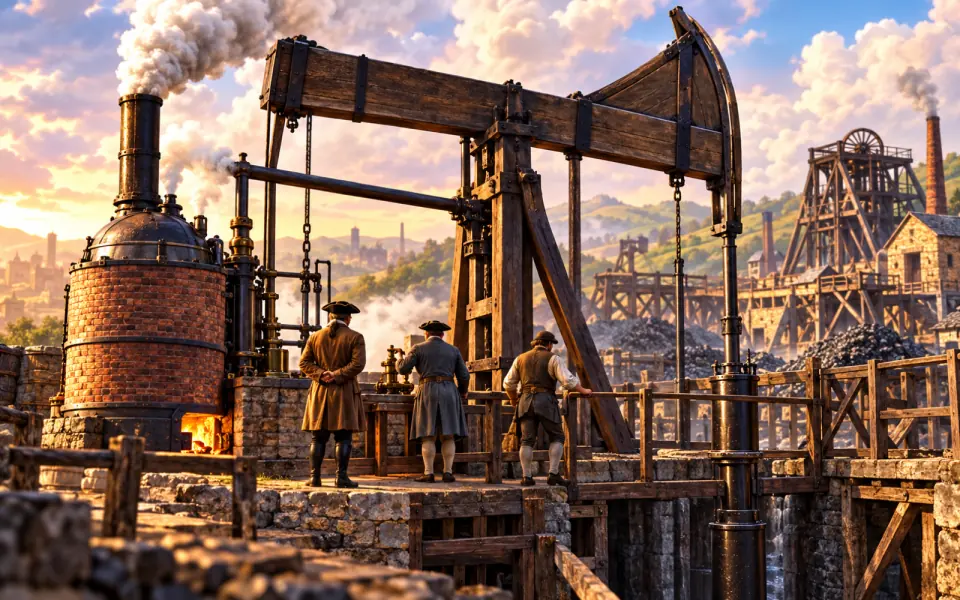 BeforeNewcomen's steam engine1712
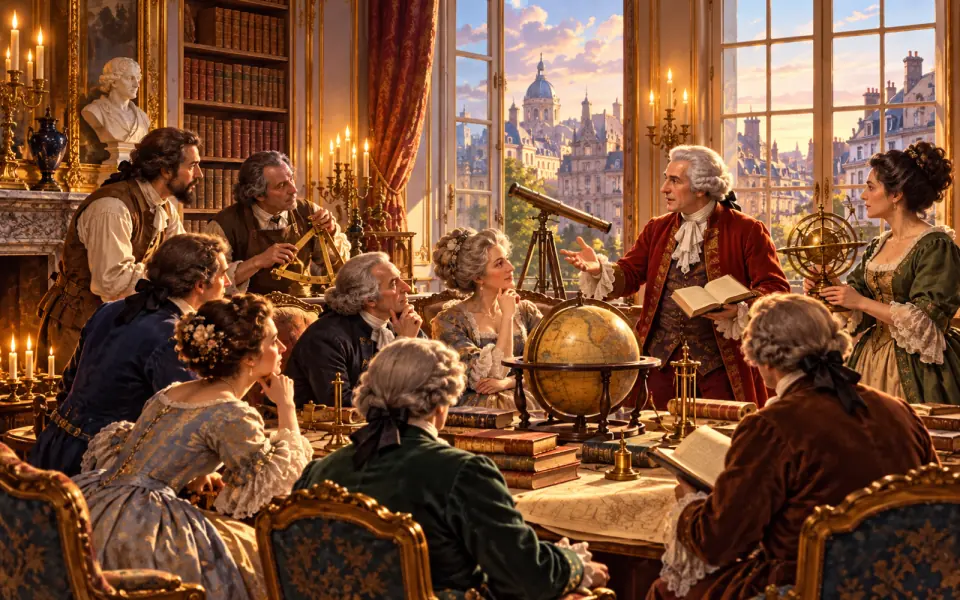 BeforeThe European Enlightenmentabout 1720
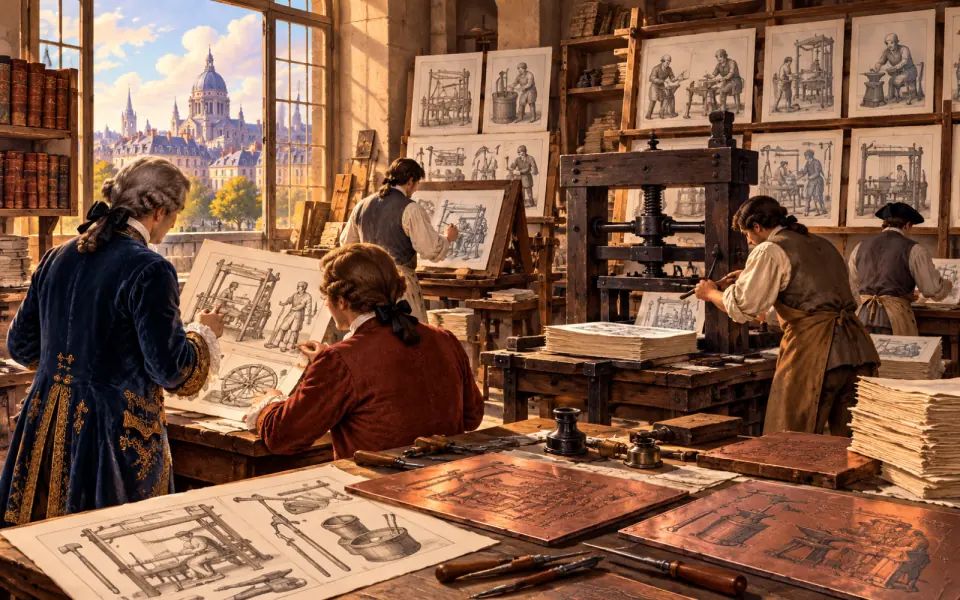 BeforeDiderot's Encyclopédie1751
 BeforeWatt's steam engine1769
 BeforeThe American Revolution1776–1783
- You are hereThe first hot-air balloon flight1783
 AfterThe French Revolution1789–1799
 AfterThe metric system1795
 AfterJenner's vaccine1796
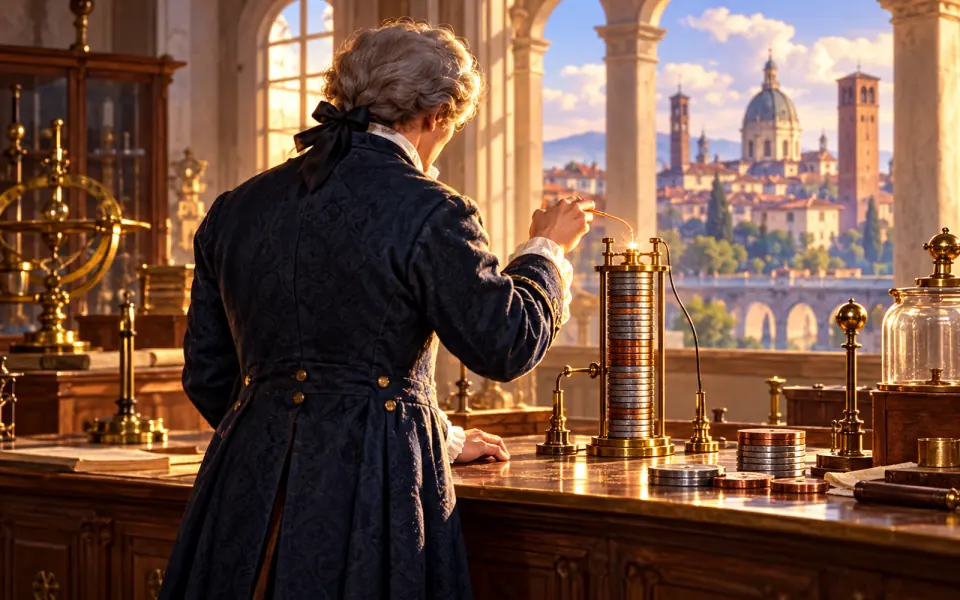 AfterVolta's battery1800
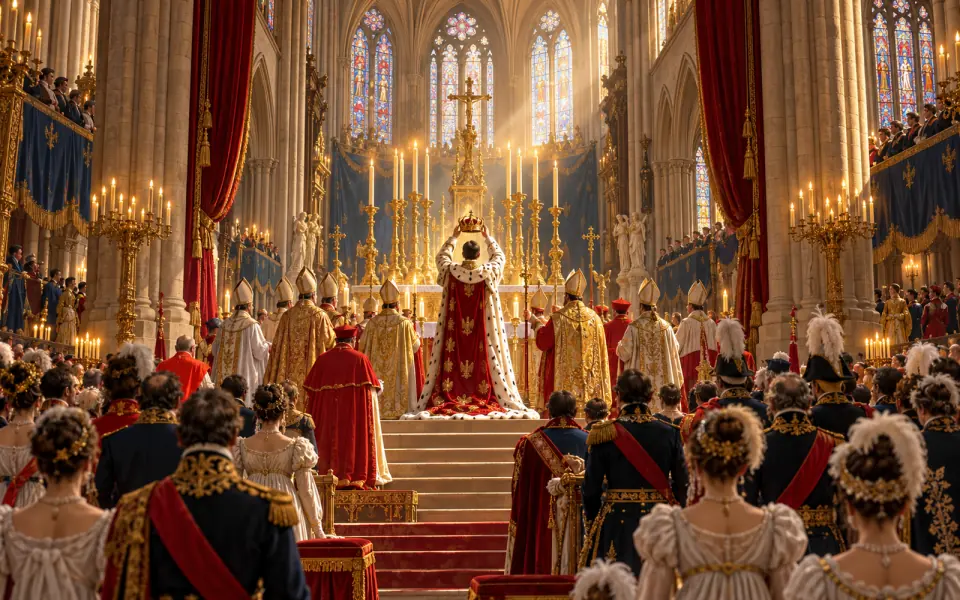 AfterNapoleon becomes emperor1804
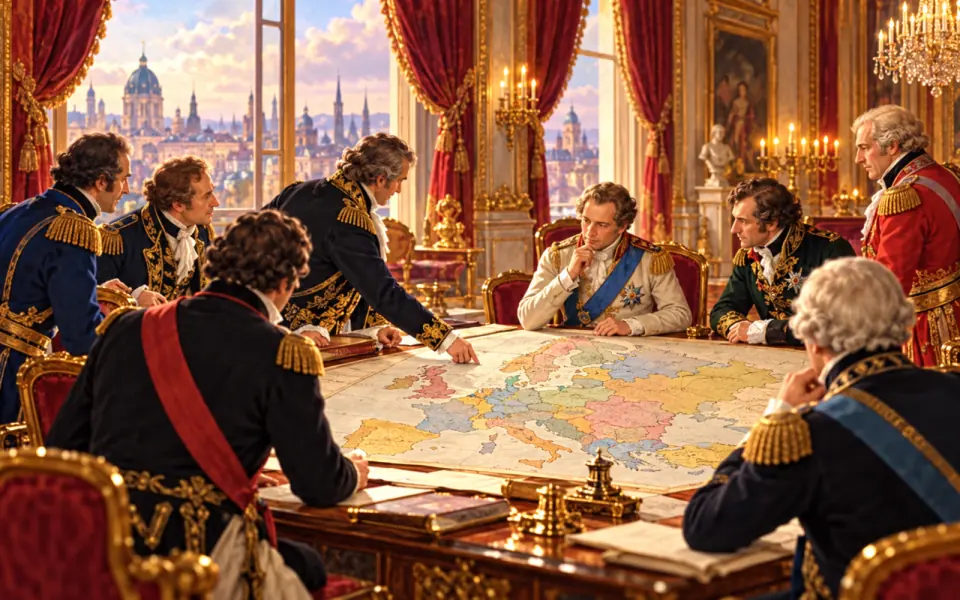 AfterThe Congress of Vienna1815
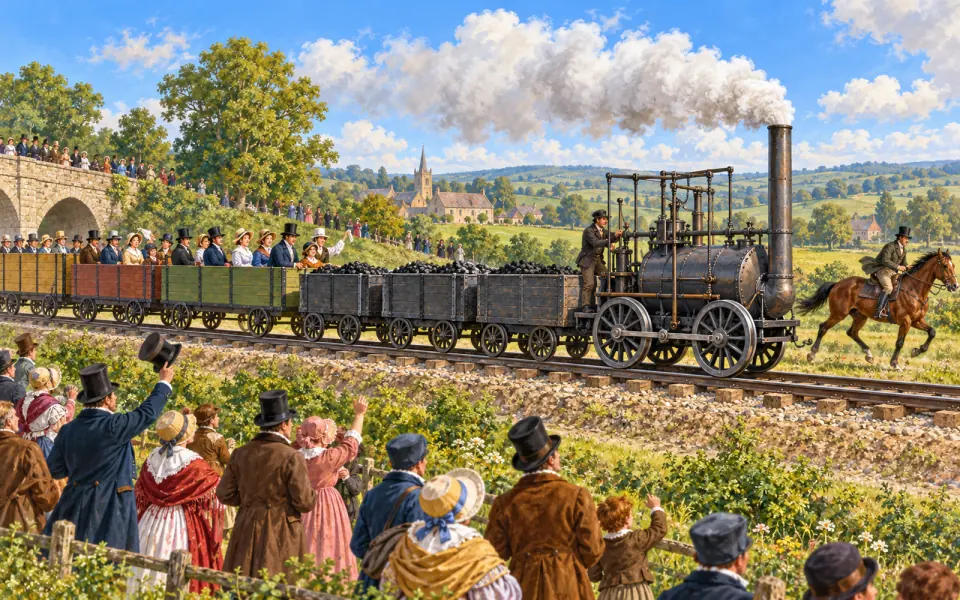 AfterThe first public steam railway1825
 AfterNiépce's photographabout 1826
 AfterManzoni's The Betrothed1827
 AfterThe electric telegraph1844
 AfterThe revolutions of 18481848
 AfterDarwin publishes On the Origin of Species1859
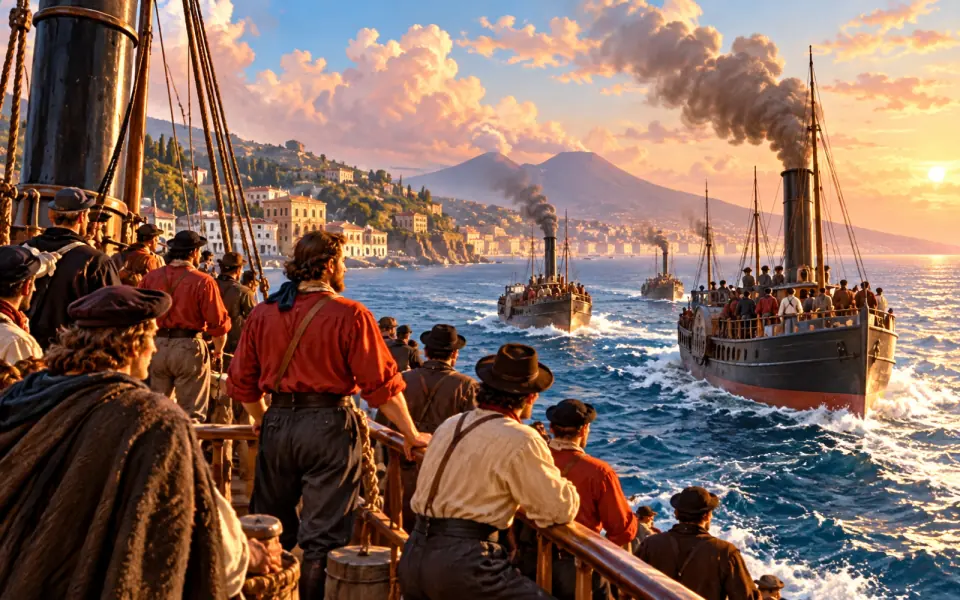 AfterThe Expedition of the Thousand1860
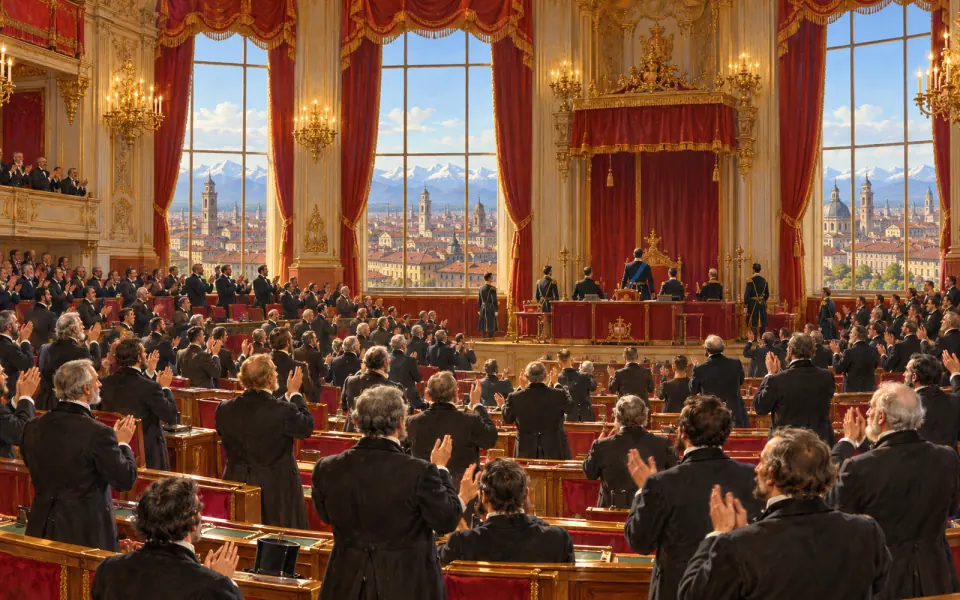 AfterThe unification of Italy1861
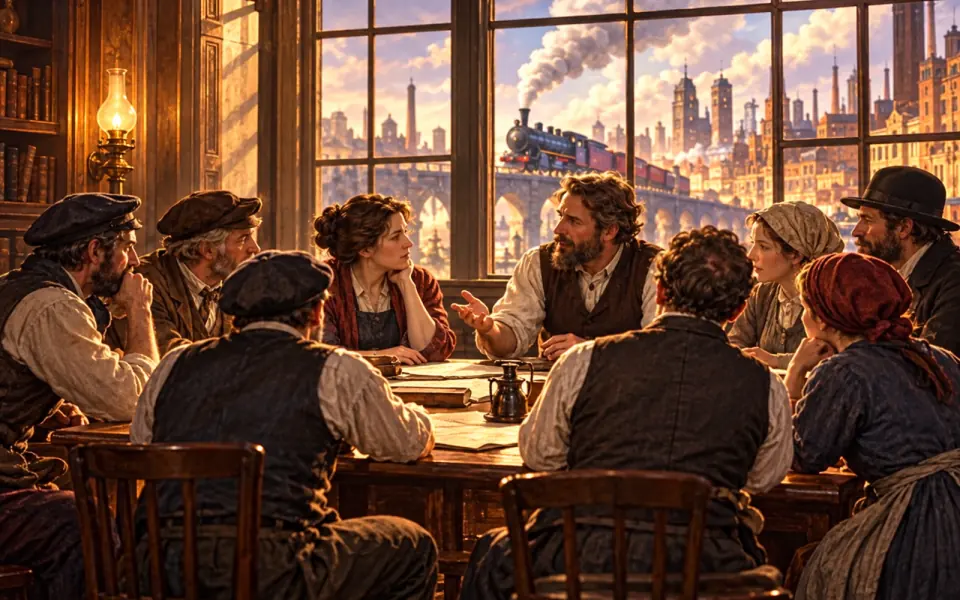 AfterThe labour movementabout 1864
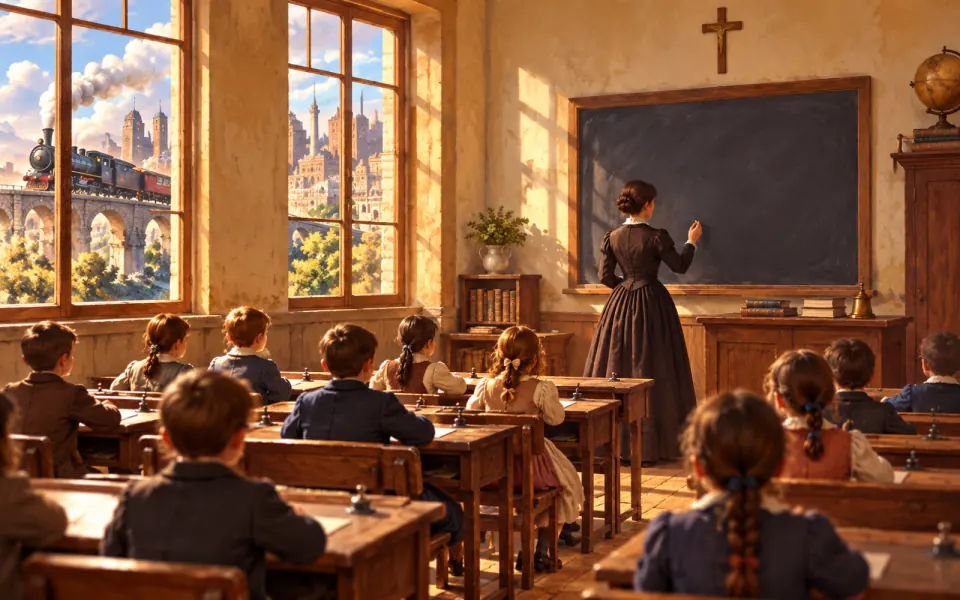 AfterCompulsory primary school (Coppino law)1877
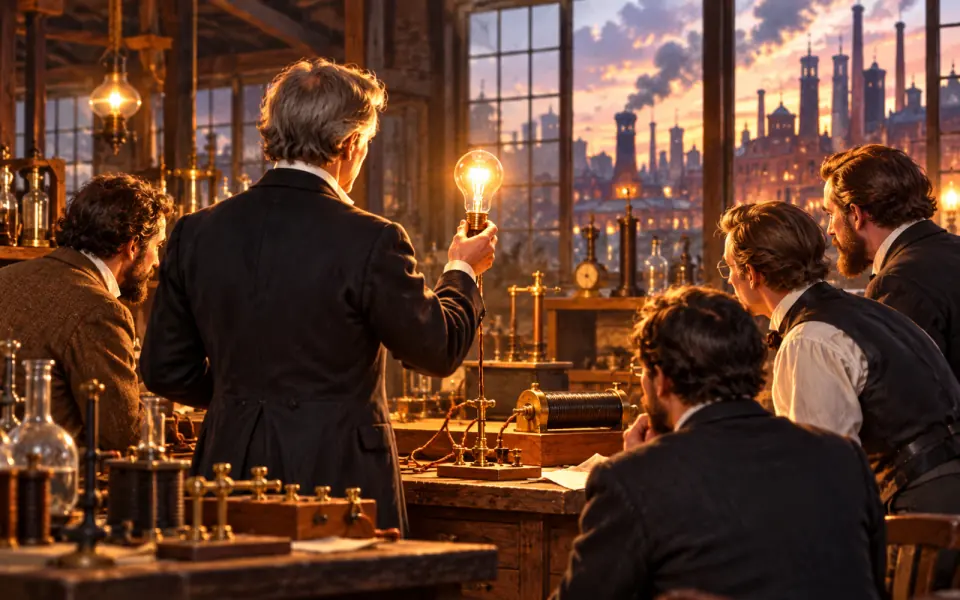 AfterA practical electric light bulb1879
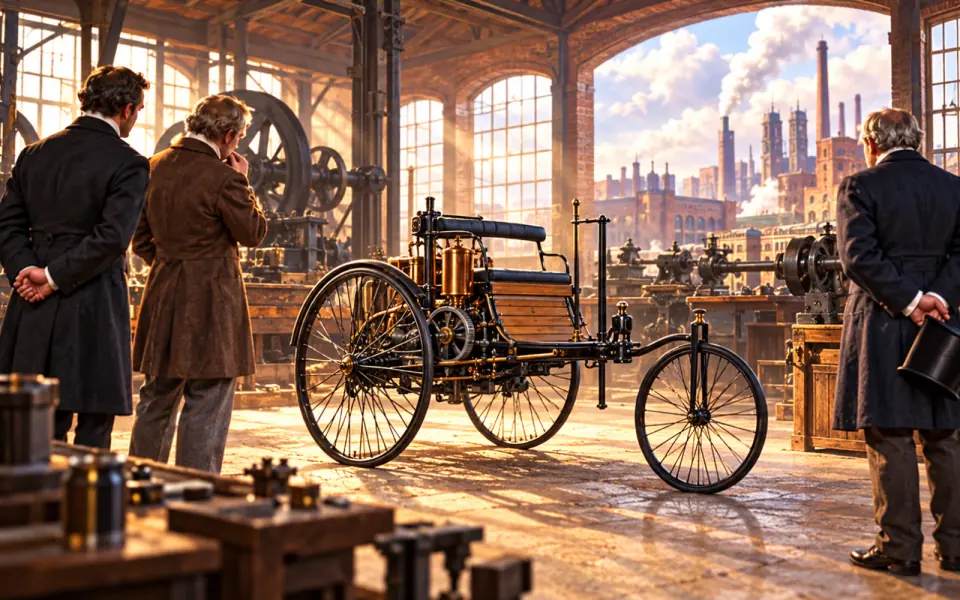 AfterThe first modern motor car1886
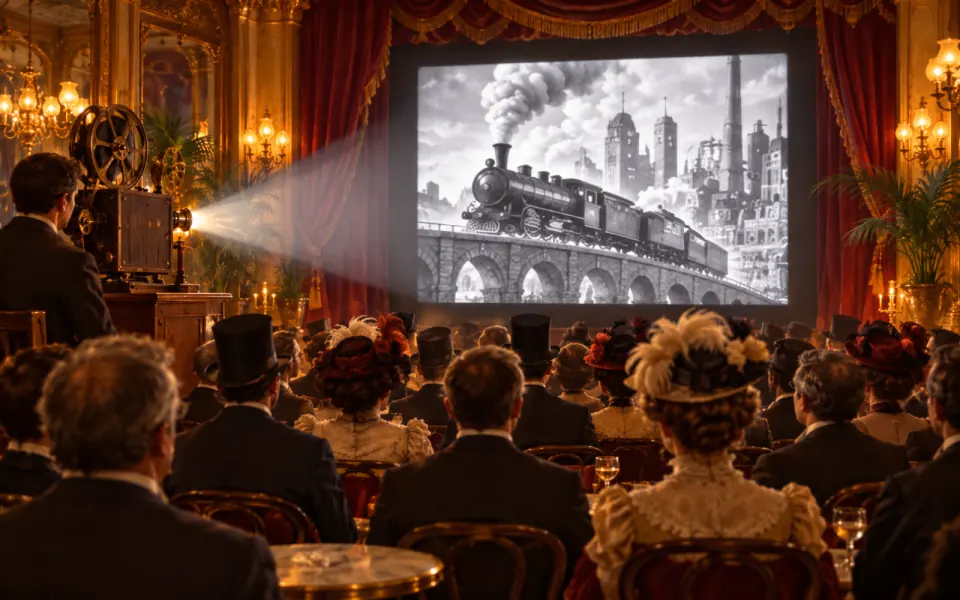 AfterThe Lumière brothers' cinema1895
Listen / Read next
- Music to read by: Cinematic JourneyEpic film-style music, no lyrics, by Ciro Simone IrmiciSpotifyYouTube Music
Meanwhile, elsewhere in the world
Other events of the era “Age of revolutions”
- Newcomen's steam engine
- The European Enlightenment
- Diderot's Encyclopédie
- Watt's steam engine
- The American Revolution
- The French Revolution
- The metric system
- Jenner's vaccine
- Volta's battery
- Napoleon becomes emperor
- The Congress of Vienna
- The first public steam railway
- Niépce's photograph
- Manzoni's The Betrothed
- The electric telegraph
- The revolutions of 1848
- Darwin publishes On the Origin of Species
- The Expedition of the Thousand
- The unification of Italy
- The labour movement
- Compulsory primary school (Coppino law)
- A practical electric light bulb
- The first modern motor car
- The Lumière brothers' cinema
