The American Revolution
1776–1783 Philadelphia, United States
In short
The thirteen British colonies in North America protested because they had to pay taxes decided in London without having representatives in Parliament. War broke out in 1775, and on 4 July 1776, in Philadelphia, the colonies' delegates approved the Declaration of Independence, written mainly by Thomas Jefferson. The text stated that all men are created equal, even though slavery was still allowed at the time. With help from France, George Washington's army won, and in 1783 Great Britain recognised the United States.
Why it matters A republic with a written Constitution was born, a model that inspired many other peoples.
Source: Encyclopaedia Britannica, “American Revolution”
Study card about 6 minutes of reading
The story
Thirteen colonies and a distant king
In the middle of the 18th century, on the Atlantic coast of North America, there were thirteen British colonies, home to about a million and a half people in the mid-century, and more than two million on the eve of the revolution, mostly settlers who had come from England and other European countries, alongside a large number of enslaved Africans and the native peoples. The colonies had local assemblies, courts and newspapers, and the colonists felt free. But they were governed by a distant king, George III, and by a Parliament in London in which the colonists had no representative at all.
In 1763 Great Britain had won a long war against France, the Seven Years' War, but was deep in debt. The government thought it fair to make the colonists pay part of the cost, since they had been defended, and brought in new taxes: in 1765 the stamp tax, a stamp required on newspapers, documents and playing cards, then others on glass, paper and tea. The colonists protested with a cry that was to become famous: “No taxation without representation!”. They were not against taxes as such, but against having to pay them without having a say.
From tea to arms
Tensions grew. In 1770, in Boston, British soldiers fired on a crowd and killed five people: it was called the “Boston Massacre”. In December 1773, to protest against a tax on tea, a group of colonists disguised as Native Americans boarded three ships in Boston harbour and threw 342 chests of tea into the sea: this is the “Boston Tea Party”. The British government reacted with very harsh laws, which the colonists called the “Intolerable Acts”, and the colonies, for the first time, united, sending delegates to a Congress in Philadelphia.
On 19 April 1775, at Lexington and Concord, near Boston, British soldiers and armed colonists clashed: the first shot of the war was fired, later called “the shot heard round the world”. Congress named as commander of the colonists' army a landowner from Virginia, George Washington.
4 July 1776
At first, many colonists only wanted more rights, not to break away from Great Britain. But in January 1776 an English writer who had emigrated to America, Thomas Paine, published a short book, “Common Sense”, in which he argued in plain words that it was absurd for a great continent to be ruled by a distant island, and that independence was the right path. Hundreds of thousands of copies were sold.
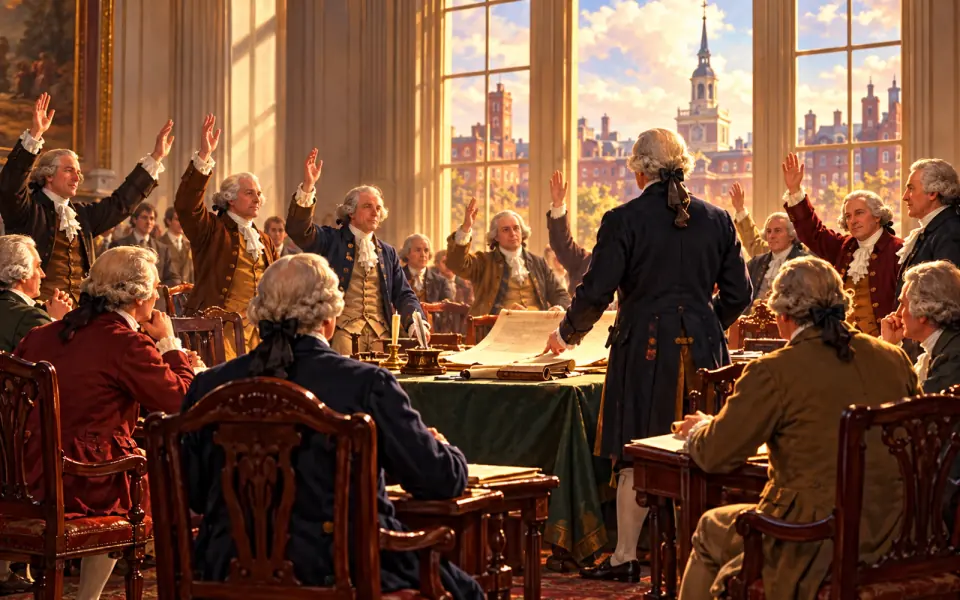
Congress appointed five delegates to write a declaration. It was written mainly by a young lawyer from Virginia, Thomas Jefferson, with the help of Benjamin Franklin and John Adams. The text was approved by Congress on 4 July 1776, in Philadelphia. The “Declaration of Independence” stated: “We hold these truths to be self-evident, that all men are created equal, that they are endowed by their Creator with certain unalienable Rights, that among these are Life, Liberty and the pursuit of Happiness.” If a government violates these rights, the people have the right to change it.
Those words were far ahead of their time, but they were also full of contradictions: many of the signatories, Jefferson himself among them, owned slaves, and women and Native Americans had no political rights. In the following decades the word “equal” would be used precisely to criticise these injustices.
The war and the victory
The war lasted eight years. The British army was stronger, but Washington, with a poorly equipped army of volunteers, held out even through harsh winters, like that of 1777–78 at Valley Forge. The turning point was the victory at Saratoga, in 1777, which persuaded France, England's enemy, to ally with the colonists, sending money, ships and soldiers. Among the French was the young Marquis de Lafayette, who became a friend of Washington. Some Italians also took part in the cause: Filippo Mazzei, a Tuscan doctor and friend of Jefferson, contributed ideas and writings.
The decisive battle was at Yorktown, in Virginia, in October 1781, when the French and Americans surrounded the army of the British general Cornwallis, who surrendered. With the Treaty of Paris of 1783 Great Britain recognised the independence of the United States of America.
A new nation
In 1787, in Philadelphia, delegates wrote the Constitution of the United States, which sets up a government with three separate powers: Congress, the President and the judges. In 1789 Washington was elected the first President. In 1791 the first ten amendments were added to the Constitution, the “Bill of Rights”, which guarantees freedom of speech, of the press and of religion, and the right to a fair trial.
Why it happened
The American Revolution grew out of the clash between the colonies and the mother country over taxes and representation, but it had deeper roots: the colonists were used to governing themselves, and the ideas of the Enlightenment and of philosophers like John Locke, who spoke of natural rights and of government by the consent of the citizens, were widely read.
The sheer size of America also mattered, which made it hard to govern from far away, as did the growth of an economic and cultural life of its own.
What changed
The American Revolution created a new nation, founded on a written constitution and on the principle that power comes from the people. It was a model for other peoples: it inspired the French Revolution in 1789 and, in the following decades, the independence movements of Latin America.
It showed that a republic could work in a very large country, with elections, a government divided into powers, and civil liberties. But it also left unresolved problems, such as slavery, abolished only in 1865 after a terrible civil war, and the exclusion of women and Native Americans from the vote.
Today 4 July is the national holiday of the United States. The Declaration of Independence is still one of the most widely read and quoted documents in the world, and its phrase “all men are created equal” remains a reference point for those who fight for rights.
Key people and places
People
- George Washington
- General and first President of the United States (1732–1799): he led the army in the War of Independence.
- Thomas Jefferson
- American politician (1743–1826): he wrote the Declaration of Independence; third President.
- Benjamin Franklin
- American scientist, writer and politician (1706–1790): he took part in the Declaration and won the French alliance.
- Thomas Paine
- English-American writer and activist (1737–1809): author of “Common Sense”.
- Filippo Mazzei
- Tuscan doctor and writer (1730–1816): a friend of Jefferson, he supported the American cause.
Places
- Independence Hall, Philadelphia
- The building where the Declaration of Independence was approved on 4 July 1776 and where the Constitution was written in 1787.
- Yorktown, Virginia (United States)
- The site of the last great battle, in October 1781.
Good to know
- The colonists threw 342 chests of tea into the sea at Boston in December 1773, in the “Boston Tea Party”.
- The Declaration of Independence was approved on 4 July 1776, when there were thirteen colonies.
- Thomas Jefferson was 33 when he wrote the Declaration of Independence.
- The war lasted eight years, from 1775 to 1783.
- The first President of the United States, George Washington, was elected in 1789.
Find out more
- National Archives, “Declaration of Independence” archives.gov
- Wikipedia, “American Revolution” en.wikipedia.org
- Wikipedia, “United States Declaration of Independence” en.wikipedia.org
- Wikipedia, “Philip Mazzei” en.wikipedia.org
Related events
- The European Enlightenmentabout 1720 · Age of revolutionsThe ideas of the Enlightenment inspired the fathers of America.
- The French Revolution1789–1799 · Age of revolutionsThe French Revolution followed a few years later.
- Martin Luther King and civil rights1963 · TodayMartin Luther King recalled the promise of equality in this Declaration.
- The Congress of Vienna1815 · Age of revolutionsAfter Napoleon, the Congress of Vienna tried to restore the old order.
Before and after, in the era “Age of revolutions”
Event 5 of 25
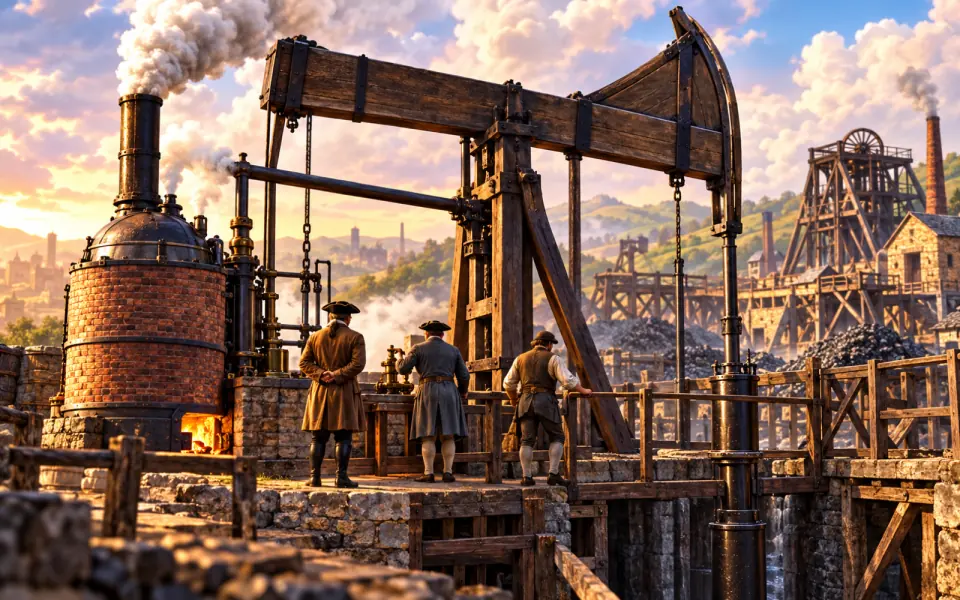 BeforeNewcomen's steam engine1712
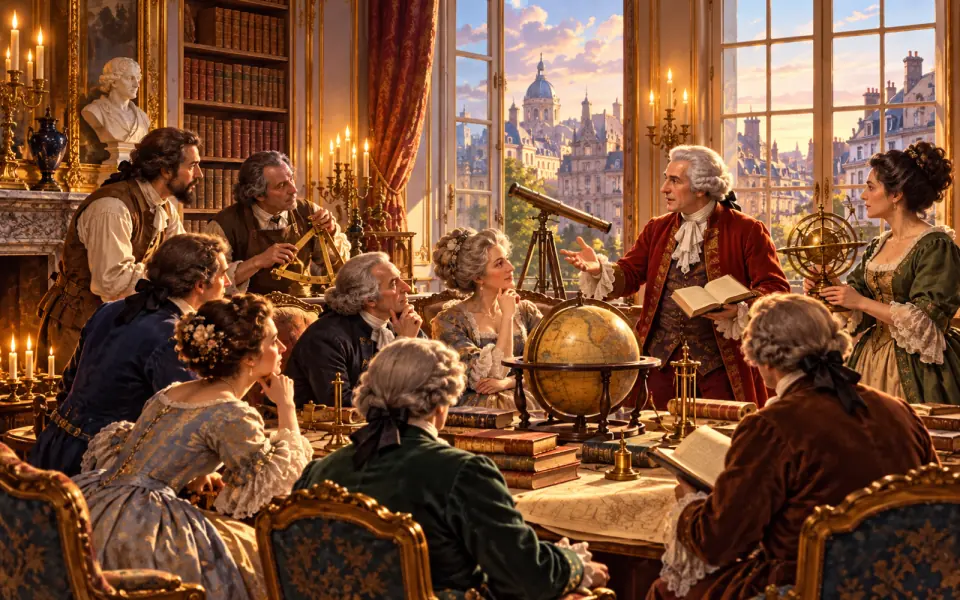 BeforeThe European Enlightenmentabout 1720
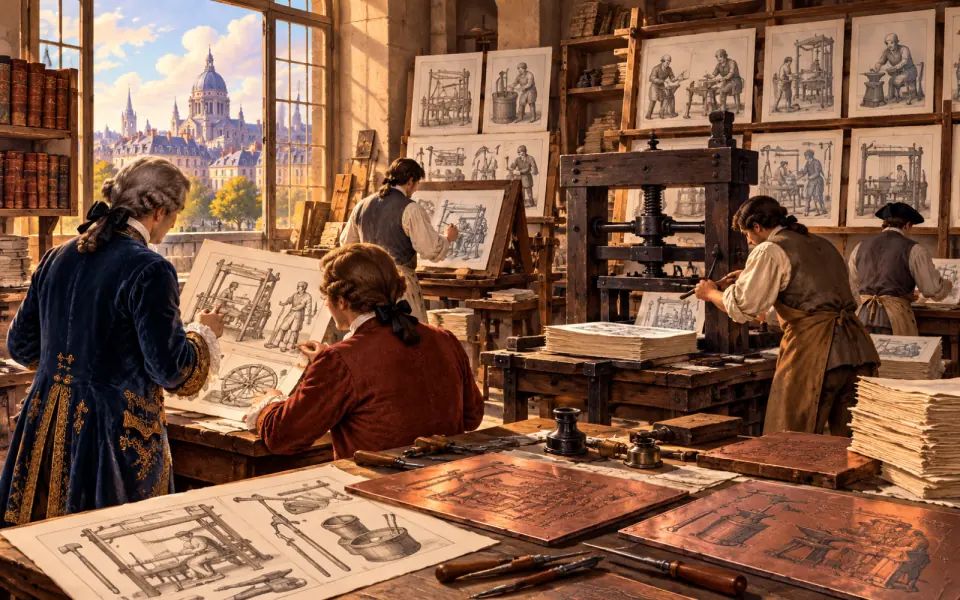 BeforeDiderot's Encyclopédie1751
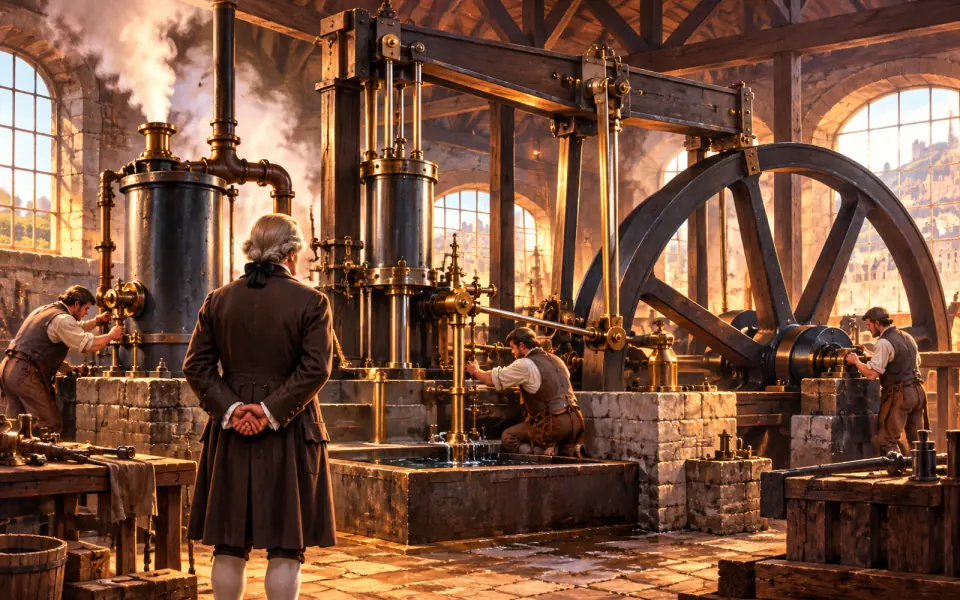 BeforeWatt's steam engine1769
- You are hereThe American Revolution1776–1783
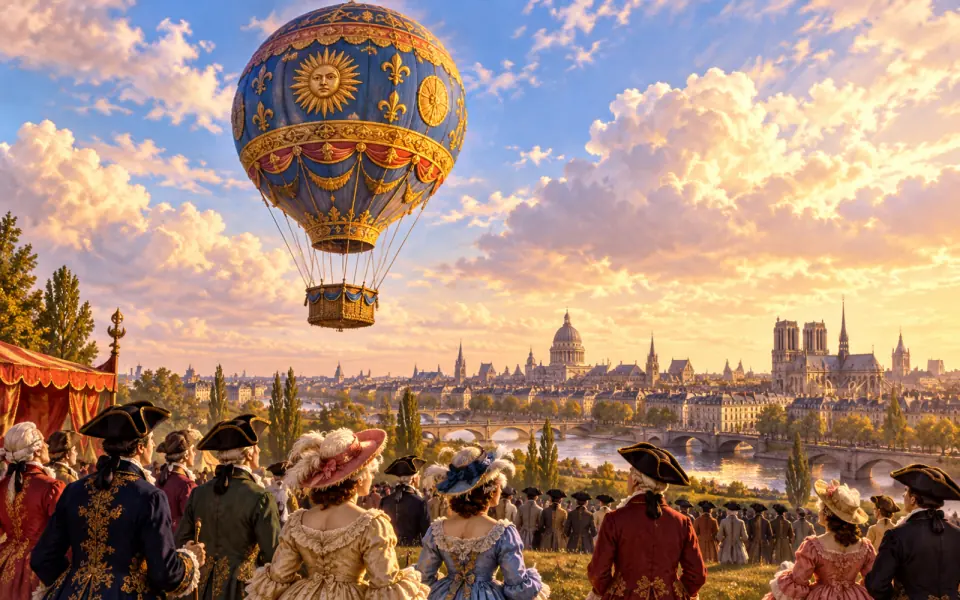 AfterThe first hot-air balloon flight1783
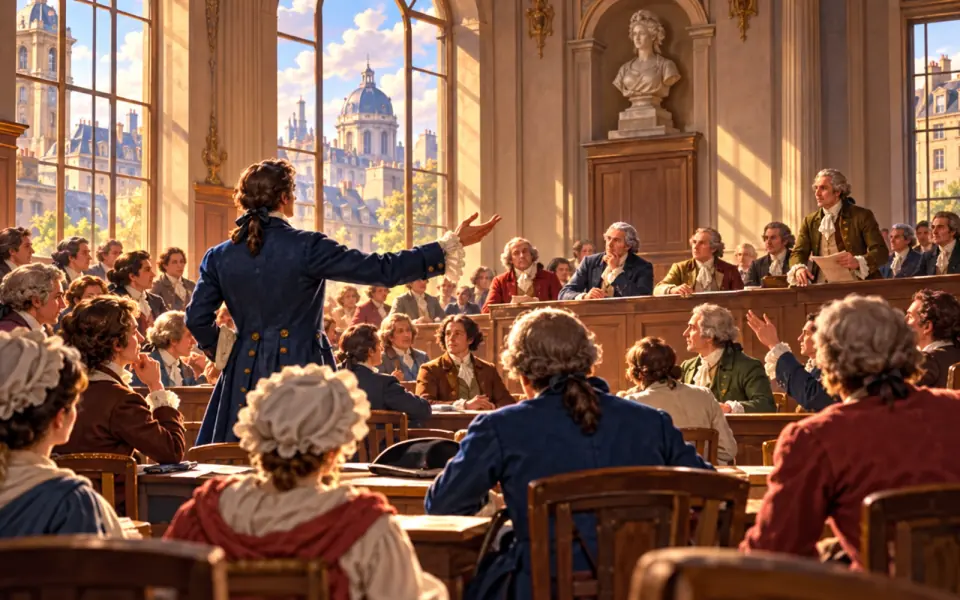 AfterThe French Revolution1789–1799
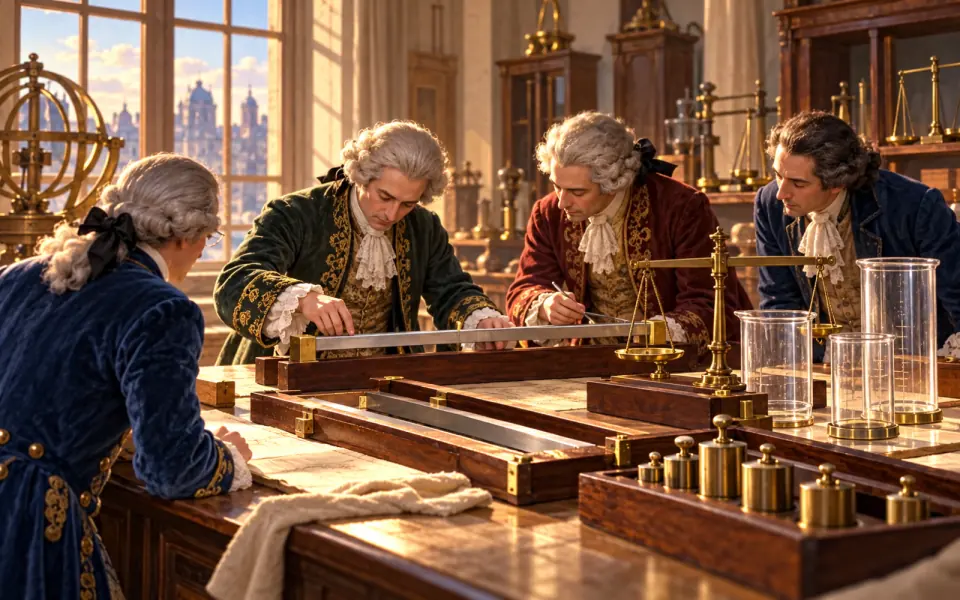 AfterThe metric system1795
 AfterJenner's vaccine1796
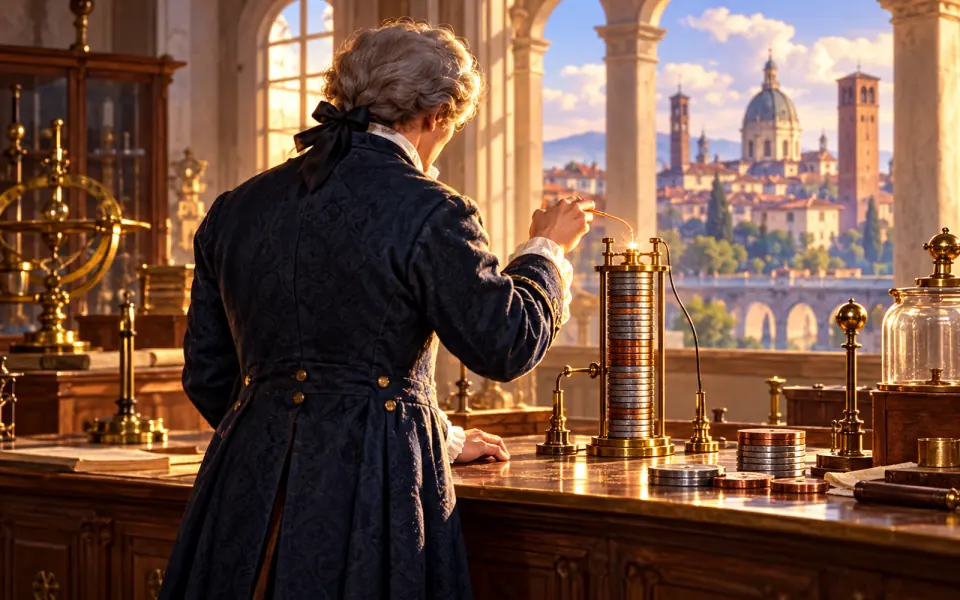 AfterVolta's battery1800
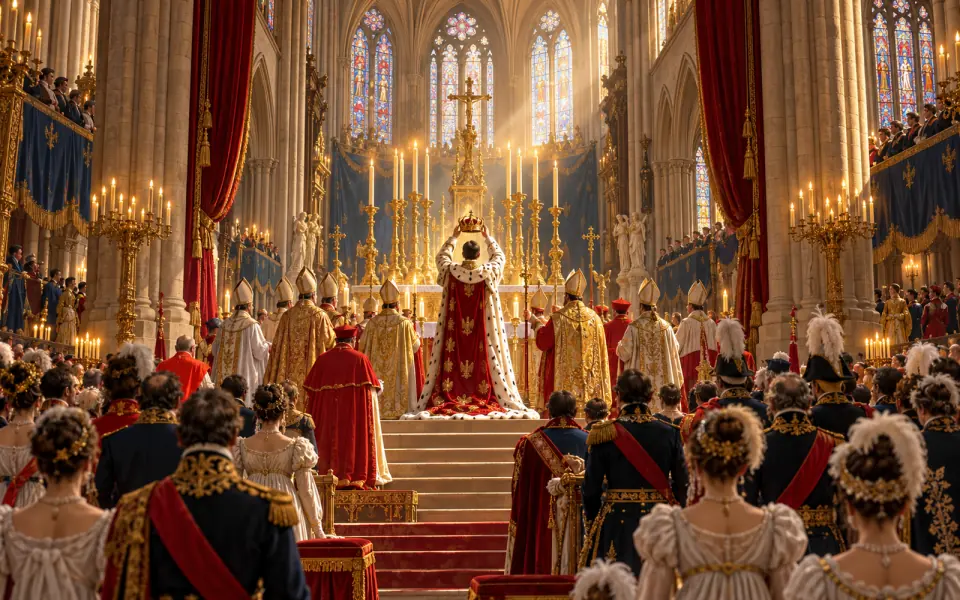 AfterNapoleon becomes emperor1804
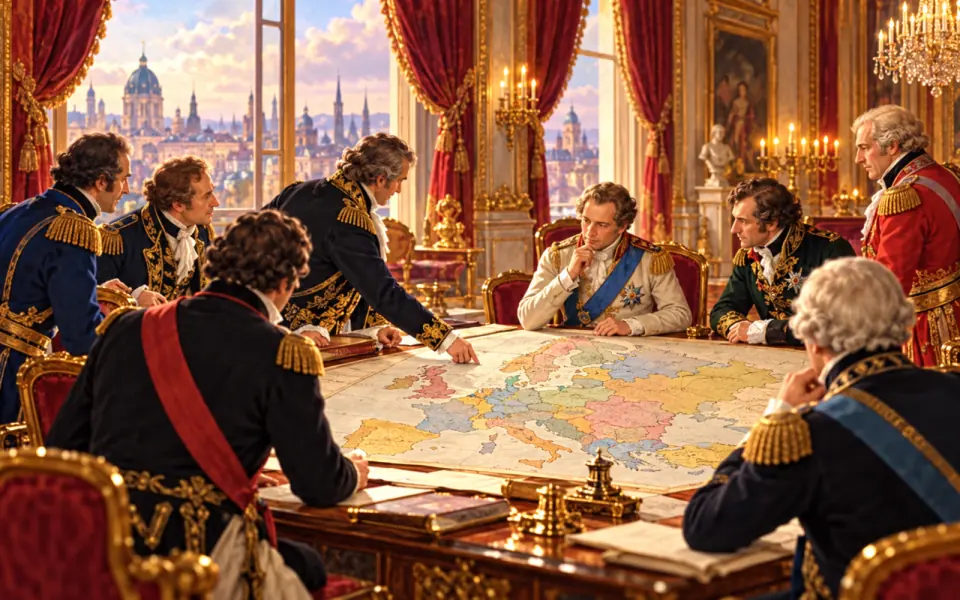 AfterThe Congress of Vienna1815
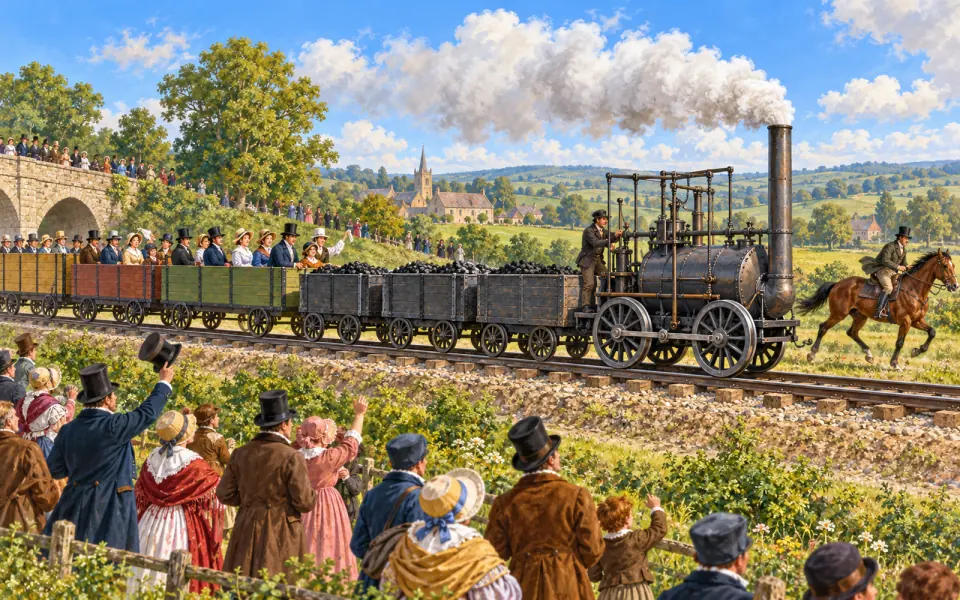 AfterThe first public steam railway1825
 AfterNiépce's photographabout 1826
 AfterManzoni's The Betrothed1827
 AfterThe electric telegraph1844
 AfterThe revolutions of 18481848
 AfterDarwin publishes On the Origin of Species1859
 AfterThe Expedition of the Thousand1860
 AfterThe unification of Italy1861
 AfterThe labour movementabout 1864
 AfterCompulsory primary school (Coppino law)1877
 AfterA practical electric light bulb1879
 AfterThe first modern motor car1886
 AfterThe Lumière brothers' cinema1895
Listen / Read next
- Music to read by: Cinematic JourneyEpic film-style music, no lyrics, by Ciro Simone IrmiciSpotifyYouTube Music
Meanwhile, elsewhere in the world
Other events of the era “Age of revolutions”
- Newcomen's steam engine
- The European Enlightenment
- Diderot's Encyclopédie
- Watt's steam engine
- The first hot-air balloon flight
- The French Revolution
- The metric system
- Jenner's vaccine
- Volta's battery
- Napoleon becomes emperor
- The Congress of Vienna
- The first public steam railway
- Niépce's photograph
- Manzoni's The Betrothed
- The electric telegraph
- The revolutions of 1848
- Darwin publishes On the Origin of Species
- The Expedition of the Thousand
- The unification of Italy
- The labour movement
- Compulsory primary school (Coppino law)
- A practical electric light bulb
- The first modern motor car
- The Lumière brothers' cinema
