Watt's steam engine
1769 Glasgow, Scotland
In short
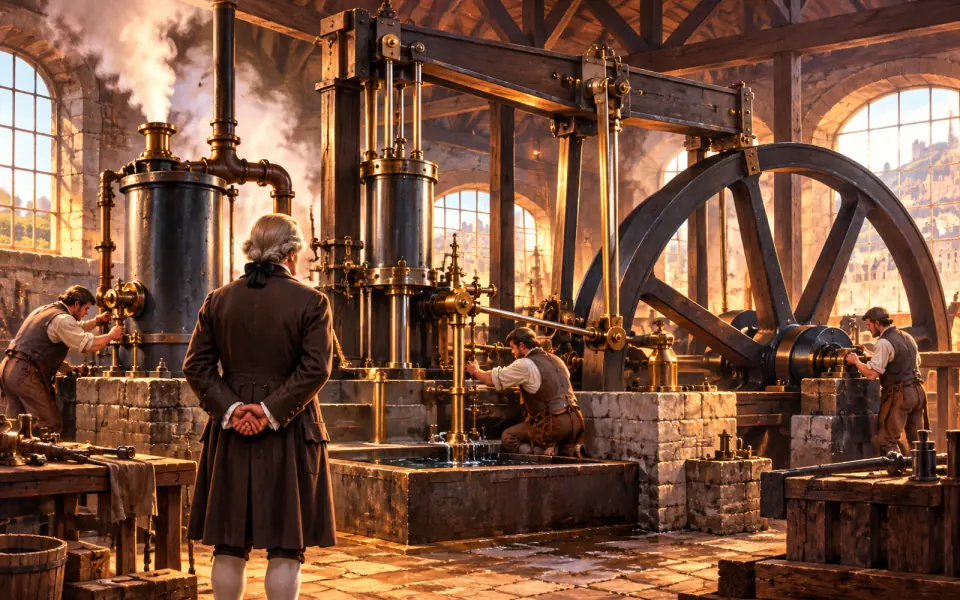
James Watt repaired instruments for the University of Glasgow, in Scotland, when a model of Newcomen's engine was brought to him. He realised that it wasted energy because the same cylinder was constantly heated and cooled. In 1769 he patented a separate condenser, where the steam was cooled somewhere else: the engine became much more efficient. Later he adapted it to turn wheels and machinery in factories.
Why it matters Watt's engine powered factories, mills and later trains and ships: the unit of power, the watt, is named after him.
Source: Encyclopaedia Britannica, “James Watt”
Study card about 5 minutes of reading
The story
A little model to repair
James Watt was born in 1736 in Greenock, in Scotland, into a family of shipbuilders and merchants. He was a boy in poor health who spent a lot of time at home, and he taught himself geometry and mechanics. As an adult he moved to Glasgow where, since he could not open a shop because he did not belong to the town's guilds, he was taken on by the university as a maker of scientific instruments. Here he met professors such as Joseph Black, the chemist who had studied heat, and who became his friend and adviser.
In the winter of 1763–64 the university asked him to repair a model of a Newcomen engine, used for physics lessons. Watt put it right, but noticed something odd: the little model used up a huge amount of steam, far more than seemed necessary. Why? He studied the problem very carefully, measuring and running tests.
The idea of the condenser
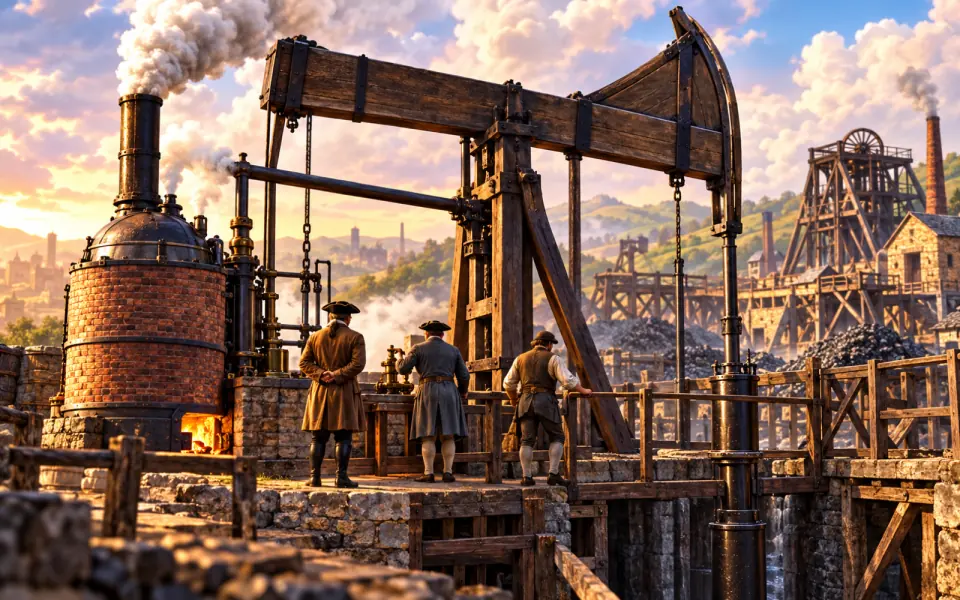
He realised that the fault lay in the way the engine worked. In Newcomen's engines the steam entered the cylinder and then, to create a vacuum, was cooled with a spray of cold water; with every stroke the cylinder had to be heated up again, and this used a great deal of steam and coal. It was as if, to go on a car journey, you had to warm up a cold engine every single time.
One spring day in 1765, while he was walking on Glasgow Green, a large park in the city, the idea came to him: why not condense the steam in a separate container, kept cold all the time, and leave the cylinder hot all the time? The steam would pass from the cylinder into the condenser, where it would turn into water and create the vacuum, without cooling the cylinder. It was a simple and brilliant solution.
From idea to machine
Having the idea was one thing, building an engine that worked was another: the details took years of work and failures. An entrepreneur, John Roebuck, paid for the first attempts, and in January 1769 Watt obtained a patent for his “new method of lessening the consumption of steam and fuel in fire-engines”. But Roebuck went bankrupt, and Watt had to find another partner.
He found one in 1775 in Matthew Boulton, an industrialist from Birmingham who owned a big factory, the Soho Manufactory. Boulton believed in the project and put in money, workshops and workers, and together they founded “Boulton & Watt”. Another decisive contribution came from John Wilkinson, who had invented a machine for boring cannons with precision: he could make perfectly smooth cylinders, which were essential so that the steam did not escape.
Watt's first engine for a customer, in 1776, pumped water out of a coal mine. It used less than a third of the coal of a Newcomen engine, and it was a success. To get paid, Boulton and Watt did not sell the engine, but charged customers a third of what they saved on coal.
From the pump to the factory
Watt did not stop there. The first engines were only for pumping water, with an up-and-down movement. But factory owners also wanted to turn wheels and machinery. With some ingenious devices, such as the gears known as “sun and planet” (1781), he turned the back-and-forth movement into a rotating one, and made the engine “double-acting”, that is, able to push the piston in both directions. He invented a governor with spinning balls, which kept the speed steady automatically (1788).
So steam engines could drive spinning machines, looms, mills, hammers and pumps, even in places far from rivers and waterfalls. By 1800 Boulton & Watt had built about five hundred. To tell customers how much power an engine had, Watt invented a unit of measurement: the “horsepower”, defined by comparing its strength with that of the horses working in the mines.
Why it happened
Watt's improvement came from combining good scientific knowledge, in particular the studies of heat by his friend Black, with great practical skill. Watt not only had the idea, he also knew how to measure and test.
The right partners, such as Boulton, were decisive, and so was the presence in England of smiths, foundries and workers able to make very precise parts. Without them, the idea would have stayed on paper.
What changed
Watt's engine was the motor of the Industrial Revolution. Because it used less coal and could drive every kind of machinery, it made it possible to build factories anywhere, near towns and ports. This began the age of steam, with textile mills, ironworks, and then steamboats and locomotives.
Watt's name has stayed in history: in 1882 it was proposed to call the unit of measurement of power, which you can read on light bulbs and household appliances, the “watt” in his honour.
Watt's engine ran at low pressure. Engineers such as Richard Trevithick, in Cornwall, soon built high-pressure steam engines, smaller and more powerful, which could drive locomotives and boats. Watt retired from business in 1800 and died in 1819, aged eighty-three.
Key people and places
People
- James Watt
- Scottish engineer and inventor (1736–1819): he devised the separate condenser and perfected the steam engine.
- Matthew Boulton
- English industrialist (1728–1809): Watt's partner, he financed and built the engines in Birmingham.
- Joseph Black
- Scottish chemist and doctor (1728–1799): he studied heat and was Watt's friend and adviser.
- John Wilkinson
- English ironmaster (1728–1808): he made the precision cylinders for Watt's engines.
- Richard Trevithick
- English engineer (1771–1833): he built the first high-pressure steam engines.
Places
- Soho Manufactory, Birmingham (England)
- Boulton's factory, where Watt's engines were built.
- Glasgow, Scotland
- The city where Watt worked as the university's instrument maker.
Good to know
- Watt had the idea of the separate condenser while walking in Glasgow, in the spring of 1765.
- Watt's engines used less than a third of the coal of Newcomen's.
- To sell the engines, Boulton and Watt charged a share of the coal saved.
- The unit of measurement of power, the watt, was proposed (in 1882) with that name in honour of the inventor.
- Watt also invented “horsepower”, to explain the power of engines.
Find out more
- Wikipedia, “James Watt” en.wikipedia.org
- Wikipedia, “Boulton and Watt” en.wikipedia.org
- Wikipedia, “Steam engine” en.wikipedia.org
- Wikipedia, “Watt” en.wikipedia.org
Related events
- Newcomen's steam engine1712 · Age of revolutionsWatt improved Newcomen's engine.
- The first public steam railway1825 · Age of revolutionsThe steam engine led to the locomotive.
- Volta's battery1800 · Age of revolutionsA few years later Volta invented the battery, another source of energy.
- A practical electric light bulb1879 · Age of revolutionsThe electric light bulb made the watt the unit of measurement in every home.
Before and after, in the era “Age of revolutions”
Event 4 of 25
 BeforeNewcomen's steam engine1712
 BeforeThe European Enlightenmentabout 1720
 BeforeDiderot's Encyclopédie1751
- You are hereWatt's steam engine1769
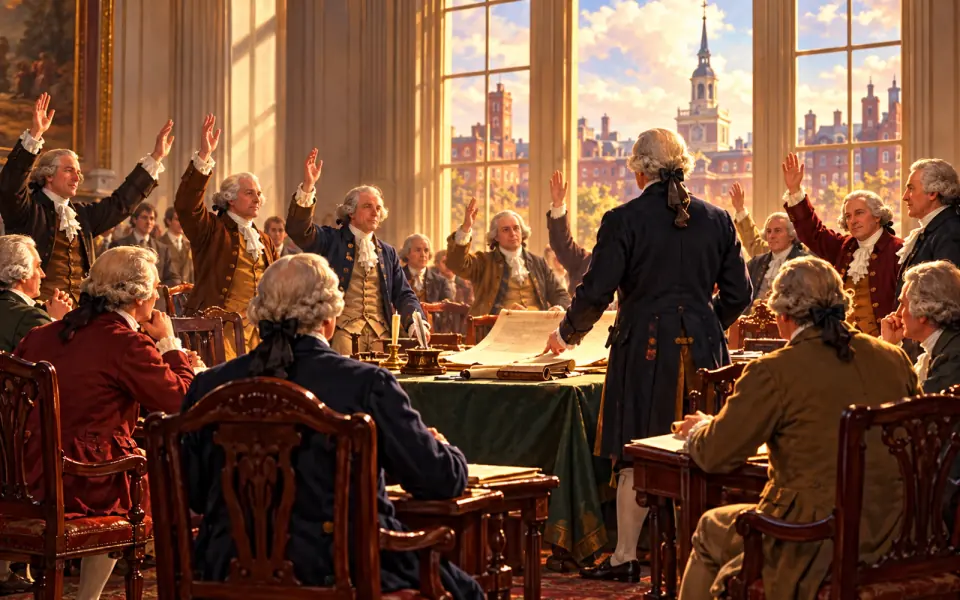 AfterThe American Revolution1776–1783
 AfterThe first hot-air balloon flight1783
 AfterThe French Revolution1789–1799
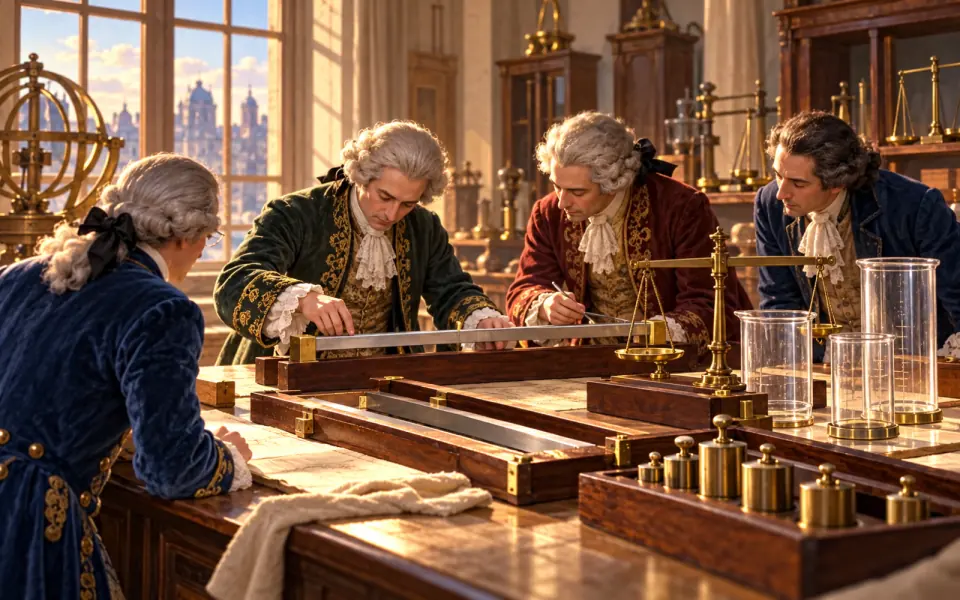 AfterThe metric system1795
 AfterJenner's vaccine1796
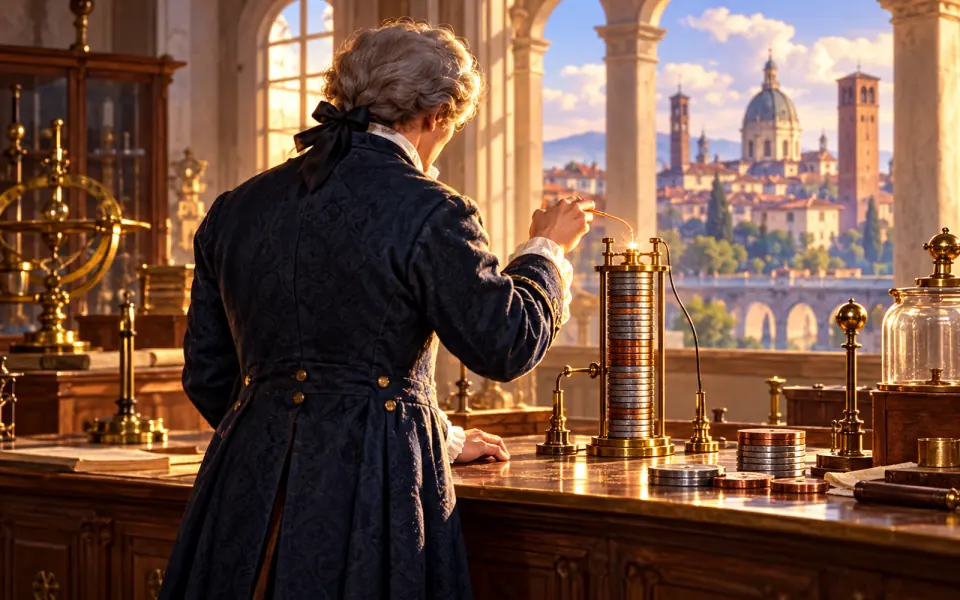 AfterVolta's battery1800
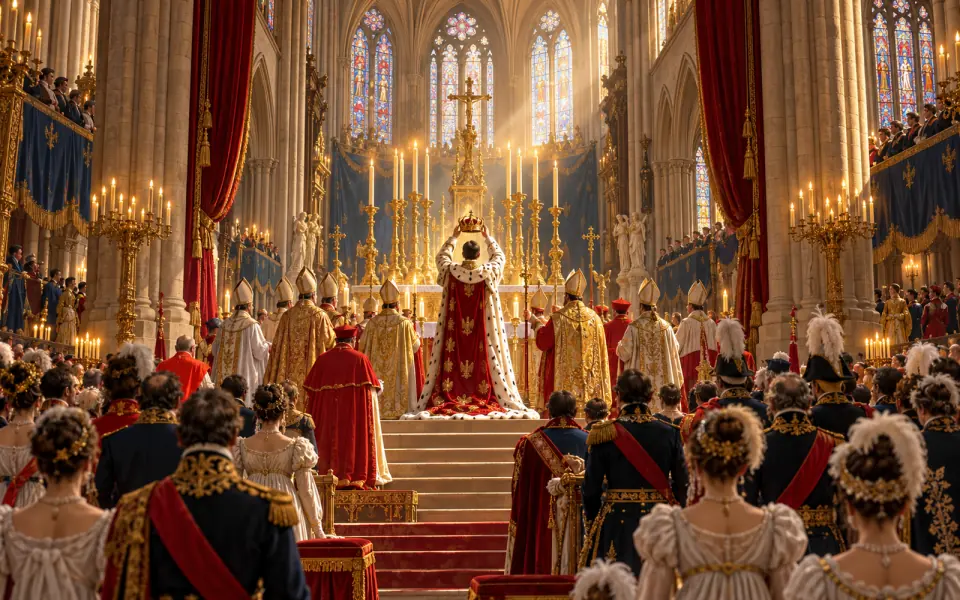 AfterNapoleon becomes emperor1804
 AfterThe Congress of Vienna1815
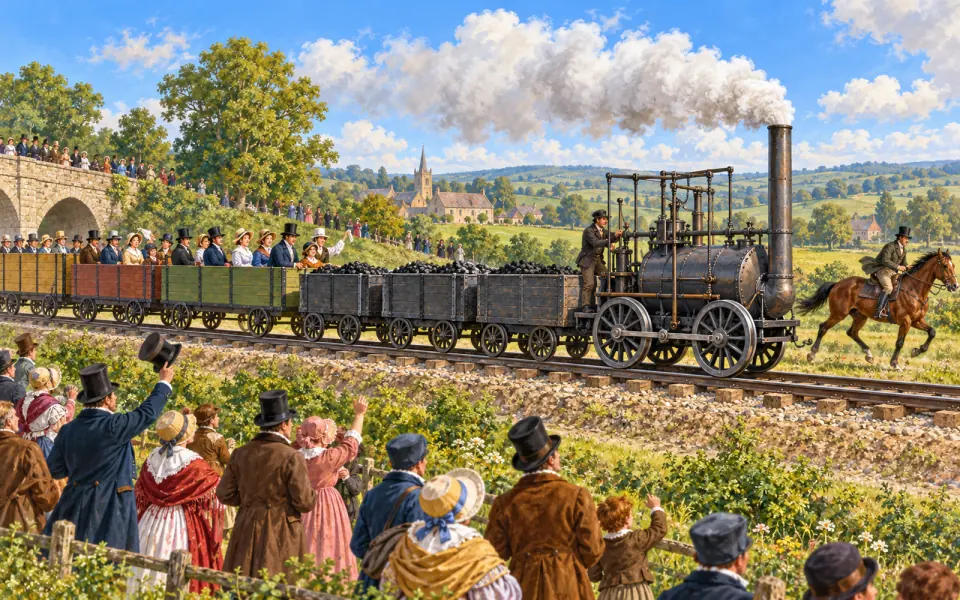 AfterThe first public steam railway1825
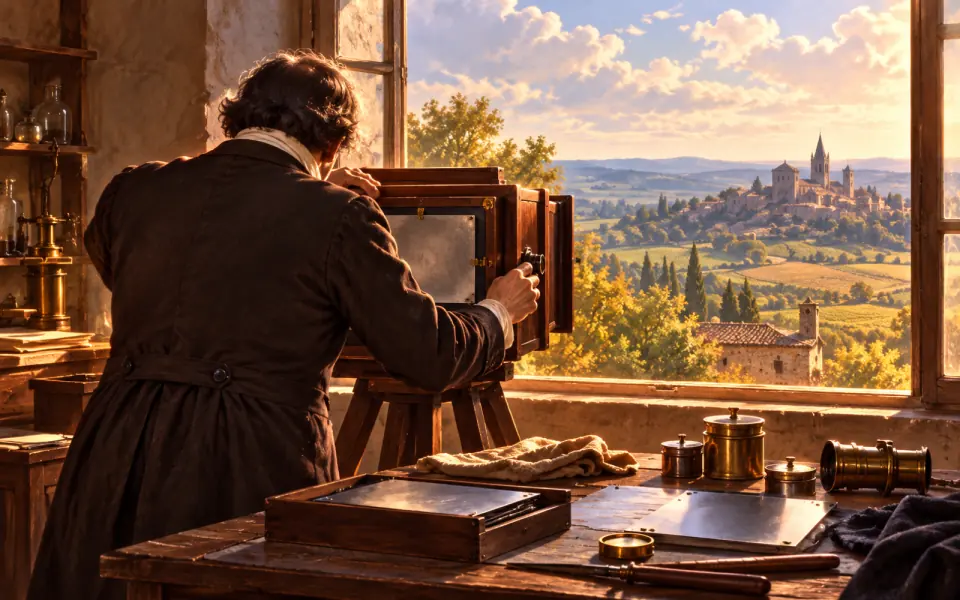 AfterNiépce's photographabout 1826
 AfterManzoni's The Betrothed1827
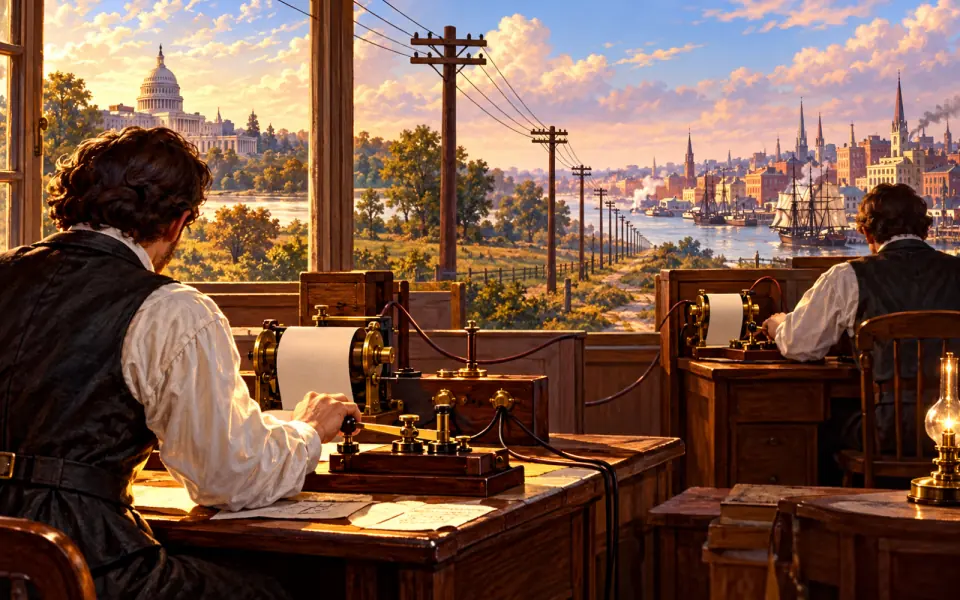 AfterThe electric telegraph1844
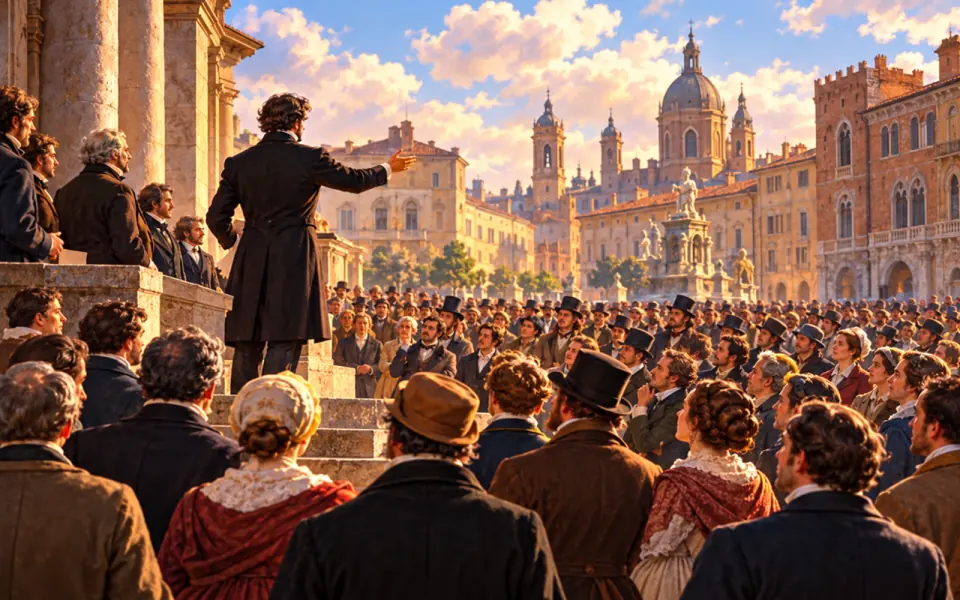 AfterThe revolutions of 18481848
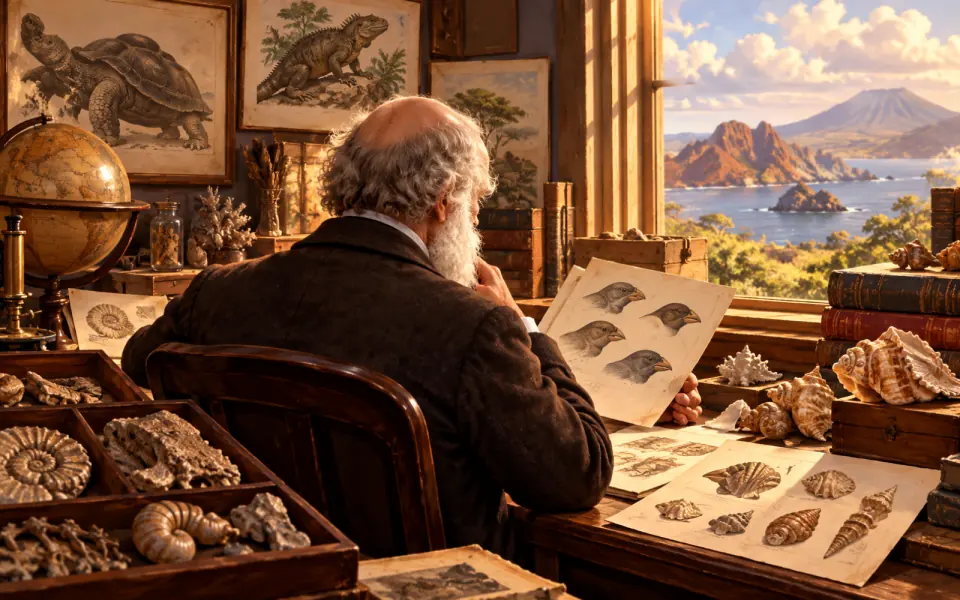 AfterDarwin publishes On the Origin of Species1859
 AfterThe Expedition of the Thousand1860
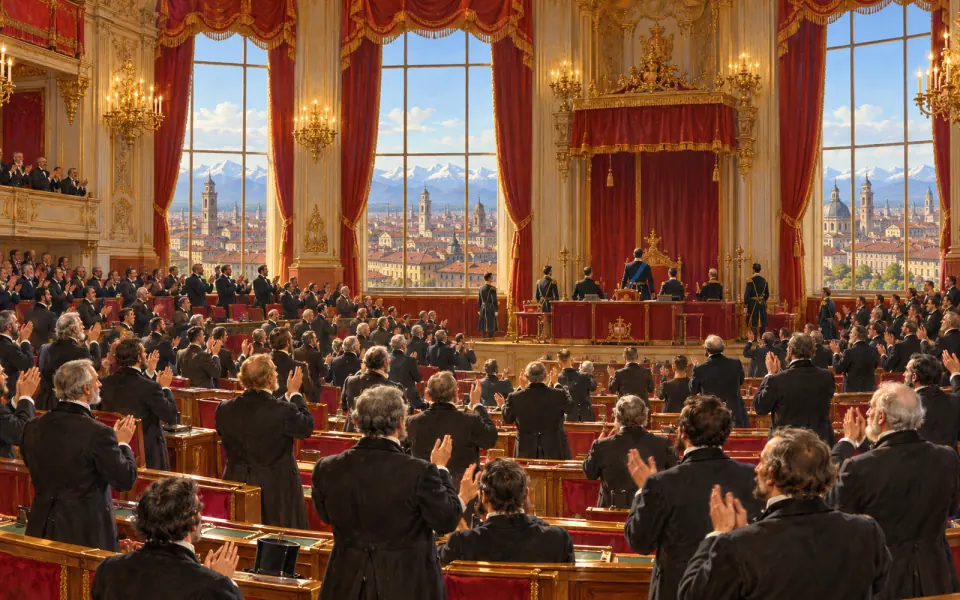 AfterThe unification of Italy1861
 AfterThe labour movementabout 1864
 AfterCompulsory primary school (Coppino law)1877
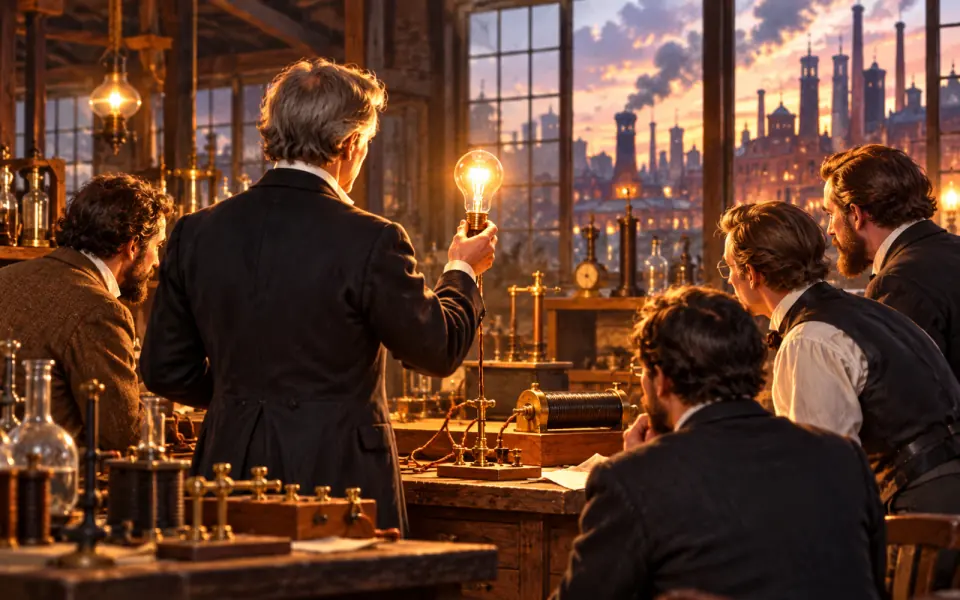 AfterA practical electric light bulb1879
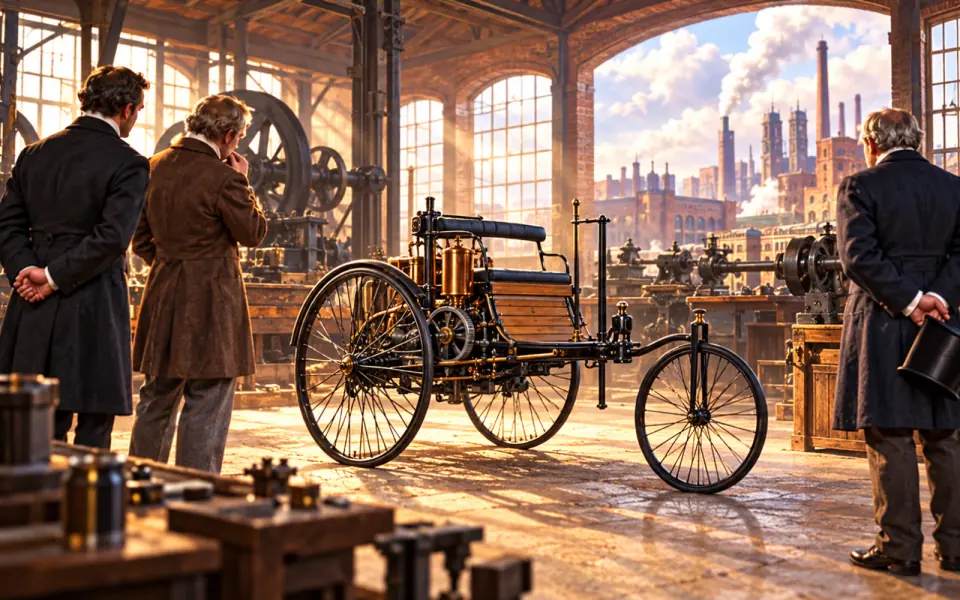 AfterThe first modern motor car1886
 AfterThe Lumière brothers' cinema1895
Listen / Read next
- Music to read by: Cinematic JourneyEpic film-style music, no lyrics, by Ciro Simone IrmiciSpotifyYouTube Music
Meanwhile, elsewhere in the world
Other events of the era “Age of revolutions”
- Newcomen's steam engine
- The European Enlightenment
- Diderot's Encyclopédie
- The American Revolution
- The first hot-air balloon flight
- The French Revolution
- The metric system
- Jenner's vaccine
- Volta's battery
- Napoleon becomes emperor
- The Congress of Vienna
- The first public steam railway
- Niépce's photograph
- Manzoni's The Betrothed
- The electric telegraph
- The revolutions of 1848
- Darwin publishes On the Origin of Species
- The Expedition of the Thousand
- The unification of Italy
- The labour movement
- Compulsory primary school (Coppino law)
- A practical electric light bulb
- The first modern motor car
- The Lumière brothers' cinema
