Diderot's Encyclopédie
1751 Paris, France
In short
Denis Diderot and the mathematician Jean d'Alembert decided to gather all the knowledge of their time in a single work. The first volume of the Encyclopédie came out in Paris in 1751, and in about twenty years it reached 17 volumes of text and 11 of illustrated plates. More than a hundred authors wrote for it, and many entries explained trades and machines, from the blacksmith to the weaver. The authorities disliked some of its ideas and for a time banned its publication.
Why it matters It showed that knowledge could be organised and made available to many people, as online encyclopaedias do today.
Source: Treccani, entry “Encyclopédie”
Study card about 4 minutes of reading
The story
A mad project
Imagine a book that wants to hold everything: how a clock works, how glass is made, what the stars are, how bread is baked, what the rules of chess are, how to write a letter. In the 18th century some people really wanted to do this. The project began with a Parisian publisher, André Le Breton, who in 1745 wanted to translate into French a great English work, Ephraim Chambers's “Cyclopaedia”, a dictionary of the arts and sciences. But the undertaking changed scale when it was handed to two young men: the writer Denis Diderot and the mathematician Jean le Rond d'Alembert.
Diderot, the son of a cutler from Langres, was brilliant, passionate and full of ideas. He had already spent a few months in prison for his writings, which were thought too daring. D'Alembert, the illegitimate son of a noblewoman, was a famous mathematician and physicist, but also a great writer. They decided not to stop at translating: they wrote a new work, an “Encyclopédie, or Reasoned Dictionary of the Sciences, Arts and Trades”, that would gather all the knowledge of the age.
Knowledge for everyone
The first volume came out in 1751. In the “Preliminary Discourse”, d'Alembert explained the idea: knowledge is like a great tree, with roots in memory, reason and imagination, from which spring the branches of history, philosophy and the arts. But the Encyclopédie was not only for scholars: it wanted to teach everyone, so that anyone could understand the world.
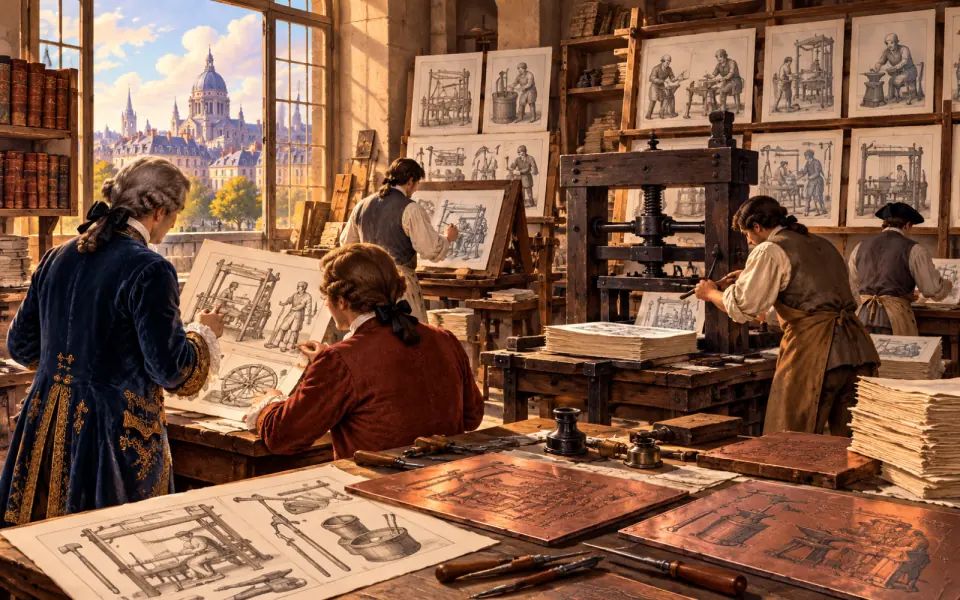
A great novelty was its attention to trades. Diderot went into workshops and workrooms, talked with craftsmen and watched how they worked. The work gave long entries and splendid illustrated plates to how iron, silk and paper are worked, how a pin is made, how a ship is built. For the first time manual work was considered worth studying, alongside philosophy and theology. In all, seventeen volumes of text and eleven of plates were published, with thousands of illustrations, between 1751 and 1772.
A team of great names
Diderot and d'Alembert did not do everything alone. More than a hundred and forty contributors took part in writing the entries: Voltaire, Montesquieu and Rousseau wrote articles, and with them doctors, engineers, craftsmen, nobles and priests. The work was enormous, and Diderot, who after a few years was left almost alone in charge of the enterprise, laboured for more than twenty years, with great effort.
Censorship and courage
The Encyclopédie made the people in power furious. It explained things by reason and experience, not by the authority of tradition and religion. It criticised privileges, superstition and intolerance, and the Church saw it as a danger. In 1752 the government banned it, in 1759 a Parliament authority condemned it, and the Pope put it on the list of forbidden books. Diderot had to work almost in secret, and some entries were written cautiously, or with ironic cross-references from one entry to another.
According to tradition, a friend, the head of censorship, Malesherbes, warned Diderot before a search, and the manuscripts were hidden in his father's house, the very last place anyone would suspect. D'Alembert, tired of quarrels, left the project in 1758. In the end, in 1772, the work was completed.
Success
In spite of everything, the Encyclopédie was a huge success. About twenty-five thousand copies were sold across Europe, a very high figure for such an expensive work, and further editions and reprints were made, in Italy and Switzerland too, at lower prices. The people who read it were not only nobles and scholars, but also merchants, lawyers and doctors.
Why it happened
The Encyclopédie grew out of the Enlightenment idea that knowledge makes people freer, and out of faith in progress. In an age when knowledge was divided up and held by a few people, Diderot and d'Alembert wanted to bring it together and make it available to all.
The growth of the public mattered too: in the 18th century more and more people could read and wanted to be informed, and there were publishers able to print in large numbers.
What changed
The Encyclopédie was the symbolic work of the Enlightenment, and it helped spread the ideas of liberty, reason and tolerance that would inspire the French Revolution. Its way of explaining the world, with order and clarity, became the model for the great reference works.
It also showed the value of technical work: the attention to trades helped spread useful knowledge and prepare the way for the Industrial Revolution.
Today the descendants of that dream can be found all over the world: modern encyclopaedias, like the Treccani in Italy, and the one many people use every day, Wikipedia, started in 2001 and written by volunteers around the world. Diderot's idea, knowledge gathered by many and open to all, is more alive than ever.
Key people and places
People
- Denis Diderot
- French writer and philosopher (1713–1784): editor of the Encyclopédie.
- Jean le Rond d'Alembert
- French mathematician and philosopher (1717–1783): co-founder and author of the “Preliminary Discourse”.
- Voltaire
- French writer and philosopher (1694–1778): he contributed many articles.
- Chrétien-Guillaume de Malesherbes
- French magistrate (1721–1794): head of censorship, he protected the Encyclopédie enterprise.
- André Le Breton
- Parisian publisher (1708–1779): he promoted and financed the Encyclopédie.
Places
- Paris, France
- The city where the Encyclopédie was conceived, written and printed.
- Langres, France
- The home town of Denis Diderot.
Good to know
- The Encyclopédie was published between 1751 and 1772, in seventeen volumes of text and eleven of plates.
- Diderot also spent a few months in prison because of his writings.
- To describe the trades, Diderot visited workshops and talked to craftsmen.
- The Pope put the Encyclopédie on the list of forbidden books.
- Wikipedia, begun in 2001, is considered a descendant of the Encyclopédie.
Find out more
- Wikipedia, “Encyclopédie” en.wikipedia.org
- Wikipedia, “Denis Diderot” en.wikipedia.org
- Wikipedia, “Jean Le Rond d'Alembert” en.wikipedia.org
- Wikipedia, “Encyclopedia” en.wikipedia.org
Related events
- The European Enlightenmentabout 1720 · Age of revolutionsThe Enlightenment was the movement of which the Encyclopédie was the symbol.
- The French Revolution1789–1799 · Age of revolutionsThe ideas of the Encyclopédie prepared the way for the French Revolution.
- Gutenberg prints the Bibleabout 1455 · Early modern ageGutenberg, three centuries earlier, had made it possible to print books.
- The World Wide Web1991 · TodayThe Web has made the dream of knowledge open to everyone come true.
Before and after, in the era “Age of revolutions”
Event 3 of 25
 BeforeNewcomen's steam engine1712
 BeforeThe European Enlightenmentabout 1720
- You are hereDiderot's Encyclopédie1751
 AfterWatt's steam engine1769
 AfterThe American Revolution1776–1783
 AfterThe first hot-air balloon flight1783
 AfterThe French Revolution1789–1799
 AfterThe metric system1795
 AfterJenner's vaccine1796
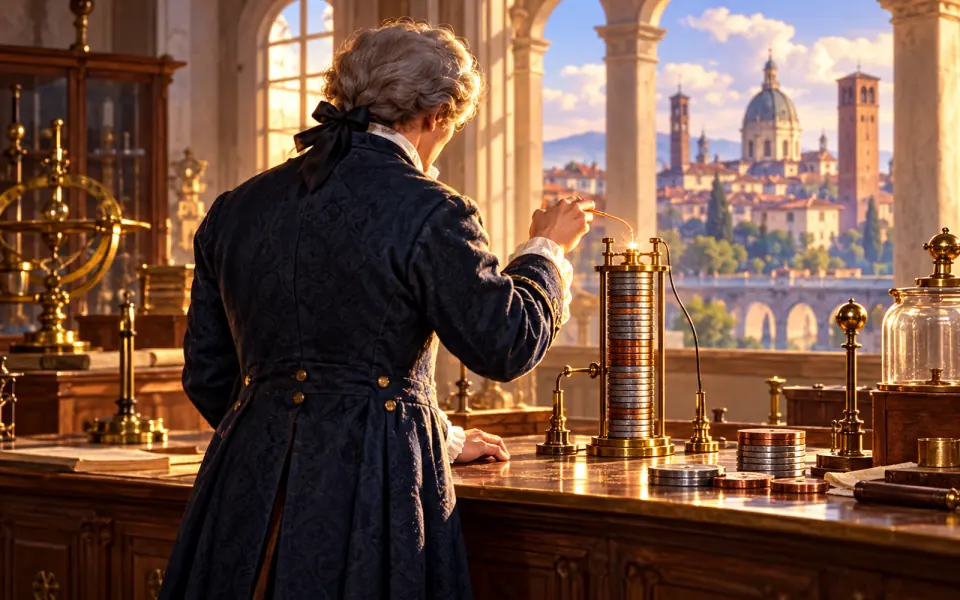 AfterVolta's battery1800
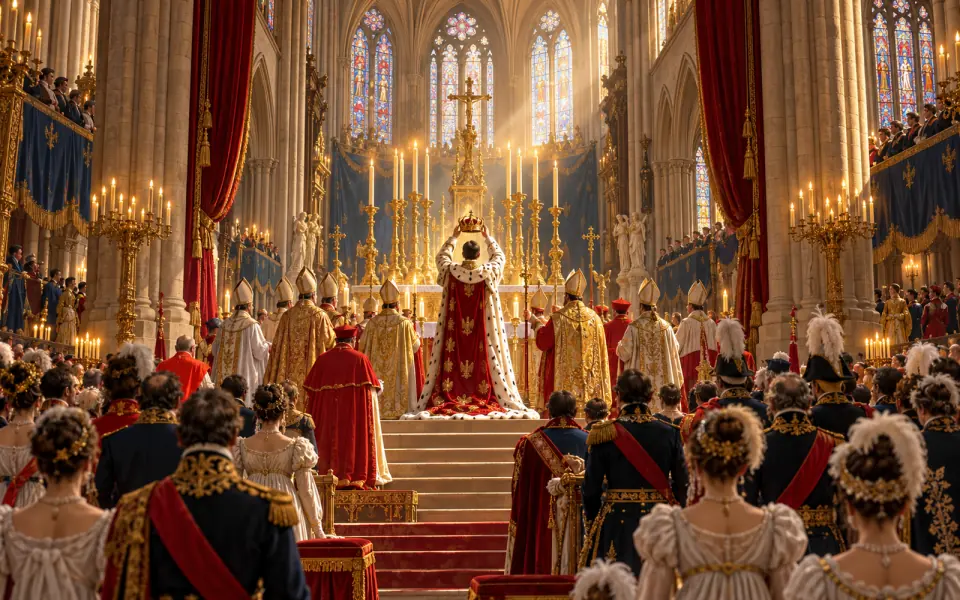 AfterNapoleon becomes emperor1804
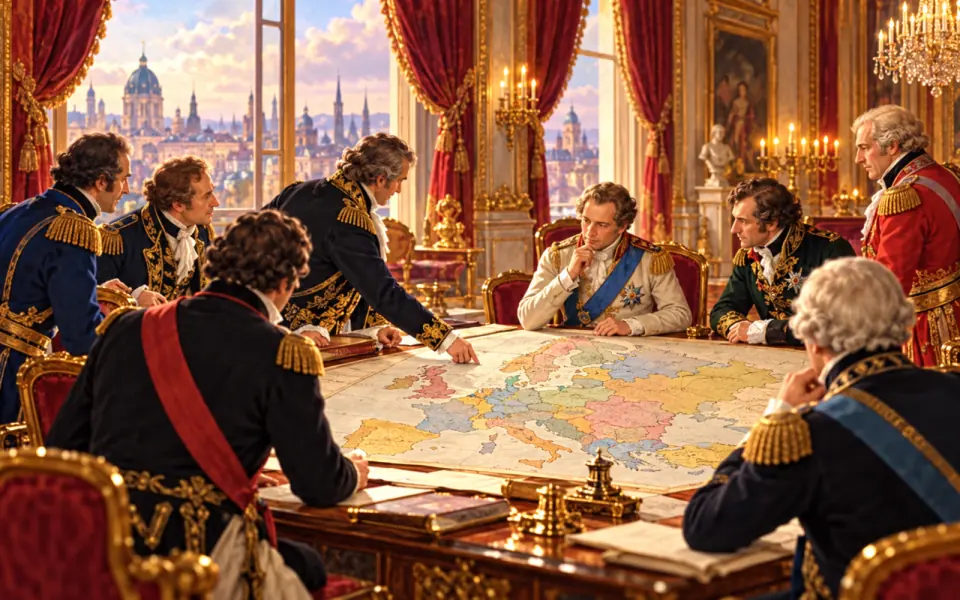 AfterThe Congress of Vienna1815
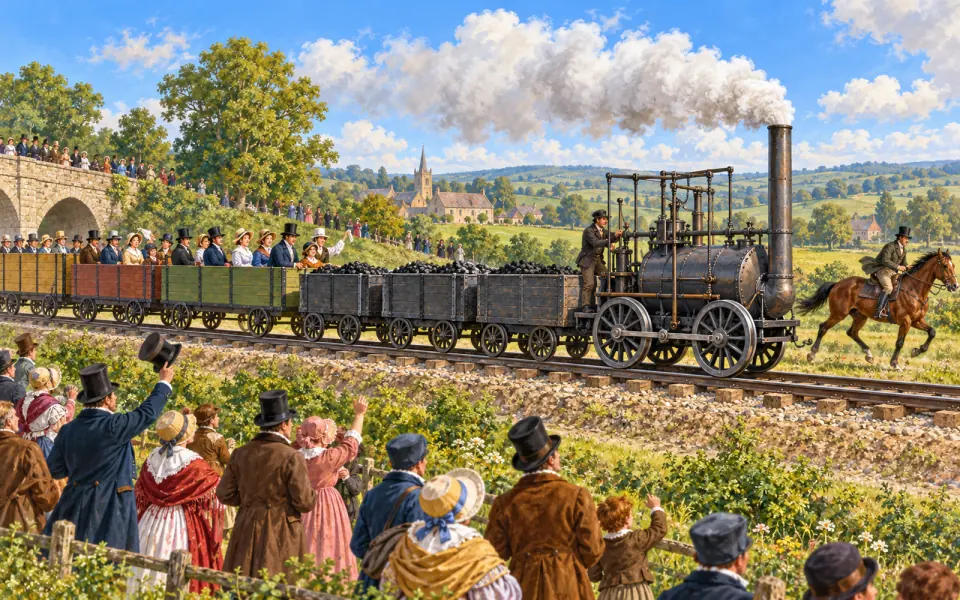 AfterThe first public steam railway1825
 AfterNiépce's photographabout 1826
 AfterManzoni's The Betrothed1827
 AfterThe electric telegraph1844
 AfterThe revolutions of 18481848
 AfterDarwin publishes On the Origin of Species1859
 AfterThe Expedition of the Thousand1860
 AfterThe unification of Italy1861
 AfterThe labour movementabout 1864
 AfterCompulsory primary school (Coppino law)1877
 AfterA practical electric light bulb1879
 AfterThe first modern motor car1886
 AfterThe Lumière brothers' cinema1895
Listen / Read next
- Music to read by: Cinematic JourneyEpic film-style music, no lyrics, by Ciro Simone IrmiciSpotifyYouTube Music
Meanwhile, elsewhere in the world
Other events of the era “Age of revolutions”
- Newcomen's steam engine
- The European Enlightenment
- Watt's steam engine
- The American Revolution
- The first hot-air balloon flight
- The French Revolution
- The metric system
- Jenner's vaccine
- Volta's battery
- Napoleon becomes emperor
- The Congress of Vienna
- The first public steam railway
- Niépce's photograph
- Manzoni's The Betrothed
- The electric telegraph
- The revolutions of 1848
- Darwin publishes On the Origin of Species
- The Expedition of the Thousand
- The unification of Italy
- The labour movement
- Compulsory primary school (Coppino law)
- A practical electric light bulb
- The first modern motor car
- The Lumière brothers' cinema
