The Webb telescope starts observing
2022 Launched from Kourou (French Guiana); works 1.5 million km from the Earth
In short
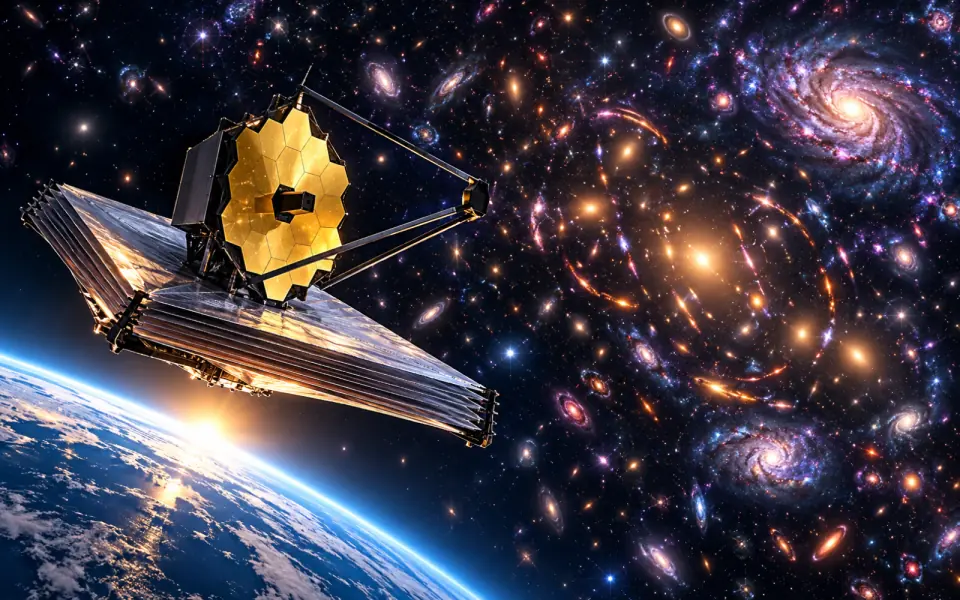
The James Webb Space Telescope, built by NASA, ESA and the Canadian Space Agency, was launched on Christmas Day 2021 on a European Ariane 5 rocket from French Guiana. Its mirror, 6.5 metres across, is made of 18 gold-coated hexagonal pieces and travelled folded up like origami. It works 1.5 million kilometres from the Earth and mainly observes infrared light, which our eyes cannot see. On 12 July 2022 the first scientific images were revealed.
Why it matters Webb can observe galaxies born soon after the Big Bang and study the atmospheres of planets orbiting other stars.
Source: ESA, “Webb”
Study card about 5 minutes of reading
The story
Hubble's successor
Since 1990 a telescope called Hubble has been circling the Earth and has given us beautiful photographs of the sky. Hubble looks mostly at visible light, the light that our eyes can see too. But there is much more to discover in another kind of light that we cannot see: infrared, that is, heat. Infrared passes through clouds of dust and gas, and reaches us from the most distant stars and galaxies: their light, travelling for billions of years through expanding space, has been “stretched” until it became infrared.
To see the first galaxies, born a few hundred million years after the Big Bang, you would need a large infrared telescope in space. In 1996 a group of American astronomers proposed building one. The project was called the Next Generation Space Telescope, later renamed after James Webb, the head of NASA at the time of the Apollo missions. It took twenty-five years of work, delays and very high costs, about ten billion dollars, and the collaboration of three agencies: NASA, the European Space Agency ESA and the Canadian one.
A golden mirror
The Webb telescope has a main mirror 6.5 metres across, about three times that of Hubble. A mirror that wide would not fit in the rocket, so it was divided into eighteen hexagonal segments, made of beryllium, a light and strong metal, and covered with a very thin layer of gold, which reflects infrared extremely well. They were folded like the panels of an origami, to unfold in space. The sunshield too, as big as a tennis court, was made of five very thin layers, like sheets of plastic, which had to unfold.
The telescope has to be extremely cold, at almost 230 degrees below zero, so that its own heat does not disturb the detection of faint infrared. That is why it does not orbit the Earth, like Hubble, but sits about a million and a half kilometres from us, at a special point called L2, where the Earth, the Sun and the Moon always stay on the same side: the shield keeps them all behind it.
The journey and the unfolding
Webb set off on 25 December 2021 from the European base at Kourou, in French Guiana, on an Ariane 5 rocket. In the following thirty days, as it travelled towards its destination, it had to carry out hundreds of delicate operations: open the shield, stretch the layers, unfold the mirrors. The engineers called them the “344 things that could go wrong”: if even one had failed, the mission would have been over. One after another, they all succeeded. The launch was so precise that the telescope has fuel for far longer than the planned twenty years.
The first images
After months of testing and fine-tuning, on 12 July 2022 NASA, with ESA and Canada, showed the world the first scientific colour photographs. The first, unveiled the day before by the American president Joe Biden, was a “deep field”: a tiny patch of sky, as big as a grain of sand held at arm's length, full of thousands of galaxies, some seen as they were more than thirteen billion years ago. Then came the images of the Carina Nebula, coloured like a landscape of mountains, of five nearby galaxies touching one another, the Southern Ring Nebula and, above all, the spectrum of a planet outside the Solar System, in which the telescope found traces of water vapour.
What it is looking for
Webb studies how the first stars and galaxies were born after the Big Bang, how stars and planets form, and what the atmosphere of planets orbiting other stars is like, to understand whether any of them could be home to life. From the first months it has found galaxies older and brighter than expected, and has revealed details never seen before.
Why it happened
Scientists wanted to find out what the young universe was like. Hubble had seen distant galaxies, but not far enough: the older the light, the more it shifts towards infrared. To see the dawn of the universe a new instrument was needed, with a very large, cold mirror.
The project took more than twenty years because every part had to be invented from scratch: new materials, sensors that work at extremely low temperatures, opening mechanisms that had to work a million and a half kilometres away, with no possibility of repair.
What changed
Webb is revolutionising astronomy. It has shown galaxies that were already big a few hundred million years after the Big Bang, has revealed details of nebulae where stars are born and has begun to study the atmospheres of distant planets very precisely, recognising molecules such as water and carbon dioxide.
Its images, made public, have been seen by millions of people, and every new photograph raises questions: how did the first stars form? Are there other worlds like ours? Astronomy is perhaps closer than ever to answering these questions.
In future other telescopes, on Earth and in space, will work together with Webb. But this telescope will remain a symbol of collaboration: thousands of scientists and engineers from many countries, and a wait of twenty-five years to get a window onto the childhood of the universe.
Key people and places
People
- James E. Webb
- American administrator (1906–1992): head of NASA from 1961 to 1968, he led the agency in the early years of the Apollo programme.
- John Mather
- American physicist (born 1946): senior project scientist of Webb; Nobel Prize in Physics in 2006.
- Jane Rigby
- American astronomer: operations project scientist of the Webb telescope.
- Edwin Hubble
- American astronomer (1889–1953): he discovered that the universe is expanding; the Hubble telescope is named after him.
- Gillian Wright
- British astronomer: she led the European team for Webb's MIRI instrument.
Places
- Kourou, French Guiana
- The European space base from which the telescope set off on 25 December 2021.
- Sun-Earth L2 point
- The point about a million and a half kilometres from the Earth where the telescope is located.
Good to know
- Webb's mirror has 18 hexagonal segments, covered with a very thin layer of gold.
- Webb is about a million and a half kilometres from the Earth, four times the distance of the Moon.
- To unfold in space, 344 critical points had to work, with no possibility of repair.
- Its sunshield is as big as a tennis court.
- Webb cost about 10 billion dollars and took about twenty-five years of work.
Find out more
- ESA, “Webb” esa.int
- NASA, “James Webb Space Telescope” science.nasa.gov
- Wikipedia, “James Webb Space Telescope” en.wikipedia.org
Related events
- Galileo turns his telescope to the sky1609 · Early modern ageGalileo, in 1609, used the telescope to look at the sky.
- The first image of a black hole2019 · TodayThe first images of a black hole were obtained with radio telescopes.
- The Moon landing1969 · TodayApollo 11 took man to the Moon in 1969.
- The International Space Station1998 · TodayThe International Space Station is another laboratory in orbit.
Before and after, in the era “Today”
Event 25 of 25
 BeforeThe double helix of DNA1953
 BeforeThe polio vaccine1955
 BeforeBirth of the European Community1957
 BeforeThe first artificial satellite1957
 BeforeThe first human in space1961
 BeforePop artabout 1962
 BeforeThe Beatles1963
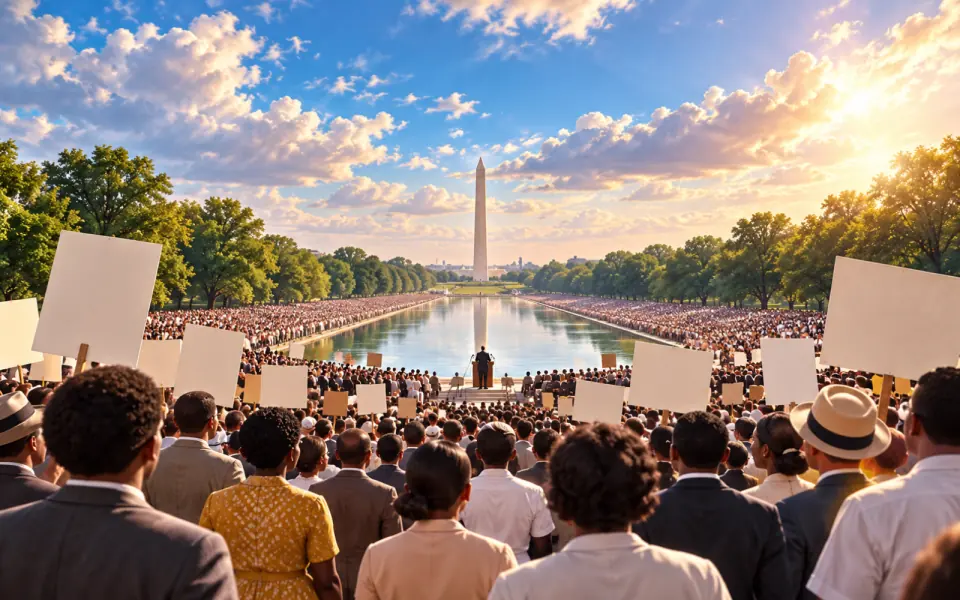 BeforeMartin Luther King and civil rights1963
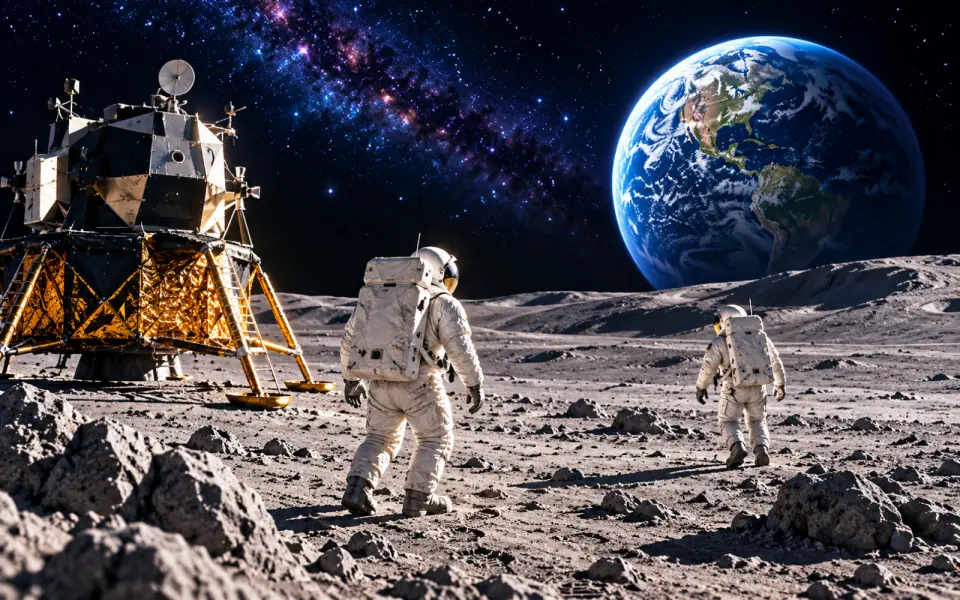 BeforeThe Moon landing1969
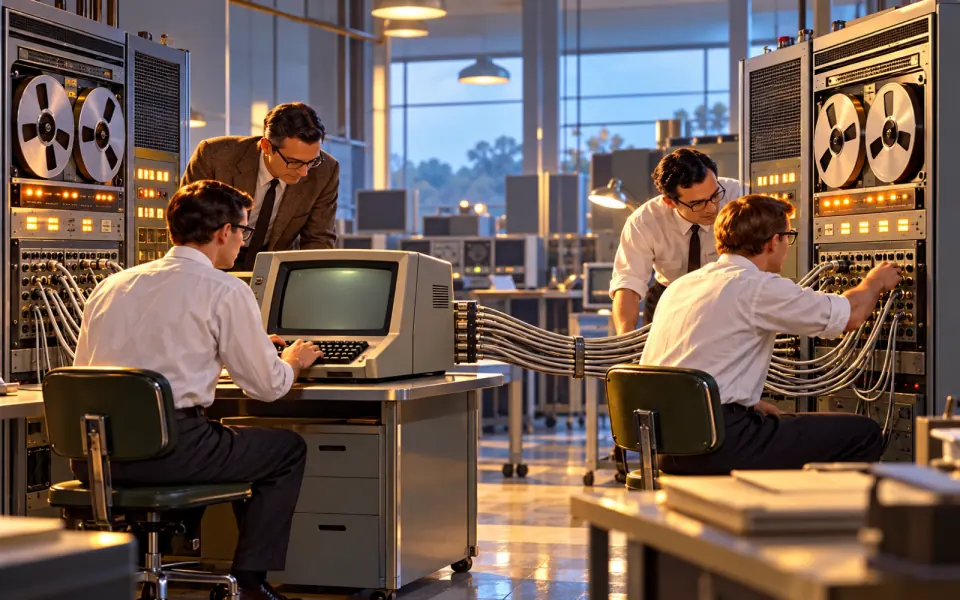 BeforeThe internet's first ARPANET links1969
 BeforeEarth Day and the environmental movement1970
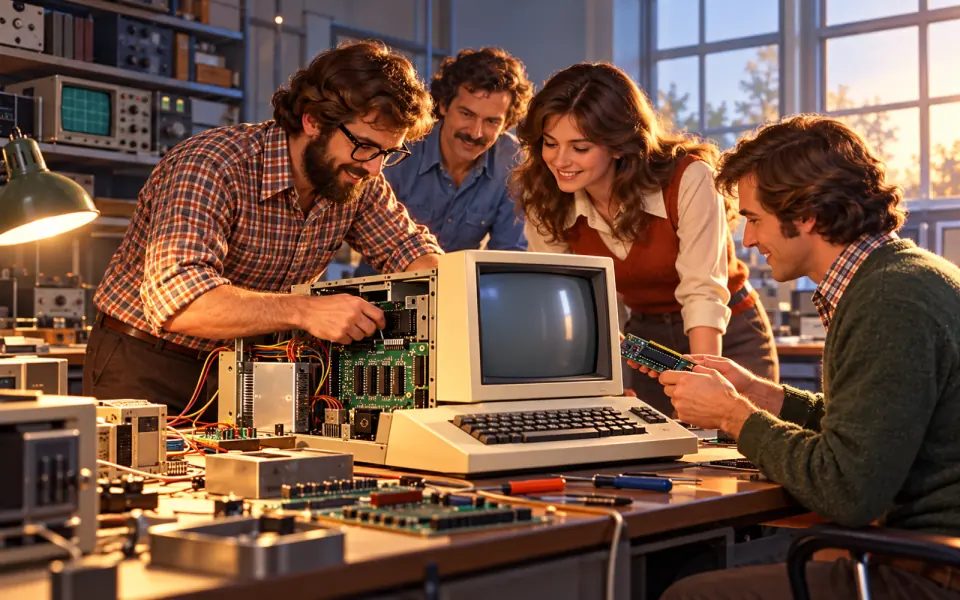 BeforeThe personal computer1977
 BeforeThe fall of the Berlin Wall1989
 BeforeThe World Wide Web1991
 BeforeThe European Union1993
 BeforeNelson Mandela becomes president1994
 BeforeThe International Space Station1998
 BeforeEuro notes and coins arrive2002
 BeforeThe modern smartphone2007
 BeforeThe global financial crisis2008
 BeforeMalala wins the Nobel Peace Prize2014
 BeforeThe Paris Agreement on climate2015
 BeforeThe first image of a black hole2019
 BeforeThe COVID-19 pandemic2020
- You are hereThe Webb telescope starts observing2022
Listen / Read next
- Music to read by: Cinematic JourneyEpic film-style music, no lyrics, by Ciro Simone IrmiciSpotifyYouTube Music
Meanwhile, elsewhere in the world
Other events of the era “Today”
- The double helix of DNA
- The polio vaccine
- Birth of the European Community
- The first artificial satellite
- The first human in space
- Pop art
- The Beatles
- Martin Luther King and civil rights
- The Moon landing
- The internet's first ARPANET links
- Earth Day and the environmental movement
- The personal computer
- The fall of the Berlin Wall
- The World Wide Web
- The European Union
- Nelson Mandela becomes president
- The International Space Station
- Euro notes and coins arrive
- The modern smartphone
- The global financial crisis
- Malala wins the Nobel Peace Prize
- The Paris Agreement on climate
- The first image of a black hole
- The COVID-19 pandemic
