Birth of the European Community
1957 Capitoline Hill, Rome, Italy
In short
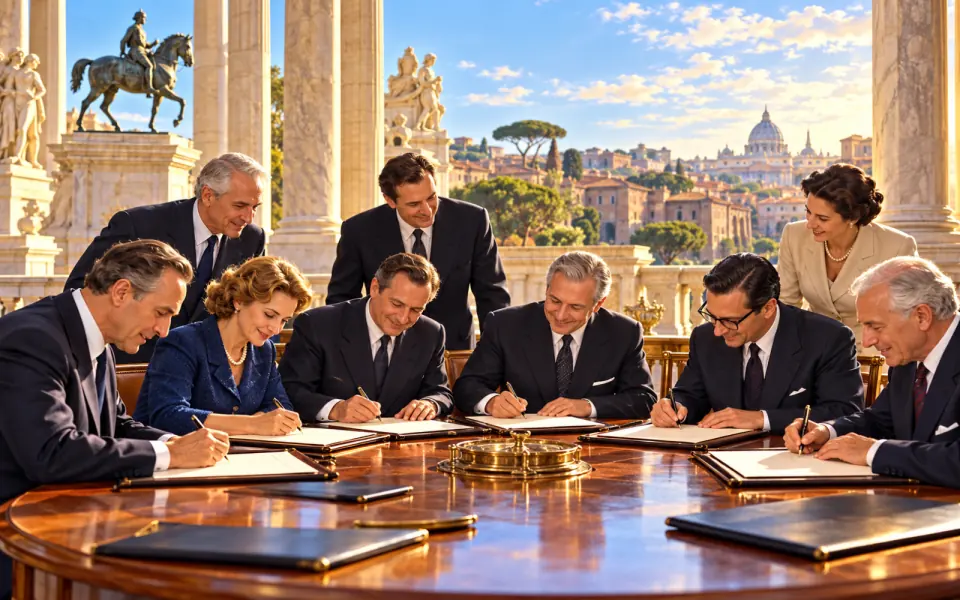
After two world wars, some European politicians thought the best way to avoid new conflicts was to work together. On 25 March 1957, on the Capitoline Hill in Rome, six countries signed the Treaties of Rome: Belgium, France, West Germany, Italy, Luxembourg and the Netherlands. The European Economic Community was born, aiming for a common market with no customs duties between its members, together with a community for atomic energy. Back in 1951 the same six had already pooled their coal and steel.
Why it matters It was the first big step towards the European Union, which has united in peace countries that were once enemies.
Source: European Union, “Storia dell'Unione europea”
Study card about 5 minutes of reading
The story
From the rubble to reconciliation
In 1945, when the Second World War ended, Europe lay in ruins. Millions of people were dead, cities were destroyed, many factories were idle and hunger was widespread. In less than eighty years France and Germany had gone to war three times. Many people asked how to stop it happening again.
One answer was simple and brave: to tie the European countries together so closely that war between them would become impossible. On 9 May 1950 the French foreign minister Robert Schuman, inspired by the official Jean Monnet, proposed putting the coal and steel production of France and Germany, the materials needed to make weapons, under a common authority. In 1951 six countries signed the treaty: France, West Germany, Italy, Belgium, the Netherlands and Luxembourg. The ECSC had been born, the European Coal and Steel Community.
The next step
The project, however, did not head straight for a political union. In 1954 the French parliament rejected the idea of a common European army, and many people thought the European dream was over. The six countries then decided to start again from the economy, which was more concrete. In June 1955 their foreign ministers met in Messina, in Sicily, and asked the Belgian Paul-Henri Spaak to prepare a plan. After two years of work and negotiations, the plan was ready.
On 25 March 1957, in a rainy Rome, the representatives of the six countries gathered on the Capitoline Hill, in the Hall of the Horatii and Curiatii in the Palazzo dei Conservatori, and signed two treaties. For Italy there were the prime minister Antonio Segni and the foreign minister Gaetano Martino; for Germany Konrad Adenauer; for Belgium Paul-Henri Spaak. The first treaty created the European Economic Community (EEC), that is, a “common market”; the second created Euratom, so that nuclear energy could be used together for peaceful purposes only. The two documents were written in four languages, all equally valid: Dutch, French, German and Italian.
What is a common market?
The common market promised something that seems normal today: goods, workers, services and money could move between the countries without customs duties, that is, without the taxes paid at the border. The six countries promised to remove duties between themselves, to set a common duty towards other countries and to coordinate their economic policies, for example farming. Tariffs between the countries were abolished completely on 1 July 1968, a year and a half ahead of schedule.
The treaties came into force on 1 January 1958. In time the institutions grew: the European Commission, which proposes laws, the Council, which brings together the governments, a parliamentary Assembly, later to become the European Parliament, and a Court of Justice to make sure the rules were followed. Among the fathers of this idea we remember, besides Schuman and Monnet, three Christian Democrat leaders who were convinced of European unity: the Italian Alcide De Gasperi, the German Adenauer and Schuman himself, who all spoke the language of reconciliation.
An open door
The Treaty of Rome was not meant to be a closed club. The text said that any European state could ask to join. The United Kingdom tried as early as the 1960s, but was blocked by the veto of de Gaulle's France; it joined only in 1973, together with Ireland and Denmark. The Community went on growing in the following decades, until it became the great common home of today.
Why it happened
The deepest cause was the desire for peace. After two world wars that began in Europe, many leaders understood that the biggest states must no longer be enemies, but partners in the same business: if wealth and interests are tangled together, war costs everyone too much.
The economy mattered too: European companies needed bigger markets to compete with those of the United States and the Soviet Union, and the countries needed to rebuild fast. Finally, in the climate of the Cold War, Western Europe wanted to be united and strong in the face of the Soviet bloc, with American support through the Marshall Plan.
What changed
The common market worked better than expected, partly because companies could at last sell in an area with about 170 million people. Between 1958 and 1968 trade among the six countries grew much faster than trade with the rest of the world, and the European economy enjoyed a long period of growth. France, Germany and Italy, once enemies, became regular partners.
The Treaty of Rome is the starting point of today's European Union: later treaties have changed and widened it, but the idea of a market without borders and of common institutions has remained. From it came the single market, free movement of people, the Erasmus programme for studying abroad and, many years later, the single currency.
The road has not been a straight one: there have been vetoes, crises and heated arguments, and the European project also has many critics. But the basic idea, that common problems are better tackled together, gave Western Europe one of the longest periods of peace in its modern history.
Key people and places
People
- Robert Schuman
- French politician (1886–1963): in 1950 he proposed pooling coal and steel.
- Jean Monnet
- French official and businessman (1888–1979): he inspired Schuman's plan and was the first president of the ECSC.
- Alcide De Gasperi
- Italian politician (1881–1954): he strongly supported European unity.
- Konrad Adenauer
- Chancellor of West Germany (1876–1967): he signed the Treaties of Rome.
- Paul-Henri Spaak
- Belgian politician (1899–1972): he led the committee that prepared the treaties.
Places
- Capitoline Hill, Rome
- In the Hall of the Horatii and Curiatii the six countries signed the treaties on 25 March 1957.
- Messina, Sicily
- In June 1955 the ministers of the six countries decided here to start again from the economy.
Good to know
- The Treaties of Rome were written in four languages, all equally valid: Dutch, French, German and Italian.
- On the day of the signing, 25 March 1957, it was raining in Rome.
- Duties between the six countries were removed completely on 1 July 1968, ahead of schedule.
- Euratom, the second treaty signed in Rome, was meant to use nuclear energy for peaceful purposes only.
- There were six founding countries: Belgium, France, West Germany, Italy, Luxembourg and the Netherlands.
Find out more
- European Union, “History of the EU: 1945-59” european-union.europa.eu
- Wikipedia, “European Economic Community” en.wikipedia.org
- Wikipedia, “Treaty of Rome” en.wikipedia.org
Related events
- Post-war rebuildingabout 1948 · Early 20th centuryAfter the war, reconstruction with the Marshall Plan pushed the European countries to work together.
- The European Union1993 · TodayIn 1993 the Community became the European Union.
- Euro notes and coins arrive2002 · TodayIn 2002 the euro arrived in citizens' pockets.
- The fall of the Berlin Wall1989 · TodayAfter 1989 many Eastern countries joined Europe.
Before and after, in the era “Today”
Event 3 of 25
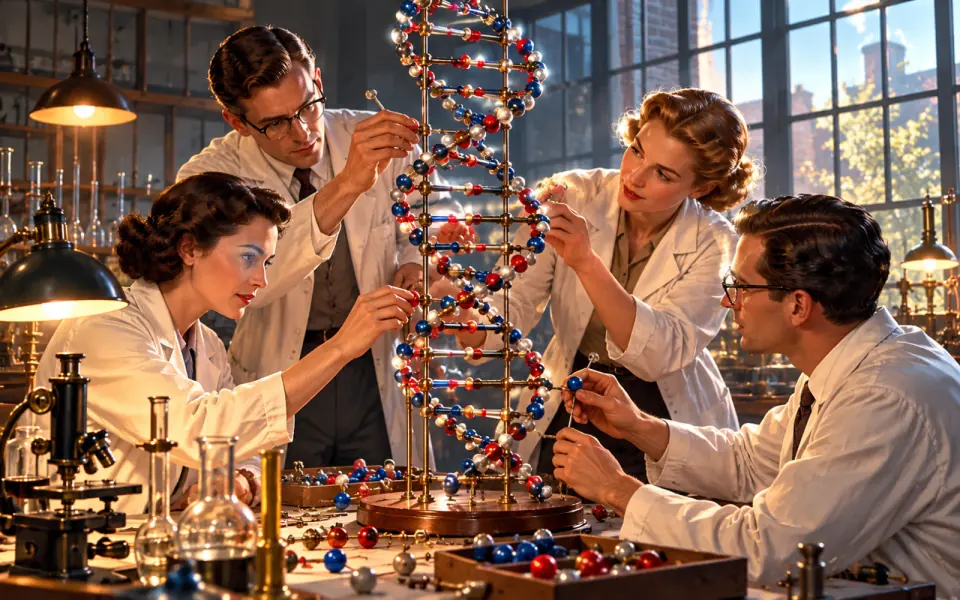 BeforeThe double helix of DNA1953
 BeforeThe polio vaccine1955
- You are hereBirth of the European Community1957
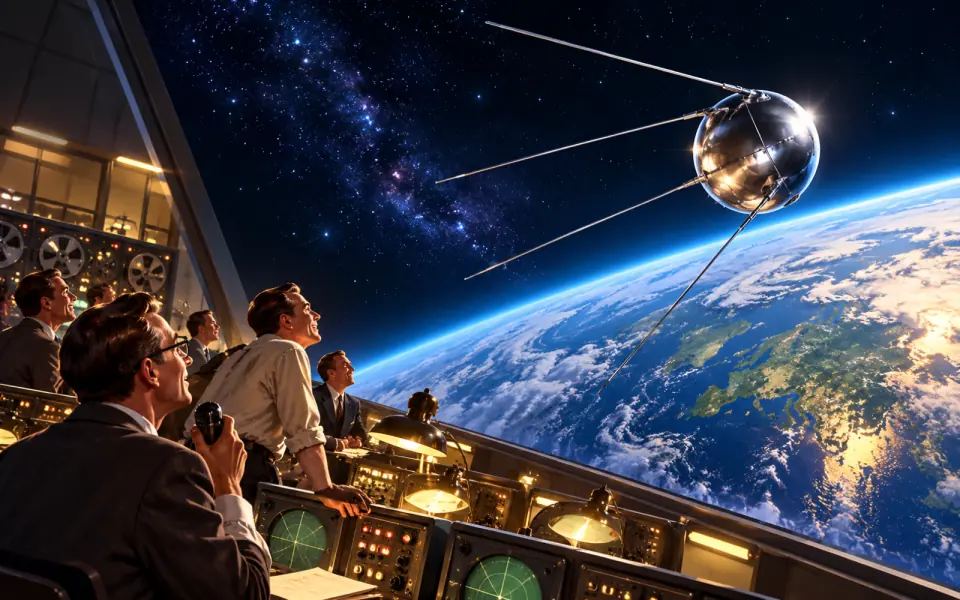 AfterThe first artificial satellite1957
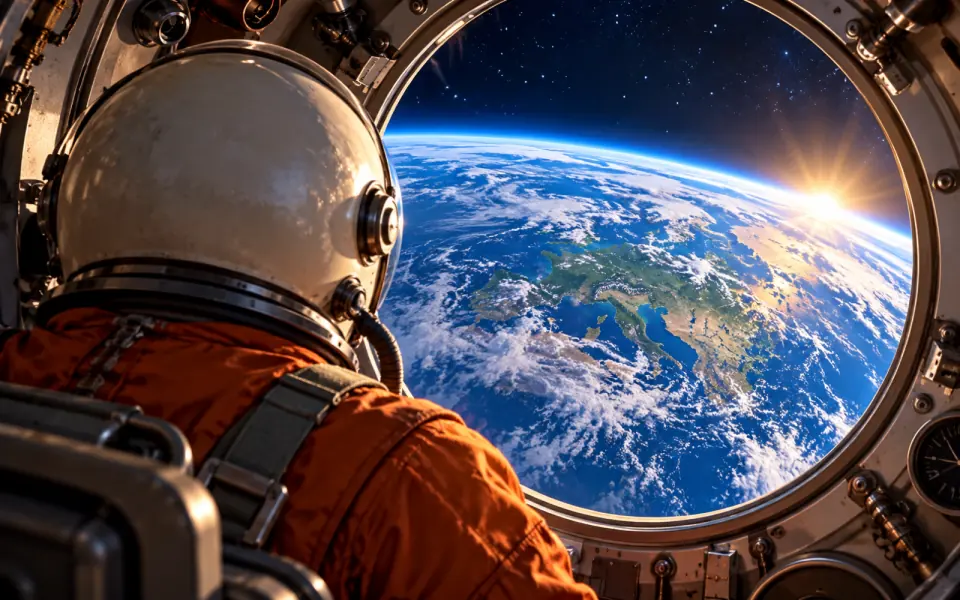 AfterThe first human in space1961
 AfterPop artabout 1962
 AfterThe Beatles1963
 AfterMartin Luther King and civil rights1963
 AfterThe Moon landing1969
 AfterThe internet's first ARPANET links1969
 AfterEarth Day and the environmental movement1970
 AfterThe personal computer1977
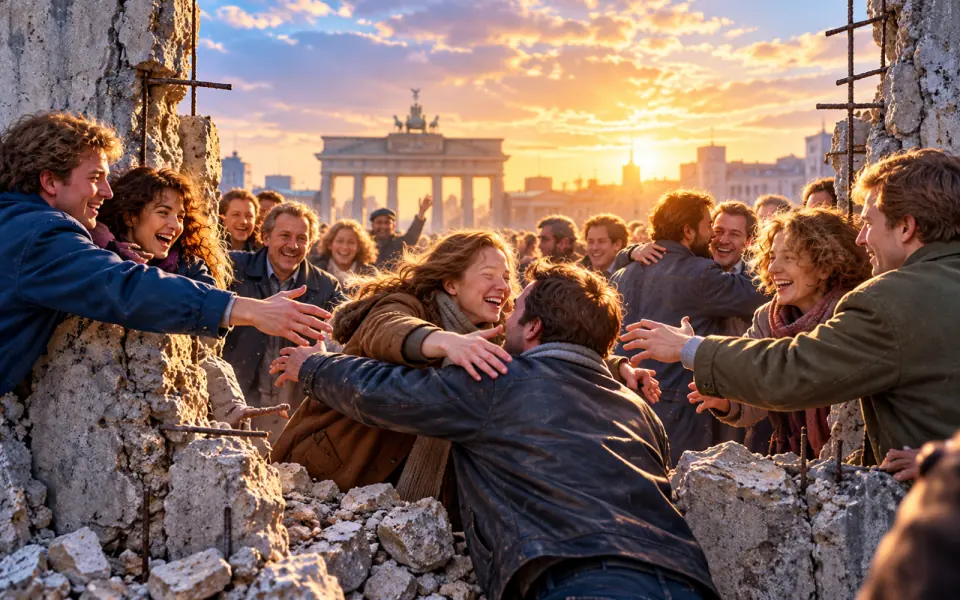 AfterThe fall of the Berlin Wall1989
 AfterThe World Wide Web1991
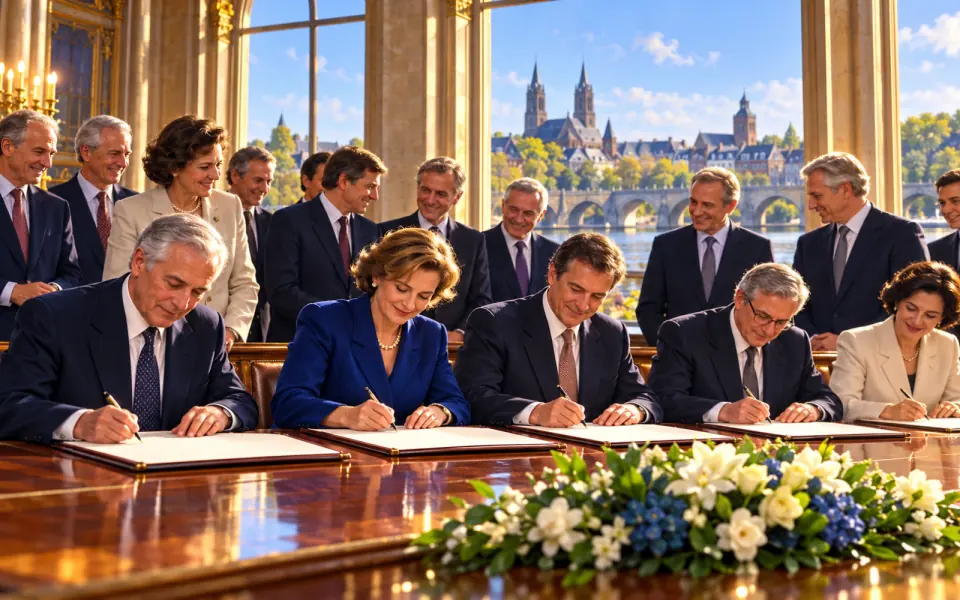 AfterThe European Union1993
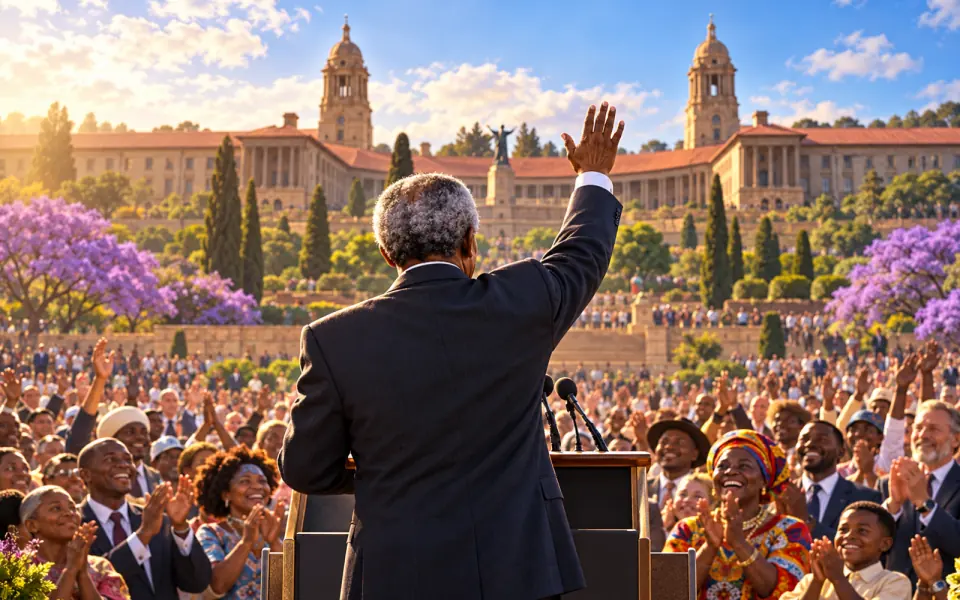 AfterNelson Mandela becomes president1994
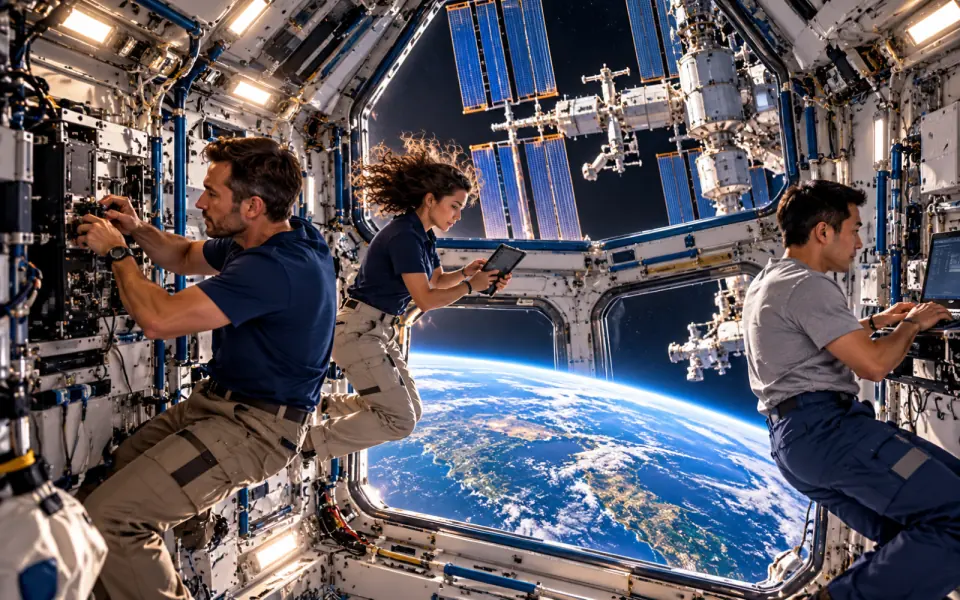 AfterThe International Space Station1998
 AfterEuro notes and coins arrive2002
 AfterThe modern smartphone2007
 AfterThe global financial crisis2008
 AfterMalala wins the Nobel Peace Prize2014
 AfterThe Paris Agreement on climate2015
 AfterThe first image of a black hole2019
 AfterThe COVID-19 pandemic2020
 AfterThe Webb telescope starts observing2022
Listen / Read next
- Music to read by: Cinematic JourneyEpic film-style music, no lyrics, by Ciro Simone IrmiciSpotifyYouTube Music
Meanwhile, elsewhere in the world
Other events of the era “Today”
- The double helix of DNA
- The polio vaccine
- The first artificial satellite
- The first human in space
- Pop art
- The Beatles
- Martin Luther King and civil rights
- The Moon landing
- The internet's first ARPANET links
- Earth Day and the environmental movement
- The personal computer
- The fall of the Berlin Wall
- The World Wide Web
- The European Union
- Nelson Mandela becomes president
- The International Space Station
- Euro notes and coins arrive
- The modern smartphone
- The global financial crisis
- Malala wins the Nobel Peace Prize
- The Paris Agreement on climate
- The first image of a black hole
- The COVID-19 pandemic
- The Webb telescope starts observing
