Talking pictures
1927 New York, United States
In short
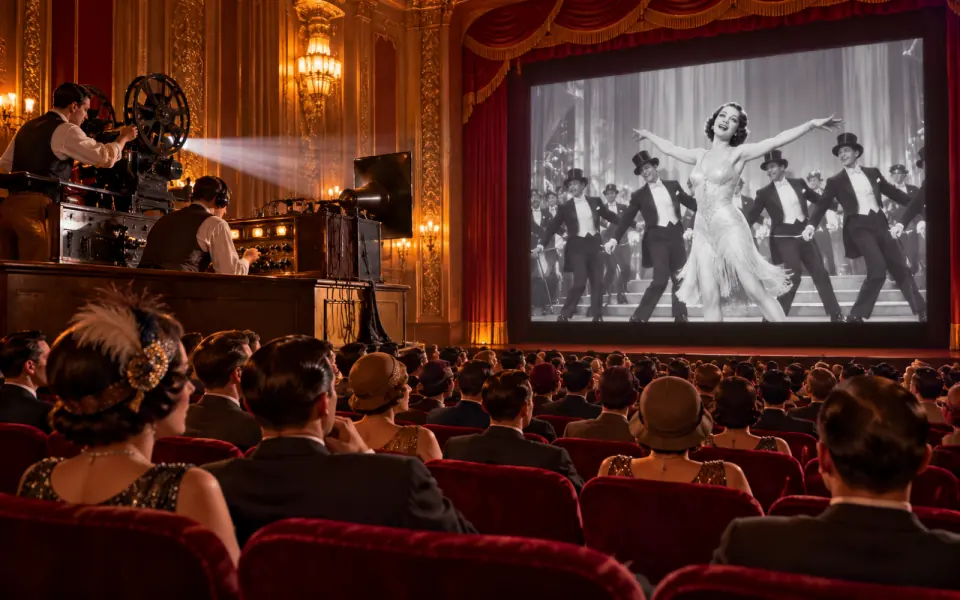
For its first thirty years cinema was silent: the words appeared written on the screen and in the cinema a pianist or an orchestra played live. On 6 October 1927 The Jazz Singer came out in New York, the first feature film with some scenes of dialogue and songs synchronised with the pictures. Audiences were amazed to hear the actors' voices. Within a few years almost all films had sound, and some silent film stars lost their jobs.
Why it matters Sound turned cinema into the kind of show we know, with voices, music and effects.
Source: Encyclopaedia Britannica, “The Jazz Singer”
Study card about 5 minutes of reading
The story
The cinema that did not talk
For more than thirty years, from the first screenings by the Lumière brothers in 1895, cinema was silent. On the screen you saw only moving pictures, in black and white. To show what the characters were saying, title cards were used, short pieces of writing that appeared between one scene and the next. But the cinema was never silent: there was often a pianist, or a whole orchestra in the bigger cinemas, playing live to follow the action. Sometimes there was also a “barker” who explained the story aloud.
Silent films had a great art of their own: actors such as Charlie Chaplin, Buster Keaton and Mary Pickford could make people laugh and feel moved with only gestures, faces and their bodies. Many artists, and the public, thought that cinema was a universal language precisely because it had no words, and that adding sound would spoil it.
The problem of synchronisation
Inventors, though, had always been trying to make pictures talk: the hard part was synchronising the sound with the scenes. People tried recording the sound on a big disc to be played along with the projector, but if the disc slipped for a moment, the lips and the words no longer matched. With a full house it was a disaster. Other inventors put the voice on the same film, as a thin line running along its edge, a steadier system that in the end won out.
The big film studios were in no hurry: silent cinema was doing very well, and sound cost a lot. But a small production company, Warner Bros, which was close to going bankrupt, decided to gamble on sound, with a disc system called Vitaphone. In 1926 a first film with recorded music and sound effects came out, and the public was thrilled.
6 October 1927
On the evening of 6 October 1927, in a cinema in New York, there was the premiere of a film called “The Jazz Singer”, the first feature film with synchronised singing and speech, starring the singer Al Jolson. It was almost all silent, with title cards and music, but in some scenes Jolson really sang and, at one point, spoke to the audience, with a line that was already part of his repertoire: “Wait a minute, you ain't heard nothin' yet!” The hall erupted in applause. One of the Warner brothers, Sam, who had wanted sound more than anyone, could not see it: he had died the day before, a few hours before the premiere.
The success was overwhelming. In 1928 “Lights of New York” came out, the first film that was all talking, and in a few years almost all American cinemas were fitted with sound equipment. Silent cinema vanished. In 1928 Walt Disney also presented “Steamboat Willie”, a cartoon with a well-synchronised soundtrack, which marked the official debut of Mickey Mouse.
Voices and languages
Sound changed everything. Some silent-film actors, with voices that did not suit, disappeared from the screen; the musicians in the cinemas lost their jobs; directors had to learn to film with microphones, which forced actors to stay still. New jobs appeared: sound engineers, film-score composers, dialogue writers. Genres such as the musical gained strength, and cinema began to move with great freedom again.
Sound also created a problem: languages. Silent films, with translated title cards, could be seen by everyone; talking films could not. People used subtitles or dubbing, replacing the original voices with voices in the language of the country. In Italy the first sound film, “La canzone dell'amore”, came out in 1930, and the Fascist regime soon required foreign films to be dubbed: a tradition, that of Italian voice actors, which is still very strong today. In 1937 Cinecittà, the great film city, was opened in Rome.
Why it happened
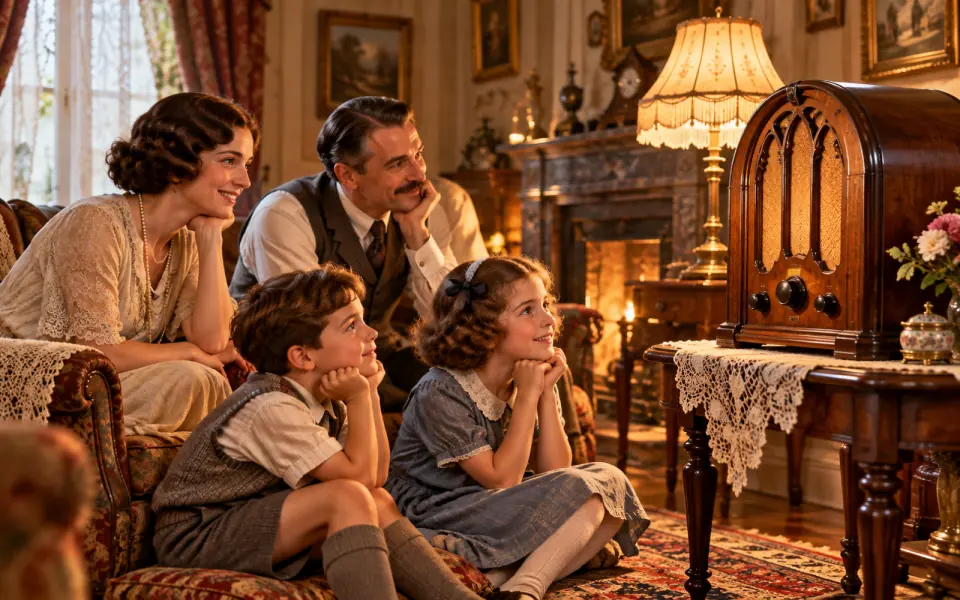
Sound cinema was born from the meeting of two technologies: electricity, which made it possible to amplify sound thanks to Lee de Forest's valve, and recording. After radio, audiences were already used to listening to voices and music at home, and cinema feared losing viewers.
The success of 1927 also depended on the economic situation: Warner needed a breakthrough to survive, and sound gave it an advantage. Once it was clear that the public wanted it, everyone else had to follow.
What changed
With sound, cinema became the great mass entertainment of the 20th century. The musical, the screwball comedy, gangster films and stories in which dialogue mattered all took hold. In 1929 the first Academy Awards ceremony was held.
Many artists, such as Charlie Chaplin, held out for a long time: his film “City Lights” (1931) had only music and sound effects, and “Modern Times” (1936) only a few sounds and a song. But after “The Great Dictator” (1940), in which he spoke, even he accepted the voice.
Cinema went on evolving: with colour, widescreen, special effects, 3D films and cinemas with surround sound, up to digital cinema and the streaming on which we now watch films at home and on our phones.
Key people and places
People
- Al Jolson
- American singer and actor (1886–1950): the star of “The Jazz Singer”.
- Sam Warner
- American producer (1887–1927): he promoted sound at Warner Bros; he died the day before the film's premiere.
- Charlie Chaplin
- English actor and director (1889–1977): a master of silent cinema, he held out against sound.
- Walt Disney
- American producer and animator (1901–1966): with “Steamboat Willie” (1928) he made the sound cartoon famous.
- Gennaro Righelli
- Italian director (1886–1949): he directed “La canzone dell'amore”, the first Italian sound film.
Places
- Warner Theatre, New York
- The cinema where “The Jazz Singer” was presented on 6 October 1927.
- Cinecittà, Rome
- The film studios opened in 1937.
Good to know
- “The Jazz Singer”, released on 6 October 1927, was the first feature film with spoken and sung parts.
- “Steamboat Willie” of 1928 was one of the first sound cartoons, and the first successful one with a well-synchronised soundtrack.
- In silent cinema there was almost always a pianist or an orchestra in the hall.
- The first Italian sound film is “La canzone dell'amore”, from 1930.
- The Cinecittà studio in Rome was opened in 1937.
Find out more
- Wikipedia, “The Jazz Singer” en.wikipedia.org
- Wikipedia, “Sound film” en.wikipedia.org
- Wikipedia, “The Song of Love (1930 film)” en.wikipedia.org
- Museo Nazionale del Cinema, Turin museocinema.it
Related events
- The Lumière brothers' cinema1895 · Age of revolutionsThe Lumière brothers had invented cinema in 1895.
- Radio for everyoneabout 1920 · Early 20th centuryRadio had got the public used to listening to voices and music.
- Jazz spreadsabout 1920 · Early 20th century“The Jazz Singer” brought jazz to the big screen.
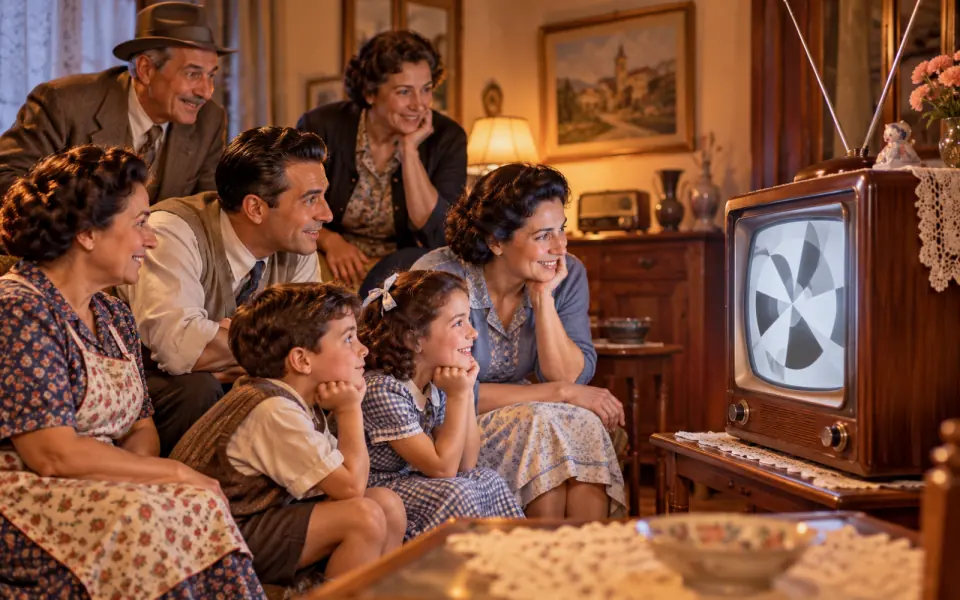
- Television spreadsabout 1950 · Early 20th centuryAfter cinema, television brought pictures into every home.
Before and after, in the era “Early 20th century”
Event 12 of 25
 BeforeThe first powered flight1903
 BeforeSpecial relativity1905
 BeforeMaria Montessori's Children's House1907
 BeforeAbstract artabout 1910
 BeforeMarie Curie and her two Nobel Prizes1911
 BeforeThe First World War1914–1918
 BeforeThe Russian Revolution1917
 BeforeRadio for everyoneabout 1920
 BeforeJazz spreadsabout 1920
 BeforeInsulin against diabetes1922
 BeforeTotalitarian regimes in Europe1922
- You are hereTalking pictures1927
 AfterThe discovery of penicillin1928
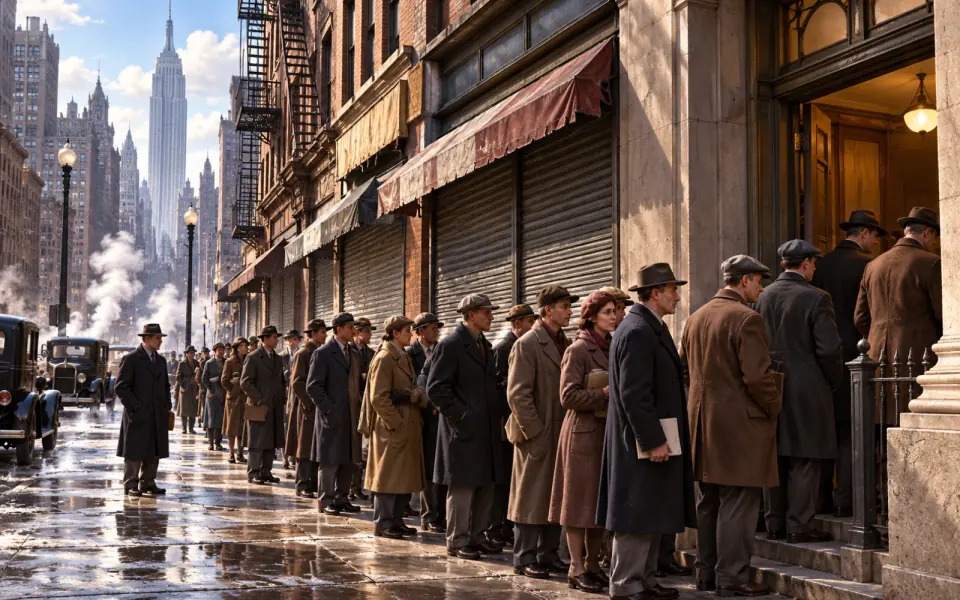 AfterThe Great Depression1929
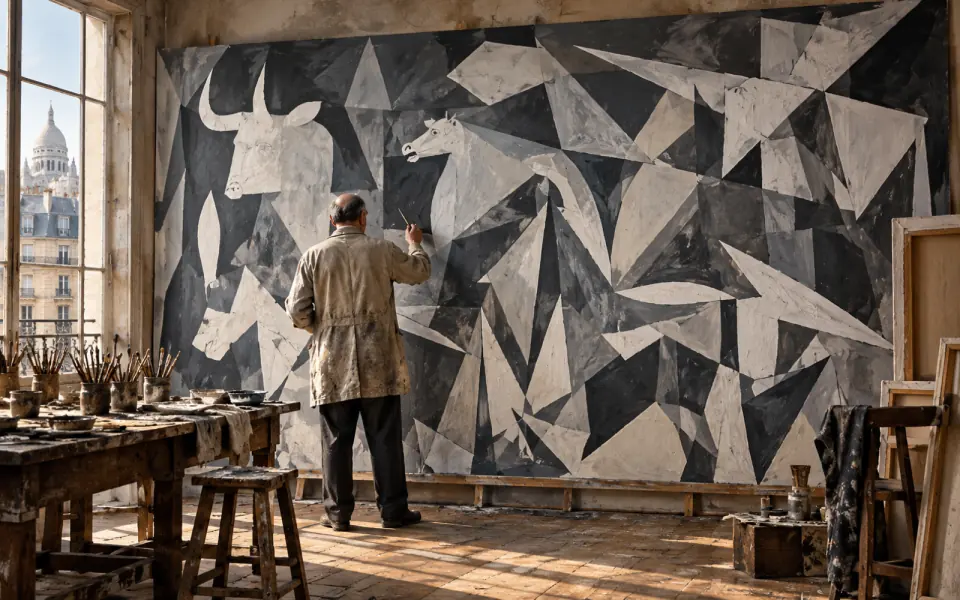 AfterPicasso's Guernica1937
 AfterThe Second World War1939–1945
 AfterThe Shoahabout 1941–1945
 AfterAnne Frank writes her diary1942
 AfterFermi and the first atomic pile1942
 AfterThe Italian Resistance1943–1945
 AfterThe Italian Republic and votes for women1946
 AfterThe first general-purpose electronic computer1946
 AfterThe Italian Constitution1948
 AfterPost-war rebuildingabout 1948
 AfterTelevision spreadsabout 1950
Listen / Read next
- Music to read by: Cinematic JourneyEpic film-style music, no lyrics, by Ciro Simone IrmiciSpotifyYouTube Music
Meanwhile, elsewhere in the world
Other events of the era “Early 20th century”
- The first powered flight
- Special relativity
- Maria Montessori's Children's House
- Abstract art
- Marie Curie and her two Nobel Prizes
- The First World War
- The Russian Revolution
- Radio for everyone
- Jazz spreads
- Insulin against diabetes
- Totalitarian regimes in Europe
- The discovery of penicillin
- The Great Depression
- Picasso's Guernica
- The Second World War
- The Shoah
- Anne Frank writes her diary
- Fermi and the first atomic pile
- The Italian Resistance
- The Italian Republic and votes for women
- The first general-purpose electronic computer
- The Italian Constitution
- Post-war rebuilding
- Television spreads
