Emperor Justinian
AD 527 Constantinople (now Istanbul, Turkey)
In short
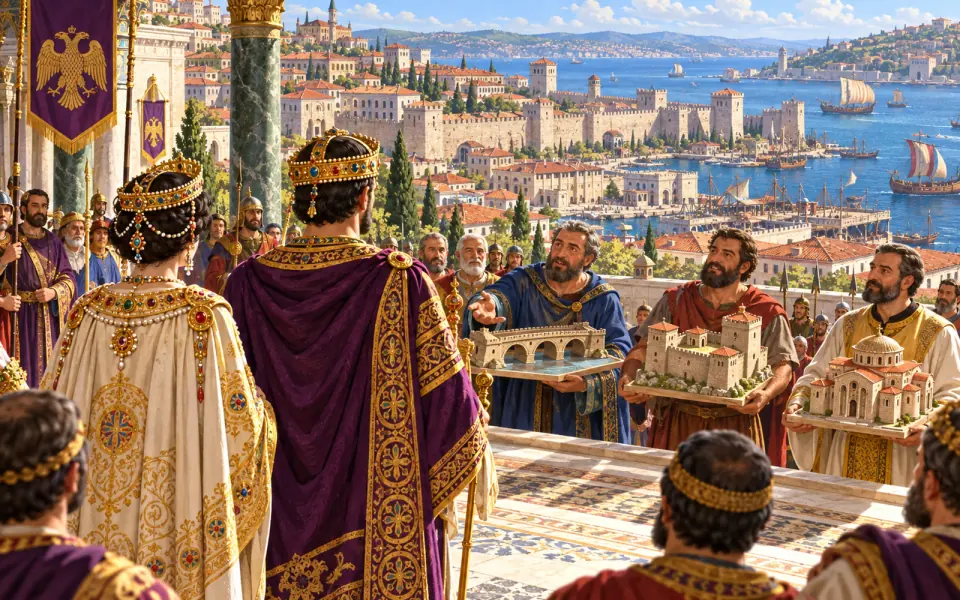
Justinian became Eastern Roman emperor in AD 527 and ruled from Constantinople, today's Istanbul, for almost forty years. At his side was his wife Theodora, who had a great deal of influence over his decisions. His dream was to win back the lands of the old Western Empire, and his generals retook North Africa and Italy after long wars. He also had churches, fortresses and bridges built throughout the empire.
Why it matters Under him the Byzantine Empire lived through one of its most splendid periods.
Source: Encyclopaedia Britannica, “Justinian I”
Study card about 5 minutes of reading
The story
From peasant to emperor
Justinian was born around AD 482 at Tauresium, a village in the Balkans (now in North Macedonia). His family spoke Latin, not Greek, the language used at Constantinople. His good fortune was his uncle on his mother's side, Justin, a soldier who became emperor in 518 and called his nephew to his side. Justinian studied, made a career and in 521 became consul. He was the emperor's real right-hand man.
On 1 April 527 Justin named him Augustus, that is, made him emperor together with himself. On 1 August of the same year his uncle died and Justinian remained the sole ruler. He governed for thirty-eight years, until 14 November 565.
An extraordinary wife
Beside him was Theodora. According to the historian Procopius of Caesarea, who however hated her and spoke very badly of her in a secret work, as a young woman she had been a stage actress, a trade that the Roman nobles despised. We know less for certain than we would like: she was probably born at Constantinople around 495-500, the daughter of a man who looked after the animals of a team at the hippodrome. Justinian met her around 522. To allow the marriage, his uncle the emperor had to change a law that forbade marriage between a citizen of rank and a woman of the theatre. When Justinian became emperor, Theodora was crowned Augusta, and she took part in the decisions of government more than empresses before her had done.
The Nika riot
In January 532 the capital came close to overthrowing the emperor. Constantinople had a great hippodrome, where chariot races were held, and the supporters' groups, called “factions” and told apart by their colours, were also political groups. The factions joined together against the emperor, shouting “Nika!”, that is, “Win!”. For a few days a large part of the city went up in flames, and the church of Hagia Sophia was destroyed too.
Justinian thought of fleeing. It is told, once again by Procopius, that Theodora persuaded him to stay: an emperor, she is said to have declared, must not abandon the throne. The generals Belisarius and Narses crushed the revolt in the hippodrome, and many thousands of people were killed: according to Procopius as many as thirty thousand. Straight afterwards the emperor had the church rebuilt, larger and more beautiful than before: the Hagia Sophia we talk about in another event.
The dream of reconquering the West
Justinian was convinced that he must bring the lost lands back under a single emperor. In 533 he sent the general Belisarius against the Vandals in North Africa: the enterprise succeeded in a few months, and in April 534 the new provinces had an imperial government. Then he turned to Italy, where the Ostrogoths ruled. Belisarius conquered Sicily in 535 and Rome in 536, but the war dragged on for almost twenty years. Only in 552, with Narses' victory in the battle of Taginae, were the Goths defeated for good. The conquest was completed in 562, with the surrender of Brescia and Verona. Around 551-552 the emperor also intervened in the south of Spain, taking advantage of a civil war among the Visigoths.
But the war in Italy was long and costly: cities, countryside and roads came out of it in ruins.
An emperor who built
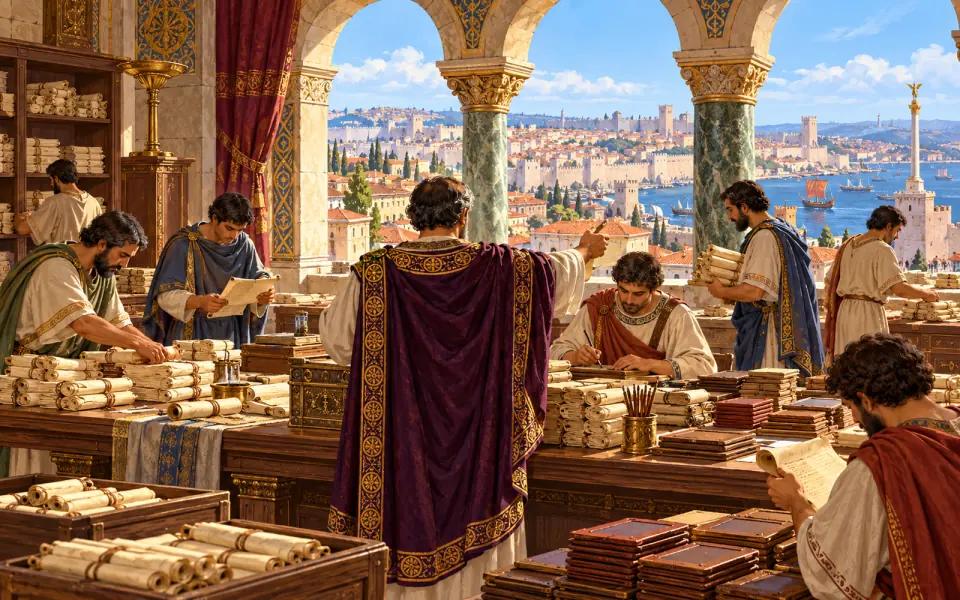
At home Justinian was a reformer. He had the Roman laws collected and put in order in the Corpus iuris civilis, rebuilt Hagia Sophia and had churches, fortresses, bridges and aqueducts built all over the empire. According to tradition, two monks brought to Constantinople, hidden in hollow canes, silkworm eggs that came from China: from then on the empire had its own silk production, which became a very important industry.
His last years were harder. In 542 a terrible plague epidemic reached Constantinople which, according to modern historians' estimates, killed between a fifth and two fifths of the population; another outbreak followed in 558. Theodora died on 28 June 548, perhaps of cancer. Justinian outlived her by seventeen years. He died in 565, by then very old, and the throne passed to Justin II.
How we remember him
For the Byzantines he was a great emperor, but some of his contemporaries judged him harshly: the wars and the taxes had made his subjects poorer. After his death many of the lands conquered in the West were soon lost. What remains is the enormous legacy of his laws and his buildings, which have lasted almost fifteen centuries.
Why it happened
Justinian inherited a rich and stable Eastern Empire, while the West was divided into Germanic kingdoms. He thought of himself as the true heir of Rome and believed it was his duty to win back the lost provinces.
Circumstances also made the enterprise possible: in the kingdoms of the Vandals and the Ostrogoths the Roman subjects were mostly Catholic, like Justinian, while their kings were Arians: the emperor could present himself as the protector of the Catholics.
What changed
For a moment the empire rebuilt the unity of the Mediterranean. But the wars in Italy lasted so long that they left the country exhausted, and the plague of 542 weakened the whole empire still further. A few years after Justinian's death, in 568, the Lombards entered Italy and took a large part of it: so Justinian's dream lasted only a short time.
What did remain was the legal legacy. The Corpus iuris civilis, rediscovered centuries later, is the basis of the law of many European countries. His buildings too, from Hagia Sophia to Ravenna, gave shape to Byzantine art. The silk industry, born under him, made Constantinople rich for centuries.
Key people and places
People
- Theodora
- Empress, wife of Justinian: born in the world of entertainment, she was his most listened-to adviser. She died in 548.
- Justin I
- Justinian's uncle, emperor from 518 to 527: he opened the road to power for him and changed a law to allow his marriage.
- Belisarius
- Justinian's greatest general: he defeated the Vandals in Africa and reconquered Rome in 536.
- Narses
- Justinian's general: in 552 he defeated the Goths at Taginae.
- Procopius of Caesarea
- Byzantine historian: he told of the emperor's wars, and in a secret work spoke very badly of him; he must be read with care.
Places
- Constantinople
- The capital of the empire, now Istanbul, with the hippodrome, the imperial palace and Hagia Sophia.
- Tauresium
- The village in the Balkans where Justinian was born, in what is now North Macedonia.
- Carthage
- City in North Africa, one of the Vandals' conquests; it was retaken by the Byzantines in the war of 533-534.
Good to know
- Justinian spoke Latin, while most of his subjects spoke Greek, and Greek became the language of the empire.
- The Nika riot takes its name from the cry of the rioters: “Nika!”, that is, “Win!”.
- According to tradition, the silkworm reached Constantinople hidden in the canes of two monks.
- Theodora was proclaimed a saint by the Orthodox Church.
- The plague of 542 is still called the “plague of Justinian” today.
Find out more
- Wikipedia, “Justinian I” en.wikipedia.org
- Wikipedia, “Theodora (wife of Justinian I)” en.wikipedia.org
- Wikipedia, “Nika riots” en.wikipedia.org
- Wikipedia, “Gothic War (535–554)” en.wikipedia.org
Related events
- Justinian's CodeAD 529 · Early Middle AgesJustinian had the Roman laws collected in the Corpus iuris civilis.
- Hagia Sophia in ConstantinopleAD 537 · Early Middle AgesAfter the Nika riot he had Hagia Sophia rebuilt.
- The mosaics of San Vitale in RavennaAD 547 · Early Middle AgesAt Ravenna the mosaics of San Vitale show him and Theodora.
- The Lombards in ItalyAD 568 · Early Middle AgesA few years after his death the Lombards entered Italy.
- The Romano-Germanic kingdomsabout AD 480 · Early Middle AgesHe reconquered the lands of the Vandal and Ostrogothic kingdoms.
Before and after, in the era “Early Middle Ages”
Event 2 of 25
 BeforeThe Romano-Germanic kingdomsabout AD 480
- You are hereEmperor JustinianAD 527
 AfterJustinian's CodeAD 529
 AfterBenedictine monksabout AD 529
 AfterHagia Sophia in ConstantinopleAD 537
 AfterThe mosaics of San Vitale in RavennaAD 547
 AfterThe Lombards in ItalyAD 568
 AfterMuhammad's HijraAD 622
 AfterIsidore writes the Etymologiesabout AD 625
 AfterThe spread of IslamAD 632–750
 AfterPaper reaches Samarkandabout AD 751
 AfterCharlemagne, King of the FranksAD 768
 AfterThe Carolingian Renaissanceabout AD 790
 AfterThe Book of Kellsabout AD 800
 AfterCharlemagne crowned emperorAD 800
 AfterHindu-Arabic numerals head westabout AD 825
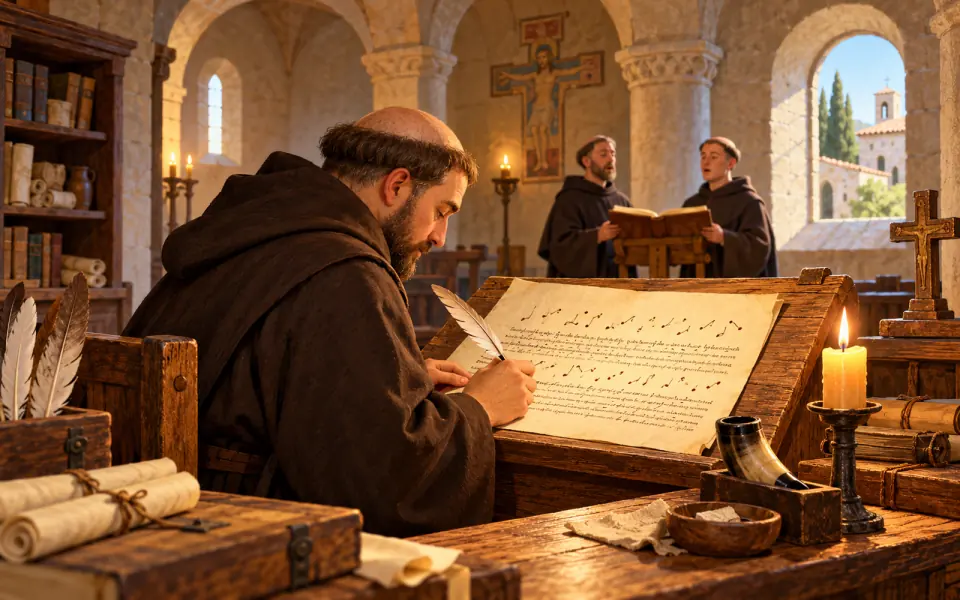 AfterWriting music down with neumesabout AD 850
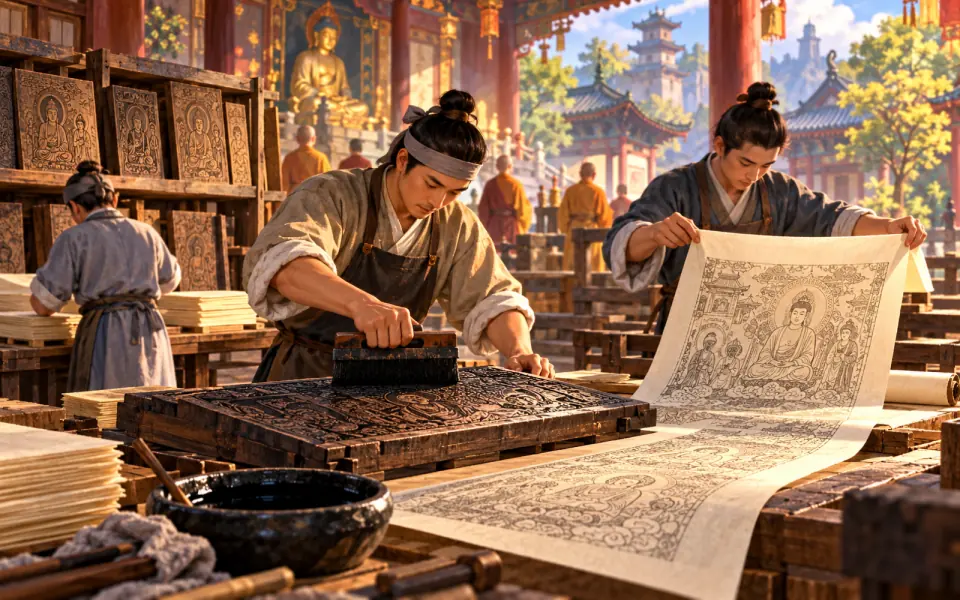 AfterThe Diamond Sutra, oldest dated printed bookAD 868
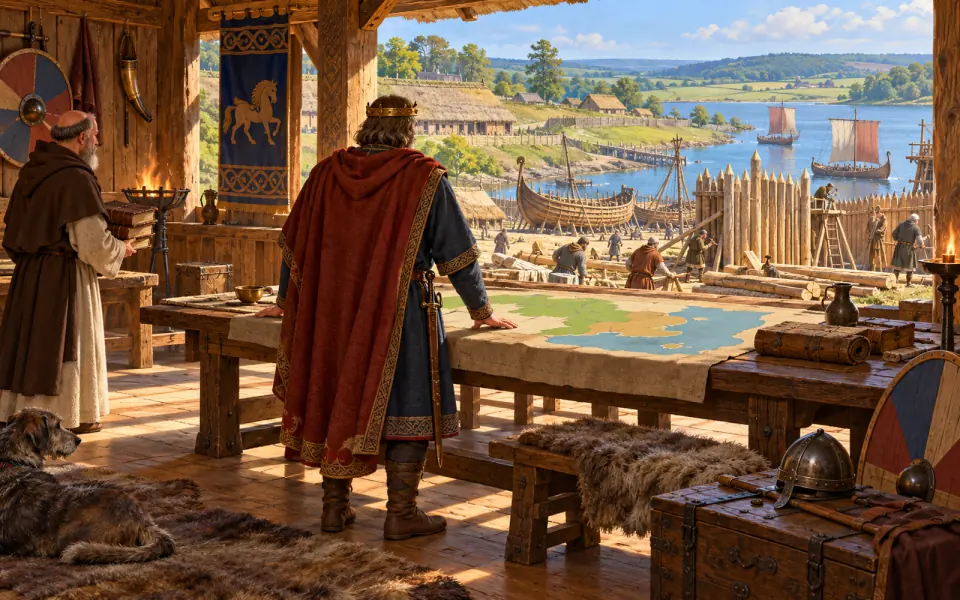 AfterAlfred the GreatAD 871
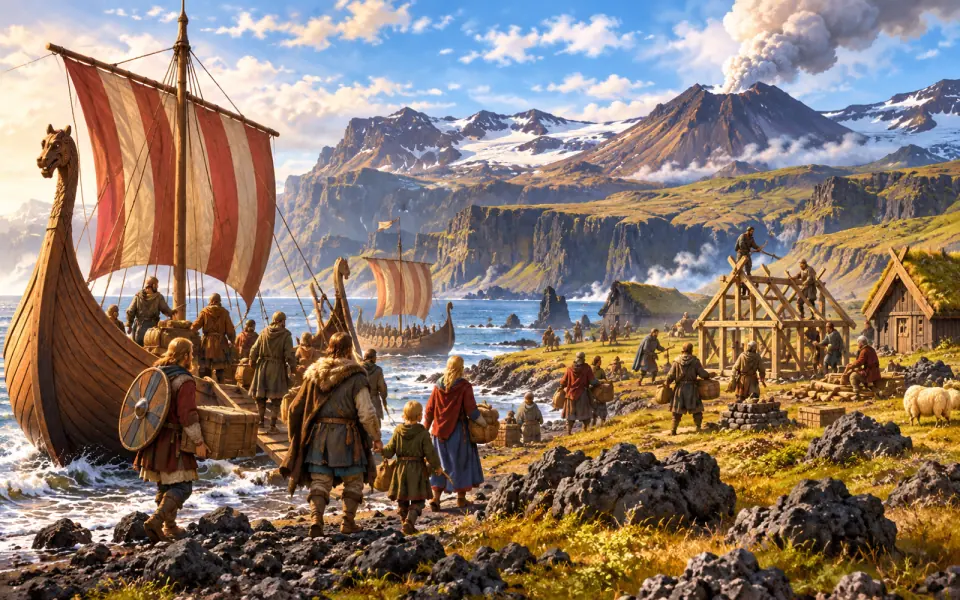 AfterThe Vikings reach Icelandabout AD 874
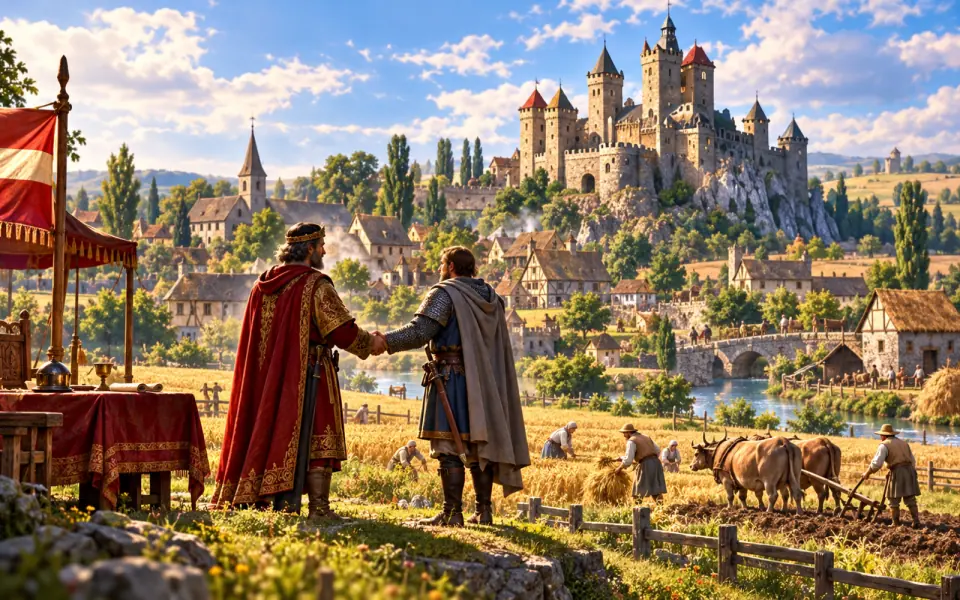 AfterThe feudal system spreadsabout AD 900
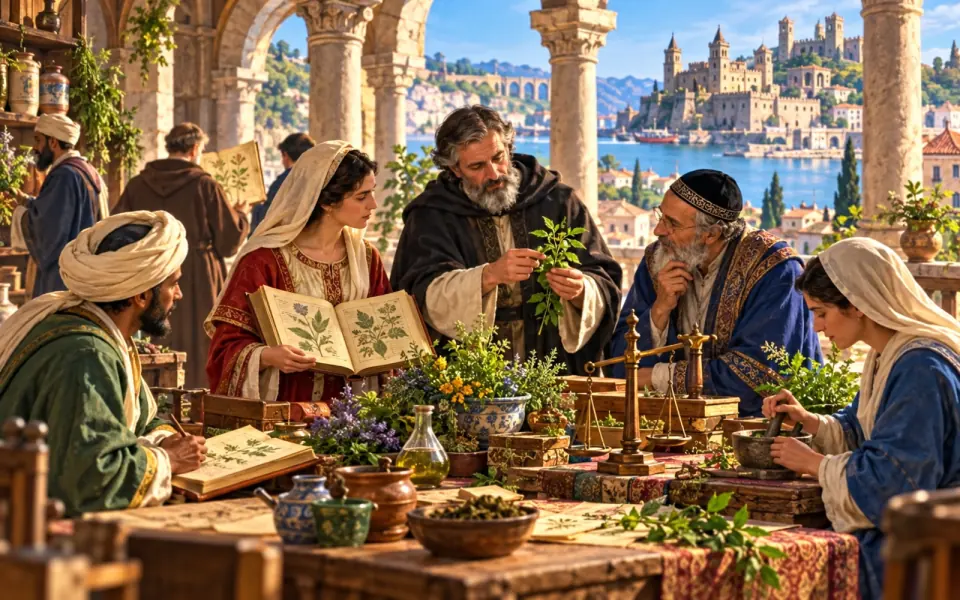 AfterThe Medical School of Salernoabout AD 950
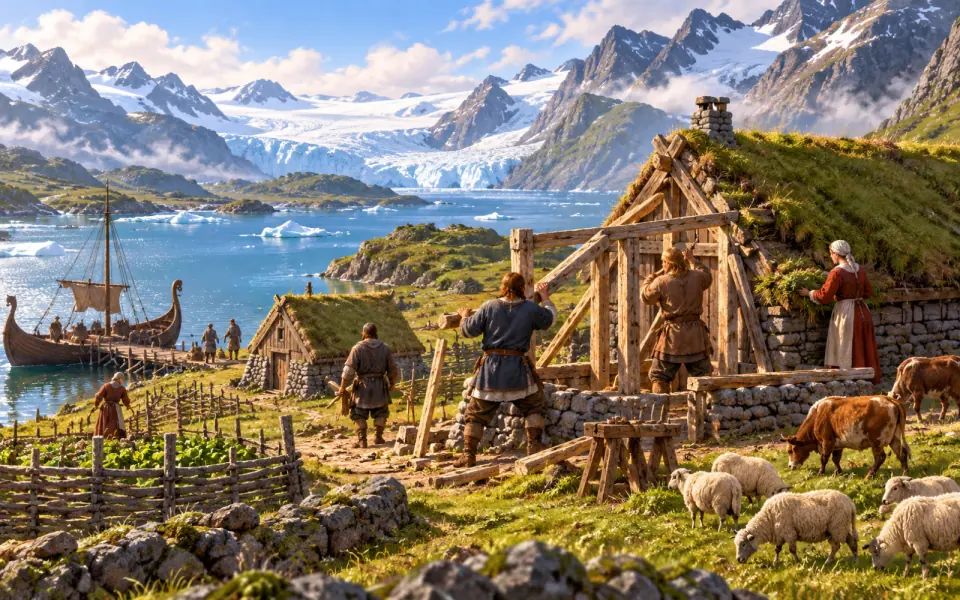 AfterThe Vikings in Greenlandabout AD 985
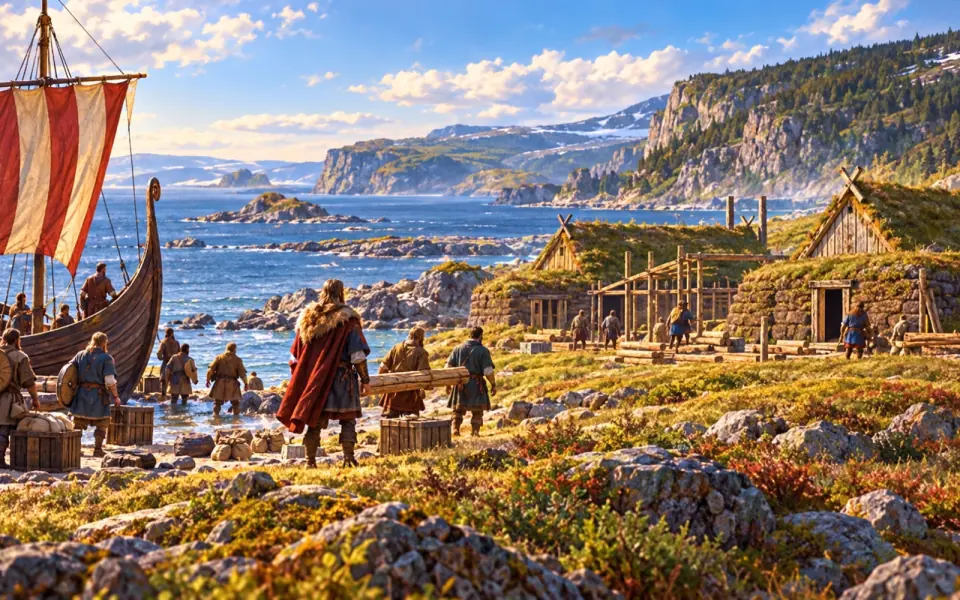 AfterLeif Erikson in North Americaabout 1000
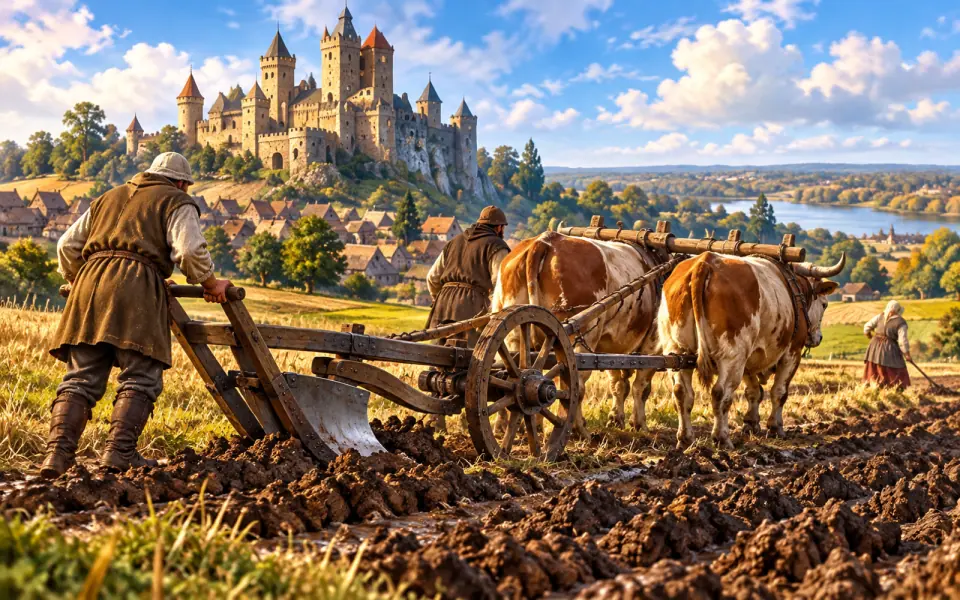 AfterThe heavy plough spreadsabout 1000
Listen / Read next
- Music to read by: Cinematic JourneyEpic film-style music, no lyrics, by Ciro Simone IrmiciSpotifyYouTube Music
Meanwhile, elsewhere in the world
Other events of the era “Early Middle Ages”
- The Romano-Germanic kingdoms
- Justinian's Code
- Benedictine monks
- Hagia Sophia in Constantinople
- The mosaics of San Vitale in Ravenna
- The Lombards in Italy
- Muhammad's Hijra
- Isidore writes the Etymologies
- The spread of Islam
- Paper reaches Samarkand
- Charlemagne, King of the Franks
- The Carolingian Renaissance
- The Book of Kells
- Charlemagne crowned emperor
- Hindu-Arabic numerals head west
- Writing music down with neumes
- The Diamond Sutra, oldest dated printed book
- Alfred the Great
- The Vikings reach Iceland
- The feudal system spreads
- The Medical School of Salerno
- The Vikings in Greenland
- Leif Erikson in North America
- The heavy plough spreads
