The spread of Islam
AD 632–750 From Arabia to Central Asia and Spain
In short
After Muhammad's death in AD 632, his successors, called caliphs, led the Arabs in a rapid expansion. In a few decades they conquered Syria, Egypt, Persia and North Africa, and in AD 711 they reached Spain. In the conquered lands Christians and Jews could generally keep their own religion by paying a special tax. Arabic became the language of government and learning from Córdoba to Central Asia.
Why it matters So a great world was born that brought different cultures together and preserved and enriched the science of the Greeks and Persians.
Source: Encyclopaedia Britannica, “Islamic world”
Study card about 5 minutes of reading
The story
After Muhammad
When Muhammad died, in AD 632, his community faced a big problem: who was to lead it? The Muslims chose successors, called “caliphs”, a word meaning the successor of Muhammad at the head of the community. The first was Abu Bakr, the faithful companion who had accompanied Muhammad on the Hijra. With him and with the caliphs who came after, in less than a hundred years, the Arabs built a territory that stretched from the Atlantic to Central Asia. It is one of the fastest expansions in history, and to understand it we have to follow it year by year.
Syria, Persia, Egypt
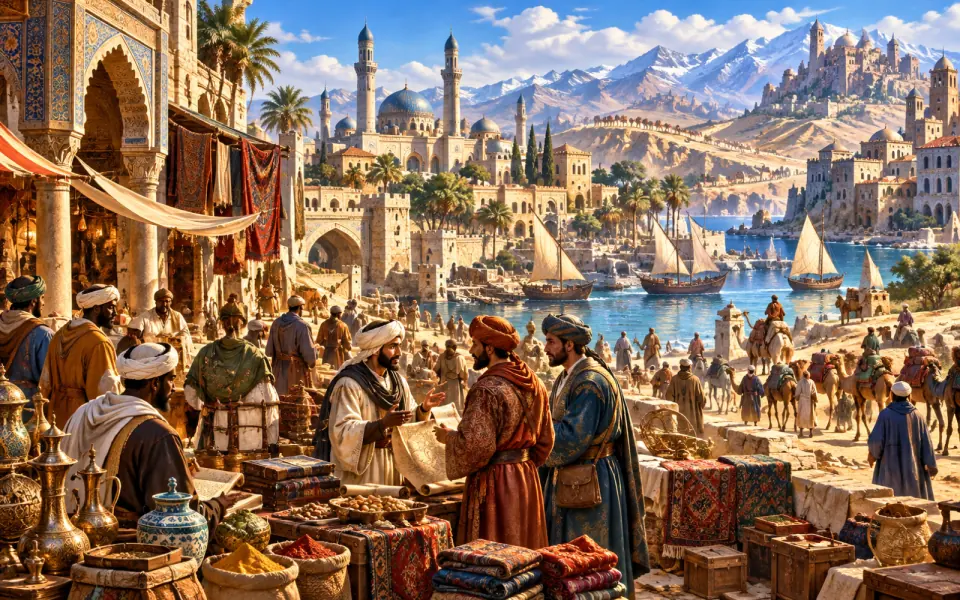
Between 633 and 640 the Arabs took Syria and Palestine from the Byzantines. Jerusalem was occupied in 638. In 637 they conquered Ctesiphon, the capital of the Persian empire; by about 651 that empire, which for centuries had been Byzantium's great rival, was wiped out. Between 639 and 646 they conquered Egypt, and in 642 Alexandria fell, the great city on the sea.
The Arabs did not stop. In 649 they attacked the island of Cyprus; in 655, in the naval battle of Lycia, they defeated the Byzantines at sea too. They were years of success, but not without difficulties inside: between 656 and 661 the community split in a crisis that marked the separation between Sunnis and Shiites, the two great branches of Islam that still exist today, and also gave rise to a third group, the Kharijites.
The Umayyad dynasty
In 661 Muawiya came to power, the first caliph of the Umayyad dynasty. He moved the capital to Damascus, in Syria. From there the caliphs governed an ever-larger territory. To the west, in 670, the city of Kairouan was founded, in what is now Tunisia, which served as a base for the advance into North Africa. By 705 Morocco too was in Arab hands.
The next step was Spain. In 711 a commander named Tariq ibn Ziyad landed on the Spanish coast and defeated the Visigoths of King Roderic. The Visigothic kingdom, which had lasted more than two centuries, collapsed: in 713 Toledo fell too. The Arabs crossed the Pyrenees and reached France: Narbonne in 719; in 721 they besieged Toulouse but were defeated by Duke Odo of Aquitaine; in 725 they took Nîmes and Carcassonne. In 717 they also tried to take Constantinople with a long siege, but were driven back thanks to the famous “Greek fire”, an incendiary weapon of the Byzantines.
In 720 the principality of Asturias was born in northern Spain, the first core of Christian resistance. Around 732 (some sources say 733) the battle of Poitiers was fought, in France. Tradition remembers it as the moment when the Arab advance in Europe stopped. Today many historians play down its importance: it was an important clash, but it did not on its own decide the history of Europe.
In 750 the Umayyad dynasty fell. Soon afterwards, in 751, near the river Talas, in Central Asia, the Arabs met the Chinese army of the Tang dynasty. The clash marked the division of the area between the Arabs and Tang China. The conquest of Sicily began later, in 827, and was completed in 902.
How were the conquered territories governed?
The Arabs had to govern very different peoples. Christians and Jews, in general, could keep their religion: they were called dhimmis, that is, “protected”, and in exchange paid a special tax (the jizya) and a tribute on land (the kharaj). Those who converted to Islam obtained full civil rights, but in the first Islamic century political rights were often denied to many non-Arab converts. The language of administration and of the Quran was Arabic, which little by little became established as the language of government and study over vast territories.
Why was it so fast?
Nobody can explain it with a single reason. But historians agree on one fact: Byzantines and Persians were exhausted by a long war against each other. The local populations, moreover, were tired of Byzantine rule, and the Arab tribute was often lighter than the imperial taxes. The Arabs found, therefore, exhausted empires and peoples who were not very willing to defend them.
Why it happened
The first cause was the birth of a new community, united by faith and led by determined leaders. After the Hijra and the birth of the community of Medina, the Muslims had a common identity and leaders to guide them; the leadership of the caliphs carried them beyond the borders of Arabia.
The second cause was the weakness of their neighbours. The Byzantines and the Sasanians, the two great empires of the time, were exhausted by a long war against each other. Many local populations were unhappy with the imperial taxes and more willingly accepted a lighter tribute.
What changed
A new world was born, which united different peoples, languages and cultures under the same government. Arabic became the language of administration, of the Quran and, in time, of study and science.
For Europe the consequences were great: the Visigothic kingdom vanished and in the north of Spain the Christian resistance began from Asturias, which would be a long story. The conquest of Sicily began in 827 and was completed in 902. The Mediterranean, which had been the “sea of Rome”, became a space divided between Christians and Muslims.
From the religious point of view, the division between Sunnis and Shiites born in the first decades remains today one of the main differences within Islam.
Key people and places
People
- Abu Bakr
- First caliph, from 632: companion of Muhammad on the journey of the Hijra.
- Muawiya
- First caliph of the Umayyad dynasty from 661: he moved the capital to Damascus.
- Tariq ibn Ziyad
- Arab commander who in 711 landed in Spain and defeated the Visigoths of King Roderic.
- Roderic
- Last king of the Visigoths, defeated by Tariq in 711.
Places
- Damascus
- Capital of the Umayyad caliphate from 661.
- Ctesiphon
- Capital of the Persian empire, conquered by the Arabs in 637.
- Kairouan
- City founded in 670 in present-day Tunisia, a base for the advance into North Africa.
- Toledo
- Ancient Visigothic capital, which fell in 713.
Good to know
- The word “caliph” means the successor of Muhammad at the head of the community.
- In 717 Constantinople was besieged by the Arabs but was saved thanks to “Greek fire”, an incendiary weapon.
- The battle of Poitiers is dated 732, but some sources say 733; modern historians play down its importance.
- In the conquered territories Christians and Jews were called dhimmis, that is, “protected”.
- The Arab conquest of Sicily began only in 827 and ended in 902.
Find out more
- Wikipedia, “Early Muslim conquests” en.wikipedia.org
- Wikipedia, “Umayyad Caliphate” en.wikipedia.org
- Wikipedia, “Battle of Tours” en.wikipedia.org
- Wikipedia, “Tariq ibn Ziyad” en.wikipedia.org
Related events
- Muhammad's HijraAD 622 · Early Middle AgesThe expansion set out from the community founded by Muhammad with the Hijra.
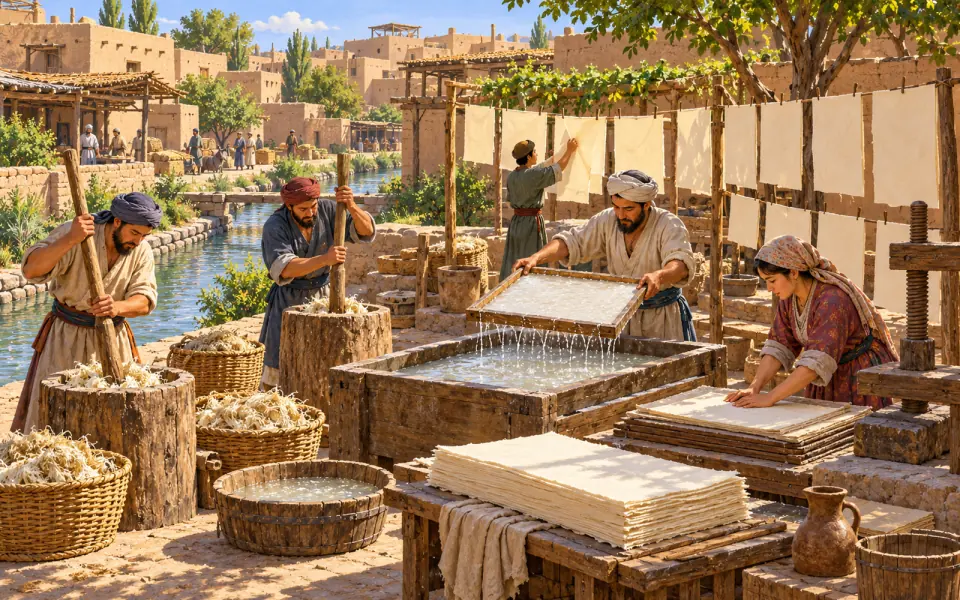
- Paper reaches Samarkandabout AD 751 · Early Middle AgesIn 751 the river Talas was the scene of the clash with the Chinese, and paper reached the Islamic world.
- Isidore writes the Etymologiesabout AD 625 · Early Middle AgesIsidore's Visigothic kingdom ended in 711.
- Hindu-Arabic numerals head westabout AD 825 · Early Middle AgesScholars such as al-Khwarizmi worked in the territories of the caliphate.
Before and after, in the era “Early Middle Ages”
Event 10 of 25
 BeforeThe Romano-Germanic kingdomsabout AD 480
 BeforeEmperor JustinianAD 527
 BeforeJustinian's CodeAD 529
 BeforeBenedictine monksabout AD 529
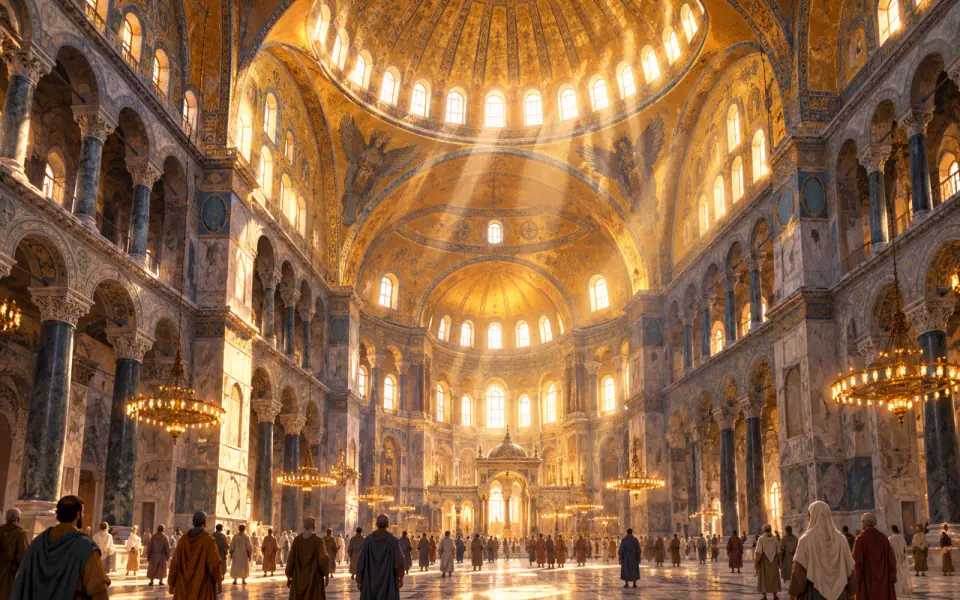 BeforeHagia Sophia in ConstantinopleAD 537
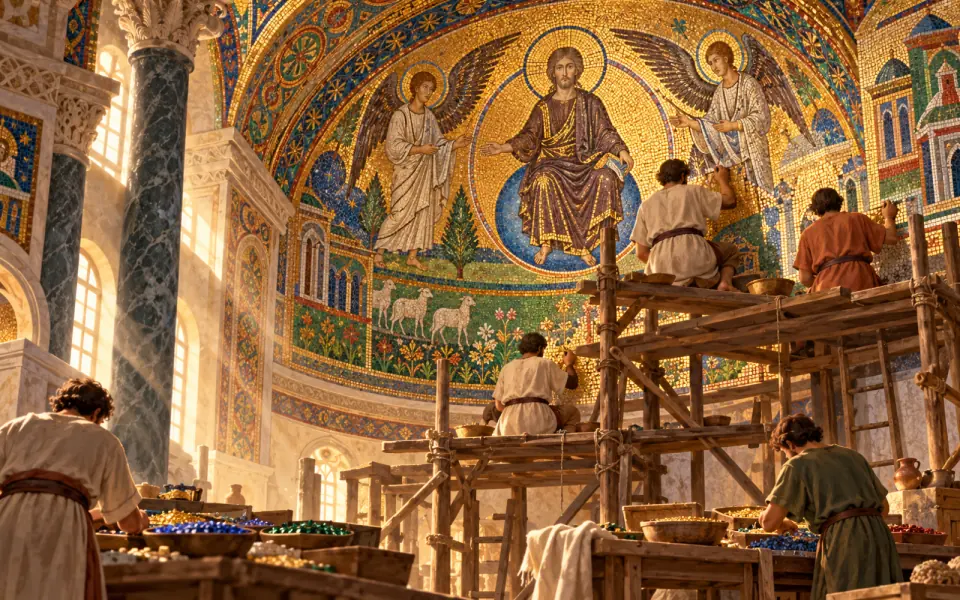 BeforeThe mosaics of San Vitale in RavennaAD 547
 BeforeThe Lombards in ItalyAD 568
 BeforeMuhammad's HijraAD 622
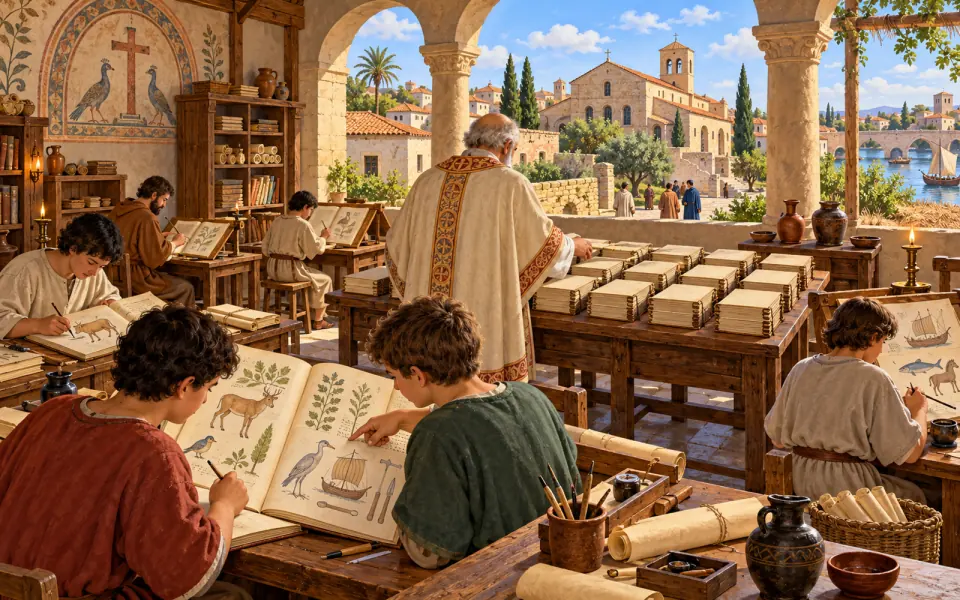 BeforeIsidore writes the Etymologiesabout AD 625
- You are hereThe spread of IslamAD 632–750
 AfterPaper reaches Samarkandabout AD 751
 AfterCharlemagne, King of the FranksAD 768
 AfterThe Carolingian Renaissanceabout AD 790
 AfterThe Book of Kellsabout AD 800
 AfterCharlemagne crowned emperorAD 800
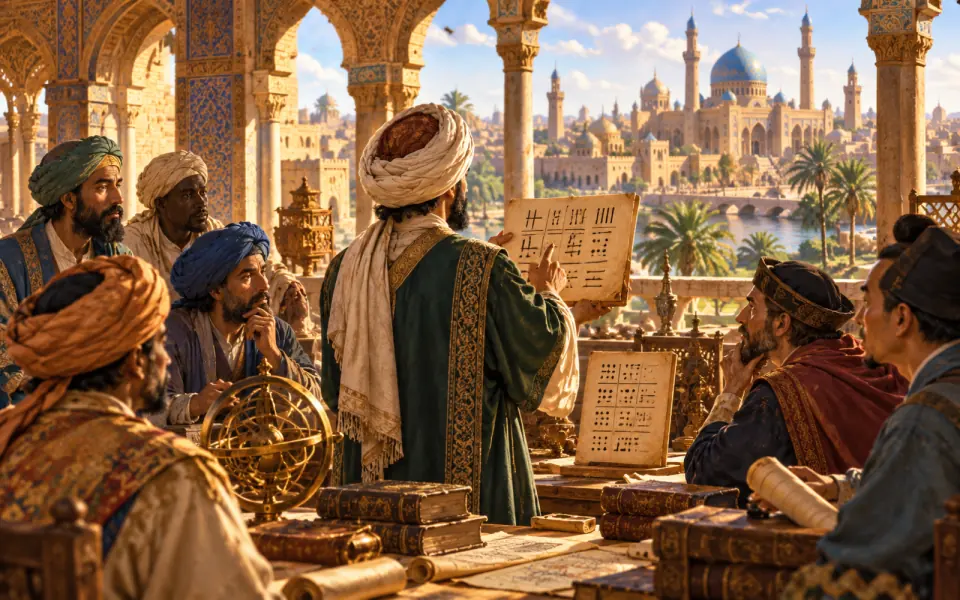 AfterHindu-Arabic numerals head westabout AD 825
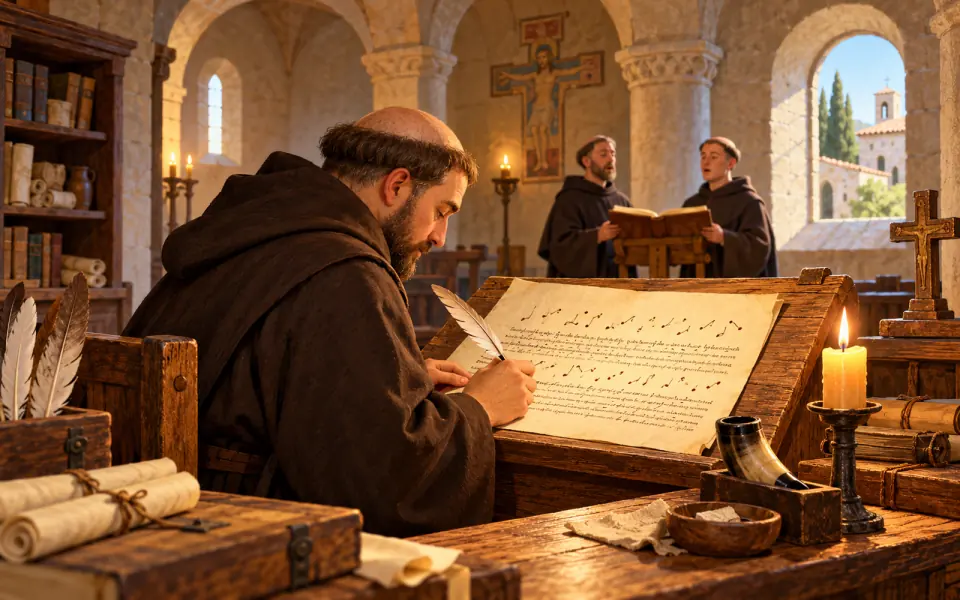 AfterWriting music down with neumesabout AD 850
 AfterThe Diamond Sutra, oldest dated printed bookAD 868
 AfterAlfred the GreatAD 871
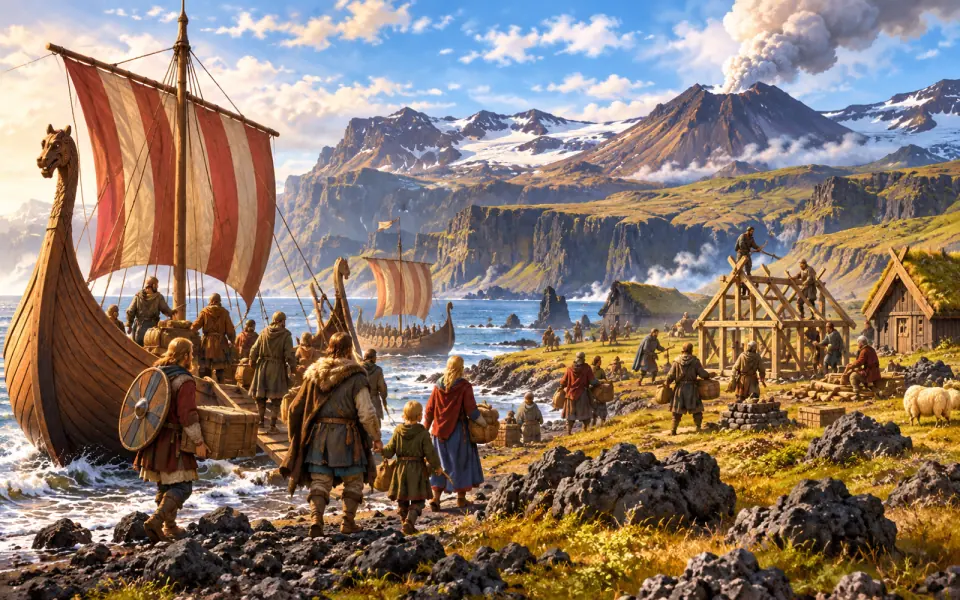 AfterThe Vikings reach Icelandabout AD 874
 AfterThe feudal system spreadsabout AD 900
 AfterThe Medical School of Salernoabout AD 950
 AfterThe Vikings in Greenlandabout AD 985
 AfterLeif Erikson in North Americaabout 1000
 AfterThe heavy plough spreadsabout 1000
Listen / Read next
- Music to read by: Cinematic JourneyEpic film-style music, no lyrics, by Ciro Simone IrmiciSpotifyYouTube Music
Meanwhile, elsewhere in the world
Other events of the era “Early Middle Ages”
- The Romano-Germanic kingdoms
- Emperor Justinian
- Justinian's Code
- Benedictine monks
- Hagia Sophia in Constantinople
- The mosaics of San Vitale in Ravenna
- The Lombards in Italy
- Muhammad's Hijra
- Isidore writes the Etymologies
- Paper reaches Samarkand
- Charlemagne, King of the Franks
- The Carolingian Renaissance
- The Book of Kells
- Charlemagne crowned emperor
- Hindu-Arabic numerals head west
- Writing music down with neumes
- The Diamond Sutra, oldest dated printed book
- Alfred the Great
- The Vikings reach Iceland
- The feudal system spreads
- The Medical School of Salerno
- The Vikings in Greenland
- Leif Erikson in North America
- The heavy plough spreads
