The Vikings reach Iceland
about AD 874 Reykjavík, Iceland
In short
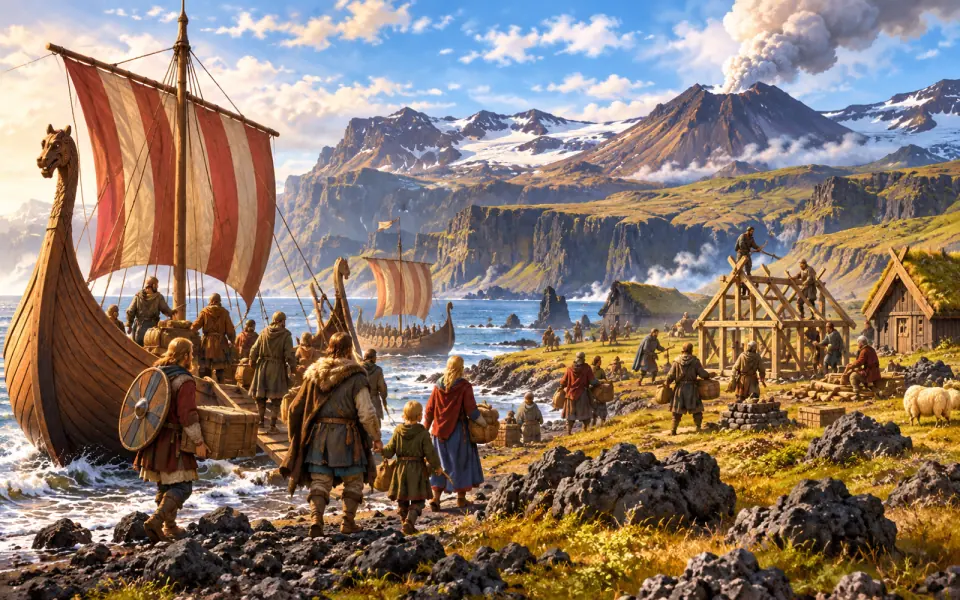
According to the old Icelandic sagas, the first person to settle in Iceland was the Norwegian Ingólfr Arnarson. He arrived with his family and servants in long, narrow ships, and chose the spot where Reykjavík stands today. In the following decades thousands of settlers came from Norway and the British Isles. In AD 930 the Icelanders created the Althing, an open-air assembly where laws were discussed.
Why it matters The Althing is considered one of the oldest parliaments in the world still in existence.
Source: Encyclopaedia Britannica, “Iceland”
Study card about 5 minutes of reading
The story
An island of ice and fire
Iceland is a volcanic island in the North Atlantic, just below the Arctic Circle. It has glaciers, geysers, hot springs, volcanoes that erupt now and then, long winter nights and long summer days. Before the Vikings it was almost uninhabited. Perhaps there were a few Irish monks there, called “papar”, looking for lonely places to pray; only uncertain traces of them remain.
According to the “Landnámabók”, the “Book of Settlements”, put into writing in Iceland between the 12th and 13th centuries, the first Norwegians to see the island were sailors blown off course by storms, such as Naddoddr and Garðar. Another explorer, Flóki, spent the winter there, lost his livestock and, seeing a fjord full of ice, called it “Ísland”, “land of ice”. The name has stuck, even though the south of the island is very green.
Ingólfr and the smoking peninsula
The first settler to stay for good was, according to tradition, a Norwegian chief named Ingólfr Arnarson. The story says that, as he approached the coast, he threw two wooden pillars from his house into the sea and swore to settle wherever the current carried them ashore. After a few years he found them in a bay surrounded by steam rising from the ground. He called it Reykjavík, “smoky bay”, and settled there, around the year 874. Today Reykjavík is the capital of Iceland. That steam was hot water from geothermal springs.
After him hundreds of families arrived. Many, according to the sagas, were fleeing from Norway because King Harald Fairhair (Harald Hårfagre) was imposing taxes and taking power away from the local chiefs. Others came from the British Isles and Ireland, bringing slaves and Celtic wives with them. Studies of the DNA of modern Icelanders show that most of the men descend from Scandinavians and most of the women from women of the British Isles. In less than sixty years the island was occupied: the period of settlement is called the “landnám”.
A country without a king
The Icelanders did not want to be ruled by a king. They organised themselves in an original way. The local chiefs, the “goðar”, did not rule over a territory but over a group of followers, who could change chief. In 930 they met for the first time in a general assembly, the Alþingi, in the open air, at Þingvellir, on a plain with a rock wall. It was a parliament: laws were made, cases were judged, quarrels were settled. The “lawspeaker”, a man chosen for three years, had to remember by heart and recite a third of the laws every year, because they were not written down.
In the year 1000 the assembly decided that Iceland would become Christian. The judge Þorgeir, who was still a pagan, withdrew for a day and a night under a blanket and then announced that there had to be one law and one faith. Anyone who wished could go on honouring the old gods in private.
Life on the island was hard. Houses were built with turf and blocks of lava, because there were no large trees; sheep and goats grazed on the meadows; cod was fished and dried for the winter. In time the settlers cut down many birch woods, and the soil, with no trees, was eroded by the wind.
Sagas and language
The Icelanders loved to tell stories. Between the 12th and the 14th centuries they wrote many “sagas”, long prose tales about the settlers' families, about feuds and revenge, about sea voyages. A writer and chief, Snorri Sturluson, also collected the myths of the old Norse gods, such as Odin and Thor. Thanks to these texts we know a great deal about the world of the Vikings.
The Icelandic language has changed much less than other European languages: an Icelander today can read texts more than eight hundred years old with relative ease. In 1262, after decades of internal struggles, Iceland agreed to submit to the king of Norway; it became independent again only in 1944.
Why it happened
The Vikings were looking for free land where they could farm, raise animals and live far from kings. Norway had little good land and many inhabitants and, according to the sagas, King Harald was strengthening his power at the expense of the local chiefs, who preferred to leave.
The Norse ships and their knowledge of navigation made it possible to cross the ocean from island to island, passing through the Faroe Islands.
What changed
Iceland became a society with its own laws and institutions, which lasted about three centuries without a king. The Alþingi is considered one of the oldest parliaments still in existence, even though it has had interruptions.
The sagas and Snorri's writings preserved the memory of the Vikings and their myths. Without them, we would know much less about medieval Scandinavian religion and culture.
From Iceland Erik the Red set out for Greenland; his son Leif Erikson, born in Iceland, reached North America from Greenland. Even today Icelanders are very attached to their origins and their language.
Key people and places
People
- Ingólfr Arnarson
- First permanent settler of Iceland, according to tradition (9th century).
- Flóki Vilgerðarson
- Norwegian sailor: he gave the island the name Ísland.
- Harald Fairhair
- First king of united Norway (about 850–932): many left him for Iceland.
- Snorri Sturluson
- Icelandic chief, poet and historian (1179–1241): he collected the Norse myths.
- Þorgeir Ljósvetningagoði
- Icelandic chief who in the year 1000 decided in favour of conversion to Christianity.
Places
- Reykjavík
- Capital of Iceland, founded in 874 according to tradition.
- Þingvellir
- Plain where the assembly met, a UNESCO World Heritage Site since 2004.
Good to know
- The name Reykjavík means “smoky bay”, because of the steam from the hot springs.
- The Alþingi met for the first time in 930.
- The “lawspeaker” had to remember the laws by heart.
- Icelanders today understand the language of a thousand years ago.
- Iceland became independent again in 1944.
Find out more
- Wikipedia, “Iceland” en.wikipedia.org
- Wikipedia, “Althing” en.wikipedia.org
- Wikipedia, “Landnámabók” en.wikipedia.org
- Wikipedia, “Snorri Sturluson” en.wikipedia.org
Related events
- The Vikings in Greenlandabout AD 985 · Early Middle AgesFrom Iceland the Vikings reached Greenland.
- Leif Erikson in North Americaabout 1000 · Early Middle AgesLeif Erikson was the son of an Icelandic settler.
- Alfred the GreatAD 871 · Early Middle AgesOther Vikings were attacking England.
- The feudal system spreadsabout AD 900 · Early Middle AgesIn continental Europe the feudal system was taking shape.
Before and after, in the era “Early Middle Ages”
Event 20 of 25
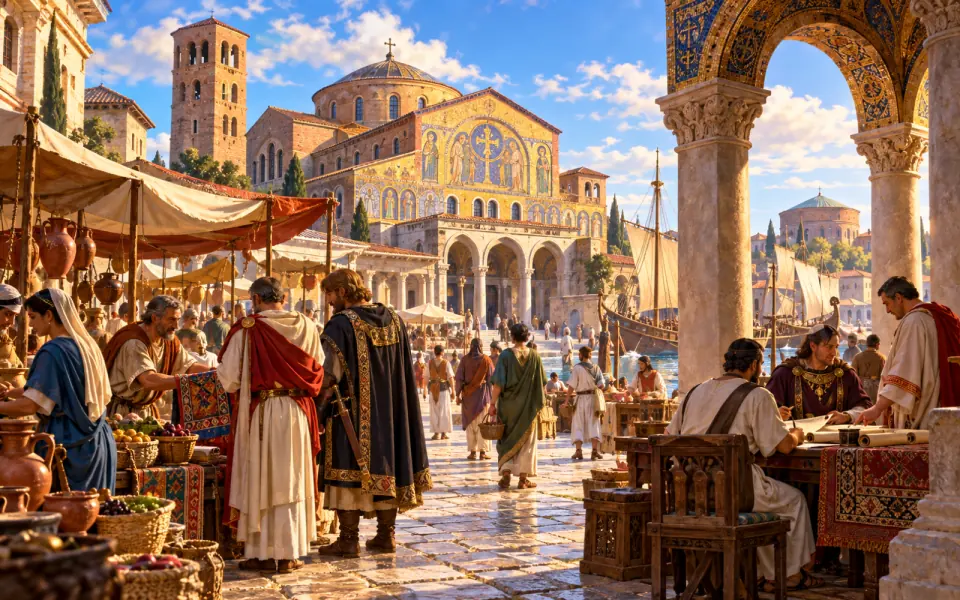 BeforeThe Romano-Germanic kingdomsabout AD 480
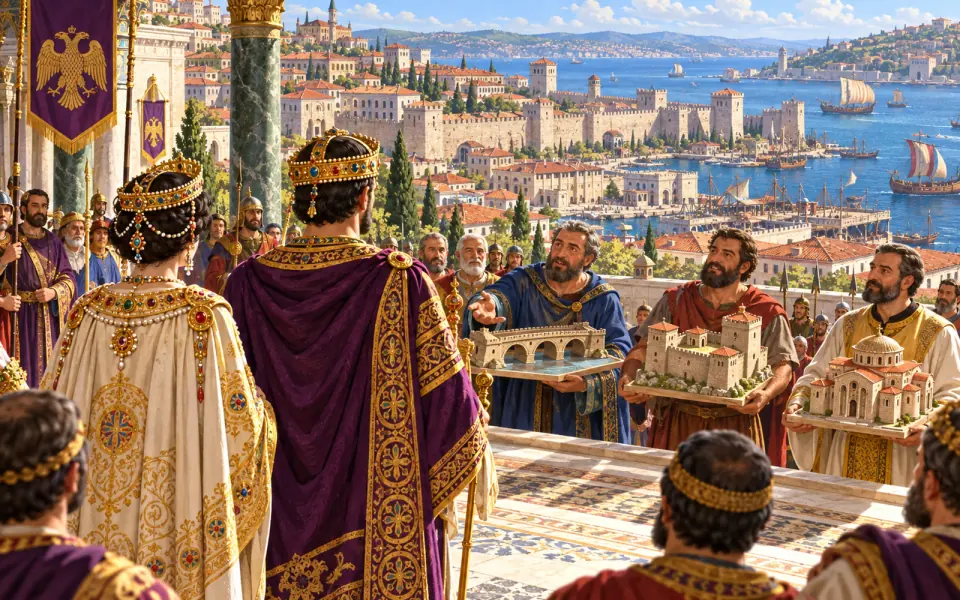 BeforeEmperor JustinianAD 527
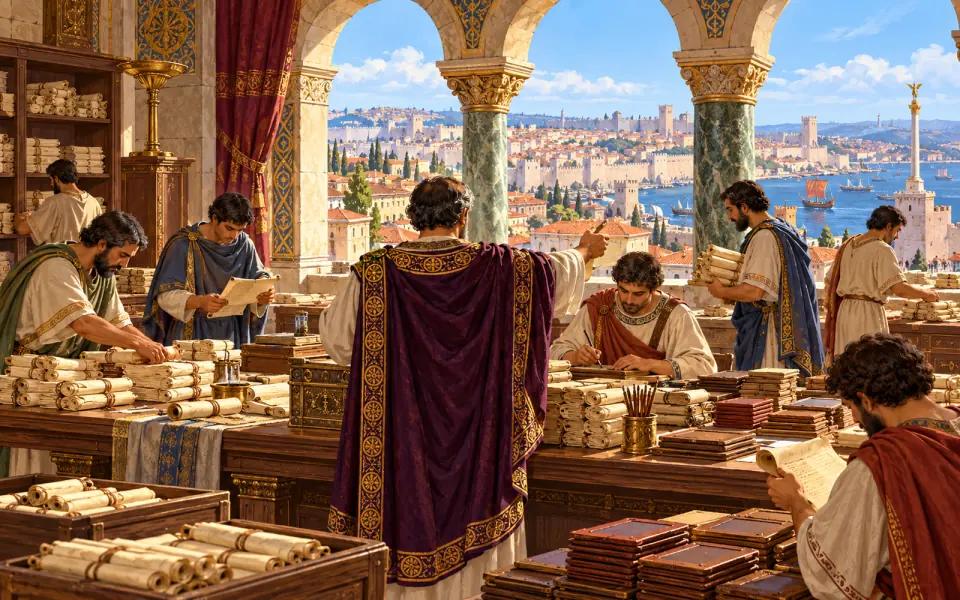 BeforeJustinian's CodeAD 529
 BeforeBenedictine monksabout AD 529
 BeforeHagia Sophia in ConstantinopleAD 537
 BeforeThe mosaics of San Vitale in RavennaAD 547
 BeforeThe Lombards in ItalyAD 568
 BeforeMuhammad's HijraAD 622
 BeforeIsidore writes the Etymologiesabout AD 625
 BeforeThe spread of IslamAD 632–750
 BeforePaper reaches Samarkandabout AD 751
 BeforeCharlemagne, King of the FranksAD 768
 BeforeThe Carolingian Renaissanceabout AD 790
 BeforeThe Book of Kellsabout AD 800
 BeforeCharlemagne crowned emperorAD 800
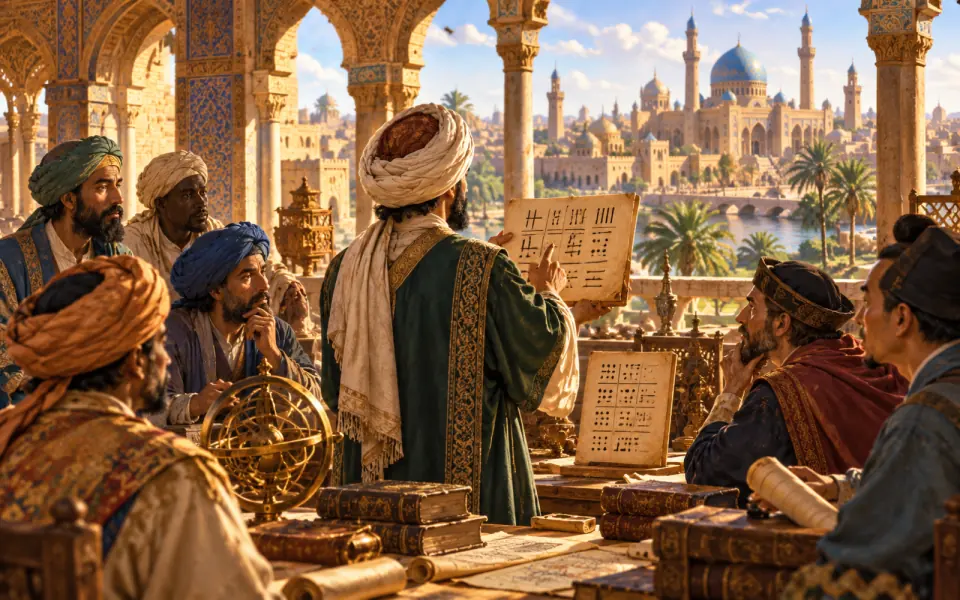 BeforeHindu-Arabic numerals head westabout AD 825
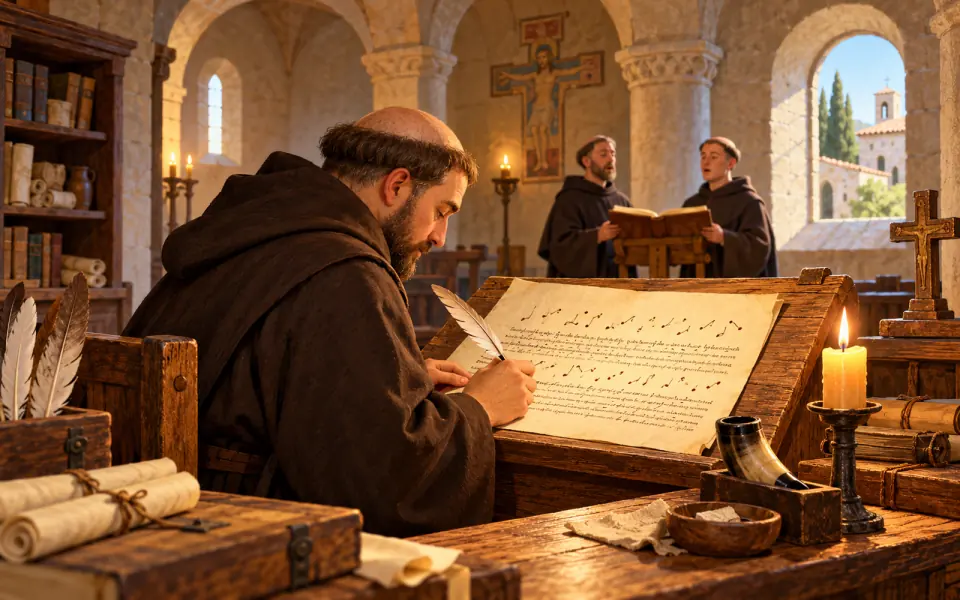 BeforeWriting music down with neumesabout AD 850
 BeforeThe Diamond Sutra, oldest dated printed bookAD 868
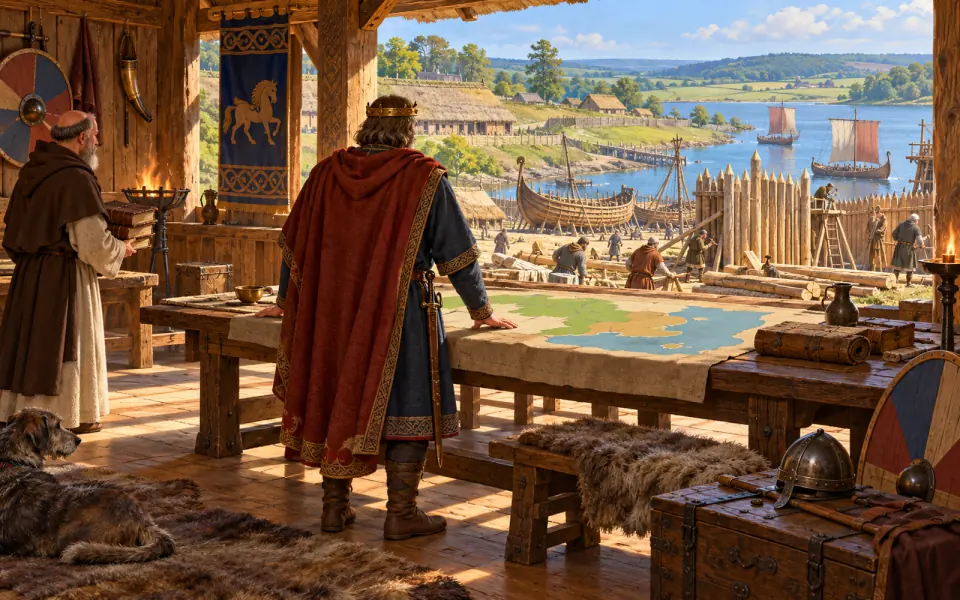 BeforeAlfred the GreatAD 871
- You are hereThe Vikings reach Icelandabout AD 874
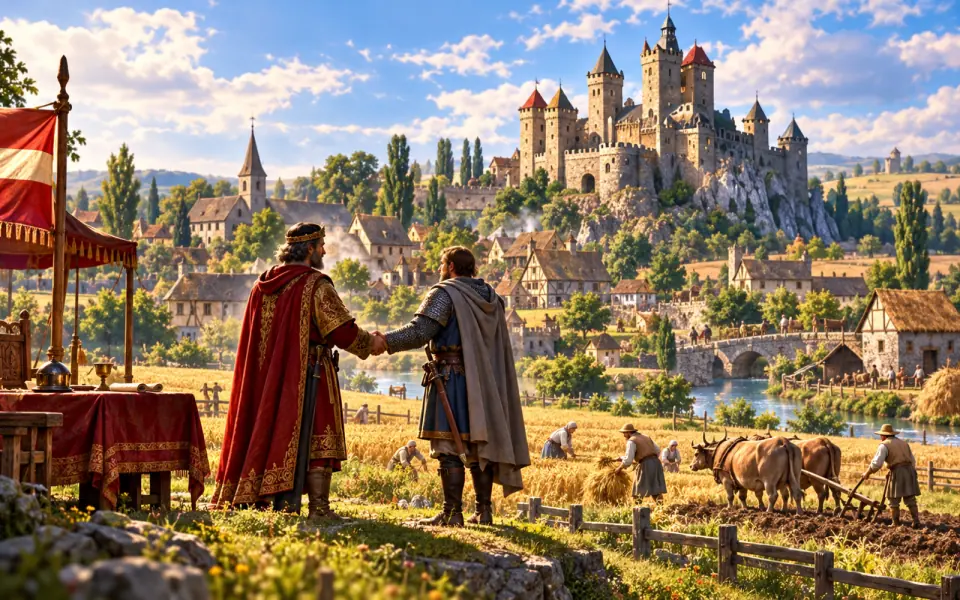 AfterThe feudal system spreadsabout AD 900
 AfterThe Medical School of Salernoabout AD 950
 AfterThe Vikings in Greenlandabout AD 985
 AfterLeif Erikson in North Americaabout 1000
 AfterThe heavy plough spreadsabout 1000
In legend
Listen / Read next
- Music to read by: Cinematic JourneyEpic film-style music, no lyrics, by Ciro Simone IrmiciSpotifyYouTube Music
Meanwhile, elsewhere in the world
Other events of the era “Early Middle Ages”
- The Romano-Germanic kingdoms
- Emperor Justinian
- Justinian's Code
- Benedictine monks
- Hagia Sophia in Constantinople
- The mosaics of San Vitale in Ravenna
- The Lombards in Italy
- Muhammad's Hijra
- Isidore writes the Etymologies
- The spread of Islam
- Paper reaches Samarkand
- Charlemagne, King of the Franks
- The Carolingian Renaissance
- The Book of Kells
- Charlemagne crowned emperor
- Hindu-Arabic numerals head west
- Writing music down with neumes
- The Diamond Sutra, oldest dated printed book
- Alfred the Great
- The feudal system spreads
- The Medical School of Salerno
- The Vikings in Greenland
- Leif Erikson in North America
- The heavy plough spreads
