The heavy plough spreads
about 1000 Plains of northern Europe
In short
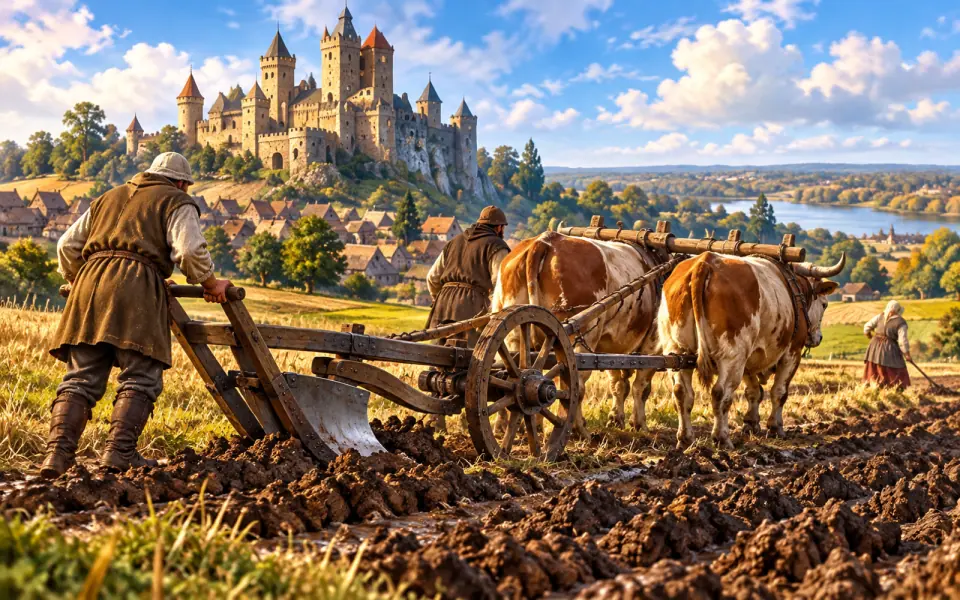
In northern Europe the soil is often clay, heavy and wet, and hard to work with the simple Roman plough. The heavy plough had wheels, an iron blade that cut the soil and a mouldboard that turned the clods over. Pulling it took several pairs of oxen or, later, horses with a stiff collar that did not choke them. Around the year 1000 it spread to many regions, together with crop rotation.
Why it matters With bigger harvests Europe's population could grow and new villages appeared.
Source: Encyclopaedia Britannica, “Plow”
Study card about 4 minutes of reading
The story
Two ways of ploughing the land
To plough means to open the earth into furrows, to sow seed and to let the soil breathe. In ancient times, around the Mediterranean, a simple plough was used, called the “light plough” or “ard”: a pointed wooden stake, sometimes with an iron tip, pulled by a pair of oxen. It scratched the surface of the ground but did not turn it over. Because Mediterranean soil is dry and light, this was enough: the field was ploughed twice, crosswise, before sowing.
In Northern Europe, however, the soil is very different. On the plains of Germany, northern France, England and the Netherlands the earth is clayey, heavy, often full of water. A light plough slid over it without really moving it, and the heavy rains turned it into mud. The best fields, therefore, were only the sandier, lighter soils, and a lot of good land stayed covered by woods and marshes.
A plough with three pieces of iron
Already known in Roman times, between the early Middle Ages and the year 1000 a more powerful plough, the “heavy plough”, spread widely in the North. It had three main parts. In front was the coulter, a vertical blade that cut the sod. Then came the ploughshare, a horizontal blade that cut it free from below. Last was the mouldboard, a curved board that lifted it and turned it over to the side. In this way the earth was turned over in one go, and the grass that was on top ended up underneath, where it rotted and fertilised the field.
It was a big machine, often with wheels, and very heavy to pull. It needed four, six or even eight oxen, which few peasants owned on their own. Neighbours pooled their animals and in turn ploughed everyone's fields. To cut down on turning, the fields were made long and narrow, because turning the plough with the whole team of oxen was tiring, and so the long strips of land were born that can still be seen in many European countrysides.
The ploughman's work was hard. One man drove the animals with a whip and a goad, another held the handles of the plough to keep the furrow straight. Ploughing was done in autumn and in spring. In the illustrated calendars of the Middle Ages, the month of ploughing is often shown by just such a peasant with his team of oxen.
Horses, collars and horseshoes
With the heavy plough came other novelties. The rigid collar, resting on the horse's shoulders, allowed the animal to pull with all its strength without choking, as happened with the old straps. Horseshoes protected the horses' hooves in the mud. The horse, faster than the ox, could do more work. In the North more and more peasants used horses for ploughing.
People also began to organise the fields better: instead of letting half the land rest every year, it was divided into three parts, one sown with winter wheat, one with barley, oats or pulses in spring, and one left to rest. This system, the three-field rotation, gave a bigger harvest and made it possible to keep more animals.
How much did it really change?
A famous American historian, Lynn White, wrote in the 1960s that the heavy plough had changed European society, helping to bring about bigger villages and organised communities. Historians today are more cautious: the dates and places of its spread are still debated, and many think the changes were slower and more varied than White imagined. But many agree that, between the year 1000 and the 13th century, the countryside of the North produced more grain than before, also because new lands were brought under cultivation.
Why it happened
The clayey soil of the North required a stronger tool than the one used in the Mediterranean. The milder climate after the year 1000 and the end of many invasions made it possible to cultivate new lands and to move into areas that had been abandoned.
When peasant families learned to cooperate, pooling oxen, fields and labour, the expensive heavy plough became usable even by those who had little.
What changed
Woods and marshes were cleared, new villages were founded and the population grew. Northern Europe, once poorer, became one of the richest farming regions and prepared the growth of the towns.
The more abundant harvest fed more people, and it freed part of the population from the work of the fields. New trades, markets and workshops appeared, and trade developed.
The shared work of the villages, with open fields and ploughing teams, created a collective organisation that lasted until modern times.
Key people and places
People
- The medieval peasant
- He worked the land with simple tools and lived in villages that shared oxen and fields.
- Lynn White Jr.
- American historian (1907–1987): he studied the effect of technical innovations on medieval society.
Places
- Plains of Northern Europe
- Clayey, damp lands, suited to the heavy plough: northern France, Germany, England.
- Open fields
- Large fields divided into long strips, worked in common by the villages.
Good to know
- A heavy plough could be pulled by eight oxen.
- The mouldboard turns over the sod, like a shovel.
- Turning the plough took a lot of space, and that is why fields were long and narrow.
- With the rigid collar the horse could pull without choking.
- The Mediterranean plough did not turn the earth over: it only scratched it.
Find out more
- Wikipedia, “Plough” en.wikipedia.org
- Wikipedia, “Three-field system” en.wikipedia.org
- Wikipedia, “Open-field system” en.wikipedia.org
- Wikipedia, “Moldboard plough” en.wikipedia.org
Related events
- The feudal system spreadsabout AD 900 · Early Middle AgesThe feudal system organised work in the villages.
- Charlemagne, King of the FranksAD 768 · Early Middle AgesCharlemagne ruled a kingdom of peasants.
- Alfred the GreatAD 871 · Early Middle AgesAlfred the Great defended an England made up of farming villages.
- The Medical School of Salernoabout AD 950 · Early Middle AgesA healthier and larger population also encouraged the birth of schools like the one at Salerno.
Before and after, in the era “Early Middle Ages”
Event 25 of 25
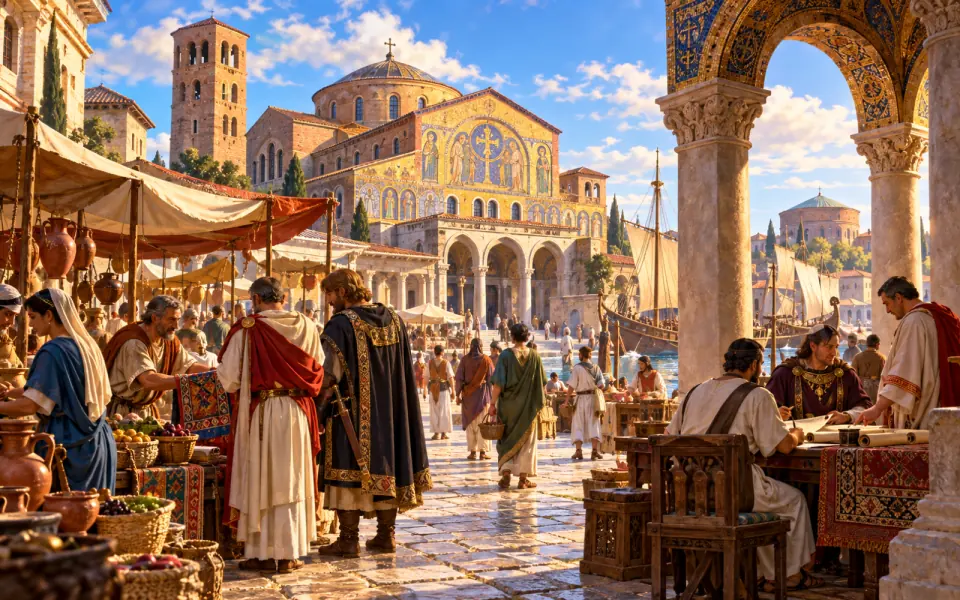 BeforeThe Romano-Germanic kingdomsabout AD 480
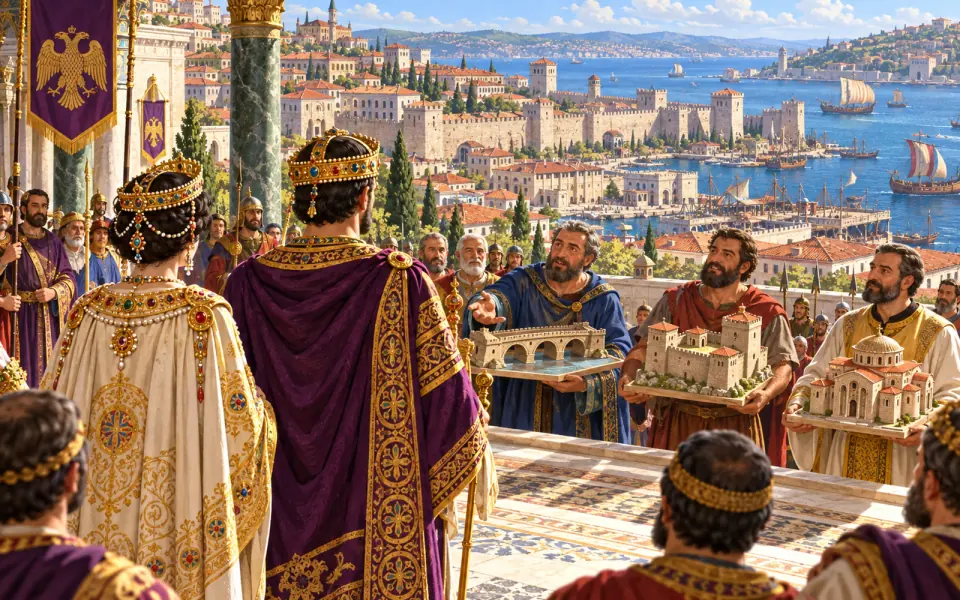 BeforeEmperor JustinianAD 527
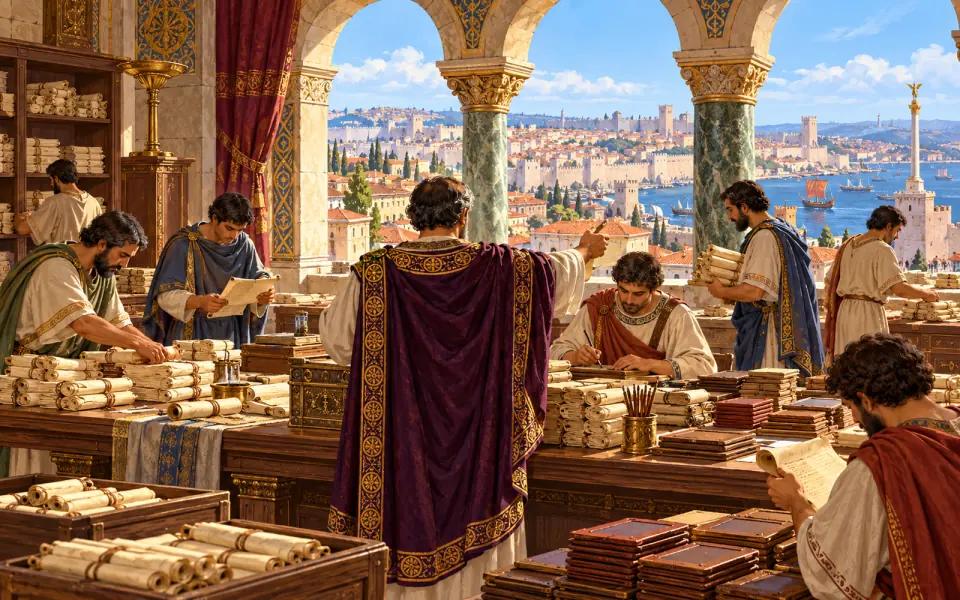 BeforeJustinian's CodeAD 529
 BeforeBenedictine monksabout AD 529
 BeforeHagia Sophia in ConstantinopleAD 537
 BeforeThe mosaics of San Vitale in RavennaAD 547
 BeforeThe Lombards in ItalyAD 568
 BeforeMuhammad's HijraAD 622
 BeforeIsidore writes the Etymologiesabout AD 625
 BeforeThe spread of IslamAD 632–750
 BeforePaper reaches Samarkandabout AD 751
 BeforeCharlemagne, King of the FranksAD 768
 BeforeThe Carolingian Renaissanceabout AD 790
 BeforeThe Book of Kellsabout AD 800
 BeforeCharlemagne crowned emperorAD 800
 BeforeHindu-Arabic numerals head westabout AD 825
 BeforeWriting music down with neumesabout AD 850
 BeforeThe Diamond Sutra, oldest dated printed bookAD 868
 BeforeAlfred the GreatAD 871
 BeforeThe Vikings reach Icelandabout AD 874
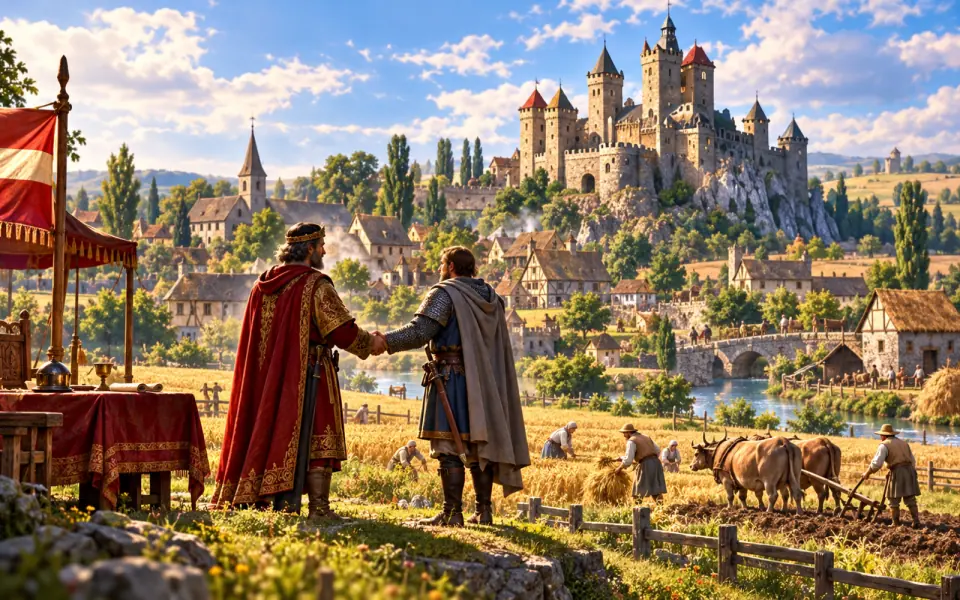 BeforeThe feudal system spreadsabout AD 900
 BeforeThe Medical School of Salernoabout AD 950
 BeforeThe Vikings in Greenlandabout AD 985
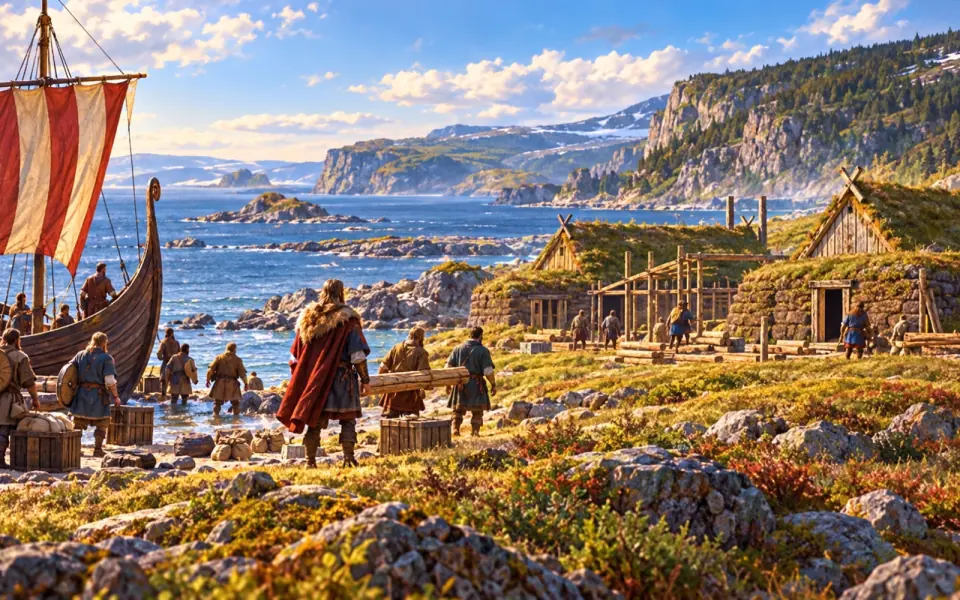 BeforeLeif Erikson in North Americaabout 1000
- You are hereThe heavy plough spreadsabout 1000
Listen / Read next
- Music to read by: Cinematic JourneyEpic film-style music, no lyrics, by Ciro Simone IrmiciSpotifyYouTube Music
Meanwhile, elsewhere in the world
Other events of the era “Early Middle Ages”
- The Romano-Germanic kingdoms
- Emperor Justinian
- Justinian's Code
- Benedictine monks
- Hagia Sophia in Constantinople
- The mosaics of San Vitale in Ravenna
- The Lombards in Italy
- Muhammad's Hijra
- Isidore writes the Etymologies
- The spread of Islam
- Paper reaches Samarkand
- Charlemagne, King of the Franks
- The Carolingian Renaissance
- The Book of Kells
- Charlemagne crowned emperor
- Hindu-Arabic numerals head west
- Writing music down with neumes
- The Diamond Sutra, oldest dated printed book
- Alfred the Great
- The Vikings reach Iceland
- The feudal system spreads
- The Medical School of Salerno
- The Vikings in Greenland
- Leif Erikson in North America
