Isidore writes the Etymologies
about AD 625 Seville, Spain
In short
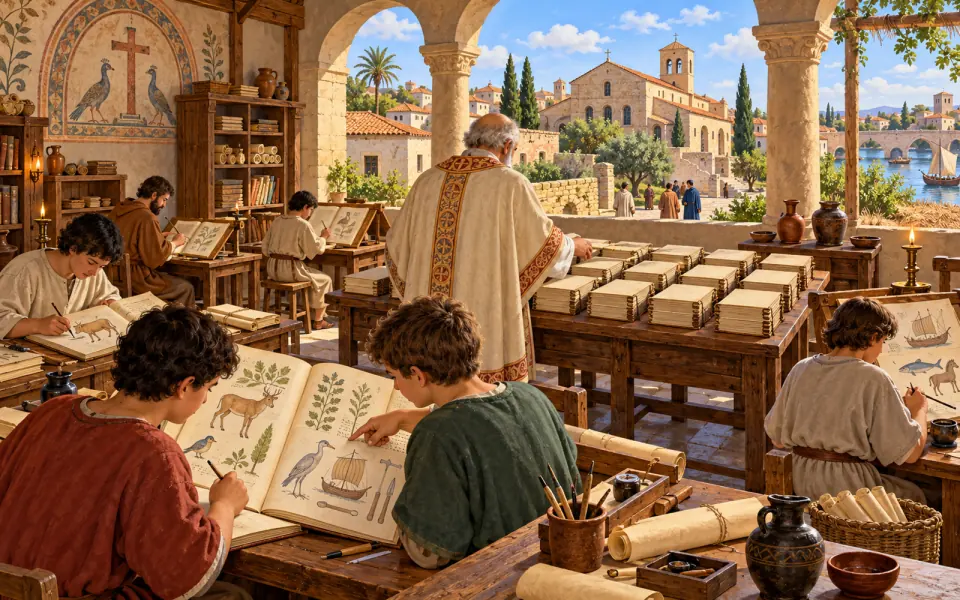
Isidore was Bishop of Seville, in Spain, in the time of the Visigothic kings. In twenty books he gathered everything that was known in his day: grammar, medicine, animals, stones, cities, even ships and clothes. To explain things he often started from where words came from, which is why the work is called the Etymologies. Some of his explanations are fanciful, yet it was copied and read all over Europe for centuries.
Why it matters It is a kind of ancient encyclopaedia, which formed a bridge between ancient and medieval knowledge.
Source: Encyclopaedia Britannica, “Saint Isidore of Seville”
Study card about 5 minutes of reading
The story
A bishop of the Visigoths
Isidore was born around AD 560 at Cartagena, in Spain, in a territory that was then still partly under the Byzantines. His parents died when he was young, and he was brought up by his elder brother Leander, who was bishop of Seville. When Leander died, in 601, Isidore took his place. He remained bishop for more than thirty years, until his death on 4 April 636.
Isidore's Spain was ruled by the Visigothic kings, a Germanic people we spoke of in the Romano-Germanic kingdoms. In his time the Visigoths had recently left Arianism for Catholicism, and bishops had a very important role. Isidore presided over the second and third provincial councils of Seville and the fourth national council of Toledo, in 633: meetings of bishops in which the rules of the Church were discussed, and also matters of the kingdom.
A man who wanted to preserve knowledge
Isidore lived at a time when the Roman world was by now over. He chose to do an enormous task: to gather in a single work everything that was known. He wrote a great deal: a treatise on nature called De natura rerum, which starts from time and the sky and goes on to climate, the sea and the earth; a history of the Goths, the Vandals and the Suevi; a rule for monks of 25 chapters; the three books of the Sentences, which are his second most read text in the Middle Ages, with more than five hundred surviving manuscripts. But his most famous work is the Etymologies.
The Etymologies
The Latin title is Etymologiarum sive Originum libri XX, that is, “Twenty books of etymologies or origins”. The basic idea was this: to understand something well you have to understand where its name comes from. Isidore was convinced that the form of a word revealed the essence of what it meant. So, every time he spoke of something, he went back to its origin.
The twenty books touch on almost every subject. The first three are devoted to the liberal arts, that is, the subjects studied at school: grammar, rhetoric and dialectic, then arithmetic, geometry, music and astronomy. The fourth is about medicine, the fifth about laws and time. Next come the books on the Church, on God and the angels, on languages and peoples. Then we move on to human beings and animals, the world and the earth, buildings and fields, stones and metals, agriculture, war and games, ships and clothes, and finally the house and household tools. Book ten is the only one in alphabetical order, and collects words with their explanation.
How much did Isidore write himself? Little: a large part of the content comes from older authors, Roman and Christian, whom he summarised and put in order. His merit lies precisely in having saved and organised this knowledge.
Right etymologies, fanciful etymologies
Some explanations are correct. Isidore derives dominus, “master”, from domus, “house”: and indeed the dominus was the master of the house. Others are fanciful. Wine, in Latin vinum, for him comes from the veins, venae, because it “refreshes” the veins. Cheeks, genae, and knees, genua, would be linked because in the mother's womb the child's body is curled up and the knees touch the cheeks. Today we know that modern linguistics does not work like this, but for Isidore and his readers the explanation was a way of remembering.
An unfinished work
Isidore worked on the Etymologies for years. When he fell ill he could not finish the final revision and entrusted the task to his pupil Braulio, bishop of Saragossa. Braulio himself had asked him to send him the books complete and well connected, because fragmentary versions were circulating. The text dates, in its final form, to about 636, but the work began much earlier: for this reason scholars speak of a work written over several years, whose exact year is not known, and the timeline places it around 625.
Success over the centuries
After the Bible, the Etymologies were one of the most copied texts of the Middle Ages: about a thousand manuscripts survive. For centuries it was a central educational text. The work influenced the great dictionaries and encyclopaedias of the later Middle Ages. The English poet Chaucer knew it, and Dante, in the Paradiso, places Isidore in the Heaven of the Sun, among the wise spirits.
In 1472 the Etymologies were among the first medieval works to be printed, at Augsburg, in Germany, by Günther Zainer. In that edition, in book XIV, the first printed map of the world appears.
Isidore is venerated as a saint and is a Doctor of the Church. Many people consider him, unofficially, the patron saint of the internet.
Why it happened
After the end of the Western Empire the knowledge of the Greeks and Romans risked being scattered among many different writings. Isidore, a bishop and scholar, decided to collect it in a single work, putting together what he had found in the books of earlier Roman and Christian authors.
There was also his way of reasoning: Isidore believed that the form of a word revealed the essence of the thing, and so explaining the origin of names seemed to him the best way to order and understand the world.
What changed
For centuries the Etymologies became the great encyclopaedia of Christian Europe: anyone who wanted to know something about grammar, animals, medicine or geography could find a summary of it. They served as a bridge between ancient and medieval knowledge.
The work influenced the great dictionaries and encyclopaedias of the late Middle Ages, and Isidore was regarded as an authority.
Its limit is clear: it makes no distinction between true and fanciful explanations. But it is also true that without Isidore much information about ancient authors would have been lost.
Key people and places
People
- Isidore of Seville
- Bishop of Seville from 601 to 636, author of the Etymologies; saint and Doctor of the Church.
- Leander
- Isidore's elder brother and bishop of Seville before him: he brought him up after their parents' death.
- Braulio of Saragossa
- Bishop and pupil of Isidore: he prepared the final version of the Etymologies when his master fell ill.
- Günther Zainer
- Printer of Augsburg who in 1472 published the first printed edition of the Etymologies.
Places
- Seville
- City in southern Spain, seat of Isidore's bishopric.
- Cartagena
- City on the Spanish coast where Isidore was born around 560.
- Toledo
- Capital of the Visigothic kingdom: here, in 633, the fourth national council, presided over by Isidore, was held.
Good to know
- The Etymologies are divided into twenty books, and only the tenth is in alphabetical order.
- For Isidore wine (vinum) took its name from the veins (venae), because it “refreshes” the blood: a fanciful etymology.
- In the edition printed in 1472 the first printed map of the world appears.
- Dante places Isidore in the Heaven of the Sun in the Paradiso.
- Many consider Isidore, unofficially, the patron saint of the internet: the Church has never declared this officially.
Find out more
- Wikipedia, “Isidore of Seville” en.wikipedia.org
- Wikipedia, “Etymologiae” en.wikipedia.org
- Wikipedia, “Visigoths” en.wikipedia.org
- Wikipedia, “Toledo, Spain” en.wikipedia.org
Related events
- The Romano-Germanic kingdomsabout AD 480 · Early Middle AgesIsidore lived in the Visigothic kingdom of Toledo, one of the Romano-Germanic kingdoms.
- Benedictine monksabout AD 529 · Early Middle AgesLike Benedict, Isidore wrote a rule for monks.
- The Carolingian Renaissanceabout AD 790 · Early Middle AgesIn the following centuries medieval copyists went on copying books such as the Etymologies.
- The spread of IslamAD 632–750 · Early Middle AgesIsidore's Visigothic kingdom fell to the Arabs in 711.
Before and after, in the era “Early Middle Ages”
Event 9 of 25
 BeforeThe Romano-Germanic kingdomsabout AD 480
 BeforeEmperor JustinianAD 527
 BeforeJustinian's CodeAD 529
 BeforeBenedictine monksabout AD 529
 BeforeHagia Sophia in ConstantinopleAD 537
 BeforeThe mosaics of San Vitale in RavennaAD 547
 BeforeThe Lombards in ItalyAD 568
 BeforeMuhammad's HijraAD 622
- You are hereIsidore writes the Etymologiesabout AD 625
 AfterThe spread of IslamAD 632–750
 AfterPaper reaches Samarkandabout AD 751
 AfterCharlemagne, King of the FranksAD 768
 AfterThe Carolingian Renaissanceabout AD 790
 AfterThe Book of Kellsabout AD 800
 AfterCharlemagne crowned emperorAD 800
 AfterHindu-Arabic numerals head westabout AD 825
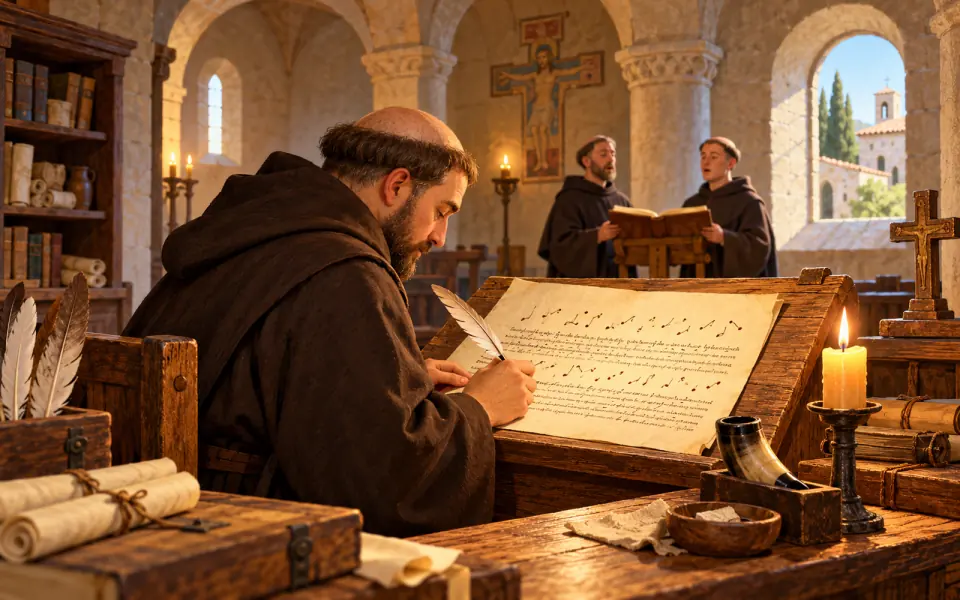 AfterWriting music down with neumesabout AD 850
 AfterThe Diamond Sutra, oldest dated printed bookAD 868
 AfterAlfred the GreatAD 871
 AfterThe Vikings reach Icelandabout AD 874
 AfterThe feudal system spreadsabout AD 900
 AfterThe Medical School of Salernoabout AD 950
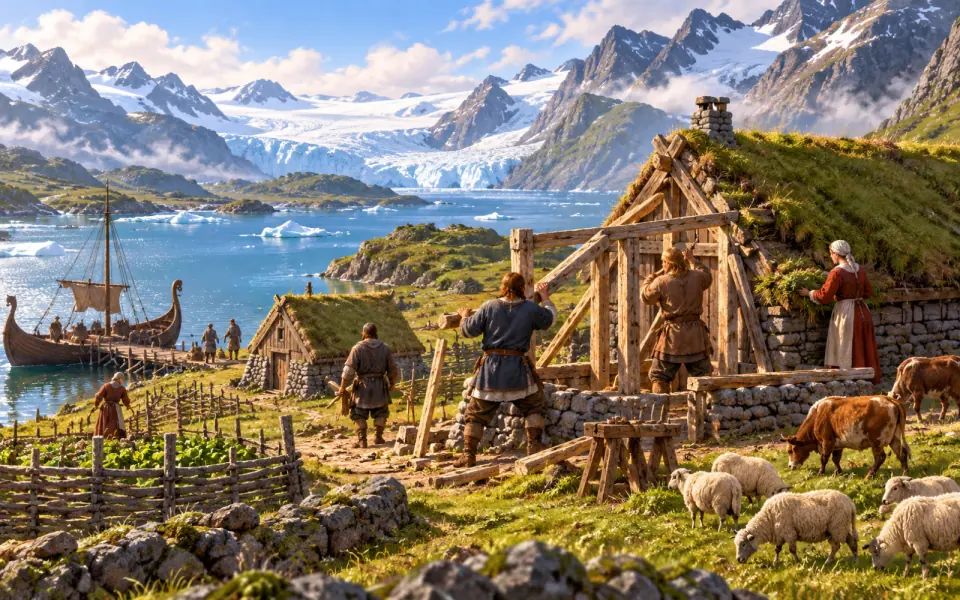 AfterThe Vikings in Greenlandabout AD 985
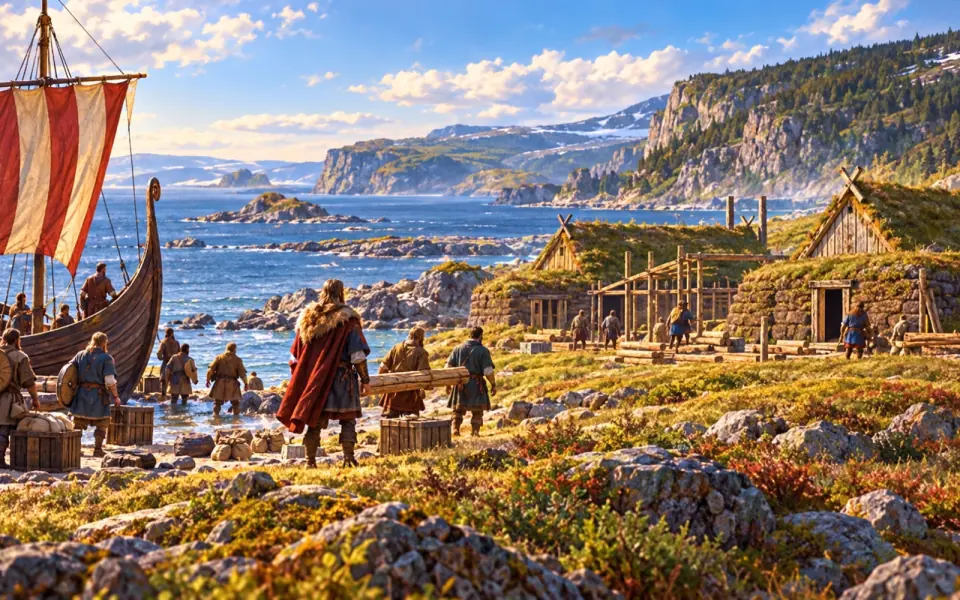 AfterLeif Erikson in North Americaabout 1000
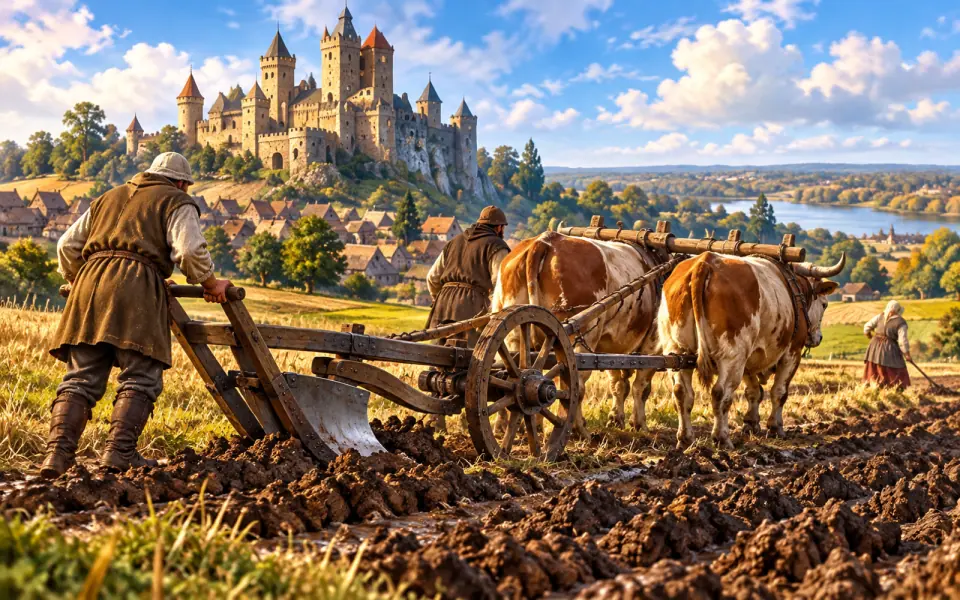 AfterThe heavy plough spreadsabout 1000
Listen / Read next
- Music to read by: Cinematic JourneyEpic film-style music, no lyrics, by Ciro Simone IrmiciSpotifyYouTube Music
Meanwhile, elsewhere in the world
Other events of the era “Early Middle Ages”
- The Romano-Germanic kingdoms
- Emperor Justinian
- Justinian's Code
- Benedictine monks
- Hagia Sophia in Constantinople
- The mosaics of San Vitale in Ravenna
- The Lombards in Italy
- Muhammad's Hijra
- The spread of Islam
- Paper reaches Samarkand
- Charlemagne, King of the Franks
- The Carolingian Renaissance
- The Book of Kells
- Charlemagne crowned emperor
- Hindu-Arabic numerals head west
- Writing music down with neumes
- The Diamond Sutra, oldest dated printed book
- Alfred the Great
- The Vikings reach Iceland
- The feudal system spreads
- The Medical School of Salerno
- The Vikings in Greenland
- Leif Erikson in North America
- The heavy plough spreads
