Tomatoes, maize and potatoes reach Europe
about 1550 Seville, Spain (port of arrival from the Americas)
In short
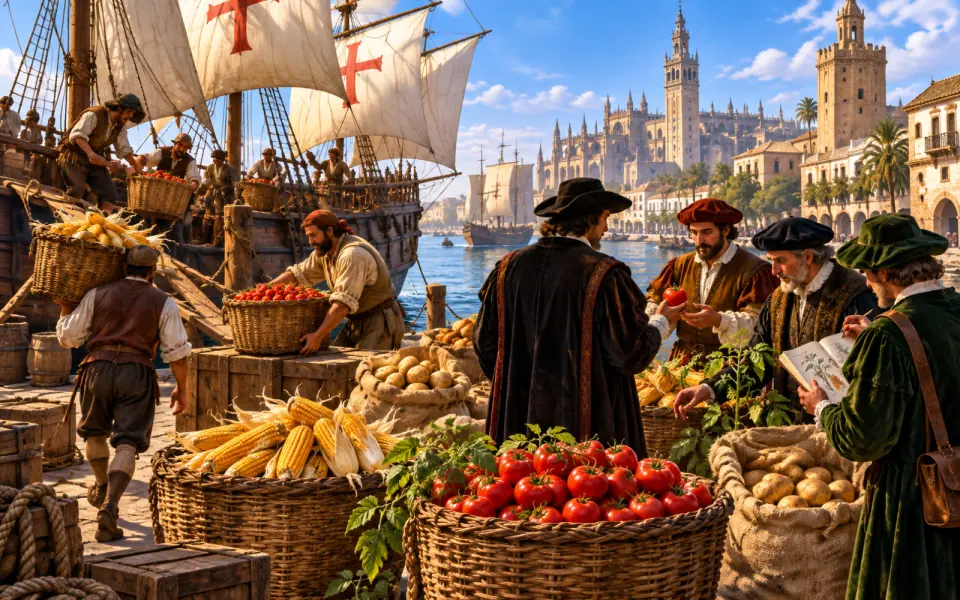
After Columbus's voyages, the ships returning from America brought plants to Europe that nobody there had ever seen: maize, tomatoes, potatoes, peppers, beans and cocoa. The doctor Pietro Andrea Mattioli from Siena described the tomato as early as 1544; its Italian name, ‘pomo d'oro’ or ‘golden apple’, reminds us that some of the first fruits were yellow. At first many people grew it only as an ornamental plant. It took centuries for tomatoes and potatoes to become everyday foods.
Why it matters The exchange of plants and animals between continents changed cooking for ever, Italian cooking included.
Source: Treccani, entry “Pomodoro”
Study card about 4 minutes of reading
The story
A kitchen without tomatoes
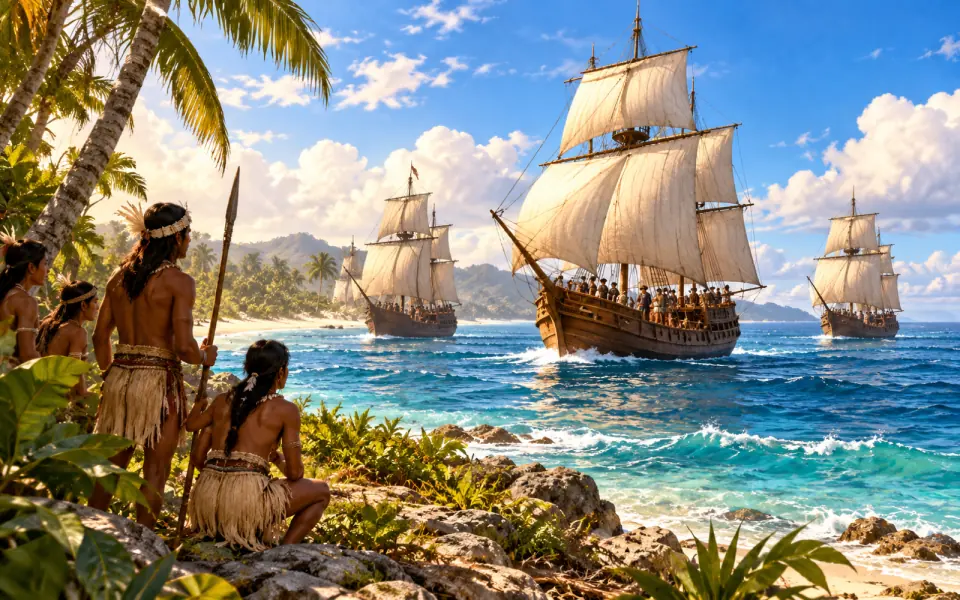
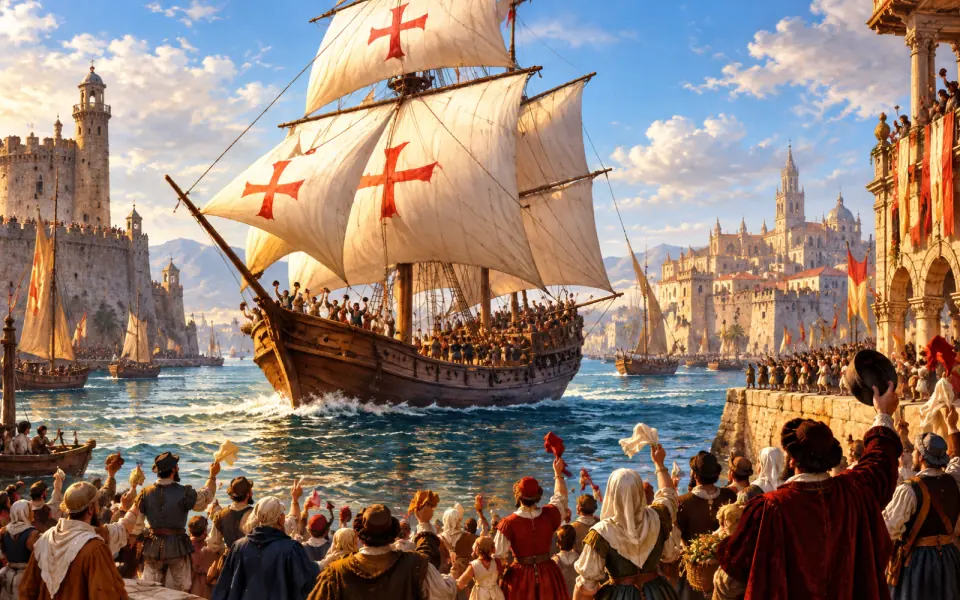
Try to imagine Italian cooking before 1500: no tomato pizza, no spaghetti with red sauce, no maize polenta, no chips. It seems impossible, but it is true. Tomatoes, maize and potatoes did not exist in Europe: they grew only in the Americas, where the native peoples had farmed them for thousands of years. When Spanish ships began to cross the ocean, alongside gold and silver they also brought seeds, tubers and curious plants, and that is how these plants came to Europe.
This exchange of plants, animals and diseases between the two continents, which began with Columbus, is called the “Columbian exchange”. Europeans took wheat, grapevines, cows, horses and sugar to the Americas. From the Americas, besides maize, tomatoes and potatoes, came cocoa, chilli peppers, beans, squash, turkeys and tobacco.
Maize
Maize was one of the first American plants to be brought to Europe: Columbus himself collected some seeds on his first voyage. In Spain people soon began to grow it, first as a curiosity, then as animal feed and finally as food for people. It grows well even where wheat does not, it gives a high yield and it can be ground into flour. In the 17th century, in the Veneto, in Lombardy and in other regions of northern Italy, maize polenta began to replace the kind made from other grains, becoming the everyday food of peasants.
But a diet made almost only of polenta, with no other foods, caused a disease called pellagra, which brings skin sores, diarrhoea and mental disorders. Only many years later did people understand that it was caused by a lack of a vitamin, niacin, which maize does not make available unless it is treated in a certain way. In the Americas the native peoples knew a treatment with lime or ash, called nixtamalisation, which avoided the problem.
The potato
The potato comes from the Andes, in what is now Peru and Bolivia, where hundreds of varieties were grown. It arrived in Spain around 1570, perhaps from the Canary Islands. At first Europeans found it strange: it grew underground, some said it was not mentioned in the Bible, and others thought it caused diseases. It was times of famine and war that pushed peasants to grow it, because it survived the damage of wars and soldiers better than wheat did.
Kings and scientists helped to spread it too. Frederick II of Prussia, in 1756, ordered his peasants to plant it; in France Antoine-Augustin Parmentier made it known with a famous promotion campaign. In Ireland the potato became the basic food of the poorest people, and for this reason, when a plant disease destroyed the crops in the years 1845–1852, a terrible famine followed: about a million people died and another million emigrated.
The tomato
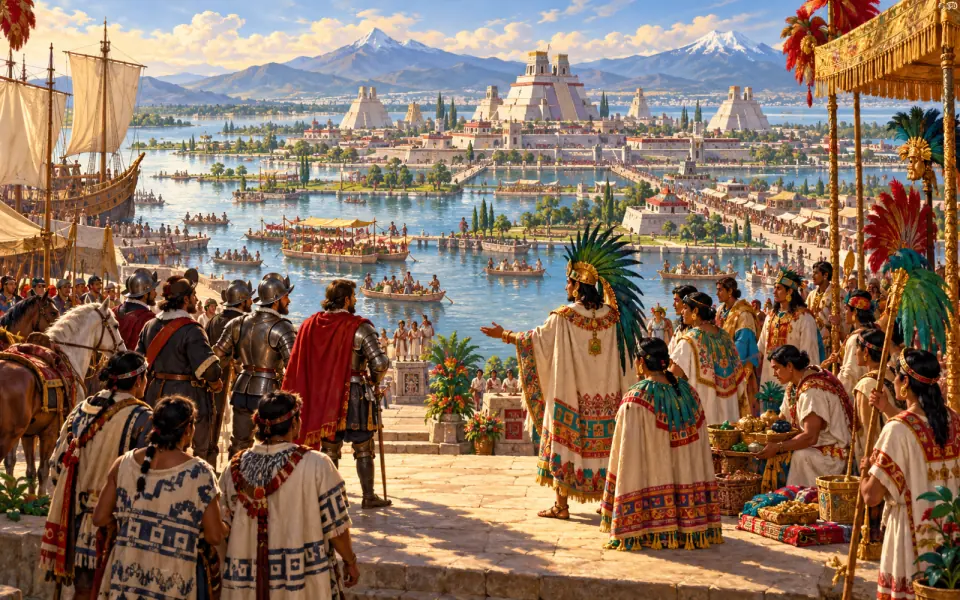
The tomato comes from Mexico and Central America. Its name comes from Nahuatl, the language of the Mexica, “tomatl”. It arrived in Europe after the conquest of Tenochtitlán. It was first described by a doctor and botanist from Siena, Pietro Andrea Mattioli, in 1544, who called it “pomo d'oro”, or “golden apple”, because the first varieties were yellow.
For a long time in Europe the tomato was used as an ornamental plant. It belongs to the same family as deadly nightshade and other poisonous plants, and many people thought it dangerous. The earliest Italian recipe with tomato known to us is found in a book of 1692 by Antonio Latini, from the Marche, who worked in Naples: a “tomato sauce in the Spanish style”. Only in the 19th century, with preserves and pasta, did the tomato become the symbol of Italian cooking.
Why it happened
The ships that crossed the Atlantic carried goods back and forth, but also seeds and plants: sailors and missionaries brought them as curiosities or as food. Botanical gardens, which appeared in the 16th century, studied and exchanged them.
Europe's population was growing and needed new foods; American plants, such as maize and potatoes, gave a big harvest from little land and were soon adopted in times of famine.
What changed
European diet changed deeply. With maize and potatoes the population was able to grow: historians think the potato helped population growth in Europe between the 18th and 19th centuries.
Cooking changed. Pasta with tomato sauce, polenta, chips and chocolate, today part of the traditions of many countries, are in fact the result of the meeting of the two continents.
There were risks as well: a diet too dependent on a single plant, like the potato in Ireland or maize in northern Italy, made whole populations fragile, and they suffered hunger or pellagra when something went wrong.
Key people and places
People
- Pietro Andrea Mattioli
- Doctor and botanist from Siena (1501–1578): the first to describe the tomato in Europe.
- Antonio Latini
- Cook from the Marche who worked in Naples (1642–1696): he wrote the earliest known Italian recipe with tomato.
- Antoine-Augustin Parmentier
- French agronomist (1737–1813): he spread potato growing in France.
- Frederick II of Prussia
- King of Prussia (1712–1786): he ordered peasants to plant potatoes.
Places
- Seville and Cádiz (Spain)
- Ports where goods from the Americas arrived.
- Andes (Peru and Bolivia)
- The region where the potato comes from.
- Mexico
- The region where the tomato and maize come from.
Good to know
- The Italian word “pomodoro” recalls “pomo d'oro”, golden apple, because the first varieties were yellow.
- The earliest known Italian recipe with tomato dates from 1692.
- Pellagra, a disease of poverty, was widespread among peasants who ate almost nothing but polenta.
- In Ireland the potato famine (1845–1852) caused about a million deaths.
- Hundreds of varieties of potato, in many colours, come from the Andes.
Find out more
- Wikipedia, “Tomato” en.wikipedia.org
- Wikipedia, “Potato” en.wikipedia.org
- Wikipedia, “Maize” en.wikipedia.org
- Wikipedia, “Columbian exchange” en.wikipedia.org
Related events
- Columbus's voyage1492 · Early modern ageAfter Columbus's first voyage the exchange of plants began.
- The conquest of Tenochtitlán1521 · Early modern ageThe tomato arrived from Mexico after the conquest of Tenochtitlán.
- The first voyage round the world1522 · Early modern ageThe ships that crossed the oceans also carried seeds and plants.
- Vasco da Gama reaches India1498 · Early modern ageAsian spices, brought by the Portuguese, were reaching Europe in the same years.
Before and after, in the era “Early modern age”
Event 16 of 25
 BeforeRenaissance perspectiveabout 1420
 BeforeBrunelleschi completes the dome1436
 BeforeThe fall of Constantinople1453
 BeforeGutenberg prints the Bibleabout 1455
 BeforeLorenzo de' Medici in Florence1469
 BeforeLeonardo designs machinesabout 1485
 BeforeColumbus's voyage1492
 BeforeVasco da Gama reaches India1498
 BeforeMichelangelo carves David1504
 BeforeRaphael paints the Vatican Rooms1508
 BeforeLuther and the Reformation1517
 BeforeThe conquest of Tenochtitlán1521
 BeforeThe first voyage round the world1522
 BeforeCopernicus puts the Sun at the centre1543
 BeforeThe Council of Trent1545–1563
- You are hereTomatoes, maize and potatoes reach Europeabout 1550
 AfterThe Gregorian calendar1582
 AfterShakespeare's theatreabout 1590
 AfterRegular newspapers1605
 AfterGalileo turns his telescope to the sky1609
 AfterKepler describes the orbits1609
 AfterArtemisia Gentileschiabout 1612
 AfterHarvey studies the circulation of the blood1628
 AfterScientific academies1660
 AfterNewton publishes the Principia1687
Listen / Read next
- Music to read by: Cinematic JourneyEpic film-style music, no lyrics, by Ciro Simone IrmiciSpotifyYouTube Music
Meanwhile, elsewhere in the world
Other events of the era “Early modern age”
- Renaissance perspective
- Brunelleschi completes the dome
- The fall of Constantinople
- Gutenberg prints the Bible
- Lorenzo de' Medici in Florence
- Leonardo designs machines
- Columbus's voyage
- Vasco da Gama reaches India
- Michelangelo carves David
- Raphael paints the Vatican Rooms
- Luther and the Reformation
- The conquest of Tenochtitlán
- The first voyage round the world
- Copernicus puts the Sun at the centre
- The Council of Trent
- The Gregorian calendar
- Shakespeare's theatre
- Regular newspapers
- Galileo turns his telescope to the sky
- Kepler describes the orbits
- Artemisia Gentileschi
- Harvey studies the circulation of the blood
- Scientific academies
- Newton publishes the Principia
