Raphael paints the Vatican Rooms
1508 Vatican Palaces, Rome
In short
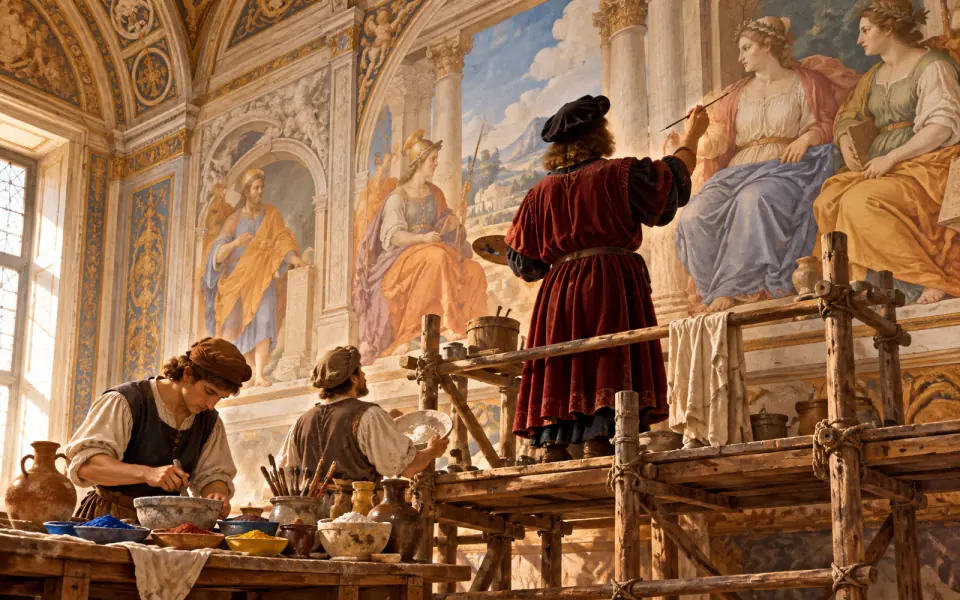
In 1508 Pope Julius II called the young Raphael, born in Urbino, to Rome and gave him the job of decorating some rooms in his apartment in the Vatican. In the Room of the Signatura he painted The School of Athens, a large fresco of the ancient philosophers gathered in a majestic building. In the centre you can recognise Plato and Aristotle, and some figures have the faces of artists of the time. Today these rooms are part of the Vatican Museums.
Why it matters The Rooms show the harmony and balance that make Raphael one of the masters of the Renaissance.
Source: Musei Vaticani, “Stanze di Raffaello”
Study card about 4 minutes of reading
The story
A young painter called to Rome
Raphael (Raffaello Sanzio) was born in Urbino in 1483. His father, Giovanni Santi, was a painter at the duke's court, and the boy learned the trade in the family workshop. Left an orphan at the age of eleven, he trained with other masters, including Perugino, and at twenty-one he was already so good that he was called to work in Florence, where he studied the works of Leonardo and Michelangelo. He painted gentle, luminous Madonnas that everyone liked.
In 1508, at the age of twenty-five, he was called to Rome by Pope Julius II. Julius II was known as “the warrior Pope” because he personally led armies, but he was also a great lover of the arts: he wanted to make Rome the most beautiful capital in the world. In the same period he had given Michelangelo the job of painting the ceiling of the Sistine Chapel, and had called the architect Bramante to design the new basilica of St Peter's.
The Stanze
The Pope asked Raphael to decorate some rooms of the Vatican Palace, where he wanted to live himself; it is said that he avoided the Borgia apartments, whose memory he disliked. These rooms are called the “Raphael Rooms” (the Stanze). The first was the Stanza della Segnatura, where papal documents were signed; it was probably the Pope's library. Raphael painted it between 1508–1509 and 1511 with four great frescoes devoted to theology, philosophy, poetry and justice.
The most famous is the “School of Athens”, which represents philosophy. In the centre are two Greek philosophers, Plato, who points to the sky, and Aristotle, who stretches his hand towards the earth. Around them, in an immense building, are dozens of figures: Pythagoras writing, Euclid drawing with a compass, Diogenes lying on the steps, Socrates in discussion. According to tradition, Raphael gave Plato the face of Leonardo da Vinci and Heraclitus, alone in the foreground, that of Michelangelo. The artist also painted himself, in a corner, looking out at us.
Raphael's secret
Raphael used perspective with great mastery: the architecture in the background really seems to open up into space. His figures are orderly, harmonious and balanced. While Michelangelo is powerful and dramatic, Raphael looks for grace, serenity and clarity. Many after him have taken him as a model of “ideal beauty”.
After the Stanza della Segnatura he made the Stanza di Eliodoro (1511–1514), with scenes of miracles and divine help, and the Stanza dell'Incendio di Borgo (1514–1517). The work was too much for one man: Raphael organised a large workshop of pupils and assistants, where each knew how to do a part, and he drew and directed. The fourth room, the Stanza di Costantino, was finished after his death by his pupils.
An artist of everything
He was not only a painter. For Pope Leo X, Julius II's successor, he designed tapestries for the Sistine Chapel and in 1514 he was appointed architect of St Peter's, after Bramante. He also worked on studying and saving the ancient Roman ruins, and wrote a letter to the Pope asking him to protect them. He painted famous portraits, such as that of Baldassare Castiglione.
He died in Rome on 6 April 1520, at only thirty-seven, after a short illness. It is said that it was Good Friday, the same day on which he had been born, but the date of his birth is uncertain. He was buried in the Pantheon, the Roman temple turned into a church, where his tomb is still visited today. His funeral was very solemn, and all Rome wept.
Why it happened
Julius II wanted to make Rome the centre of the world and to show the greatness of the papacy through the arts. He had the money, the ideas and the character to call the best artists in Italy to Rome.
In Florence Raphael had learned to join sweetness and the search for harmony with the study of antiquity and perspective, and he was a man of courteous character, able to work with everyone.
What changed
Raphael's Stanze are one of the masterpieces of the Renaissance and were the model for classical painting for centuries. European academies and art schools taught students for centuries to copy his drawings.
Together with Leonardo and Michelangelo, Raphael is considered one of the three great masters of the High Renaissance. After his death, his pupils, such as Giulio Romano, spread his style across Italy.
Rome, thanks to the popes and to artists like him, became the new artistic centre of Europe, in place of Florence, and stayed so for more than a century. The Stanze can still be visited in the Vatican Museums.
Key people and places
People
- Raphael (Raffaello Sanzio)
- Painter and architect from Urbino (1483–1520): he decorated the Vatican Stanze.
- Julius II
- Pope from 1503 to 1513 (1443–1513): he called Raphael and Michelangelo to Rome.
- Donato Bramante
- Architect (about 1444–1514): he began the new basilica of St Peter's.
- Leo X
- Pope from 1513 to 1521 (1475–1521), son of Lorenzo de' Medici: he went on protecting Raphael.
- Giulio Romano
- Pupil of Raphael (about 1499–1546): he finished the Stanza di Costantino.
Places
- Vatican Museums, Rome
- The complex of museums that includes the Raphael Rooms.
- Urbino
- Town in the Marche where Raphael was born and where his house can be visited.
- Pantheon, Rome
- The ancient Roman temple, now a church, where Raphael is buried.
Good to know
- In the “School of Athens” Plato has, according to tradition, the face of Leonardo.
- Raphael died at the age of thirty-seven, on 6 April 1520.
- Raphael's tomb is in the Pantheon in Rome.
- It is said that Julius II did not want to live in the Borgia apartments, and for this reason had new rooms decorated.
- Raphael wrote a letter to the Pope asking him to protect the ruins of ancient Rome.
Find out more
- Wikipedia, “Raphael” en.wikipedia.org
- Wikipedia, “Raphael Rooms” en.wikipedia.org
- Wikipedia, “The School of Athens” en.wikipedia.org
- Wikipedia, “Pope Julius II” en.wikipedia.org
Related events
- Leonardo designs machinesabout 1485 · Early modern ageLeonardo is, according to tradition, the face of Plato.
- Michelangelo carves David1504 · Early modern ageMichelangelo, in the same period, was painting the Sistine Chapel.
- Renaissance perspectiveabout 1420 · Early modern ageRaphael makes masterly use of the perspective born in Florence.
- Luther and the Reformation1517 · Early modern ageA few years later, Luther criticised the luxury of the Church of Rome.
Before and after, in the era “Early modern age”
Event 10 of 25
 BeforeRenaissance perspectiveabout 1420
 BeforeBrunelleschi completes the dome1436
 BeforeThe fall of Constantinople1453
 BeforeGutenberg prints the Bibleabout 1455
 BeforeLorenzo de' Medici in Florence1469
 BeforeLeonardo designs machinesabout 1485
 BeforeColumbus's voyage1492
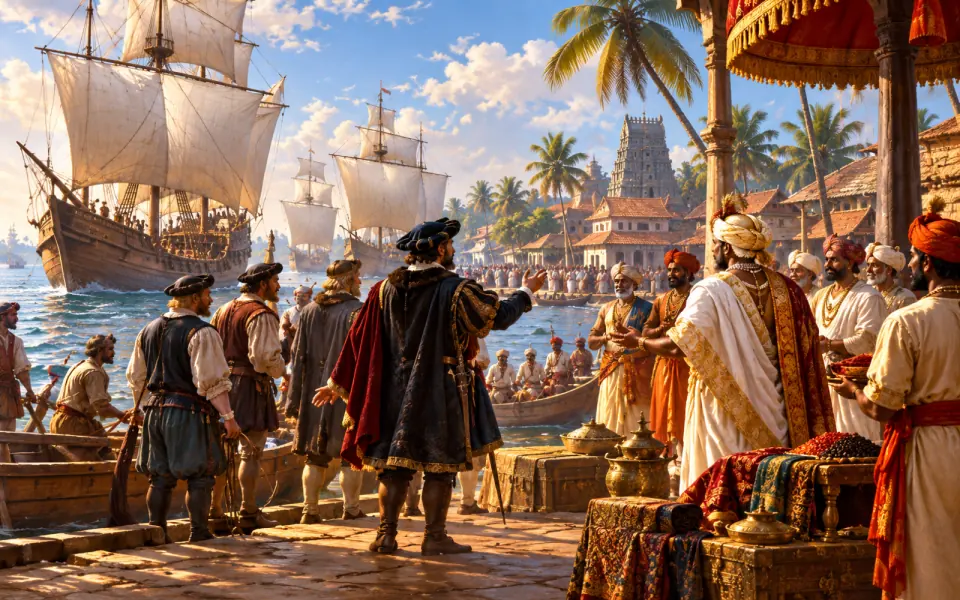 BeforeVasco da Gama reaches India1498
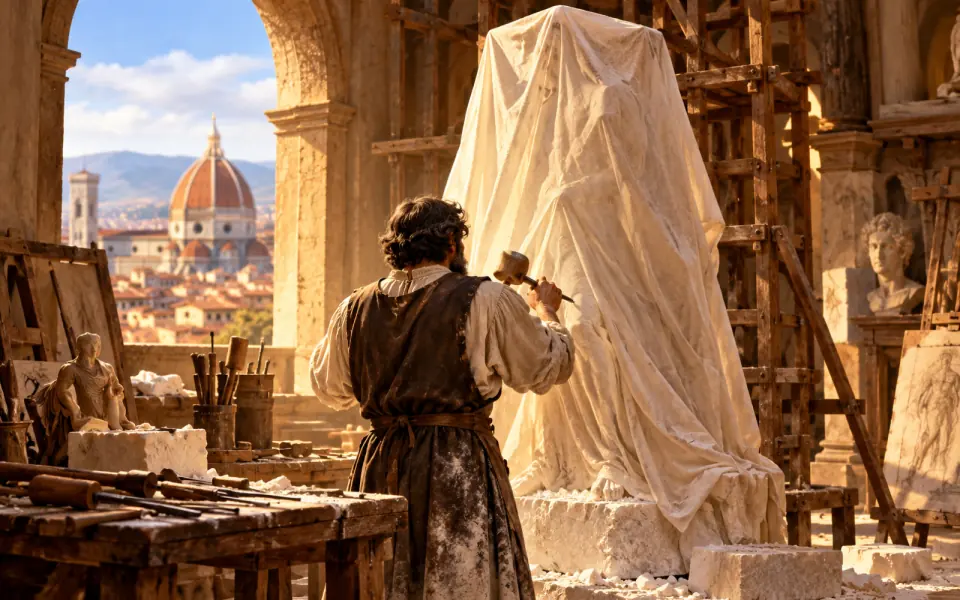 BeforeMichelangelo carves David1504
- You are hereRaphael paints the Vatican Rooms1508
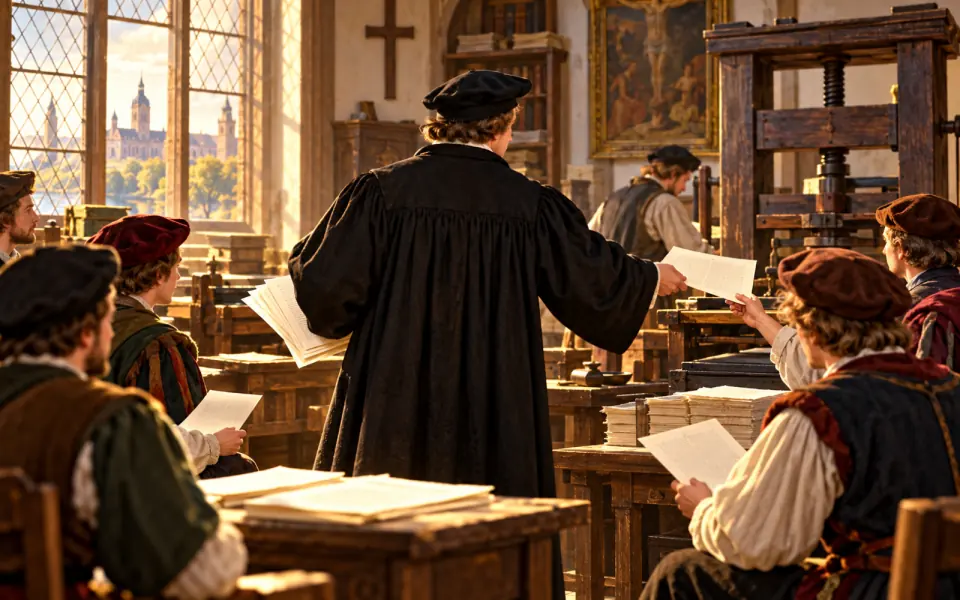 AfterLuther and the Reformation1517
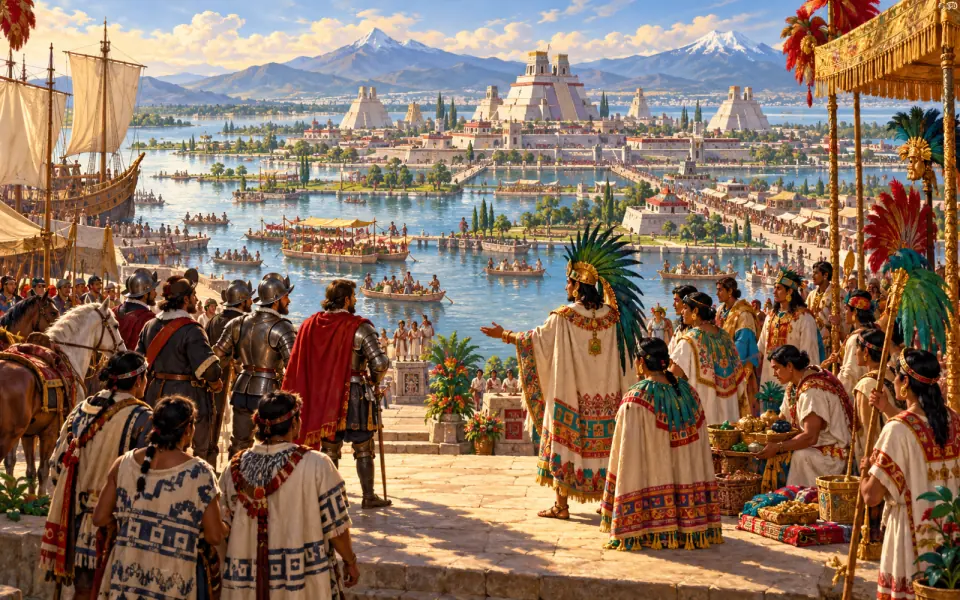 AfterThe conquest of Tenochtitlán1521
 AfterThe first voyage round the world1522
 AfterCopernicus puts the Sun at the centre1543
 AfterThe Council of Trent1545–1563
 AfterTomatoes, maize and potatoes reach Europeabout 1550
 AfterThe Gregorian calendar1582
 AfterShakespeare's theatreabout 1590
 AfterRegular newspapers1605
 AfterGalileo turns his telescope to the sky1609
 AfterKepler describes the orbits1609
 AfterArtemisia Gentileschiabout 1612
 AfterHarvey studies the circulation of the blood1628
 AfterScientific academies1660
 AfterNewton publishes the Principia1687
Listen / Read next
- Music to read by: Cinematic JourneyEpic film-style music, no lyrics, by Ciro Simone IrmiciSpotifyYouTube Music
Meanwhile, elsewhere in the world
Other events of the era “Early modern age”
- Renaissance perspective
- Brunelleschi completes the dome
- The fall of Constantinople
- Gutenberg prints the Bible
- Lorenzo de' Medici in Florence
- Leonardo designs machines
- Columbus's voyage
- Vasco da Gama reaches India
- Michelangelo carves David
- Luther and the Reformation
- The conquest of Tenochtitlán
- The first voyage round the world
- Copernicus puts the Sun at the centre
- The Council of Trent
- Tomatoes, maize and potatoes reach Europe
- The Gregorian calendar
- Shakespeare's theatre
- Regular newspapers
- Galileo turns his telescope to the sky
- Kepler describes the orbits
- Artemisia Gentileschi
- Harvey studies the circulation of the blood
- Scientific academies
- Newton publishes the Principia
