Lorenzo de' Medici in Florence
1469 Florence, Italy
In short
In 1469, aged only twenty, Lorenzo de' Medici took charge of governing Florence after his father's death, even though officially the city was still a republic. He was a banker, but also a poet, and he loved to surround himself with artists and philosophers. Botticelli and the very young Michelangelo were part of his circle. He used diplomacy to keep a balance between the Italian states, and to everyone he became ‘the Magnificent’.
Why it matters Under his leadership Florence became one of the liveliest centres of the Renaissance.
Source: Treccani, Dizionario Biografico, entry “Medici, Lorenzo de'”
Study card about 5 minutes of reading
The story
A city without a king
Florence, in the 15th century, was officially a republic, with magistrates who changed often and councils of citizens. In reality, for some decades, one single family had been in charge behind the scenes: the Medici. They were bankers, and had branches of their bank in many European cities, from Venice to Bruges, from London to Lyon. Money, and friendship with popes and princes, gave them enormous power, even though they had no title of ruler.
It was Lorenzo's grandfather, Cosimo the Elder, who built this system: he paid for public works, helped citizens in difficulty and placed friends in important posts. After him, his son Piero, who suffered from gout, governed for a few years. When Piero died, in December 1469, the leaders of the city turned to his elder son, who was barely twenty: Lorenzo.
A young man in charge
Lorenzo was born in 1449. He had been taught by excellent teachers and studied Latin, Greek, philosophy and poetry, but he could also ride, take part in tournaments and talk with ambassadors and merchants. He was not handsome, with a flattened nose and a slightly nasal voice, but he had a charm that won people over. He was an excellent politician: he knew how to listen, negotiate and wait.
The Florentines began to call him “the Magnificent”, a title which in the 15th century was given to important and generous people. His foreign policy was one of balance: to stop any one state in Italy from becoming too strong, and to keep the larger states at peace. For this reason some historians called him “the needle of the scales” of Italy.
The Pazzi conspiracy
Not everyone was happy with the power of the Medici. The rival Pazzi family, backed by Pope Sixtus IV, who wanted to extend the power of his own family into Tuscany too, organised a conspiracy. On 26 April 1478, during solemn Mass in the Cathedral, the conspirators attacked Lorenzo and his brother Giuliano. Giuliano was stabbed to death. Lorenzo, wounded in the neck, managed to take refuge in the sacristy with the help of his friends.
The Florentines did not rise up against the Medici, as the conspirators had hoped: on the contrary, they sided with Lorenzo and avenged Giuliano. Many of the conspirators were hanged from the windows of the Palazzo della Signoria. The Pope excommunicated Lorenzo and a coalition was formed to make war on him. Between 1479 and 1480, with great courage, Lorenzo went in person to Naples, to negotiate with King Ferrante, and managed to obtain peace.
The patron
Lorenzo was also a great protector of the arts, that is, a patron. Around him he had painters such as Sandro Botticelli, sculptors such as Verrocchio, and poets and philosophers such as Angelo Poliziano and Marsilio Ficino. In the garden near the church of San Marco he kept ancient statues, and there he had young artists study: among them was a boy called Michelangelo, who lived for a time in his house. Lorenzo himself wrote poems, carnival songs and a short narrative poem, in Italian, and helped give dignity to the language of the Florentines.
Lorenzo also collected gems, vases of hard stone and ancient manuscripts, and sent his agents around Europe and the East to look for them. The books gathered by the family became the core of the Medici Laurentian Library, which was opened to readers in 1571 and can still be visited.
He died on 8 April 1492, at the villa of Careggi, at the age of forty-three. He had governed Florence for twenty-three years. It is said that in his last days he wanted the friar Girolamo Savonarola, who preached against luxury, near him, but the details of this episode are uncertain.
Why it happened
The power of the Medici was based on the wealth of the bank, on a network of alliances and on the habit of the Florentines of a republic that, in practice, was led by a few. When Lorenzo inherited the leadership, he found a system that already worked, and knew how to use it cleverly.
The economic vitality of Florence, with wool, silk and finance, made it possible to pay artists and scholars, and the competition between Italian cities for beauty and prestige encouraged investment in culture.
What changed
Under Lorenzo Florence lived through one of its periods of greatest artistic splendour. The climate of culture that formed in those years prepared the way for the mature Renaissance of Leonardo, Michelangelo and Raphael.
The balance between the Italian states lasted until his death. Two years later, in 1494, the King of France, Charles VIII, invaded Italy, and a long period of wars began. The Medici were driven out of Florence and returned only in 1512.
The Medici bank, already in difficulty because of bad business, lost importance in the following years. The family, however, returned to power and later had two popes, Leo X and Clement VII, and, from 1569, the grand dukes of Tuscany.
Key people and places
People
- Lorenzo de' Medici
- Ruler of Florence from 1469 to 1492 (1449–1492): politician, poet and protector of the arts.
- Giuliano de' Medici
- Lorenzo's brother (1453–1478): he was killed in the Pazzi conspiracy.
- Sandro Botticelli
- Florentine painter (1445–1510): he painted “Primavera” and “The Birth of Venus”.
- Angelo Poliziano
- Poet and humanist (1454–1494): a friend of Lorenzo and the teacher of his children.
- Sixtus IV
- Pope from 1471 to 1484: he supported the Pazzi against the Medici.
Places
- Florence
- Tuscan city, centre of the Italian Renaissance.
- Villa of Careggi
- The Medici villa outside Florence where Lorenzo died in 1492.
Good to know
- Lorenzo took charge of Florence at the age of twenty.
- During the Pazzi conspiracy, in the Cathedral, Lorenzo was wounded in the neck but survived.
- To make peace with Naples, Lorenzo went in person to King Ferrante in 1479.
- Lorenzo wrote poems and carnival songs.
- The young Michelangelo lived for a time in the Medici house.
Find out more
- Wikipedia, “Lorenzo de' Medici” en.wikipedia.org
- Wikipedia, “Pazzi conspiracy” en.wikipedia.org
- Wikipedia, “Sandro Botticelli” en.wikipedia.org
- Wikipedia, “House of Medici” en.wikipedia.org
Related events
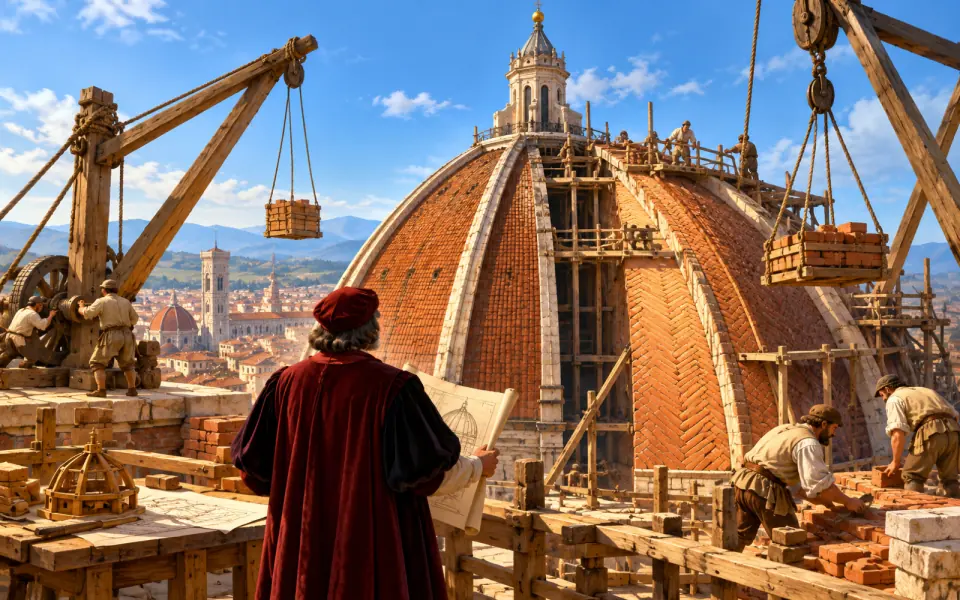
- Brunelleschi completes the dome1436 · Early modern ageThe dome of Florence Cathedral was finished thirty-three years earlier.
- Leonardo designs machinesabout 1485 · Early modern ageLeonardo, as a young man, also worked in Florence.
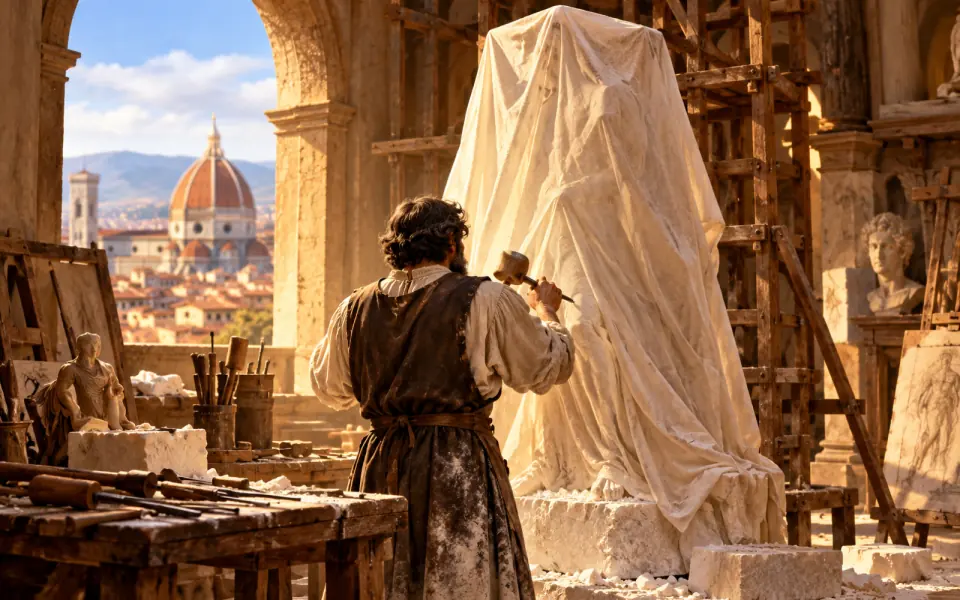
- Michelangelo carves David1504 · Early modern ageMichelangelo, brought up in the circle of the Medici, carved the David.
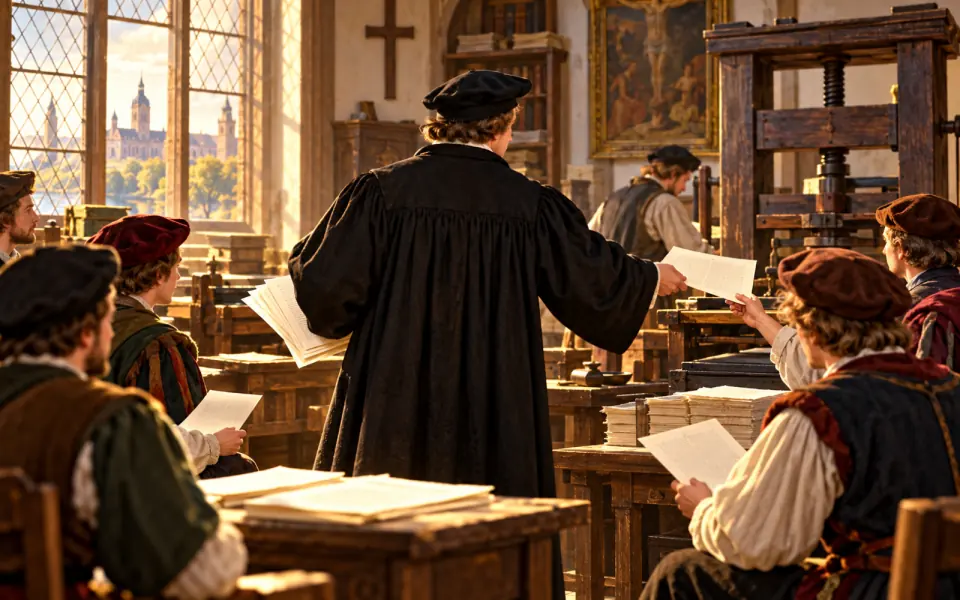
- Luther and the Reformation1517 · Early modern ageLater the Medici had popes, such as Leo X, at the time of Luther.
Before and after, in the era “Early modern age”
Event 5 of 25
 BeforeRenaissance perspectiveabout 1420
 BeforeBrunelleschi completes the dome1436
 BeforeThe fall of Constantinople1453
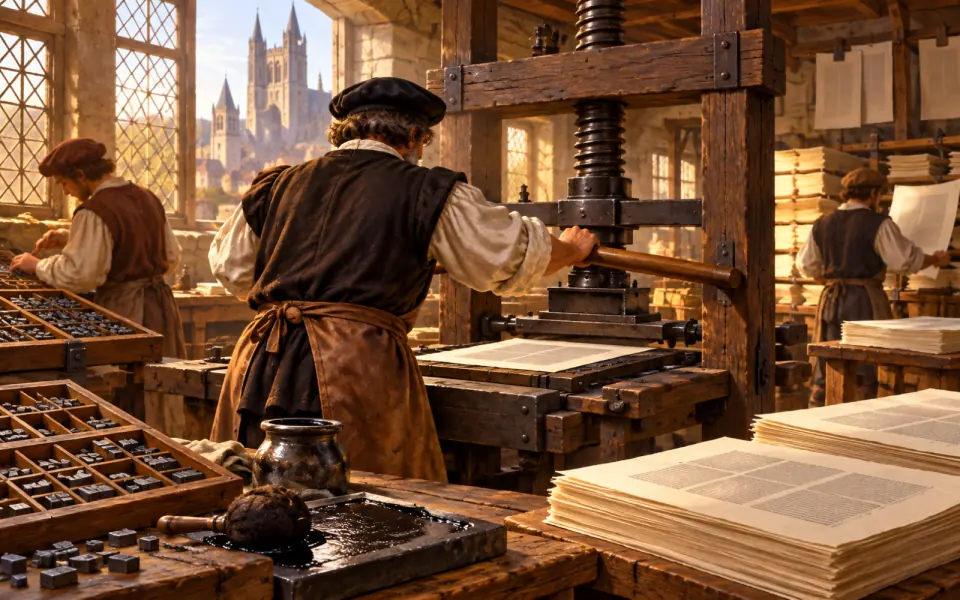 BeforeGutenberg prints the Bibleabout 1455
- You are hereLorenzo de' Medici in Florence1469
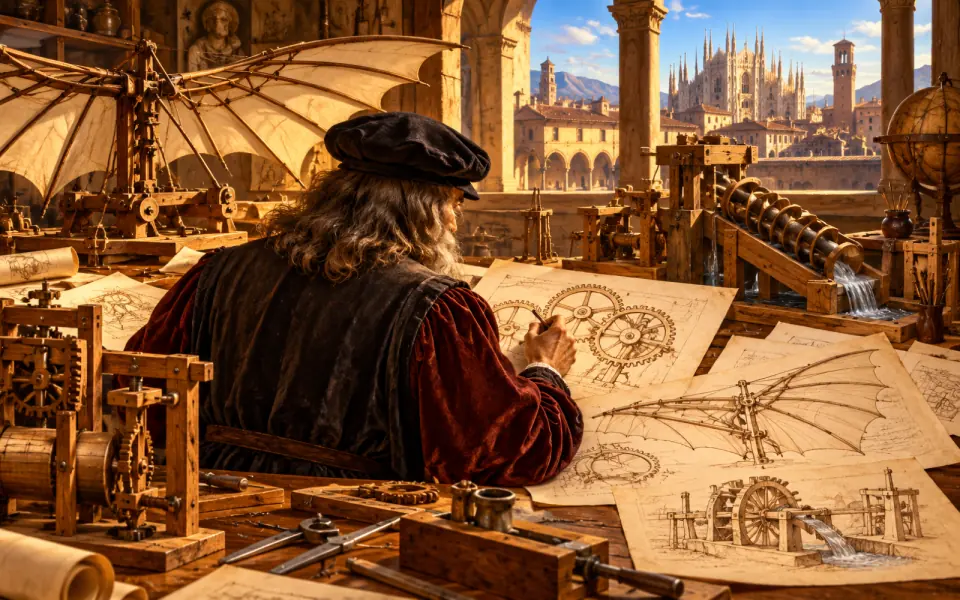 AfterLeonardo designs machinesabout 1485
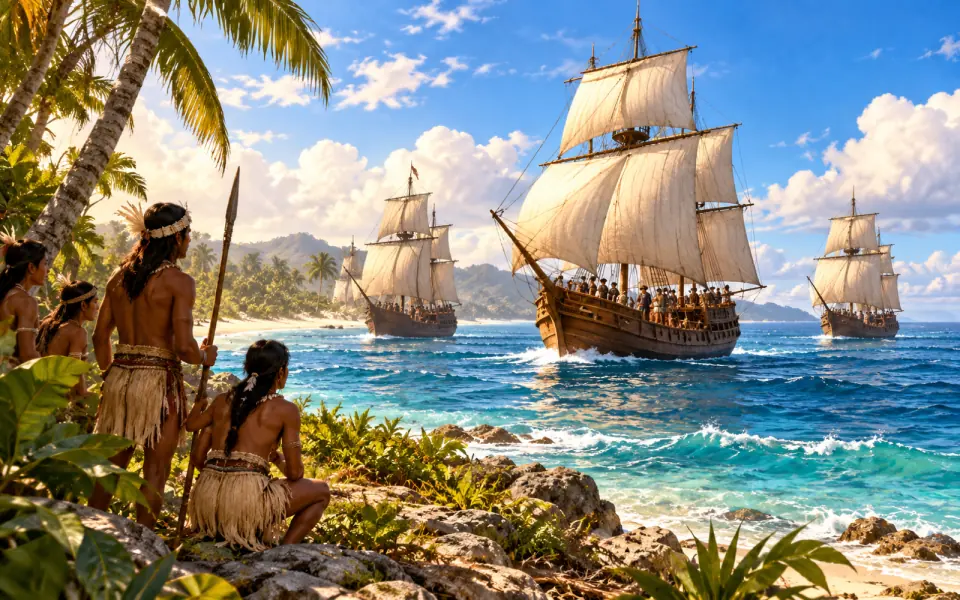 AfterColumbus's voyage1492
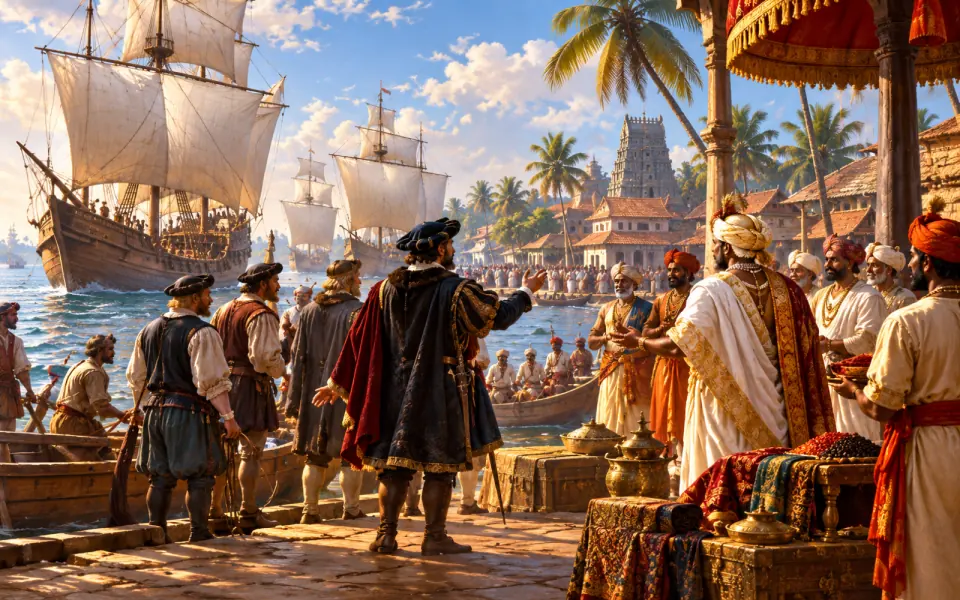 AfterVasco da Gama reaches India1498
 AfterMichelangelo carves David1504
 AfterRaphael paints the Vatican Rooms1508
 AfterLuther and the Reformation1517
 AfterThe conquest of Tenochtitlán1521
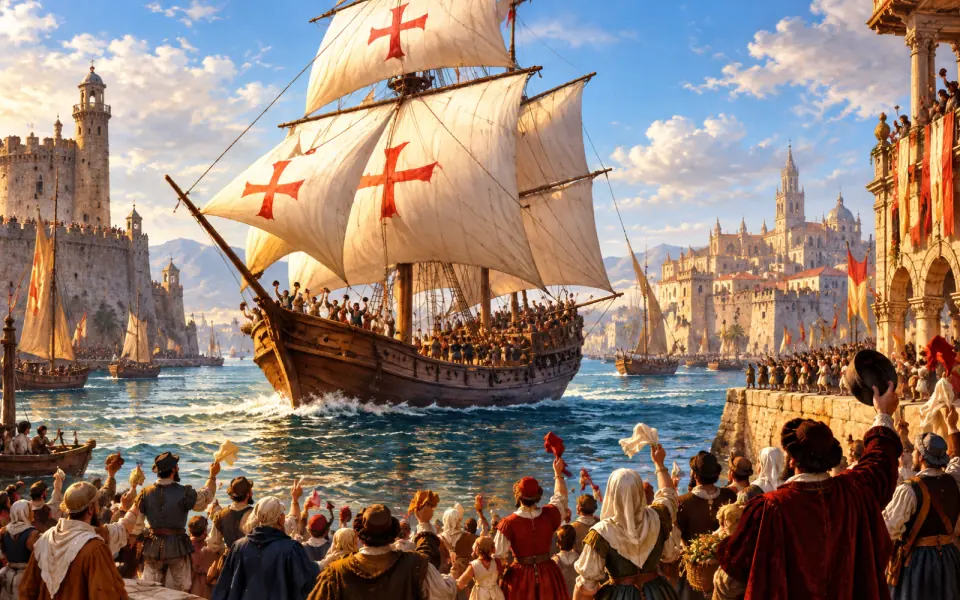 AfterThe first voyage round the world1522
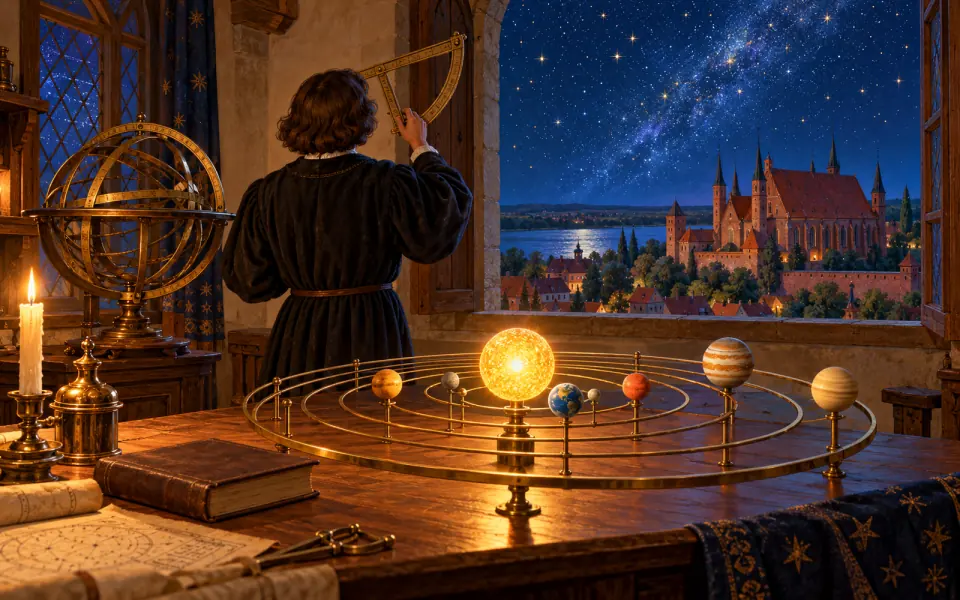 AfterCopernicus puts the Sun at the centre1543
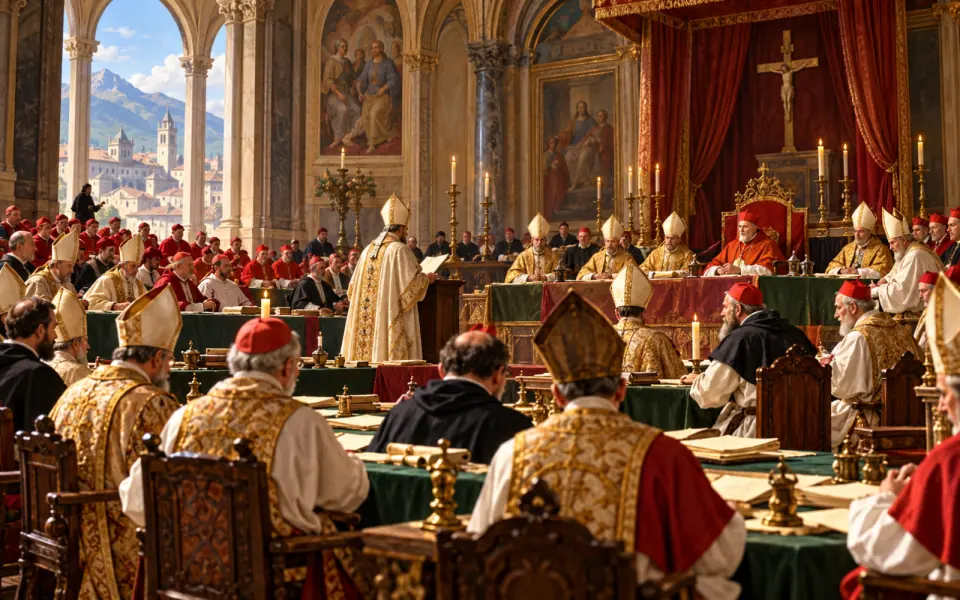 AfterThe Council of Trent1545–1563
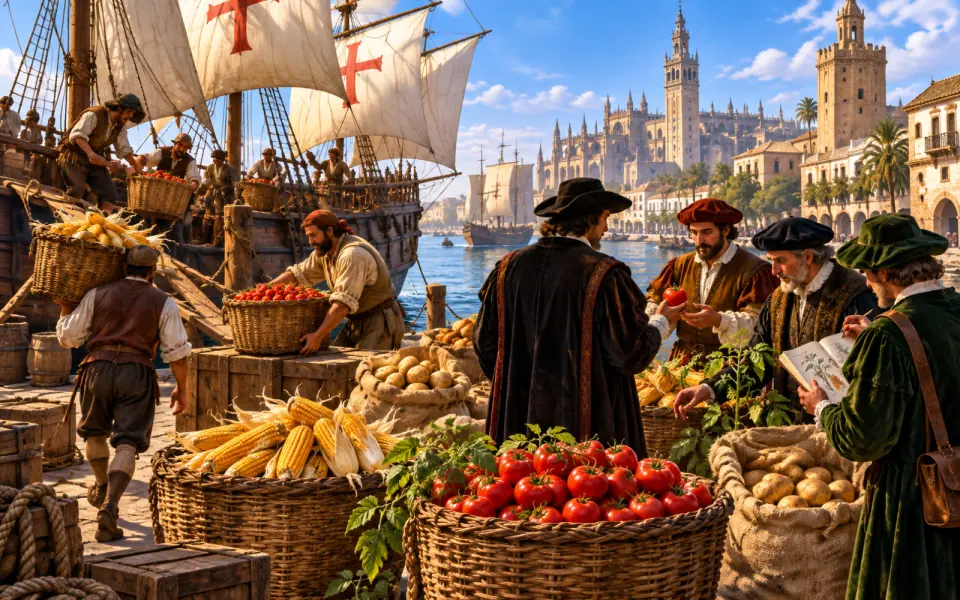 AfterTomatoes, maize and potatoes reach Europeabout 1550
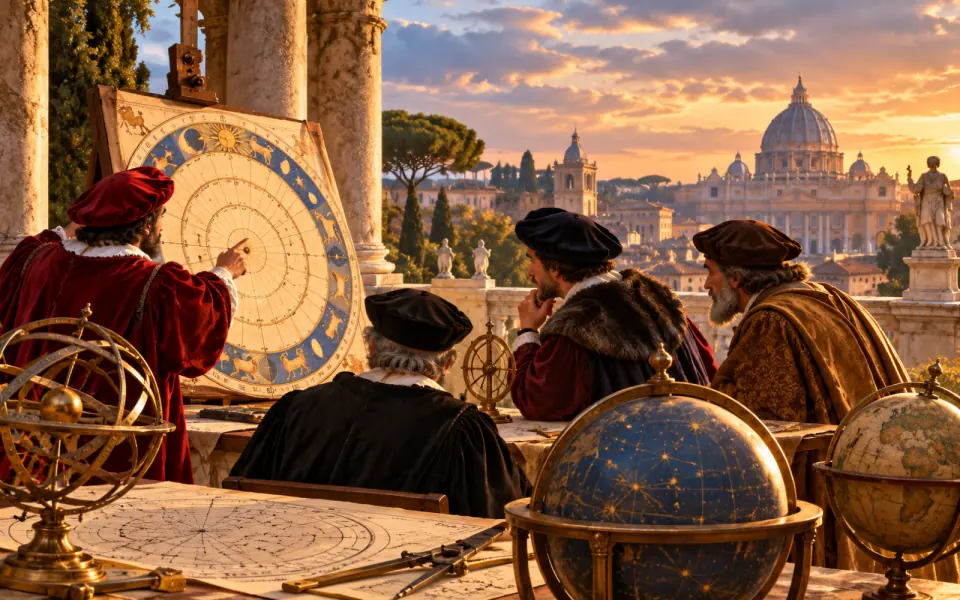 AfterThe Gregorian calendar1582
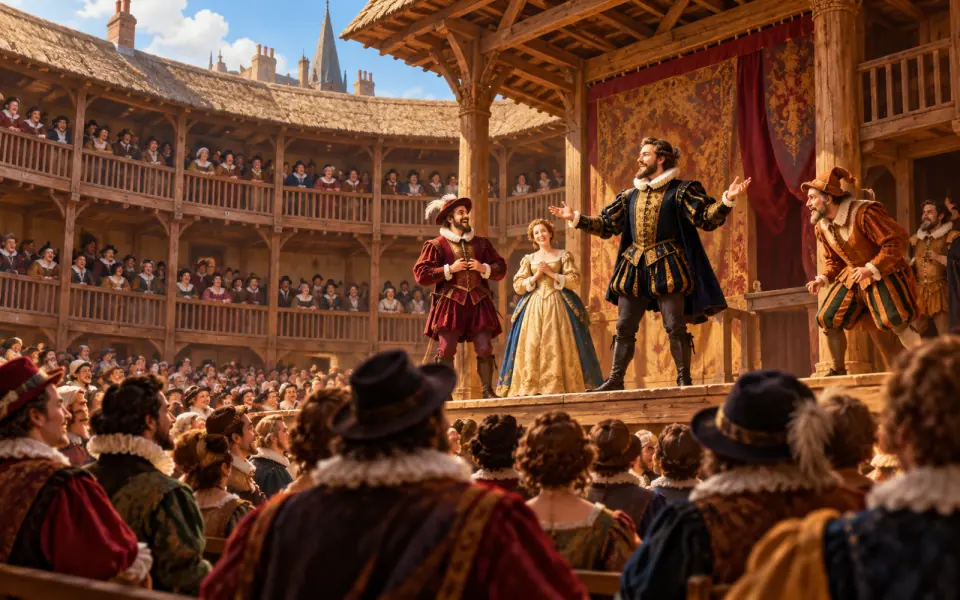 AfterShakespeare's theatreabout 1590
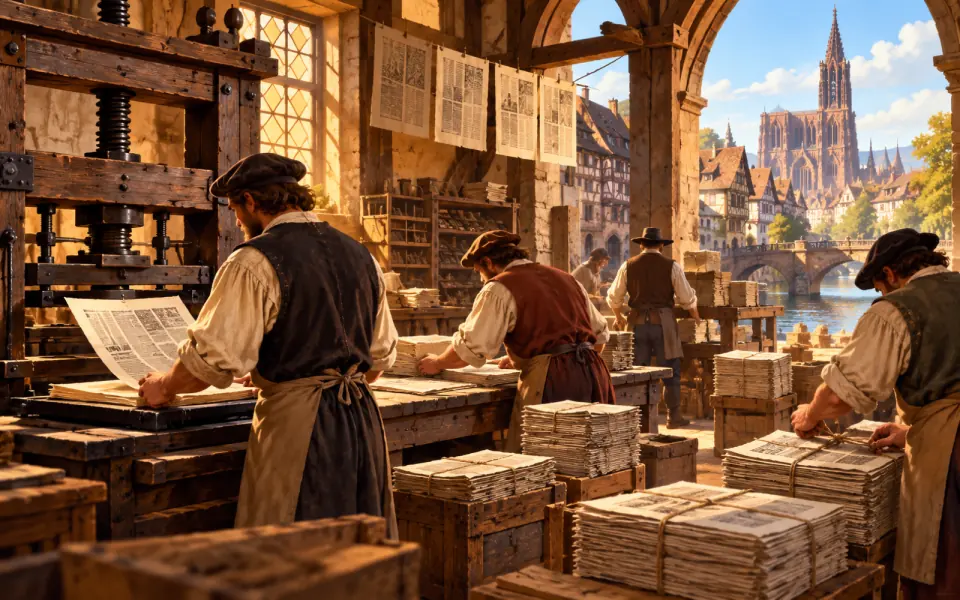 AfterRegular newspapers1605
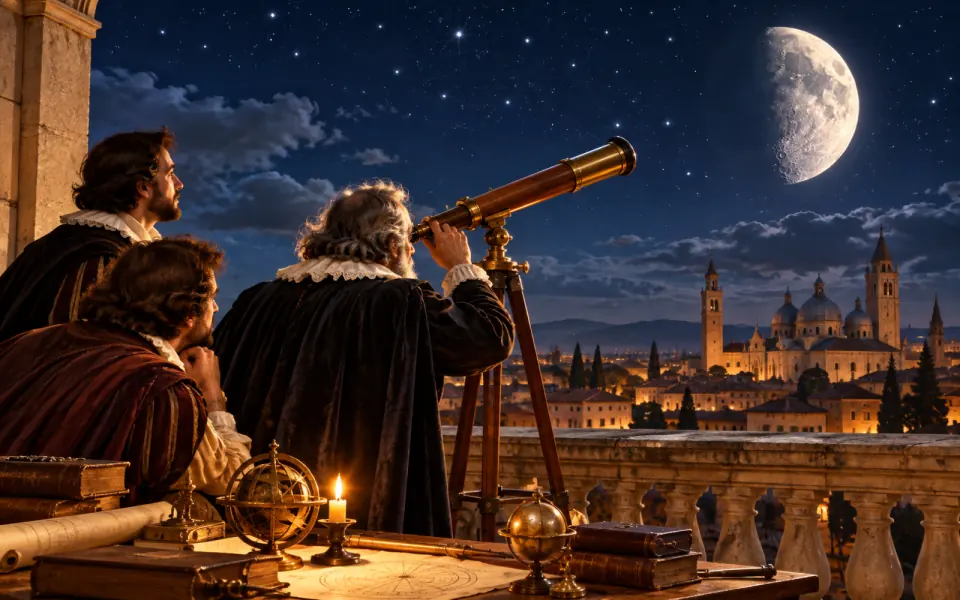 AfterGalileo turns his telescope to the sky1609
 AfterKepler describes the orbits1609
 AfterArtemisia Gentileschiabout 1612
 AfterHarvey studies the circulation of the blood1628
 AfterScientific academies1660
 AfterNewton publishes the Principia1687
Listen / Read next
- Music to read by: Cinematic JourneyEpic film-style music, no lyrics, by Ciro Simone IrmiciSpotifyYouTube Music
Meanwhile, elsewhere in the world
Other events of the era “Early modern age”
- Renaissance perspective
- Brunelleschi completes the dome
- The fall of Constantinople
- Gutenberg prints the Bible
- Leonardo designs machines
- Columbus's voyage
- Vasco da Gama reaches India
- Michelangelo carves David
- Raphael paints the Vatican Rooms
- Luther and the Reformation
- The conquest of Tenochtitlán
- The first voyage round the world
- Copernicus puts the Sun at the centre
- The Council of Trent
- Tomatoes, maize and potatoes reach Europe
- The Gregorian calendar
- Shakespeare's theatre
- Regular newspapers
- Galileo turns his telescope to the sky
- Kepler describes the orbits
- Artemisia Gentileschi
- Harvey studies the circulation of the blood
- Scientific academies
- Newton publishes the Principia
