The Gregorian calendar
1582 Rome, Italy
In short
The Julian calendar, used since the time of Julius Caesar, was a little longer than the real year: over the centuries it had fallen ten days behind the seasons. Pope Gregory XIII decided to correct it, following the method of the Calabrian doctor Luigi Lilio. To put things right, in 1582 the calendar jumped straight from 4 to 15 October. The rule for leap years changed too: years at the end of a century are leap years only if they can be divided by 400.
Why it matters It is the calendar we still use today in almost the whole world.
Source: Treccani, entry “Calendario”
Study card about 5 minutes of reading
The story
A calendar that was wrong
The calendar Europeans used at the end of the 16th century had been introduced by Julius Caesar in 46 BC, and for this reason it is called the Julian calendar. It counted 365 days in a year, plus one extra day every four years, in leap years, giving an average of 365 and a quarter days. But the astronomical year, that is, the time the Earth takes to go around the Sun, is a little shorter: about 365 days, 5 hours, 48 minutes and 46 seconds.
The difference is only about eleven minutes a year, but over the centuries it adds up: one day about every 128 years. By the 16th century the error had reached ten days. The spring equinox, which the Council of Nicaea in 325 had fixed at around 21 March, now fell around 11 March. For the Church this was a serious problem, because the date of Easter depends on the spring equinox and the full moon.
Who reformed it
It had been discussed for a long time, and the Council of Trent had also asked the pope to deal with it. Pope Gregory XIII, elected in 1572, appointed a commission of experts, including the Calabrian doctor and astronomer Luigi Giglio (Aloysius Lilius) and the German Jesuit Christopher Clavius, a professor of mathematics in Rome. Giglio died before the reform was approved, but his proposal was taken up and perfected by Clavius.
The solution was elegant. First, ten days had to be skipped, to bring the equinox back to 21 March. Second, to stop the error from coming back, the rule for leap years was changed: years divisible by four stayed leap years, but not the years that begin a century, unless they were divisible by four hundred. So 1600 and 2000 are leap years, while 1700, 1800 and 1900 were not. In this way the average length of the year becomes 365.2425 days, very close to the true one.
From Thursday the 4th to Friday the 15th
On 24 February 1582 Gregory XIII signed the bull “Inter gravissimas”, introducing the new calendar. It was decided that after Thursday 4 October 1582 the next day would be Friday 15 October: ten days, from the 5th to the 14th, simply did not exist. No day of the week was skipped, so the sequence of weekdays carried on. It was a big change: there were doubts, some people feared losing ten days of their life or of their wages, and some rents and interest payments had to be recalculated.
Italy, Spain, Portugal and some other Catholic states adopted the new calendar at once. In Protestant and Orthodox countries, however, acceptance was very slow, because people did not want to obey a decree of the pope. England and its American colonies adopted it in 1752, when the difference had grown to eleven days, and so they had to jump from 2 to 14 September. Sweden, Russia, Japan, China and Greece adopted it even later. In Russia it was only done in 1918, after the revolution.
Today's calendar
The new calendar also reached the countryside and the villages: parish priests had to announce the change from the church, and merchants had to redo their calculations of deadlines. In border areas between states that had adopted the calendar in different years, two neighbouring towns could have different dates.
The Gregorian calendar is still the one we use. Some Orthodox Churches still follow the Julian calendar for their festivals, and for this reason Orthodox Christmas, in Russia and in other countries, falls on 7 January. The Gregorian calendar is not perfect: in about three thousand years it will have built up an error of one day. But for now it is good enough.
Why it happened
The Church needed a correct date for Easter, which depends on the spring equinox. The Julian calendar had drifted by ten days since the time of the Council of Nicaea, and the problem had been known for centuries to scholars such as Roger Bacon.
In the 16th century there were astronomers, tables and mathematical knowledge to propose a correction, and a determined pope to carry it out.
What changed
Today almost the whole world uses the Gregorian calendar for civil life, and that is why we can agree on international dates, trade and travel. The change from Julian to Gregorian happened at different times in different countries, and even today historians have to be careful: the same date can mean different days depending on the country.
A famous example: the “October Revolution” in Russia broke out on 25 October according to the Julian calendar then in use there, but that day corresponded to 7 November in the Gregorian calendar. That is why history books speak of the “October” revolution, even though today we would say November.
Gregory XIII's calendar is an example of how astronomy and mathematics can change everyday life, and of how a technical reform can also become a political and religious matter.
Key people and places
People
- Gregory XIII
- Pope from 1572 to 1585 (1502–1585): he issued the calendar reform.
- Christopher Clavius
- German Jesuit and mathematician (1538–1612): the most important expert on the commission.
- Luigi Giglio (Aloysius Lilius)
- Calabrian doctor and astronomer (about 1510–1576): he devised the basic plan of the reform.
- Julius Caesar
- Roman consul and dictator (100–44 BC): he introduced the Julian calendar in 46 BC.
Places
- Rome
- The city where the bull “Inter gravissimas” was issued.
- Vatican
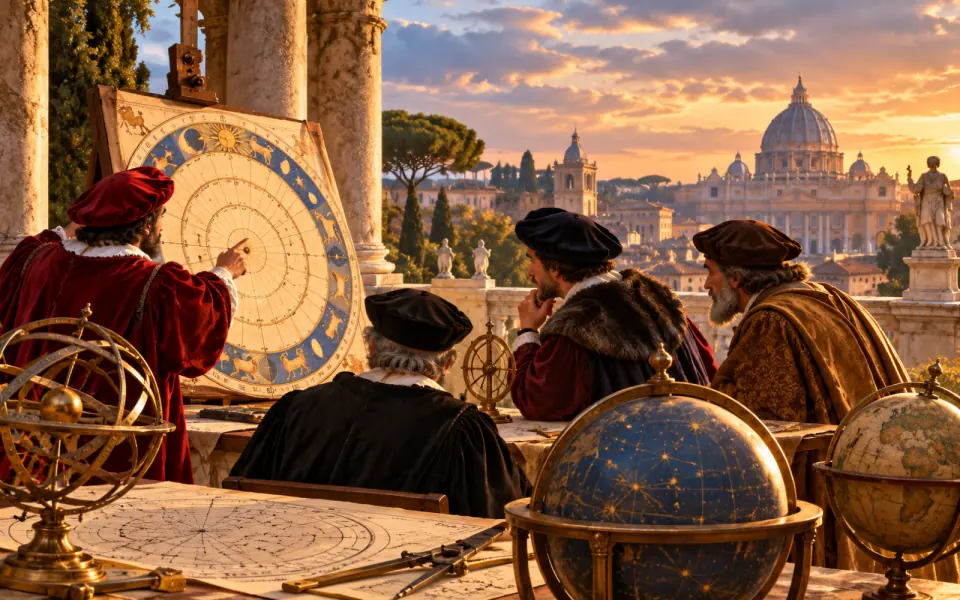
- The seat of the pope, where the commission for the calendar worked.
Good to know
- In 1582, in Italy, 4 October was followed directly by 15 October.
- 1600 and 2000 were leap years, but 1700, 1800 and 1900 were not.
- In countries that adopted it later, such as England, eleven days had to be skipped.
- Russian Orthodox Christmas falls on 7 January, because the Julian calendar is still used for festivals.
- The Gregorian calendar is off by one day about every three thousand years.
Find out more
- Wikipedia, “Gregorian calendar” en.wikipedia.org
- Wikipedia, “Julian calendar” en.wikipedia.org
- Wikipedia, “Christopher Clavius” en.wikipedia.org
- Wikipedia, “Pope Gregory XIII” en.wikipedia.org
Related events
- The Council of Trent1545–1563 · Early modern ageThe Council of Trent had asked for the calendar to be reformed.
- Copernicus puts the Sun at the centre1543 · Early modern ageCopernicus had also used his observations to study the length of the year.
- Galileo turns his telescope to the sky1609 · Early modern ageGalileo, a few years later, observed the sky with the telescope.
- Gutenberg prints the Bibleabout 1455 · Early modern agePrinting spread the new calendar across Europe.
Before and after, in the era “Early modern age”
Event 17 of 25
 BeforeRenaissance perspectiveabout 1420
 BeforeBrunelleschi completes the dome1436
 BeforeThe fall of Constantinople1453
 BeforeGutenberg prints the Bibleabout 1455
 BeforeLorenzo de' Medici in Florence1469
 BeforeLeonardo designs machinesabout 1485
 BeforeColumbus's voyage1492
 BeforeVasco da Gama reaches India1498
 BeforeMichelangelo carves David1504
 BeforeRaphael paints the Vatican Rooms1508
 BeforeLuther and the Reformation1517
 BeforeThe conquest of Tenochtitlán1521
 BeforeThe first voyage round the world1522
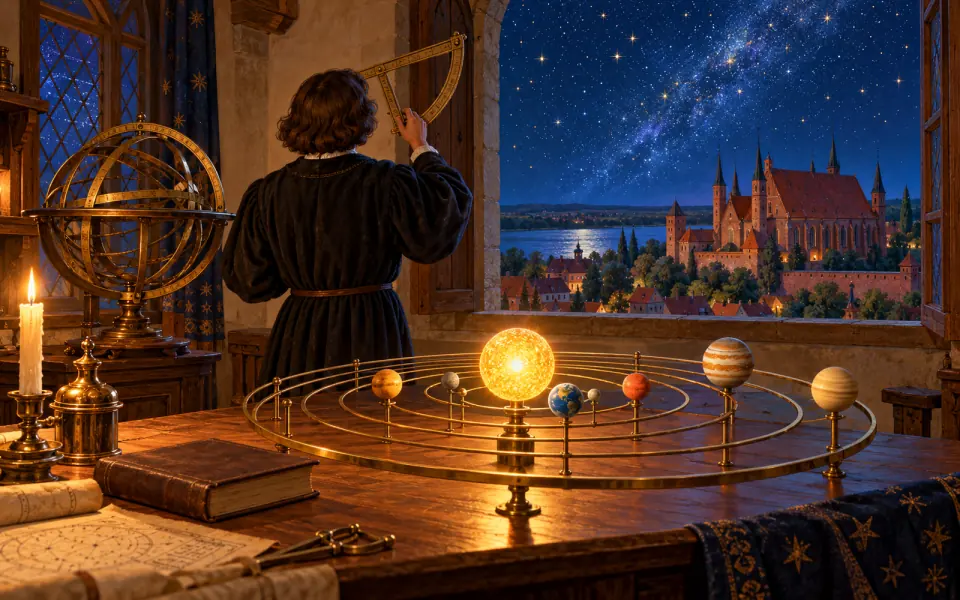 BeforeCopernicus puts the Sun at the centre1543
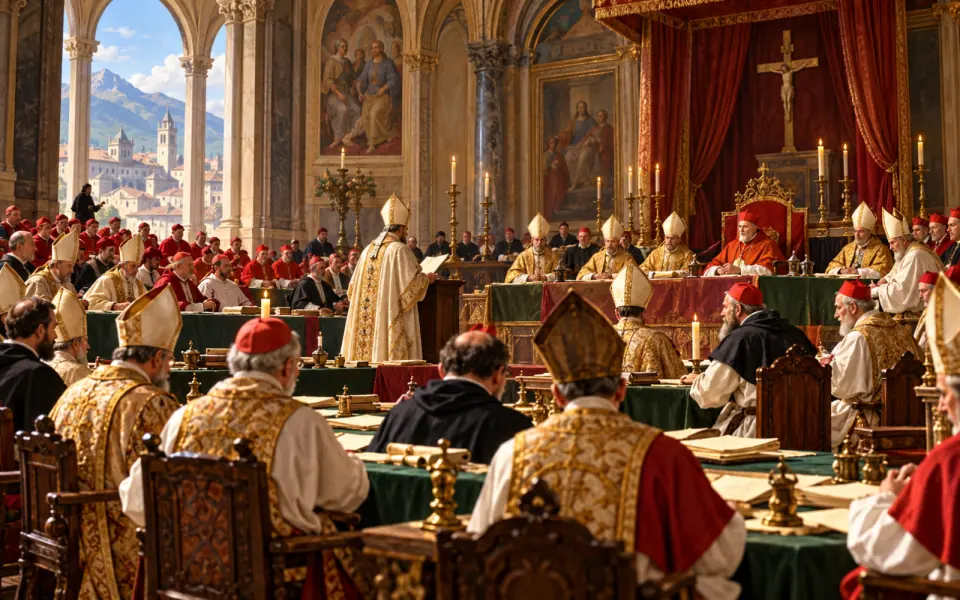 BeforeThe Council of Trent1545–1563
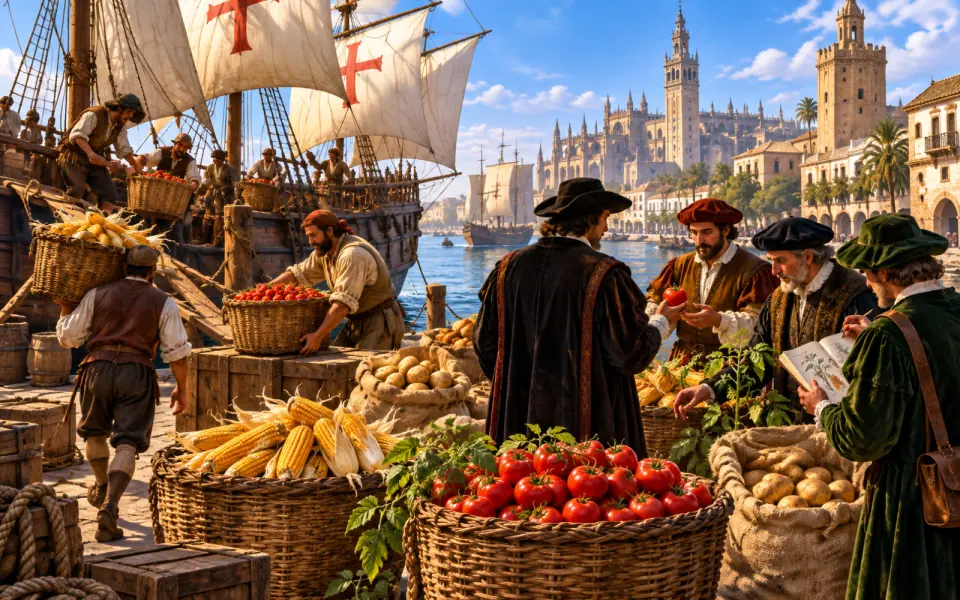 BeforeTomatoes, maize and potatoes reach Europeabout 1550
- You are hereThe Gregorian calendar1582
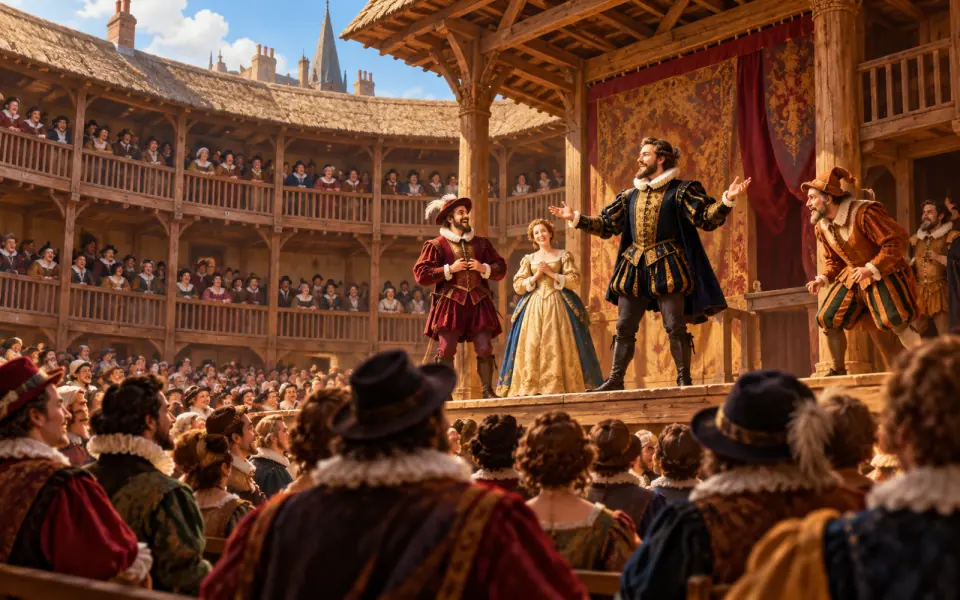 AfterShakespeare's theatreabout 1590
 AfterRegular newspapers1605
 AfterGalileo turns his telescope to the sky1609
 AfterKepler describes the orbits1609
 AfterArtemisia Gentileschiabout 1612
 AfterHarvey studies the circulation of the blood1628
 AfterScientific academies1660
 AfterNewton publishes the Principia1687
Listen / Read next
- Music to read by: Cinematic JourneyEpic film-style music, no lyrics, by Ciro Simone IrmiciSpotifyYouTube Music
Meanwhile, elsewhere in the world
Other events of the era “Early modern age”
- Renaissance perspective
- Brunelleschi completes the dome
- The fall of Constantinople
- Gutenberg prints the Bible
- Lorenzo de' Medici in Florence
- Leonardo designs machines
- Columbus's voyage
- Vasco da Gama reaches India
- Michelangelo carves David
- Raphael paints the Vatican Rooms
- Luther and the Reformation
- The conquest of Tenochtitlán
- The first voyage round the world
- Copernicus puts the Sun at the centre
- The Council of Trent
- Tomatoes, maize and potatoes reach Europe
- Shakespeare's theatre
- Regular newspapers
- Galileo turns his telescope to the sky
- Kepler describes the orbits
- Artemisia Gentileschi
- Harvey studies the circulation of the blood
- Scientific academies
- Newton publishes the Principia
