Uruk, the great city
about 3000 BC Uruk, Mesopotamia (now Iraq)
In short
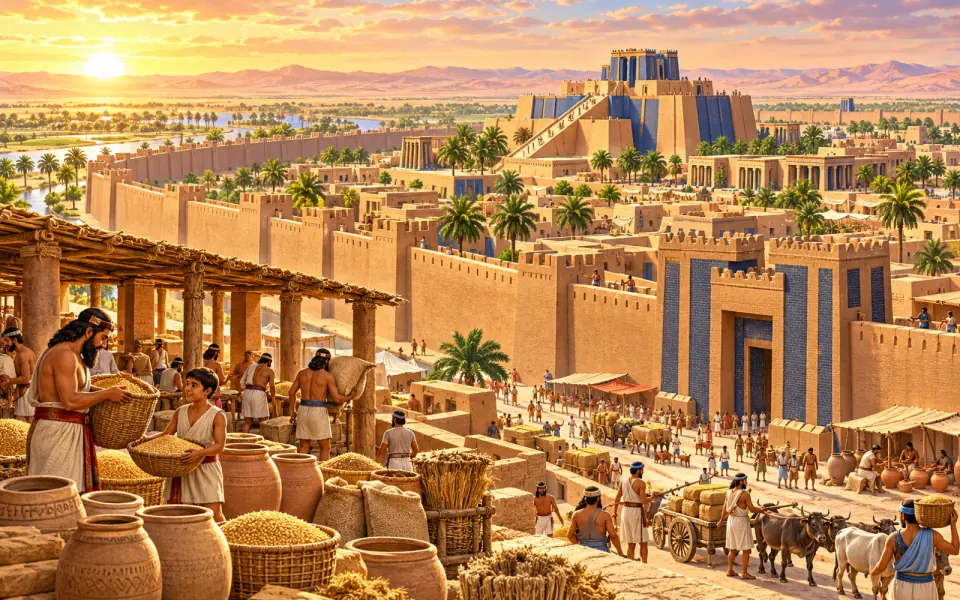
Around 3000 BC Uruk was perhaps the biggest city in the world, with tens of thousands of inhabitants. Its walls, which legend says were built by King Gilgamesh, were about 9 kilometres long. Inside there were craftsmen's quarters, great temples and storehouses where farm produce was collected. Its ruins lie today in the desert of southern Iraq.
Why it matters Uruk shows how quickly a farming village could turn into a huge city.
Source: Treccani, entry “Uruk”
Study card about 6 minutes of reading
The story
The city with walls nine kilometres long
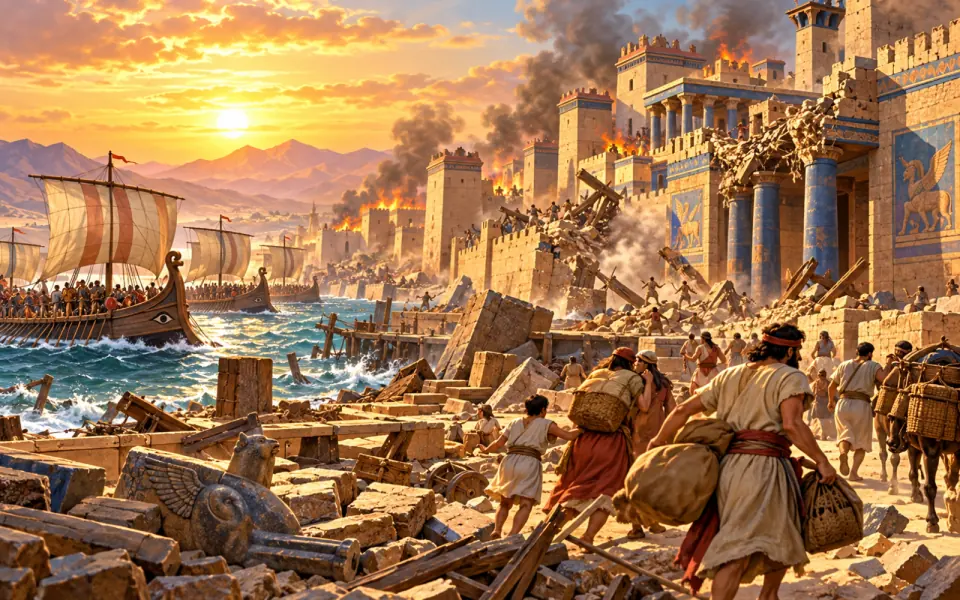
If you had arrived in Mesopotamia around 3000 BC, after days of travel through green fields and canals, you would have seen a dark smudge on the horizon: the walls of Uruk. Those walls, made of mud brick, ran for about nine kilometres, with hundreds of towers, and enclosed an area of more than five square kilometres, although not all of it was filled with houses. No city in the world was so big. Scholars estimate that tens of thousands of people lived inside; the exact numbers are not known and vary greatly from one estimate to another.
Uruk, which the Arabs today call Warka, stood near the ancient course of the Euphrates, in the south of present-day Iraq. In the Bible it appears as Erech. Sumerian tradition said that its walls had been ordered by King Gilgamesh, the fifth king of the city after the flood. Archaeologists say the surviving walls are a little later than the age of greatest splendour, perhaps about 2900 BC, but the idea that a king had protected the city with such a long wall was already clear to the ancients.
Two districts, two gods
In the centre of Uruk there were two great sacred areas. The first was the Eanna, “the house of heaven”, dedicated to the goddess Inanna, lady of love and war. Here stood enormous buildings, with walls decorated with thousands of little clay cones painted red, black and white and pushed into the plaster, forming geometric patterns like a mosaic. The second was the terrace of Anu, the sky god, where a temple with white walls stood on an artificial hill about twelve metres high: archaeologists call it the White Temple. It is one of the ancestors of the ziggurats, the stepped towers we will talk about.
From the Eanna district also comes the Warka Vase, a large alabaster vase about a metre tall, carved in bands. From bottom to top we see plants, animals, naked men carrying offerings, and finally the goddess with her priest-king. It is like a summary of the society of the time: nature, work and power. It was found in 1933–1934, stolen in 2003 during the war in Iraq and recovered after a couple of months, but in pieces, and then restored.
A city full of trades
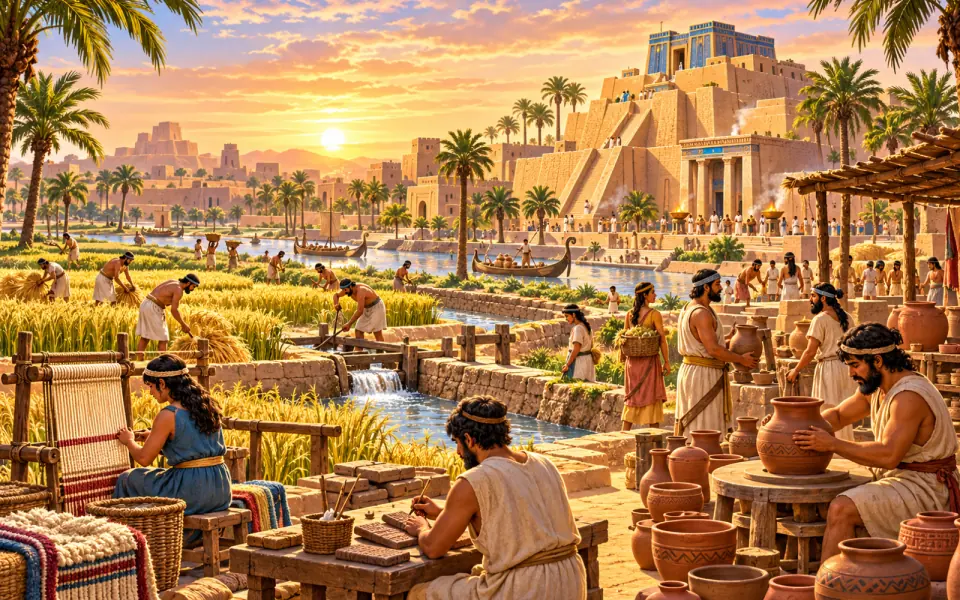
Uruk was not only big. It was also complicated. Specialised craftsmen worked there: potters, weavers, smiths, stonecutters, jewellers who worked rare stone brought from far away, such as lapis lazuli from Afghanistan. The temple worked as a great storehouse and received barley, wool, oil and animals. Its employees received food rations in return. To hand them out, mass-produced clay bowls with flared rims were used: thousands have been found, and they are a sign of mass production. Some people joke that they are the “lunch bowls” of antiquity.
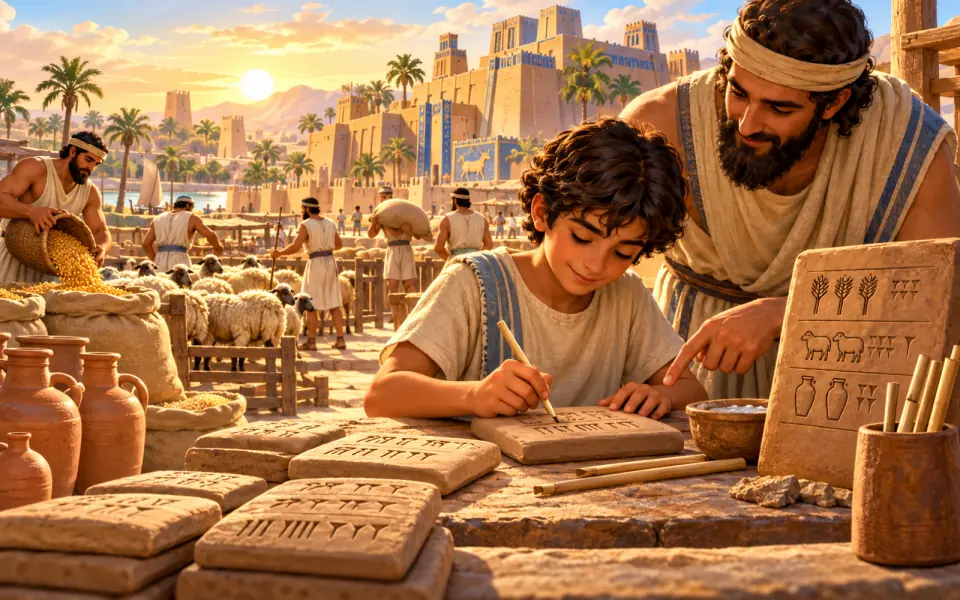
Uruk also used the cylinder seal: a small stone cylinder with a carved design, rolled over soft clay to leave one's signature on a container or a tablet. And it is here, as we have seen, that the first written tablets appeared, to keep accounts. The priest-king, called en in Sumerian, governed the city and the temple together.
A network of colonies
Uruk was not isolated. In the same period, and in places hundreds of kilometres away, in Syria and Iran, archaeologists have found villages and small towns with pottery, seals and architecture typical of Uruk, such as Habuba Kabira on the Euphrates or Godin Tepe in the mountains of Iran. Some scholars regard them as trading colonies, set up to obtain metals, wood and stones. Others think of looser relations between communities that shared the same style. The debate is open.
After the peak
Around 3100 BC the Uruk period ended, perhaps because of changes in the climate or the rivers, or because of wars. The city went on living for thousands of years, but other cities became more important, such as Ur and then Babylon. Uruk had King Gilgamesh, who became the hero of a poem; in its temple of Inanna the gods were still worshipped a thousand years later. It was inhabited until the first centuries AD and abandoned completely around AD 700, perhaps because the Euphrates changed course and left the city without water.
The German excavations began in 1912 and have continued on and off until today: they are among the longest in the history of archaeology. Yet only a small part of the city has been dug.
Why it happened
Uruk grew because it stood in a very fortunate spot: fertile land, canals that brought water to the fields and a river for transport. Whoever ruled it could count on plentiful harvests and on hands to use in public works, such as temples and walls.
Trade mattered too. Uruk lacked wood, stone and metals, and they had to be brought from far away. The city organised exchanges with Syria, Anatolia and Iran, and the colonies helped keep these routes open. The more goods arrived, the richer the temples grew and the more people came to live in the city.
Finally there was a religious and political cause. People believed that Inanna and Anu lived at Uruk and that the city had to be as beautiful as possible to house them. Building great structures drew crowds and gave prestige to the rulers.
What changed
Uruk showed for the first time that a city could be enormous and still hold together. To make so large a community work, it needed rules, officials, measures, writing and a precise division of tasks. The inventors of Uruk were the first to face problems that big cities still face today: how to feed everyone, how to share out goods, how to keep order.
Its model was copied throughout Mesopotamia. The structure with a temple at the centre, seals for signing, tablets for writing and a ring of walls remained the form of the Mesopotamian city for more than two thousand years. Other Sumerian cities, such as Ur, Nippur and Lagash, imitated it.
Uruk also lives on in literature. Its king Gilgamesh is the hero of one of the oldest works in the world, which begins and ends with praise of its walls. That is why the name of Uruk, five thousand years later, is still known to anyone who studies history or reads the epic.
Key people and places
People
- Gilgamesh
- King of Uruk, according to tradition, and hero of a famous poem. He was probably a real person, but no inscription of his time names him.
- Inanna
- Sumerian goddess of love and war, protector of Uruk. According to the myth she went down into the land of the dead and came back.
- Julius Jordan
- German archaeologist who from 1912 led the first excavations at Uruk and found the Eanna district.
- The en of Uruk
- The priest-king who governed the city: in images of the time he is recognised by a beard, a net skirt and a headband, as he feeds the sacred animals or fights enemies.
Places
- Uruk, now Warka (Iraq)
- An ancient Sumerian city on the Euphrates. Its ruins, covered by the desert, have been excavated since 1912 and take up about 5 square kilometres.
- Eanna
- The sacred district of Inanna at Uruk, with great buildings decorated in a mosaic of coloured cones.
- Habuba Kabira (Syria)
- A city on the Euphrates, in Syria, built in the style of Uruk. It was inhabited for a few centuries and is regarded as one of the colonies of Uruk.
Good to know
- The walls of Uruk were about nine kilometres long: to walk the whole circuit would take more than an hour and a half.
- The walls of the Eanna were decorated with thousands of coloured clay cones pushed into the plaster: from a distance they looked like a carpet.
- Archaeologists have found thousands of identical clay bowls, used to hand out barley rations to the temple workers.
- The Warka Vase was stolen from the Baghdad Museum in 2003 and found a couple of months later, broken into pieces, and then restored.
- The name Uruk appears in the Bible as Erech, in the list of cities founded by Nimrod.
Find out more
- World History Encyclopedia, “Uruk” worldhistory.org
- Wikipedia, “Uruk” en.wikipedia.org
- Wikipedia, “Sumerians” en.wikipedia.org
- Wikipedia, “Mesopotamia” en.wikipedia.org
Related events
- The first Sumerian citiesabout 4000 BC · River civilisationsUruk is the biggest of the first Sumerian cities.
- Cuneiform writingabout 3200 BC · River civilisationsThe first written tablets were found right in the temple of Uruk.
- The Epic of Gilgameshabout 2100 BC · River civilisationsGilgamesh, the legendary king of Uruk, is the hero of a very ancient poem.
- The Ziggurat of Urabout 2100 BC · River civilisationsThe White Temple of Uruk is an ancestor of ziggurats like the one at Ur.
- Çatalhöyükabout 9,000 years ago · PrehistoryÇatalhöyük was a large village; Uruk shows the next step, the true city.
Before and after, in the era “River civilisations”
Event 5 of 25
 BeforeThe first Sumerian citiesabout 4000 BC
 BeforeCuneiform writingabout 3200 BC
 BeforeEgyptian hieroglyphsabout 3200 BC
 BeforeThe unification of Egyptabout 3100 BC
- You are hereUruk, the great cityabout 3000 BC
 AfterThe Egyptian calendarabout 2800 BC
 AfterThe Step Pyramid of Djoserabout 2650 BC
 AfterThe Standard of Urabout 2600 BC
 AfterEgyptian mummificationabout 2600 BC
 AfterThe Great Pyramid of Gizaabout 2560 BC
 AfterThe cities of the Indus Valleyabout 2500 BC
 AfterThe drains and baths of Mohenjo-daroabout 2450 BC
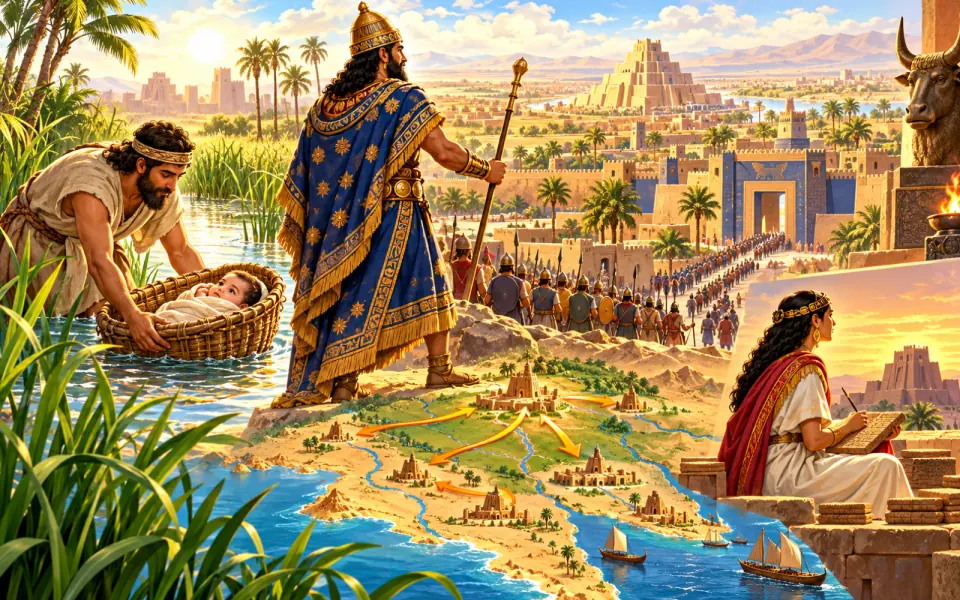 AfterSargon and the Akkadian Empireabout 2334 BC
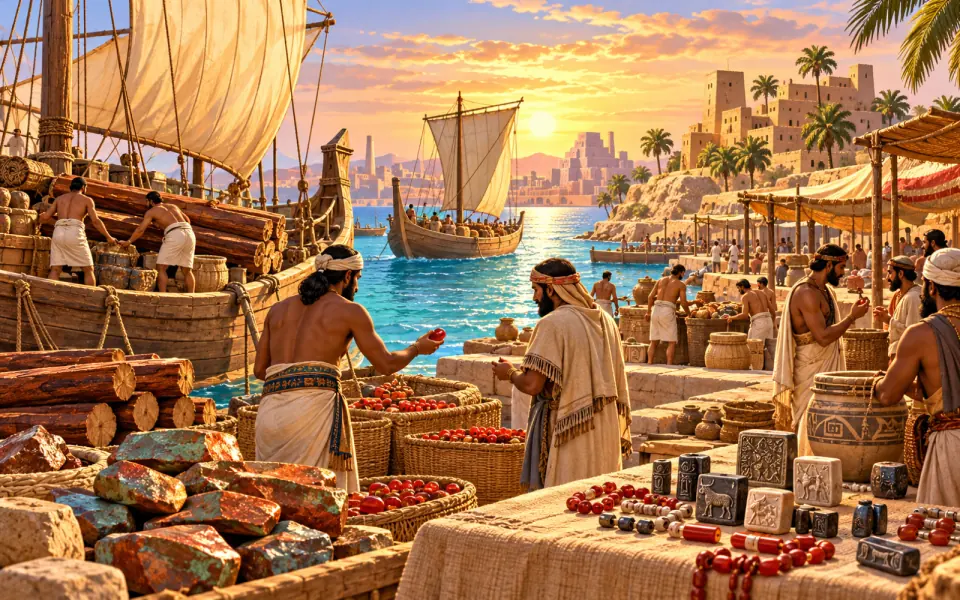 AfterTrade between the Indus and Mesopotamiaabout 2300 BC
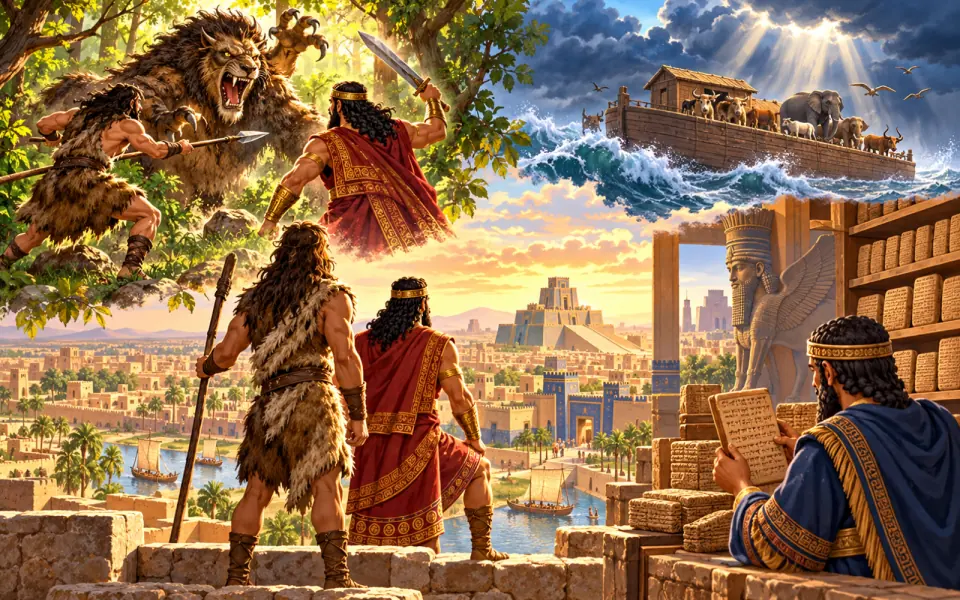 AfterThe Epic of Gilgameshabout 2100 BC
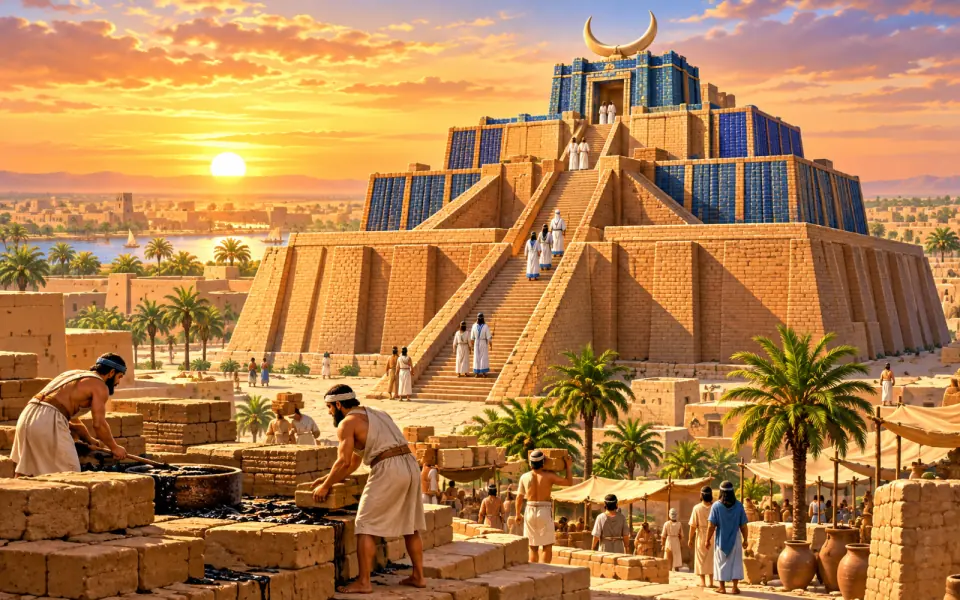 AfterThe Ziggurat of Urabout 2100 BC
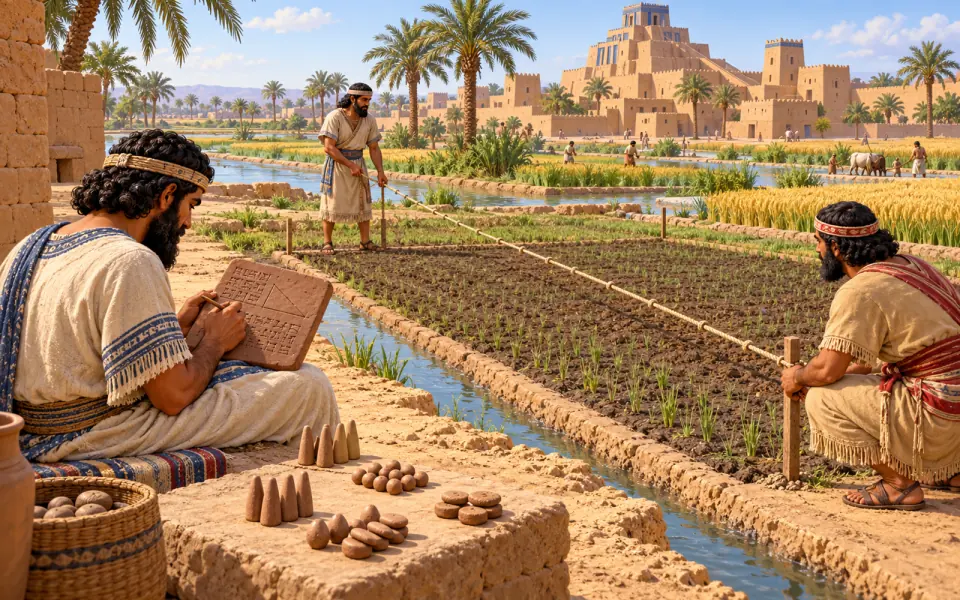 AfterBabylonian mathematicsabout 1800 BC
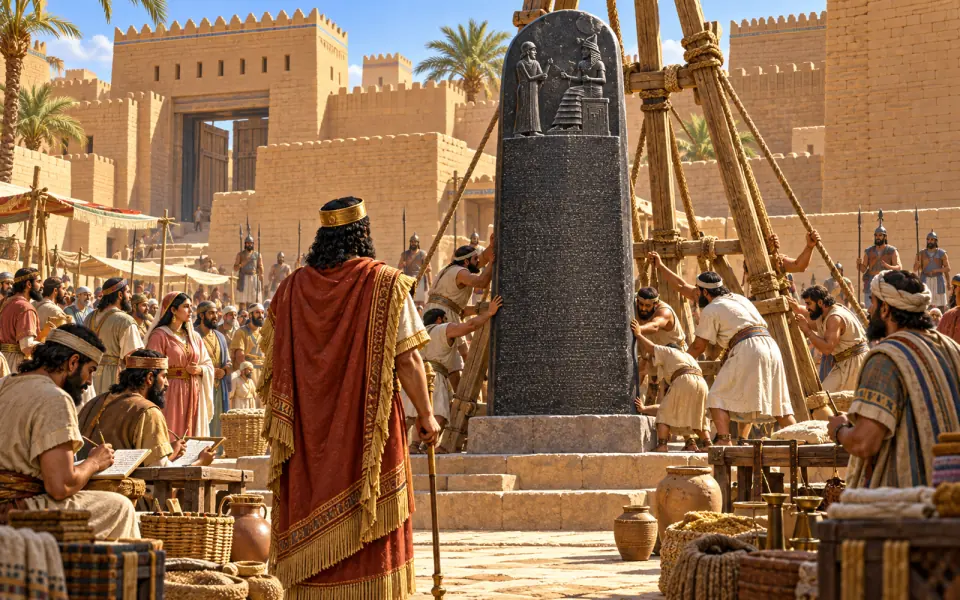 AfterThe Code of Hammurabiabout 1754 BC
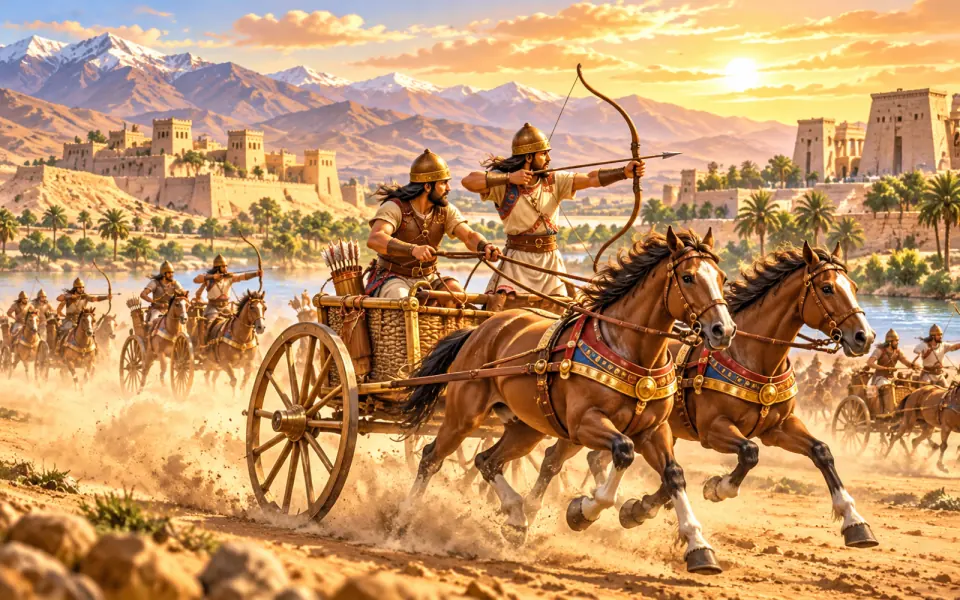 AfterWar chariotsabout 1700 BC
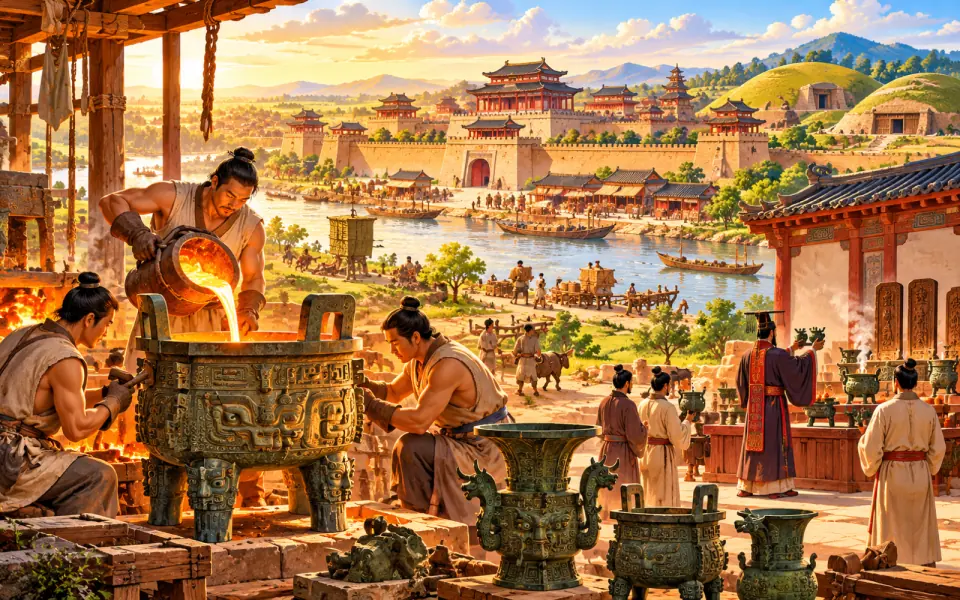 AfterThe Shang dynastyabout 1600–1046 BC
 AfterHatshepsut, the woman pharaohabout 1479–1458 BC
 AfterThe reign of Akhenatenabout 1353–1336 BC
 AfterThe reign of Ramesses IIabout 1279–1213 BC
 AfterWriting on oracle bonesabout 1250 BC
 AfterThe Bronze Age collapseabout 1200 BC
Listen / Read next
- Music to read by: Cinematic JourneyEpic film-style music, no lyrics, by Ciro Simone IrmiciSpotifyYouTube Music
Other events of the era “River civilisations”
- The first Sumerian cities
- Cuneiform writing
- Egyptian hieroglyphs
- The unification of Egypt
- The Egyptian calendar
- The Step Pyramid of Djoser
- The Standard of Ur
- Egyptian mummification
- The Great Pyramid of Giza
- The cities of the Indus Valley
- The drains and baths of Mohenjo-daro
- Sargon and the Akkadian Empire
- Trade between the Indus and Mesopotamia
- The Epic of Gilgamesh
- The Ziggurat of Ur
- Babylonian mathematics
- The Code of Hammurabi
- War chariots
- The Shang dynasty
- Hatshepsut, the woman pharaoh
- The reign of Akhenaten
- The reign of Ramesses II
- Writing on oracle bones
- The Bronze Age collapse
