The Shang dynasty
about 1600–1046 BC Anyang, Yellow River valley (China)
In short
Along the Yellow River, in China, the Shang dynasty ruled for about five centuries. Its craftsmen cast bronze into large vessels decorated with animal masks, used in ceremonies for the ancestors. The last capital, near today's Anyang, was a real city with palaces, workshops and royal tombs. The Shang are the first Chinese dynasty for which we have written evidence.
Why it matters With the Shang, Chinese history steps out of legend and becomes documented.
Source: Encyclopaedia Britannica, “Shang dynasty”
Study card about 6 minutes of reading
The story
A king discovered twice
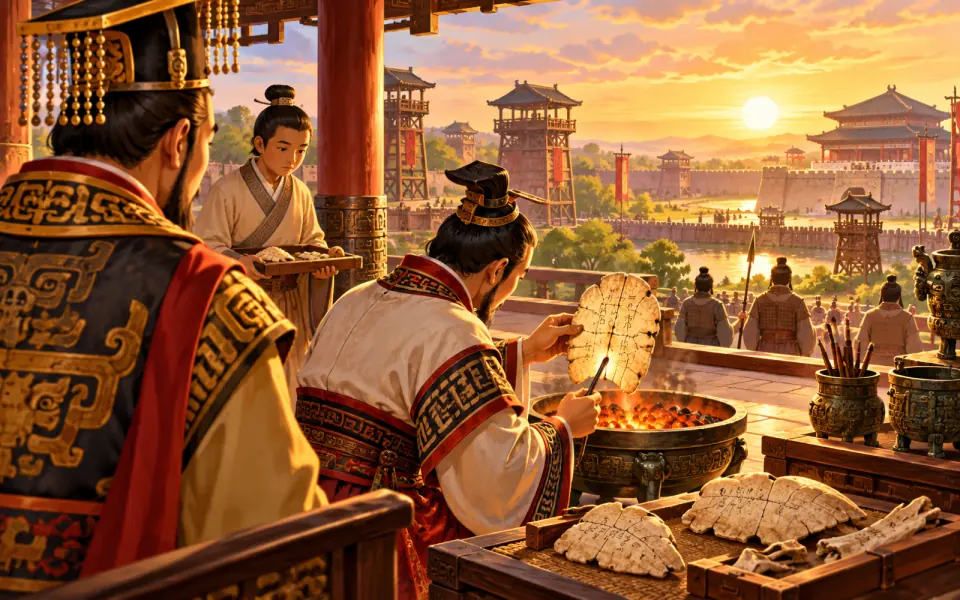
In 1917 a Chinese scholar, Wang Guowei, compared two lists. The first was the list of the kings of the Shang dynasty written by the historian Sima Qian around 100 BC, in a book called “Records of the Grand Historian”. The second was a list of names of kings carved on bones and turtle shells, discovered a few years earlier. The names matched. It was a sensational discovery: the Shang dynasty, which many regarded as a legend, had really existed, and its bones spoke of kings whom the old historian had listed almost a thousand years later.
So China entered documented history. The bones came from Anyang, a place on the plain north of the Yellow River, in the province of Henan, where a great city, called Yin by the Shang, was the last capital of the dynasty. Scientific excavations began in 1928 and are still going on today.
A dynasty that lasts five centuries
The Shang ruled part of northern China, around the Yellow River, from about 1600 until 1046 BC. The dates are approximate. The starting date varies according to scholars (1600, 1554 and others), while 1046 BC is now the most used value for the end. They did not rule a large united state like Egypt. Their territory was a set of cities and villages that recognised the king's authority, surrounded by peoples who were not always friendly. The king often changed residence: according to tradition the capital was moved several times, until it settled at Yin around 1300 BC.
Society was very hierarchical. At the top was the king, who was also head of the rites; then the nobles, who commanded the armies and owned land; then the craftsmen, the farmers and finally servants and prisoners of war. The king led wars, hunted tigers and deer, and every day consulted the ancestors.
The ancestors' bronze
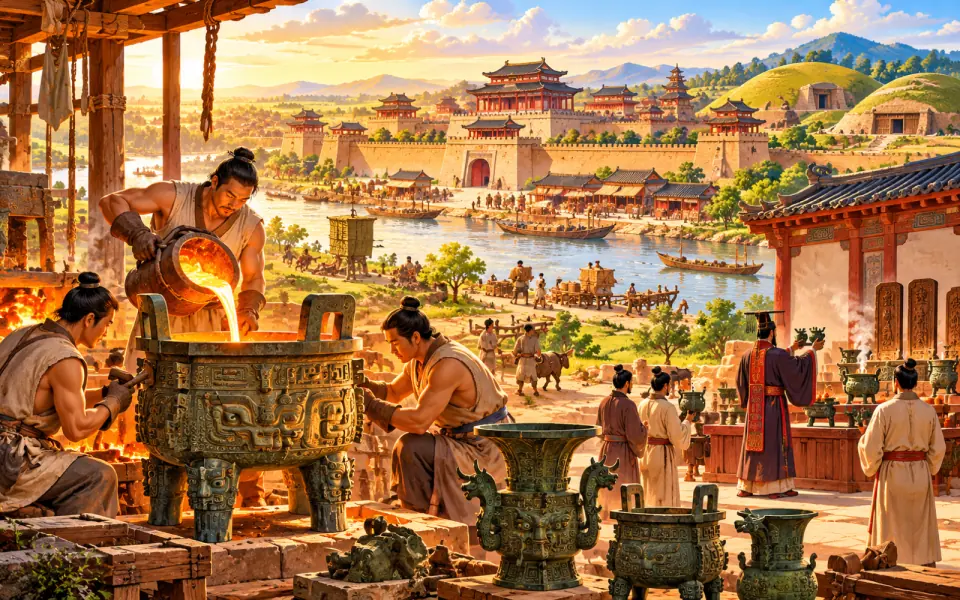
The Shang were masters of bronze. They produced it in large foundries, with a technique different from the one used in Mesopotamia: instead of casting the metal in a lost model, they prepared clay moulds in several pieces, joined them and poured in the molten bronze. With this system they managed to make enormous, richly decorated vessels. The biggest, the Houmuwu ding, a three-legged cauldron, weighs about 830 kilograms.
These vessels were not for everyday cooking. They were ritual containers, for the food and drink offered to the dead ancestors. The king was convinced that the ancestors, having become powerful spirits, could help or harm the living: they gave good harvests and victories in war, or illness and misfortune. For this reason rites with vessels, sacrifices of animals and, sadly, of people as well, were at the centre of life. In the royal tombs archaeologists have found hundreds of victims buried beside the kings, with chariots and horses.
On the surfaces of the vessels appear animal masks with big eyes, called taotie, made of horns, claws and eyes. Nobody is certain of the meaning: perhaps they protected, perhaps they represented forces of the spirit world.
The warrior queen
In 1976, at Anyang, archaeologists found an intact tomb, the tomb of Fu Hao, one of the wives of King Wu Ding. Inside were 468 bronze objects, including 130 weapons, and more than 700 jade objects. The oracle bones say that Fu Hao led armies, even of thousands of soldiers, and conducted campaigns against neighbouring peoples; the king worried about her when she was pregnant. She was a powerful woman, priestess and commander, an important example in the history of women in China.
The city and its people
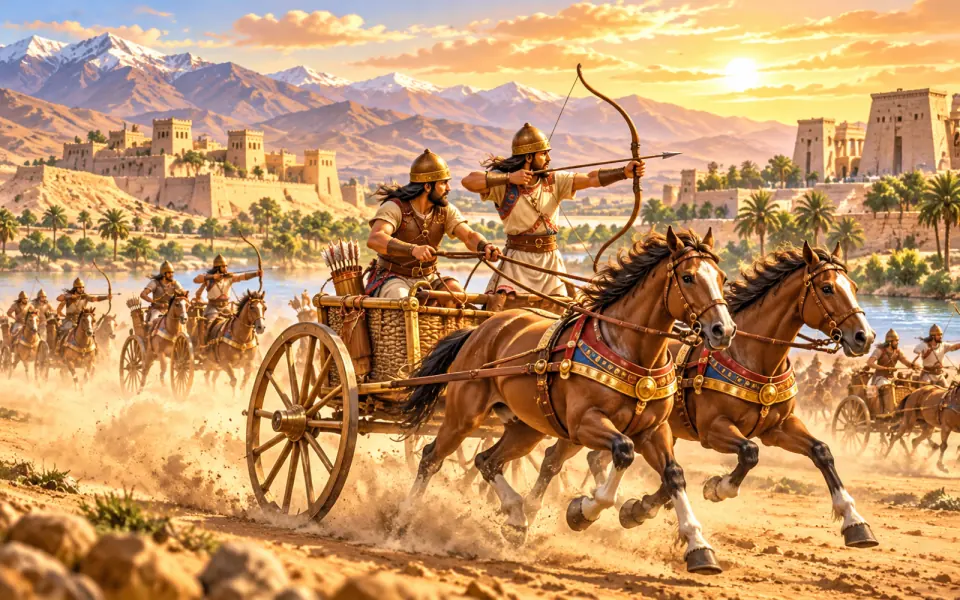
At Yin, besides palaces and temples, there were districts of craftsmen: bronze foundries, jade workshops, pottery shops, bone workshops. People grew millet, wheat and rice, raised pigs and oxen and already knew silk and the chariot with horses, which the Shang used in battle and in ceremonies. Cowrie shells, which came from the southern seas, were used as money.
The end of the Shang
Around 1046 BC King Wu, chief of the Zhou, a people of the western borders, defeated the last Shang king in the battle of Muye, near Yin. Tradition tells that the last king, considered cruel, killed himself in the flames. The victor founded the Zhou dynasty, which ruled for almost eight centuries. To explain their victory, the Zhou said that the “Mandate of Heaven” had passed from the Shang to them, because the Shang no longer deserved it. It is an important idea that shaped Chinese thought for three thousand years: a ruler governs as long as he is just.
Why it happened
The Shang dynasty formed thanks to the wealth of the Yellow River plain. The river brought fertile silt and made it possible to grow millet and wheat, and to support ever larger villages. A territory so productive could maintain nobles, craftsmen and soldiers.
Bronze technology mattered a great deal. Whoever controlled the production of weapons, tools and ritual vessels had military and religious power. The Shang organised the mining of copper and tin and the foundries, and made bronze the basis of their power.
Finally the religion of the ancestors counted. The king presented himself as the only one able to communicate with the spirits, and this made his authority stronger. The oracle bones and the great rites served to confirm this in the eyes of his subjects.
What changed
The Shang left China elements that would last thousands of years: writing, from which today's characters descend (see the card on oracle bones), the cult of ancestors, ritual bronze vessels, the idea of the king as intermediary between heaven and earth. The Zhou too, who defeated them, inherited much from them.
Their story is important for understanding how a people's memory is born. Before 1899 the dynasty was known only from late books; after the discovery of the bones and the excavations at Anyang it became documented history. Today the site of Yinxu, at Anyang, is one of the most important places of study in China, a World Heritage Site since 2006.
The concept of the “Mandate of Heaven”, born to justify the fall of the Shang, accompanied Chinese history for three millennia: every time a dynasty fell, the new rulers said it had lost the mandate. Even today many historians regard it as one of the most influential political ideas in East Asia.
Key people and places
People
- Wu Ding
- Shang king (about 1250–1192 BC), the most famous of the dynasty. He reigned for many years, waged wars and consulted the oracle bones.
- Fu Hao
- Wife of Wu Ding, priestess and commander. Her tomb, discovered in 1976, is one of the richest and most intact of those of the Shang.
- Wang Guowei
- Chinese scholar (1877–1927) who in 1917 showed, by comparing the bones with written history, that the Shang kings really existed.
- Sima Qian
- Chinese historian (about 145–86 BC), author of the “Records of the Grand Historian”, who listed the Shang kings.
Places
- Anyang (Henan, China)
- A city near the Yellow River where Yin stood, the last capital of the Shang. Excavations began in 1928.
- Yin (Yinxu)
- The archaeological site of the ruins of the last Shang capital, with palaces, royal tombs and workshops.
- Muye (Henan, China)
- Site of the battle of 1046 BC in which the Zhou defeated the Shang, according to tradition.
Good to know
- The Houmuwu ding, the largest ancient bronze vessel found in China, weighs about 830 kilograms.
- In Fu Hao's tomb there were 468 bronze objects, 130 of them weapons: she was a warrior woman.
- The Shang used cowrie shells as money, which came from the distant sea.
- The names of the Shang kings carved on the bones matched the list written a thousand years later by Sima Qian: proof of his work.
- The “Mandate of Heaven” is the idea, born to explain the fall of the Shang, that a king governs as long as he is just.
Find out more
- Wikipedia, “Shang dynasty” en.wikipedia.org
- Wikipedia, “Yinxu” en.wikipedia.org
- Wikipedia, “Fu Hao” en.wikipedia.org
- World History Encyclopedia, “Shang Dynasty” worldhistory.org
Related events
- Writing on oracle bonesabout 1250 BC · River civilisationsThe oracle bones are the first Chinese writing, born under the Shang.
- War chariotsabout 1700 BC · River civilisationsThe Shang used war chariots, which had arrived from Central Asia.
- The Iron Age beginsabout 1200 BC · Sea civilisationsThe Iron Age marked, centuries later, the end of the dominance of bronze, in China too.
- The cities of the Indus Valleyabout 2500 BC · River civilisationsIn the same period the Indus civilisation flourished, on the other side of Asia.
- Hatshepsut, the woman pharaohabout 1479–1458 BC · River civilisationsHatshepsut, a woman in power in Egypt, recalls Fu Hao, a powerful woman in China.
Before and after, in the era “River civilisations”
Event 20 of 25
 BeforeThe first Sumerian citiesabout 4000 BC
 BeforeCuneiform writingabout 3200 BC
 BeforeEgyptian hieroglyphsabout 3200 BC
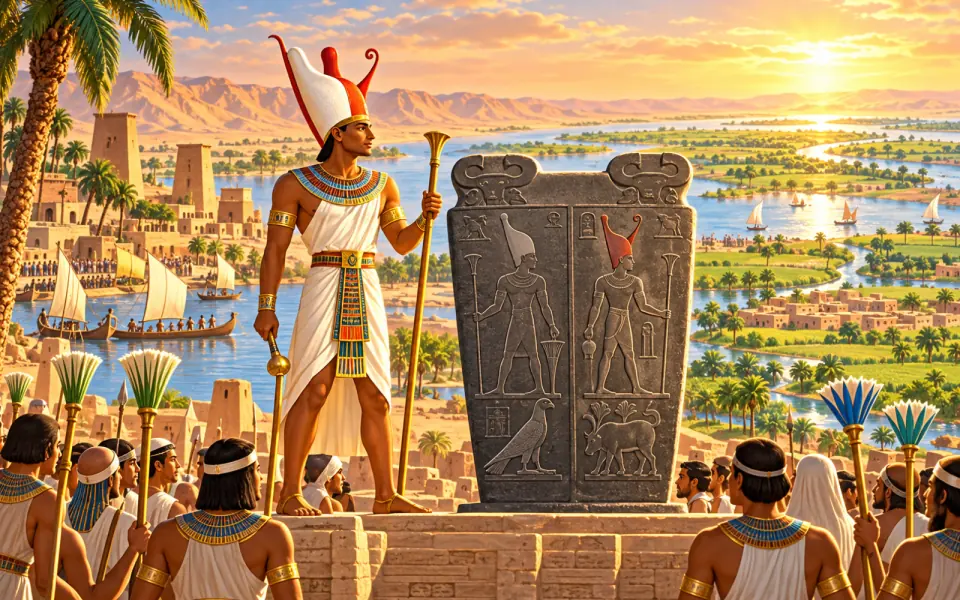 BeforeThe unification of Egyptabout 3100 BC
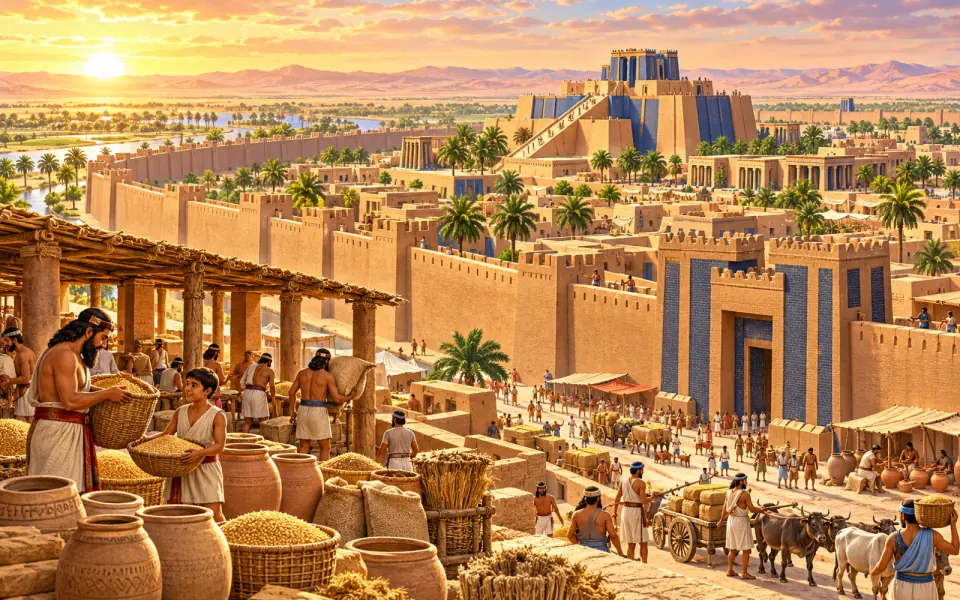 BeforeUruk, the great cityabout 3000 BC
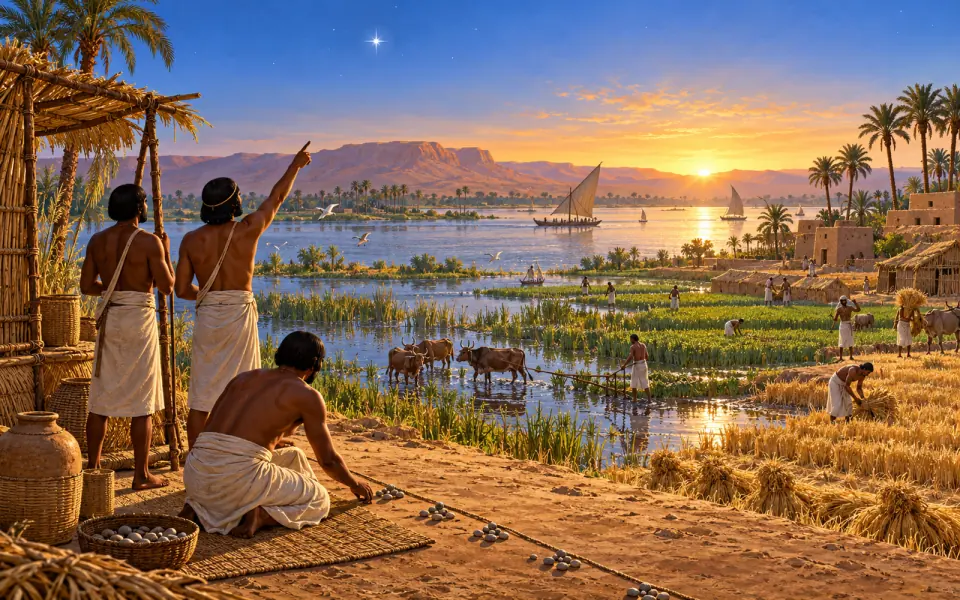 BeforeThe Egyptian calendarabout 2800 BC
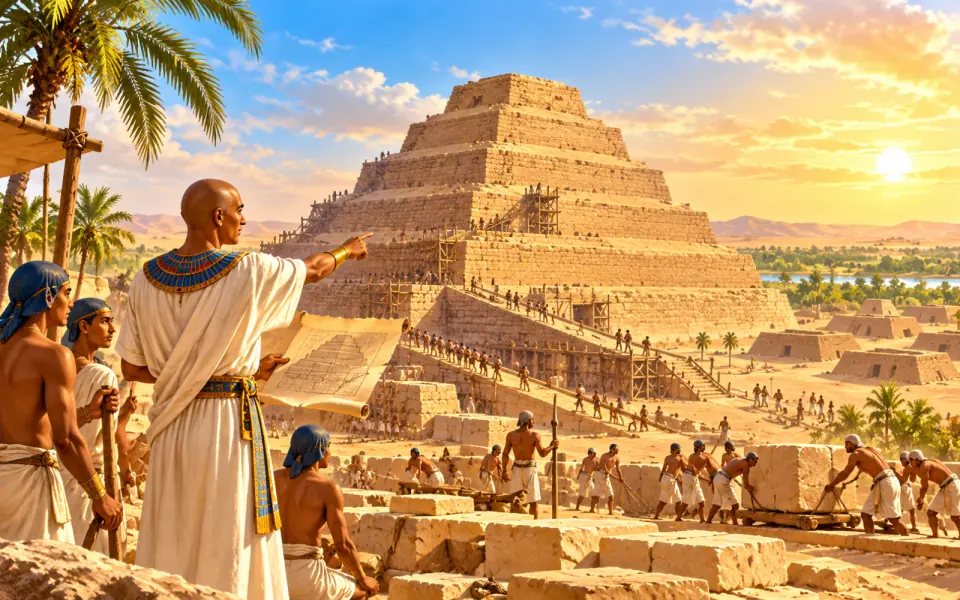 BeforeThe Step Pyramid of Djoserabout 2650 BC
 BeforeThe Standard of Urabout 2600 BC
 BeforeEgyptian mummificationabout 2600 BC
 BeforeThe Great Pyramid of Gizaabout 2560 BC
 BeforeThe cities of the Indus Valleyabout 2500 BC
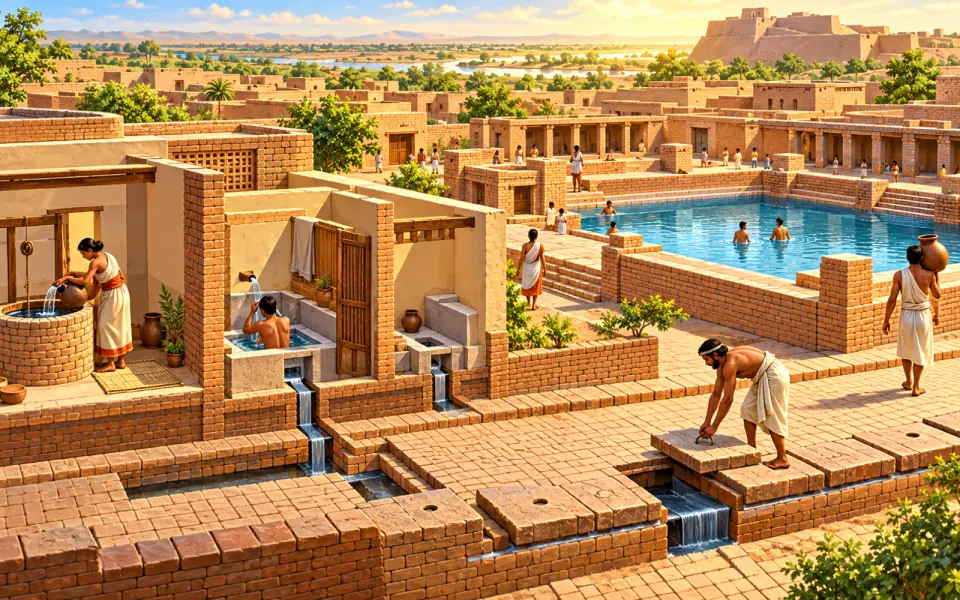 BeforeThe drains and baths of Mohenjo-daroabout 2450 BC
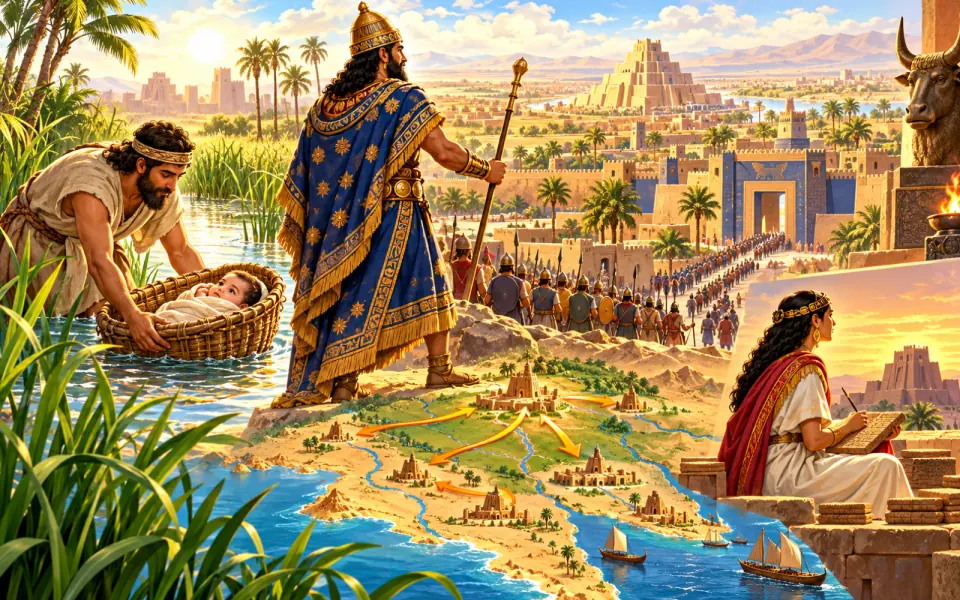 BeforeSargon and the Akkadian Empireabout 2334 BC
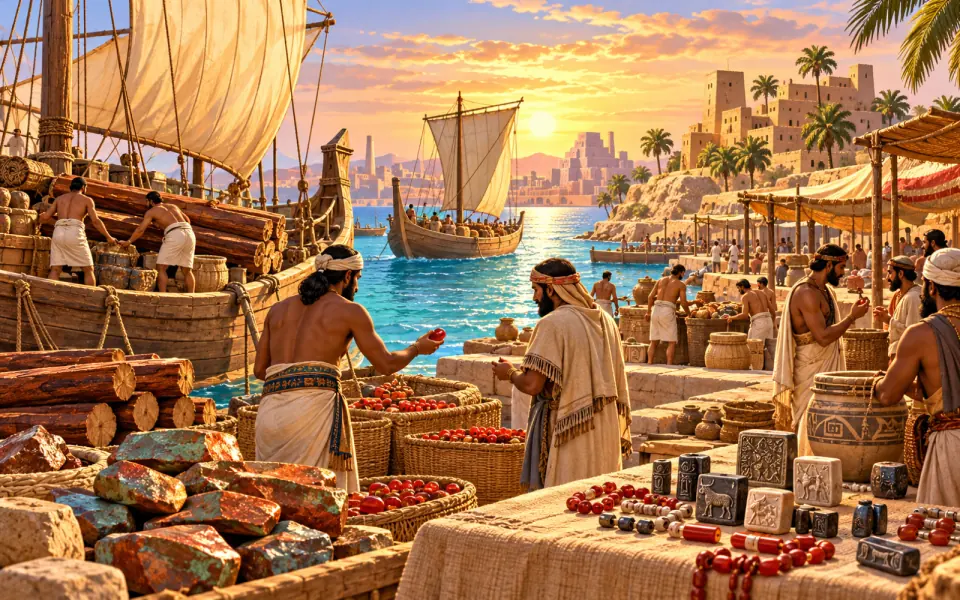 BeforeTrade between the Indus and Mesopotamiaabout 2300 BC
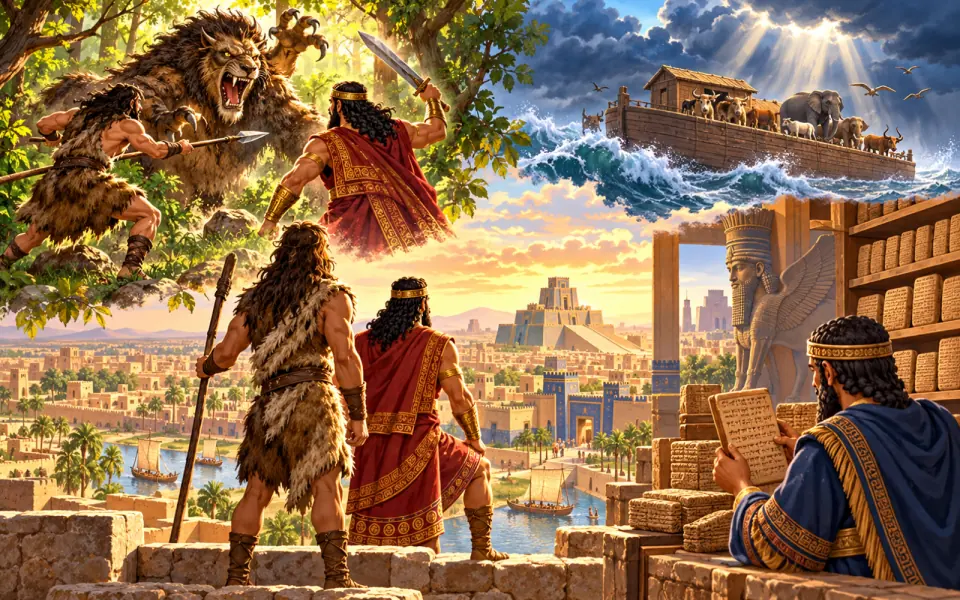 BeforeThe Epic of Gilgameshabout 2100 BC
 BeforeThe Ziggurat of Urabout 2100 BC
 BeforeBabylonian mathematicsabout 1800 BC
 BeforeThe Code of Hammurabiabout 1754 BC
 BeforeWar chariotsabout 1700 BC
- You are hereThe Shang dynastyabout 1600–1046 BC
 AfterHatshepsut, the woman pharaohabout 1479–1458 BC
 AfterThe reign of Akhenatenabout 1353–1336 BC
 AfterThe reign of Ramesses IIabout 1279–1213 BC
 AfterWriting on oracle bonesabout 1250 BC
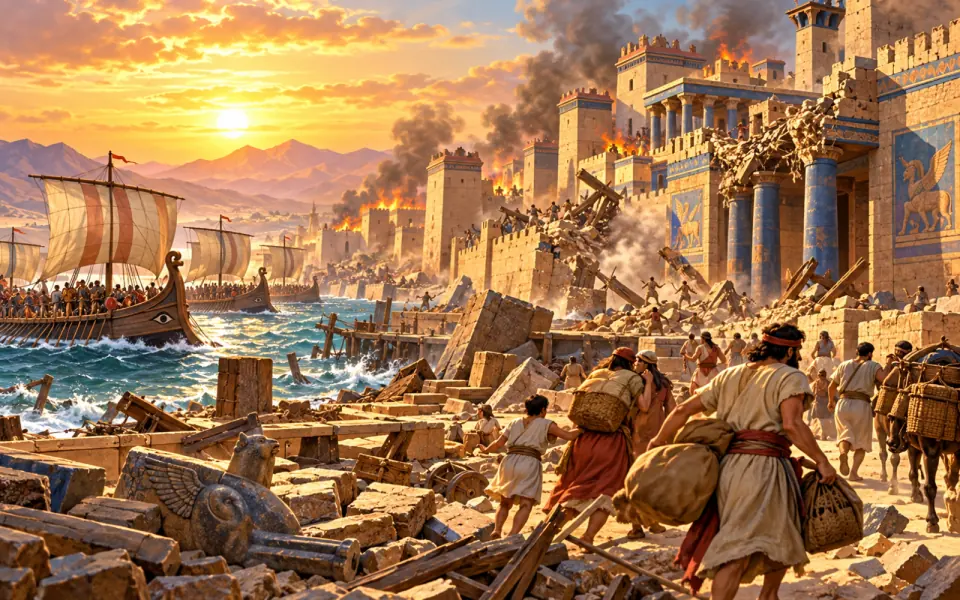 AfterThe Bronze Age collapseabout 1200 BC
Listen / Read next
- Music to read by: Cinematic JourneyEpic film-style music, no lyrics, by Ciro Simone IrmiciSpotifyYouTube Music
Meanwhile, elsewhere in the world
Other events of the era “River civilisations”
- The first Sumerian cities
- Cuneiform writing
- Egyptian hieroglyphs
- The unification of Egypt
- Uruk, the great city
- The Egyptian calendar
- The Step Pyramid of Djoser
- The Standard of Ur
- Egyptian mummification
- The Great Pyramid of Giza
- The cities of the Indus Valley
- The drains and baths of Mohenjo-daro
- Sargon and the Akkadian Empire
- Trade between the Indus and Mesopotamia
- The Epic of Gilgamesh
- The Ziggurat of Ur
- Babylonian mathematics
- The Code of Hammurabi
- War chariots
- Hatshepsut, the woman pharaoh
- The reign of Akhenaten
- The reign of Ramesses II
- Writing on oracle bones
- The Bronze Age collapse
