The Epic of Gilgamesh
about 2100 BC Nippur and Ur, Mesopotamia (now Iraq)
In short
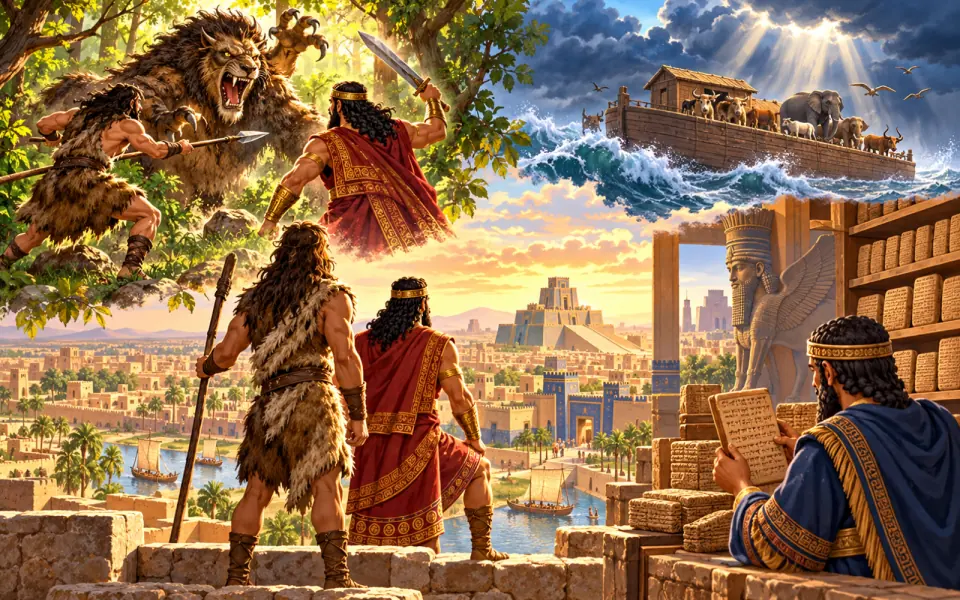
Gilgamesh was probably a real king of Uruk, but the stories about him became legend. In the poems he fights a forest monster with his friend Enkidu and then sets off in search of the secret of never dying. The first tales were written in Sumerian; the most complete version, on twelve tablets, was found in the library of the Assyrian king Ashurbanipal at Nineveh. It also contains the story of a great flood.
Why it matters It is one of the oldest works of literature in the world and speaks of friendship and the fear of death, themes that still matter to us.
Source: Encyclopaedia Britannica, “Epic of Gilgamesh”
Study card about 6 minutes of reading
The story
A man reads a tablet and is moved
London, 3 December 1872. In the hall of the Society of Biblical Archaeology a young scholar from the British Museum, George Smith, already known for having grown up as a banknote engraver and taught himself Assyrian, is reading a translation to an audience. It speaks of a man who, warned by the gods, builds a great ship, loads his family and the animals on it and survives a flood, until the ship comes to rest on a mountain and he lets a dove go, then a swallow, then a raven. The audience, who knew the story of Noah, is left breathless: that tale had been written in cuneiform long before the Bible. It was on a tablet, number 11 of a still unknown poem, the Epic of Gilgamesh.
The tablets had been found twenty years earlier, between 1849 and 1853, at Nineveh, in the north of Iraq, by the archaeologists Austen Henry Layard and Hormuzd Rassam, in the library of the Assyrian king Ashurbanipal. That king, who reigned in the 7th century BC, had collected more than thirty thousand tablets of every kind: prayers, laws, medical formulas, lists of stars and ancient poems. A treasure of which nobody, for more than two thousand years, had been able to read a line.
The story, in a few lines
Gilgamesh is the king of Uruk. He is strong, very handsome and very proud, two-thirds god and one-third man. The people suffer from his whims and call for help. The gods then create a rival: Enkidu, a wild man, born on the steppe, who lives with the animals. After being civilised by a woman, Shamhat, Enkidu comes to Uruk and wrestles with Gilgamesh. Neither wins, and the two become inseparable friends.
Together they set out for the Cedar Forest, where the giant Humbaba (or Huwawa), guardian of the sacred trees, lives, and they kill him. When the goddess Ishtar proposes marriage to Gilgamesh and he refuses, the goddess sends the Bull of Heaven; the two heroes defeat this too. But the gods demand a victim: Enkidu falls ill and dies. Gilgamesh, devastated, for the first time understands what it means to die and is afraid.
He then sets out on a long journey in search of Utnapishtim, the only man to whom the gods granted eternal life after the flood. He crosses mountains and deserts, passes the scorpion-men, and meets the tavern-keeper Siduri, who gives him advice that has remained famous: fill your belly, enjoy yourself day and night, wear clean clothes, wash, look at the child who holds your hand, embrace your wife: this is the lot of men. Gilgamesh does not listen and goes on. Utnapishtim tells him about the flood and sets him a test: to stay awake for six days and seven nights. Gilgamesh falls asleep at once.
In the end he is told of a plant at the bottom of the sea that makes you young again. He picks it, but on the way home, while he is bathing in a pool, a snake takes it from him. Gilgamesh returns to Uruk empty-handed. Yet the poem does not end in sadness: he looks at the walls of his city and understands that the works of men remain even when men die.
How the poem was formed
Gilgamesh was probably a real king of Uruk, who lived around 2700–2600 BC (the Sumerian King List puts him fifth of his dynasty). However, no inscription of his time names him, so we cannot be sure. Stories about him began to circulate in the form of short poems in Sumerian, written around 2100 BC, in the time of the Third Dynasty of Ur. King Shulgi of Ur even called him “brother” and boasted of descending from him.
In the following centuries Babylonian scribes gathered these tales into a single poem in Akkadian. The most complete version, on twelve tablets, is the one from Nineveh: tradition attributes the final form to a scribe named Sin-leqi-unninni, who lived perhaps around 1200 BC. The twelfth tablet, which does not continue the story, is a translation of an older Sumerian poem added later. The work is more than three thousand lines long, and many are damaged: scholars fill the gaps with other copies, found all over Mesopotamia, in Turkey and in Syria.
Why it still speaks to us
The poem begins with praise of the walls of Uruk and an invitation to climb the walls to admire the bricks. It is the story of a friendship, of the fear of death and of the need to leave something of oneself behind. The scholars who translate it point out that some lines are surprisingly modern: the hardness of the orphan who weeps for his friend, the king who realises he is not all-powerful.
A word of caution: Utnapishtim's flood resembles Noah's, but also an older Babylonian tale, that of Atrahasis. Historians believe the biblical story drew on Mesopotamian traditions, but how this happened is an open question. Nobody can say for certain which traditions were truly original.
Why it happened
The Epic of Gilgamesh was born in a world of city-states with powerful kings, temples and scribes. Kings wanted to be remembered; court poets gathered their deeds and turned them into stories. That of Gilgamesh, king of a famous city like Uruk, was the most suitable.
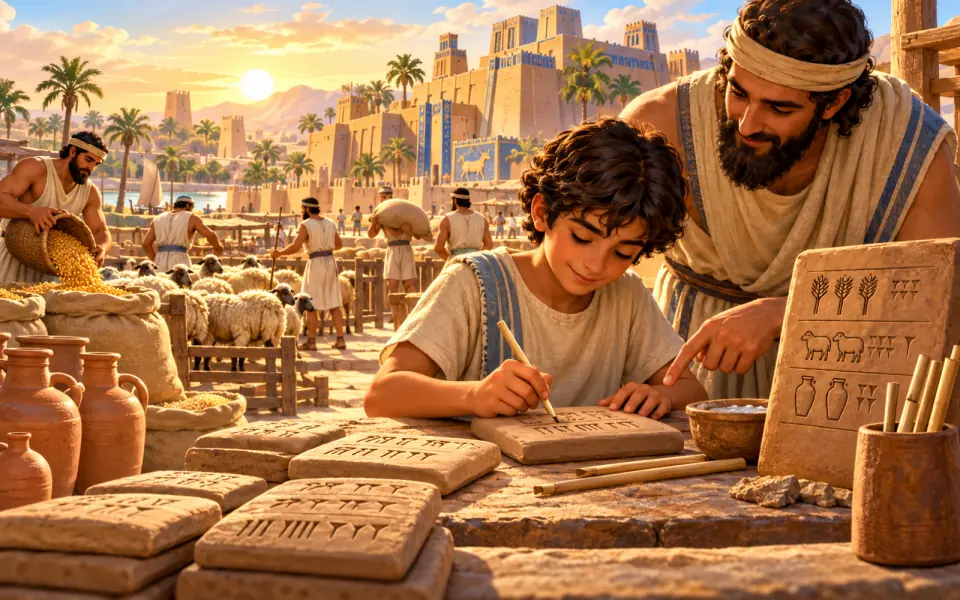
Writing also mattered, invented only a few centuries earlier. With tablets, oral tales could be put on record and copied in the scribes' schools, where apprentices copied them to learn the language. So the poem survived to reach us in many copies.
Finally there was a universal question: why do we have to die? People of every age have asked it. The poem tackles it through the story of a hero who loses his friend and understands that he is mortal, and for this reason it still moves readers of every era.
What changed
The Epic of Gilgamesh is considered one of the oldest great works of literature in the world. It influenced neighbouring tales, including the biblical ones (the flood), and, according to some scholars, the Homeric poems too, though this influence is debated. It opened the way to epic literature: heroes, monsters, journeys to the afterlife, friendships and losses.
Its rediscovery, from 1872, changed our idea of the Bible and the ancient world: it showed that Mesopotamia had a very rich literature and that Hebrew stories were born in a shared cultural setting. From Smith's translation came the modern interest in Assyriology.
Today the poem is translated into dozens of languages, studied at school and retold in theatre, novels and comics. After the war in Iraq in 2003, the tablets of Nineveh and other sites became a symbol of the need to protect humanity's cultural heritage.
Key people and places
People
- Gilgamesh
- King of Uruk, perhaps a real person around 2700–2600 BC, hero of the epic. According to tradition he was two-thirds god and one-third man.
- Enkidu
- Gilgamesh's friend, created by the gods as his rival; his death drives the hero to seek eternal life.
- George Smith
- English Assyriologist (1840–1876) who in 1872 recognised the story of the flood in the tablets of the British Museum and read it in public.
- Ashurbanipal
- Assyrian king of the 7th century BC who gathered at Nineveh a great library with thousands of tablets, including those of Gilgamesh.
Places
- Uruk (southern Iraq)
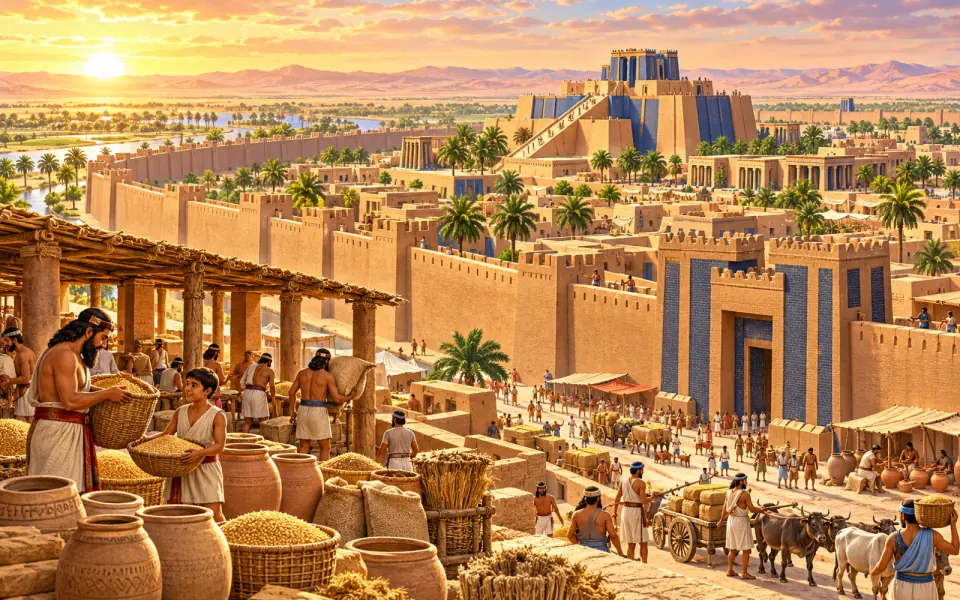
- The city of which Gilgamesh was king, famous for its great walls. The poem begins and ends with praise of them.
- Nineveh (northern Iraq)
- The Assyrian capital where, in the library of Ashurbanipal, the most complete version of the poem was found.
- British Museum (London)
- The museum where the tablets of Nineveh are kept, including the famous flood tablet.
Good to know
- George Smith, who in 1872 first read the story of the flood, had grown up working as an engraver and had taught himself to read cuneiform.
- Siduri's advice to Gilgamesh, “look at the child who holds your hand”, is one of the most human lines of antiquity.
- The most complete poem has more than 3,000 lines on twelve tablets, and many are damaged: scholars still find and join new fragments today.
- King Shulgi of Ur, around 2050 BC, called Gilgamesh “my brother” and worshipped him as a god.
- The library of Ashurbanipal at Nineveh held over 30,000 tablets and fragments, and is considered one of the first great libraries in the world.
Find out more
- Wikipedia, “Epic of Gilgamesh” en.wikipedia.org
- World History Encyclopedia, “Ashurbanipal” worldhistory.org
- Wikipedia, “Uruk” en.wikipedia.org
- World History Encyclopedia, “Gilgamesh” worldhistory.org
Related events
- Uruk, the great cityabout 3000 BC · River civilisationsUruk is the city of which Gilgamesh was king and whose walls he loved.
- Cuneiform writingabout 3200 BC · River civilisationsThe poem was written in cuneiform on clay tablets.
- The Ziggurat of Urabout 2100 BC · River civilisationsUr-Nammu and Shulgi, the kings of Ur, had the first poems about Gilgamesh written down.
- Homer's poems are written downabout 750 BC · Sea civilisationsThe Homeric poems are the other great epic of the ancient world.
- The Babylonian Exileabout 586 BC · Sea civilisationsThe Babylonian exile brought the Hebrews into contact with Mesopotamian traditions.
Before and after, in the era “River civilisations”
Event 15 of 25
 BeforeThe first Sumerian citiesabout 4000 BC
 BeforeCuneiform writingabout 3200 BC
 BeforeEgyptian hieroglyphsabout 3200 BC
 BeforeThe unification of Egyptabout 3100 BC
 BeforeUruk, the great cityabout 3000 BC
 BeforeThe Egyptian calendarabout 2800 BC
 BeforeThe Step Pyramid of Djoserabout 2650 BC
 BeforeThe Standard of Urabout 2600 BC
 BeforeEgyptian mummificationabout 2600 BC
 BeforeThe Great Pyramid of Gizaabout 2560 BC
 BeforeThe cities of the Indus Valleyabout 2500 BC
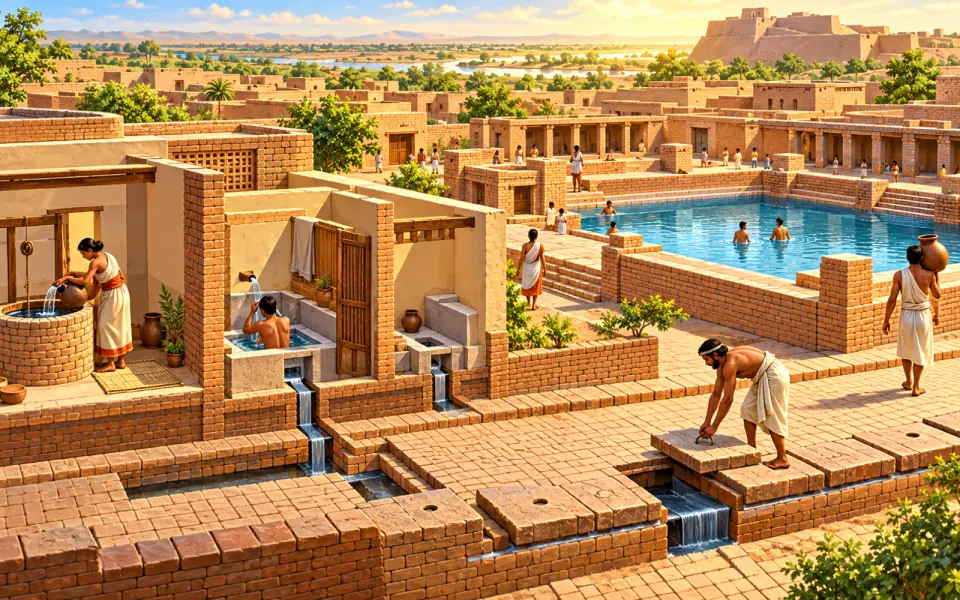 BeforeThe drains and baths of Mohenjo-daroabout 2450 BC
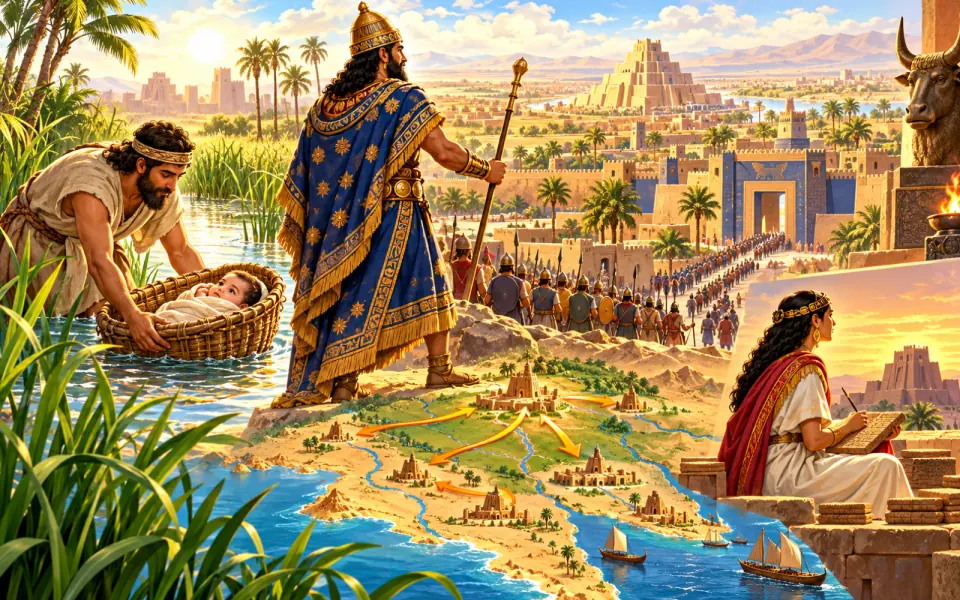 BeforeSargon and the Akkadian Empireabout 2334 BC
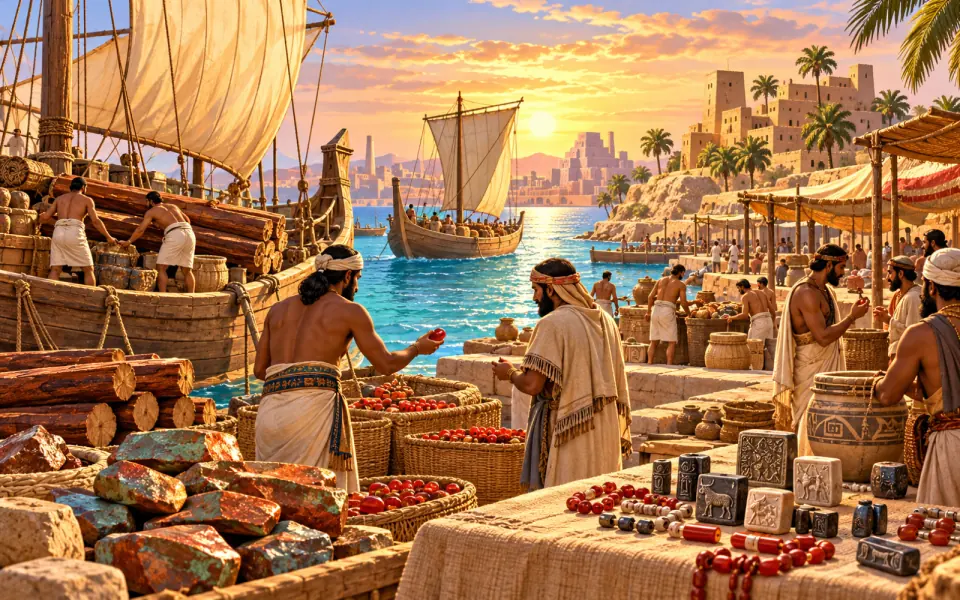 BeforeTrade between the Indus and Mesopotamiaabout 2300 BC
- You are hereThe Epic of Gilgameshabout 2100 BC
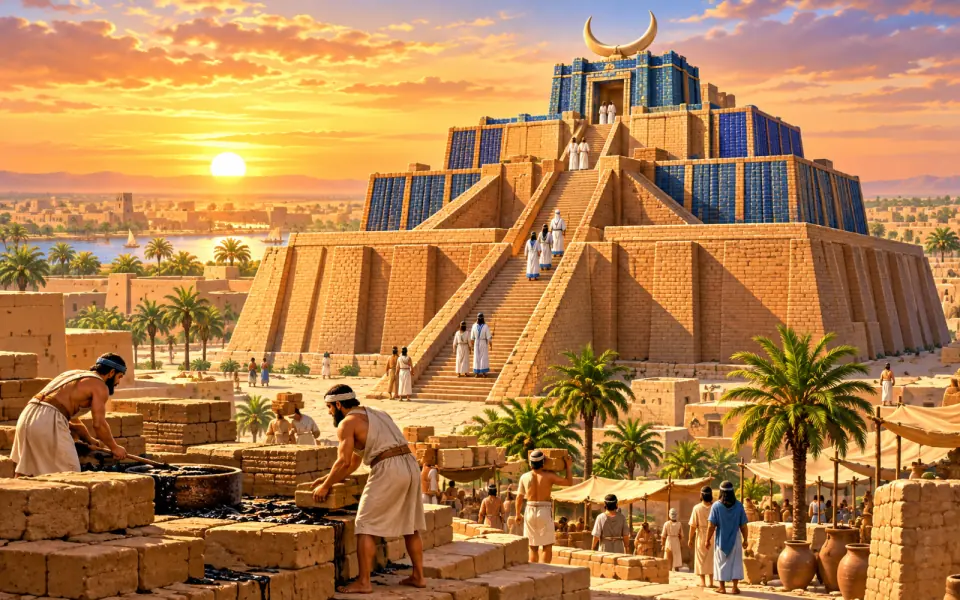 AfterThe Ziggurat of Urabout 2100 BC
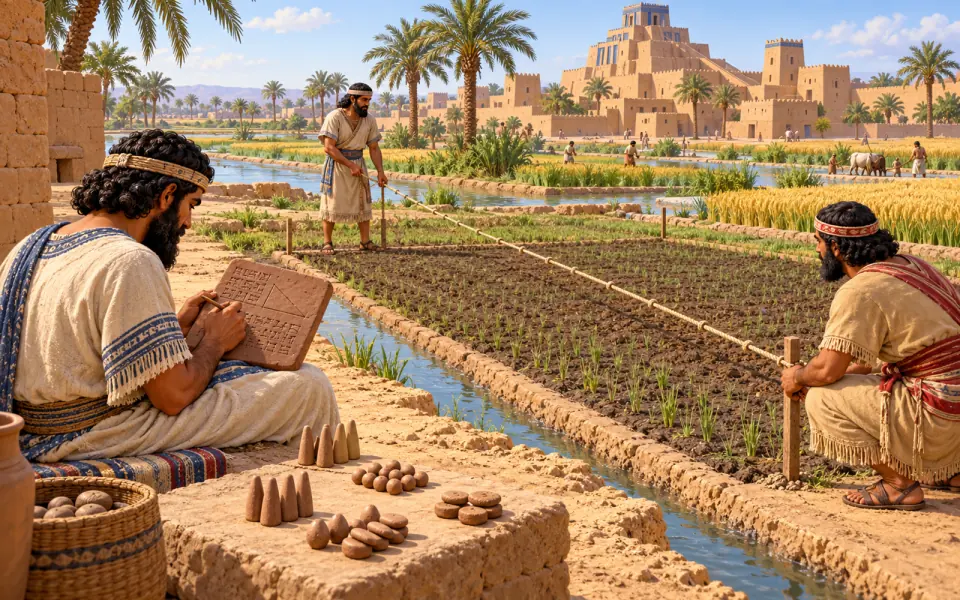 AfterBabylonian mathematicsabout 1800 BC
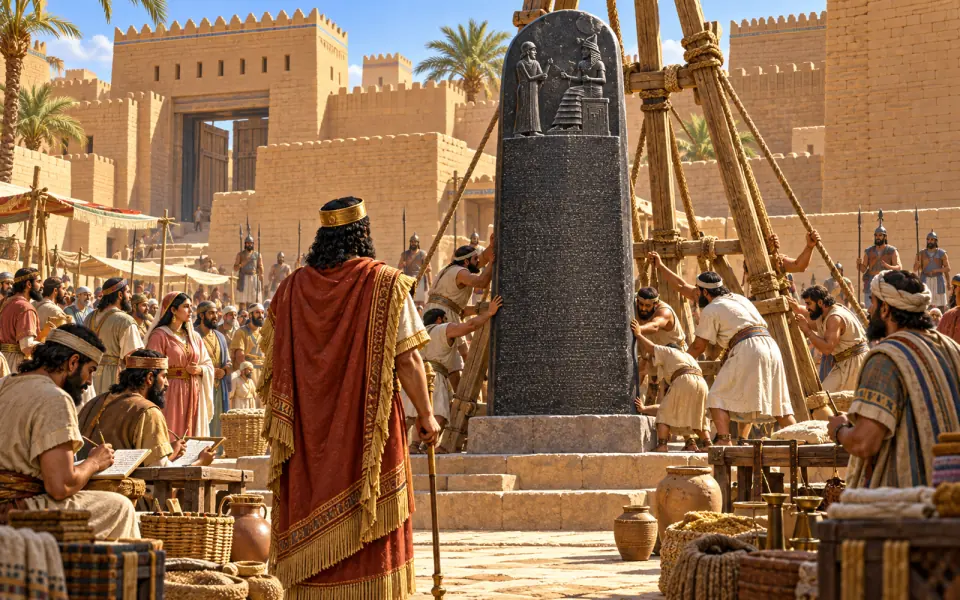 AfterThe Code of Hammurabiabout 1754 BC
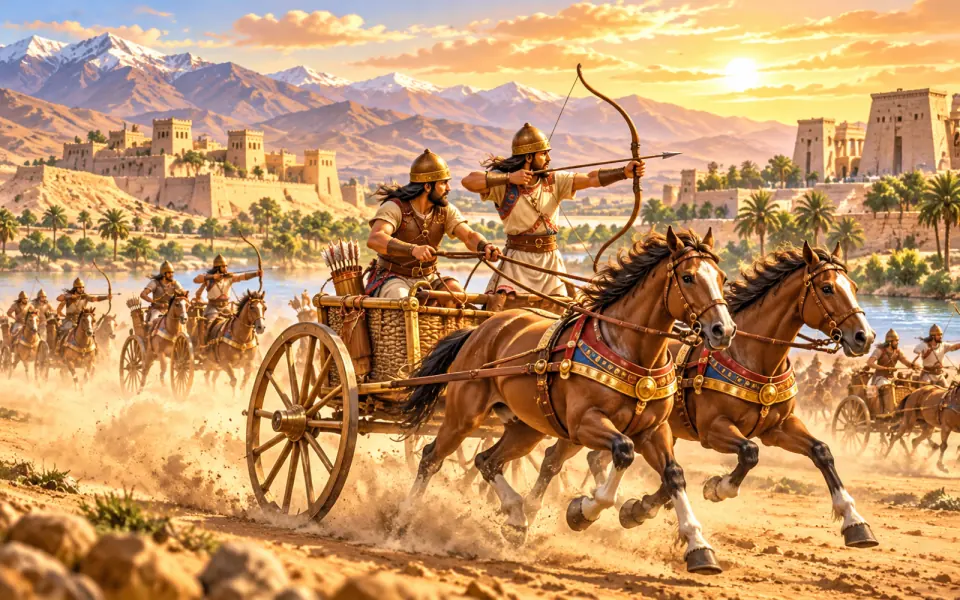 AfterWar chariotsabout 1700 BC
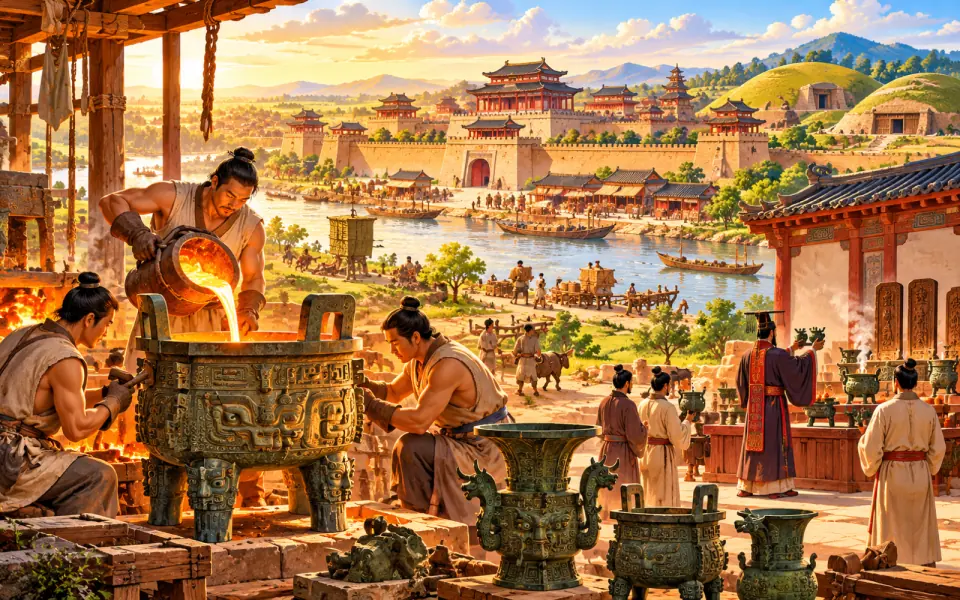 AfterThe Shang dynastyabout 1600–1046 BC
 AfterHatshepsut, the woman pharaohabout 1479–1458 BC
 AfterThe reign of Akhenatenabout 1353–1336 BC
 AfterThe reign of Ramesses IIabout 1279–1213 BC
 AfterWriting on oracle bonesabout 1250 BC
 AfterThe Bronze Age collapseabout 1200 BC
In legend
Listen / Read next
- Music to read by: Cinematic JourneyEpic film-style music, no lyrics, by Ciro Simone IrmiciSpotifyYouTube Music
Meanwhile, elsewhere in the world
Other events of the era “River civilisations”
- The first Sumerian cities
- Cuneiform writing
- Egyptian hieroglyphs
- The unification of Egypt
- Uruk, the great city
- The Egyptian calendar
- The Step Pyramid of Djoser
- The Standard of Ur
- Egyptian mummification
- The Great Pyramid of Giza
- The cities of the Indus Valley
- The drains and baths of Mohenjo-daro
- Sargon and the Akkadian Empire
- Trade between the Indus and Mesopotamia
- The Ziggurat of Ur
- Babylonian mathematics
- The Code of Hammurabi
- War chariots
- The Shang dynasty
- Hatshepsut, the woman pharaoh
- The reign of Akhenaten
- The reign of Ramesses II
- Writing on oracle bones
- The Bronze Age collapse
