The Babylonian Exile
about 586 BC Jerusalem and Babylon
In short
The Babylonian king Nebuchadnezzar II conquered Jerusalem and destroyed the Temple built, according to the Bible, by Solomon. Many people from the Kingdom of Judah were taken to Babylon, far from their land. In exile the Jewish people held on to their faith by gathering their stories and laws, and some books of the Bible took shape in those years. About fifty years later the Persian king Cyrus allowed the exiles to return.
Why it matters The exile changed the history of the Jewish people for ever, as they learnt to live their religion even far from their homeland.
Source: Encyclopaedia Britannica, “Babylonian Exile”
Study card about 5 minutes of reading
The story
The small kingdom crushed between giants
After the division of the two kingdoms we spoke of, the kingdom of Judah, with Jerusalem as its capital, remained for centuries a small country among great powers. After the fall of the kingdom of Israel in the north, conquered by the Assyrians in 722 BC, Judah survived, but its position was dangerous: to the south lay Egypt, to the north and east the great empires of Mesopotamia. In the 6th century BC the dominant power was Babylon, and its king was Nebuchadnezzar II.
Three deportations
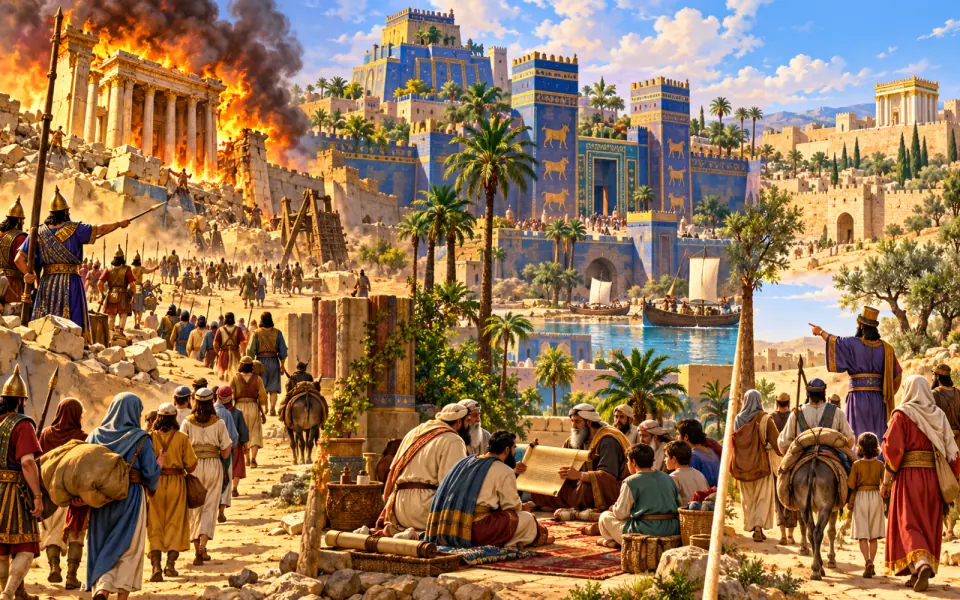
The account historians reconstruct, putting together the Bible and the Babylonian documents, speaks of several stages. In 597 BC Nebuchadnezzar besieged Jerusalem and took it. He carried off to Babylon King Jehoiachin, his court and many others, about seven thousand people according to one estimate, among them the prophet Ezekiel. In his place he put on the throne Zedekiah, another member of the royal family.
But Zedekiah rebelled. Nebuchadnezzar came back and, after a new siege, the city fell. The most common dates are 587 or 586 BC, depending on the calculations. This time the Babylonians destroyed Jerusalem and the Temple, the one that according to the Bible had been built by Solomon. Zedekiah was blinded and taken in chains to Babylon. Other inhabitants were deported, and another deportation took place in 582 BC. Judah became a Babylonian province, called Yehud. According to some estimates the population of the country fell from about one hundred and ten thousand people to a number between fifteen and forty thousand. The numbers given by the Bible are inconsistent, and so historians use them with caution.
Life in exile
The exiles were settled in farming communities in Mesopotamia, for example at Tel-abib, near Nippur. They had to live far from their homeland, however, without the Temple, which was the centre of worship. How do you practise a religion without its temple? The exiles began to meet in homes, to keep the Sabbath, to practise circumcision, to read and to remember the laws and the psalms.
In these years some of the most moving writings of Jewish tradition were born. Psalm 137 begins with words describing the exiles sitting “by the rivers of Babylon”, weeping at the memory of Zion. The Book of Lamentations mourns the destruction of the city. Ezekiel is one of the great prophets of this period. Scholars think that in that time the Torah, that is, the first books of the Bible with the laws, became more and more central to the life of the people. The historian Yehezkel Kaufmann called the exile “the watershed” of the religion of Israel.
The exiles also met the Aramaic language and script, widespread in Mesopotamia. The alphabet of Aramaic origin ended up replacing the old Hebrew script and gave their shape to the letters that Jews still use today.
The return
The Babylonian empire did not last long. In 539 BC the Persian king Cyrus the Great conquered Babylon. According to the Bible he issued a decree allowing the exiles to return to their homeland and rebuild the Temple. But scholars debate whether that decree really existed in the form described, because the famous Cyrus Cylinder, a Persian document, does not name Judah. It is certain, however, that after 539 many Jews returned. Led by Zerubbabel and the priest Joshua, they rebuilt the Temple, the Second Temple, completed around 516 BC. Not everyone returned, though: part of the people stayed in Mesopotamia.
One date, two versions
For the fall of Jerusalem two dates are found, 587 and 586 BC. Historians debate them, and depending on how the years of the kings are counted you arrive at one or the other. This is why, when we talk about such ancient things, the date is almost always an “about”.
Why it happened
The immediate cause was politics. Judah was a small kingdom crushed between Egypt and Babylon, and its kings tried to ally now with one power and now with the other in order to survive. When Zedekiah rebelled against Babylon, probably counting on Egypt's help, Nebuchadnezzar's response was very harsh.
Historians recall that moving groups of people out of a conquered territory was a practice already used by the empires of antiquity, as a means of controlling subject lands better.
What changed
The exile changed the history of the Jewish people for ever. Without Temple and without king, the Jews had to work out how to keep their identity far from their homeland. They collected and preserved their laws and their stories, and gave the sacred texts a new importance. Scholars consider it a fundamental turning point for the religion of Israel.
The return and the rebuilding of the Temple led to a new phase, in which Judea was part of the Persian empire. But part of the people remained scattered outside the land of origin, the so-called diaspora, and this dispersion would continue in the following centuries.
Even today the memory of the exile is alive in Jewish tradition, in the psalms and prayers, and the images of the “rivers of Babylon” have entered the culture of the whole world, in poetry as in music.
Key people and places
People
- Nebuchadnezzar II
- King of Babylon who took Jerusalem in 597 BC and destroyed it in 587/586 BC.
- Zedekiah
- Last king of Judah, put on the throne by Nebuchadnezzar; according to the account he rebelled and was blinded.
- Ezekiel
- A prophet deported to Babylon in 597 BC.
- Cyrus the Great
- Persian king who conquered Babylon in 539 BC and, according to the Bible, allowed the exiles to return.
- Zerubbabel
- Leader, with the priest Joshua, of the returnees who rebuilt the Temple.
Places
- Jerusalem
- Capital of the kingdom of Judah, conquered and destroyed by the Babylonians.
- Babylon
- A great city of Mesopotamia, capital of Nebuchadnezzar's empire.
- Tel-abib
- A farming place near Nippur where, according to tradition, some of the exiles were settled.
Good to know
- The date of the destruction of Jerusalem is 587 or 586 BC, depending on the calculations.
- Psalm 137 begins with the exiles sitting “by the rivers of Babylon”.
- The Cyrus Cylinder, a Persian document, does not name Judah, which is why the authenticity of the biblical decree is debated.
- After the exile Hebrew writing adopted the letters of Aramaic origin that are still used today.
- The Second Temple was completed around 516 BC.
Find out more
- Wikipedia, “Nebuchadnezzar II” en.wikipedia.org
- Wikipedia, “Siege of Jerusalem (587 BC)” en.wikipedia.org
- Wikipedia, “Cyrus the Great” en.wikipedia.org
- Wikipedia, “Babylonian captivity” en.wikipedia.org
Related events
- The Kingdom of Israelabout 1000 BC · Sea civilisationsThe kingdom of Judah and its Temple had been born with David and Solomon.
- The Phoenicians spread outabout 1200 BC · Sea civilisationsThe Phoenician cities too were subjected to Babylon and the Persians.
- The Code of Hammurabiabout 1754 BC · River civilisationsBabylon had been the city of Hammurabi more than a thousand years earlier.
- The Battle of Marathon490 BC · Ancient GreeceThe Persian empire founded by Cyrus later clashed with the Greeks.
- The Phoenician alphabetabout 1050 BC · Sea civilisationsThe ancient Hebrew alphabet descended from the Phoenician one.
Before and after, in the era “Sea civilisations”
Event 24 of 25
 BeforeMinoan civilisation on Creteabout 2000 BC
 BeforeThe palace of Knossosabout 1900 BC
 BeforeThe Proto-Sinaitic alphabetabout 1800 BC
 BeforeThe eruption of Theraabout 1600 BC
 BeforeThe nuraghi of Sardiniaabout 1600 BC
 BeforeThe gold mask of Mycenaeabout 1550 BC
 BeforeLinear Babout 1450 BC
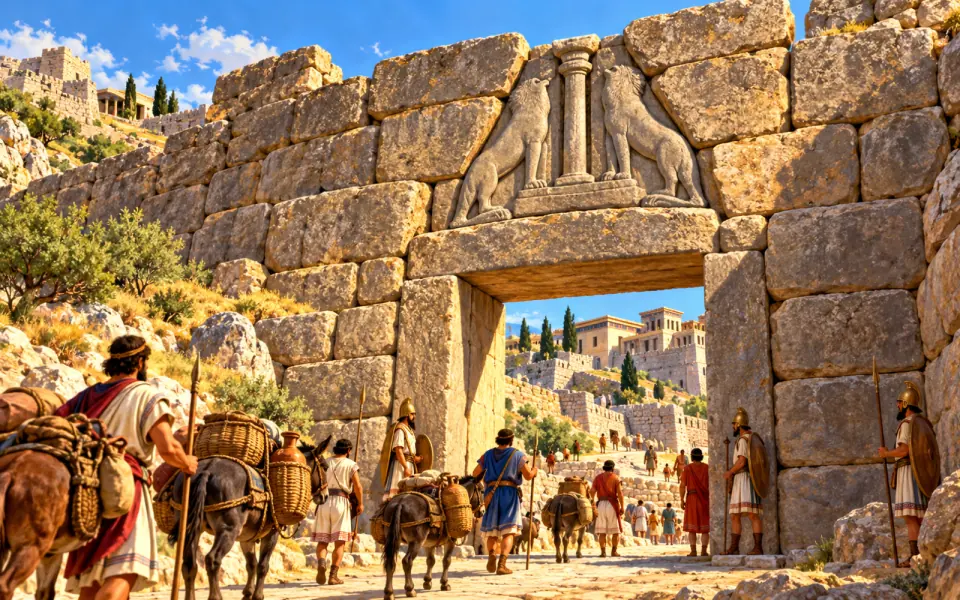 BeforeThe Lion Gate at Mycenaeabout 1250 BC
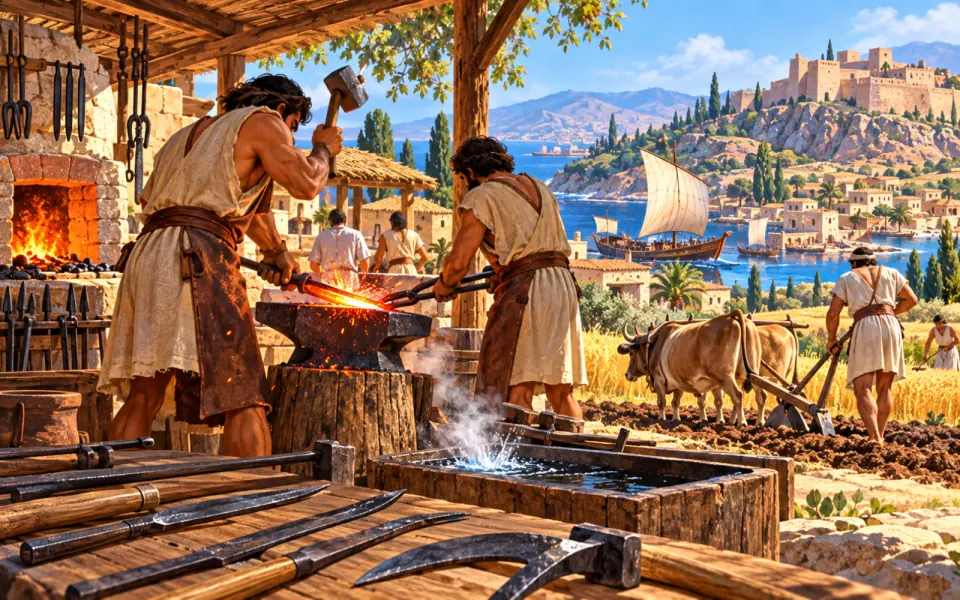 BeforeThe Iron Age beginsabout 1200 BC
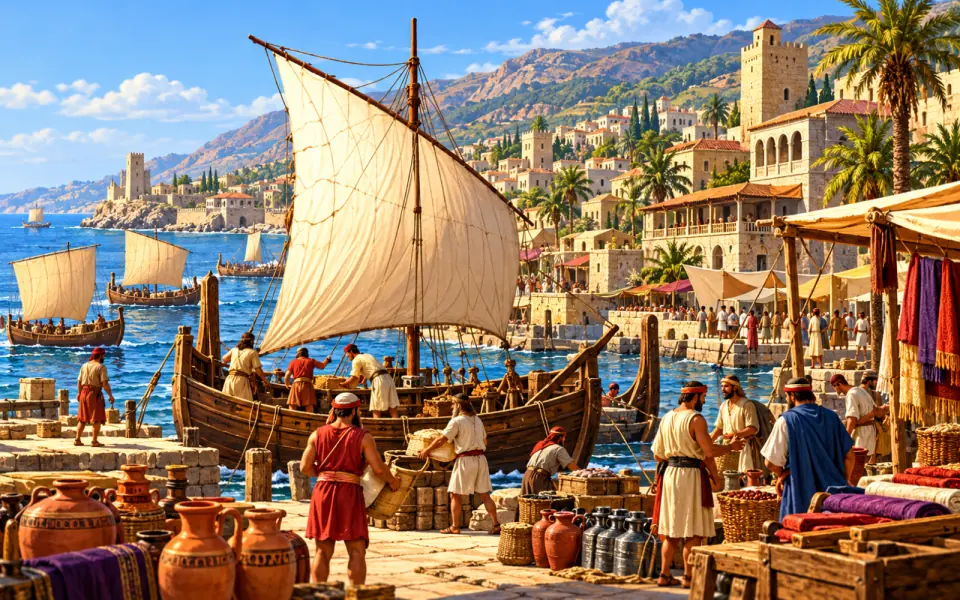 BeforeThe Phoenicians spread outabout 1200 BC
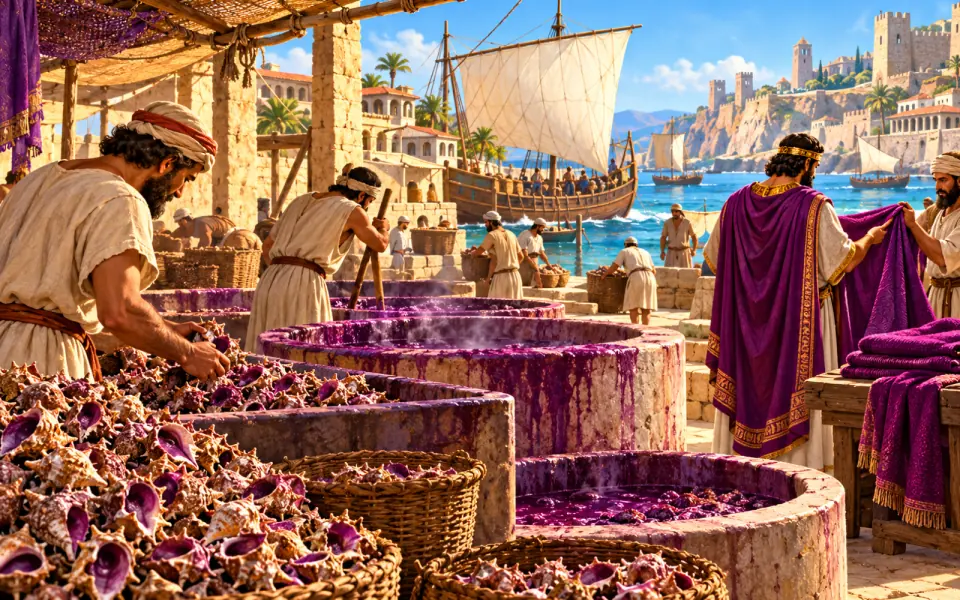 BeforePhoenician purpleabout 1100 BC
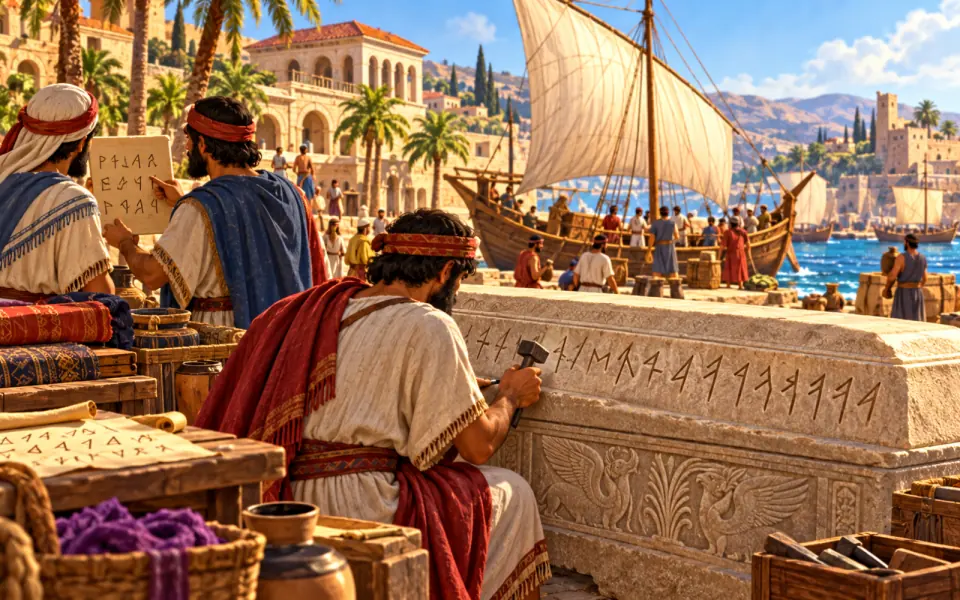 BeforeThe Phoenician alphabetabout 1050 BC
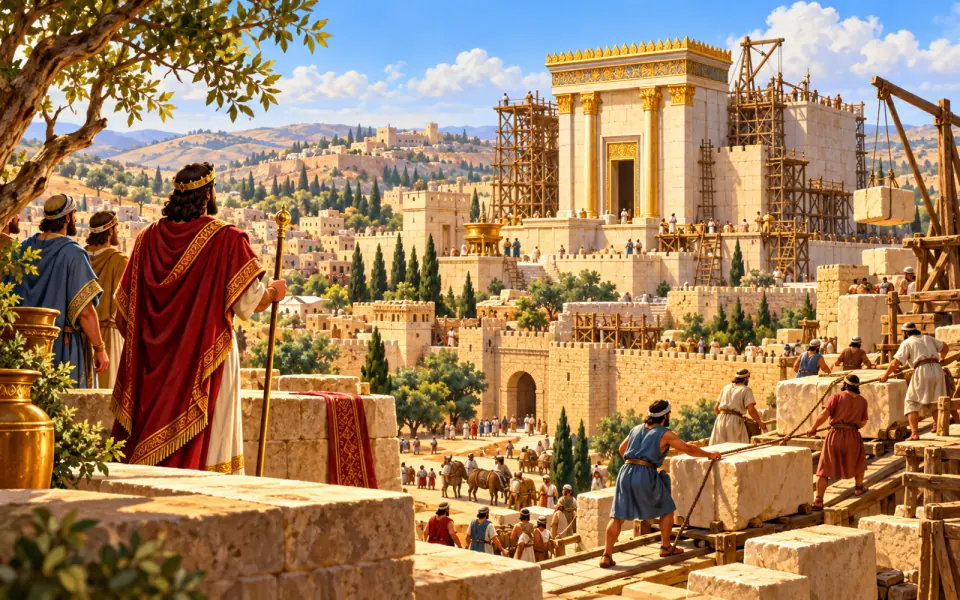 BeforeThe Kingdom of Israelabout 1000 BC
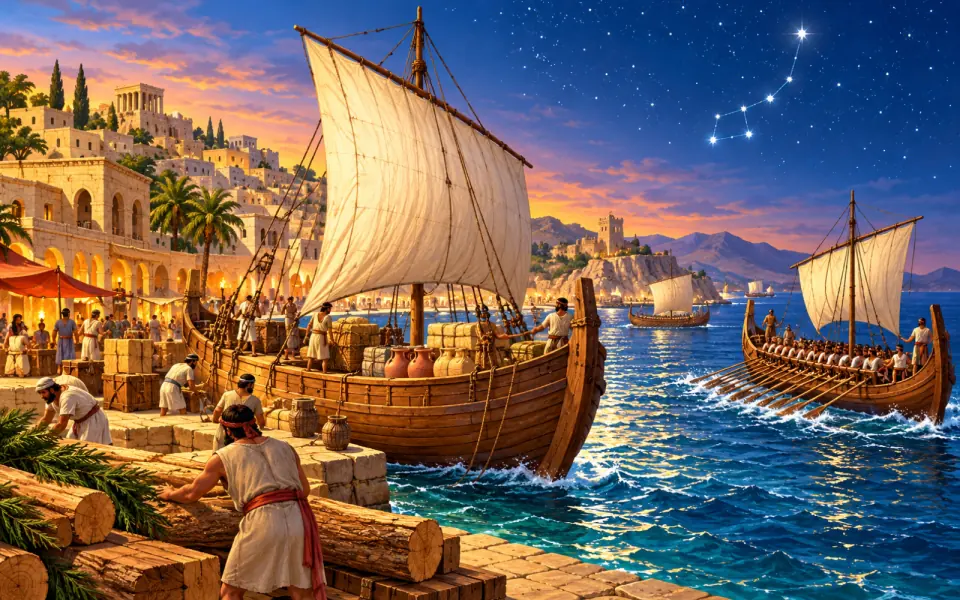 BeforePhoenician seafaringabout 1000 BC
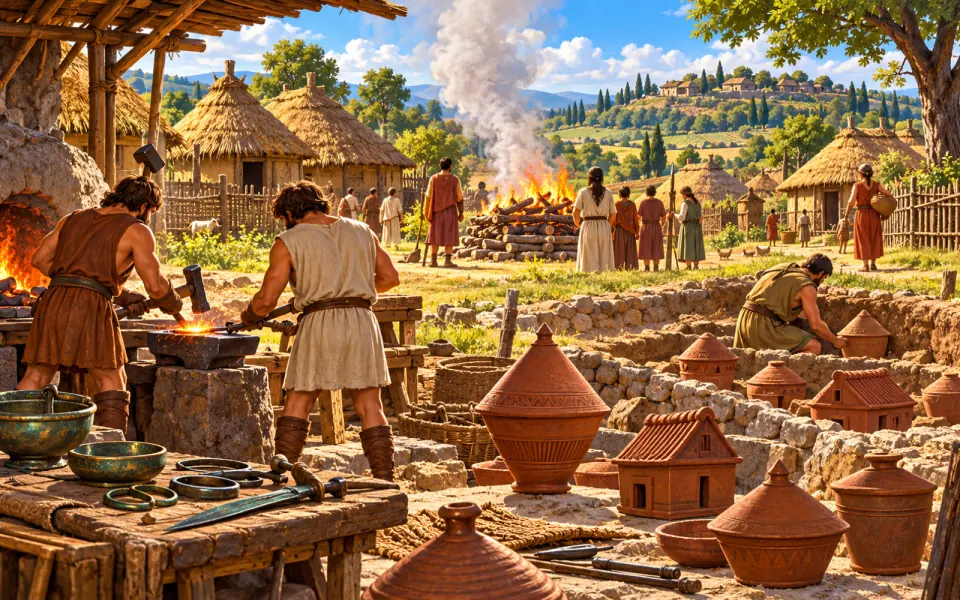 BeforeThe Villanovan culture in Italyabout 900 BC
 BeforeTraditional founding of Carthageabout 814 BC
 BeforeThe Nora Stoneabout 800 BC
 BeforeAmphorae for oil and wineabout 800 BC
 BeforeHomer's poems are written downabout 750 BC
 BeforeGreek colonies in the Westabout 750 BC
 BeforeThe Etruscans, lords of the Tyrrhenian Seaabout 700 BC
 BeforePhoenician glass spreadsabout 600 BC
 BeforeCoins in the Mediterraneanabout 600 BC
- You are hereThe Babylonian Exileabout 586 BC
 AfterSailing beyond Gibraltarabout 500 BC
Listen / Read next
- Music to read by: Cinematic JourneyEpic film-style music, no lyrics, by Ciro Simone IrmiciSpotifyYouTube Music
Meanwhile, elsewhere in the world
Other events of the era “Sea civilisations”
- Minoan civilisation on Crete
- The palace of Knossos
- The Proto-Sinaitic alphabet
- The eruption of Thera
- The nuraghi of Sardinia
- The gold mask of Mycenae
- Linear B
- The Lion Gate at Mycenae
- The Iron Age begins
- The Phoenicians spread out
- Phoenician purple
- The Phoenician alphabet
- The Kingdom of Israel
- Phoenician seafaring
- The Villanovan culture in Italy
- Traditional founding of Carthage
- The Nora Stone
- Amphorae for oil and wine
- Homer's poems are written down
- Greek colonies in the West
- The Etruscans, lords of the Tyrrhenian Sea
- Phoenician glass spreads
- Coins in the Mediterranean
- Sailing beyond Gibraltar
