Phoenician purple
about 1100 BC Tyre and Sidon (now Lebanon)
In short
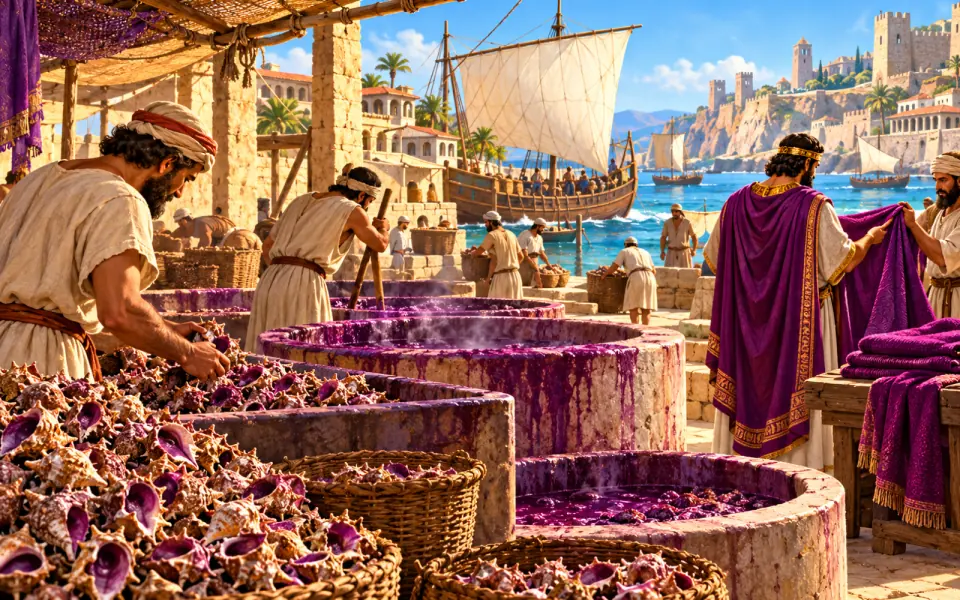
Purple was a reddish-violet dye made from small sea snails called murex. Dyeing a single cloak took thousands of shells, left to soak in large vats with a terrible smell. That is why purple cloth was extremely expensive and was worn by kings, nobles and priests. Perhaps the very name of the Phoenicians comes from the Greek word for that colour.
Why it matters Even today purple is the colour of luxury and power.
Source: Encyclopaedia Britannica, “Tyrian purple”
Study card about 5 minutes of reading
The story
The most expensive colour of the ancient world
Today a purple dress costs as much as a yellow or green one. In antiquity it was not so: cloth the colour of purple could cost as much as a small fortune, and in certain periods only kings, priests and great nobles had the right to wear it. The secret of this colour lay in a tiny animal: a sea snail.
From snail to colour
Purple was obtained from certain spiny-shelled sea molluscs, called murex shells. The species used were mainly three, known today by the scientific names Bolinus brandaris, Hexaplex trunculus and Stramonita haemastoma. Inside the body of these animals there is a gland that produces the substance from which the dye is made. During dyeing the colour changes: it starts from a blue tint and moves towards red-violet. It is a little piece of chemical magic that the ancients observed and knew how to exploit.
The problem was quantity. One scholar, David Jacoby, has calculated that twelve thousand murex shells of the brandaris species give at most 1.4 grams of pure dye: roughly enough to trim a single garment. This is why purple was so expensive. An ancient historian, Theopompus, wrote that at Colophon purple was sold for its weight in silver.
The work and the stink
The Roman writer Pliny the Elder describes the process. The gland was removed from the animals and salt was added to it, then the liquid was left to rest for about three days. After that, it was boiled for around ten days in vessels of tin or lead, skimming it all the time, and now and then the colour was tested on a sample of wool. When the colour was right, the wool was dipped in and then taken out and dipped again, until it took on the desired shade.
The ancient sources agree on one point: the smell was unbearable. The molluscs were left to rot in the vats. An Egyptian papyrus complains that “the dyer's hands stink like rotten fish”. According to the Talmud, the text of the Jewish tradition, a woman was allowed to divorce her husband if, after the wedding, he had become a dyer.
The colour of waves and blood
There was not just one purple. Different shades were obtained by mixing the species and varying the times: from bright red to dark violet. The most precious colour, it is said, was an almost black tone, like clotted blood, which was perhaps obtained by dipping the cloth first in one dye and then in another. The main dye is a molecule that contains bromine: today chemists can describe it exactly.
Who invented purple?
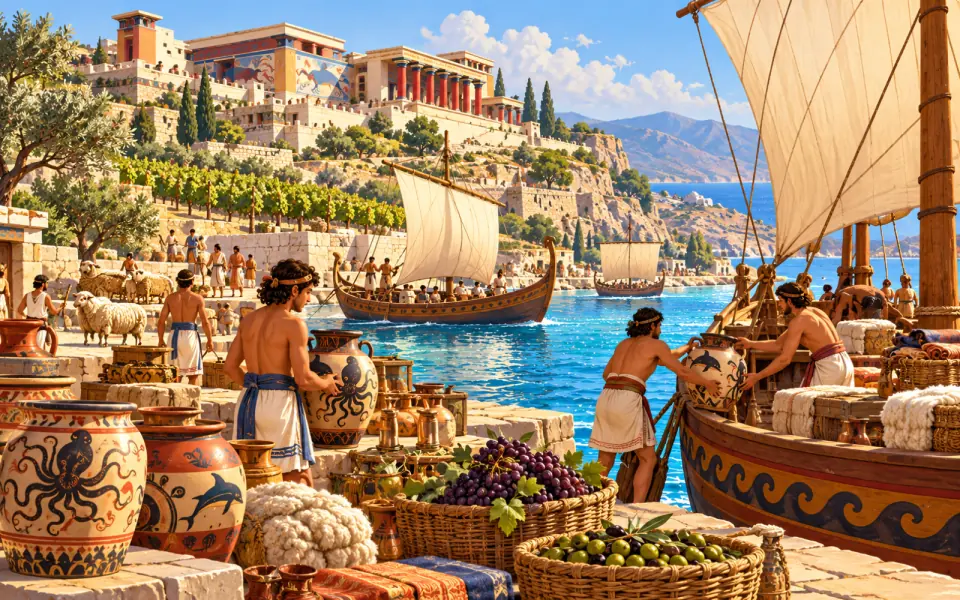
We do not know for certain. Production for dyeing cloth is documented among the Phoenicians from about 1200 BC, with possible traces that are even older, around 1570 BC. But on the island of Crete heaps of murex shells have been found which suggest Minoan production already between the 20th and 18th centuries BC, perhaps before the Phoenicians of Tyre. Some scholars think that the very name “Phoenicia” means “land of purple”. The Greek word phoînix could mean a Phoenician, but also purple and even the date.
The Greeks, who liked stories, told that purple had been discovered by chance on the beach at Tyre by the dog of Heracles, which bit a murex and found its muzzle stained. It is a legend, reported by an author of the 2nd century AD, Julius Pollux.
A colour for kings
Given the price, purple became a sign of power. Various states passed laws limiting the right to wear it to certain people. In the 4th century AD, in Rome, only the emperor could wear true Tyrian purple. This is why “wearing the purple” became a saying for “becoming emperor”. In the Byzantine empire production was controlled by the State and the children born to an emperor already in office were called “porphyrogenitus”, that is, “born in the purple”.
In 1998 some scholars managed to redo the dyeing with an ancient process, by trial and error: mixing sea salt and potash in a vat, they obtained wool of an intense violet.
Why it happened
Purple was a success for two reasons. The first is nature: on the coasts of the eastern Mediterranean murex shells were plentiful, and between the Phoenician cities and other areas the work of gathering and dyeing could be organised.
The second is society. In antiquity kings, nobles and priests needed visible signs of their power, and a garment of a very rare and very expensive colour made it clear to everyone. Whoever controlled purple controlled a luxury product that could be sold to the rich all over the Mediterranean, and the cities that produced it grew very wealthy.
What changed
Purple brought great fame and wealth to the Phoenician cities, Tyre in particular, and helped give them their name. Together with the trade in timber and glass, it was one of the products that took Phoenician ships all over the Mediterranean.
In Western culture violet and purple have remained for centuries the colours of power: in the robes of kings and emperors. Even a saying, “wearing the purple”, recalls that time.
Today violet dyes are made in laboratories and cost little. But the case of purple teaches that the value of things depends on the effort they cost and on how rare they are. The shells of the ancient murex snails, found in heaps in digs, are among the most direct proofs of that trade.
Key people and places
People
- Pliny the Elder
- Roman writer and scholar of the 1st century AD: in the Natural History he describes how wool was dyed with purple.
- Theopompus
- Ancient Greek historian, cited for having written that at Colophon purple cost as much as silver by weight.
- Julius Pollux
- Greek author of the 2nd century AD who reports the legend of Heracles's dog.
Places
- Tyre
- A Phoenician city famous throughout the ancient world for its purple, also called “Tyrian purple”.
- Sidon
- Another Phoenician city on the coast of Lebanon where purple was worked.
- Crete
- A Greek island where murex shells have been found that point to very early Minoan production.
Good to know
- To obtain 1.4 grams of dye about twelve thousand murex shells were needed.
- An Egyptian papyrus says that the dyer's hands stink like rotten fish.
- The expression “born in the purple” referred to the children of Byzantine emperors.
- The name “Phoenicia” perhaps means “land of purple”.
- The legend says purple was discovered by the dog of Heracles, which stained its muzzle biting a murex.
Find out more
- Wikipedia, “Murex” en.wikipedia.org
- World History Encyclopedia, “Tyrian Purple” worldhistory.org
- Wikipedia, “Bolinus brandaris” en.wikipedia.org
- Wikipedia, “Tyrian purple” en.wikipedia.org
Related events
- The Phoenicians spread outabout 1200 BC · Sea civilisationsThe Phoenician cities sold purple all over the Mediterranean.
- Minoan civilisation on Creteabout 2000 BC · Sea civilisationsOn Crete the remains of Minoan purple production have been found.
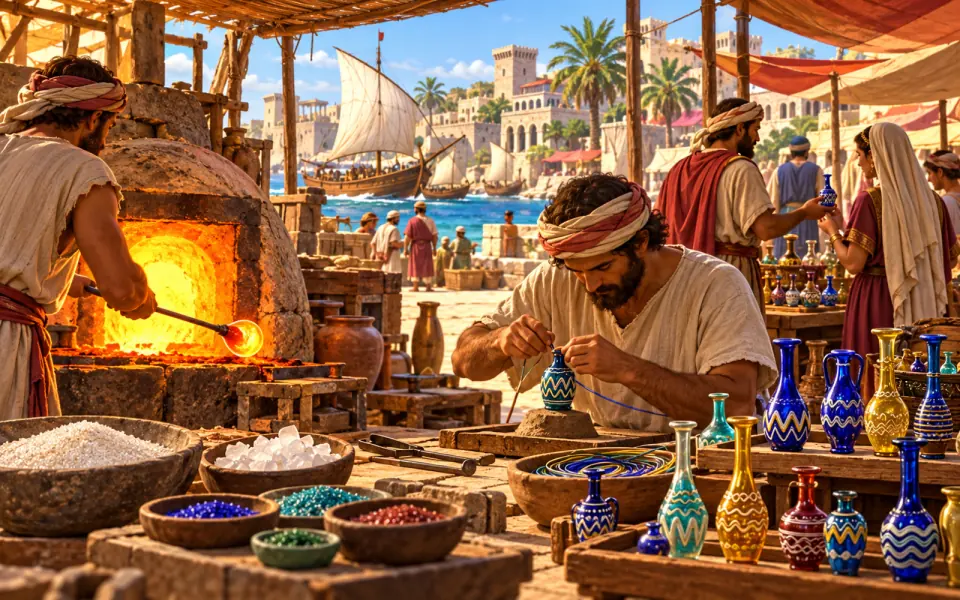
- Phoenician glass spreadsabout 600 BC · Sea civilisationsGlass was another luxury product of the Phoenicians.
- Phoenician seafaringabout 1000 BC · Sea civilisationsPhoenician ships carried purple to distant ports.
- Augustus, the first emperor27 BC · Ancient RomeIn Rome, under the emperors, purple became the symbol of power.
Before and after, in the era “Sea civilisations”
Event 11 of 25
 BeforeMinoan civilisation on Creteabout 2000 BC
 BeforeThe palace of Knossosabout 1900 BC
 BeforeThe Proto-Sinaitic alphabetabout 1800 BC
 BeforeThe eruption of Theraabout 1600 BC
 BeforeThe nuraghi of Sardiniaabout 1600 BC
 BeforeThe gold mask of Mycenaeabout 1550 BC
 BeforeLinear Babout 1450 BC
 BeforeThe Lion Gate at Mycenaeabout 1250 BC
 BeforeThe Iron Age beginsabout 1200 BC
 BeforeThe Phoenicians spread outabout 1200 BC
- You are herePhoenician purpleabout 1100 BC
 AfterThe Phoenician alphabetabout 1050 BC
 AfterThe Kingdom of Israelabout 1000 BC
 AfterPhoenician seafaringabout 1000 BC
 AfterThe Villanovan culture in Italyabout 900 BC
 AfterTraditional founding of Carthageabout 814 BC
 AfterThe Nora Stoneabout 800 BC
 AfterAmphorae for oil and wineabout 800 BC
 AfterHomer's poems are written downabout 750 BC
 AfterGreek colonies in the Westabout 750 BC
 AfterThe Etruscans, lords of the Tyrrhenian Seaabout 700 BC
 AfterPhoenician glass spreadsabout 600 BC
 AfterCoins in the Mediterraneanabout 600 BC
 AfterThe Babylonian Exileabout 586 BC
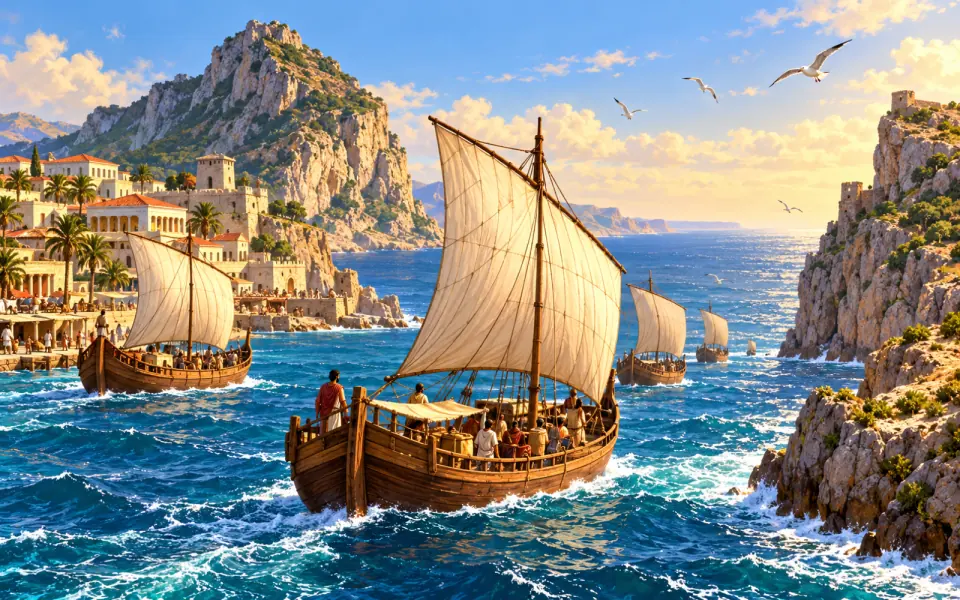 AfterSailing beyond Gibraltarabout 500 BC
Listen / Read next
- Music to read by: Cinematic JourneyEpic film-style music, no lyrics, by Ciro Simone IrmiciSpotifyYouTube Music
Meanwhile, elsewhere in the world

Other events of the era “Sea civilisations”
- Minoan civilisation on Crete
- The palace of Knossos
- The Proto-Sinaitic alphabet
- The eruption of Thera
- The nuraghi of Sardinia
- The gold mask of Mycenae
- Linear B
- The Lion Gate at Mycenae
- The Iron Age begins
- The Phoenicians spread out
- The Phoenician alphabet
- The Kingdom of Israel
- Phoenician seafaring
- The Villanovan culture in Italy
- Traditional founding of Carthage
- The Nora Stone
- Amphorae for oil and wine
- Homer's poems are written down
- Greek colonies in the West
- The Etruscans, lords of the Tyrrhenian Sea
- Phoenician glass spreads
- Coins in the Mediterranean
- The Babylonian Exile
- Sailing beyond Gibraltar
