Coins in the Mediterranean
about 600 BC Sardis, Lydia (now Turkey)
In short
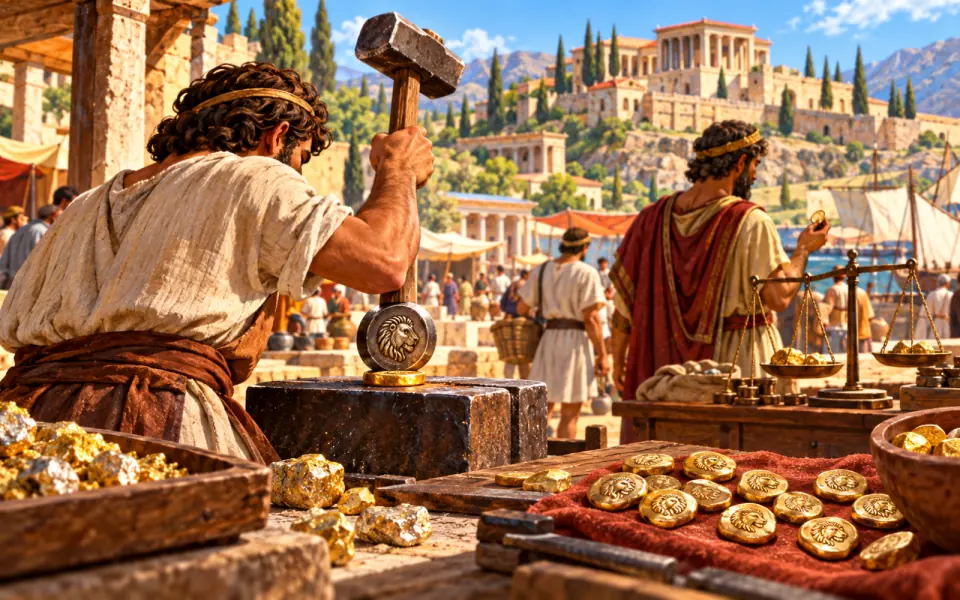
The first coins were struck in Lydia, a kingdom in today's Turkey, from electrum, a natural mix of gold and silver. They were small pieces of metal with a fixed weight and a stamped picture, such as a lion's head, that guaranteed their value. Before that, people paid by weighing metal or by swapping goods. Soon the Greek cities also began making coins of their own.
Why it matters With coins, buying and selling became simpler and quicker for everyone.
Source: Encyclopaedia Britannica, “Coin”
Study card about 4 minutes of reading
The story
Paying without coins
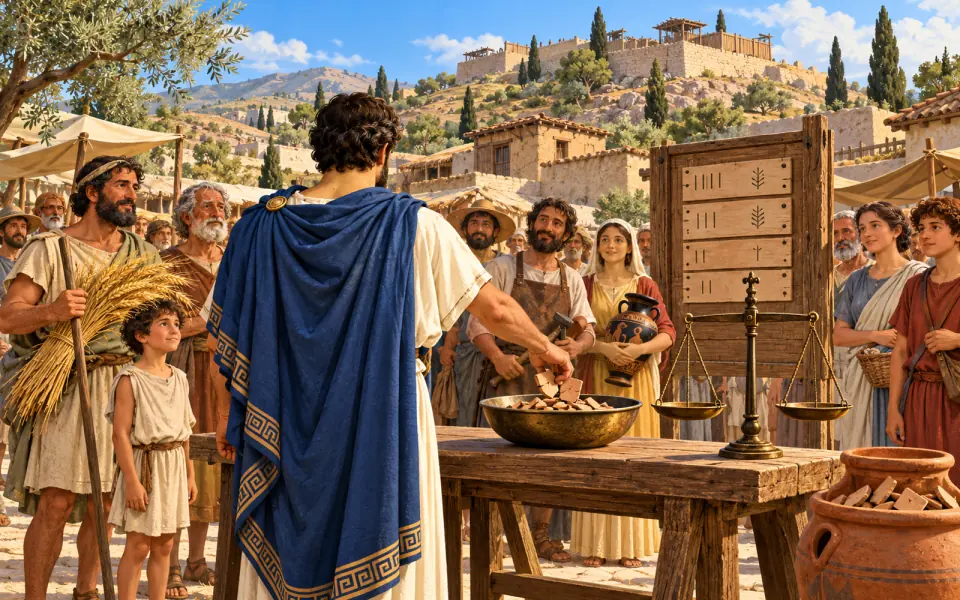
Before coins, buying something was more complicated. You could barter: three sheep in exchange for a tool, a sack of grain for a jar of oil. But barter only works if the person who has what you want wants in turn what you have. For larger payments precious metals were used, such as silver, cut into pieces or in the form of ingots, and they were weighed on a balance at every exchange. It was slow work, and you had to trust the person weighing and the purity of the metal.
The kingdom of Lydia
The great novelty took place in Lydia, a kingdom of western Anatolia, in present-day Turkey, whose capital was Sardis. The river Pactolus, which flowed nearby, was the source of electrum, a natural metal that is an alloy of gold and silver. The Lydians collected it and began to make small discs of fixed weight from it, on which they stamped a mark, an image that guaranteed who had made them and what they were worth. According to scholars, these were the first known coins.
The dates are not certain. One source says that the first metal coins date from the end of the 7th or the start of the 6th century BC; another speaks of about 650 BC, because some Lydian and Greek coastal coins were found under the temple of Artemis at Ephesus, which is thought to date from that period. In general, the birth of coinage in Lydia is placed between about 650 and 575 BC, in the time of King Alyattes.
What they were like
Lydian coins contained roughly 45–55% gold. A curious fact: the natural electrum of the region usually has a higher percentage of gold, between 70 and 90%, so scholars think that the Lydians added refined silver, which means they already knew how to work silver in an advanced way. A typical coin weighed about 4.7 grams and was worth a third of a stater. Three coins made a stater, which corresponded roughly to a soldier's pay for a month. For small purchases there were also tiny fractions, down to a ninety-sixth of a stater.
The flaw of electrum
Every electrum coin had a problem, however. Because the amount of gold could vary from one piece to another, it was hard to know what it was really worth. Whoever received a coin could not be sure. This slowed down trade.
The solution came around 560–550 BC with the “croeseid” coins, named after King Croesus: they were of pure gold or pure silver, so their value was clear. Electrum, however, went on circulating for a long time, until about 350 BC.
Coinage spreads
The idea caught on. The Greek cities of the nearby coast, which traded with the Lydians, began to strike coins of their own, each with its own symbol, and from there the custom spread across the Mediterranean. On coins people put animals, heads of gods, plants, buildings and, in time, the faces of rulers. They were at once a means of payment and a form of advertising and propaganda.
Why it was so important
Coinage solved a fundamental problem: it gave a common value to all things. A price expressed in coins made it possible to compare a piece of cloth with a sack of grain. A seller could receive a payment and spend it elsewhere, without having to find someone who wanted precisely his goods. It was easier to pay wages, collect taxes, lend money and save.
Why it happened
Coins were born in a world where trade was growing. Many more people bought and sold, in ports and markets, and using metal by weight was awkward. There was a need for a quick and sure way of saying “this piece is worth this much”.
In Lydia there were also special conditions. The kingdom had electrum, which was gathered in the river, and an organisation strong enough to guarantee the value of the pieces. Whoever stamped the mark, probably a king or a public authority, undertook to guarantee that the coin contained the promised metal.
What changed
Coinage changed the economy, and with it society. It made buying and selling easier and made it possible to pay soldiers, workers and officials regularly. It encouraged the birth of banks and loans, and increased the power of those who had money.
Each state struck its own coins, which became a way of showing who was in charge. The images on coins are an important source for historians today: they show us gods, symbols, rulers and political moments.
Today we use coins, banknotes and digital payments, but the basic idea is the same as the Lydians': a sign guaranteed by someone that lets you exchange anything. The name “Croesus” has stayed in the language as a synonym for a very rich man.
Key people and places
People
- Alyattes
- King of Lydia: the beginning of electrum coinage is placed in his reign.
- Croesus
- King of Lydia, very rich; the coins of pure gold and silver, the “croeseids”, are named after him.
Places
- Lydia
- A kingdom of western Anatolia (now Turkey) where the first coins were born.
- Sardis
- Capital of the kingdom of Lydia.
- River Pactolus
- A river of Lydia from which the electrum used for the first coins was obtained.
- Temple of Artemis at Ephesus
- The place where some of the oldest known coins were found.
Good to know
- The first coins were made of electrum, a natural alloy of gold and silver.
- A Lydian coin weighed about 4.7 grams: three of them were worth one stater, roughly a soldier's pay for a month.
- The “croeseid” coins of Croesus, around 560–550 BC, were among the first of pure gold.
- Lydian coins had tiny fractions, down to a ninety-sixth of a stater.
- The saying “as rich as Croesus” comes from the king of Lydia.
Find out more
- Wikipedia, “Coin” en.wikipedia.org
- Wikipedia, “Lydia” en.wikipedia.org
- Wikipedia, “Croesus” en.wikipedia.org
- Wikipedia, “Electrum” en.wikipedia.org
Related events
- Greek colonies in the Westabout 750 BC · Sea civilisationsThe Greek cities of the coasts soon adopted the use of coins.
- The Phoenicians spread outabout 1200 BC · Sea civilisationsThe Phoenician cities traded all over the Mediterranean, where coins made exchange easier.
- The gold florin1252 · Late Middle AgesThe gold florin was the most important coin of the Middle Ages.
Before and after, in the era “Sea civilisations”
Event 23 of 25
 BeforeMinoan civilisation on Creteabout 2000 BC
 BeforeThe palace of Knossosabout 1900 BC
 BeforeThe Proto-Sinaitic alphabetabout 1800 BC
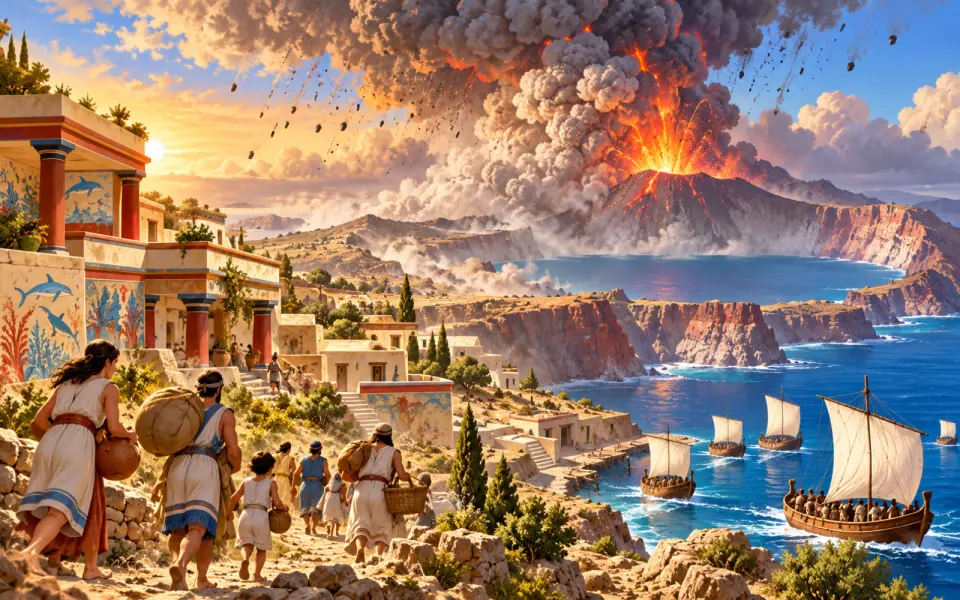 BeforeThe eruption of Theraabout 1600 BC
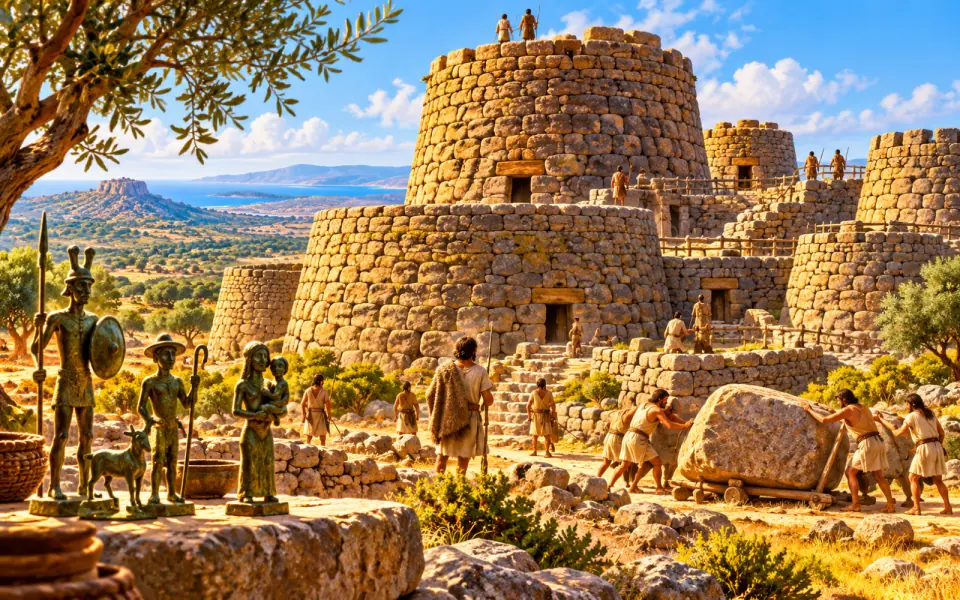 BeforeThe nuraghi of Sardiniaabout 1600 BC
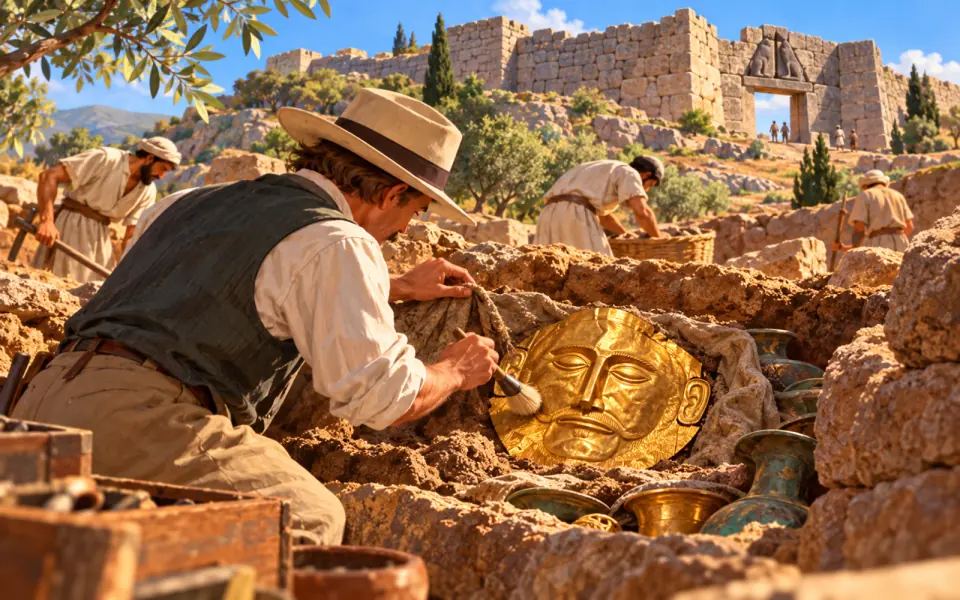 BeforeThe gold mask of Mycenaeabout 1550 BC
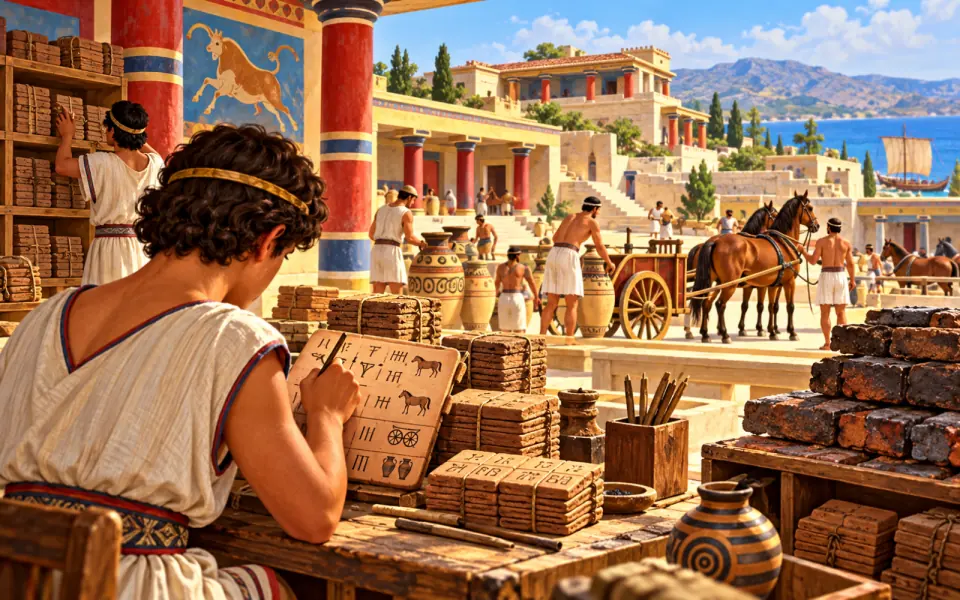 BeforeLinear Babout 1450 BC
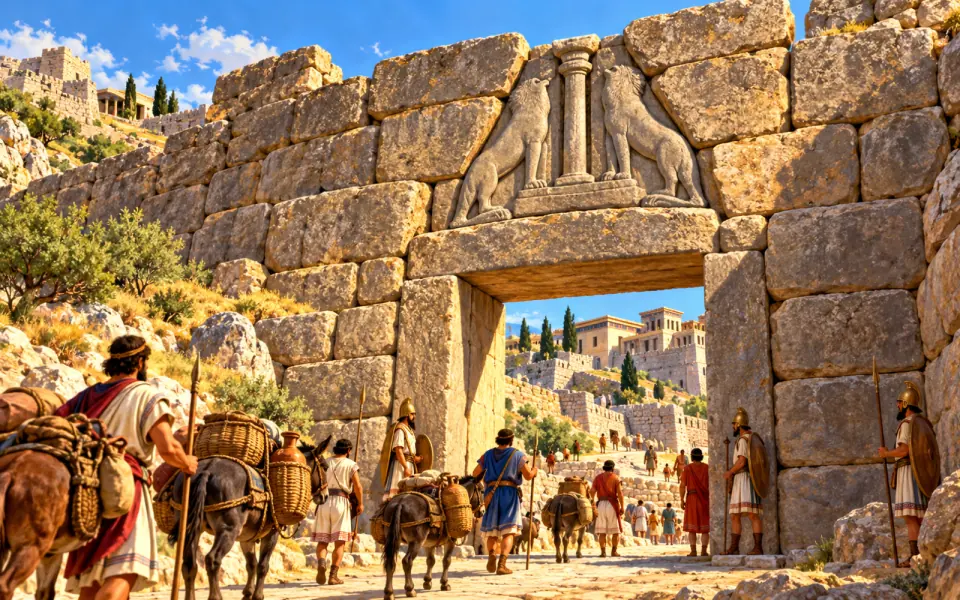 BeforeThe Lion Gate at Mycenaeabout 1250 BC
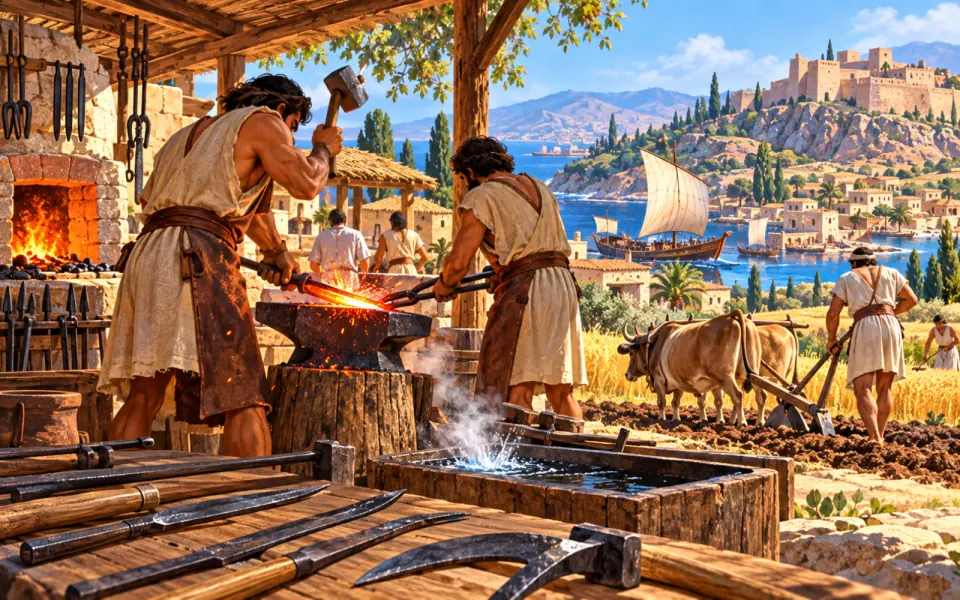 BeforeThe Iron Age beginsabout 1200 BC
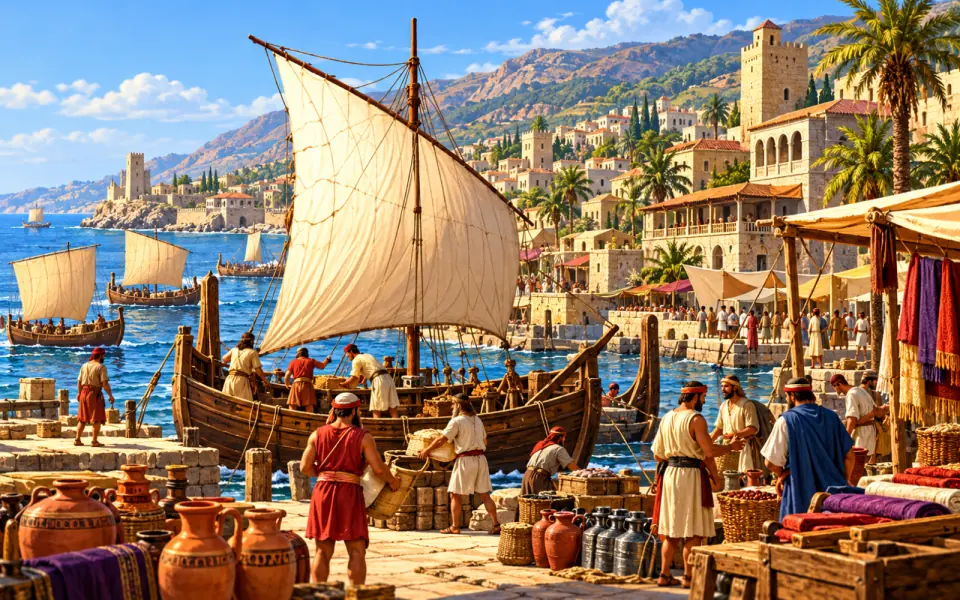 BeforeThe Phoenicians spread outabout 1200 BC
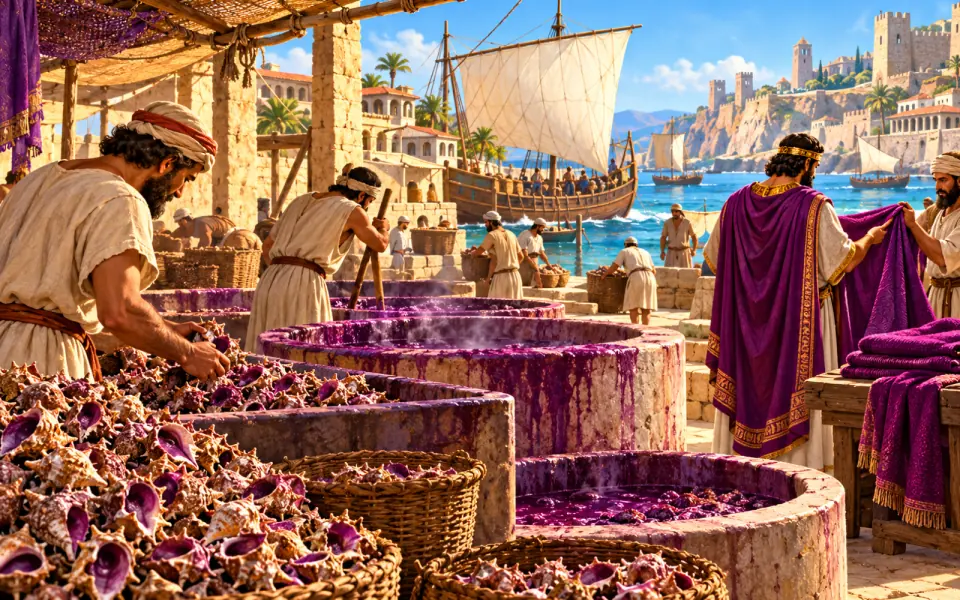 BeforePhoenician purpleabout 1100 BC
 BeforeThe Phoenician alphabetabout 1050 BC
 BeforeThe Kingdom of Israelabout 1000 BC
 BeforePhoenician seafaringabout 1000 BC
 BeforeThe Villanovan culture in Italyabout 900 BC
 BeforeTraditional founding of Carthageabout 814 BC
 BeforeThe Nora Stoneabout 800 BC
 BeforeAmphorae for oil and wineabout 800 BC
 BeforeHomer's poems are written downabout 750 BC
 BeforeGreek colonies in the Westabout 750 BC
 BeforeThe Etruscans, lords of the Tyrrhenian Seaabout 700 BC
 BeforePhoenician glass spreadsabout 600 BC
- You are hereCoins in the Mediterraneanabout 600 BC
 AfterThe Babylonian Exileabout 586 BC
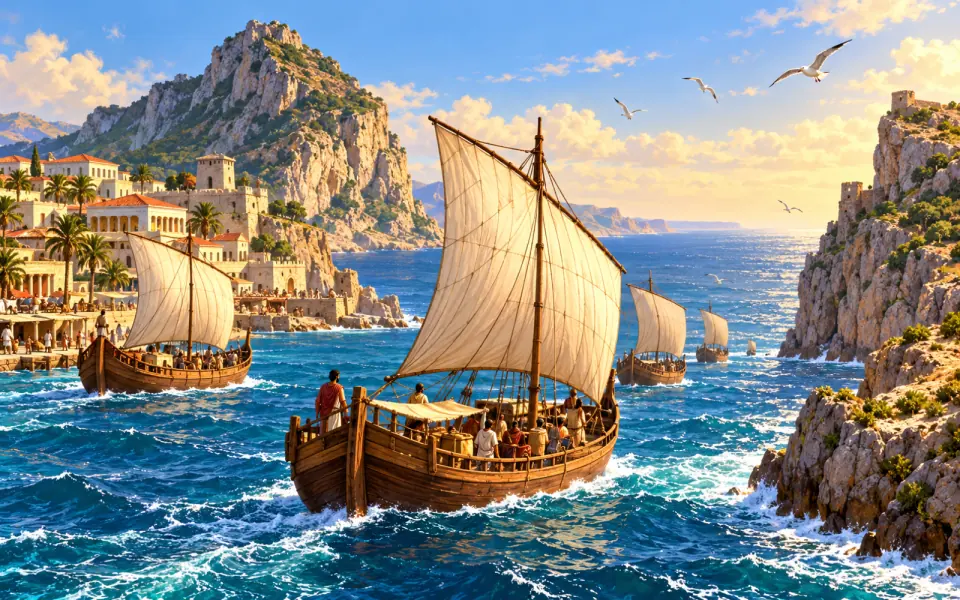 AfterSailing beyond Gibraltarabout 500 BC
Listen / Read next
- Music to read by: Cinematic JourneyEpic film-style music, no lyrics, by Ciro Simone IrmiciSpotifyYouTube Music
Meanwhile, elsewhere in the world
Other events of the era “Sea civilisations”
- Minoan civilisation on Crete
- The palace of Knossos
- The Proto-Sinaitic alphabet
- The eruption of Thera
- The nuraghi of Sardinia
- The gold mask of Mycenae
- Linear B
- The Lion Gate at Mycenae
- The Iron Age begins
- The Phoenicians spread out
- Phoenician purple
- The Phoenician alphabet
- The Kingdom of Israel
- Phoenician seafaring
- The Villanovan culture in Italy
- Traditional founding of Carthage
- The Nora Stone
- Amphorae for oil and wine
- Homer's poems are written down
- Greek colonies in the West
- The Etruscans, lords of the Tyrrhenian Sea
- Phoenician glass spreads
- The Babylonian Exile
- Sailing beyond Gibraltar
