Sappho, the poet of Lesbos
about 600 BC Mytilene, island of Lesbos (Greece)
In short
Sappho lived in Mytilene, on the island of Lesbos, and wrote poems to be sung with the lyre. She wrote about love, friendship, jealousy and the beauty of things, in simple, powerful words. People in ancient times admired her so much that they called her ‘the tenth Muse’. Mostly fragments of her poems survive, passed down through quotations by other writers and ancient Egyptian papyri.
Why it matters She is the first great woman poet in European literature whose name we know.
Source: Treccani, entry “Saffo”
Study card about 6 minutes of reading
The story
A voice from Lesbos
Lesbos is an island in the Aegean, very close to the coast of present-day Turkey. Around 600 BC it was a rich place, with lively cities, merchants, ships and noble families competing for power. Sappho lived here. According to modern sources she was born at Eresos, a small town on the island, around 630 BC, but she spent most of her life at Mytilene, the most important city of Lesbos. That is why our site gives Mytilene as the place and about 600 as the date: they are approximations, because we know very little about her life for certain.
The biographical details have reached us from authors who lived long after her, and not all of them are reliable. She seems to have belonged to a noble family, with three brothers and a daughter named Cleis. On Lesbos aristocratic families fought one another for power, and hers was drawn in too. For this reason, according to an ancient report, Sappho spent a period of exile in Sicily, perhaps about ten years, before returning home.
The circle of girls
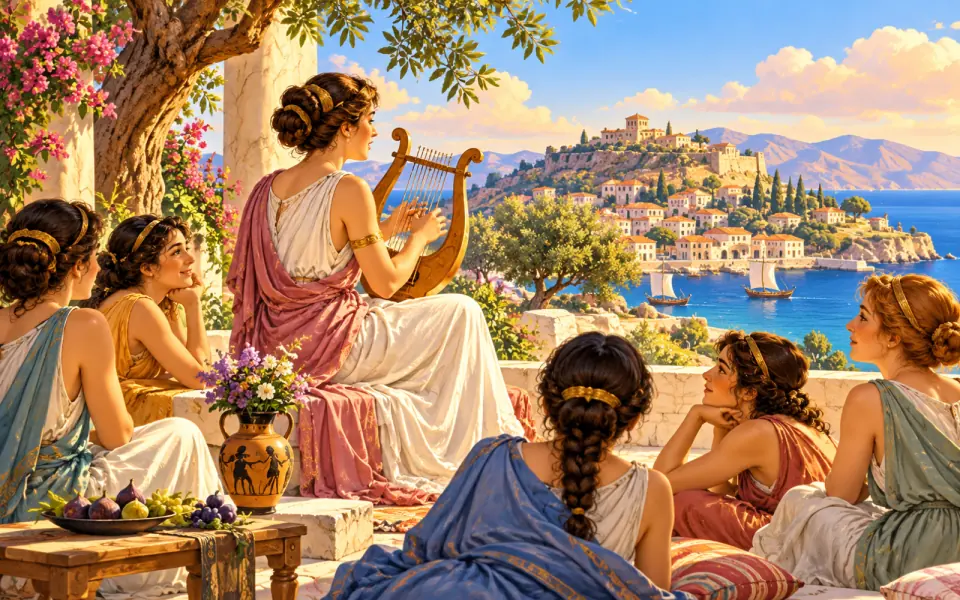
Back on Lesbos, Sappho led a thiasos: a group of young women of good family who met to study poetry, music and dance, and to honour the goddess Aphrodite. It was not a school like ours, but a community where the girls prepared for adult life and for marriage. Sappho wrote songs for ceremonies, and songs in which she spoke of friends who were leaving, of memories, glances and jealousies. Her poems grew out of everyday life.
Poems to sing with the lyre
For the early Greeks lyric poetry was not made to be read silently, but to be sung, with the accompaniment of the lyre (hence the name “lyric”). Sappho wrote in the dialect of Lesbos, Aeolic, in very simple language. Her style is direct: she speaks of emotions like a person feeling them right now. A famous example is the poem in which she describes the heart pounding, the tongue freezing and the sweating in front of the person she loves: a list of symptoms that any reader still recognises.
A stanza called the “Sapphic” is linked to her poetry, made of three long lines and one short one. The metre takes its name from her because she used it a great deal, although the ancients thought it had been invented by another poet from Lesbos, Alcaeus.
How much is left
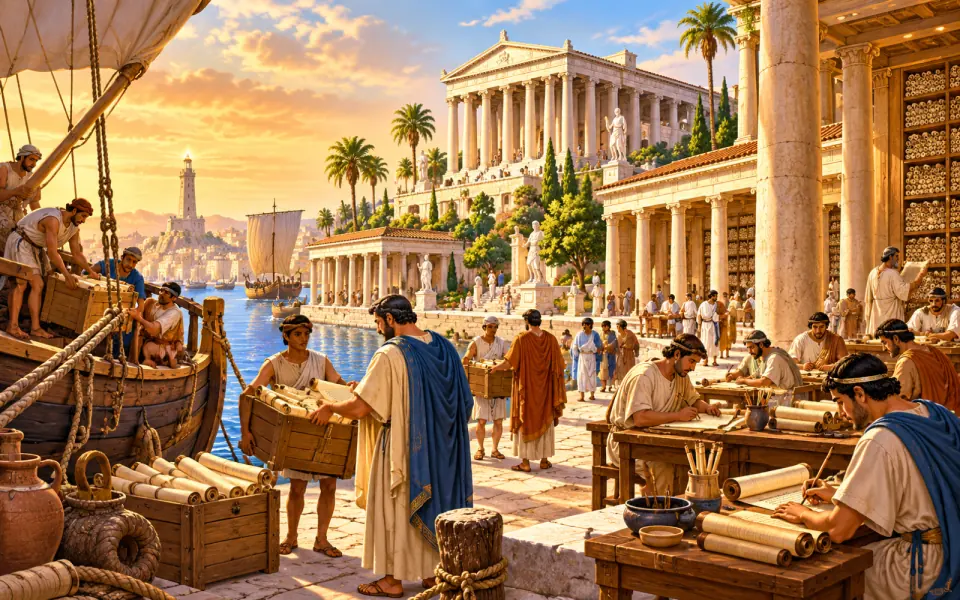
The ancient scholars of the Library of Alexandria collected her works in eight or nine books. It is estimated that altogether they contained about 10,000 lines. Today we have about 650, mostly fragments: pieces of poems, sometimes a few lines, sometimes only a few words. The only poem to have come down whole is the “Hymn to Aphrodite”, in which the poet asks the goddess for help with an unreturned love. Others are incomplete.
Why was so much lost? Ancient books were copied by hand, and when a poem stopped being of interest nobody copied it any more. We know many of Sappho's lines because other authors quoted them, and others are found by scholars on papyri, sheets made from an Egyptian plant. Some come from the excavations at Oxyrhynchus, in Egypt, where papyri were preserved in the dry climate. New fragments have been presented in recent years too: in 2014 a scholar announced two nearly complete poems, one of which speaks of her brothers. There is still debate about how those papyri were recovered, but the research goes on.
Sappho and the legend
The ancients already admired her enormously. An epigram attributed to Plato calls her “the tenth” after the nine Muses, and that is where the image of the “tenth Muse” comes from. The geographer Strabo called her “a marvellous creature”. According to an anecdote, the Athenian lawgiver Solon once heard one of her poems sung and said he only wished to learn it by heart, and then die.
Legends grew up around her, however. The most famous says that, because of an unreturned love for a young man named Phaon, she threw herself from the cliff of Leucas. The story already appears in the theatre of Menander (4th–3rd century BC) and then in Ovid, centuries later, and scholars regard it as a legend, partly created to belittle the poet. Even in antiquity, after all, some observed that a few of her lines speak of a woman who is by now old, and so who did not die young. In the 19th century, finally, her love poems for her companions led to the use of the word “sapphic” for love between women: a modern use, which says more about our time than about her life.
Why it happened
Sappho's poetry was born in a particular world: the aristocracies of Lesbos, rich and quarrelsome, with festivals, banquets and ceremonies in which music had a central role. In that setting a poet was an important figure, because her songs accompanied weddings, funerals and religious rites.
The freedom with which the women of Lesbos, at least those of noble families, could devote themselves to culture also counted. In the thiasos the girls learned to sing, play and dance, and Sappho was their teacher. Another factor is language: the Greek of Lesbos was different from the language of the Homeric poems, and it allowed Sappho to write with new words, close to speech, instead of repeating the formulas of the old epics.
What changed
Sappho is remembered as the first great woman poet of the West whose name we know. Her poetry showed that you could speak of personal feelings, not only of gods, heroes and battles as in the epic poems. Many poets after her, Greek and Roman, imitated her style and her images.
In the modern world too Sappho has remained a point of reference. Poets, painters and musicians have taken up her figure, and her name has even been given to an asteroid, number 80. The Sapphic stanza was used by many poets, Italian ones included. Her case also reminds us how fragile the memory of antiquity is: of a much-loved poet only a small part of her work remains, and every new papyrus found is a gift.
Key people and places
People
- Sappho
- Poet of Lesbos (about 630–570 BC): she wrote songs of love and friendship in the Aeolic dialect.
- Alcaeus
- Poet of Lesbos, her contemporary: the ancients credited him with inventing the stanza later called “Sapphic”.
- Phaon
- A young man of myth, the main figure in the legend of Sappho's unhappy love.
- Cleis
- Sappho's daughter, mentioned in ancient biographies.
Places
- Lesbos
- Island in the eastern Aegean, home of Sappho and Alcaeus.
- Mytilene
- The main city of Lesbos, where Sappho lived.
- Eresos
- A small town on Lesbos where, according to the sources, the poet was born.
- Oxyrhynchus
- A city of Roman Egypt whose excavations have yielded a great many papyri, some with lines by Sappho.
Good to know
- About 650 lines of her work survive, out of the roughly 10,000 she is thought to have written.
- Only one poem by Sappho has come down whole: the “Hymn to Aphrodite”.
- Asteroid number 80 bears her name: it is called Sappho.
- The Sapphic stanza has three long lines and one short one, and it was also used by Latin and Italian poets.
- According to an epigram attributed to Plato, there are not nine Muses but ten, because Sappho is one too.
Find out more
- Wikipedia, “Sappho” en.wikipedia.org
- Wikipedia, “Oxyrhynchus Papyri” en.wikipedia.org
- Wikipedia, “Lesbos” en.wikipedia.org
- Wikipedia, “Alcaeus of Mytilene” en.wikipedia.org
Related events
- The Greek alphabetabout 750 BC · Ancient GreeceSappho wrote with the newly born Greek alphabet, and her lines were saved on papyri.
- The reforms of Solonabout 594 BC · Ancient GreeceSolon, in Athens, is almost her contemporary and wrote verses to explain his laws.
- The Library of Alexandriaabout 295 BC · Ancient GreeceThe scholars of Alexandria arranged her lines into books.
- The theatre of Aeschylus472 BC · Ancient GreeceGreek theatre, too, was born from poetry and song.
Before and after, in the era “Ancient Greece”
Event 5 of 25
 BeforeThe first Greek city-statesabout 800 BC
 BeforeThe ancient Olympic Gamesabout 776 BC
 BeforeThe Greek alphabetabout 750 BC
 BeforeLife in Spartaabout 700 BC
- You are hereSappho, the poet of Lesbosabout 600 BC
 AfterThe reforms of Solonabout 594 BC
 AfterThales studies natureabout 585 BC
 AfterPythagoras at Crotonabout 530 BC
 AfterCleisthenes and democracyabout 508 BC
 AfterThe Battle of Marathon490 BC
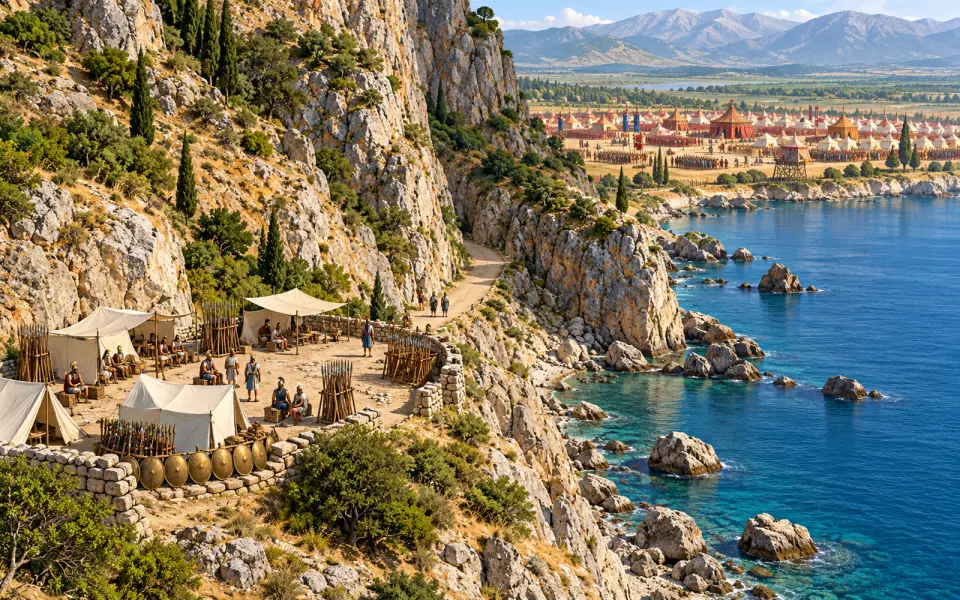 AfterThe Battle of Thermopylae480 BC
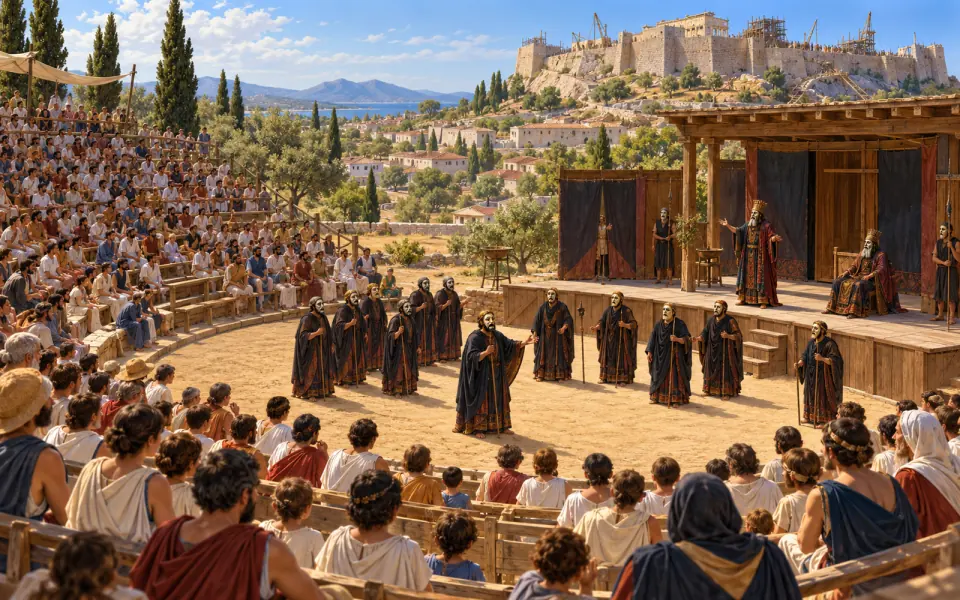 AfterThe theatre of Aeschylus472 BC
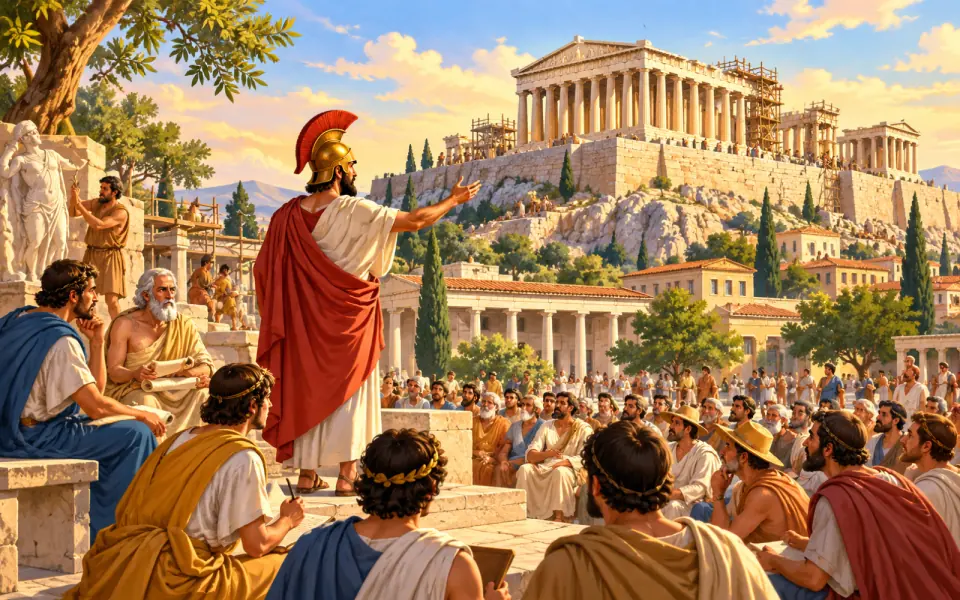 AfterThe Age of Pericles461–429 BC
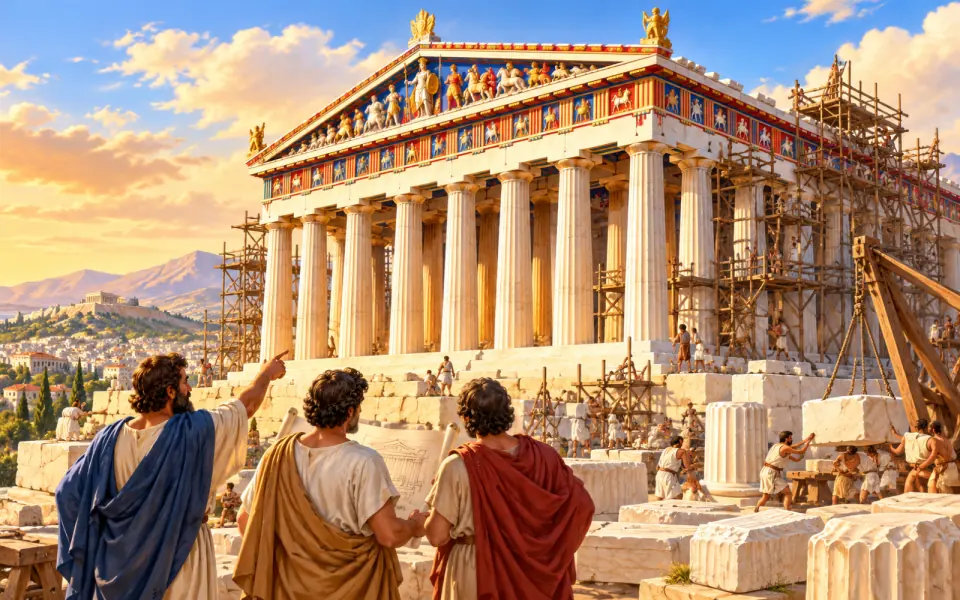 AfterThe Parthenon447–432 BC
 AfterThe Peloponnesian War431–404 BC
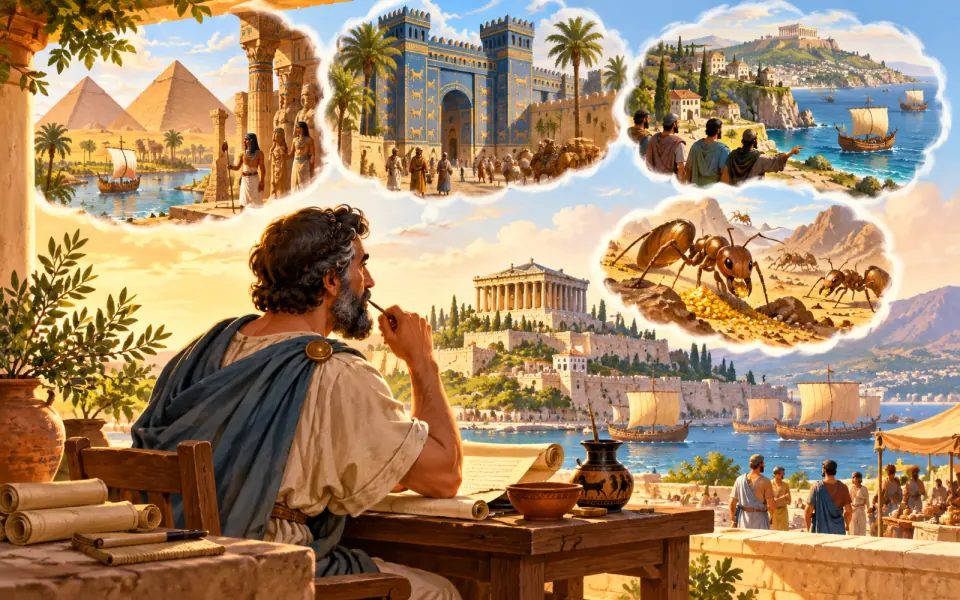 AfterHerodotus writes the Historiesabout 430 BC
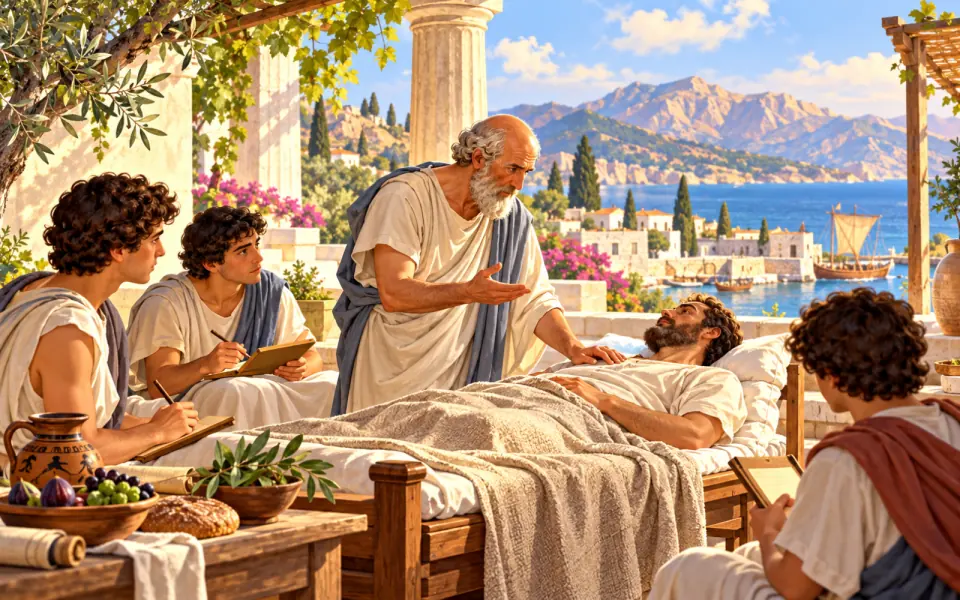 AfterHippocrates and medicineabout 400 BC
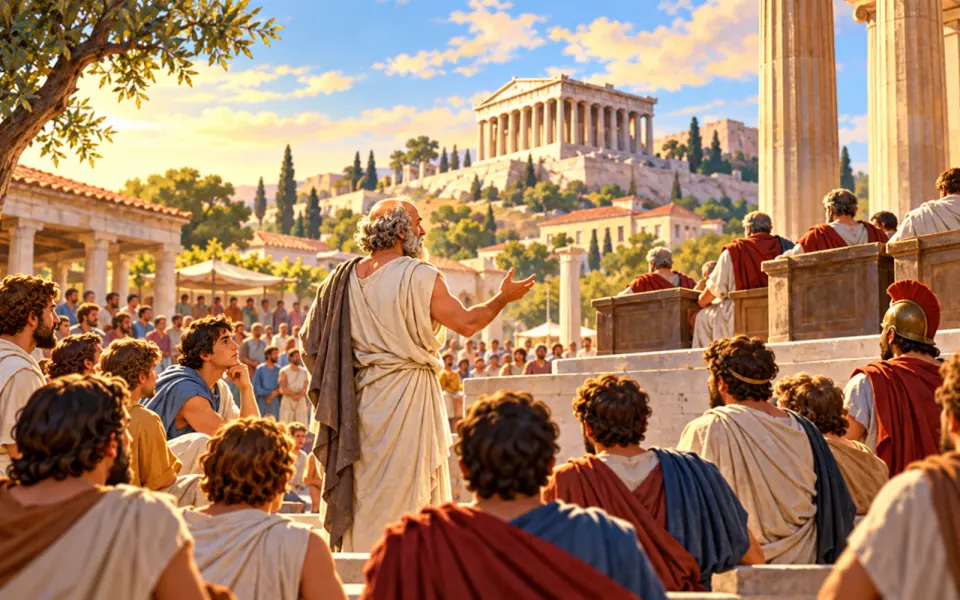 AfterSocrates is condemned399 BC
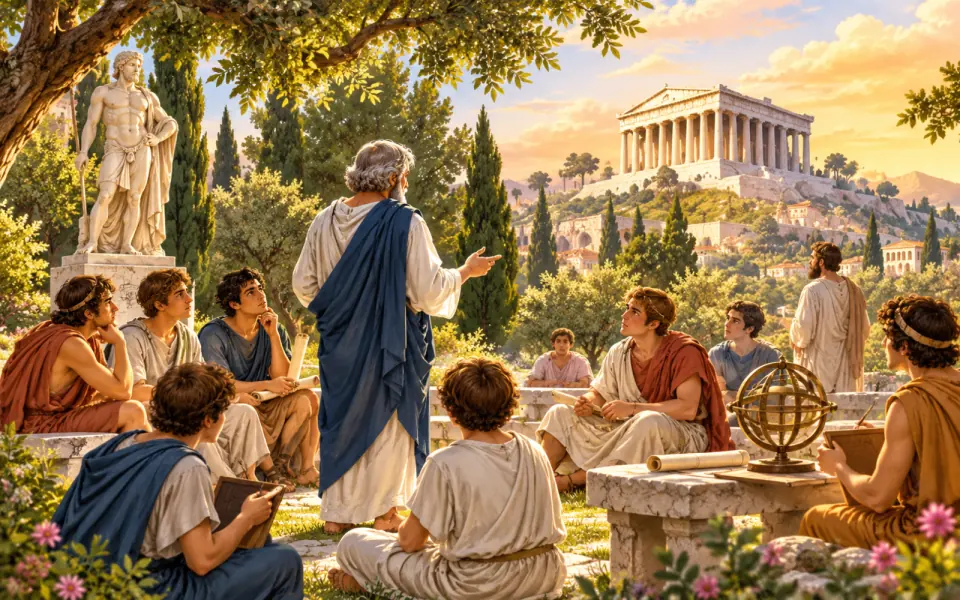 AfterPlato's Academyabout 387 BC
 AfterAristotle founds the Lyceumabout 335 BC
 AfterThe conquests of Alexander334–323 BC
 AfterEuclid writes the Elementsabout 300 BC
 AfterThe Library of Alexandriaabout 295 BC
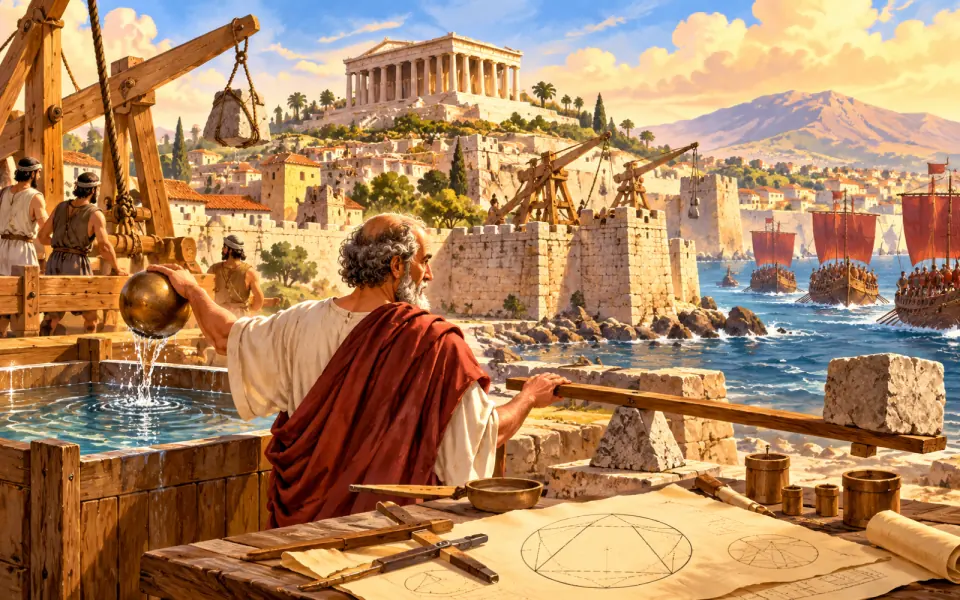 AfterArchimedes of Syracuseabout 250 BC
 AfterThe Antikythera mechanismabout 100 BC
Listen / Read next
- Music to read by: Cinematic JourneyEpic film-style music, no lyrics, by Ciro Simone IrmiciSpotifyYouTube Music
Meanwhile, elsewhere in the world

Other events of the era “Ancient Greece”
- The first Greek city-states
- The ancient Olympic Games
- The Greek alphabet
- Life in Sparta
- The reforms of Solon
- Thales studies nature
- Pythagoras at Croton
- Cleisthenes and democracy
- The Battle of Marathon
- The Battle of Thermopylae
- The theatre of Aeschylus
- The Age of Pericles
- The Parthenon
- The Peloponnesian War
- Herodotus writes the Histories
- Hippocrates and medicine
- Socrates is condemned
- Plato's Academy
- Aristotle founds the Lyceum
- The conquests of Alexander
- Euclid writes the Elements
- The Library of Alexandria
- Archimedes of Syracuse
- The Antikythera mechanism
