The Age of Pericles
461–429 BC Athens (Greece)
In short
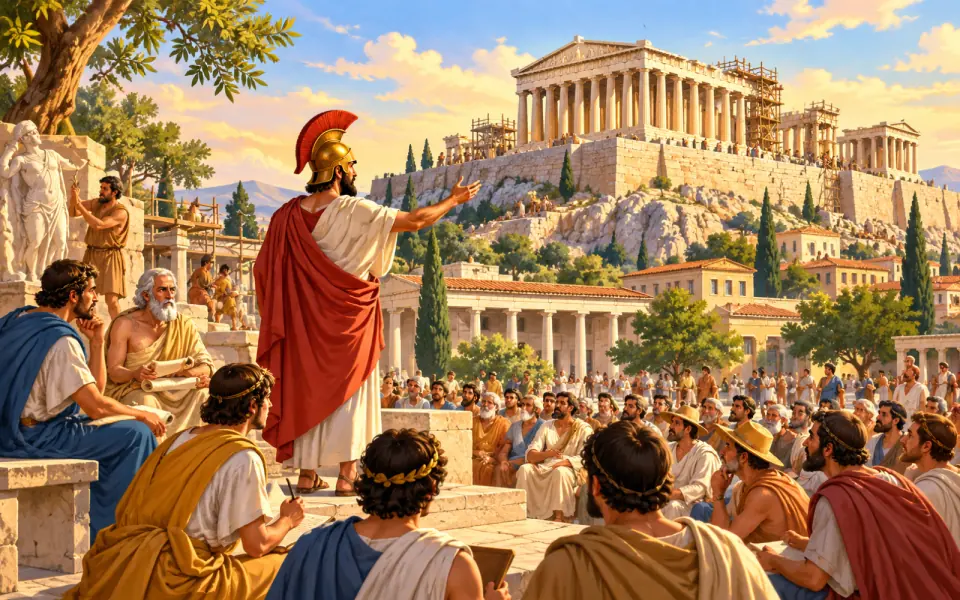
For about thirty years Pericles was the most influential politician in Athens, re-elected as general almost every year. He had people paid for holding public office, so that even poor citizens could take part in government. With money from the league of allied cities he paid for great building works on the Acropolis. Artists, philosophers and writers gathered around him, and Athens became the cultural centre of the Greek world.
Why it matters His time is remembered as the golden age of Athens, even though it was partly built with the allies' money.
Source: Encyclopaedia Britannica, “Pericles”
Study card about 5 minutes of reading
The story
A noble on the side of the people
Pericles was born in Athens around 495 BC, in the deme of Cholargos, a district of Athens. The date is not certain. He came from an aristocratic family: his father, Xanthippus, was an important politician, and his mother, Agariste, was descended from the Alcmaeonids, the same powerful family as Cleisthenes. Yet in politics Pericles chose to stand with the people. He was a pupil and friend of Ephialtes, the leader of the democratic party.
In 462 BC Ephialtes managed to reduce the powers of the Areopagus, the old council of nobles, which until then had had a supervisory role over the laws and the magistrates. Soon afterwards Ephialtes was killed, and Pericles took over the leadership of the party. In that same year he had his main opponent, Cimon, sent into exile by ostracism, accused of being too favourable to Sparta. That is why our site marks 461 BC as the start of the age of Pericles.
A single office, renewed for years
Pericles was never a king or a tyrant. The only office he formally held was that of strategos, or general: there were ten strategoi, elected every year by the assembly. After 442 BC, when his opponent Thucydides son of Melesias was sent into exile, Pericles was re-elected strategos every year. His strength lay in persuasion: he spoke to the assembly, convinced the citizens, and his proposals were approved.
More power to poor citizens
Under Pericles Athenian democracy widened. Soon after 454 BC he introduced a payment, the “misthos”, for citizens who served as jurors in the people's courts. It seems a detail, but it changed everything: before, those who had to work every day to live could not afford to spend hours in court or in the assembly. With a payment, even the poorest could take part in public life.
The allies' money and the new city
Athens had become the leader of the Delian League, an alliance of Greek cities against the Persians, whose members paid a contribution. The League's treasury was moved to Athens in 454–453 BC. Pericles used it for a great building programme. Enormous sums, in the order of thousands of talents (a talent was a large quantity of silver), were set aside to rebuild the temples destroyed by the Persians. On the Acropolis rose the Propylaea, the monumental entrance, and the Parthenon, with the great gold statue of Athena. The work gave jobs to many craftsmen, sculptors, workers and sailors.
This is the questionable side of the golden age: the beauty of Athens was also paid for with the money of allied cities, which felt less and less like allies and more and more like subjects. That is why the judgement on his age remains twofold.
Pericles' friends and their troubles
Artists and philosophers gathered around Pericles. Phidias, the sculptor, directed the works on the Acropolis. Anaxagoras, a philosopher, influenced Pericles' way of thinking. Aspasia, his partner, was a cultured and intelligent woman. But freedom of thought had limits. Phidias was accused of misappropriating materials and of impiety, that is, lack of respect for the gods, and, according to tradition, died in prison (today it is thought he was exiled to Elis). Anaxagoras was accused of impiety and condemned to a fine and exile. Aspasia was accused of corrupting Athenian women, but was acquitted. These episodes show how Pericles' enemies, unable to strike him, struck those close to him.
War and plague
In 431 BC war broke out with Sparta. Pericles made a cautious choice: not to face the Spartans in open battle, but to have the inhabitants of Attica take refuge inside the Long Walls, which protected the city, and to use the fleet to strike the enemy from the sea. After the first year of war he gave a speech for the fallen soldiers, reported by Thucydides, in which he praised the freedom and laws of Athens.
In the summer of 430 BC an epidemic broke out in the overcrowded city. Pericles lost his sister and his legitimate sons. He too died, of plague, in the autumn of 429 BC. He had led Athens for about thirty years. After him no leader had his authority.
Why it happened
Athens had come out of the Persian wars with enormous prestige. Its fleet was the strongest in Greece and the Delian League gave it a large amount of money every year. This made possible a building project that no other Greek polis could afford.
Politically, the reforms of Cleisthenes and the growing weight of the sailors and small citizens, who made the fleet work, had made the people ever stronger. Poor citizens demanded to count for more, and Pericles gave them what they wanted. For conservative nobles, however, his policy was a threat: hence the ostracisms and the political battles of the 460s and 450s.
What changed
The 5th century BC is often called the “century of Pericles” because in those years Athens was the centre of Greek culture. Buildings were put up that are still symbols of Greece today, sculptors like Phidias worked, the great authors of tragedies wrote, and historians like Herodotus and Thucydides were active.
But there were less bright consequences. Using the League's treasury for Athens increased the allies' resentment. And Athens' growing strength frightened Sparta, leading to the Peloponnesian War: a long and ruinous war that Pericles did not live to see end.
His model of government is still debated. For some it is the example of a democracy in which a leader persuades the citizens with reasoning; for others it shows the risks of depending too much on one charismatic man. In any case, the idea that citizens should be able to take part in public life regardless of wealth has come down to us.
Key people and places
People
- Pericles
- Athenian politician (about 495–429 BC), strategos re-elected for years and leader of Athens in its period of greatest splendour.
- Ephialtes
- Democratic leader, teacher of Pericles: in 462 BC he reduced the powers of the Areopagus and soon afterwards was killed.
- Phidias
- Sculptor, friend of Pericles and director of the works on the Acropolis.
- Anaxagoras
- Philosopher who influenced Pericles; he was accused of impiety.
- Aspasia
- Pericles' partner, a cultured woman, accused and then acquitted.
- Cimon
- Opponent of Pericles, sent into exile by ostracism in 461 BC.
Places
- Acropolis of Athens
- The hill of temples, renewed with Pericles' building programme.
- Long Walls
- The walls that protected Athens: Pericles had the inhabitants of Attica take refuge inside them in 431 BC.
- Cholargos
- The deme, that is the village-district, near Athens where Pericles was born.
Good to know
- Pericles was strategos almost every year, but he was never a king or a tyrant: each time he had to be re-elected.
- Enormous sums, in the order of thousands of talents, were set aside to rebuild the temples.
- The plague of 430 BC took from him his sister and his legitimate sons, before killing him in 429.
- After the first year of war Pericles gave the speech for the fallen that Thucydides has handed down to us.
Find out more
- Wikipedia, “Pericles” en.wikipedia.org
- Wikipedia, “Phidias” en.wikipedia.org
- Wikipedia, “Thucydides” en.wikipedia.org
- Wikipedia, “Delian League” en.wikipedia.org
Related events
- Cleisthenes and democracyabout 508 BC · Ancient GreecePericles developed the democracy born with Cleisthenes.
- The Parthenon447–432 BC · Ancient GreeceThe Parthenon is the symbol of his building programme.
- The Peloponnesian War431–404 BC · Ancient GreecePericles led Athens at the start of the Peloponnesian War and died of plague.
- The theatre of Aeschylus472 BC · Ancient GreeceThe theatre of Aeschylus and his successors flourished in the Athens of Pericles.
- Socrates is condemned399 BC · Ancient GreeceSocrates lived and taught in the Athens of Pericles.
Before and after, in the era “Ancient Greece”
Event 13 of 25
 BeforeThe first Greek city-statesabout 800 BC
 BeforeThe ancient Olympic Gamesabout 776 BC
 BeforeThe Greek alphabetabout 750 BC
 BeforeLife in Spartaabout 700 BC
 BeforeSappho, the poet of Lesbosabout 600 BC
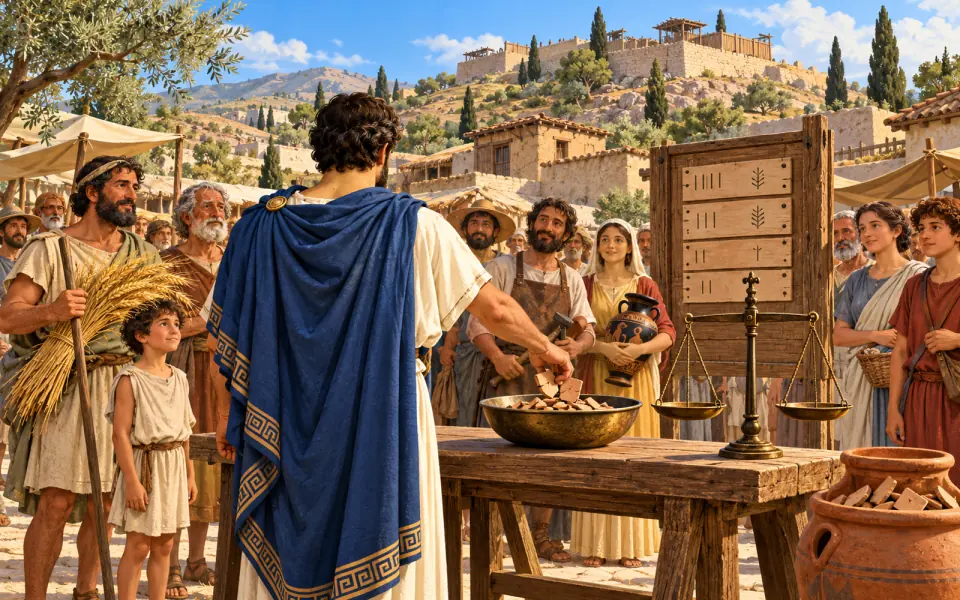 BeforeThe reforms of Solonabout 594 BC
 BeforeThales studies natureabout 585 BC
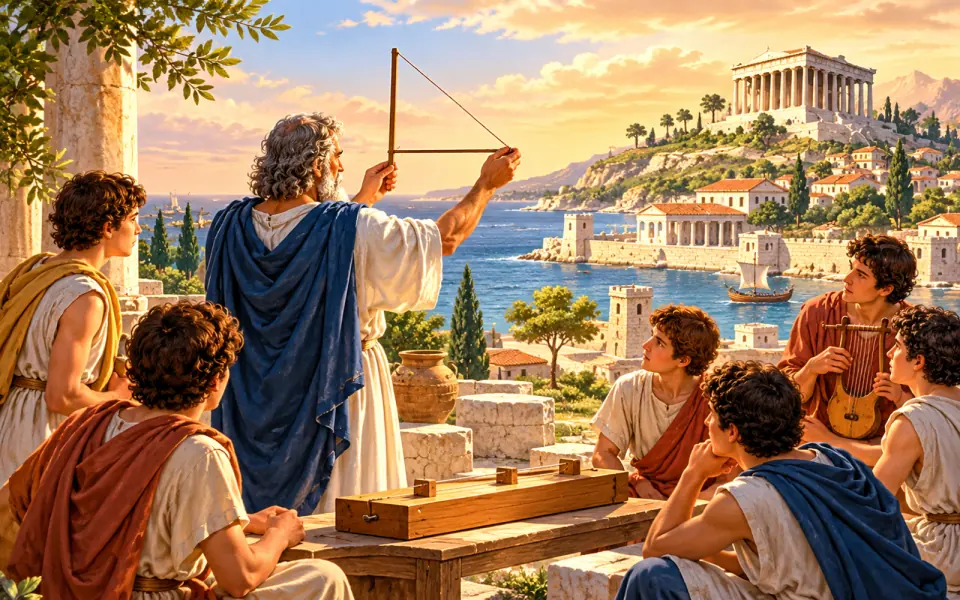 BeforePythagoras at Crotonabout 530 BC
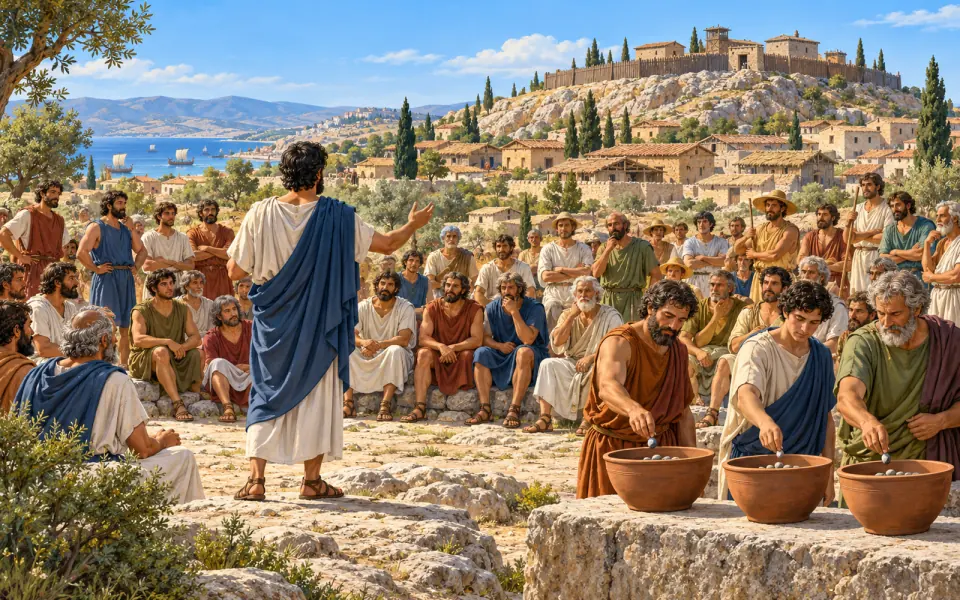 BeforeCleisthenes and democracyabout 508 BC
 BeforeThe Battle of Marathon490 BC
 BeforeThe Battle of Thermopylae480 BC
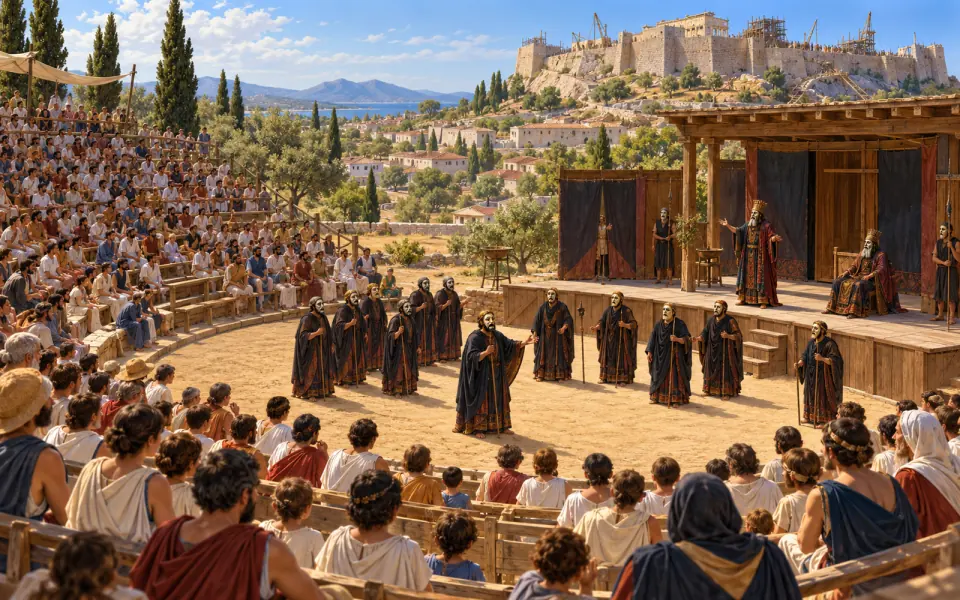 BeforeThe theatre of Aeschylus472 BC
- You are hereThe Age of Pericles461–429 BC
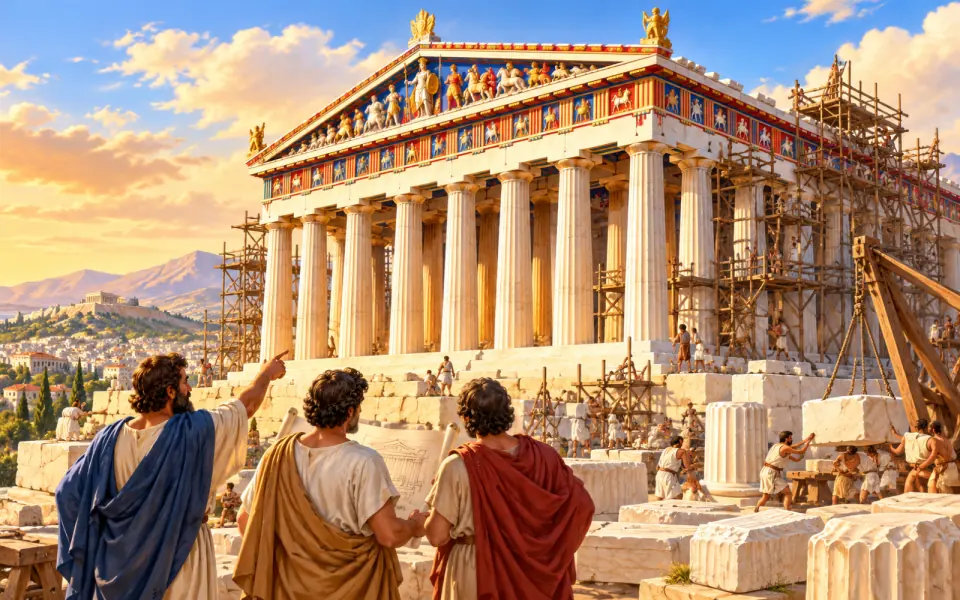 AfterThe Parthenon447–432 BC
 AfterThe Peloponnesian War431–404 BC
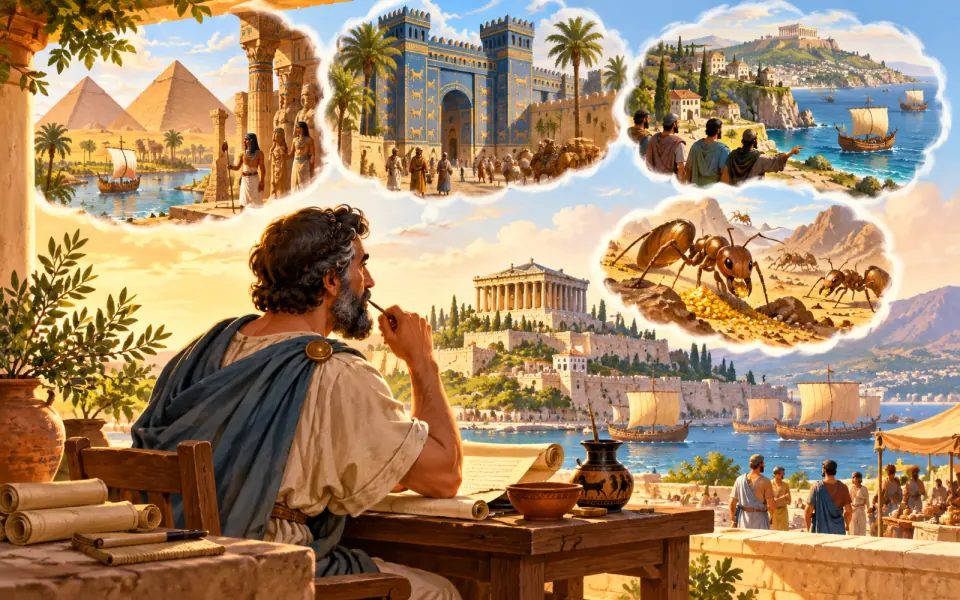 AfterHerodotus writes the Historiesabout 430 BC
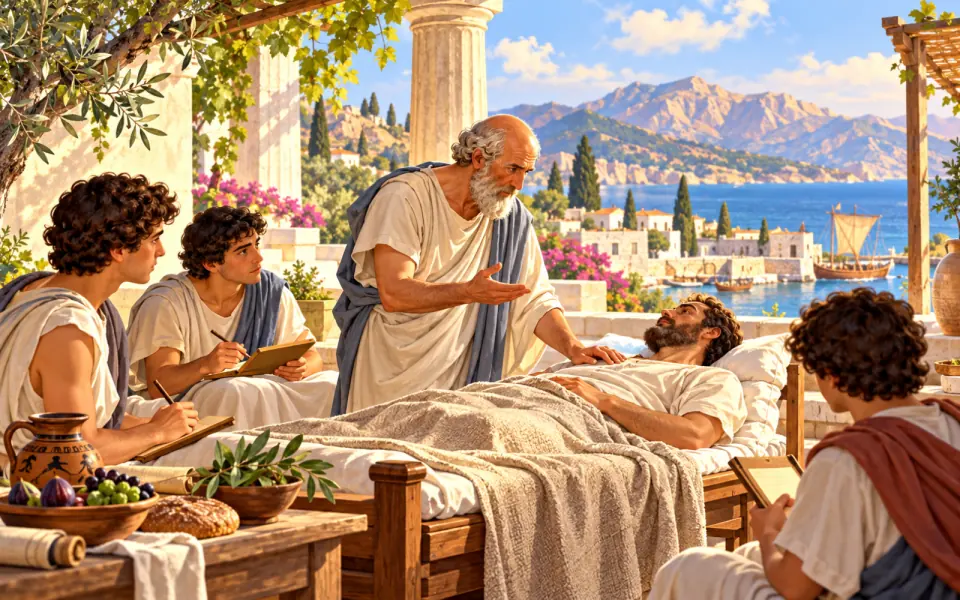 AfterHippocrates and medicineabout 400 BC
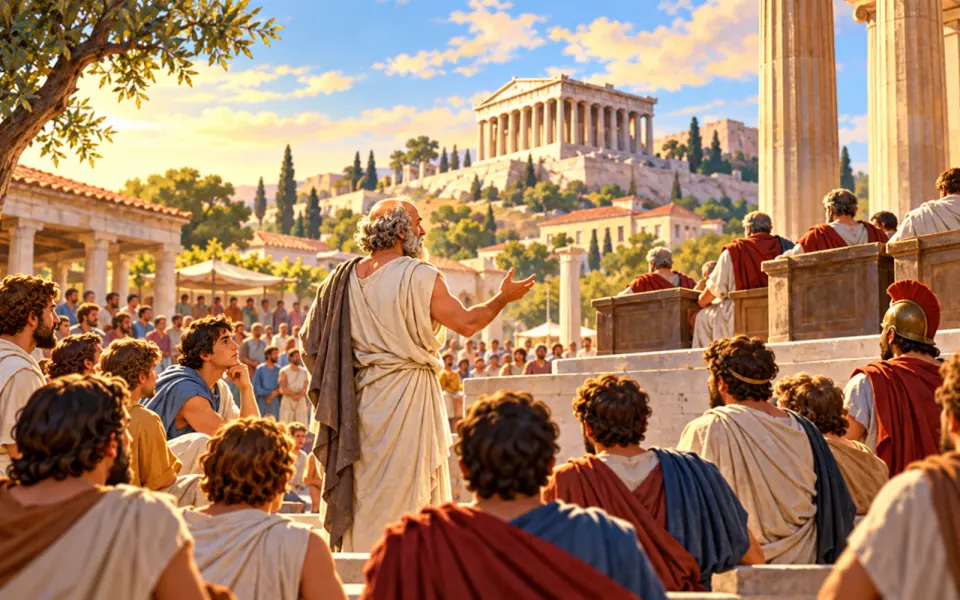 AfterSocrates is condemned399 BC
 AfterPlato's Academyabout 387 BC
 AfterAristotle founds the Lyceumabout 335 BC
 AfterThe conquests of Alexander334–323 BC
 AfterEuclid writes the Elementsabout 300 BC
 AfterThe Library of Alexandriaabout 295 BC
 AfterArchimedes of Syracuseabout 250 BC
 AfterThe Antikythera mechanismabout 100 BC
Listen / Read next
- Music to read by: Cinematic JourneyEpic film-style music, no lyrics, by Ciro Simone IrmiciSpotifyYouTube Music
Meanwhile, elsewhere in the world

Other events of the era “Ancient Greece”
- The first Greek city-states
- The ancient Olympic Games
- The Greek alphabet
- Life in Sparta
- Sappho, the poet of Lesbos
- The reforms of Solon
- Thales studies nature
- Pythagoras at Croton
- Cleisthenes and democracy
- The Battle of Marathon
- The Battle of Thermopylae
- The theatre of Aeschylus
- The Parthenon
- The Peloponnesian War
- Herodotus writes the Histories
- Hippocrates and medicine
- Socrates is condemned
- Plato's Academy
- Aristotle founds the Lyceum
- The conquests of Alexander
- Euclid writes the Elements
- The Library of Alexandria
- Archimedes of Syracuse
- The Antikythera mechanism
