Life in Sparta
about 700 BC Sparta, Peloponnese (Greece)
In short
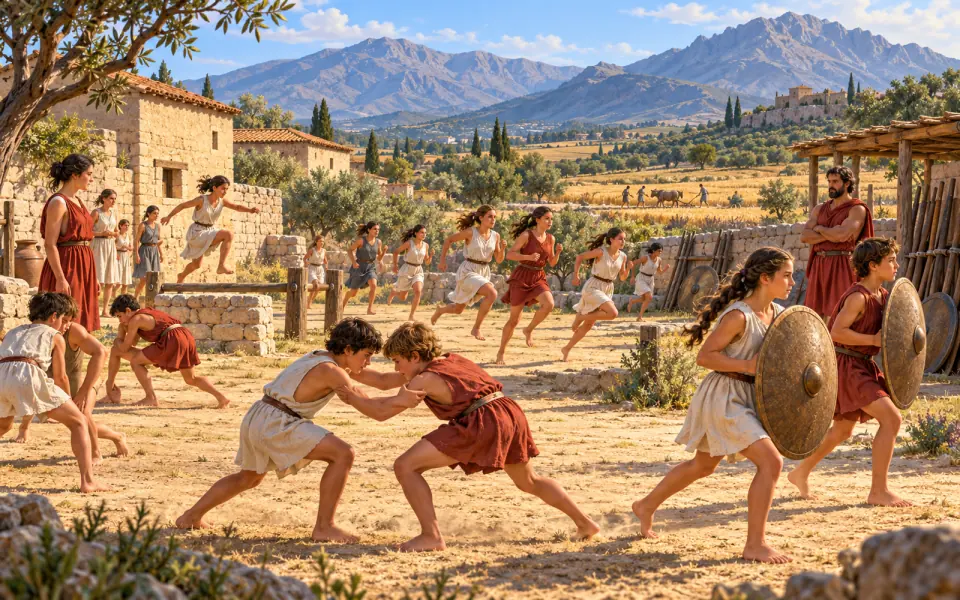
In Sparta life was organised to produce soldiers. At seven, boys left their families and were brought up together, with hard exercise, little food and strict discipline. Girls also did gymnastics and running races, which was rare in the Greek world. Work in the fields was left to the helots, a conquered people with no rights at all.
Why it matters Sparta shows a very different model of city from Athens, built entirely around the army.
Source: Treccani, entry “Sparta”
Study card about 6 minutes of reading
The story
A city with one fixed idea
Of all the Greek poleis, Sparta was the strangest. It lay in the southern Peloponnese and had organised its whole life around one idea: having excellent, united soldiers. The Spartans said the system had been given to them by Lycurgus, a lawgiver. Historians are not sure he really existed, though: he may be a legendary figure to whom tradition attributed laws that arose at different times. That is why the date on our site is “about 700 BC”: the system hardened slowly, after the wars the Spartans fought to conquer the neighbouring lands.
Three groups of inhabitants
Spartan society was divided into three groups. At the top were the Spartiates, the citizens with full rights. They called themselves “homoioi”, that is “equals”: among them, at least in theory, nobody was supposed to be richer or more important than the others. To be a Spartiate you had to have Spartiate parents and pay your share to the common meals; anyone who could not lost their rank.
Then there were the perioikoi, the “dwellers around”. They lived in nearby towns, were free, worked as craftsmen and traders, paid taxes and fought in the army, but had no political rights. Finally there were the helots, the most numerous. They were farmers without freedom, they belonged to the Spartan community and worked the lands assigned to the Spartiates, handing over part of the harvest each year. According to the historian Herodotus, in the 5th century BC the helots were about seven times more numerous than the Spartans: perhaps an exaggerated estimate, but it gives the idea of a minority ruling over a majority. The helots' work allowed the Spartiates to devote themselves entirely to military training.
The education of children
The system of education was called the “agoge”, which means “guidance”. At the age of seven Spartan boys left their families and entered groups run by the state. They learned to withstand hardship, cold and hunger, to obey and to live together. At about twenty they became young soldiers and went on training, and military service lasted until the age of sixty. Only at thirty could a Spartiate vote in the assembly.
The boys ate together in the common messes, called syssitia. The most famous dish was the “black broth”, which gave Sparta a reputation for very harsh cooking. Every citizen had to bring his share of food, and anyone who could not was cut off from the rights of a citizen. It was a way of keeping the group united.
Girls and women
Sparta was also different in the way it treated women. In the rest of Greece girls were kept at home; in Sparta they did gymnastics, running races, singing and dancing. Spartan women had more freedom and owned property of their own, but they had no political rights: they did not vote and did not take part in the assembly.
How it was governed
The government of Sparta was made up of several bodies that checked one another. There were two kings, one from each of the two royal families (the Agiads and the Eurypontids). In the classical period the kings had mainly military and religious duties. Then there was the gerousia, a council of thirty members: the two kings and twenty-eight elders over the age of sixty, elected for life. Five ephors, elected every year, supervised the kings and the magistrates. Finally there was the apella, the assembly of the Spartiates, which met once a month. It voted by acclamation, that is by shouting, without counting the votes one by one, and could only approve or reject the proposals of the gerousia.
The fear of revolts
To understand Sparta you have to remember the fear that went with it. The Spartans had conquered neighbouring Messenia in two wars: the first lasted about twenty years and ended around 724 BC according to tradition, with the fall of Mount Ithome; the second lasted many years (the sources disagree on the dates) and led to the conquest of most of the region. Many Messenians became helots. The helots rebelled several times, and the revolt of 464 BC was the most serious. To keep them under control the Spartans used force: every year young soldiers took part in the “krypteia”, a kind of hunt for helots meant to terrify them. It is a very harsh part of Spartan history, and it reminds us that the freedom of a few rested on the lack of freedom of many.
The decline
In 371 BC, at Leuctra, the army of Thebes led by Epaminondas defeated Sparta, which until then had seemed invincible. The following year the Thebans invaded the Peloponnese and took Messenia away from Sparta, that is, the land that fed the Spartiates. The number of citizens was also falling: by the middle of the 3rd century BC only about 700 remained, most of them in debt to a few big landowners. The system created to produce perfect soldiers could not withstand changing times.
Why it happened
Sparta was born in a fertile plain, surrounded by neighbouring peoples that the city conquered by force. The two wars against Messenia gave it a lot of land, but also a problem: a huge number of people to control. The few Spartiates always had to be ready to defend themselves against a revolt, and this led them to keep all the citizens in permanent training.
Tradition attributed the system to Lycurgus, the lawgiver who received his guidance from the oracle of Delphi. Whether he existed or not, the laws served one goal: to keep the citizens equal, and used to obeying and fighting. Shared education, shared meals and the lands assigned by the state created a strong bond among the Spartiates and reduced internal conflicts.
What changed
For a long time Sparta had the best land army in Greece. It was its king Leonidas who blocked the Persians at Thermopylae, and Sparta led the league of the Greeks against Xerxes as well. Later it won the long war against Athens. But it paid a high price: society was closed, the citizens were few and could not afford to lose men, and rule over the helots demanded constant vigilance.
After the defeat at Leuctra and the loss of Messenia, Sparta never became powerful again. In the following centuries it remained a city famous mainly for its history. Even today the word “spartan” means a hard life without comforts, but this reputation tells only part of what Sparta was. Historians study its case to understand what happens to a society that puts military power first, and they remind us that the comparison with Athens, so different, has influenced the way people think about politics for centuries.
Key people and places
People
- Lycurgus
- The lawgiver who, according to tradition, gave Sparta its laws after consulting the oracle of Delphi. He may be a legendary figure.
- Leonidas
- King of Sparta: he died at Thermopylae in 480 BC defending the pass against the Persians.
- Epaminondas
- General of Thebes who in 371 BC defeated the Spartans at Leuctra and then freed Messenia.
Places
- Sparta
- City of Laconia, in the southern Peloponnese, centre of a society organised for war.
- Messenia
- A neighbouring region conquered by the Spartans in two wars; most of its inhabitants became helots.
- Mount Ithome
- The Messenians' fortress, whose fall ended the First Messenian War around 724 BC, according to tradition.
- Leuctra
- A place in Boeotia where in 371 BC Thebes defeated Sparta.
Good to know
- The Spartiates called themselves “homoioi”, that is “equals”: it was their pride, even though the system depended on the work of people without rights.
- “Black broth” was the best-known dish of the Spartan common messes: the older men made do with the broth and left the meat to the young.
- Spartan girls did gymnastics, ran and sang, which seemed very strange in the rest of Greece.
- In the 3rd century BC the Spartiates were down to about 700 people, while Plutarch mentions 9,000 plots of land assigned to the Spartiates.
Find out more
- Wikipedia, “Sparta” en.wikipedia.org
- Wikipedia, “Agoge” en.wikipedia.org
- Wikipedia, “Battle of Thermopylae” en.wikipedia.org
- Wikipedia, “Peloponnesian War” en.wikipedia.org
Related events
- The first Greek city-statesabout 800 BC · Ancient GreeceSparta is an extreme case of a polis.
- The Battle of Thermopylae480 BC · Ancient GreeceLeonidas and his Spartans sacrificed themselves at Thermopylae.
- The Peloponnesian War431–404 BC · Ancient GreeceAthens and Sparta faced each other in the Peloponnesian War.
- Cleisthenes and democracyabout 508 BC · Ancient GreeceAthens chose the opposite path, with the assembly of citizens.
Before and after, in the era “Ancient Greece”
Event 4 of 25
 BeforeThe first Greek city-statesabout 800 BC
 BeforeThe ancient Olympic Gamesabout 776 BC
 BeforeThe Greek alphabetabout 750 BC
- You are hereLife in Spartaabout 700 BC
 AfterSappho, the poet of Lesbosabout 600 BC
 AfterThe reforms of Solonabout 594 BC
 AfterThales studies natureabout 585 BC
 AfterPythagoras at Crotonabout 530 BC
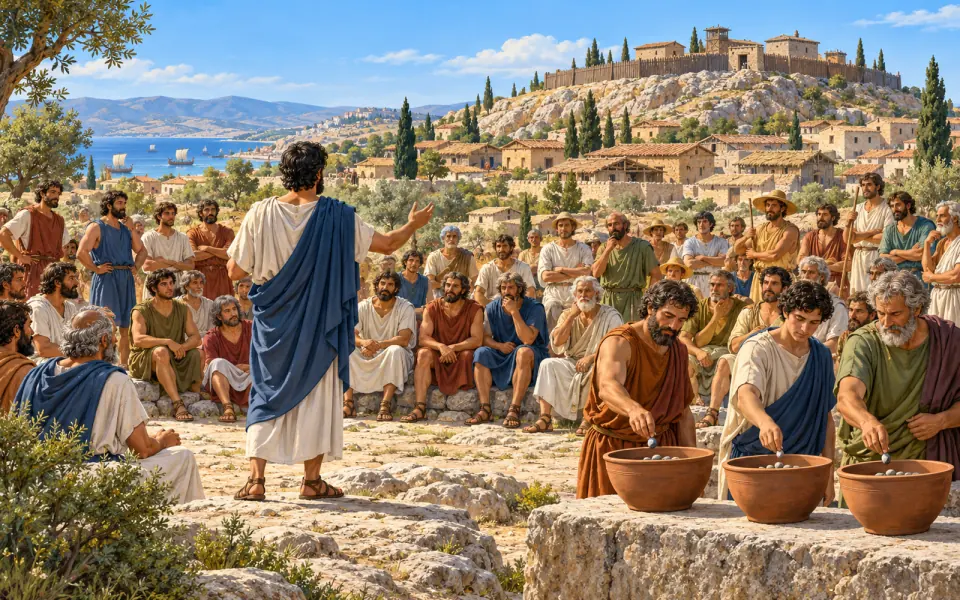 AfterCleisthenes and democracyabout 508 BC
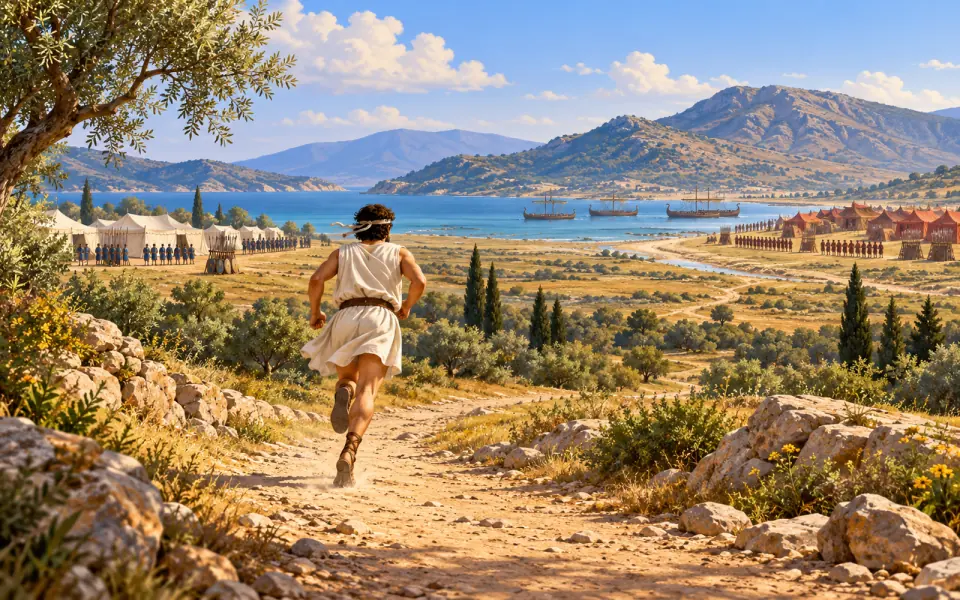 AfterThe Battle of Marathon490 BC
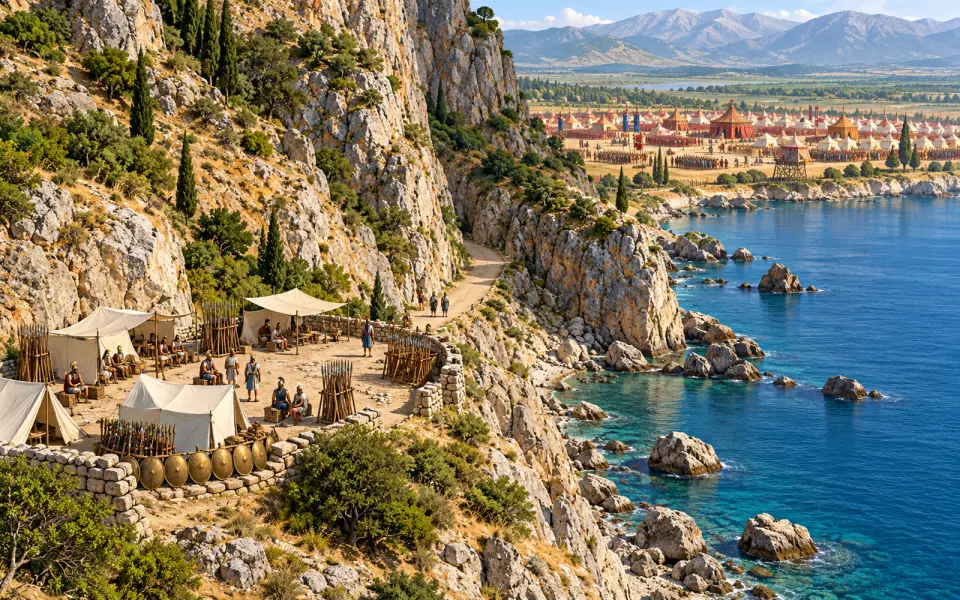 AfterThe Battle of Thermopylae480 BC
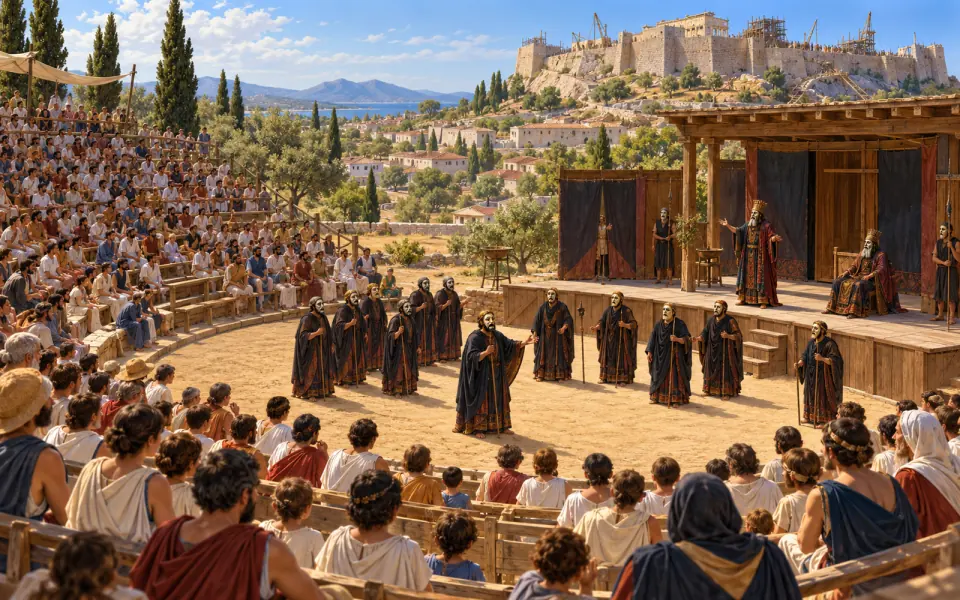 AfterThe theatre of Aeschylus472 BC
 AfterThe Age of Pericles461–429 BC
 AfterThe Parthenon447–432 BC
 AfterThe Peloponnesian War431–404 BC
 AfterHerodotus writes the Historiesabout 430 BC
 AfterHippocrates and medicineabout 400 BC
 AfterSocrates is condemned399 BC
 AfterPlato's Academyabout 387 BC
 AfterAristotle founds the Lyceumabout 335 BC
 AfterThe conquests of Alexander334–323 BC
 AfterEuclid writes the Elementsabout 300 BC
 AfterThe Library of Alexandriaabout 295 BC
 AfterArchimedes of Syracuseabout 250 BC
 AfterThe Antikythera mechanismabout 100 BC
Listen / Read next
- Music to read by: Cinematic JourneyEpic film-style music, no lyrics, by Ciro Simone IrmiciSpotifyYouTube Music
Meanwhile, elsewhere in the world
Other events of the era “Ancient Greece”
- The first Greek city-states
- The ancient Olympic Games
- The Greek alphabet
- Sappho, the poet of Lesbos
- The reforms of Solon
- Thales studies nature
- Pythagoras at Croton
- Cleisthenes and democracy
- The Battle of Marathon
- The Battle of Thermopylae
- The theatre of Aeschylus
- The Age of Pericles
- The Parthenon
- The Peloponnesian War
- Herodotus writes the Histories
- Hippocrates and medicine
- Socrates is condemned
- Plato's Academy
- Aristotle founds the Lyceum
- The conquests of Alexander
- Euclid writes the Elements
- The Library of Alexandria
- Archimedes of Syracuse
- The Antikythera mechanism
