The ancient Olympic Games
about 776 BC Olympia, Peloponnese (Greece)
In short
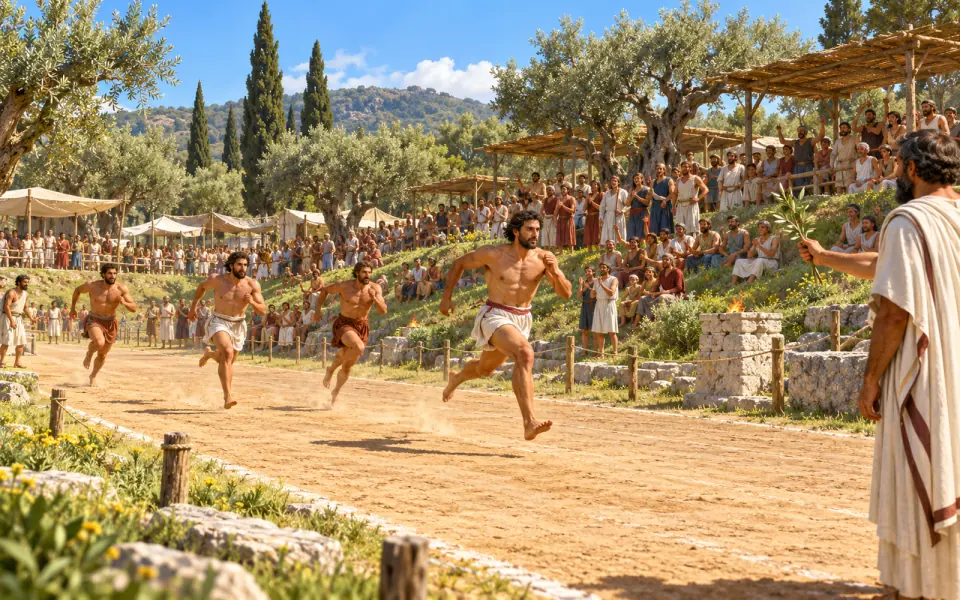
At Olympia, in the sanctuary of Zeus, sporting contests open to athletes from every Greek city were held every four years. At first there was only one event, a race of about 190 metres called the stadion. Later wrestling, boxing, jumping, discus throwing and chariot races were added. During the games a sacred truce was declared, so that athletes and spectators could travel safely. The prize for the winners was a crown of olive branches.
Why it matters The modern Olympic Games, which began in 1896, are inspired by these games.
Source: UNESCO, “Archaeological Site of Olympia”
Study card about 5 minutes of reading
The story
A festival for Zeus
Olympia was not a city but a sanctuary in the region of Elis, in the western Peloponnese. It was dedicated to Zeus, the king of the gods, and every four years a great religious festival with sports contests was held there. The traditional date of the first Games is 776 BC, which is why our site marks the event as “about”: historians know the Games had existed for some time, but nobody can say for certain the exact year they began. From then on, according to tradition, they were held for more than a thousand years, until AD 393, for a total of 293 editions.
The Games were not only sport. They were a ceremony in honour of Zeus: people gathered in front of his altars, offered sacrifices and swore oaths. Winners felt they had honoured the god, as well as themselves and their city.
The sacred truce
Greek cities often made war on each other, but during the Games everything stopped. Heralds from Elis travelled around Greece to announce the “Olympic truce”: for the whole period of the festival nobody was to attack Olympia or those travelling there. In this way athletes, judges and spectators could travel safely, even if their city was at war. The truce did not cancel wars, but it paused them for a few days: an idea that the modern Games still call to mind today, although often with little success.
From the stadium race to twenty events
At first there was only one event: the stadion, a straight race one “stade” long, about 190 metres at Olympia. The name of the race later passed to the track itself, and that is where our word “stadium” comes from. Over time other events were added, and tradition remembers the date of each novelty. In 724 BC came the diaulos, two lengths of the track, about 385 metres. In 720 BC it was the turn of the dolichos, an endurance race of a few kilometres. In 708 BC wrestling and the pentathlon, which combined several events, were added. Boxing (688 BC), chariot and horse races (680 BC) and the pancration (648 BC) followed, a very tough sport that mixed wrestling and boxing. In 520 BC there was even a race in full battle armour.
With so many additions the programme grew to twenty events and five days of festival. The chariot and horse races were the most prestigious, because they required a great deal of wealth.
Who could take part
The Games were open to free male Greek citizens who spoke Greek. Slaves, foreigners called “barbarians” (for the Greeks, anyone who did not speak their language), murderers and those who had offended the gods were excluded. Women could not compete either. One curiosity: in the chariot races the winner was not the driver but the owner of the chariot and horses. So a rich woman, if she owned the team, could be proclaimed the winner.
The prize and the glory
The official prize was only a crown of olive branches, but it was worth a great deal. The winner returned to his city as a hero: poets wrote songs for him and the city set up a statue in his honour. Receiving a prize of branches, and not of money, was a sign that what mattered was honour.
The end and the rebirth
The Games continued after the Roman conquest of Greece. By the end of the 4th century AD, however, the Roman empire was Christian and festivals dedicated to the old gods were no longer tolerated. In AD 393 the emperor Theodosius I banned games of a religious character (some sources date the ban to 394), and the contests at Olympia came to an end.
For almost fifteen centuries nobody competed there any more. Then, in 1896, the Frenchman Pierre de Coubertin organised the first modern Olympic Games in Athens, convinced that sport could bring peoples closer together. Since then the Olympics have been held every four years in different cities, but they keep many symbols of the ancient model: the very name, and the idea of a pause in the competition between countries.
Why it happened
For the Greeks sport was a form of worship. At festivals in honour of the gods there were races and contests of strength and skill, because people believed the gods appreciated the beauty and strength of the body. The sanctuary of Olympia, with the temple and altar of Zeus, was one of the holiest places in the Greek world, and that is why it was chosen for the most important festival.
There was also a political reason. The poleis were independent and often enemies, but they felt they belonged to the same people. A festival where everyone could meet in peace, speak the same language and honour the same gods helped them remember it. The sacred truce was the condition that made all this possible.
What changed
The Games at Olympia gave the Greeks a common way of counting time: the victories in the stadium race and the list of winners helped historians fix dates. That is why many dates of Greek antiquity are tied to the Olympiads. Other sanctuaries imitated Olympia with festivals of their own, and so a real circuit of contests grew up across the Greek world.
The ancient model had a second life in 1896, when Pierre de Coubertin revived the Games. The modern Olympics are not a copy of the ancient ones: women and men from every country take part, and there is no longer any link with the religion of Zeus. But the aim of bringing peoples together remains, along with the idea that effort and respect for the rules matter as much as victory. Today the Games are one of the most widely followed events in the world, and the word “Olympic” is a synonym for sport at the highest level.
Key people and places
People
- Theodosius I
- Roman emperor who in AD 393 banned games of a religious character, ending the ancient Olympics.
- Ambrose
- Bishop of Milan, very influential at court in the time of Theodosius; a direct role of his in the end of the Games is not proven.
- Coroebus of Elis
- An athlete remembered among the most famous winners of the first editions of the Games.
- Pierre de Coubertin
- French educator who in 1896 relaunched the Olympics, organising the first Games of the modern era in Athens.
Places
- Olympia
- Sanctuary of Zeus in Elis, in the Peloponnese: it hosted the Games for over a thousand years.
- Elis
- The region that was responsible for organising the Games and proclaiming the sacred truce.
- Athens
- In 1896 it hosted the first Olympics of the modern era.
Good to know
- Our word “stadium” comes from the Greek name of the oldest race, the stadion, and then of the track it was run on.
- The winners' prize was a simple olive crown, but once back home the athletes received honours and statues.
- In chariot races the winner was the owner of the chariot: that is why even a woman, though she could not compete, could be proclaimed the winner.
- Almost fifteen centuries passed between the end of the ancient Games (AD 393) and their rebirth (1896).
Find out more
- Wikipedia, “Ancient Olympic Games” en.wikipedia.org
- Wikipedia, “Olympia, Greece” en.wikipedia.org
- Wikipedia, “Olympic Truce” en.wikipedia.org
- Wikipedia, “Pierre de Coubertin” en.wikipedia.org
Related events
- The first Greek city-statesabout 800 BC · Ancient GreeceThe poleis, rivals but united by language and gods, met at Olympia.
- The Battle of Marathon490 BC · Ancient GreeceAthens remembered Marathon also with the race that is run at the Olympics today.
- Fall of the Western Roman EmpireAD 476 · Ancient RomeThe fall of the Western Roman empire closes the ancient world of the Games.
- The Peloponnesian War431–404 BC · Ancient GreeceWars between the poleis, like the Peloponnesian War, went on despite the truce of the Games.
Before and after, in the era “Ancient Greece”
Event 2 of 25
 BeforeThe first Greek city-statesabout 800 BC
- You are hereThe ancient Olympic Gamesabout 776 BC
 AfterThe Greek alphabetabout 750 BC
 AfterLife in Spartaabout 700 BC
 AfterSappho, the poet of Lesbosabout 600 BC
 AfterThe reforms of Solonabout 594 BC
 AfterThales studies natureabout 585 BC
 AfterPythagoras at Crotonabout 530 BC
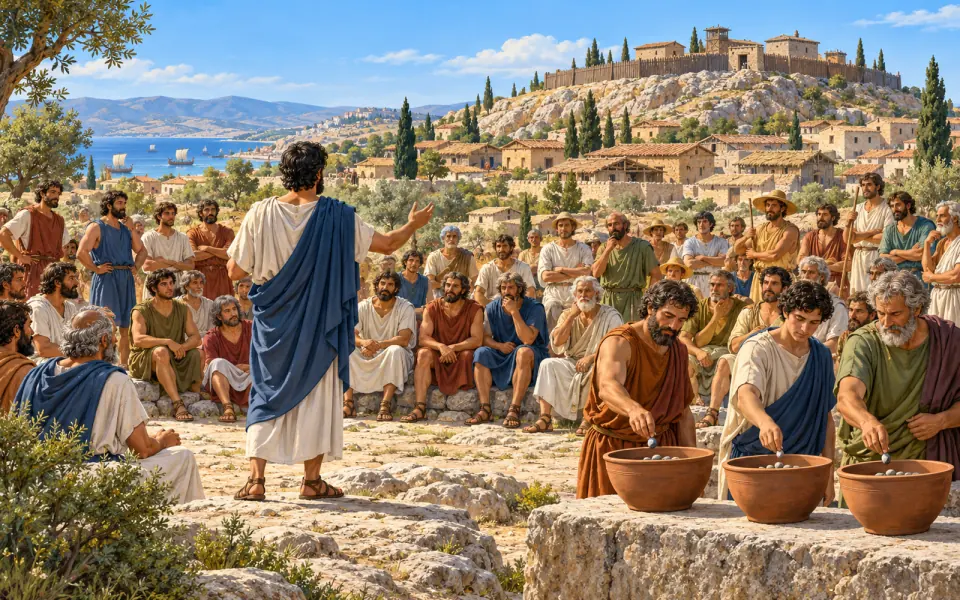 AfterCleisthenes and democracyabout 508 BC
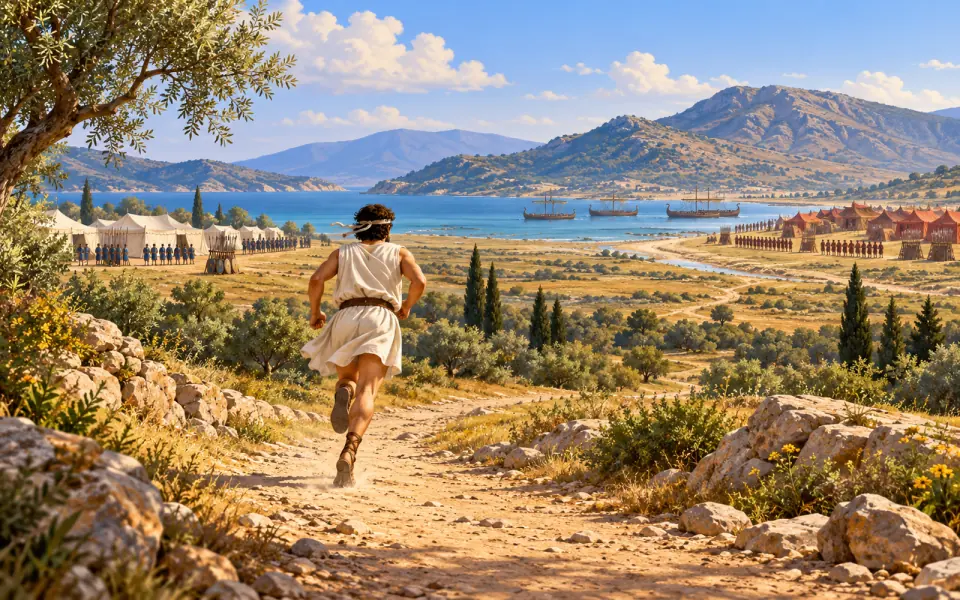 AfterThe Battle of Marathon490 BC
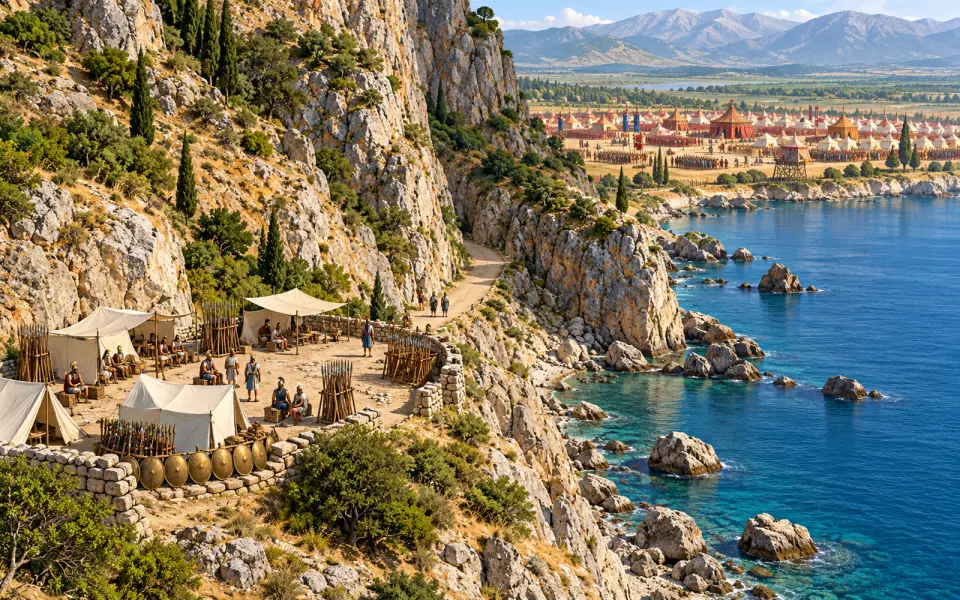 AfterThe Battle of Thermopylae480 BC
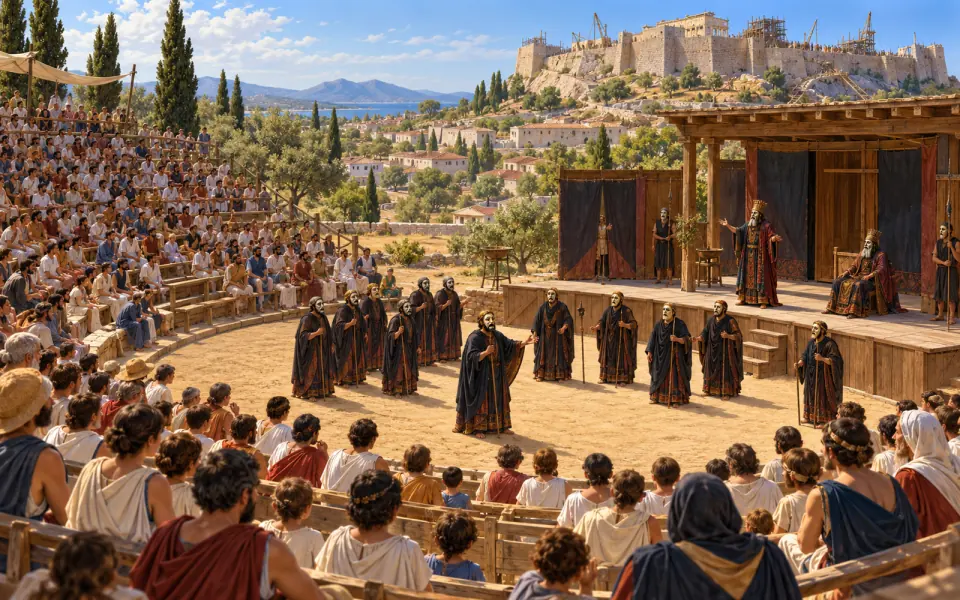 AfterThe theatre of Aeschylus472 BC
 AfterThe Age of Pericles461–429 BC
 AfterThe Parthenon447–432 BC
 AfterThe Peloponnesian War431–404 BC
 AfterHerodotus writes the Historiesabout 430 BC
 AfterHippocrates and medicineabout 400 BC
 AfterSocrates is condemned399 BC
 AfterPlato's Academyabout 387 BC
 AfterAristotle founds the Lyceumabout 335 BC
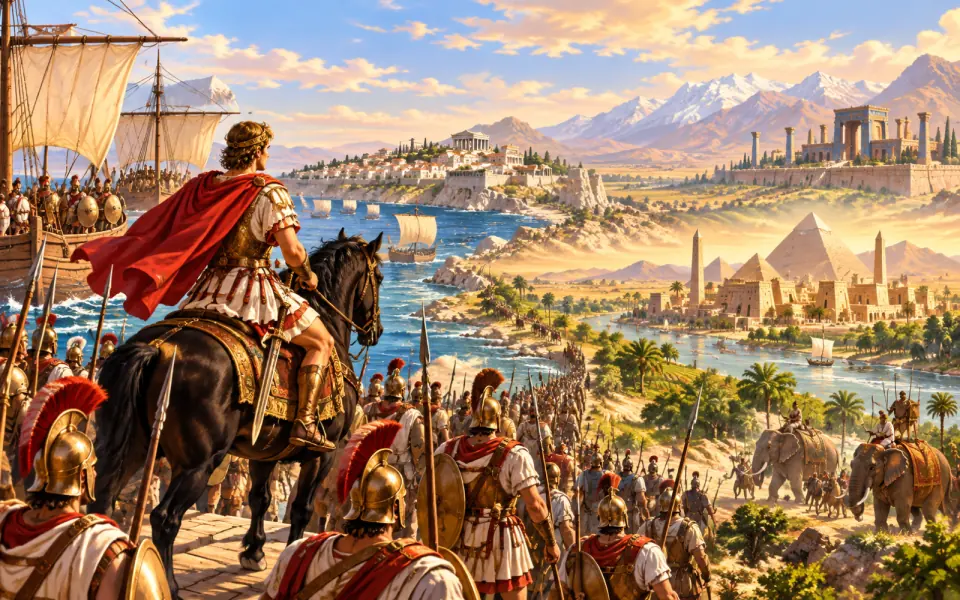 AfterThe conquests of Alexander334–323 BC
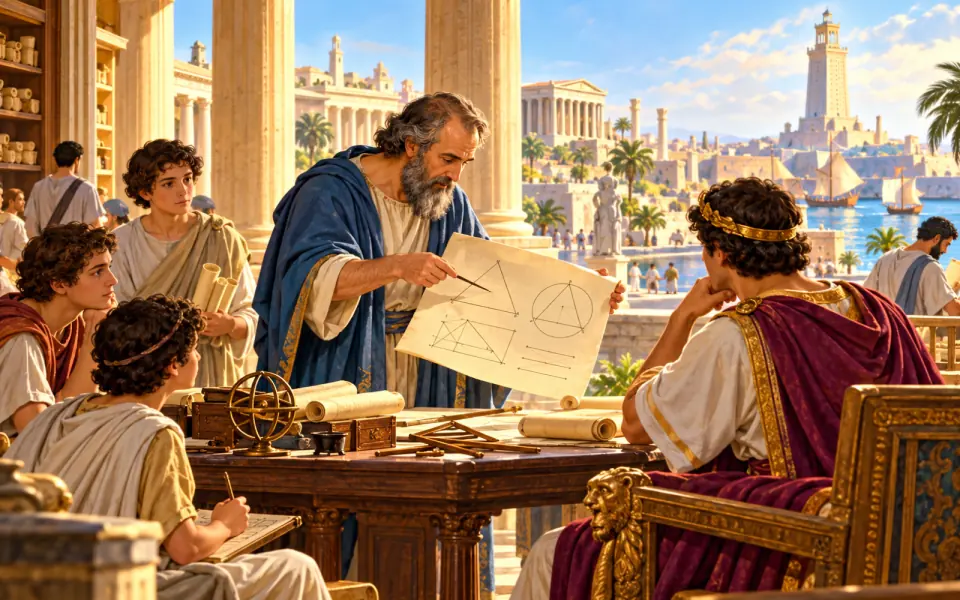 AfterEuclid writes the Elementsabout 300 BC
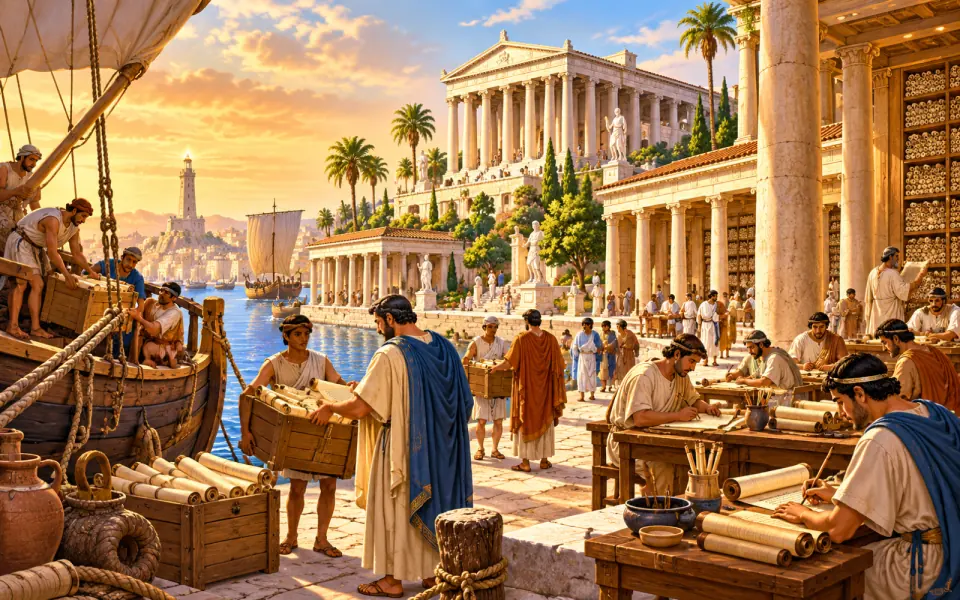 AfterThe Library of Alexandriaabout 295 BC
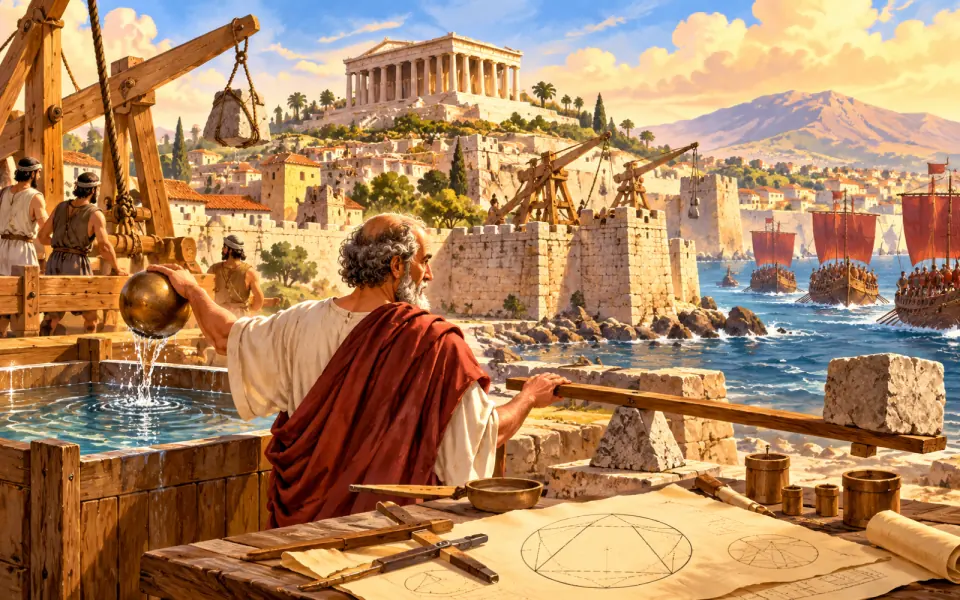 AfterArchimedes of Syracuseabout 250 BC
 AfterThe Antikythera mechanismabout 100 BC
In legend
Listen / Read next
- Music to read by: Cinematic JourneyEpic film-style music, no lyrics, by Ciro Simone IrmiciSpotifyYouTube Music
Meanwhile, elsewhere in the world
Other events of the era “Ancient Greece”
- The first Greek city-states
- The Greek alphabet
- Life in Sparta
- Sappho, the poet of Lesbos
- The reforms of Solon
- Thales studies nature
- Pythagoras at Croton
- Cleisthenes and democracy
- The Battle of Marathon
- The Battle of Thermopylae
- The theatre of Aeschylus
- The Age of Pericles
- The Parthenon
- The Peloponnesian War
- Herodotus writes the Histories
- Hippocrates and medicine
- Socrates is condemned
- Plato's Academy
- Aristotle founds the Lyceum
- The conquests of Alexander
- Euclid writes the Elements
- The Library of Alexandria
- Archimedes of Syracuse
- The Antikythera mechanism
