Thales studies nature
about 585 BC Miletus, Ionia (now Turkey)
In short
Thales of Miletus was one of the first people to look for explanations of nature without turning to myths about the gods. He thought that water was the origin of all things. According to the historian Herodotus, he predicted an eclipse of the Sun that really happened in 585 BC, right in the middle of a battle. It is also said that he measured the height of the Egyptian pyramids by comparing their shadow with the shadow of a stick.
Why it matters Philosophy begins with him: the idea of understanding the world by using reason.
Source: Treccani, entry “Talete”
Study card about 6 minutes of reading
The story
Miletus, a city of merchants
Miletus was a rich Greek city on the coast of Asia Minor, in the region called Ionia, now in Turkey. Its ships sailed all over the Mediterranean and the Black Sea, and people, goods and ideas arrived in its harbour from Egypt, Lydia and Mesopotamia. In this lively setting lived Thales, between the end of the 7th and the middle of the 6th century BC. The exact dates are not known: the ancients gave 640 BC as his year of birth, while many modern scholars prefer 624. He died around 548–545 BC. Not a single writing of his has come down to us: everything we know comes from authors who lived long after him, such as Herodotus, Plato and Aristotle.
Explaining nature without the gods
To understand why Thales matters, think about how the Greeks explained the world before him. Earthquakes, lightning, the seasons, the seas: they were caused by the gods, and people told stories of angry or kindly deities. Thales tried a different path. He asked: what are all things made of? Is there something at the origin of everything? The Greeks called this principle “arche”. According to Aristotle, who speaks of it long afterwards, Thales answered that it was water. The reason, again according to Aristotle, was that nourishment, seeds and heat seem to be moist by nature. Today we know the answer was not correct, but what mattered was the way of reasoning: looking for an explanation inside nature and not in the will of the gods.
He is also credited with the saying “everything is full of gods”, and with the idea that the magnet, which attracts iron, and rubbed amber have a kind of “soul”, that is, a force that makes them move. These are not scientific discoveries in the modern sense, but they show a curious man who observed what really happened.
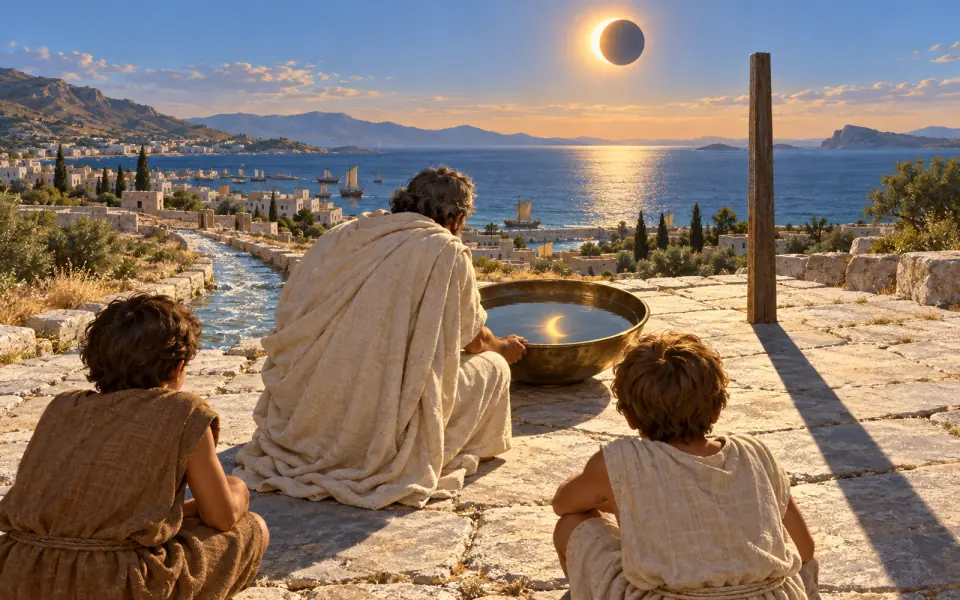
The eclipse of 585 BC
The most famous episode is told by Herodotus. While two peoples, the Medes and the Lydians, were fighting a long war in Asia Minor, during a battle day suddenly turned into night. The frightened fighters stopped the battle and made peace. Herodotus writes that Thales had announced this event to the Ionians in advance. Modern astronomers have calculated that the most likely total solar eclipse is the one of 28 May 585 BC. Some problems of chronology remain, however, and historians are not sure the events went exactly like this. How Thales could predict the eclipse remains a mystery.
Measuring the pyramids
Another story says that Thales, travelling in Egypt, measured the height of a pyramid without climbing it. According to Plutarch, he waited for the hour when the shadow of a stick planted in the ground was as long as the stick itself, and at that moment he measured the shadow of the pyramid. Another ancient author, Diogenes Laertius, gives a slightly different version: the shadow of a person was used. The reasoning is based on similar triangles, that is, on the idea that the shadow and the object are in a fixed ratio; it is the property we now call “Thales' theorem”. It is not certain that Thales really went to Egypt, but the anecdote says well what the ancients admired in him: the use of geometry to solve practical problems.
The ancients also credited him with a few theorems of elementary geometry, for example on the properties of triangles and circles. One author, Proclus, assigns some of them to him (the list varies according to the sources). Here too we must remember that we have nothing written by him, and tradition may have attributed to him discoveries made by others.
Anecdotes to take with a pinch of salt
Amusing little stories circulated about Thales. Plato tells how, while walking along looking at the stars, he fell into a well, and a young Thracian servant girl mocked him: he wanted to know the things of the sky but did not notice those at his feet. Aristotle, on the other hand, tells how, foreseeing an excellent olive harvest, Thales rented all the olive presses of Miletus and Chios cheaply and sublet them at a high price: he wanted to show that philosophers, if they chose, could easily get rich, but have other priorities. Modern historians think many of these episodes are not historical: they are invented stories meant to illustrate an idea about philosophy.
A teacher of teachers
Thales is considered the founder of the school of Miletus. His pupil was Anaximander, and Anaximander's was Anaximenes: the three, with different ideas, continued the search for the principle of all things. The ancients also placed him on the list of the Seven Sages, the wise men of archaic Greece. Plato, in the Protagoras, already names him among the seven. An old tradition says he was the first to receive this title.
Why it happened
Miletus was a city open to the world, and this helps explain Thales. Its merchants knew the knowledge of Egypt and Mesopotamia: the Babylonians' calculations about the stars, the Egyptians' measurements of fields. A Milesian thinker could put together ideas from different cultures, without being tied to a single tradition.
Freedom of thought counted too. In the Greek poleis there was no class of priests with a monopoly on knowledge. Anyone could discuss the world, as long as others would listen. Moreover, in Greek cities citizens used to debating in the assembly appreciated convincing arguments, and this encouraged a way of reasoning in which you give reasons, and not just orders.
What changed
After Thales the question “what is the world made of?” became the starting point of Greek philosophy. His successors gave different answers: the “infinite”, air, fire, numbers. In the end came Socrates, Plato and Aristotle, who changed the kind of questions but kept the method: arguing with reasons and not just with stories.
Modern science is the child of this attitude. When today we explain an eclipse by the movement of the Moon, lightning by electricity or an illness by a germ, we follow the path Thales opened: looking for natural causes and testing them. That is why textbooks remember him as the first philosopher and, in a broad sense, the first scientist of the West.
Geometry also owes him something: “Thales' theorem” on parallel lines and similar triangles is still studied today in middle and secondary school, and helps to measure heights and distances that cannot be reached.
Key people and places
People
- Thales of Miletus
- Philosopher, astronomer and mathematician (about 624–546 BC), remembered as the first philosopher and one of the Seven Sages.
- Anaximander
- Thales' pupil, he continued the search for the principle of all things.
- Anaximenes
- Anaximander's pupil, he completed the trio of Milesian philosophers.
- Herodotus
- The historian who told of the eclipse of 585 BC and of Thales' prediction.
Places
- Miletus
- City of Ionia, on the coast of present-day Turkey, home of Thales and of the first Greek philosophy.
- Ionia
- Greek region on the coast of Asia Minor, rich in merchant cities.
- Egypt
- The land of the pyramids, where tradition says Thales measured the height of a pyramid.
Good to know
- Astronomers today can calculate when an eclipse of many centuries ago took place: for the one told by Herodotus the most widely followed hypothesis is 28 May 585 BC.
- The shadow method for measuring a pyramid uses the same principle by which we measure the height of a tree today with a stick.
- According to Plato, Thales fell into a well while looking at the stars, and a servant girl made fun of him.
- Thales attributed a kind of “soul” to the magnet and to amber: it was a way of explaining why they attract other objects.
Find out more
- Wikipedia, “Thales of Miletus” en.wikipedia.org
- Wikipedia, “Eclipse of Thales” en.wikipedia.org
- Wikipedia, “Seven Sages of Greece” en.wikipedia.org
- Wikipedia, “Thales's theorem” en.wikipedia.org
Related events
- Pythagoras at Crotonabout 530 BC · Ancient GreecePythagoras, like Thales, tried to explain the world with reason and numbers.
- Herodotus writes the Historiesabout 430 BC · Ancient GreeceHerodotus tells of the eclipse and of Thales' prediction.
- Plato's Academyabout 387 BC · Ancient GreeceThe philosophy born at Miletus reaches the schools of Athens.
- Aristotle founds the Lyceumabout 335 BC · Ancient GreeceAristotle is our main source on Thales' thought.
- Babylonian mathematicsabout 1800 BC · River civilisationsThe Babylonians already had astronomical calculations, which the Greeks may have drawn on.
Before and after, in the era “Ancient Greece”
Event 7 of 25
 BeforeThe first Greek city-statesabout 800 BC
 BeforeThe ancient Olympic Gamesabout 776 BC
 BeforeThe Greek alphabetabout 750 BC
 BeforeLife in Spartaabout 700 BC
 BeforeSappho, the poet of Lesbosabout 600 BC
 BeforeThe reforms of Solonabout 594 BC
- You are hereThales studies natureabout 585 BC
 AfterPythagoras at Crotonabout 530 BC
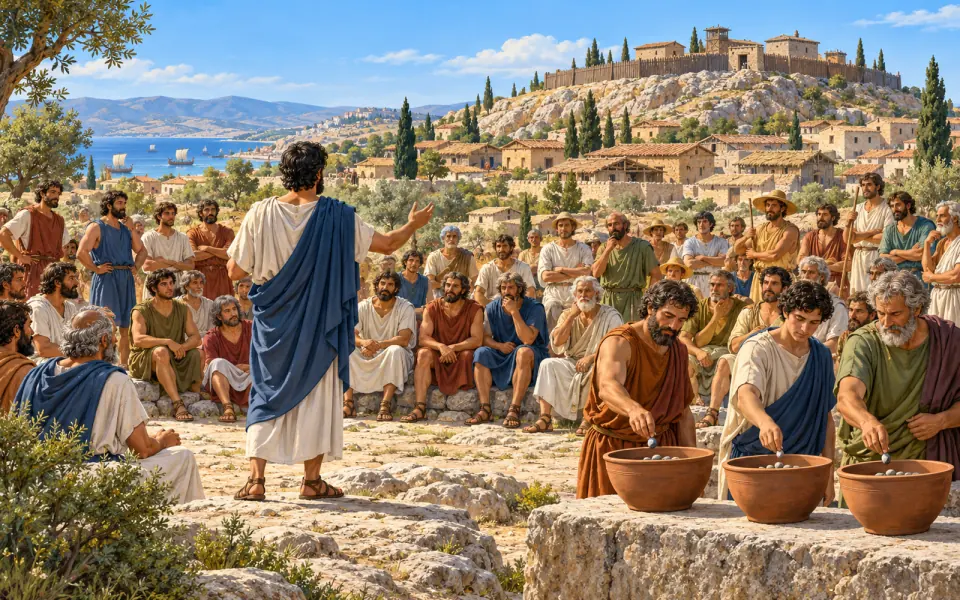 AfterCleisthenes and democracyabout 508 BC
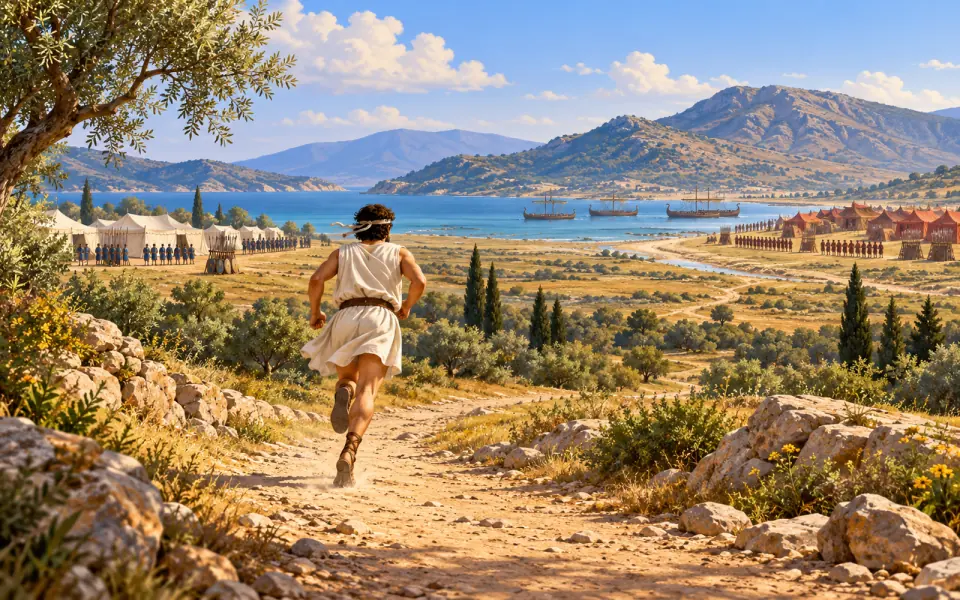 AfterThe Battle of Marathon490 BC
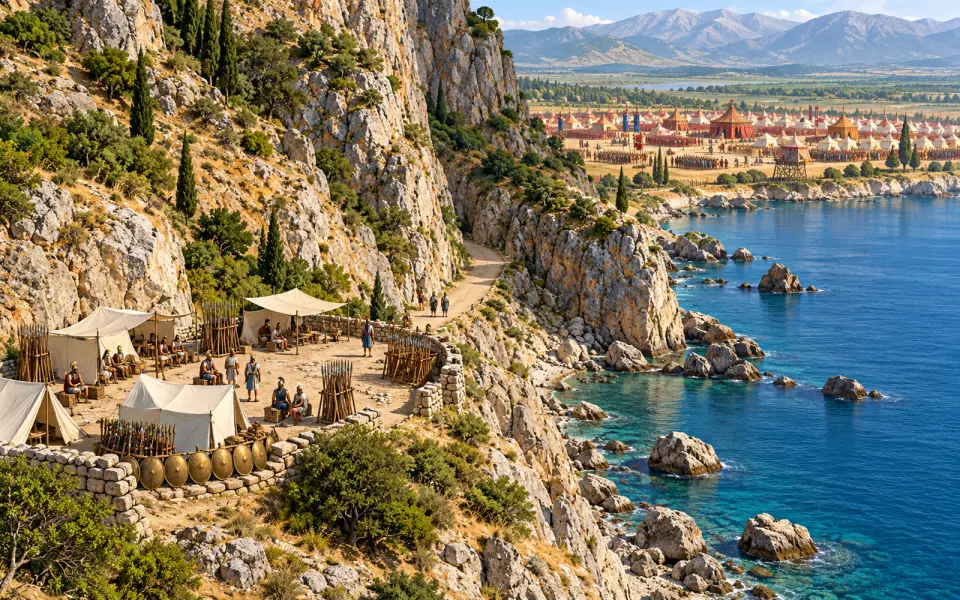 AfterThe Battle of Thermopylae480 BC
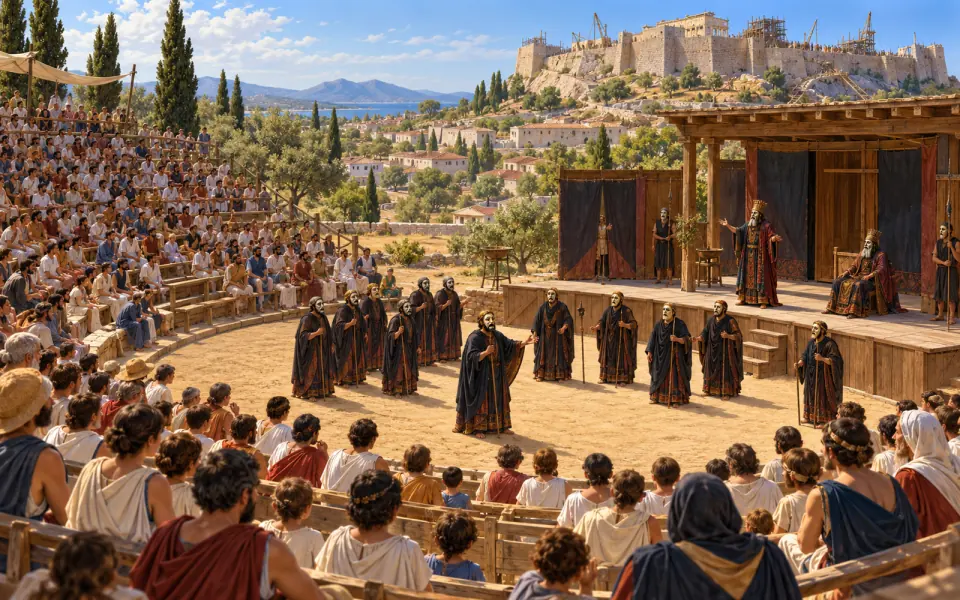 AfterThe theatre of Aeschylus472 BC
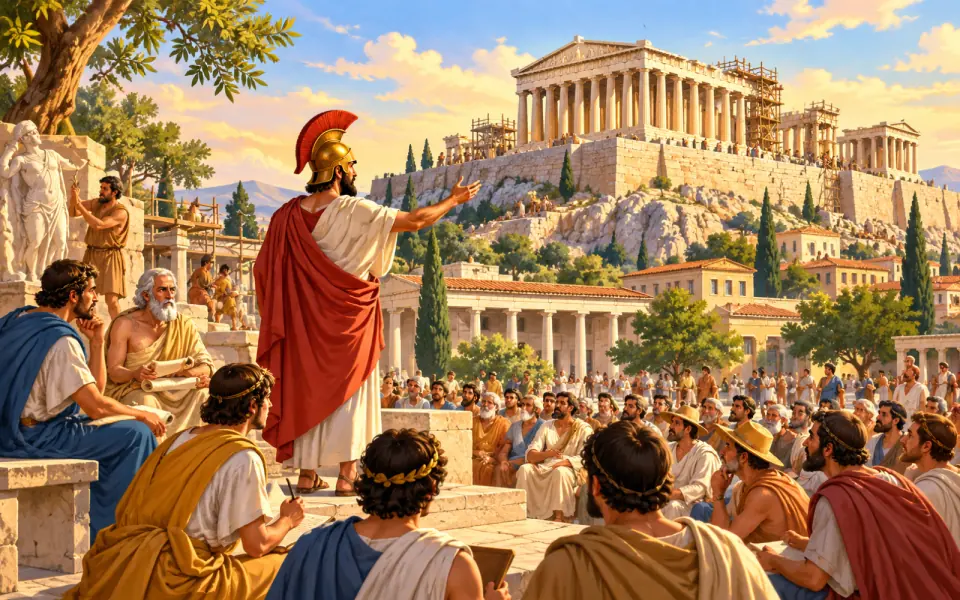 AfterThe Age of Pericles461–429 BC
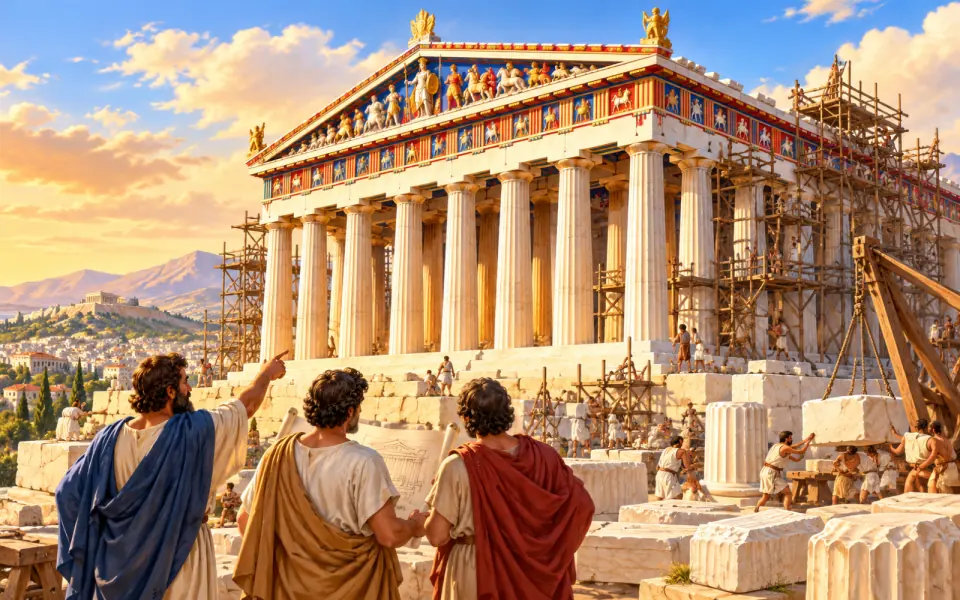 AfterThe Parthenon447–432 BC
 AfterThe Peloponnesian War431–404 BC
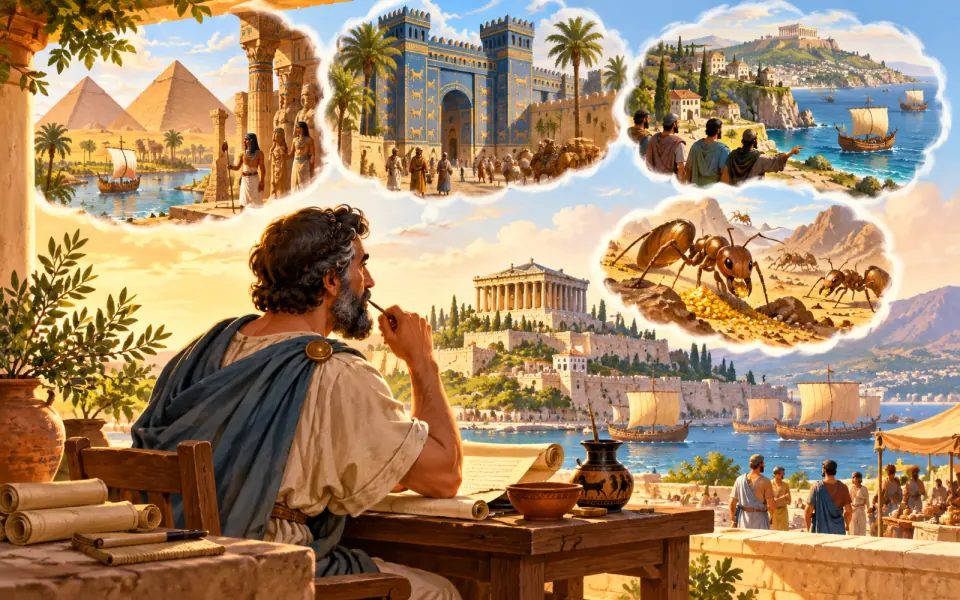 AfterHerodotus writes the Historiesabout 430 BC
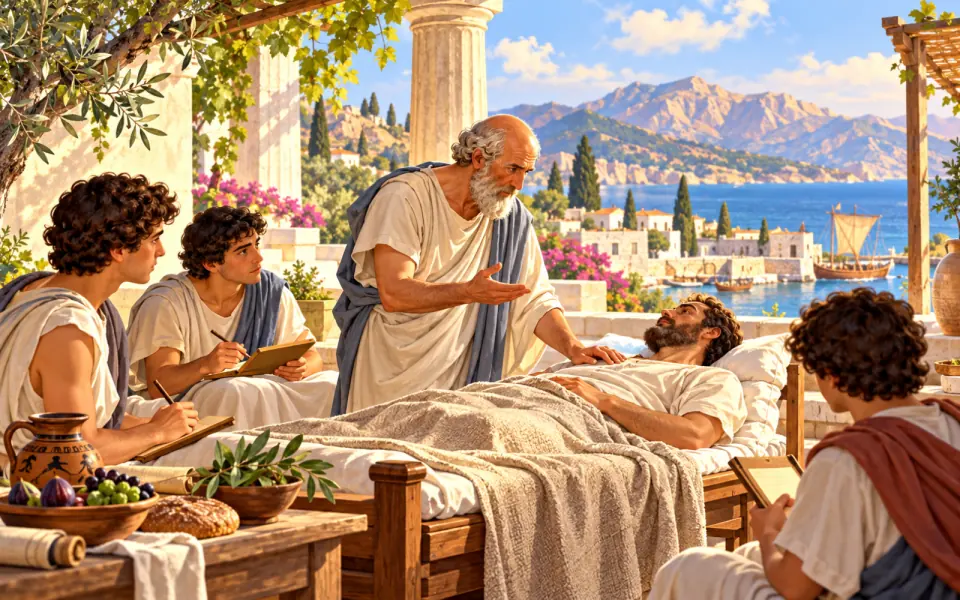 AfterHippocrates and medicineabout 400 BC
 AfterSocrates is condemned399 BC
 AfterPlato's Academyabout 387 BC
 AfterAristotle founds the Lyceumabout 335 BC
 AfterThe conquests of Alexander334–323 BC
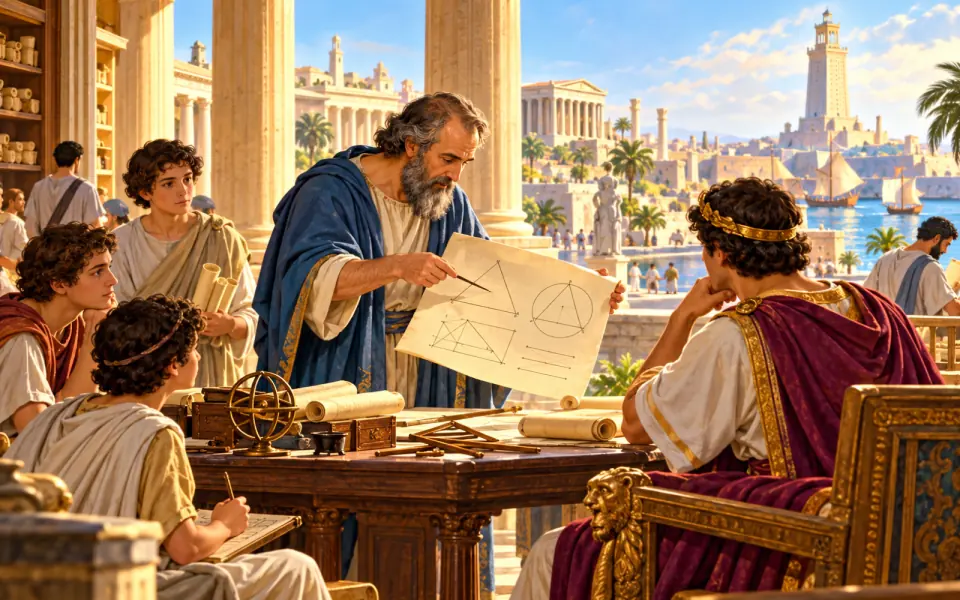 AfterEuclid writes the Elementsabout 300 BC
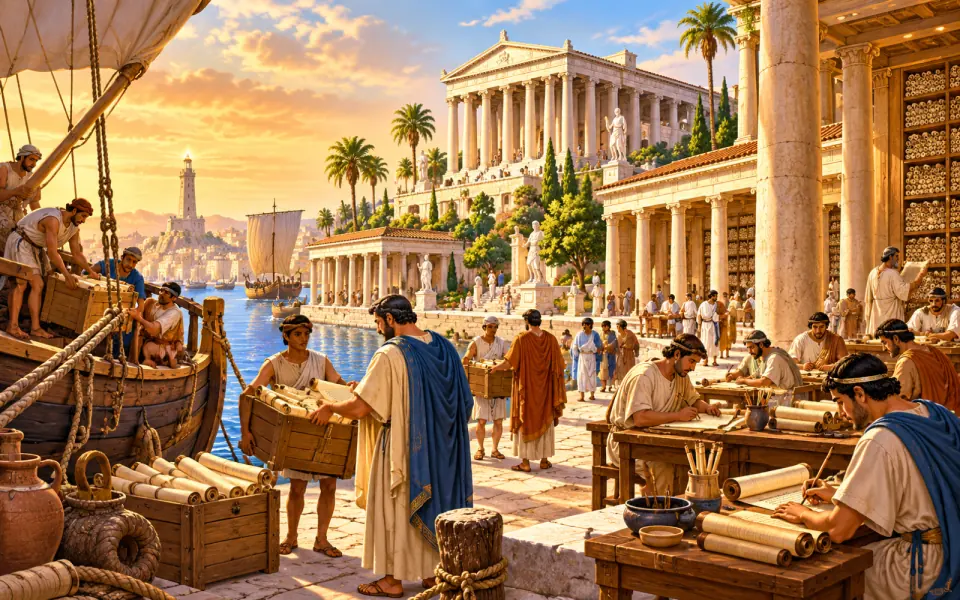 AfterThe Library of Alexandriaabout 295 BC
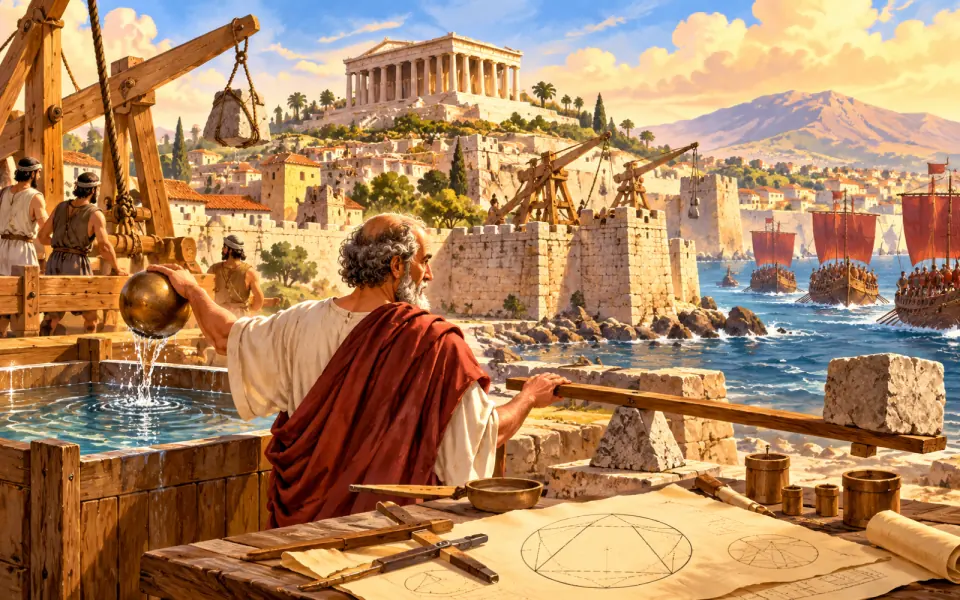 AfterArchimedes of Syracuseabout 250 BC
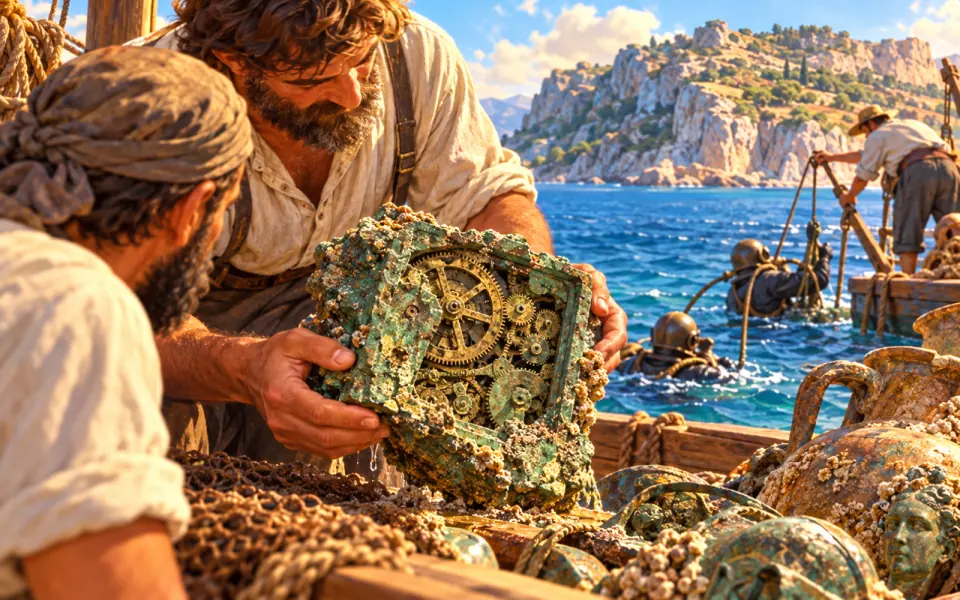 AfterThe Antikythera mechanismabout 100 BC
Listen / Read next
- Music to read by: Cinematic JourneyEpic film-style music, no lyrics, by Ciro Simone IrmiciSpotifyYouTube Music
Meanwhile, elsewhere in the world
Other events of the era “Ancient Greece”
- The first Greek city-states
- The ancient Olympic Games
- The Greek alphabet
- Life in Sparta
- Sappho, the poet of Lesbos
- The reforms of Solon
- Pythagoras at Croton
- Cleisthenes and democracy
- The Battle of Marathon
- The Battle of Thermopylae
- The theatre of Aeschylus
- The Age of Pericles
- The Parthenon
- The Peloponnesian War
- Herodotus writes the Histories
- Hippocrates and medicine
- Socrates is condemned
- Plato's Academy
- Aristotle founds the Lyceum
- The conquests of Alexander
- Euclid writes the Elements
- The Library of Alexandria
- Archimedes of Syracuse
- The Antikythera mechanism
