The first Greek city-states
about 800 BC Mainland Greece and the Aegean islands
In short
After centuries of hardship, the poleis were born in Greece: independent city-states, each with its own territory, laws and protecting gods. Mountains separated the valleys, so each community learnt to govern itself. At the heart of the polis were the acropolis, the high, fortified part, and the agora, the square for the market and for meetings. The poleis often quarrelled, but they all felt Greek.
Why it matters From the word ‘polis’ come ‘politics’ and many other words we use every day.
Source: Treccani, entry “Polis”
Study card about 6 minutes of reading
The story
A land of mountains and sea
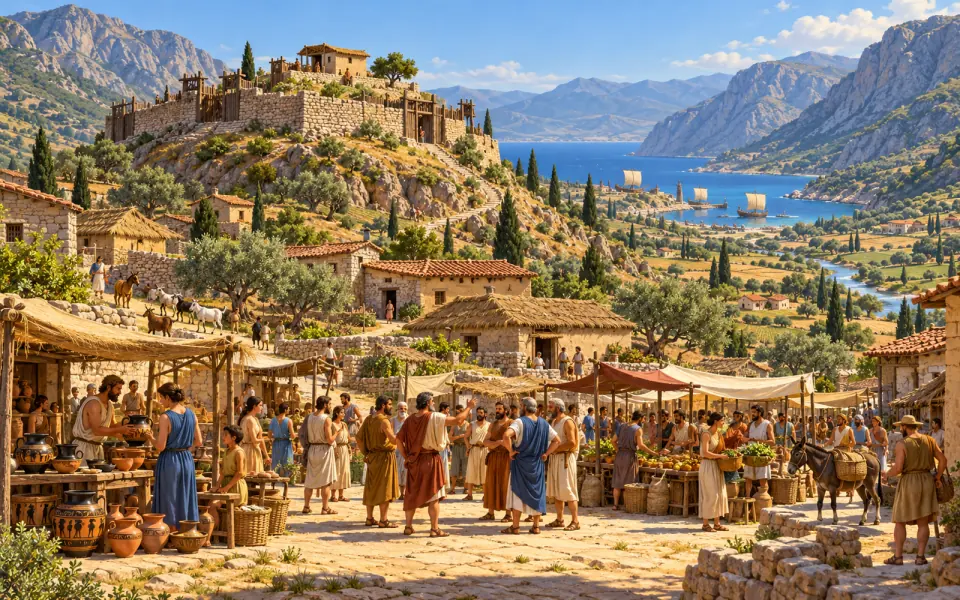
To understand the Greek poleis, you have to start from the map. Greece is a land of mountains, narrow valleys, islands and gulfs. Getting from one valley to the next was tiring, and by sea you needed a boat and a bit of courage. That is why, in the centuries after the great palaces of the Bronze Age collapsed, Greek communities lived in separate groups, each with its own land and its own habits. When these communities began to grow again, the mountains acted as natural borders: nobody could easily rule over all the others.
What is a polis?
The word “polis” is usually translated as “city-state”, and the name already says a lot. It was a city, but it was also an independent state, with its own territory, laws, magistrates, army, calendar of festivals and protecting gods. Athens had Athena, Olympia had Zeus. Scholars think the first poleis took shape between about 850 and 750 BC, so around the date our site gives as “about 800”. There is no birthday: it was a slow change that lasted generations.
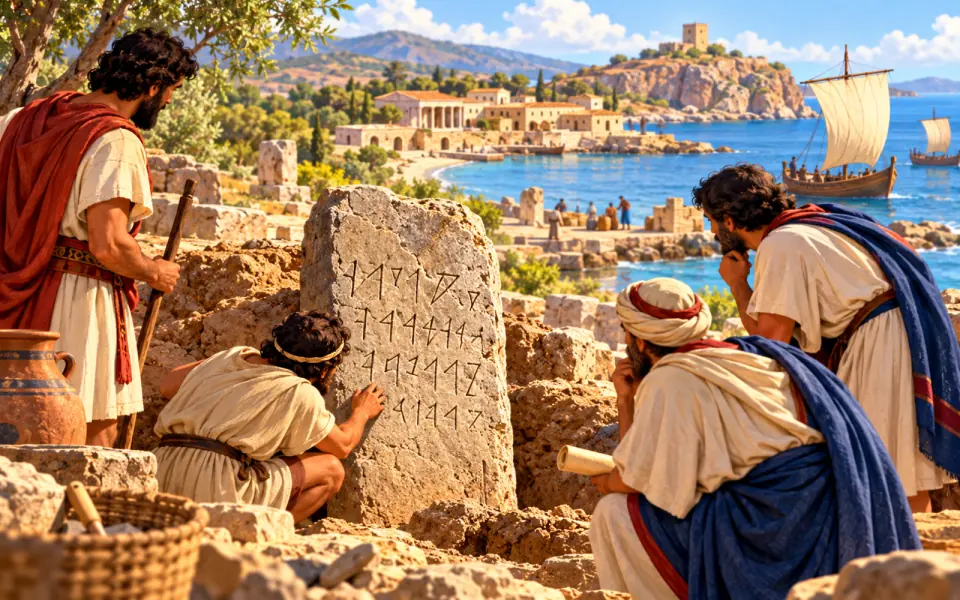
The first sure evidence of a polis as a community that decides things with its own laws comes from an inscription found at Dreros, in Crete, dating from the middle of the 7th century BC. Before that there are only clues: sanctuaries, tombs, the remains of settlements.
What a polis looked like
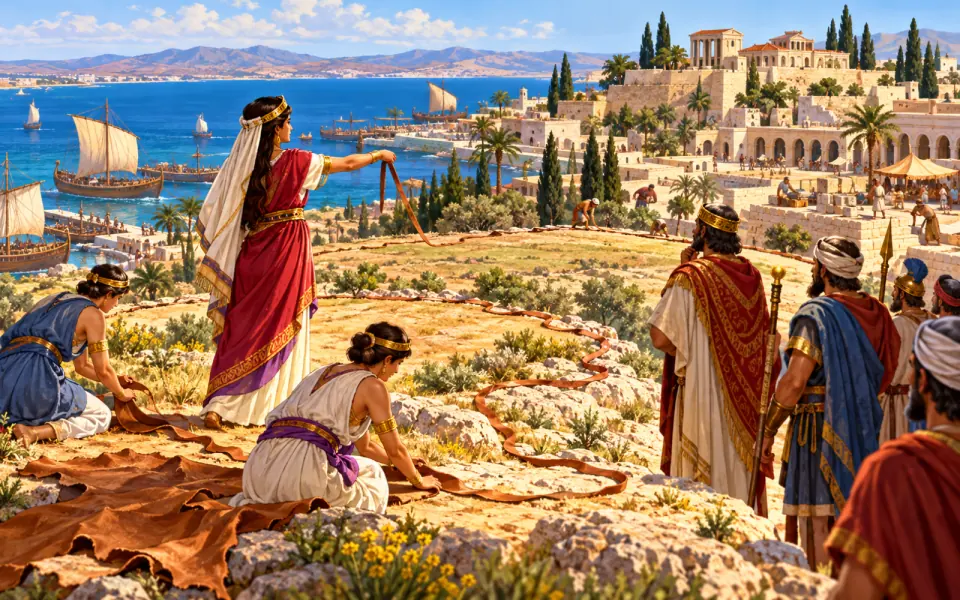
A typical polis had several parts. The acropolis, the “high city”, was a fortified hill with the temples and sanctuaries: it was the centre of religious life. Lower down was the agora, the great square where people met, bought and sold, talked and, in cities that had an assembly, voted. Around it stood the houses, usually simple, with the poorest in the lower part of the city, called the “asty”. Outside the walls stretched the “chora”, the countryside, which fed everyone and was considered extremely important. Many families lived off small fields of four or five hectares, and part of the territory belonged to the whole community. If the city was on the coast, the harbour was another vital place.
Sanctuaries had a special role. Gathering for the same festivals, in front of the same altars, helped groups of nearby villages feel like a single community. In many cases the polis was born exactly like this: scattered villages came together around a centre, with its walls and its temple.
Who belonged to the polis
Being a citizen meant taking part in decisions and, if needed, fighting. But the citizens with full rights were only adult free men. Women, foreigners living in the city (the “metics”) and slaves were left out. Metics could work and trade, but they needed a citizen to vouch for them and had to pay a special tax. In Athens, by some estimates, slaves made up between a third and a fifth of the inhabitants; in Sparta the helots greatly outnumbered the citizens; according to Herodotus, at Plataea there were seven helots following each Spartiate (the real ratio is debated).
What united the citizens was “isonomia”, the fact that all free people had to obey the same laws. It did not mean that the people governed everywhere: in some poleis a few rich men ruled, in others a single tyrant, in others still, like Athens, an assembly. But the idea that the rules applied to all citizens became the heart of Greek politics.
Many cities, one people
The poleis were jealous of their freedom and often quarrelled, but they felt part of the same world. They spoke Greek, honoured the same gods and went together to the games at Olympia. When an outside enemy threatened them all, like the Persians, they could unite, although it was not easy.
Between about the 8th and the 6th centuries BC, many poleis sent groups of citizens to found new cities far away, from the Black Sea to Sicily and southern Italy. In the end a very large share of the Greeks, according to some estimates about 40%, lived in the colonies. Each new colony began as an independent polis, with the same institutions as its mother city: that is how the model spread across the Mediterranean.
The end of the poleis
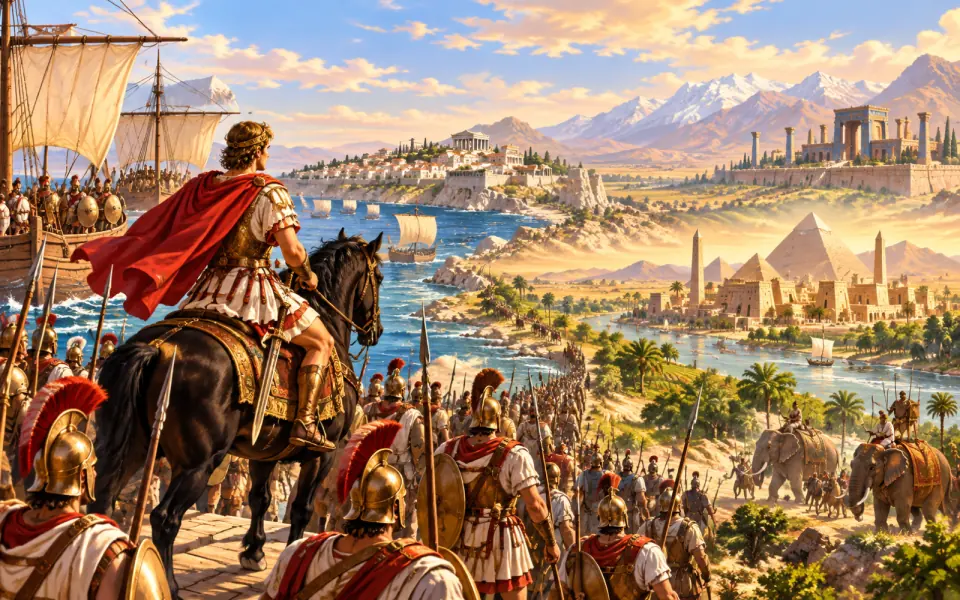
The weakness of the poleis was exactly their strength: each wanted to go it alone. Wars between cities, like the one between Athens and Sparta, wore them down. In 338 BC, at Chaeronea, the Macedonian king Philip II defeated the Greek poleis, and his son Alexander the Great took advantage of this to conquer an empire. In the Hellenistic age the cities kept existing, with their theatre and their square, but now they depended on the great kings. Those of southern Italy, Magna Graecia, came under Roman rule between the 4th and the 3rd centuries BC.
Why it happened
After the end of the Bronze Age, Greece found itself with small, isolated villages. The use of iron, which spread from around 1050 BC, made tools cheaper and allowed people to farm the land better, so the population began to grow again. Scholars debate how big this increase was, but almost all agree that farming life was safer than before.
Geography did the rest. Mountains separated the valleys, gulfs and islands kept communities apart, and no king managed to unite the whole of Greece. Each group learned to handle its own problems: defending the harvest, settling quarrels, organising festivals. On top of this came the sanctuaries, which turned the inhabitants of nearby villages into a community with a shared cult.
What changed
The polis was something new in history. In many other ancient civilisations power was in the hands of a king and a court; in Greece the cities tried out different forms of government, from rule by a few to tyrants and on to the participation of many citizens. In this laboratory the first discussions about what makes a good law were born, and from here thinking about politics began.
The model spread with colonisation: from Marseille to the Crimea, from Syracuse to Cyrene, many cities were founded with the same idea of square, temple and assembly. Magna Graecia, in Italy, brought these institutions into contact with the Etruscans and the Romans.
In today's words the polis is still everywhere: “politics” and “political” come from it, as do “metropolis”, the mother city, and “acropolis”. Even the modern idea that citizens have rights and duties, and that laws apply to everyone, has its roots in this experience, though with the limits of a society that left out women and slaves.
Key people and places
People
- Philip II of Macedon
- Macedonian king who in 338 BC defeated the Greek cities at Chaeronea and brought them under his control.
- Alexander the Great
- Philip's son: he led Greek and Macedonian troops against the Persian empire, in a world where the poleis now counted for less than the great kings.
- Cleisthenes
- Athenian politician who reformed his polis by giving it an organisation in tribes: an example of how a city-state could change its own rules.
Places
- Dreros (Crete)
- Here the oldest sure inscription showing a polis as a political community was found, from the 7th century BC.
- Athens
- The polis that developed citizens' participation in decisions more than any other, with an acropolis, an agora and an assembly.
- Sparta
- A polis in the Peloponnese where the citizens were few and the helots many: a model very different from the Athenian one.
- Magna Graecia
- The name for the Greek cities of southern Italy and Sicily, which began as colonies and later fell under Rome.
Good to know
- The word “metropolis” literally means “mother city”: that is what the Greeks called the city the colonists set out from.
- Many Greek families lived on plots of four or five hectares, about six football pitches, and part of the land was owned in common.
- The first sure evidence of a polis is an inscription from Crete, carved in stone so that everyone could know the city's laws.
- According to Herodotus, at Plataea there were seven helots following each Spartiate, but modern historians think this figure is exaggerated and the real ratio is debated.
Find out more
- Wikipedia, “Polis” en.wikipedia.org
- Wikipedia, “Athenian democracy” en.wikipedia.org
- Wikipedia, “Magna Graecia” en.wikipedia.org
- Wikipedia, “Greek colonisation” en.wikipedia.org
Related events
- Greek colonies in the Westabout 750 BC · Sea civilisationsColonisation took the model of the polis all around the Mediterranean.
- Life in Spartaabout 700 BC · Ancient GreeceSparta is the polis most different from Athens.
- Cleisthenes and democracyabout 508 BC · Ancient GreeceCleisthenes reorganised Athens and gave more power to the citizens.
- The reforms of Solonabout 594 BC · Ancient GreeceSolon tried to solve the internal conflicts of the Athenian polis.
- The conquests of Alexander334–323 BC · Ancient GreeceWith Alexander the poleis lost their independence.
Before and after, in the era “Ancient Greece”
Event 1 of 25
- You are hereThe first Greek city-statesabout 800 BC
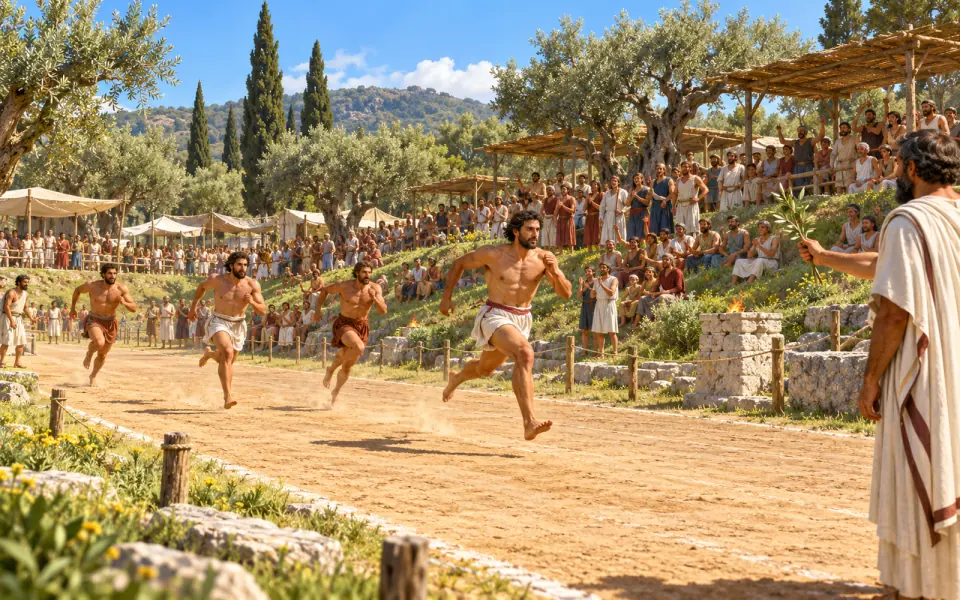 AfterThe ancient Olympic Gamesabout 776 BC
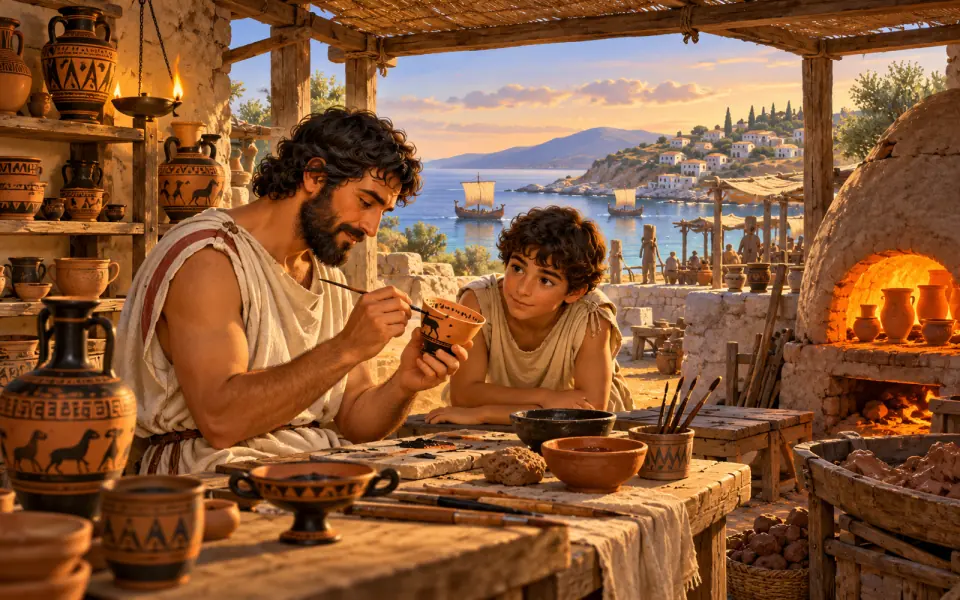 AfterThe Greek alphabetabout 750 BC
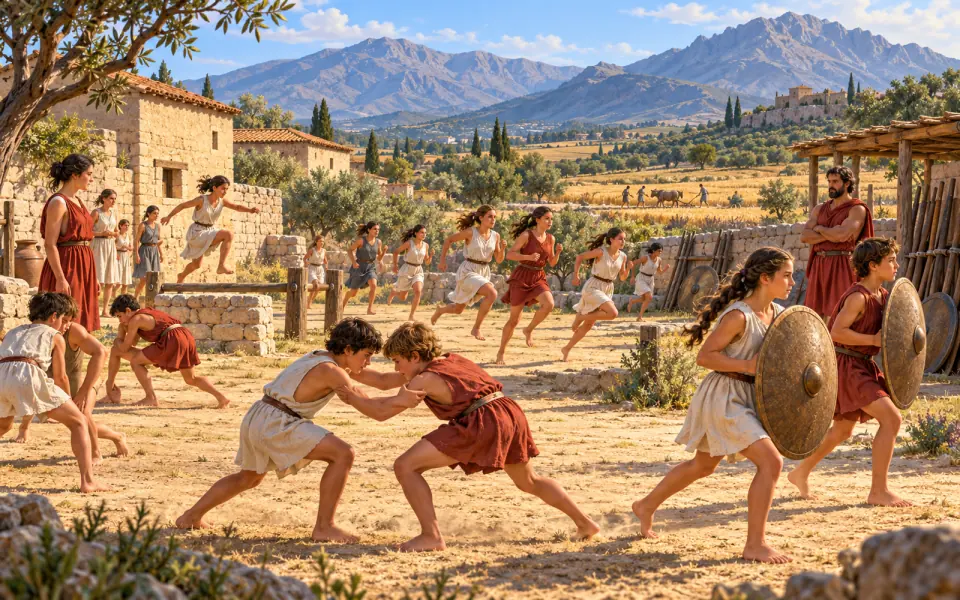 AfterLife in Spartaabout 700 BC
 AfterSappho, the poet of Lesbosabout 600 BC
 AfterThe reforms of Solonabout 594 BC
 AfterThales studies natureabout 585 BC
 AfterPythagoras at Crotonabout 530 BC
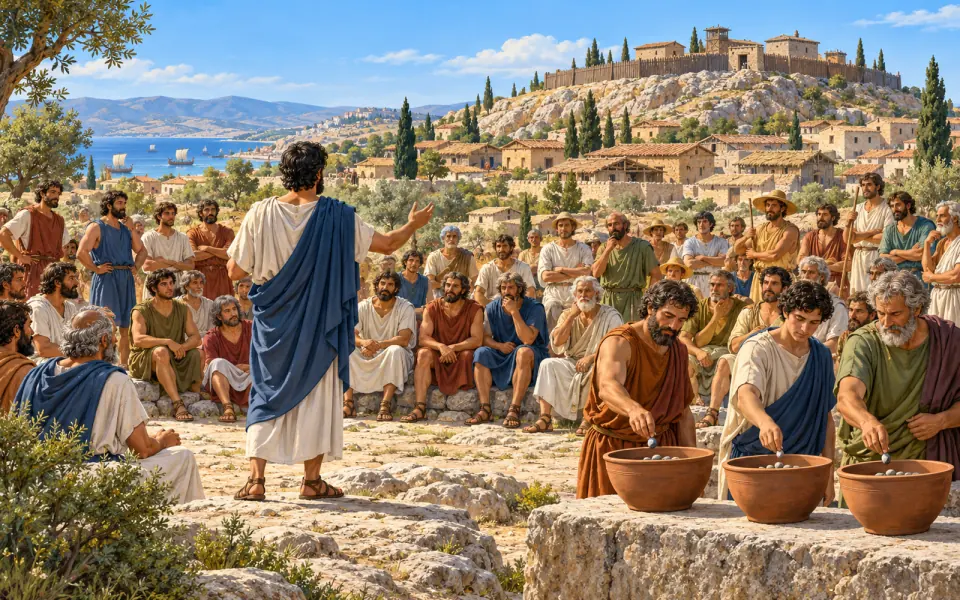 AfterCleisthenes and democracyabout 508 BC
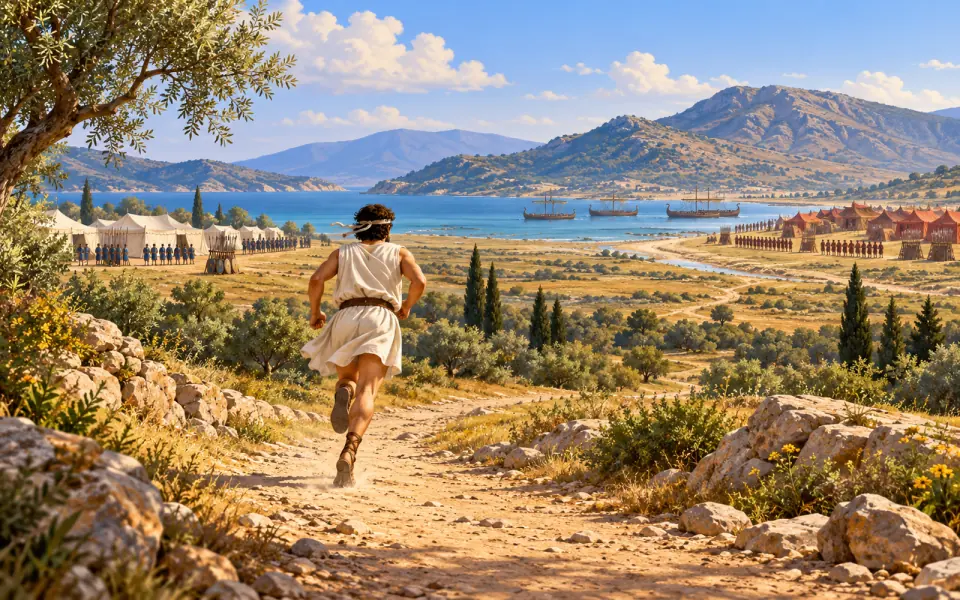 AfterThe Battle of Marathon490 BC
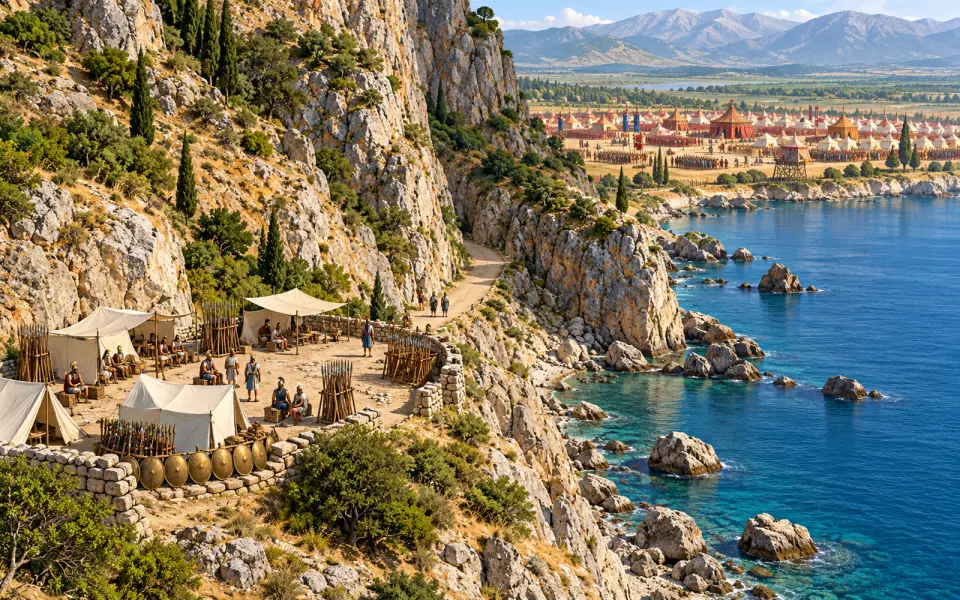 AfterThe Battle of Thermopylae480 BC
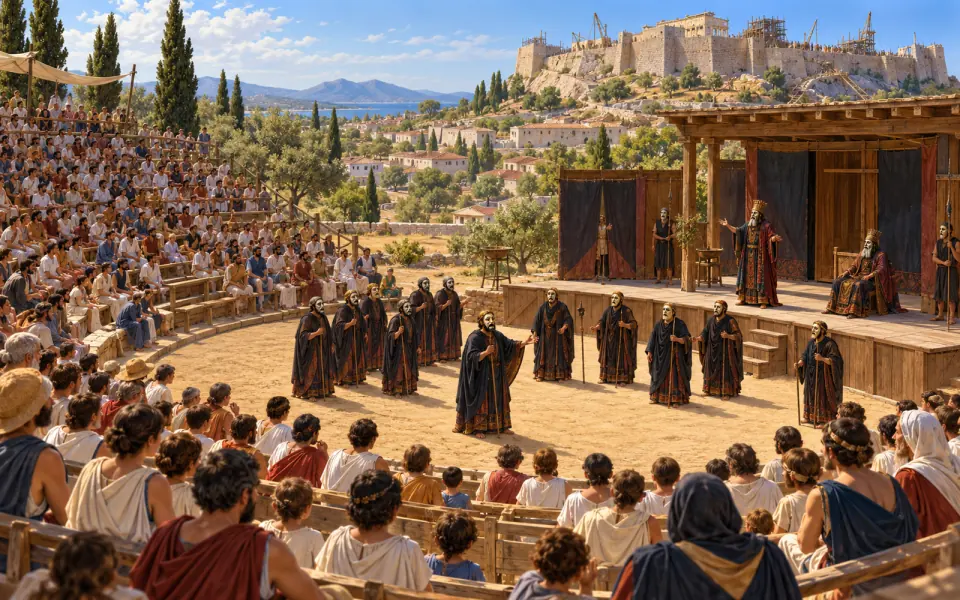 AfterThe theatre of Aeschylus472 BC
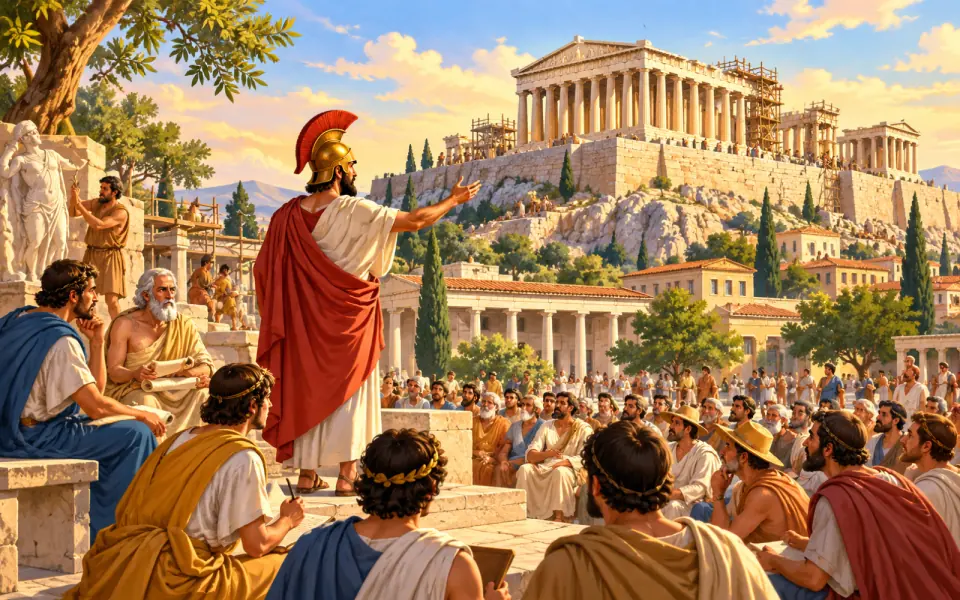 AfterThe Age of Pericles461–429 BC
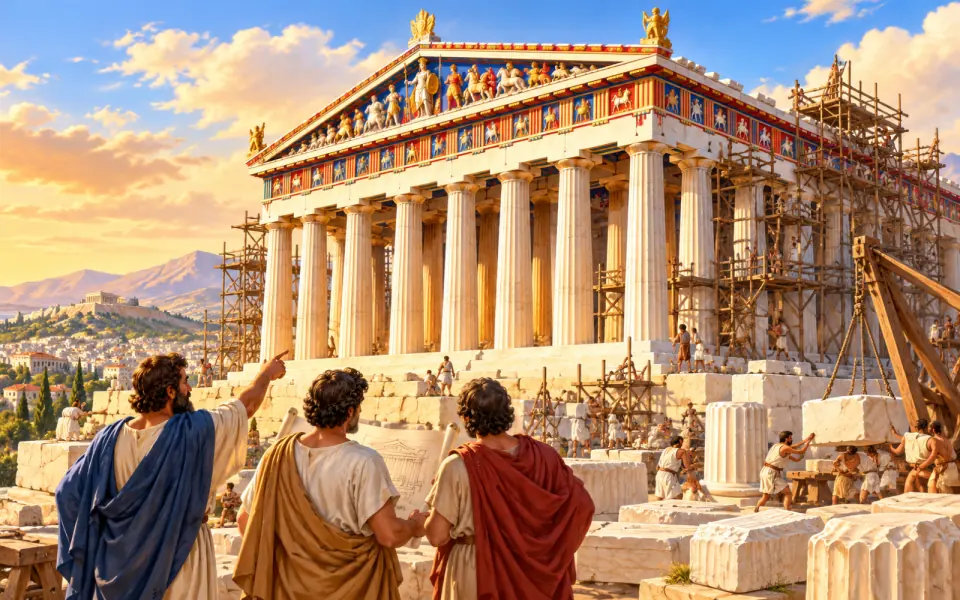 AfterThe Parthenon447–432 BC
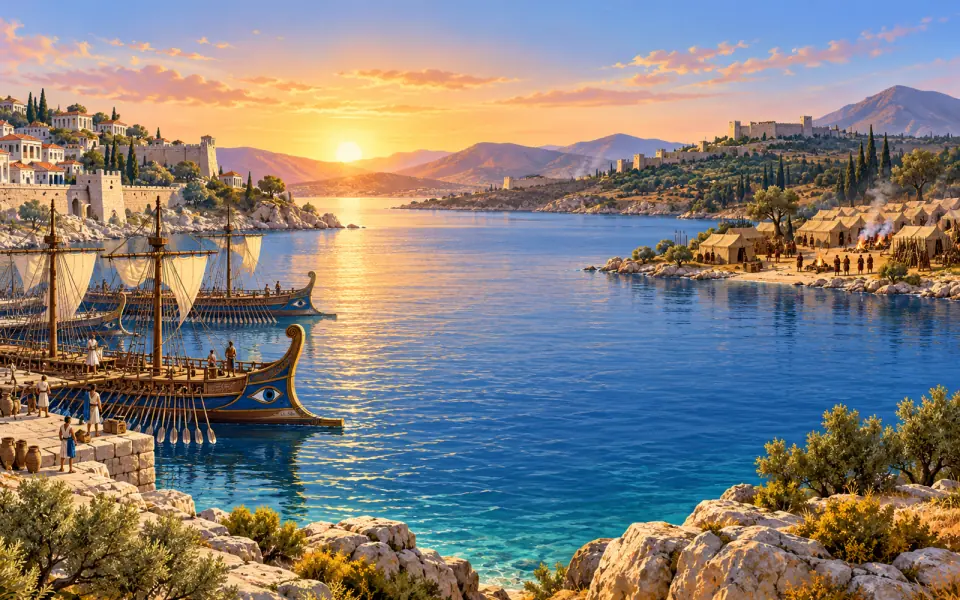 AfterThe Peloponnesian War431–404 BC
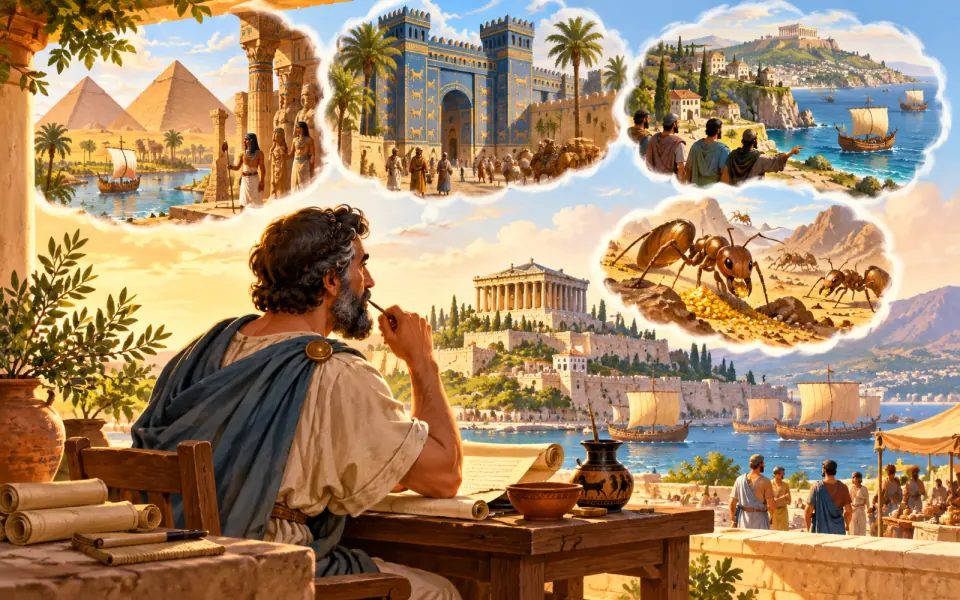 AfterHerodotus writes the Historiesabout 430 BC
 AfterHippocrates and medicineabout 400 BC
 AfterSocrates is condemned399 BC
 AfterPlato's Academyabout 387 BC
 AfterAristotle founds the Lyceumabout 335 BC
 AfterThe conquests of Alexander334–323 BC
 AfterEuclid writes the Elementsabout 300 BC
 AfterThe Library of Alexandriaabout 295 BC
 AfterArchimedes of Syracuseabout 250 BC
 AfterThe Antikythera mechanismabout 100 BC
Listen / Read next
- Music to read by: Cinematic JourneyEpic film-style music, no lyrics, by Ciro Simone IrmiciSpotifyYouTube Music
Meanwhile, elsewhere in the world
Other events of the era “Ancient Greece”
- The ancient Olympic Games
- The Greek alphabet
- Life in Sparta
- Sappho, the poet of Lesbos
- The reforms of Solon
- Thales studies nature
- Pythagoras at Croton
- Cleisthenes and democracy
- The Battle of Marathon
- The Battle of Thermopylae
- The theatre of Aeschylus
- The Age of Pericles
- The Parthenon
- The Peloponnesian War
- Herodotus writes the Histories
- Hippocrates and medicine
- Socrates is condemned
- Plato's Academy
- Aristotle founds the Lyceum
- The conquests of Alexander
- Euclid writes the Elements
- The Library of Alexandria
- Archimedes of Syracuse
- The Antikythera mechanism
