The theatre of Aeschylus
472 BC Theatre of Dionysus, Athens (Greece)
In short
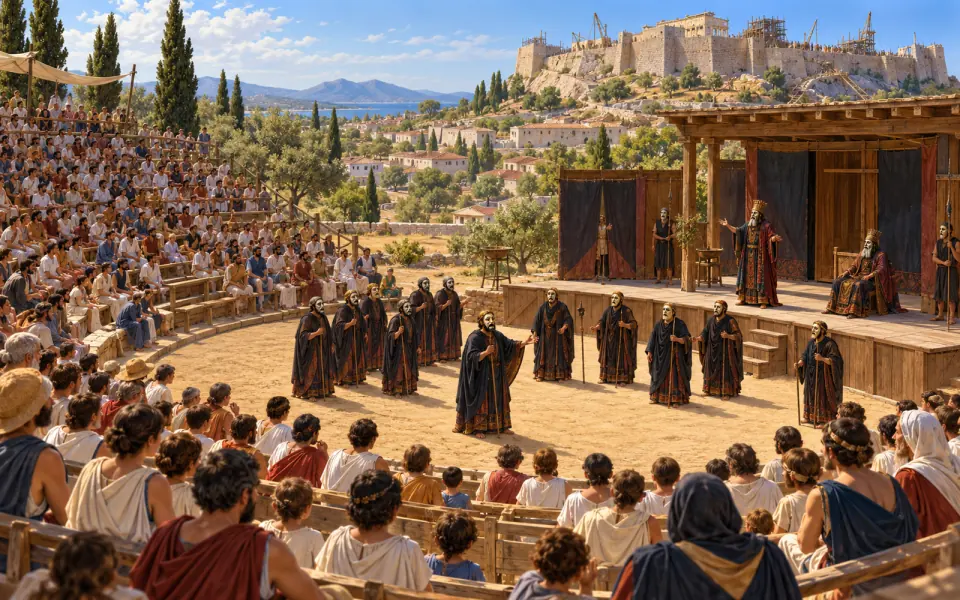
In 472 BC Aeschylus' play “The Persians”, the oldest tragedy to survive complete, was performed in Athens. Aeschylus had really fought at Marathon, and in the play he tells of the Persian defeat at Salamis as seen by the losing side. Tragedies were staged during the festivals of the god Dionysus, in open-air theatres with thousands of spectators. The actors, all men, wore masks and played the women's parts too.
Why it matters With Aeschylus, the theatre becomes the place where the city thinks about itself, about power and about suffering.
Source: Treccani, entry “Eschilo”
Study card about 6 minutes of reading
The story
Theatre is born from a festival
Theatre, as we know it, was born in Athens. It was not a pastime, but a religious ceremony. The performances were part of the festivals in honour of Dionysus, the god of wine and celebrations, and took place in an open-air theatre built on the slopes of the Acropolis. In the middle of the space for the action, called the orchestra, stood an altar of the god. The spectators sat on the hillside, on wooden and then stone benches: after the stonework of the 4th century BC the theatre could hold about 15,000 people. According to tradition, the first performance of a tragedy took place in Athens between 536 and 533 BC, with Thespis, its “inventor”, but we know little about that early phase.
Tragedy (the name probably comes from a word meaning “goat song”) was a competition. Authors presented their works in a contest, and a jury chose the winner. Tragedies were written in verse and alternated spoken parts with parts sung by the chorus, a group of people who commented on the action by singing and dancing.
A poet who had been a soldier
Aeschylus was born at Eleusis, near Athens, around 525 BC. In his youth he was a soldier. He fought at Marathon in 490 BC, where his brother Cynegeirus died, and also took part in the battles of Salamis (480) and Plataea (479). When he died, at Gela, in Sicily, in 456 BC, an epitaph was written on his tomb that recalled only his deeds as a soldier at Marathon. It said nothing of his successes as a poet, as he himself had asked.
Aeschylus won many times: his first success in the tragic contests, according to tradition, came in 484 BC, and in all he won thirteen victories. He lost, around 468, to a young author, Sophocles. About 80–90 titles of his are known, counting works cited by the ancients and reconstructed by scholars, but only seven have come down to us whole: “The Persians”, “Seven Against Thebes”, “The Suppliants”, “Prometheus Bound” and the three tragedies of the “Oresteia”. According to Aristotle, it was he who introduced a second actor, making dialogue possible and reducing the weight of the chorus. The third actor was then added by Sophocles.
“The Persians”
In 472 BC Aeschylus presented “The Persians” at the Theatre of Dionysus, and won the contest. It is still the oldest tragedy to have reached us whole, and therefore the oldest complete play we have. It is also the only surviving tragedy that deals with a recent historical event instead of myths. Only eight years had passed since the Battle of Salamis, and many spectators remembered having fought or having had a relative in the war.
The scene is set at Susa, the Persian capital, where a chorus of elderly counsellors of the king awaits news of the army. Queen Atossa, mother of Xerxes, tells of a dream that troubles her. A messenger arrives and announces the defeat: the Persian fleet has been destroyed at Salamis. The messenger describes the battle in detail, seen from the side of the defeated. Then the ghost of Darius, the old king, appears and explains why his son lost: because of “hubris”, the arrogance, that is the boundless pride of those who believe they can do anything, even defy the gods. At the end Xerxes himself arrives, defeated, and weeps together with the chorus.
The point of view is striking: an Athenian author, who had fought against the Persians, imagines the grief of the enemy. No Greek is on stage, nobody celebrates the victory. The Athenians, watching, could understand that their enemies suffered too, and that great empires can fall if those in command go too far.
After Aeschylus
In 458 BC Aeschylus presented the “Oresteia”, a trilogy made up of “Agamemnon”, “The Libation Bearers” and “The Eumenides”. It is the only classical Greek trilogy to survive complete. It tells of a chain of revenge inside a family. Around 330 BC Athens dedicated a bronze statue to him at the entrance of the theatre. In the meantime other authors, such as Sophocles and Euripides, had taken up his legacy, and Greek theatre had become one of the glories of the city.
Why it happened
Greek theatre was born from worship. The festivals of Dionysus included songs and dances by choruses, and from these rites tragedy developed, in the 6th century BC. The theatre, which had to hold thousands of people, was built on the slope of the Acropolis so that the city could take part together.
What gave Aeschylus the subject of “The Persians” was the war. After Marathon and Salamis the Athenians felt they were the protagonists of a new age and wanted to understand what had happened. The theatre was the place where the city asked itself the big questions, and tragedies spoke of justice, destiny, guilt and power. “The Persians” is one of the rare cases in which this reflection starts from something that really happened.
What changed
With Aeschylus tragedy became a mature genre. The introduction of the second actor made it possible to stage conflicts between characters, not just comments from the chorus, and opened the way to Sophocles and Euripides. Athenian theatre became a model for the Greeks and, later, for the Romans.
Greek tragedies are still performed all over the world. Every year the “Oresteia” or “The Persians” is staged, and we realise that the themes are very much of today: what happens to those who win a war, how to stop the chain of revenge, when power turns into arrogance. Many words in our vocabulary come from Greek theatre: “tragedy”, “chorus”, “scene”, “orchestra”.
The case of “The Persians” also reminds us of something important for the study of history: the voice of the defeated. An author who tries to understand the enemy's grief gives us a lesson in humanity that can never be taken for granted, in the 5th century BC or today.
Key people and places
People
- Aeschylus
- Tragic poet born at Eleusis (about 525 BC) and died at Gela (456 BC): a soldier at Marathon, Salamis and Plataea and author of seven surviving tragedies.
- Thespis
- According to tradition, the “inventor” of tragedy, active in Athens around 536–533 BC.
- Sophocles
- Younger than Aeschylus, he beat him in a contest around 468 BC and, according to tradition, introduced the third actor.
- Xerxes and Atossa
- The king and the queen mother, characters in “The Persians”; the real Xerxes was the Greeks' adversary in 480 BC.
Places
- Theatre of Dionysus
- Theatre of Athens on the southern slopes of the Acropolis, the most important in the Greek world in the 5th and 4th centuries BC.
- Eleusis
- A town near Athens where Aeschylus was born.
- Gela
- Greek city in Sicily where Aeschylus died in 456 BC.
- Susa
- Capital of the Persian empire and the place where the action of “The Persians” is set.
Good to know
- “The Persians” is the oldest Greek tragedy to have come down to us whole.
- The Theatre of Dionysus, in its stone version of the 4th century BC, could hold about 15,000 spectators.
- Aeschylus wanted only the memory of Marathon on his tomb, not that of his tragedies.
- About 80–90 titles of Aeschylus are known, but only seven survive whole.
- The “Oresteia”, of 458 BC, is the only trilogy of Greek tragedy to survive complete.
Find out more
- Wikipedia, “Aeschylus” en.wikipedia.org
- Wikipedia, “The Persians” en.wikipedia.org
- Wikipedia, “Theatre of Dionysus” en.wikipedia.org
- Wikipedia, “Greek tragedy” en.wikipedia.org
Related events
- The Battle of Marathon490 BC · Ancient GreeceAeschylus had fought at Marathon.
- The Battle of Thermopylae480 BC · Ancient GreeceXerxes, protagonist of The Persians, is the king who was in command at Thermopylae.
- The Age of Pericles461–429 BC · Ancient GreeceTheatre flourished in the Athens of Pericles.
- The Parthenon447–432 BC · Ancient GreeceThe Parthenon, too, was born in those years of splendour.
- Plautus and comedyabout 200 BC · Ancient RomePlautus and Roman comedy descend from Greek theatre.
Before and after, in the era “Ancient Greece”
Event 12 of 25
 BeforeThe first Greek city-statesabout 800 BC
 BeforeThe ancient Olympic Gamesabout 776 BC
 BeforeThe Greek alphabetabout 750 BC
 BeforeLife in Spartaabout 700 BC
 BeforeSappho, the poet of Lesbosabout 600 BC
 BeforeThe reforms of Solonabout 594 BC
 BeforeThales studies natureabout 585 BC
 BeforePythagoras at Crotonabout 530 BC
 BeforeCleisthenes and democracyabout 508 BC
 BeforeThe Battle of Marathon490 BC
 BeforeThe Battle of Thermopylae480 BC
- You are hereThe theatre of Aeschylus472 BC
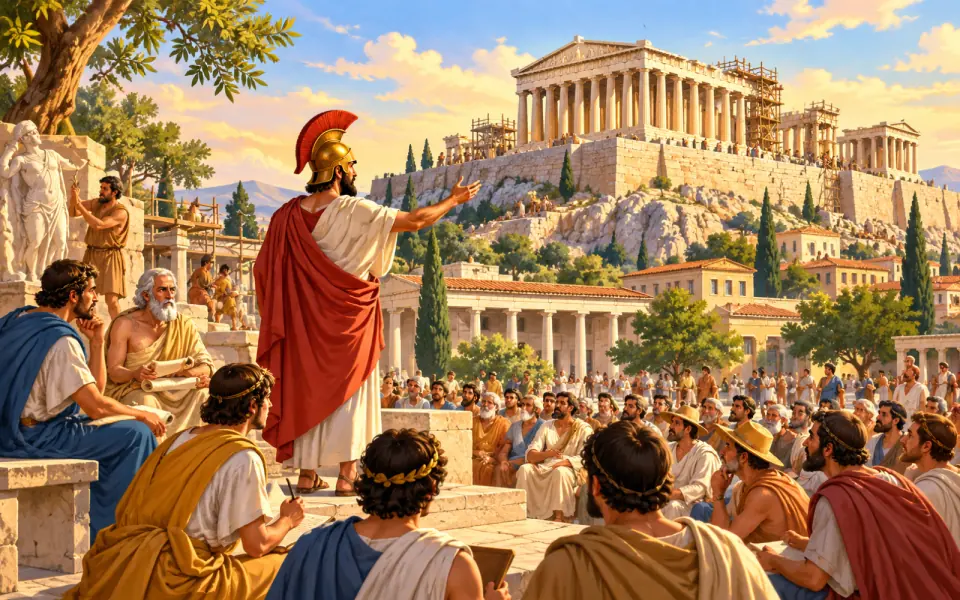 AfterThe Age of Pericles461–429 BC
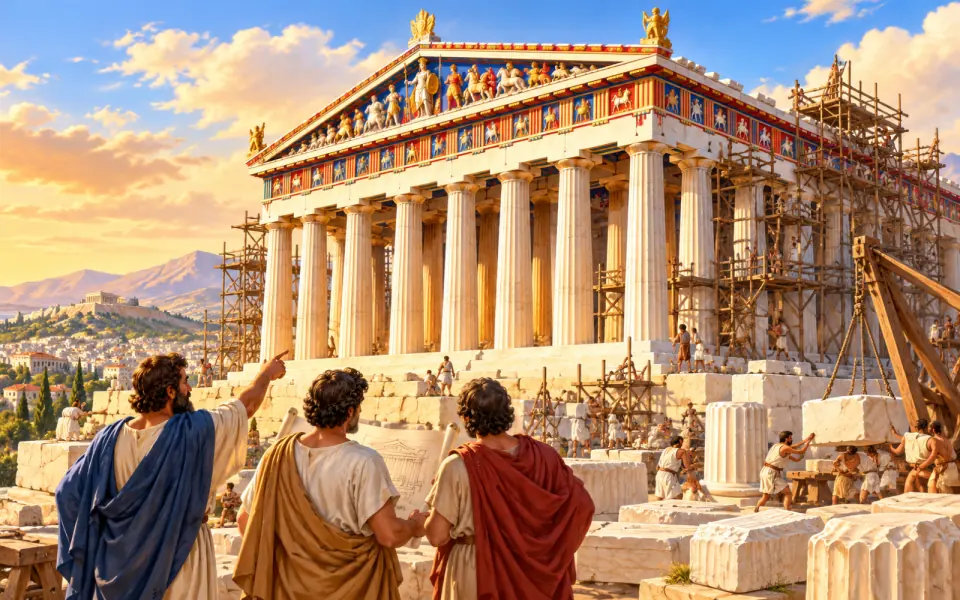 AfterThe Parthenon447–432 BC
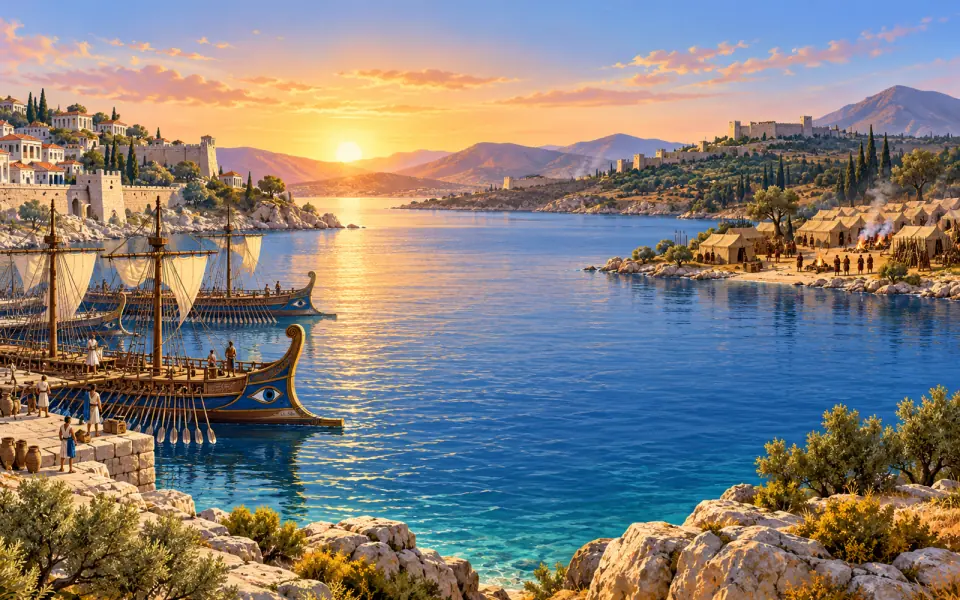 AfterThe Peloponnesian War431–404 BC
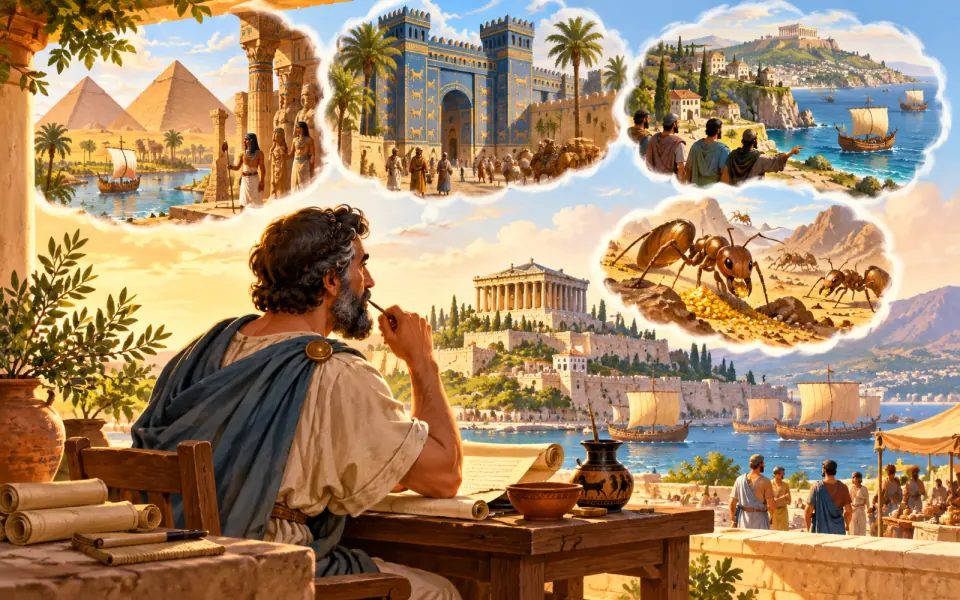 AfterHerodotus writes the Historiesabout 430 BC
 AfterHippocrates and medicineabout 400 BC
 AfterSocrates is condemned399 BC
 AfterPlato's Academyabout 387 BC
 AfterAristotle founds the Lyceumabout 335 BC
 AfterThe conquests of Alexander334–323 BC
 AfterEuclid writes the Elementsabout 300 BC
 AfterThe Library of Alexandriaabout 295 BC
 AfterArchimedes of Syracuseabout 250 BC
 AfterThe Antikythera mechanismabout 100 BC
Listen / Read next
- Music to read by: Cinematic JourneyEpic film-style music, no lyrics, by Ciro Simone IrmiciSpotifyYouTube Music
Meanwhile, elsewhere in the world
Other events of the era “Ancient Greece”
- The first Greek city-states
- The ancient Olympic Games
- The Greek alphabet
- Life in Sparta
- Sappho, the poet of Lesbos
- The reforms of Solon
- Thales studies nature
- Pythagoras at Croton
- Cleisthenes and democracy
- The Battle of Marathon
- The Battle of Thermopylae
- The Age of Pericles
- The Parthenon
- The Peloponnesian War
- Herodotus writes the Histories
- Hippocrates and medicine
- Socrates is condemned
- Plato's Academy
- Aristotle founds the Lyceum
- The conquests of Alexander
- Euclid writes the Elements
- The Library of Alexandria
- Archimedes of Syracuse
- The Antikythera mechanism
