The Laws of the Twelve Tables
about 450 BC Roman Forum, Rome
In short
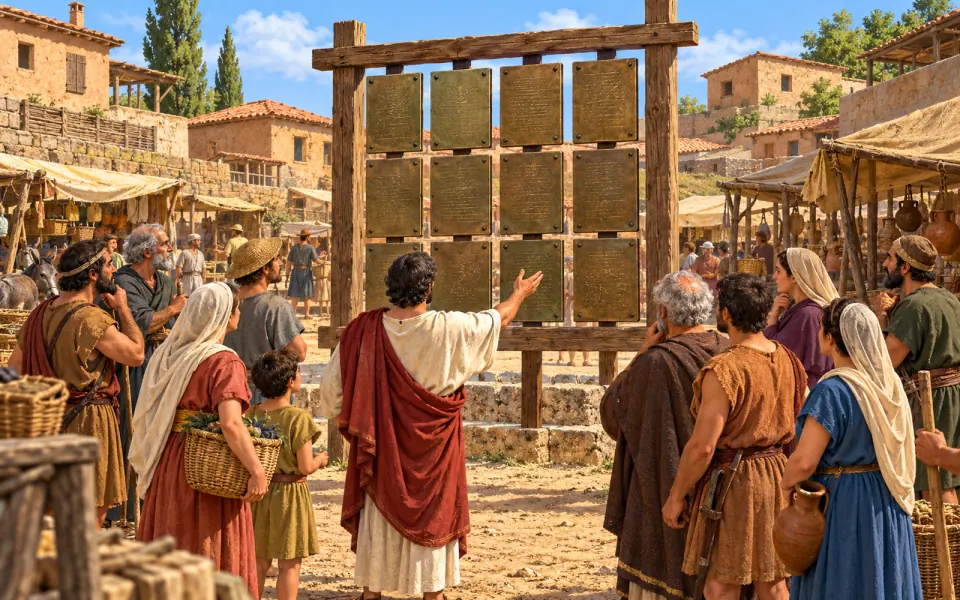
Around the middle of the 5th century BC a committee of ten men, the decemvirs, wrote down the laws of Rome on twelve tablets displayed in the Forum. Until then the rules were known mainly to the patricians, the richest and most powerful families. The plebeians, the ordinary people, had asked for written laws so that they would not be treated unfairly. The original tablets have been lost, but some sentences have come down to us through ancient writers.
Why it matters Written laws that are the same for everyone are a step towards justice, and Roman law lies at the root of many legal codes today.
Source: Treccani, entry “Dodici Tavole”
Study card about 6 minutes of reading
The story
Laws that nobody could read
Imagine living in a city where laws exist, but nobody tells you what they are. If you are accused of something, you have to go to the judge, and other people decide how the rules are to be interpreted. In Rome in the first decades of the Republic it was more or less like this. The rules existed as oral customs, handed down by word of mouth, and they were known and explained by the pontiffs, a college of priests drawn exclusively from the noble families, the patricians.
For the plebeians, that is, ordinary people, this was a serious problem. Where rules are not written down, whoever has power can interpret them as suits them. The plebeians wanted two things: written laws, which everyone could know, and a limit on the harshest rules against those who could not pay their debts. As early as 462 BC a tribune of the plebs, Gaius Terentilius Arsa, had proposed setting up a commission to put the laws in writing.
Ten men to write the laws
The request met with a lot of resistance, but in the end the Senate gave way. In 454 BC, the tradition says, three ambassadors were sent to Greece to study the laws of Athens and other cities. Modern historians note that Greek ideas may also have arrived through the Greek cities of southern Italy and Sicily, where some lawgivers were famous, such as Zaleucus of Locri and Charondas of Catania.
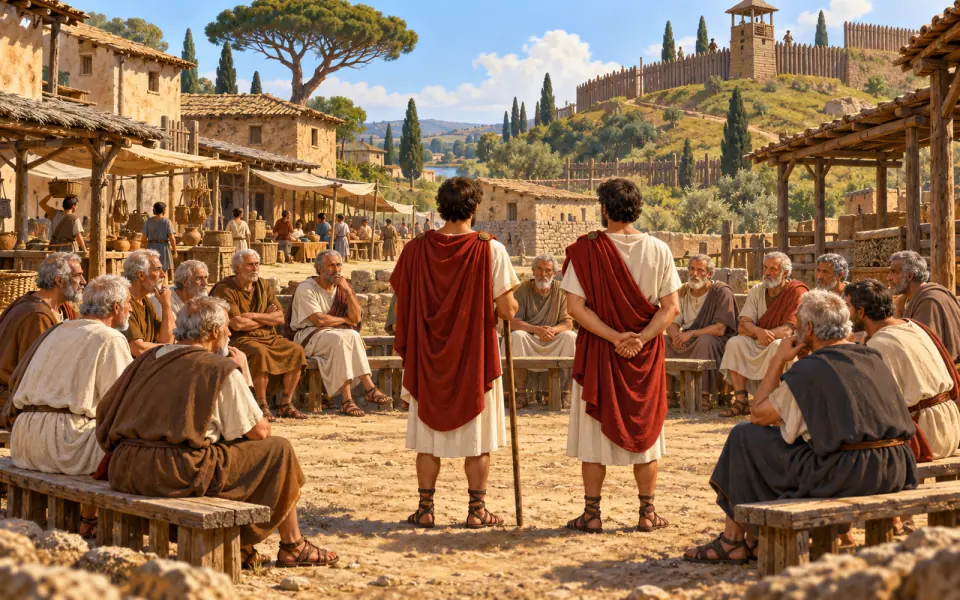
In 451 BC ten men were elected, the decemvirs, with the task of writing the laws: for that period they replaced the normal magistrates. Their work was discussed in the assembly and led to the drafting of ten tables. But it was not enough: the commission was renewed for the following year, and Appius Claudius, already a member of the first board, dominated the second.
The second decemvirate and its fall
The second group, according to the historian Livy, behaved like a government of tyrants. The decemvirs wrote the last two tables without consulting the assembly and the tradition accuses them of abuse of power. The turning point was a tragic episode, told by the ancients: Verginia, a plebeian girl, was said to have been killed by her father, Lucius Verginius, to save her from the demands of Appius Claudius. The event set off a revolt. The decemvirs were deposed and the ordinary magistrates returned. The consuls of 449 BC had the laws engraved on tablets to be displayed in public, in the Forum.
What were the tables made of? Nobody knows: the ancients speak of oak wood, of ivory, of bronze. Scholars today repeat these guesses without being able to choose among them. We know that they stayed in the Forum until 390 BC, when the Gauls, a Celtic people from the north, attacked and sacked Rome. Since then the original tables have not existed.
What was written on them
How do we know the content, if the tables are lost? Thanks to quotations from ancient authors, who reported them partly word for word and partly in paraphrase. The text, reconstructed by scholars, is incomplete and its order is partly a matter of guesswork. Cicero says that in his day boys learned it by heart, like a poem.
The laws covered many subjects. The first tables dealt with civil trials: how to summon someone to court and how to carry out a sentence. The fourth dealt with the family: the father had great power over his children, the patria potestas, but lost this power if he sold his son three times. The fifth concerned inheritances and the sixth contracts, such as buying and selling. The seventh concerned roads and the ownership of land. The eighth concerned damage and injuries, with penalties that seem harsh to us today, and one important rule: the principle of talion, that is, a punishment equal to the harm done, and in many cases money fines in place of personal revenge.
The ninth table forbade laws made against a single citizen. The tenth dealt with funerals and forbade burying or cremating the dead inside the city. The eleventh forbade marriage between patricians and plebeians: a rule that seems unfair to us today and that was abolished a few years later, in 445 BC, by the Canuleian law. The twelfth concerned various crimes.
One law for everyone
The value of the Twelve Tables does not lie in the perfection of the rules, which were often severe and suited to a society of farmers, but in the fact that they were written, displayed in public and equal for all. According to Livy they were “the source of all public and private law”. Some modern scholars are more cautious: they think that the decemvirs mostly put old customs in writing, without great novelties. The text, moreover, was expanded and interpreted by later generations, who attributed to the Twelve Tables even later changes, giving the collection an almost sacred value.
Why it happened
At the beginning of the Republic the law was in the hands of the pontiffs, who were all patricians. The plebeians feared that in trials the rules would be changed or interpreted to the nobles' advantage, and they asked for written rules that would limit this freedom. There was also the problem of debts, because the rules against those who did not pay were very severe.
The pressure of the plebeians, who had already obtained their tribunes, grew until it convinced the Senate. The example of Greek cities, where written laws had long existed, also pushed in the same direction: the Twelve Tables came out of a comparison between Rome and the Greek world, as well as from the struggle between the two Roman social groups.
What changed
For the first time every Roman citizen could know what the rules were, at least in theory. The laws were no longer a secret of the priests. In time Roman jurists began to study them, to comment on them and to relate them to real cases: this is how a science of law was born that developed over centuries.
The Twelve Tables are considered the origin of Roman law, which under the emperors was collected and put in order, for example in the Code of Justinian. That law was studied in the Middle Ages in universities, starting with Bologna, and influenced the civil codes of many European countries, including Italy.
Some ideas have come down to us: the written law, made public; the fact that nobody can be punished with a law made specially against them; the principle that a penalty must be proportionate to the harm. The Twelve Tables, however, also had rules that we judge unfair today. Studying them helps us understand how much justice has changed and how much is still left to improve.
Key people and places
People
- Gaius Terentilius Arsa
- Tribune of the plebs who in 462 BC proposed setting up a commission to write the laws.
- Appius Claudius
- Decemvir, a member of a great patrician family. In Livy's account he led the second decemvirate with the behaviour of a tyrant.
- Verginia
- Young plebeian woman of the traditional story: her case was said to have set off the revolt against the decemvirs.
- Cicero
- Roman orator and writer of the 1st century BC; he recalls that in his day children learned the Twelve Tables by heart.
Places
- Roman Forum
- The centre of public life in Rome, where the tables were displayed so that everyone could read them.
- Athens
- Greek city where, according to the tradition, Rome sent three ambassadors to study the laws in 454 BC.
- Locri and Catania
- Greek cities of southern Italy and Sicily with famous lawgivers, Zaleucus and Charondas, who perhaps influenced Roman law.
Good to know
- Nobody knows what the tables were made of: the ancients speak of oak, ivory or bronze.
- The original tables were lost in 390 BC, when the Gauls sacked Rome.
- Cicero says that in his day Roman children learned the Twelve Tables by heart, like a nursery rhyme.
- One of the rules forbade burying or cremating the dead inside the city.
- The principle of talion, “an eye for an eye”, appeared in the Twelve Tables, but it was already a step forward because it limited revenge.
Find out more
- World History Encyclopedia, “Twelve Tables” worldhistory.org
- Wikipedia, “Twelve Tables” en.wikipedia.org
- Wikipedia, “Roman law” en.wikipedia.org
- Wikipedia, “Appius Claudius Crassus Inregillensis” en.wikipedia.org
Related events
- Birth of the Roman Republicabout 509 BC · Ancient RomeWritten laws were a victory for the plebeians in their struggle with the patricians.
- The Code of Hammurabiabout 1754 BC · River civilisationsThe Code of Hammurabi is another ancient collection of written laws, born in Mesopotamia.
- The reforms of Solonabout 594 BC · Ancient GreeceAthens too had a lawgiver, Solon, who reformed the city's laws.
- Justinian's CodeAD 529 · Early Middle AgesA thousand years later, the Code of Justinian collected and reordered Roman law.
- The University of Bolognaabout 1088 · Late Middle AgesAt the University of Bologna, Roman law came to be studied again.
Before and after, in the era “Ancient Rome”
Event 3 of 25
 BeforeTraditional founding of Romeabout 753 BC
 BeforeBirth of the Roman Republicabout 509 BC
- You are hereThe Laws of the Twelve Tablesabout 450 BC
 AfterThe Appian Way312 BC
 AfterThe First Punic War264–241 BC
 AfterHannibal crosses the Alps218 BC
 AfterPlautus and comedyabout 200 BC
 AfterRoman concreteabout 150 BC
 AfterThe Aqua Marcia aqueduct144–140 BC
 AfterSpartacus leads the revolt73–71 BC
 AfterCaesar crosses the Rubicon49 BC
 AfterThe Julian calendar46 BC
 AfterThe murder of Julius Caesar44 BC
 AfterAugustus, the first emperor27 BC
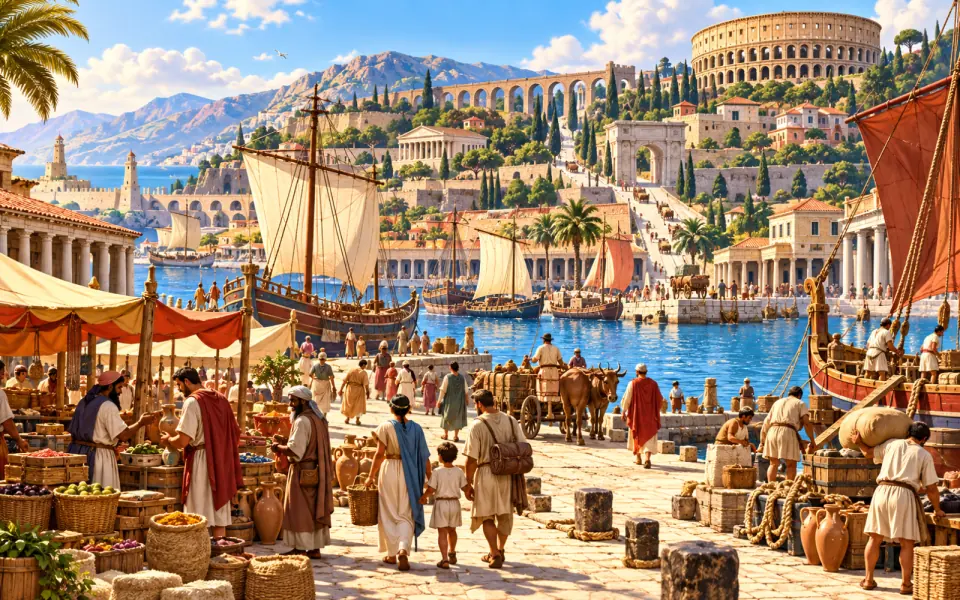 AfterThe Pax Romana27 BC – AD 180
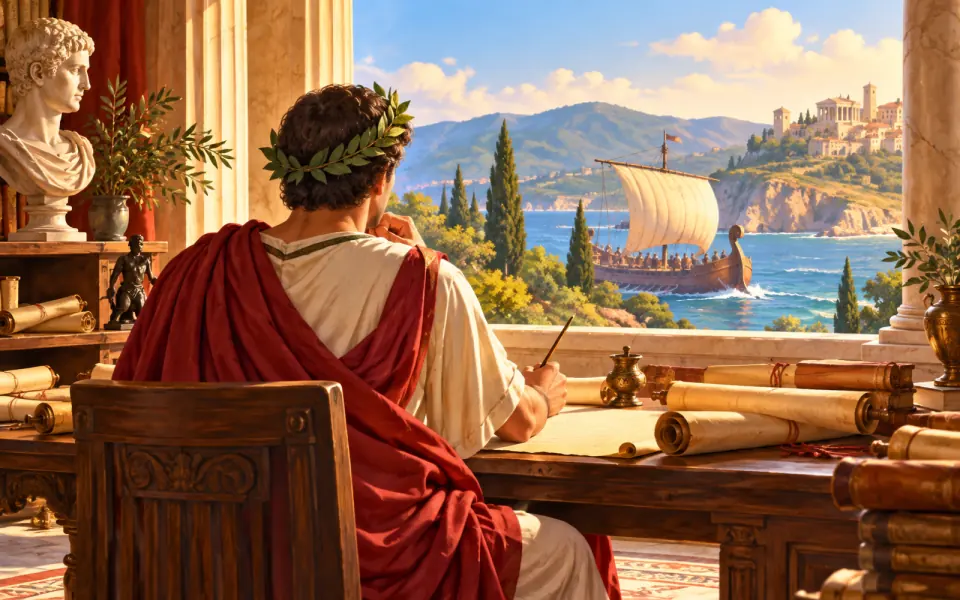 AfterVirgil and the Aeneid19 BC
 AfterPompeii buried by VesuviusAD 79
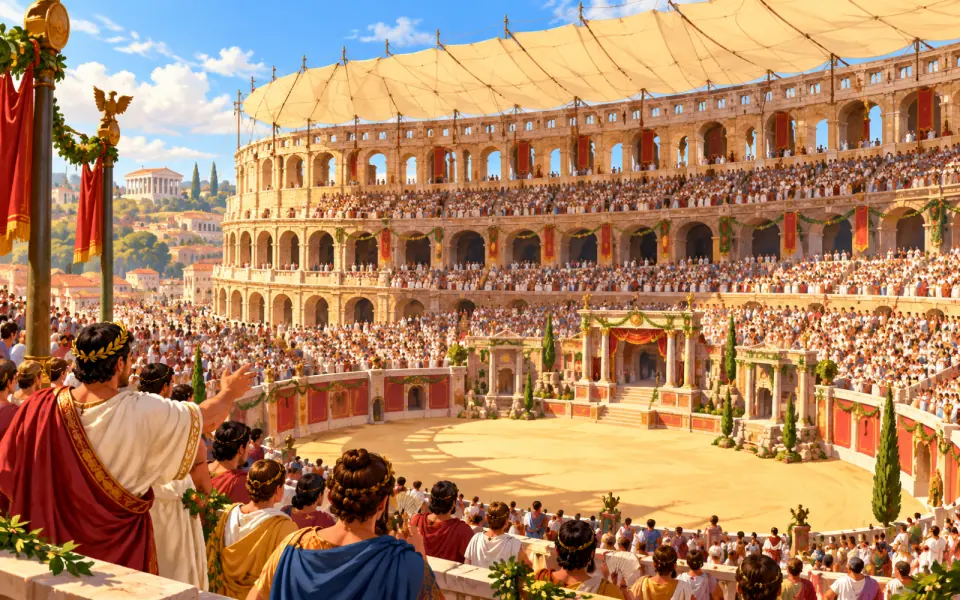 AfterThe Colosseum opensAD 80
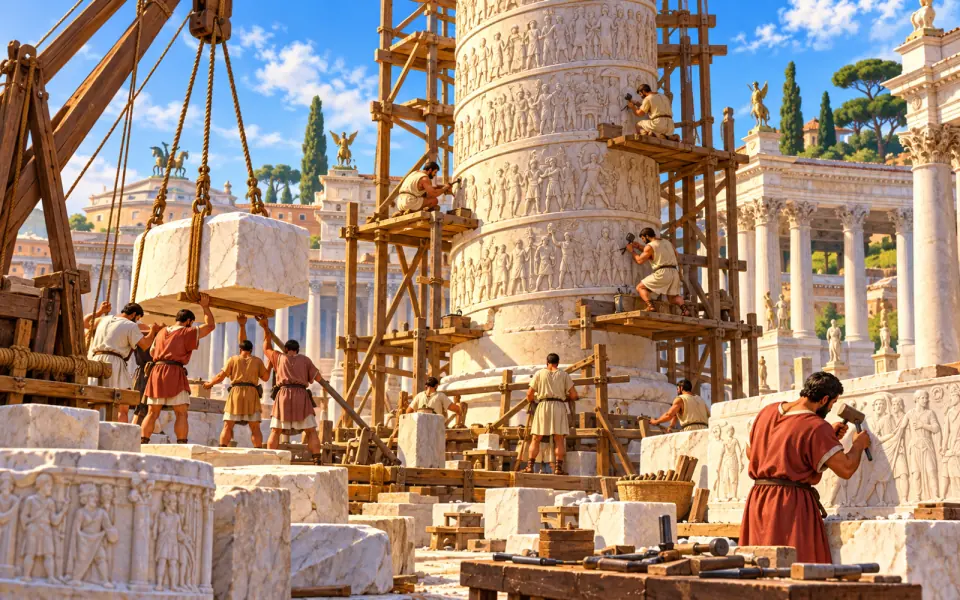 AfterTrajan's ColumnAD 113
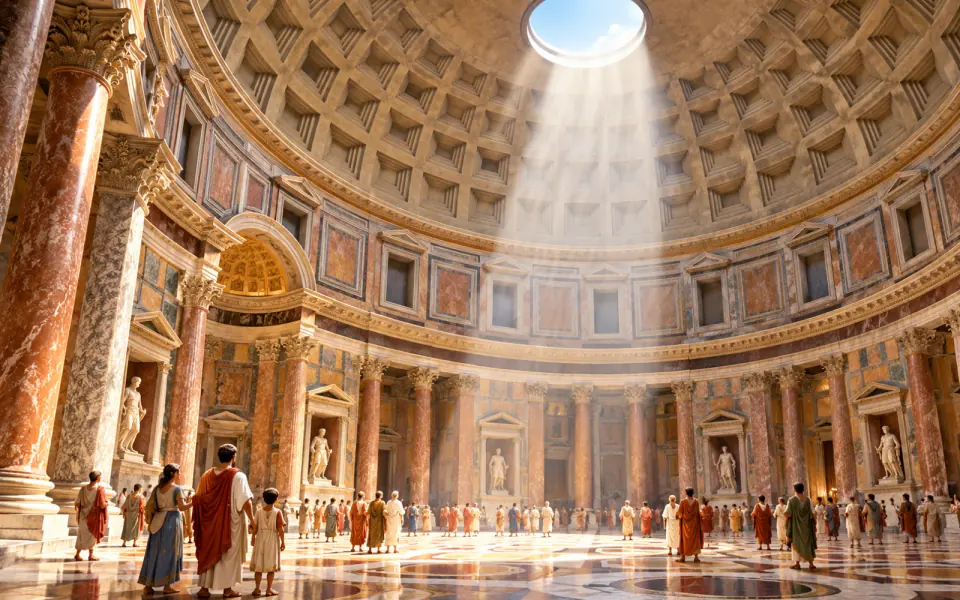 AfterThe Pantheonabout AD 125
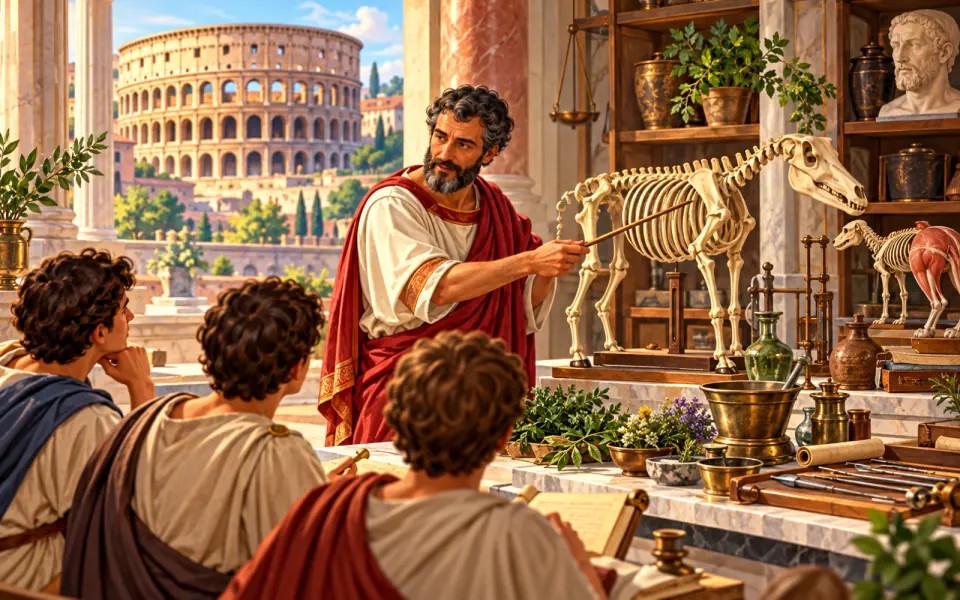 AfterGalen, a doctor in Romeabout AD 162
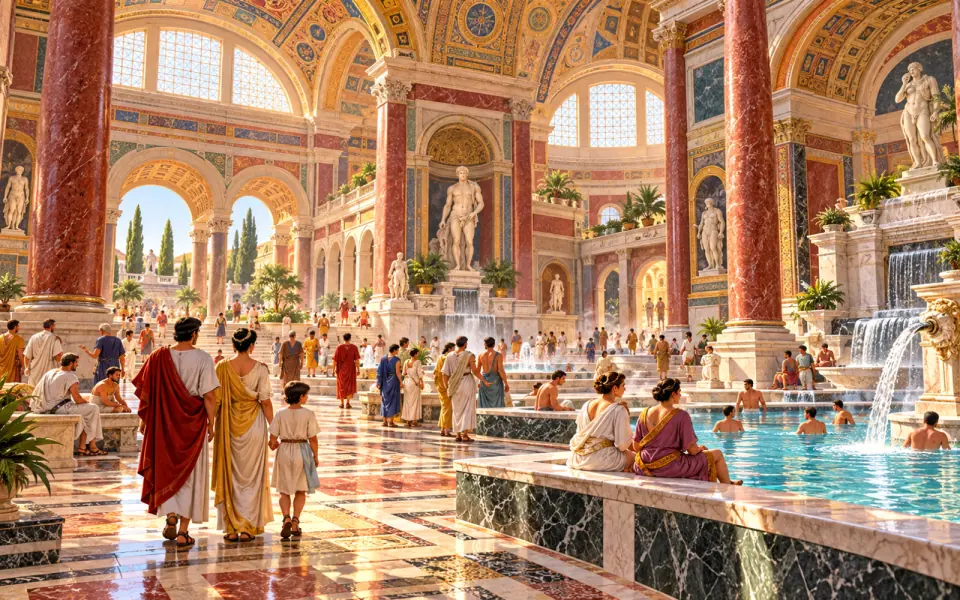 AfterThe Baths of CaracallaAD 216
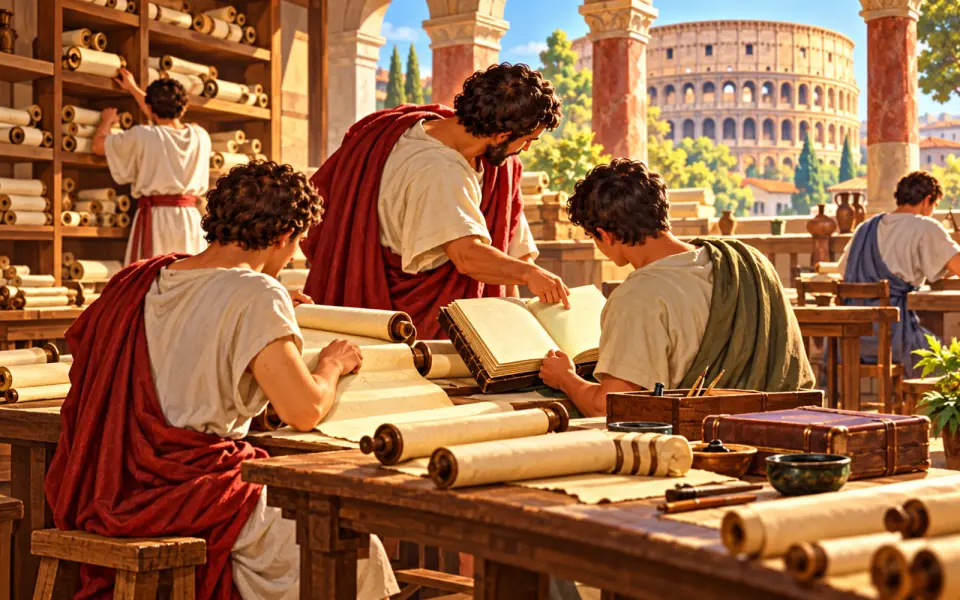 AfterThe book with pages (the codex)about AD 300
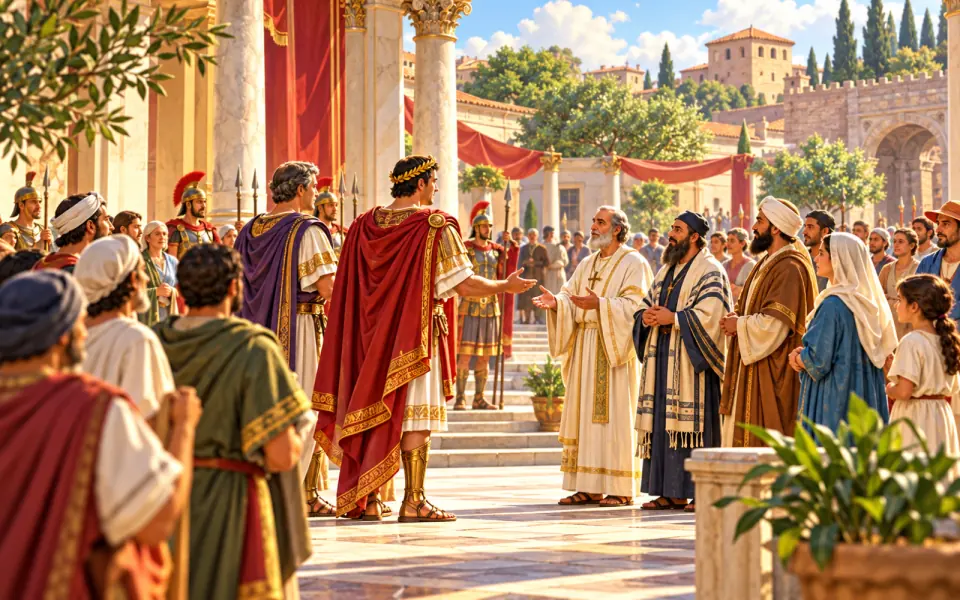 AfterThe Edict of MilanAD 313
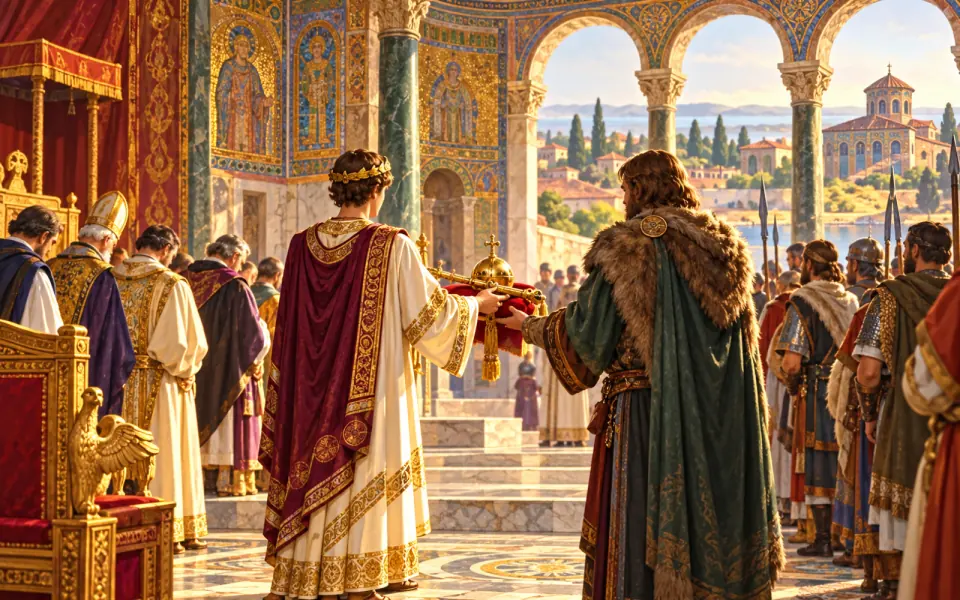 AfterFall of the Western Roman EmpireAD 476
Listen / Read next
- Music to read by: Cinematic JourneyEpic film-style music, no lyrics, by Ciro Simone IrmiciSpotifyYouTube Music
Meanwhile, elsewhere in the world

Other events of the era “Ancient Rome”
- Traditional founding of Rome
- Birth of the Roman Republic
- The Appian Way
- The First Punic War
- Hannibal crosses the Alps
- Plautus and comedy
- Roman concrete
- The Aqua Marcia aqueduct
- Spartacus leads the revolt
- Caesar crosses the Rubicon
- The Julian calendar
- The murder of Julius Caesar
- Augustus, the first emperor
- The Pax Romana
- Virgil and the Aeneid
- Pompeii buried by Vesuvius
- The Colosseum opens
- Trajan's Column
- The Pantheon
- Galen, a doctor in Rome
- The Baths of Caracalla
- The book with pages (the codex)
- The Edict of Milan
- Fall of the Western Roman Empire
