Spartacus leads the revolt
73–71 BC Capua and Vesuvius, Campania
In short
Spartacus was a gladiator from Thrace, in the Balkans, forced to fight in the arena to entertain the crowds. With about seventy companions he escaped from a gladiator school in Capua. They took refuge on Vesuvius, and soon thousands of slaves and poor farmers joined them. For two years they defeated several Roman armies, until the general Crassus beat them in 71 BC.
Why it matters His revolt shows how hard life was for slaves in the Roman world.
Source: Treccani, entry “Spartaco”
Study card about 6 minutes of reading
The story
An escape from Capua
In ancient Rome slavery was an everyday reality. Slaves worked in the fields, in houses, in mines. Some were forced to become gladiators and to fight in the arena for the entertainment of the public, with hard training in special schools. One of these schools was at Capua, in Campania, and belonged to a man named Gnaeus Cornelius Lentulus Batiatus.
In 73 BC about two hundred gladiators of the Capua school planned to escape. The plan was discovered, but a group of about seventy, according to the sources, managed to break out all the same: with knives and kitchen tools they opened the doors and took weapons from some carts. The ancient sources do not agree on the exact number: Livy speaks of 74 men, Plutarch of 78, Florus of “thirty or so, perhaps more”. Three leaders were chosen: two Gauls, Crixus and Oenomaus, and a man named Spartacus.
Who was Spartacus
We know very little about Spartacus, and what we know comes from Roman authors, who wrote long afterwards. He came from Thrace, a region of the Balkans today divided between Bulgaria, Greece and Turkey. Perhaps he had served as an auxiliary soldier in the Roman army, and had then been reduced to slavery; according to another version he had been taken prisoner in war. Some have even thought that “Thracian” indicated only a type of gladiator, the Thracians, who fought with a particular weapon and shield.
From Vesuvius to victories
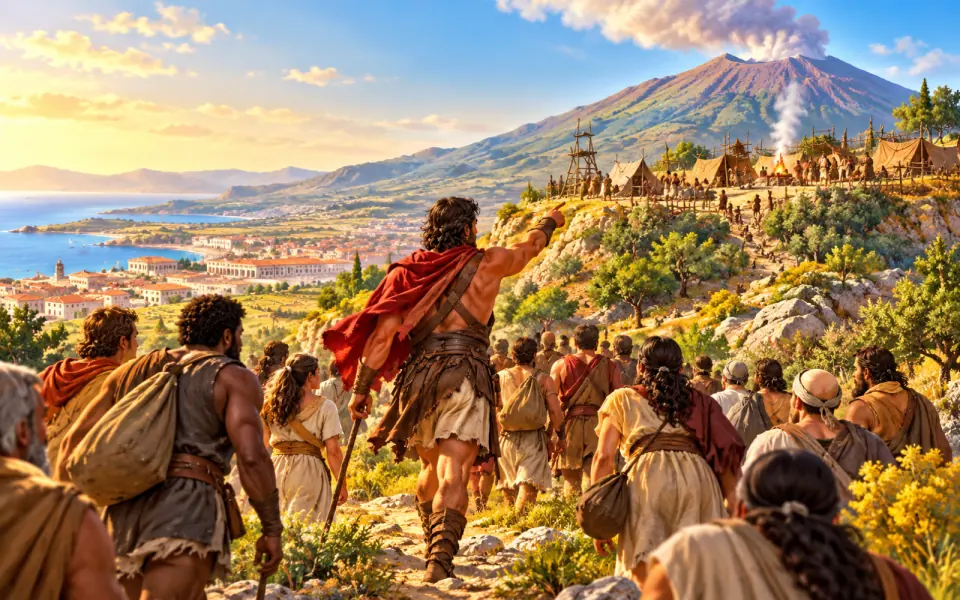
The fugitives defeated a small unit sent to stop them, got hold of real weapons and took refuge on Vesuvius, which at that time was a quiet mountain. The Romans sent against them the praetor Gaius Claudius Glaber with about three thousand men, who were not experienced legionaries. Glaber besieged the mountain, convinced he had them trapped. But Spartacus had an idea: with the branches and wild vines of the place he made ladders and ropes, climbed down the opposite side and attacked the Romans from behind.
After this victory and others against armies sent from Rome, the news spread. Shepherds, farm labourers and slaves from the countryside joined him. Plutarch speaks of about 70,000 men, Appian of 120,000: the figures are uncertain and probably exaggerated. What we know is that it became a large army, able to defeat the Romans several times.
Where did they want to go?
What did the rebels want? The sources do not agree. Appian and Florus write that Spartacus wanted to march on Rome, but scholars today think this is more the Romans' fear than a real plan. Plutarch, on the other hand, maintains that his aim was to flee north, towards Cisalpine Gaul, and to return free to their homelands. It is thought that at a certain point the group split: Crixus, according to Appian, was defeated and killed by the consul Gellius on Monte Gargano, in Apulia, with about 30,000 men, while Spartacus continued north and defeated another consul, Lentulus.
Why did they not, in the end, cross the Alps? We do not know. Perhaps the rebels, now so many, wanted to stay in Italy to plunder and enjoy their successes. When the rebels headed south, to the area of the Strait of Messina, according to Plutarch Spartacus paid some pirates of Cilicia to take him to Sicily with about 2,000 men, but the pirates betrayed him.
Crassus and the end
The Senate, now worried, gave the command to Marcus Licinius Crassus, a very rich man, with six new legions, about forty or fifty thousand men in all. Crassus restored order in the army with a severe punishment, decimation, though the sources speak of it in different ways. He built fortifications in the far south of Calabria to shut the rebels in. Spartacus managed to break the siege, but by now the army was tired and divided.
The final battle took place in 71 BC, in a place near a river in Lucania, which the sources call the Silarus or Sele. Spartacus died in battle, according to Plutarch after killing two centurions, and his body was never found. Pompey, who was returning from Spain, killed about 5,000 fugitives, and wrote to the Senate that he had torn up the war “by the roots”, taking part of the credit. About six thousand prisoners were put to death along the road between Capua and Rome, to terrify anyone who might want to imitate them.
Pompey received a triumph, Crassus a lesser honour, the ovation. Both were elected consuls for 70 BC.
Why it happened
The main cause is the condition of the slaves. In Rome very many people lived without freedom, bought and sold like objects and often treated with great harshness. After centuries of wars of conquest, Rome had slaves throughout its territory, and in Italy the big landowners employed them in the fields in very large numbers.
The gladiators, moreover, were trained to fight: a small group of armed and determined men was a more serious threat than any ordinary escape. There had been other slave revolts before, in Sicily, and Rome had considered them a danger, but it underestimated the one at Capua until it was too late.
What changed
The revolt was crushed and tens of thousands of men died, according to the sources. Slavery was not abolished: it remained a normal part of Roman society for centuries, although the fear of new revolts influenced the way slaves were controlled.
For Roman politics the affair had important effects. The success against Spartacus strengthened Pompey and Crassus, who were consuls together in 70 BC, even without having all the requirements of the normal career. After a period of rivalry they were reconciled and, with Julius Caesar, formed the First Triumvirate, a three-way agreement that marked the end of the Republic.
Spartacus has become a universal symbol of those who rebel against oppression. Over time books, films and works of art have been dedicated to him. Remembering him does not mean forgetting the victims: it helps us understand that behind the history of great commanders there are always ordinary people, and that freedom is a good that nobody should lose.
Key people and places
People
- Spartacus
- Gladiator from Thrace, leader of the slave revolt. He died in battle in 71 BC.
- Crixus
- A Gaul, one of the rebel leaders. According to Appian he was defeated and killed by the consul Gellius.
- Marcus Licinius Crassus
- Very rich Roman general who was given the command against Spartacus and defeated him.
- Pompey
- Roman general back from Spain: he intercepted and killed the fugitives and claimed the credit for the victory.
Places
- Capua
- City of Campania where the gladiator school from which the revolt began in 73 BC was located.
- Vesuvius
- The mountain where the rebels took refuge and from which they came down to surprise the Romans.
- Strait of Messina
- The area where Spartacus tried to cross to Sicily with the help of pirates.
Good to know
- The ancient sources do not even agree on the number of the first fugitives: 74, 78 or “thirty or so”.
- To get down from Vesuvius without being seen, the rebels wove ladders from branches and wild vines.
- The body of Spartacus, according to the sources, was never found.
- Pompey wrote to the Senate that he had torn up the war “by the roots”, even though the decisive battle had been won by Crassus.
- After the victory Pompey and Crassus were elected consuls together for 70 BC.
Find out more
- World History Encyclopedia, “Spartacus” worldhistory.org
- Wikipedia, “Third Servile War” en.wikipedia.org
- Wikipedia, “Marcus Licinius Crassus” en.wikipedia.org
- Wikipedia, “Gladiator” en.wikipedia.org
Related events
- The Colosseum opensAD 80 · Ancient RomeIn the arena of the Colosseum fought gladiators like those of the Capua school.
- The Appian Way312 BC · Ancient RomeAlong the Appian Way the prisoners of the revolt were put to death.
- Caesar crosses the Rubicon49 BC · Ancient RomePompey and Crassus, victors over the revolt, later became Caesar's allies and rivals.
- Pompeii buried by VesuviusAD 79 · Ancient RomeSpartacus and his men took refuge on Vesuvius, the same volcano that would erupt in AD 79.
- Martin Luther King and civil rights1963 · TodayTwo thousand years later, Martin Luther King led another struggle against injustice, without violence.
Before and after, in the era “Ancient Rome”
Event 10 of 25
 BeforeTraditional founding of Romeabout 753 BC
 BeforeBirth of the Roman Republicabout 509 BC
 BeforeThe Laws of the Twelve Tablesabout 450 BC
 BeforeThe Appian Way312 BC
 BeforeThe First Punic War264–241 BC
 BeforeHannibal crosses the Alps218 BC
 BeforePlautus and comedyabout 200 BC
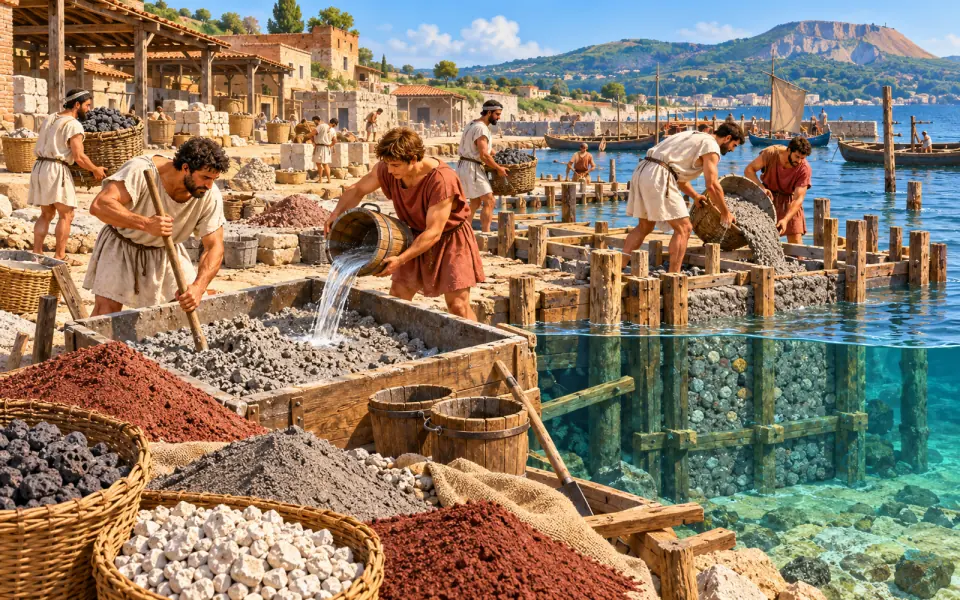 BeforeRoman concreteabout 150 BC
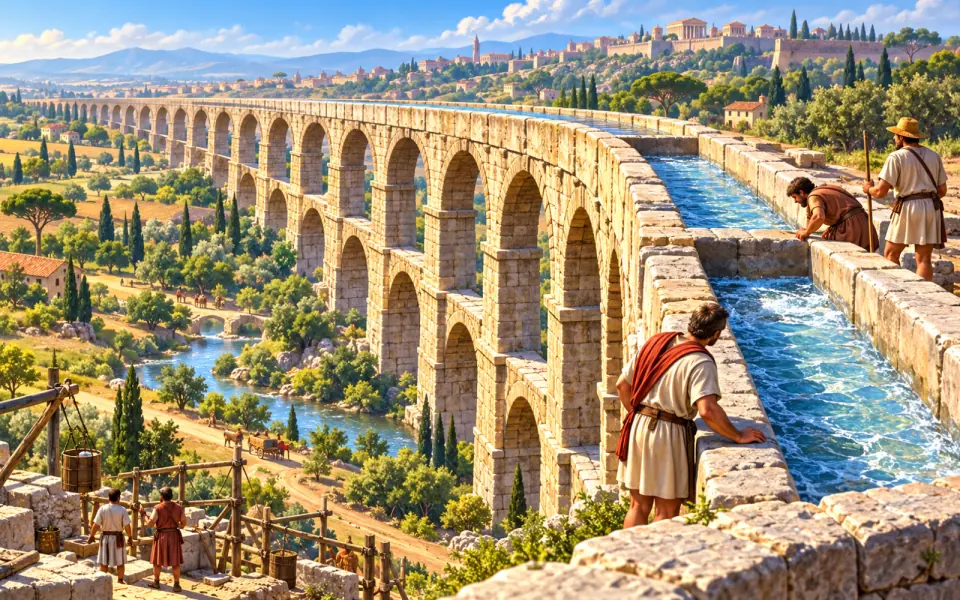 BeforeThe Aqua Marcia aqueduct144–140 BC
- You are hereSpartacus leads the revolt73–71 BC
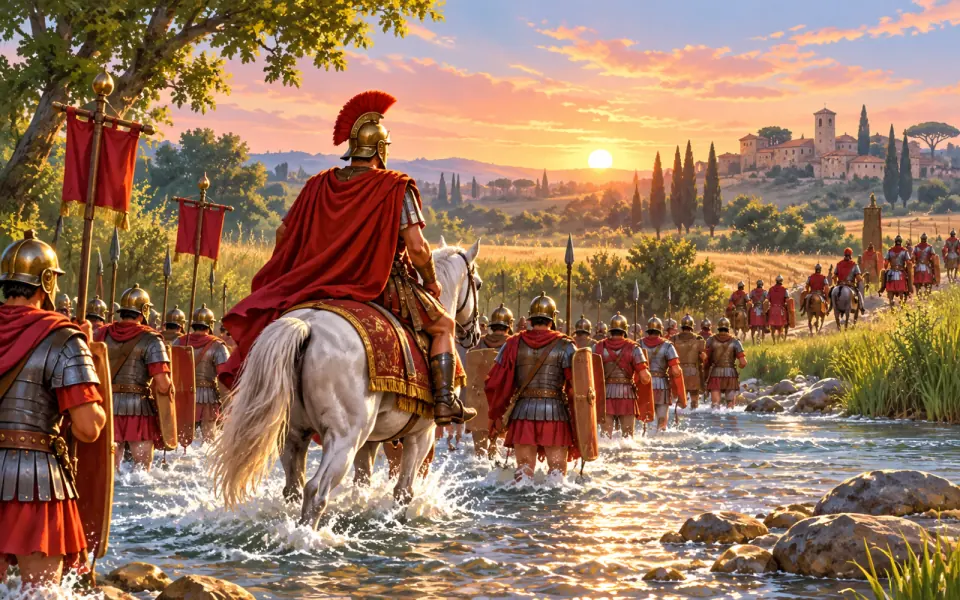 AfterCaesar crosses the Rubicon49 BC
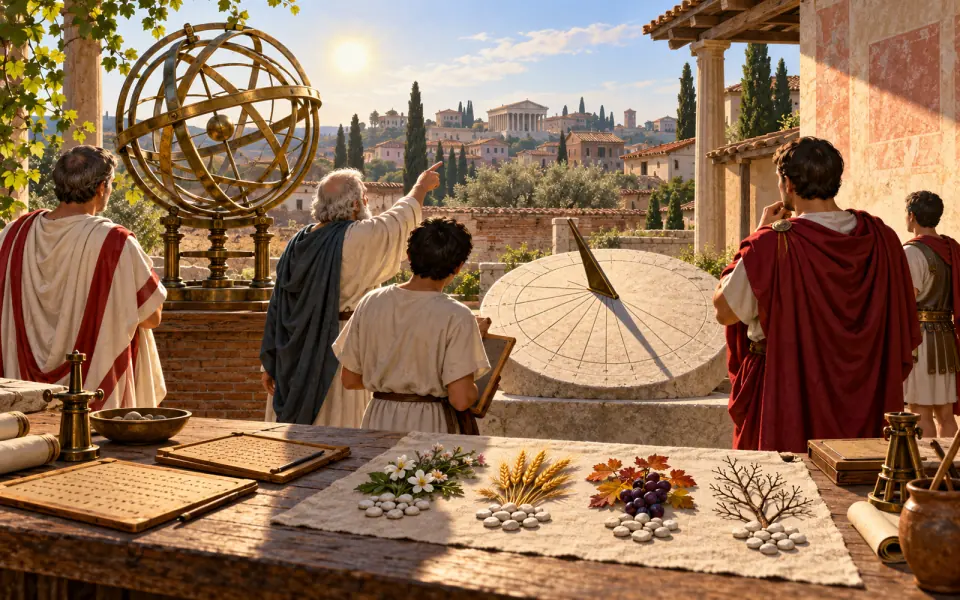 AfterThe Julian calendar46 BC
 AfterThe murder of Julius Caesar44 BC
 AfterAugustus, the first emperor27 BC
 AfterThe Pax Romana27 BC – AD 180
 AfterVirgil and the Aeneid19 BC
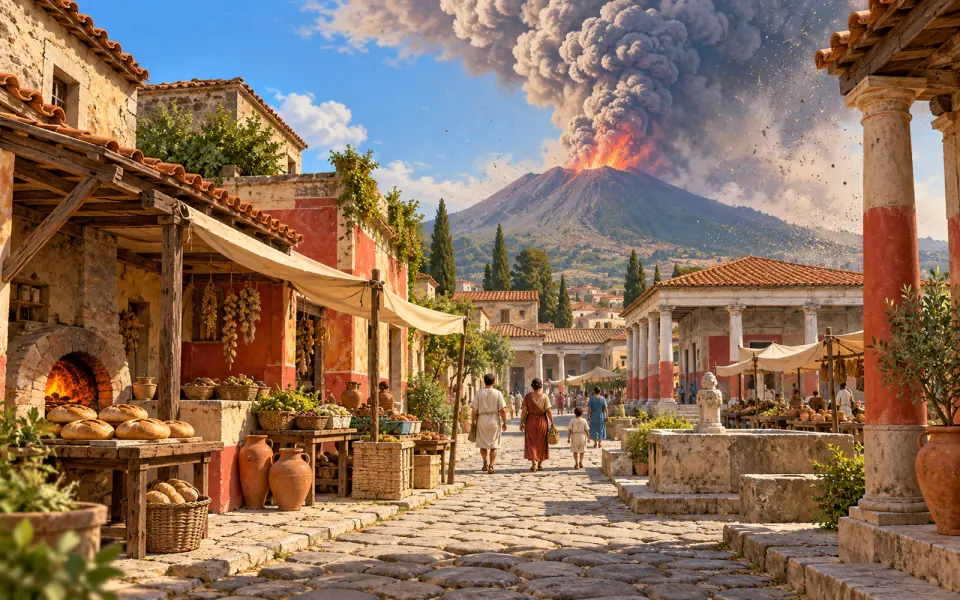 AfterPompeii buried by VesuviusAD 79
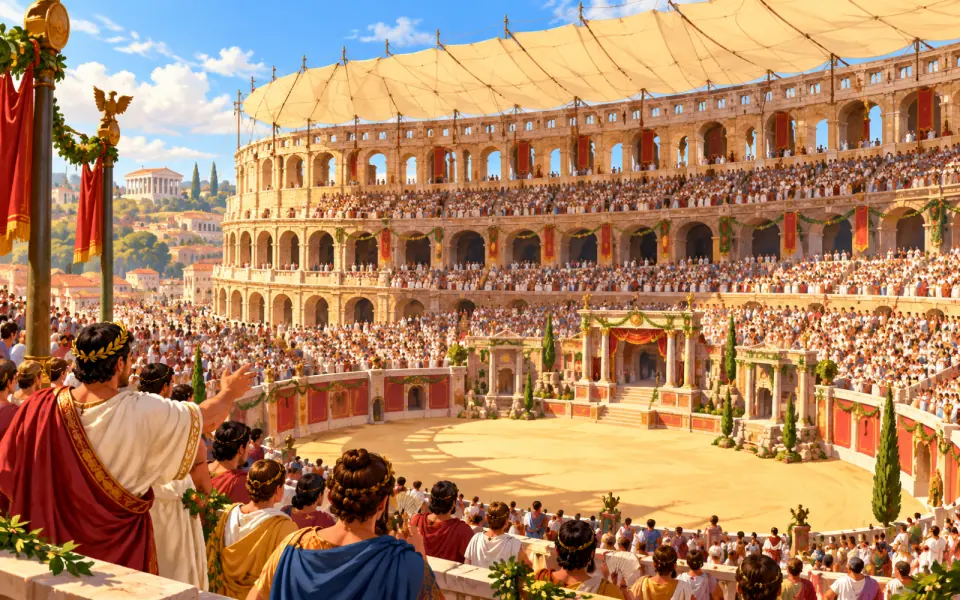 AfterThe Colosseum opensAD 80
 AfterTrajan's ColumnAD 113
 AfterThe Pantheonabout AD 125
 AfterGalen, a doctor in Romeabout AD 162
 AfterThe Baths of CaracallaAD 216
 AfterThe book with pages (the codex)about AD 300
 AfterThe Edict of MilanAD 313
 AfterFall of the Western Roman EmpireAD 476
Listen / Read next
- Music to read by: Cinematic JourneyEpic film-style music, no lyrics, by Ciro Simone IrmiciSpotifyYouTube Music
Meanwhile, elsewhere in the world
Other events of the era “Ancient Rome”
- Traditional founding of Rome
- Birth of the Roman Republic
- The Laws of the Twelve Tables
- The Appian Way
- The First Punic War
- Hannibal crosses the Alps
- Plautus and comedy
- Roman concrete
- The Aqua Marcia aqueduct
- Caesar crosses the Rubicon
- The Julian calendar
- The murder of Julius Caesar
- Augustus, the first emperor
- The Pax Romana
- Virgil and the Aeneid
- Pompeii buried by Vesuvius
- The Colosseum opens
- Trajan's Column
- The Pantheon
- Galen, a doctor in Rome
- The Baths of Caracalla
- The book with pages (the codex)
- The Edict of Milan
- Fall of the Western Roman Empire
