Caesar crosses the Rubicon
49 BC River Rubicon, Romagna
In short
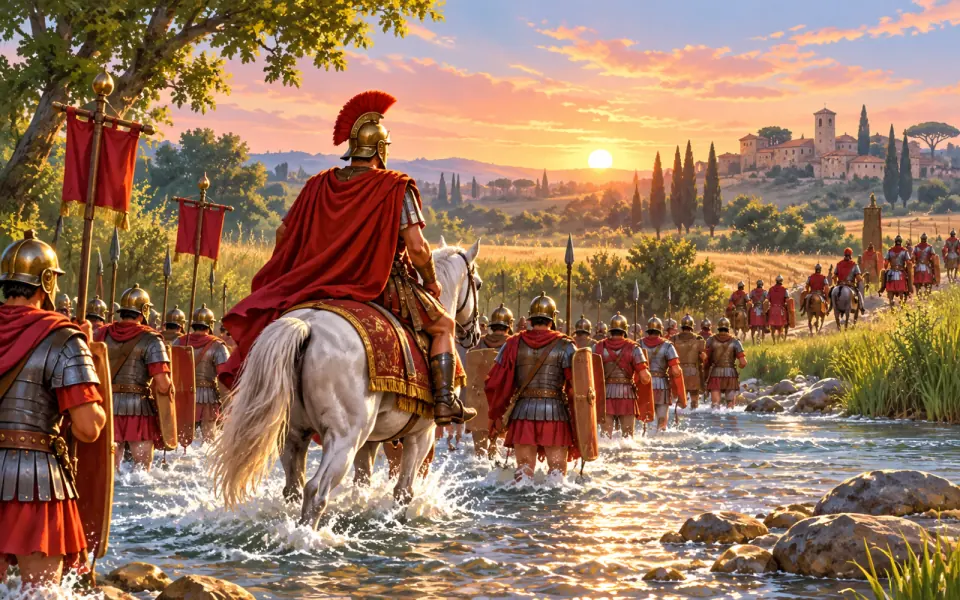
The Rubicon is a small river in Romagna that marked the border between Cisalpine Gaul and Italy proper. The law forbade a general to cross it with his army under arms. Julius Caesar, after conquering Gaul, crossed it anyway in January 49 BC, starting a civil war against Pompey and the Senate. According to the historian Suetonius, at that moment he said “The die is cast”.
Why it matters Even today ‘crossing the Rubicon’ means making a decision you cannot go back on.
Source: Treccani, entry “Cesare, Gaio Giulio”
Study card about 6 minutes of reading
The story
A small river, a great decision
The Rubicon is a modest river. About 35 kilometres long, it rises in the hills near Sogliano al Rubicone, passes through Savignano sul Rubicone and flows into the Adriatic Sea, a little south of Cesenatico, in the province of Forlì-Cesena, in Romagna. It is a torrent-type river, that is, almost dry in summer and swollen after rain. Yet one night in January 49 BC its name entered history.
To understand why, you need to know that in those days the Rubicon had a very important function. Between 59 and 42 BC it marked the boundary between the Roman province of Cisalpine Gaul and Italy proper, that is, the territory directly tied to the city of Rome. There was a rule: a general could not cross that boundary with his army under arms. The reason was simple: the republic wanted to prevent a general from using his soldiers against the state.
Caesar and the Senate
Gaius Julius Caesar was an ambitious general and politician. For years he had governed Cisalpine Gaul and had conquered Gaul, present-day France, with victories that had made him very famous and rich, and had made his army very loyal. In Rome, however, he had many enemies. Among them was Pompey, another great general, once his ally, and a part of the Senate that feared him.
Between the end of 50 and the first days of 49 BC the Senate ordered him to disband his army, give up the government of the province and return to Rome as a private citizen. Caesar was afraid. He feared being put on trial and losing everything, and he also thought that his supporters, the populares, were in danger. He refused to obey.
The night of the Rubicon
In the early hours of 10 or 11 January 49 BC, according to scholars' reconstruction, Caesar crossed the river at the head of the Thirteenth Legion, the Legio XIII Gemina, with about 5,000 foot soldiers and 300 horsemen. They were not many, but they moved fast. In this way he entered the territory of Italy under arms, and that act was equivalent to declaring war on the Republic. His lieutenant Titus Labienus, who had followed him for years in Gaul, went over instead to the side of Pompey and the Senate. The Senate had only two legions in Italy.
Caesar hesitated, at least according to the ancient authors. Then, they say, he made his decision. The historian Suetonius, who wrote more than a century after the events, reports the phrase in Latin: iacta alea est, which we translate as “the die is cast”. Another author, Plutarch, writes the same phrase in Greek, and says it was a quotation from the playwright Menander. Scholars are cautious: nobody knows whether Caesar really spoke those words, and in which language. It could be a phrase attributed to him afterwards, to give shape to a moment. The humanist Erasmus of Rotterdam thought it should be read as an order: “let the die be cast”. In Latin alea meant the game of dice and, by extension, risk and gamble.
Which river is it?
Not even the river is certain. The ancient Rubicon flowed between Rimini and Cesena, but we do not know whether it is the same as the river that bears the name today. Scholars have proposed other candidates, such as the Pisciatello and the Uso. In the past the river we now call the Rubicon was called the Fiumicino and was officially renamed Rubicone in the 1930s. Many elements, such as the Roman bridge at Savignano and the remains of a military post found near Gatteo, suggest that it is the right one, but the question is still open. According to the tradition, Caesar spoke to his soldiers at Rimini, where a column marks the spot.
After the Rubicon
Once across the river, Caesar advanced rapidly. Pompey and much of the Senate left Rome. A civil war began, that is, a war between citizens of the same state, which would be fought in Italy, in Greece, in Africa and in Spain and would end only with Caesar's victory.
The story of the crossing became so famous that it is still used today as a figure of speech: “to cross the Rubicon” means to make an irrevocable decision, from which there is no turning back. The motto alea iacta est has also become universal and appears, in slightly different forms, on the coats of arms of the town of Rimini and of the province of Forlì-Cesena.
Why it happened
Behind Caesar's choice there was a struggle for power. With the conquests in Gaul he had gained fame, money and a loyal army, and in Rome this frightened his opponents. The Senate, where many supported Pompey, ordered him to discharge his troops and return as a private citizen, where he could have been put on trial.
Caesar refused because he feared for his safety and for his political future. He judged that the only way to defend himself was to act fast, with the legions that were loyal to him, before the Senate could get organised. The Rubicon, precisely because it was a boundary with such a strong legal meaning, turned a political dispute into open war.
What changed
The crossing of the Rubicon opened the civil war between Caesar and Pompey. Caesar came out the winner and became the most powerful man in Rome. A few years later, in 44 BC, he was killed by a group of senators who feared that he wanted to become king. The civil wars continued with his heirs and led to the end of the Republic and the birth of the empire, with Augustus.
The river has remained a symbol. When we say today that someone has “crossed the Rubicon” we mean they have taken a step with no return. It reminds us that some choices cannot be undone, and that we should think carefully before making them.
For the history of Romagna the river is a matter of pride and curiosity: the discussion about which is the real Rubicon involves historians and archaeologists, and every new discovery adds a piece.
Key people and places
People
- Julius Caesar
- Roman general and politician, conqueror of Gaul. In 49 BC he crossed the Rubicon with his army.
- Pompey
- Great Roman general, Caesar's rival and leader of the party favourable to the Senate.
- Titus Labienus
- Caesar's lieutenant in Gaul who went over to Pompey's side.
- Suetonius
- Roman writer who lived between the 1st and 2nd centuries AD: in the Life of Caesar he reports the phrase “the die is cast”.
Places
- Rubicon
- Small river of Romagna, about 35 kilometres long, flowing into the Adriatic near Cesenatico.
- Cisalpine Gaul
- Roman province north of the Rubicon, in northern Italy.
- Rimini
- Town in Romagna where Caesar, according to the tradition, spoke to his soldiers; a column marks the spot.
Good to know
- Until the 1930s the river that is now called the Rubicon was called the Fiumicino.
- The phrase, which today we quote as “alea iacta est”, is reported by Suetonius in Latin and by Plutarch in Greek: for this reason scholars doubt which words were really spoken.
- Erasmus of Rotterdam thought that the original phrase was an order: “let the die be cast”.
- Caesar crossed the river with a single legion, the Thirteenth, of about 5,000 foot soldiers and 300 horsemen.
- The motto “Alea iacta est” appears on the coat of arms of the province of Forlì-Cesena.
Find out more
- World History Encyclopedia, “Julius Caesar” worldhistory.org
- Wikipedia, “Rubicon” en.wikipedia.org
- Wikipedia, “Alea iacta est” en.wikipedia.org
- Wikipedia, “Caesar's Civil War” en.wikipedia.org
Related events
- The murder of Julius Caesar44 BC · Ancient RomeFive years later, Caesar was killed in the Senate.
- The Julian calendar46 BC · Ancient RomeCaesar, victor in the civil war, reformed the calendar.
- Spartacus leads the revolt73–71 BC · Ancient RomePompey, Caesar's opponent, was also the victor over Spartacus's fugitives.
- Augustus, the first emperor27 BC · Ancient RomeCaesar's heir, Octavian, would become Augustus.
- Birth of the Roman Republicabout 509 BC · Ancient RomeThe Republic born in 509 BC was exactly the system that Caesar brought into crisis.
Before and after, in the era “Ancient Rome”
Event 11 of 25
 BeforeTraditional founding of Romeabout 753 BC
 BeforeBirth of the Roman Republicabout 509 BC
 BeforeThe Laws of the Twelve Tablesabout 450 BC
 BeforeThe Appian Way312 BC
 BeforeThe First Punic War264–241 BC
 BeforeHannibal crosses the Alps218 BC
 BeforePlautus and comedyabout 200 BC
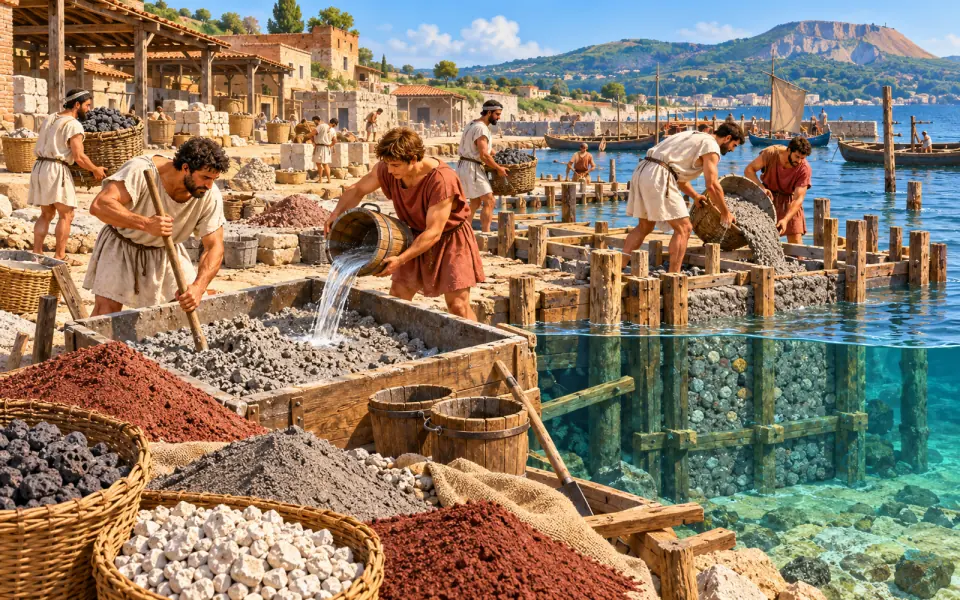 BeforeRoman concreteabout 150 BC
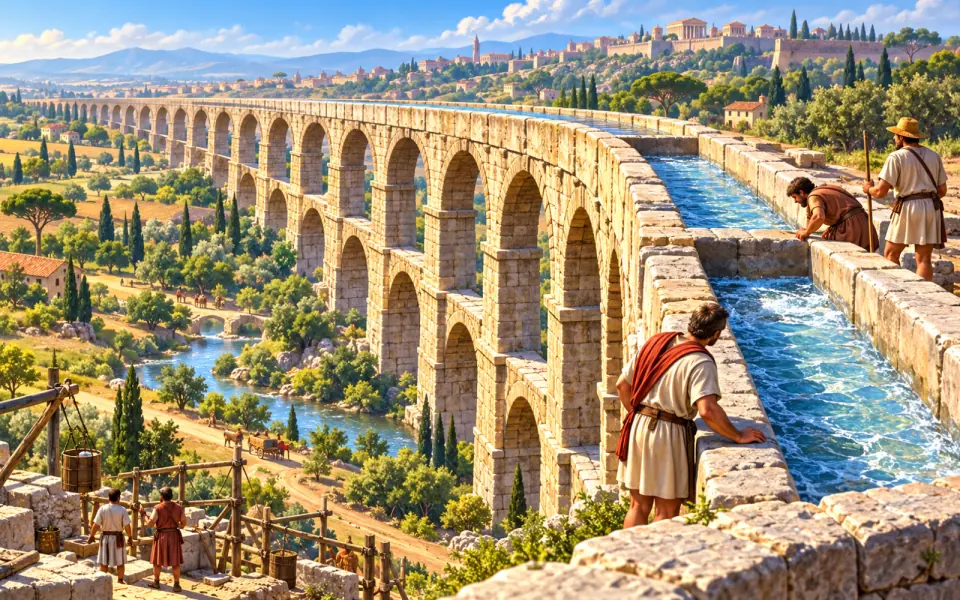 BeforeThe Aqua Marcia aqueduct144–140 BC
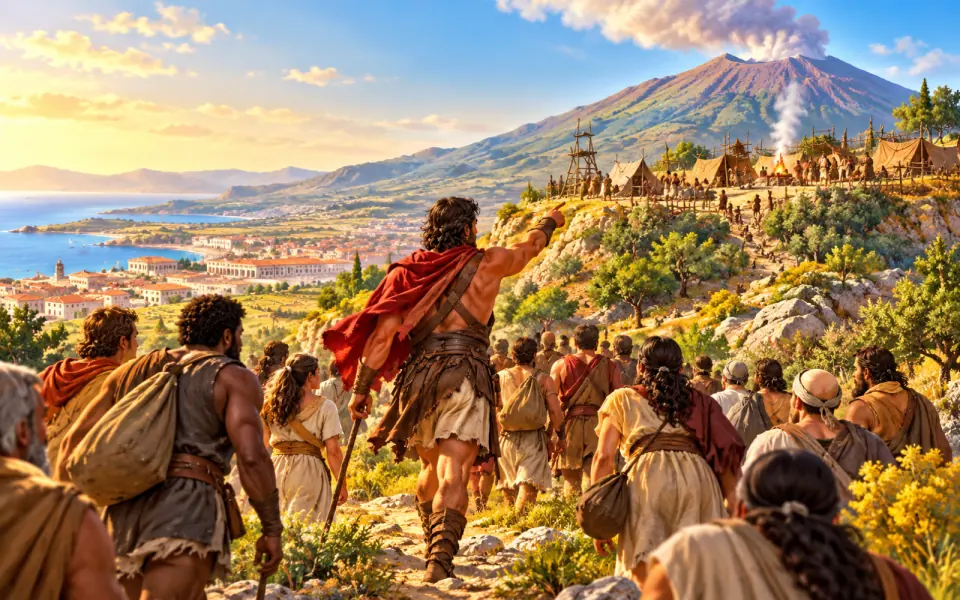 BeforeSpartacus leads the revolt73–71 BC
- You are hereCaesar crosses the Rubicon49 BC
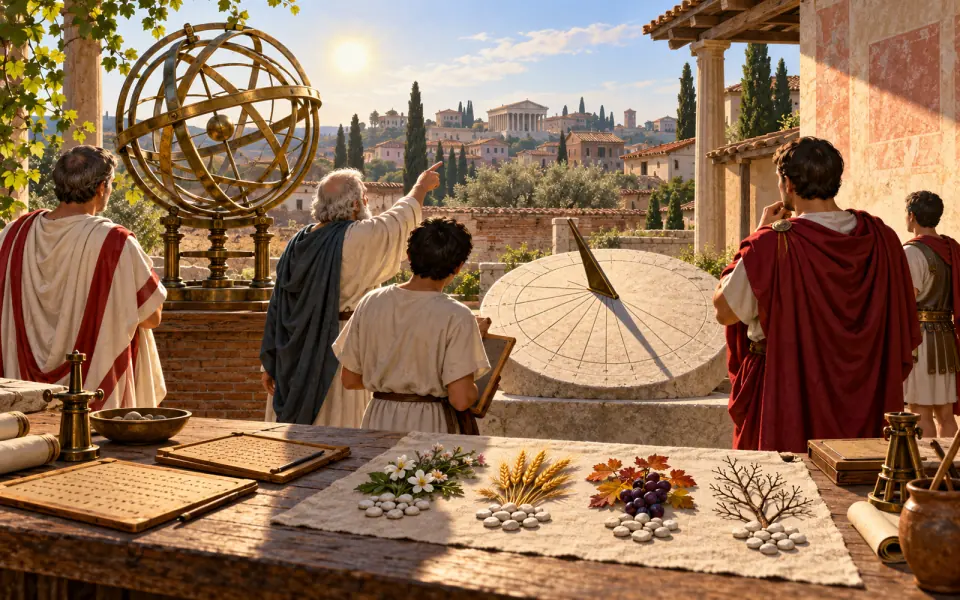 AfterThe Julian calendar46 BC
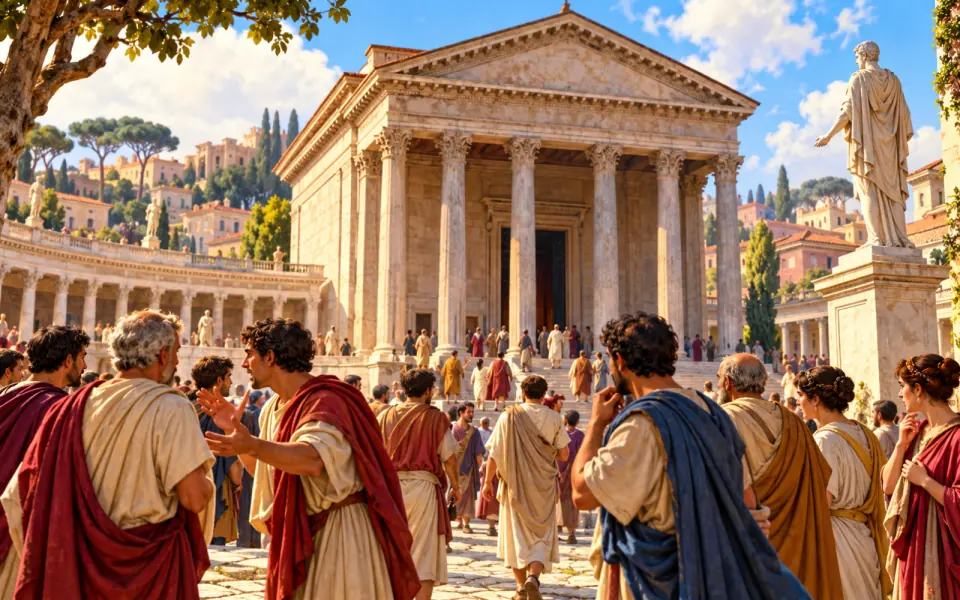 AfterThe murder of Julius Caesar44 BC
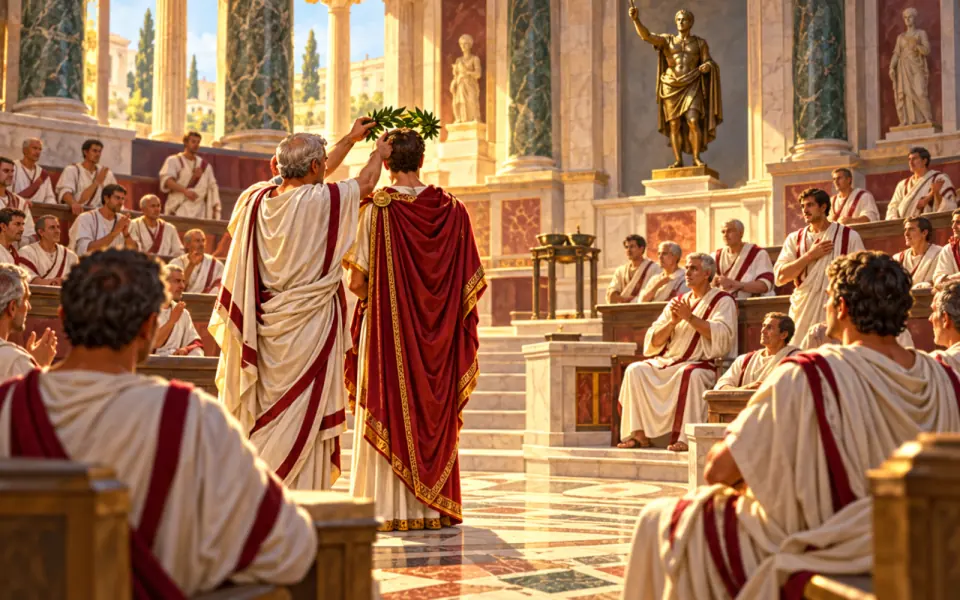 AfterAugustus, the first emperor27 BC
 AfterThe Pax Romana27 BC – AD 180
 AfterVirgil and the Aeneid19 BC
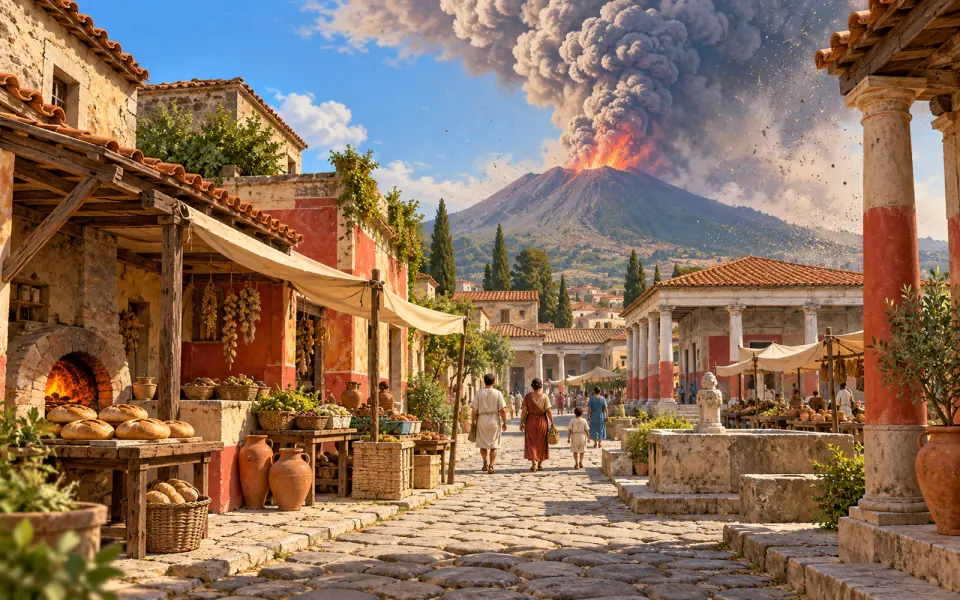 AfterPompeii buried by VesuviusAD 79
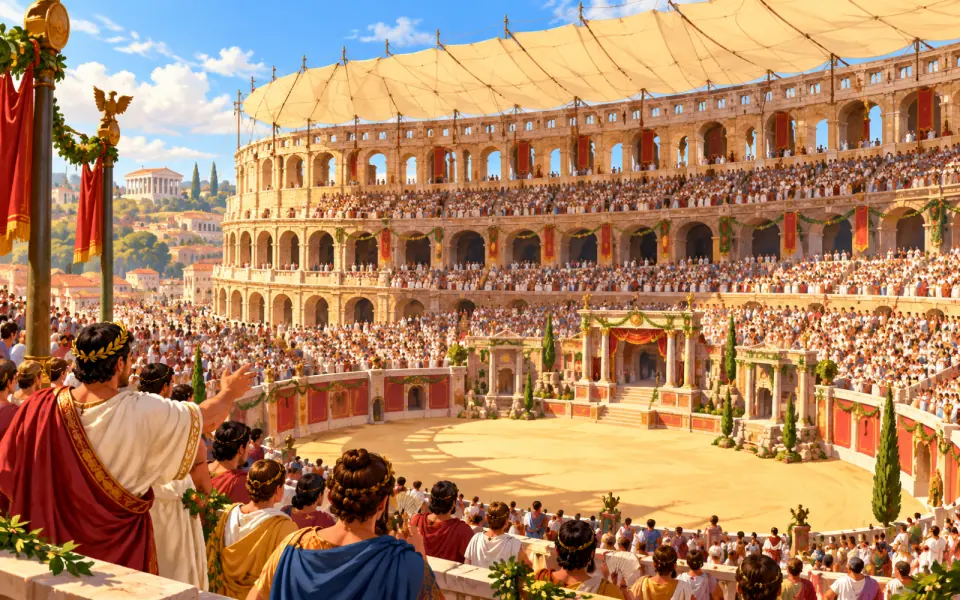 AfterThe Colosseum opensAD 80
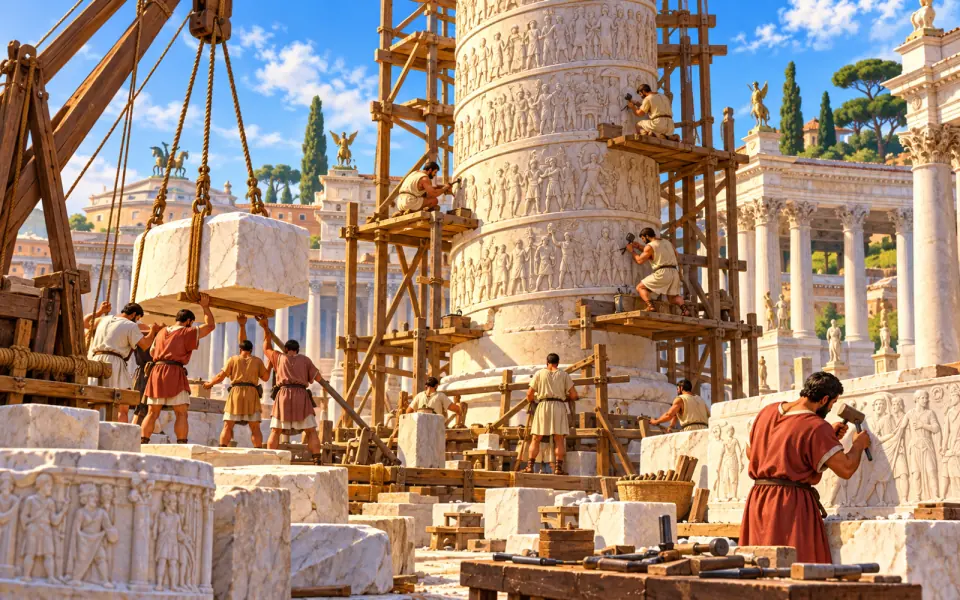 AfterTrajan's ColumnAD 113
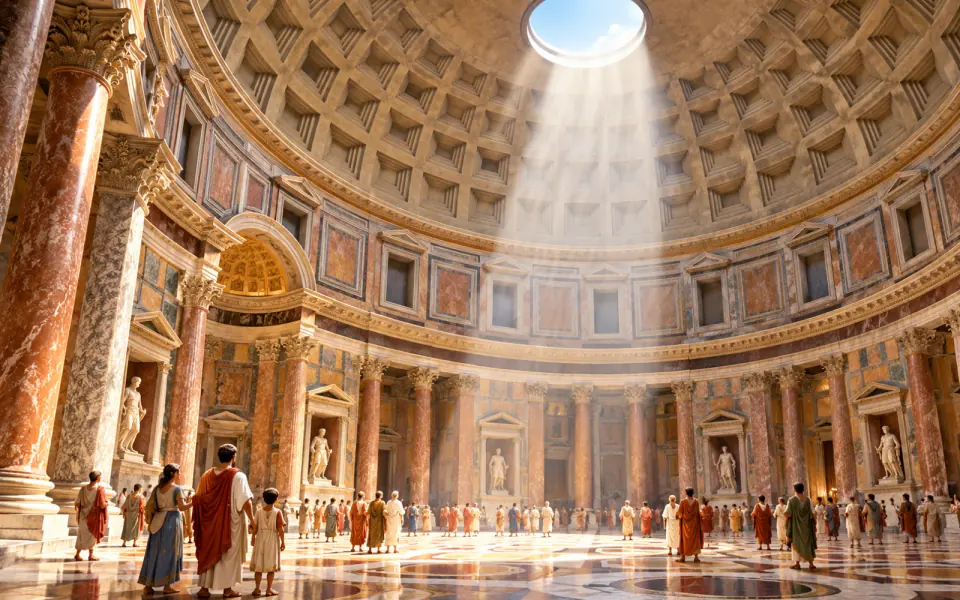 AfterThe Pantheonabout AD 125
 AfterGalen, a doctor in Romeabout AD 162
 AfterThe Baths of CaracallaAD 216
 AfterThe book with pages (the codex)about AD 300
 AfterThe Edict of MilanAD 313
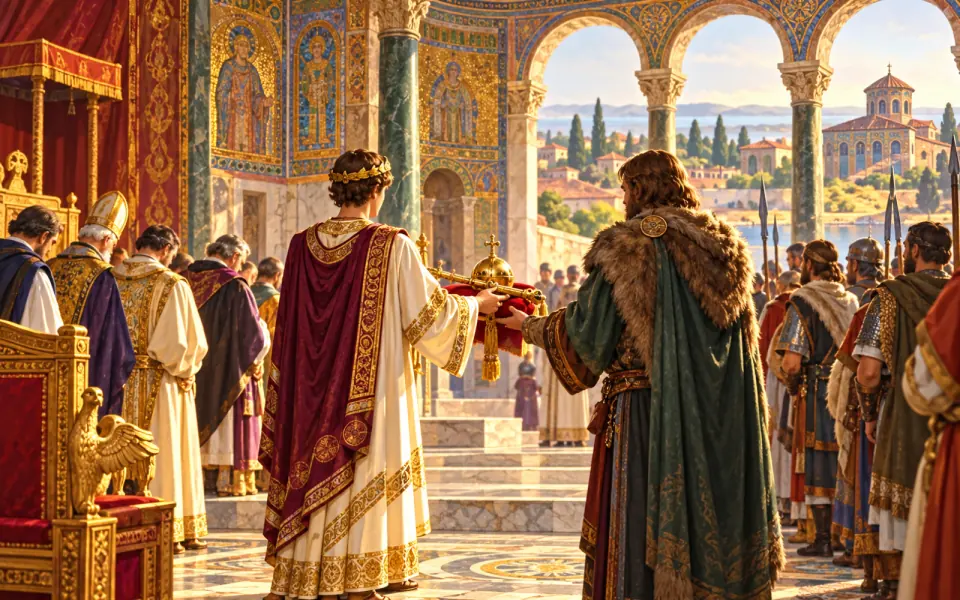 AfterFall of the Western Roman EmpireAD 476
Listen / Read next
- Music to read by: Cinematic JourneyEpic film-style music, no lyrics, by Ciro Simone IrmiciSpotifyYouTube Music
Meanwhile, elsewhere in the world
Other events of the era “Ancient Rome”
- Traditional founding of Rome
- Birth of the Roman Republic
- The Laws of the Twelve Tables
- The Appian Way
- The First Punic War
- Hannibal crosses the Alps
- Plautus and comedy
- Roman concrete
- The Aqua Marcia aqueduct
- Spartacus leads the revolt
- The Julian calendar
- The murder of Julius Caesar
- Augustus, the first emperor
- The Pax Romana
- Virgil and the Aeneid
- Pompeii buried by Vesuvius
- The Colosseum opens
- Trajan's Column
- The Pantheon
- Galen, a doctor in Rome
- The Baths of Caracalla
- The book with pages (the codex)
- The Edict of Milan
- Fall of the Western Roman Empire
