The First Punic War
264–241 BC Sicily and the surrounding seas
In short
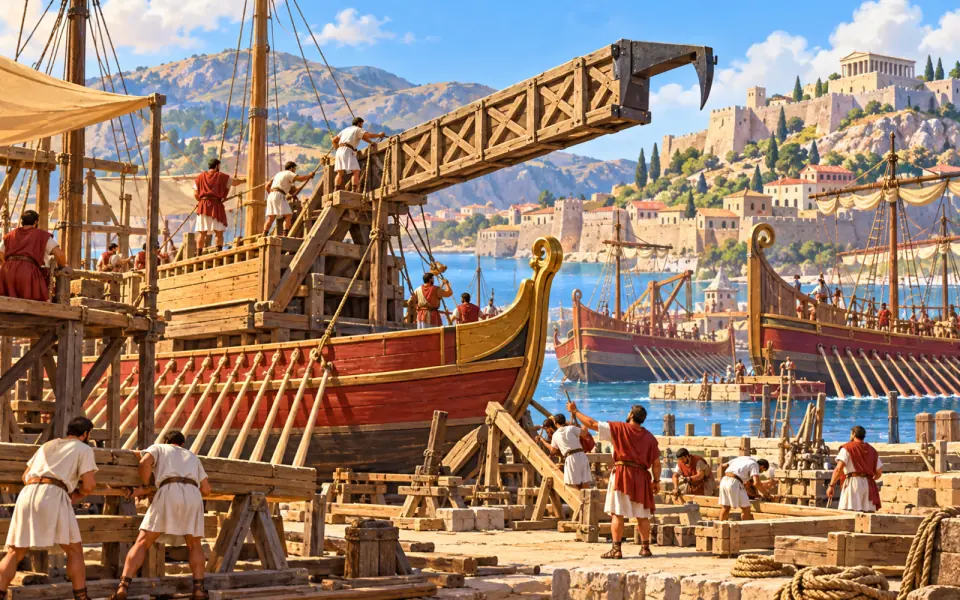
Rome and Carthage, a powerful Phoenician city in today's Tunisia, clashed over control of Sicily. The Romans were strong on land but had no real fleet, so they quickly built hundreds of ships. To fight at sea as if on dry land they invented the ‘raven’ (corvus), a movable bridge with a hook that grabbed the enemy ship. After 23 years of war Carthage had to give up Sicily, which became the first Roman province.
Why it matters With this victory Rome began to become a sea power, no longer just a power in Italy.
Source: Treccani, entry “Puniche, guerre”
Study card about 6 minutes of reading
The story
Two powers, one great island
Around the middle of the 3rd century BC there were two great powers in the western Mediterranean. On one side Rome, which by now ruled much of Italy and was strong above all on land, with its citizen-soldiers. On the other Carthage, a city founded by the Phoenicians on the coast of present-day Tunisia, which dominated the seas with a powerful fleet and controlled trade, ports and territories in Africa, Spain and Sicily. The two states had even signed treaties of friendship. Until they found themselves quarrelling over Sicily.
It all begins at Messana
The spark was small. Around 288 BC some mercenaries from Campania, the Mamertines, had seized the city of Messana (Messina) in Sicily. When Hiero II, ruler of Syracuse, attacked them, the Mamertines asked for help first from Carthage, which sent a garrison, and then from Rome. In Rome there was a long debate: to intervene meant leaving Italy and challenging the great sea power. In the end the assembly of the people agreed, and in 264 BC the consul Appius Claudius Caudex crossed the strait with the army. It was the beginning of the First Punic War. The name “Punic” comes from the Latin Poeni, which meant the Carthaginians.
Rome builds a fleet
The Romans won battles on land, for example at Agrigentum in 262 BC, but they could not take the coastal cities, because Carthage brought reinforcements and supplies with its ships. They understood that to win they had to fight at sea as well. The Senate had a fleet built, taking captured Carthaginian ships as a model. Building the ships was the easy part. Harder was finding experienced crews, because the Romans did not have the seafaring tradition of the Carthaginians.
The solution was a brilliant invention: the corvus, or “raven”. It was a movable bridge, with an iron hook at the end, that was dropped onto the enemy ship and caught hold of it. In this way Roman soldiers could cross from one ship to another and fight hand to hand, as on land. In 260 BC Gaius Duilius won at Mylae (Milazzo, in the province of Messina) the first naval battle in Roman history, thanks to the corvus. The corvus, however, was heavy and made the ships harder to handle, and it was later abandoned.
Africa and the defeat of Regulus
In 256 BC, at Cape Ecnomus in Sicily, one of the greatest naval clashes of antiquity was fought, and the consuls Lucius Manlius Vulso and Marcus Atilius Regulus won. So the Romans decided to carry the war to Africa. Regulus landed with the legions and won at Adys, but the peace terms he offered Carthage were judged too harsh and the negotiations failed. The Carthaginians hired a Spartan commander, Xanthippus, who in 255 BC defeated Regulus near Tunis and captured him. To make matters worse, on the way home a storm destroyed a good part of the Roman fleet.
Hamilcar and the Aegates Islands
The war lasted a long time. In 247 BC Carthage sent to Sicily a general of great talent, Hamilcar Barca, father of the future Hannibal. Hamilcar held the Romans at bay for years, and his land troops were never defeated. After the destruction of many ships the war seemed never to end. Rome had to make a further effort to have a fleet.
The turning point came on 10 March 241 BC at the Aegates Islands (the Egadi), west of Sicily. The Roman fleet, led by the consul Gaius Lutatius Catulus, won the battle: according to the ancient historian Polybius, Carthage lost about 120 ships, 50 sunk and 70 captured, and many men were taken prisoner (these are ancient figures, approximate). Without ships to bring supplies, Hamilcar could no longer stay in Sicily: Carthage asked for peace.
The terms of peace
After twenty-three years, the war ended. Carthage had to leave Sicily, return the Roman prisoners without ransom and not attack Syracuse and its allies. It also had to pay an indemnity: a thousand talents at once, plus 2,200 to be paid in ten yearly instalments. The talent was a unit of weight, used as money. With the exception of Syracuse, Sicily became the first Roman province, that is, a territory outside Italy governed by a magistrate sent from Rome.
Carthage then had serious problems: the mercenary soldiers, who could not be paid, rebelled, and Hamilcar Barca had to defeat them. Taking advantage of this weakness, in 238 BC Rome also took Sardinia and Corsica. The Carthaginians, humiliated, did not forget. After twenty-three years of a war fought almost always at sea, the contest between the two powers was only suspended: the rematch would be the Second Punic War.
Why it happened
The real cause was a rivalry. Rome, having conquered Italy, looked to Sicily, an island rich in grain and very close to its coasts. Carthage already controlled much of the island and did not want the Romans so close. An ancient historian, Philinus, claimed that a treaty forbade Rome to land in Sicily, but Polybius says that no such treaty existed.
The occasion was the Mamertines' request for help at Messana. The Senate was divided, but a long discussion led the popular assembly to agree. After crossing the strait, the Romans found themselves at war with the foremost naval power of the Mediterranean.
What changed
Rome came out of the war stronger and with a fleet. Sicily became the first Roman province and a granary for the city. A few years later Sardinia and Corsica were added. Rome was no longer only an Italian power: the western Mediterranean was now in its hands.
For Carthage it was a hard blow, and the revolt of the mercenaries made the situation worse. Hamilcar Barca, back home, played an important part in overcoming the crisis, and his son Hannibal would become Rome's most feared enemy.
The war also showed a typical Roman trait: the ability to learn from enemies and to adapt. With no experience of the sea, they copied Carthaginian ships and invented the corvus to make use of their strength on land.
Key people and places
People
- Gaius Duilius
- Consul who won at Mylae in 260 BC the first great Roman naval battle, thanks to the corvus.
- Marcus Atilius Regulus
- Consul who carried the war to Africa; he was defeated and captured in 255 BC.
- Hamilcar Barca
- Carthaginian general, father of Hannibal. In Sicily his land troops were never defeated.
- Gaius Lutatius Catulus
- Consul who won the battle of the Aegates Islands in 241 BC and ended the war.
Places
- Messina
- City of Sicily where it all began: the Mamertines asked Rome and Carthage for help.
- Carthage
- Great Phoenician city on the coast of present-day Tunisia, Rome's rival for control of the Mediterranean.
- Aegates Islands
- Archipelago west of Sicily where, on 10 March 241 BC, the war was decided.
- Sicily
- The contested island, which became the first Roman province.
Good to know
- The “corvus” was a movable bridge with an iron hook: it served to turn a naval battle into an infantry fight.
- The war lasted twenty-three years, from 264 to 241 BC.
- The war indemnity imposed on Carthage was a thousand talents at once and 2,200 over ten years.
- The name “Punic” comes from Poeni, the Latin word for the Carthaginians, descendants of the Phoenicians.
- Hamilcar Barca, the Carthaginian commander in Sicily, was Hannibal's father.
Find out more
- World History Encyclopedia, “First Punic War” worldhistory.org
- Wikipedia, “First Punic War” en.wikipedia.org
- Wikipedia, “Battle of the Aegates Islands” en.wikipedia.org
- Wikipedia, “Hamilcar Barca” en.wikipedia.org
Related events
- Hannibal crosses the Alps218 BC · Ancient RomeTwenty years later, Hamilcar's son, Hannibal, crossed the Alps.
- Traditional founding of Carthageabout 814 BC · Sea civilisationsCarthage was a city founded, according to the tradition, by Phoenician settlers.
- The Phoenicians spread outabout 1200 BC · Sea civilisationsThe Phoenicians, who founded Carthage, spread across the whole Mediterranean.
- Archimedes of Syracuseabout 250 BC · Ancient GreeceSyracuse, spared by the peace of 241, was later the city of Archimedes.
- The Appian Way312 BC · Ancient RomeRome built roads to move its legions to the south as well.
Before and after, in the era “Ancient Rome”
Event 5 of 25
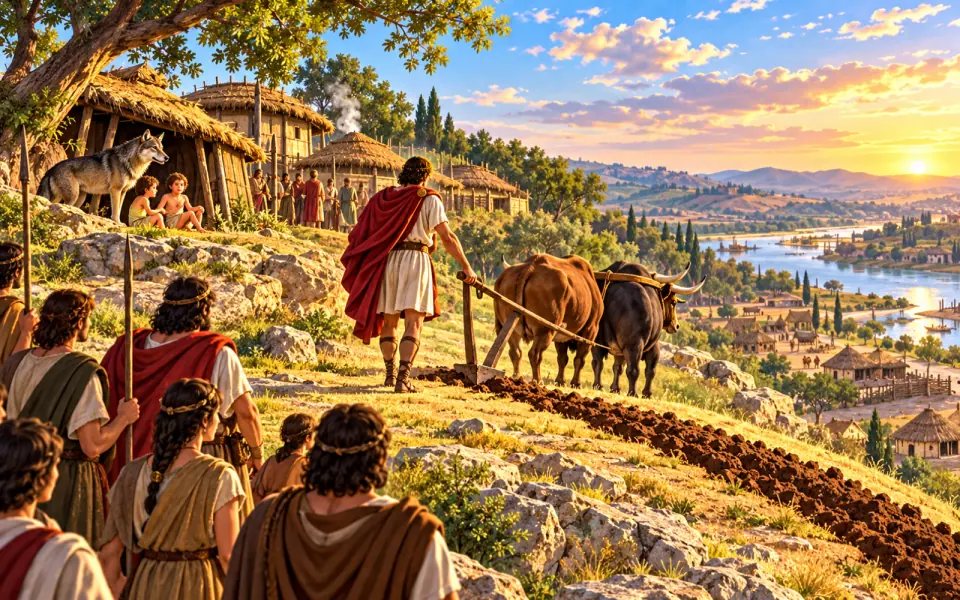 BeforeTraditional founding of Romeabout 753 BC
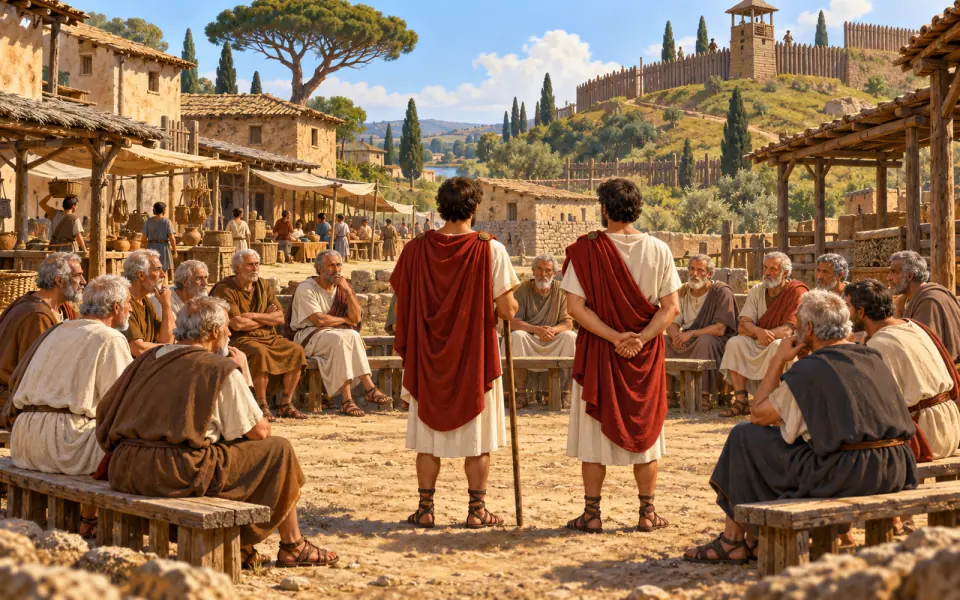 BeforeBirth of the Roman Republicabout 509 BC
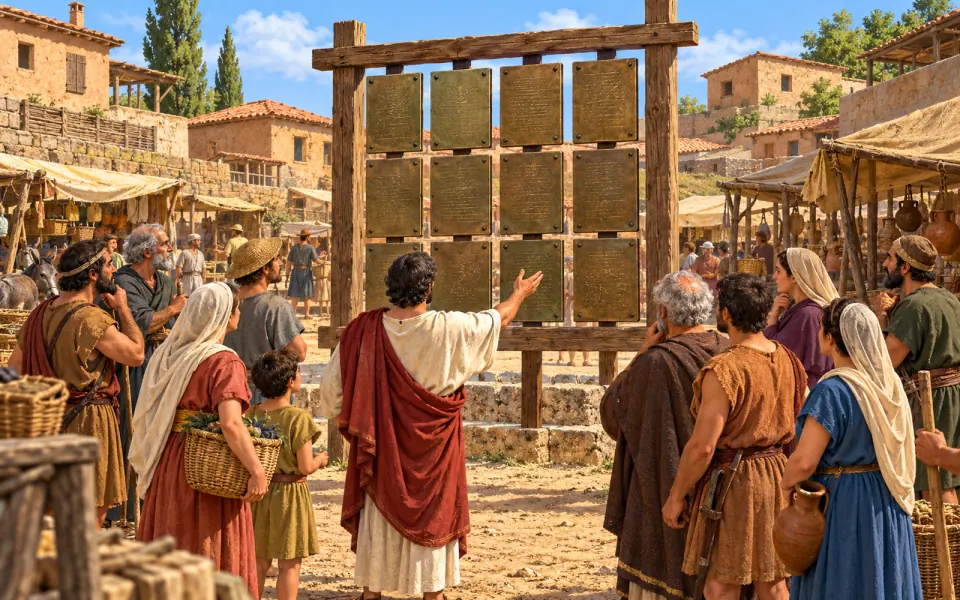 BeforeThe Laws of the Twelve Tablesabout 450 BC
 BeforeThe Appian Way312 BC
- You are hereThe First Punic War264–241 BC
 AfterHannibal crosses the Alps218 BC
 AfterPlautus and comedyabout 200 BC
 AfterRoman concreteabout 150 BC
 AfterThe Aqua Marcia aqueduct144–140 BC
 AfterSpartacus leads the revolt73–71 BC
 AfterCaesar crosses the Rubicon49 BC
 AfterThe Julian calendar46 BC
 AfterThe murder of Julius Caesar44 BC
 AfterAugustus, the first emperor27 BC
 AfterThe Pax Romana27 BC – AD 180
 AfterVirgil and the Aeneid19 BC
 AfterPompeii buried by VesuviusAD 79
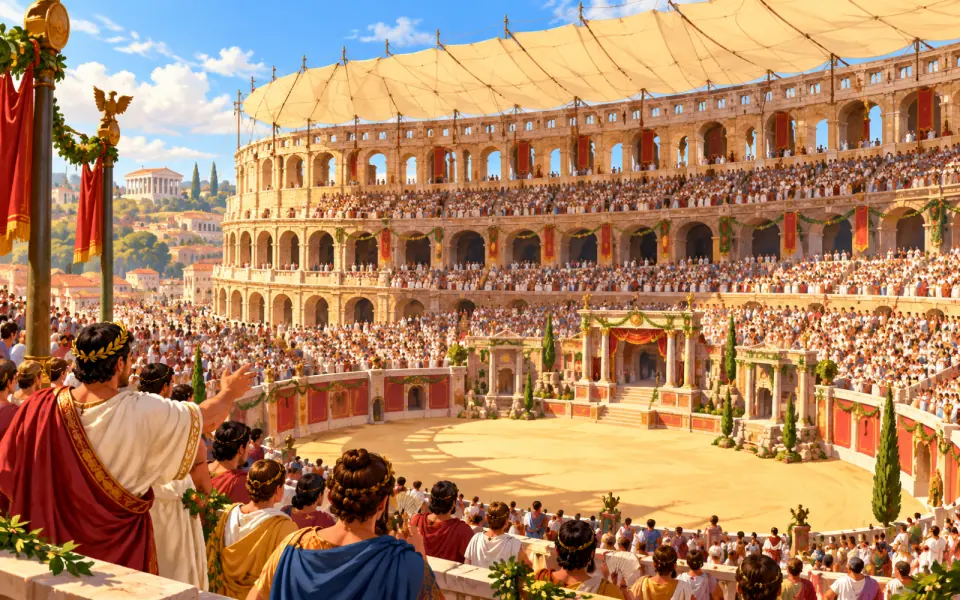 AfterThe Colosseum opensAD 80
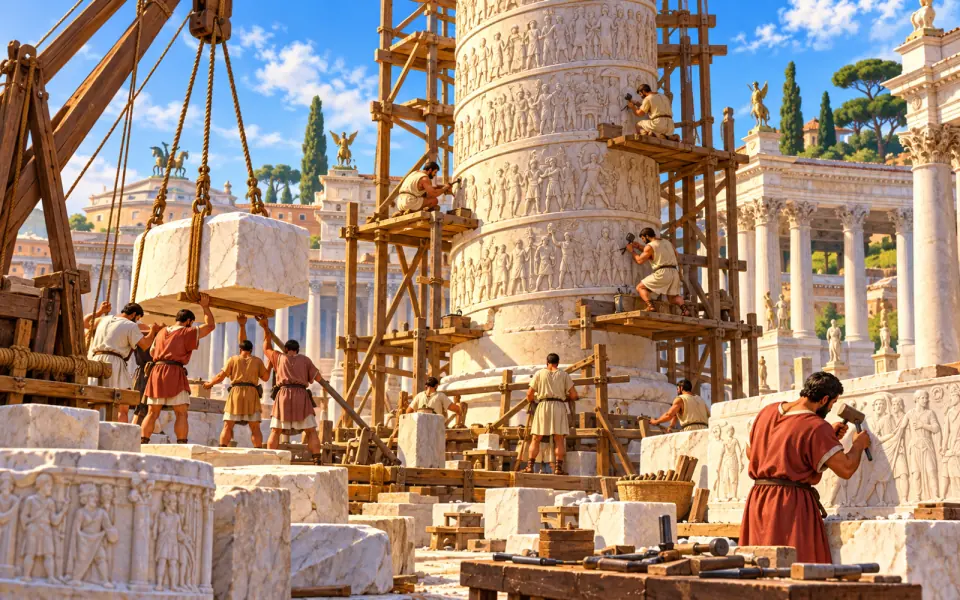 AfterTrajan's ColumnAD 113
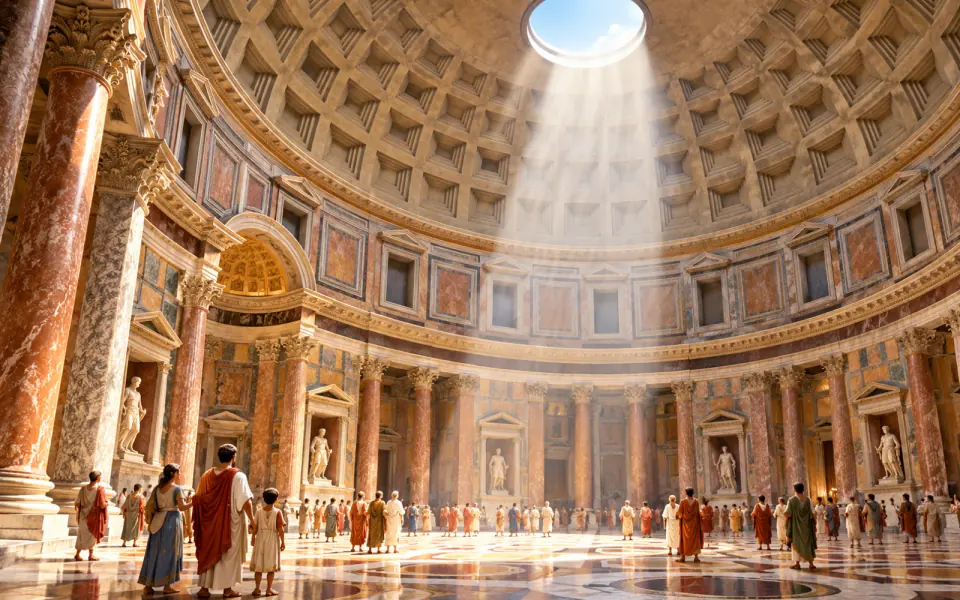 AfterThe Pantheonabout AD 125
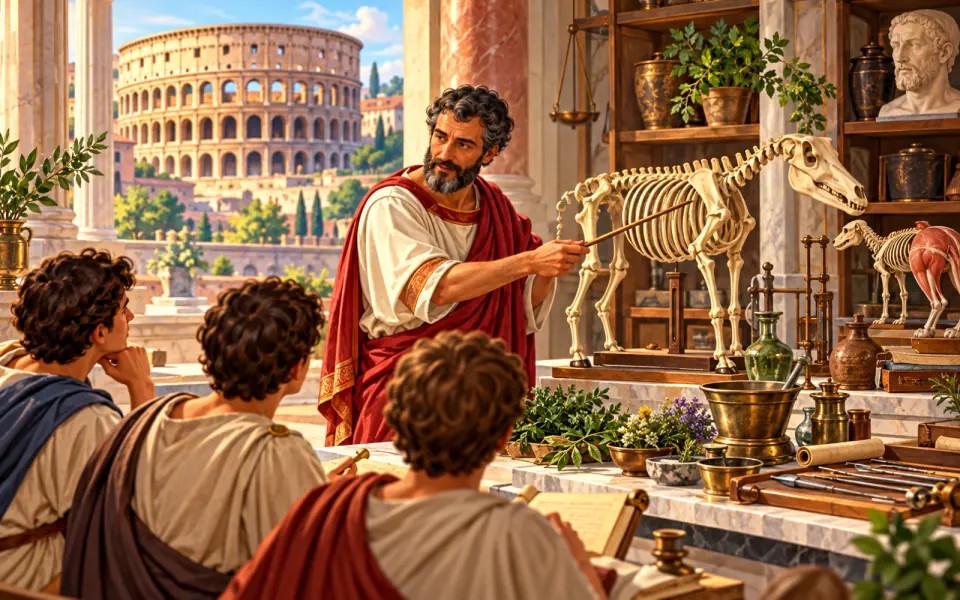 AfterGalen, a doctor in Romeabout AD 162
 AfterThe Baths of CaracallaAD 216
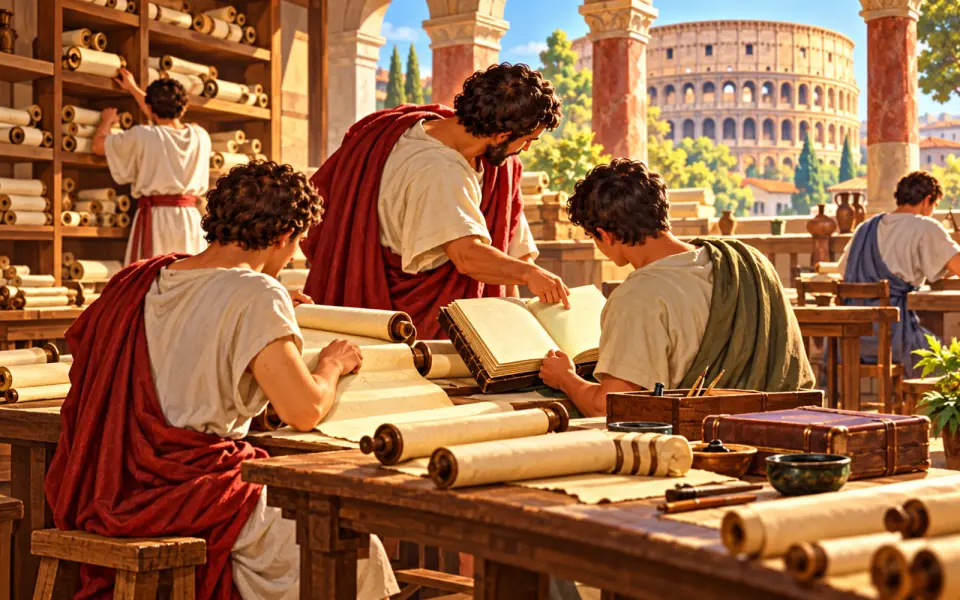 AfterThe book with pages (the codex)about AD 300
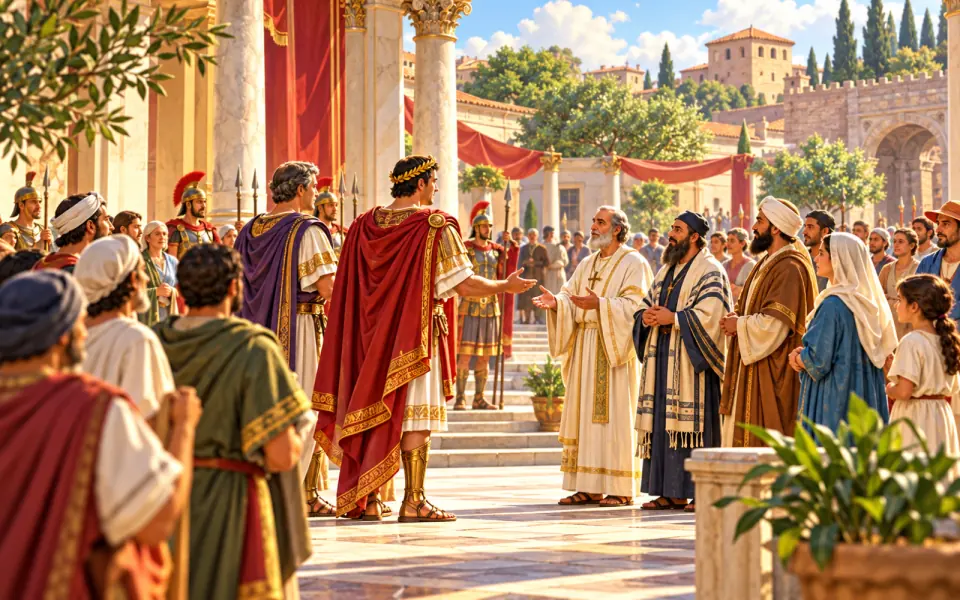 AfterThe Edict of MilanAD 313
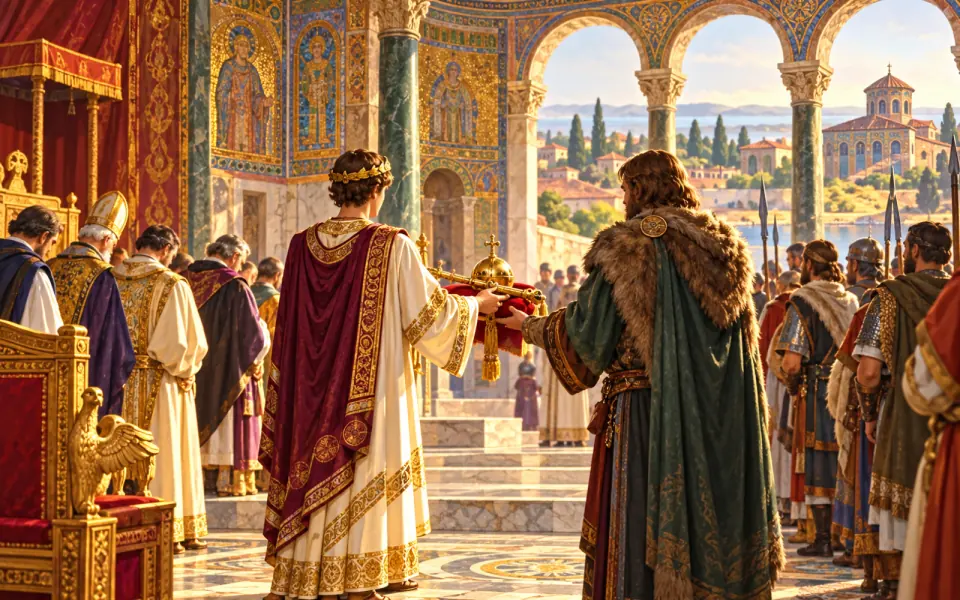 AfterFall of the Western Roman EmpireAD 476
Listen / Read next
- Music to read by: Cinematic JourneyEpic film-style music, no lyrics, by Ciro Simone IrmiciSpotifyYouTube Music
Meanwhile, elsewhere in the world
Other events of the era “Ancient Rome”
- Traditional founding of Rome
- Birth of the Roman Republic
- The Laws of the Twelve Tables
- The Appian Way
- Hannibal crosses the Alps
- Plautus and comedy
- Roman concrete
- The Aqua Marcia aqueduct
- Spartacus leads the revolt
- Caesar crosses the Rubicon
- The Julian calendar
- The murder of Julius Caesar
- Augustus, the first emperor
- The Pax Romana
- Virgil and the Aeneid
- Pompeii buried by Vesuvius
- The Colosseum opens
- Trajan's Column
- The Pantheon
- Galen, a doctor in Rome
- The Baths of Caracalla
- The book with pages (the codex)
- The Edict of Milan
- Fall of the Western Roman Empire
