The Phoenicians spread out
about 1200 BC Tyre, Sidon and Byblos (now Lebanon)
In short
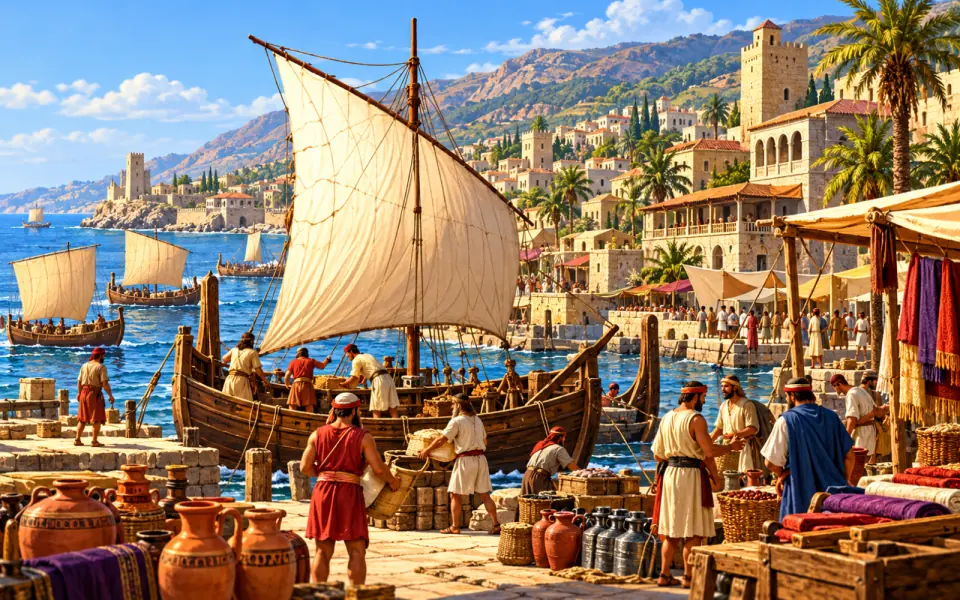
The Phoenicians lived in independent cities on the coast of today's Lebanon, such as Tyre, Sidon and Byblos, squeezed between the mountains and the sea. After the crisis of 1200 BC they took advantage of the fall of the great empires to become the masters of sea trade. They founded ports and markets in Cyprus, Sicily, Sardinia, Africa and Spain. They never formed a single kingdom: each city had its own king and its own interests.
Why it matters Their routes linked the whole Mediterranean from end to end for the first time.
Source: Treccani, entry “Fenici”
Study card about 5 minutes of reading
The story
A strip of coast, many cities
Phoenicia was never a country with borders and a single king. It was a narrow band of land on the eastern coast of the Mediterranean, in present-day Lebanon and parts of Syria and Israel, squeezed between the mountains and the sea. Here stood independent cities, each with its own king, its own walls and its own business: the most important were Tyre, Sidon and Byblos. Scholars have searched for a long time, but there is no proof that these cities felt they were a single people. The name “Phoenicians” was given to us by the Greeks, who called them that, and we do not know what they called themselves.
The territory was small and had little farmland. On the other hand there were good natural harbours and the cedar forests on the mountains of Lebanon, a strong, sweet-smelling wood, excellent for building ships. From the beginning of the 2nd millennium BC the people of these cities lived mainly by trade across the sea.
After the great crisis
Around 1200 BC the eastern Mediterranean went through a very grave crisis: many cities and many kingdoms were destroyed or abandoned. Historians call it the collapse of the Bronze Age. The Phoenician cities, however, did not disappear. Indeed: when Egypt and Assyria, two great powers of the region, grew weaker, they managed to become freer and stronger. By the time the Egyptian story of Wenamun was written, Phoenicia had already won back its independence from Egypt.
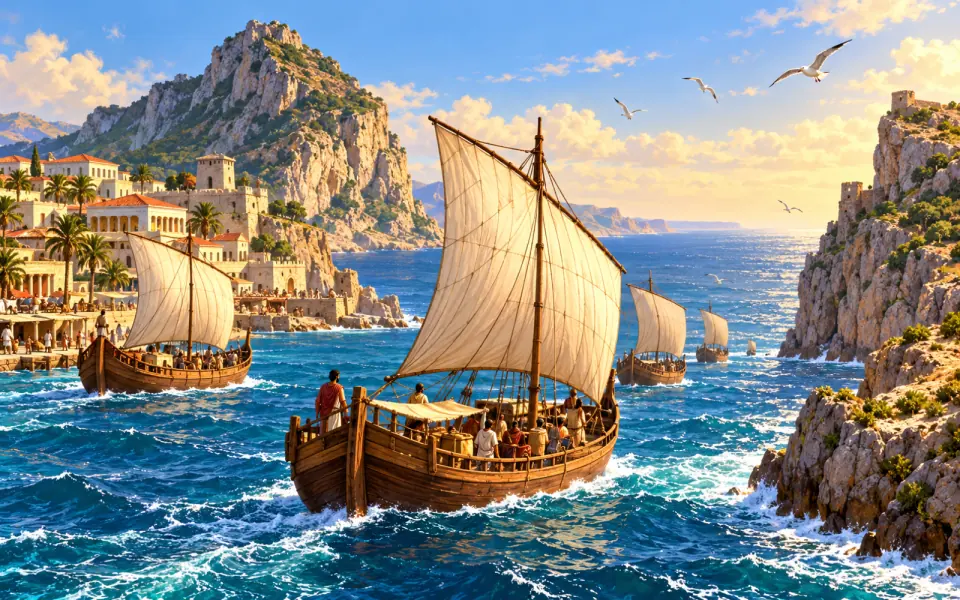
With no great empires around them, Phoenician merchants had a free hand at sea. They built ships with their cedar, loaded timber, wine, glass, metal objects, cloth dyed purple, and set out to sell and buy. Among the cities Tyre stood out, where Hiram I reigned, a king traditionally dated to the years between about 969 and 936 BC, whom the sources present as the ruler who made it the most powerful of the Phoenician cities.
The colonies
The Phoenicians did not conquer territory with armies: they founded ports and trading posts, where ships could stop, take on supplies and exchange goods. The first sure traces of a Phoenician presence on Cyprus date to the 10th–9th centuries BC. In Spain, at Almuñécar, there are landing places active from the 9th century BC, and at Toscanos there are fortified settlements from at least the 8th century. Other colonies arose on Malta, in Sicily (such as Motya) and in Sardinia (such as Tharros). Of them all, the most important became Carthage, in Africa, which according to the ancient historian Timaeus was founded in 814 BC.
The founding dates handed down by the ancients should be treated with caution. For example, tradition put the foundation of Cadiz (Gadir), in Spain, at around 1100 BC, but archaeologists have found no layers on the site older than the 9th century BC. History and legend were often mixed.
A network of ports
The colonies were not all the same. Some were small landing places on the coast. Others became real cities. It is a system very different from that of an empire: a network of ports scattered along the coasts, linked by ships carrying goods from one place to another.
Under the great empires
The freedom of the Phoenician cities did not last for ever. From the 9th century BC Assyria began to push westward and by about 738 BC it controlled much of the region. In 721 BC Sargon II crushed a revolt by Tyre. Later the Babylonians of Nebuchadnezzar II besieged Tyre, which submitted in 573 BC. After Cyrus conquered Babylon, in 539 BC, the Persians left the Phoenician cities a great deal of autonomy, treating them as vassal kingdoms. In 332 BC Alexander the Great took Tyre after a siege of about seven months, while Sidon surrendered without a fight.
Even after these conquests the cities remained centres of trade and crafts. And their colonies, Carthage in particular, went on living and growing on their own.
Why it happened
The Phoenicians launched themselves onto the sea because their land was not enough to support them. Between mountains and coast there was little room for fields and pastures, but there were harbours, excellent timber and an ideal position, between Egypt, Mesopotamia and Anatolia. Anyone living in such a place has two choices: to push out to sea or to stay poor.
The opportunity came from the crisis we have described. Until about 1200 BC trade on the Mediterranean was largely controlled by kings and great empires. When these collapsed or weakened, the merchants of the Phoenician cities could move freely, choose their routes and sell to whom they wanted.
What changed
The Phoenician routes linked the whole Mediterranean from end to end for the first time, from Lebanon to Spain, by way of Cyprus, Sicily, Sardinia and North Africa. Along with goods travelled ideas, techniques and ways of writing: the most important was the Phoenician alphabet, which was adopted by the Greeks and other peoples.
The colonies in turn became centres of development. Carthage, the largest, had a history all its own and went on to challenge Rome in the Punic Wars. In Sardinia, Sicily, Malta and Spain, the Phoenician presence left cities, ports and customs that the local peoples mixed with their own.
Many traces remain in today's world: cities founded by the Phoenicians, such as Cadiz, in Spain, still exist. The Phoenicians also showed that a network of small cities, well connected by sea, can have an enormous influence.
Key people and places
People
- Hiram I
- King of Tyre, dated by historians to about 969–936 BC: his time is regarded as the age of Tyre's growth.
- Timaeus
- Ancient Greek historian who gave 814 BC as the founding date of Carthage.
- Alexander the Great
- King of Macedonia who in 332 BC conquered Tyre after a siege of about seven months.
Places
- Tyre
- A Phoenician city-state on the coast of present-day Lebanon; the mother city of Carthage.
- Sidon
- Another great Phoenician city, which surrendered to Alexander without a fight.
- Byblos
- A very ancient Phoenician city, linked to the trade in timber and to writing.
- Carthage
- A colony of Tyre on the coast of present-day Tunisia, which became a power in the Mediterranean.
Good to know
- The name “Phoenicians” is Greek: we do not know what they called themselves.
- The Phoenician cities never formed a single kingdom: each had its own king.
- Alexander the Great took about seven months to capture the city of Tyre, in 332 BC.
- To build their ships they used cedar from the mountains of Lebanon.
- The dates of ancient foundations are uncertain: Cadiz is said to have been founded in 1100 BC, but the digs find nothing older than the 9th century BC.
Find out more
- Wikipedia, “Phoenicians” en.wikipedia.org
- World History Encyclopedia, “Phoenicia” worldhistory.org
- Wikipedia, “Tyre, Lebanon” en.wikipedia.org
- Wikipedia, “Phoenicia” en.wikipedia.org
Related events
- Traditional founding of Carthageabout 814 BC · Sea civilisationsCarthage was born as a colony of Tyre.
- The Phoenician alphabetabout 1050 BC · Sea civilisationsThe Phoenicians spread their alphabet to every port.
- Phoenician seafaringabout 1000 BC · Sea civilisationsShips and navigation were the heart of Phoenician power.
- Phoenician purpleabout 1100 BC · Sea civilisationsPurple was the most famous and the most expensive product.
- The Bronze Age collapseabout 1200 BC · River civilisationsThe crisis at the end of the Bronze Age gave the Phoenicians their opportunity.
Before and after, in the era “Sea civilisations”
Event 10 of 25
 BeforeMinoan civilisation on Creteabout 2000 BC
 BeforeThe palace of Knossosabout 1900 BC
 BeforeThe Proto-Sinaitic alphabetabout 1800 BC
 BeforeThe eruption of Theraabout 1600 BC
 BeforeThe nuraghi of Sardiniaabout 1600 BC
 BeforeThe gold mask of Mycenaeabout 1550 BC
 BeforeLinear Babout 1450 BC
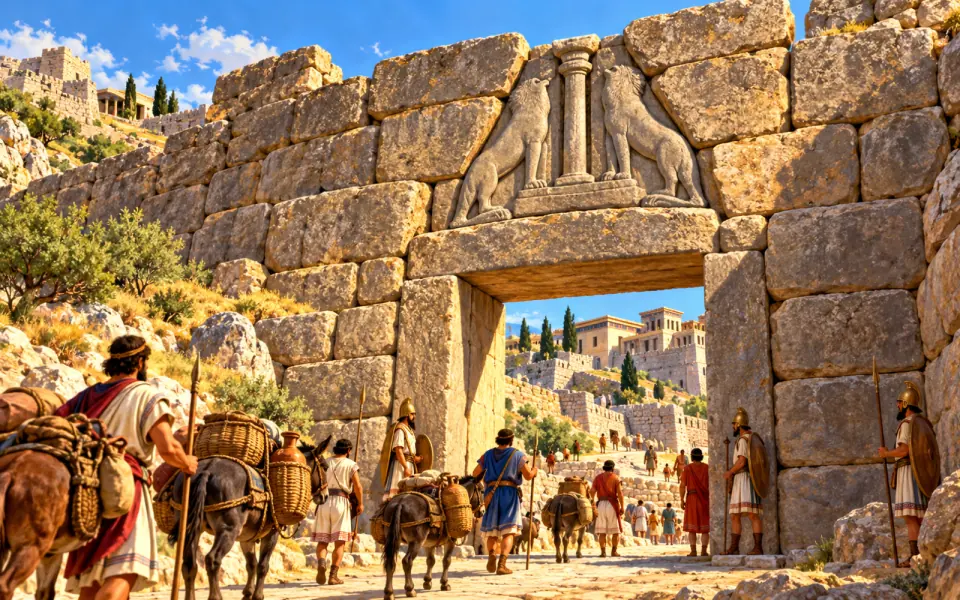 BeforeThe Lion Gate at Mycenaeabout 1250 BC
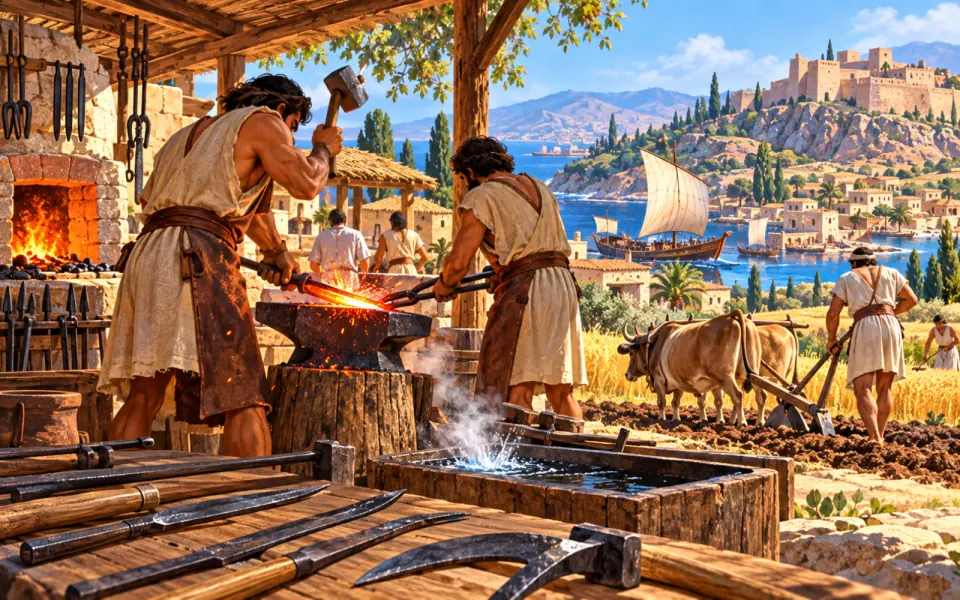 BeforeThe Iron Age beginsabout 1200 BC
- You are hereThe Phoenicians spread outabout 1200 BC
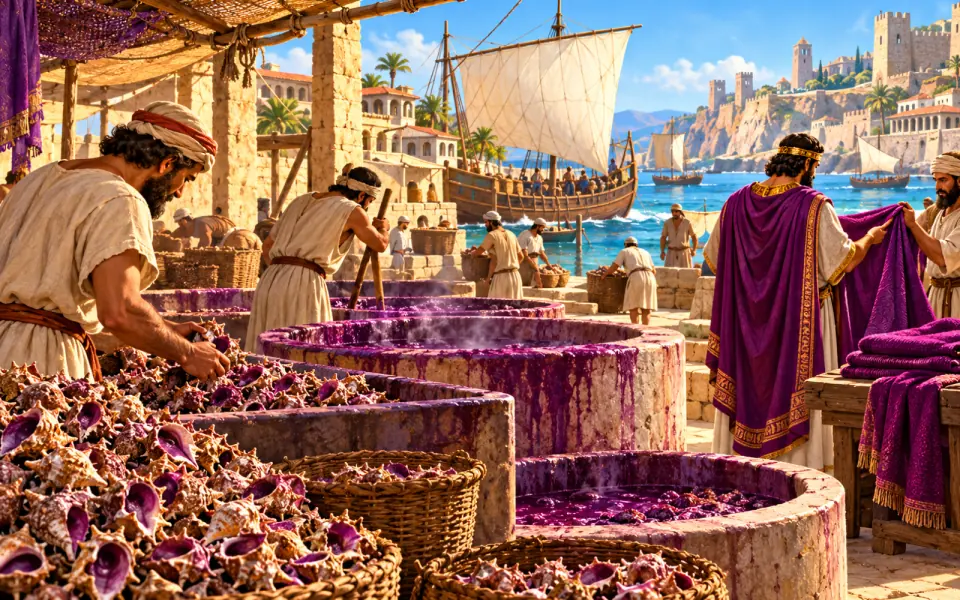 AfterPhoenician purpleabout 1100 BC
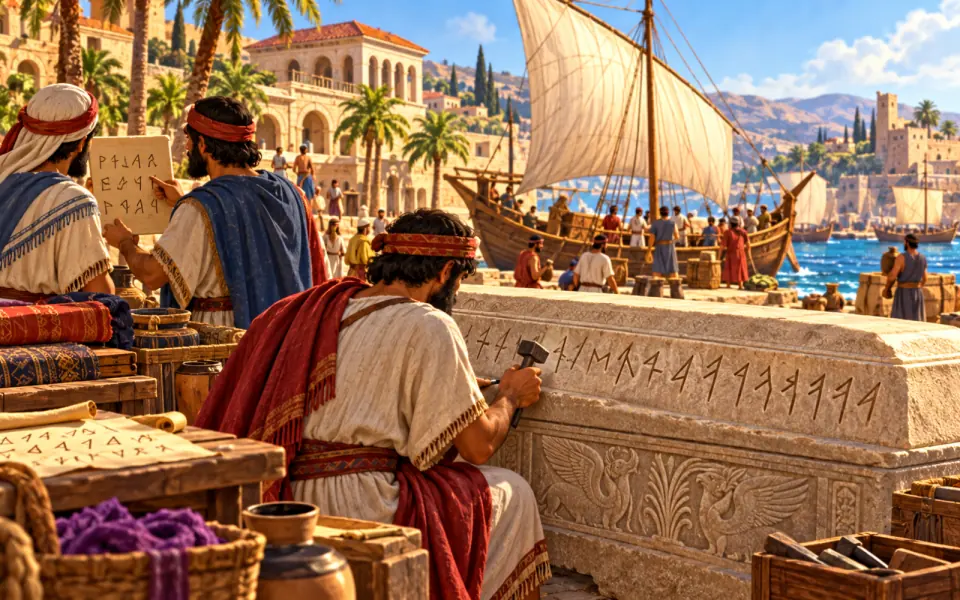 AfterThe Phoenician alphabetabout 1050 BC
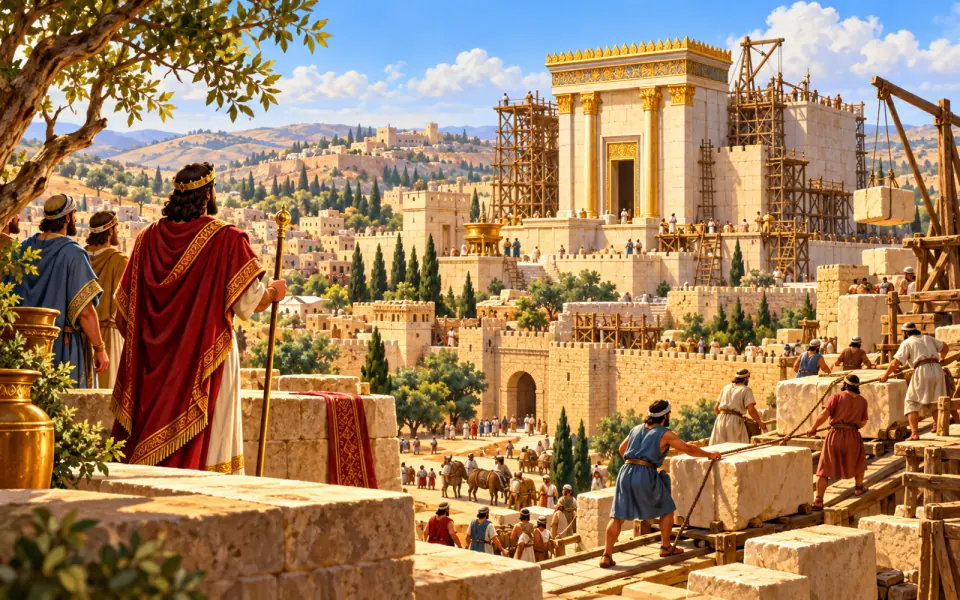 AfterThe Kingdom of Israelabout 1000 BC
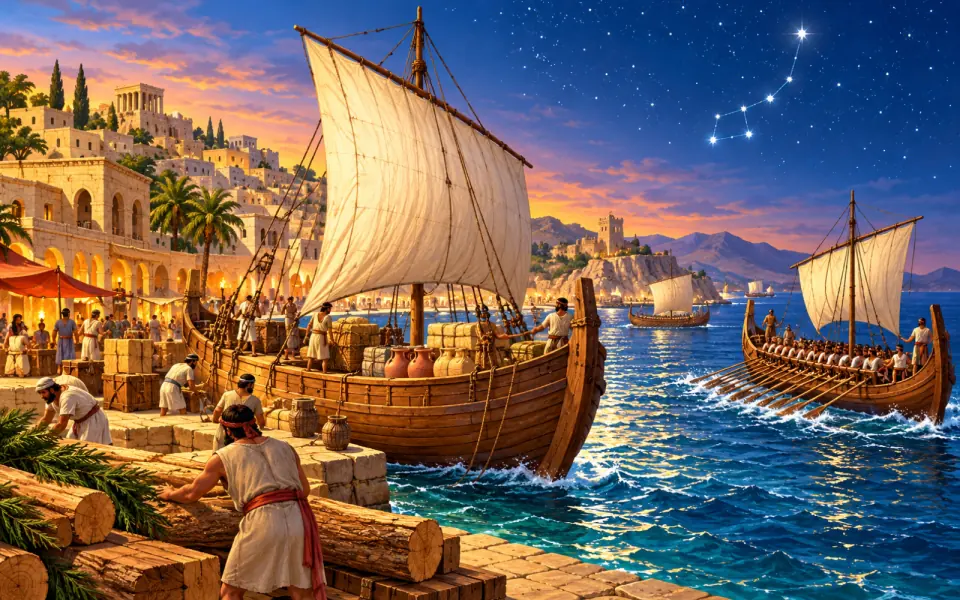 AfterPhoenician seafaringabout 1000 BC
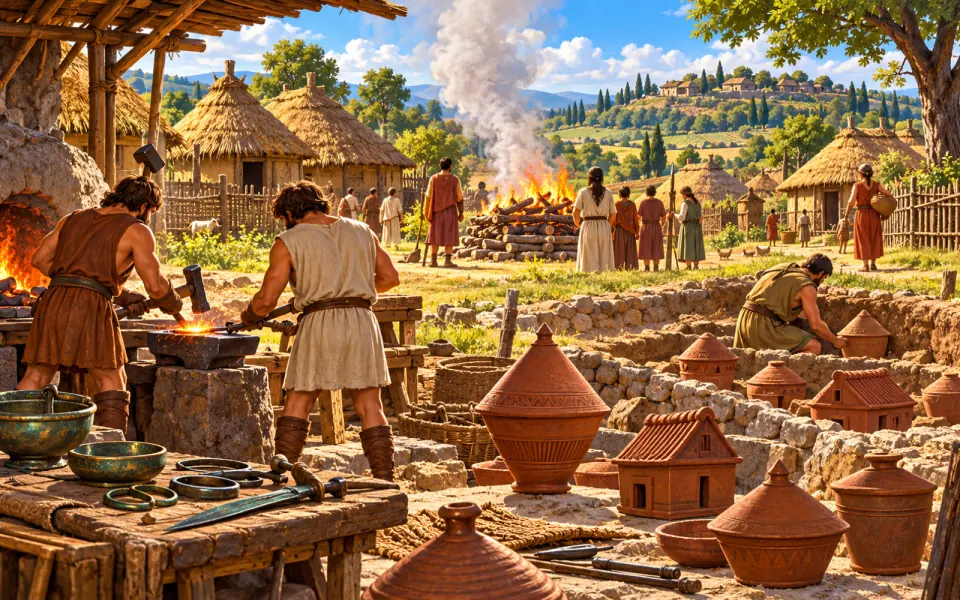 AfterThe Villanovan culture in Italyabout 900 BC
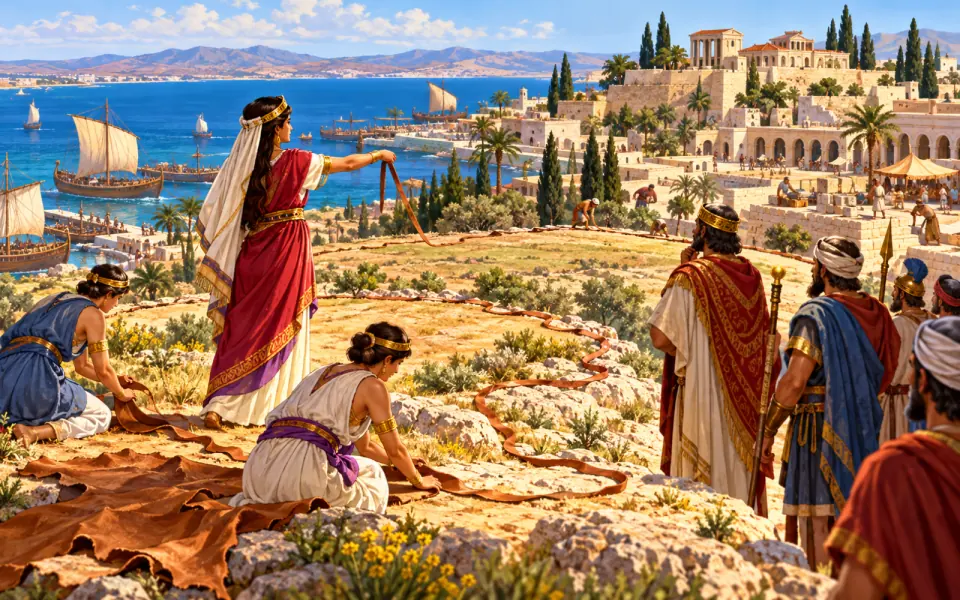 AfterTraditional founding of Carthageabout 814 BC
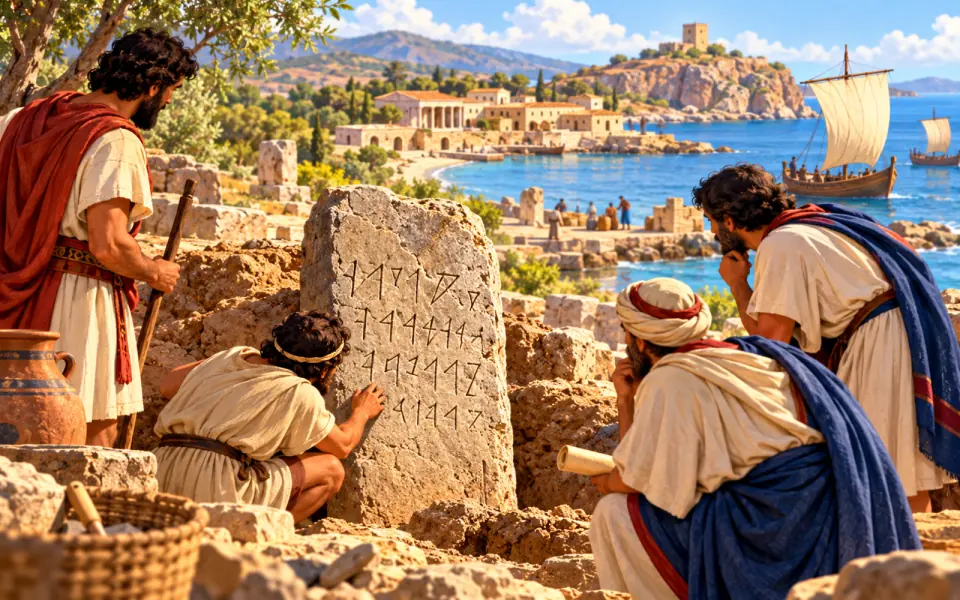 AfterThe Nora Stoneabout 800 BC
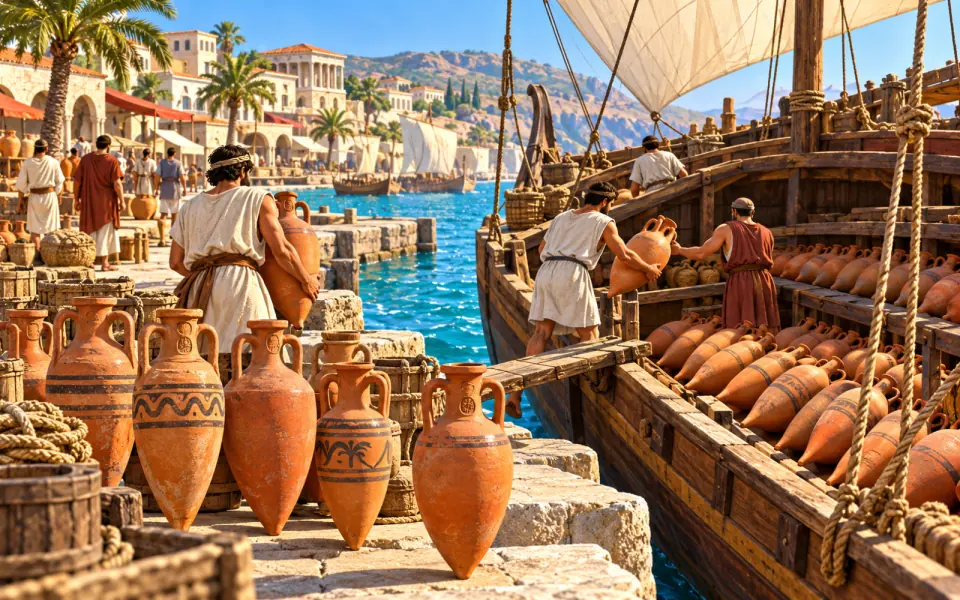 AfterAmphorae for oil and wineabout 800 BC
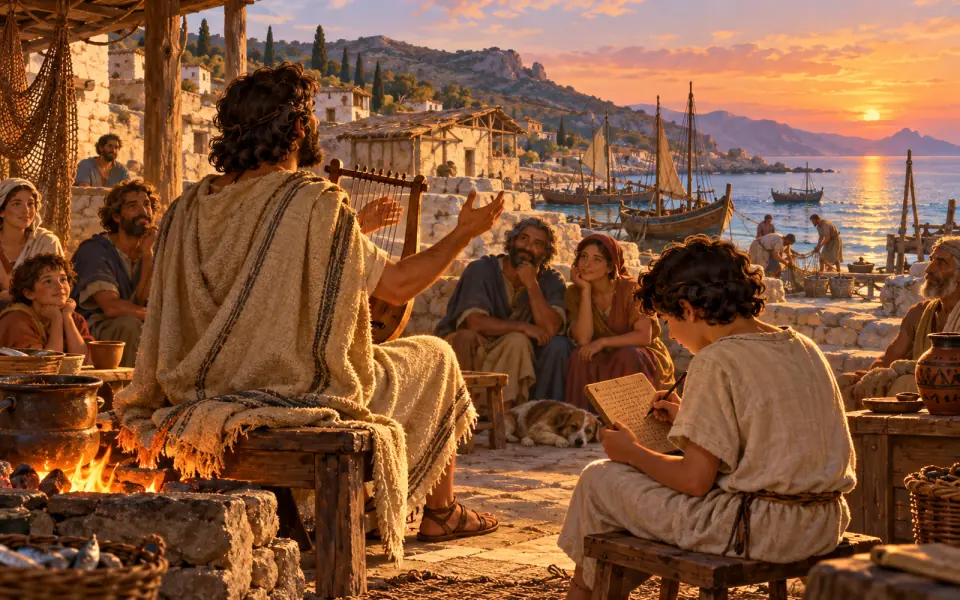 AfterHomer's poems are written downabout 750 BC
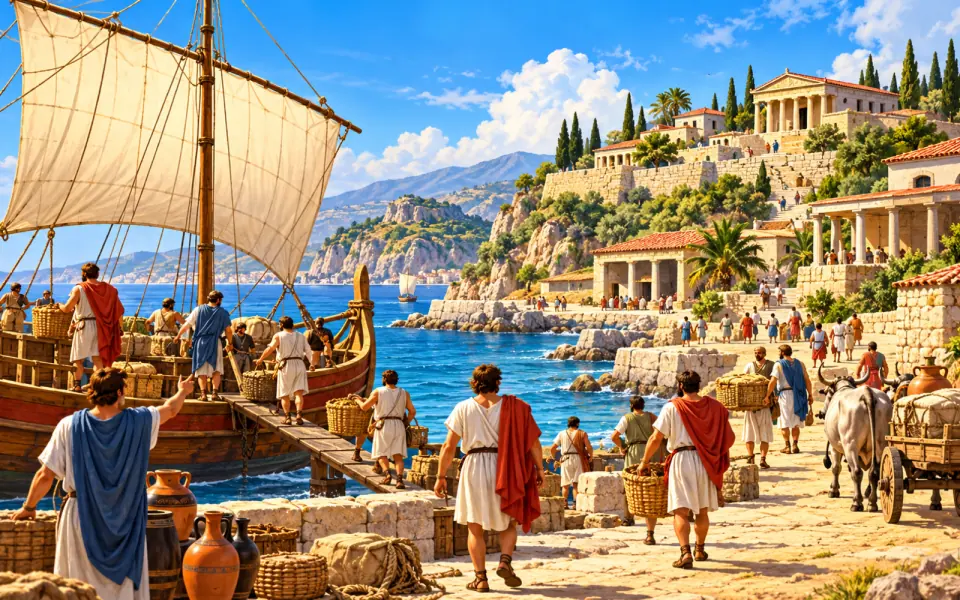 AfterGreek colonies in the Westabout 750 BC
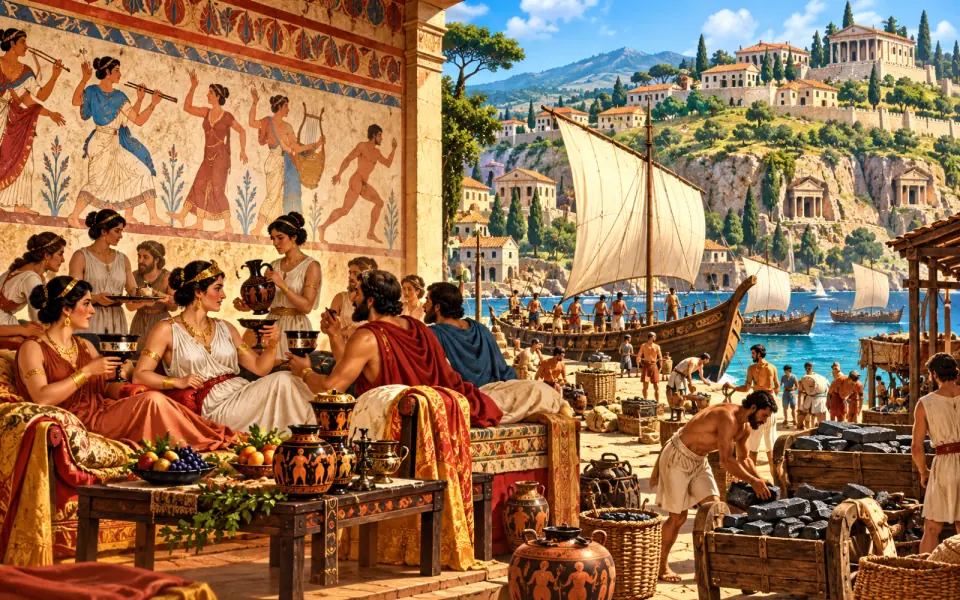 AfterThe Etruscans, lords of the Tyrrhenian Seaabout 700 BC
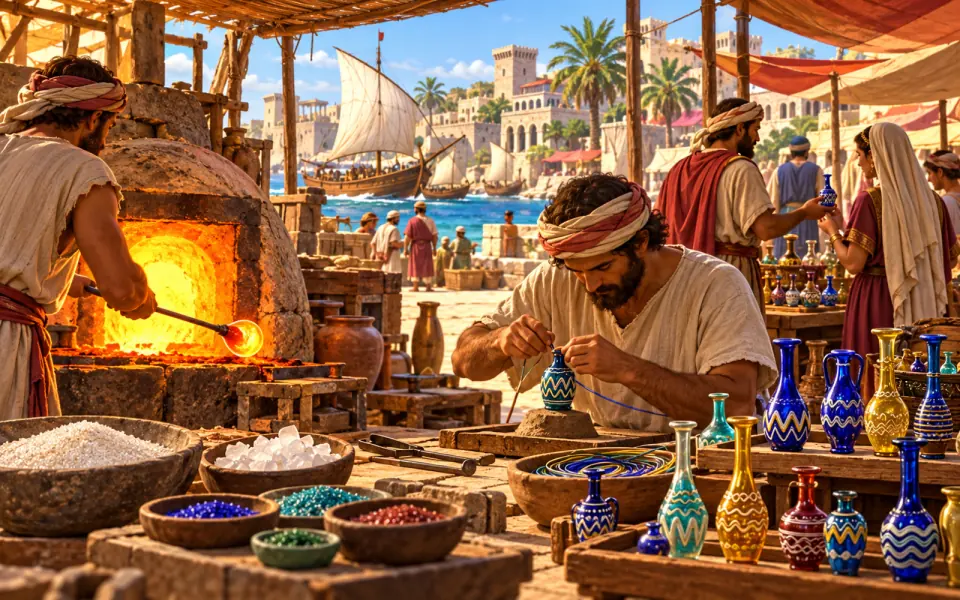 AfterPhoenician glass spreadsabout 600 BC
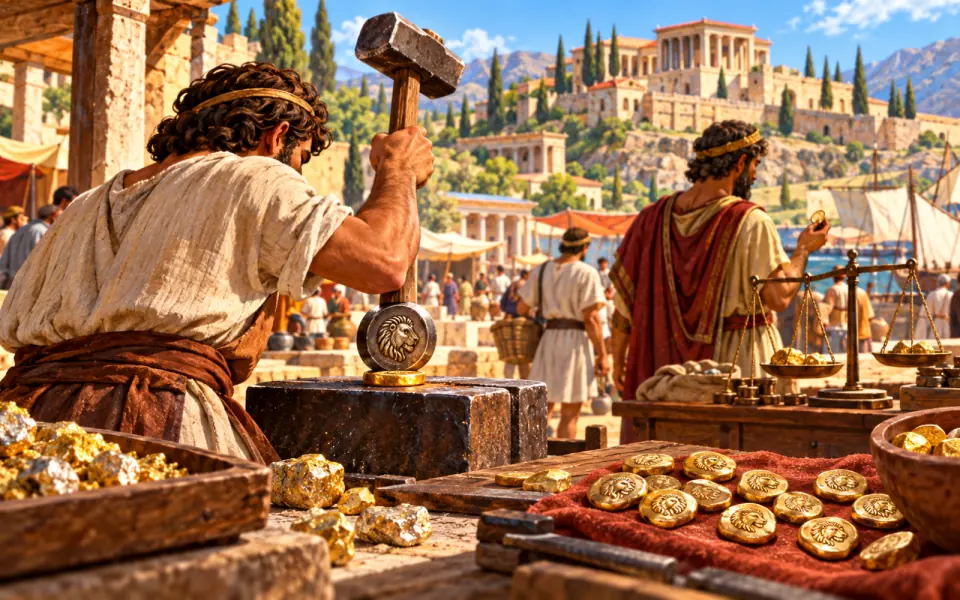 AfterCoins in the Mediterraneanabout 600 BC
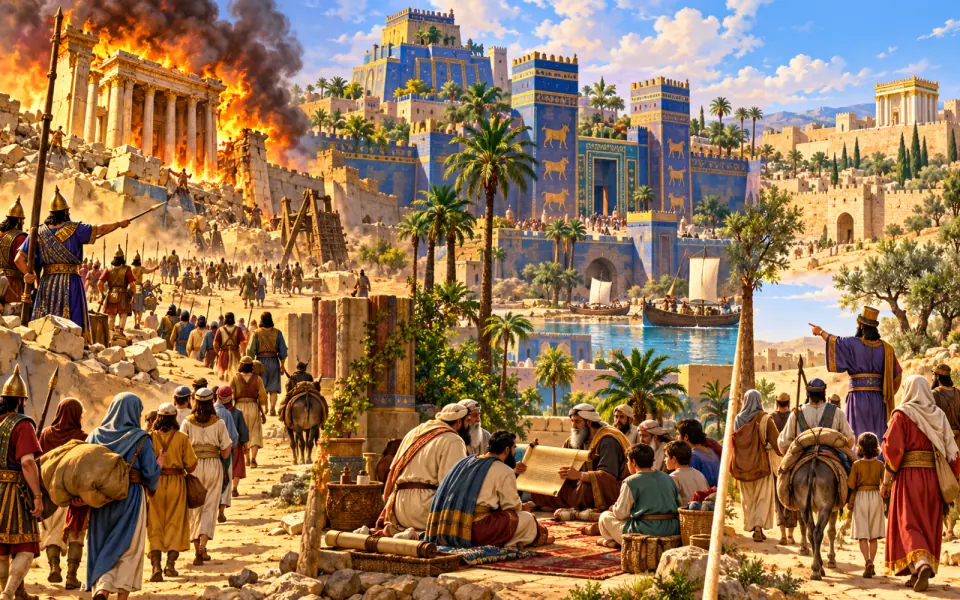 AfterThe Babylonian Exileabout 586 BC
 AfterSailing beyond Gibraltarabout 500 BC
Listen / Read next
- Music to read by: Cinematic JourneyEpic film-style music, no lyrics, by Ciro Simone IrmiciSpotifyYouTube Music
Meanwhile, elsewhere in the world

Other events of the era “Sea civilisations”
- Minoan civilisation on Crete
- The palace of Knossos
- The Proto-Sinaitic alphabet
- The eruption of Thera
- The nuraghi of Sardinia
- The gold mask of Mycenae
- Linear B
- The Lion Gate at Mycenae
- The Iron Age begins
- Phoenician purple
- The Phoenician alphabet
- The Kingdom of Israel
- Phoenician seafaring
- The Villanovan culture in Italy
- Traditional founding of Carthage
- The Nora Stone
- Amphorae for oil and wine
- Homer's poems are written down
- Greek colonies in the West
- The Etruscans, lords of the Tyrrhenian Sea
- Phoenician glass spreads
- Coins in the Mediterranean
- The Babylonian Exile
- Sailing beyond Gibraltar
