The Lion Gate at Mycenae
about 1250 BC Mycenae, Peloponnese (Greece)
In short
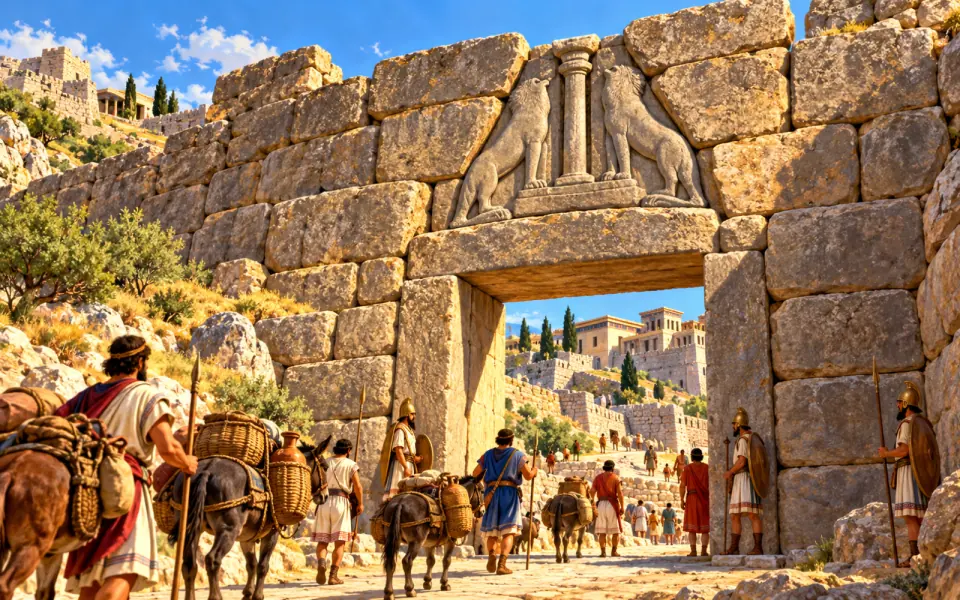
The main entrance to the citadel of Mycenae was a gate made of huge blocks, topped by a carving of two lions facing each other on either side of a column. The animals' heads, perhaps made separately, have been lost. The walls around it were so massive that later Greeks believed they had been built by the Cyclopes, one-eyed giants. It is the largest surviving sculpture from Bronze Age Greece.
Why it matters It made anyone arriving understand how powerful the kings of Mycenae were.
Source: UNESCO, “Archaeological Sites of Mycenae and Tiryns”
Study card about 5 minutes of reading
The story
The kings' entrance
Imagine you are a traveller of three thousand two hundred years ago, arriving on foot at the city of Mycenae, in the Peloponnese. From far away you see a hill with a fortress on top. Then you come closer and the walls become very tall and made of blocks so big that they seem impossible to move. Following the slope you reach a gap a little over three metres wide, closed at the top by an enormous stone. Above that stone there is a sculpture: two lionesses standing, facing each other, with their front paws resting on a column. This is the Lion Gate, the main entrance to the citadel of Mycenae.
What it is like
The gate was built around 1250 BC, in the middle of the 13th century BC, in the period archaeologists call Late Helladic IIIB. It lies on the north-west side of the hill. The gap is about 3.10 metres wide and about 2.95 metres high. On top, covering the passage, is a lintel made of a single block of stone 4.5 metres long, 2 metres high and 0.8 thick. Beside the gate the walls form a bastion, that is, a projecting part, almost fifteen metres long.
The walls of the entrance and of the bastion are built of conglomerate blocks, a rock made of pebbles cemented together. The stones are carefully squared and laid in regular rows. The relief with the lions, on the other hand, is carved on a slab of limestone placed above the lintel.
The lions
The two beasts rest their front paws on a base, and between them stands a column. One thing strikes you at once: the heads are missing. The animals' heads had been made separately, perhaps in another material, and fitted into the relief; over time they were lost and only the necks remain. For this reason some scholars wonder whether they were sphinxes or animals of another kind, although most still read them as two lionesses. The meaning is debated. The column may represent the king's house, or a deity, and the lions its guardians. Some scholars have linked the lions to the goddess Hera, but these are only hypotheses.
It is the largest monumental sculpture left from the Greek Bronze Age, and it is the only large Mycenaean sculpture to survive. Of the rest of that world we mostly have small objects, such as weapons, vases and jewellery, or paintings on walls.
The walls of the Cyclopes
The gate is part of a stretch of wall built when the citadel was extended for the second time, in the 13th century BC. The blocks of the wall are so enormous that the Greeks of later centuries, seeing them, could not imagine that men had lifted them. According to their tradition, they had been built by the Cyclopes, one-eyed giants. Even today archaeologists use the expression “Cyclopean walls” for this type of construction, made of very large blocks, little or not at all finished.
A gate never forgotten
In the 2nd century AD the Greek traveller Pausanias visited Mycenae, saw the gate still standing and described it in his travel book. This is why, when scholars came back to look for it in the 18th century, they had a clue. In 1700 Francesco Grimani surveyed the site with Pausanias as his guide and recognised the gate as the one in the account. In 1840 the Greek Archaeological Society began to clear it of earth and rubble. In 1876 Heinrich Schliemann dug the ground south of the gate and found the royal tombs with their gold. Since then the Lion Gate has been the most recognisable image of Mycenae.
The end of Mycenae
Around 1200 BC in the eastern Mediterranean many cities and palaces were destroyed or abandoned: this is the crisis discussed in the card on the end of the Bronze Age. The Mycenaean palaces did not survive; some earthquakes had already damaged Mycenae around 1250 BC and Tiryns around 1200 BC, but scholars now think they were not the main cause. The gate, in any case, stayed where it was, among the ruins, and went on being seen by those who passed by.
Why it happened
A gate like this was not only for going in. The Mycenaean kings lived in a time of rivalry between the kingdoms of Greece and of trade with distant lands. A monumental entrance with an image of strength gave a clear message to anyone arriving: guest, merchant or enemy. It showed the ruler's authority, and also his wealth, because only a king with many workers could transport and raise such heavy blocks.
At the same time, the walls were genuinely useful. In a time of wars, a fortress with thick walls and a narrow gate overlooked by the bastion was hard to attack.
What changed
For thousands of years the Lion Gate has been a silent witness of an almost forgotten civilisation. When archaeologists began to study it in the 19th century, it helped to show that the poems of Homer remembered a world that had really existed, made of fortresses, kings and warriors, even if not everything they told was history.
The sculpture is now the symbol of the Greek Bronze Age and appears in books and guides. Mycenae, together with Tiryns, is recognised as a World Heritage Site.
The idea of a monumental gate as an image of power has crossed the centuries: triumphal arches and the portals of cathedrals and palaces have gone on using the entrance as a message. And the expression “Cyclopean walls” is still a technical term in archaeology today.
Key people and places
People
- Pausanias
- Greek traveller and writer of the 2nd century AD: in his Description of Greece he described the gate of Mycenae, still visible.
- Francesco Grimani
- In 1700 he surveyed the site of Mycenae and, following Pausanias, recognised the gate.
- Heinrich Schliemann
- German archaeologist who in 1876 dug at Mycenae, south of the gate, and found the royal tombs.
- Agamemnon
- The king of Mycenae in the poems of Homer: a figure of tradition, and we do not know whether he really existed.
Places
- Mycenae
- A city in the Peloponnese dominated by a fortified citadel, capital of the Mycenaean kings.
- Lion Gate
- The main entrance to the citadel, on the north-west side, with the relief of two lionesses.
- Tiryns
- Another Mycenaean fortress in the Peloponnese, recognised as a World Heritage Site together with Mycenae.
Good to know
- The lintel of the gate is a single block 4.5 metres long and 2 metres high.
- The lions' heads were made separately and have been lost: only their necks remain.
- The Greeks of later centuries thought the walls had been built by the Cyclopes, one-eyed giants.
- The Lion Gate is the largest Bronze Age sculpture left in the Aegean.
- Pausanias saw it standing in the 2nd century AD, about fourteen centuries after it was built, and described it.
Find out more
- Wikipedia, “Mycenae” en.wikipedia.org
- World History Encyclopedia, “Mycenae” worldhistory.org
- Wikipedia, “Lion Gate” en.wikipedia.org
- Wikipedia, “Cyclopean masonry” en.wikipedia.org
Related events
- The gold mask of Mycenaeabout 1550 BC · Sea civilisationsThe royal tombs with the gold mask lie next to the gate.
- Linear Babout 1450 BC · Sea civilisationsIn the citadel the Linear B script was used to keep accounts.
- Homer's poems are written downabout 750 BC · Sea civilisationsHomer remembers Mycenae as the city of Agamemnon.
- The Bronze Age collapseabout 1200 BC · River civilisationsThe crisis at the end of the Bronze Age put an end to the Mycenaean kingdoms.
- The first Greek city-statesabout 800 BC · Ancient GreeceAfter the Bronze Age crisis Greece reorganised itself into city-states.
Before and after, in the era “Sea civilisations”
Event 8 of 25
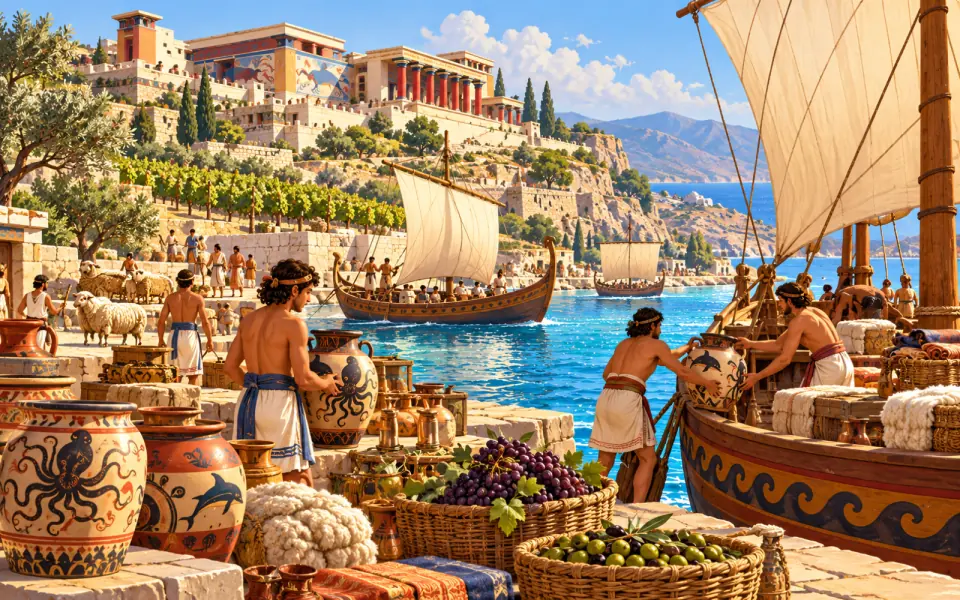 BeforeMinoan civilisation on Creteabout 2000 BC
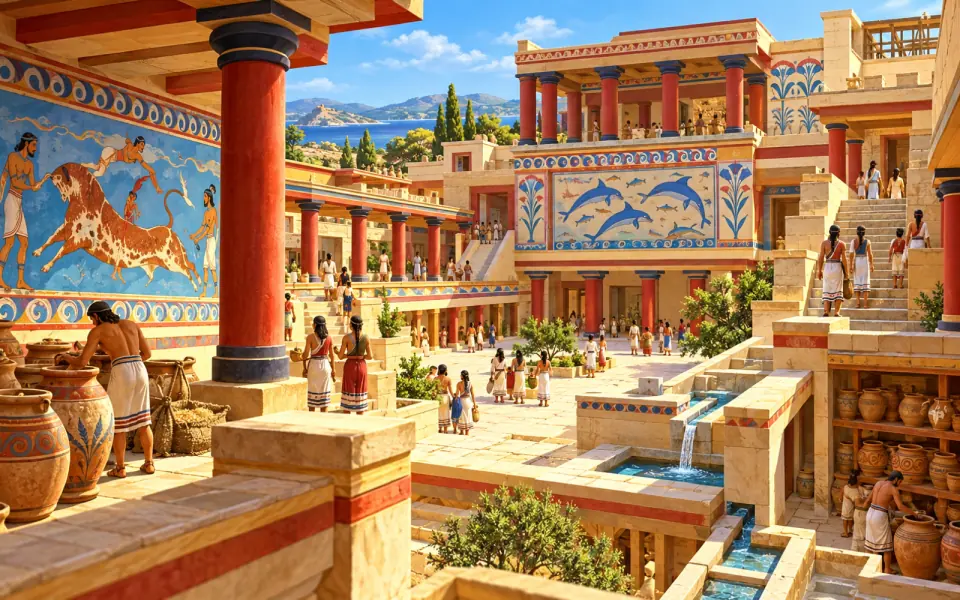 BeforeThe palace of Knossosabout 1900 BC
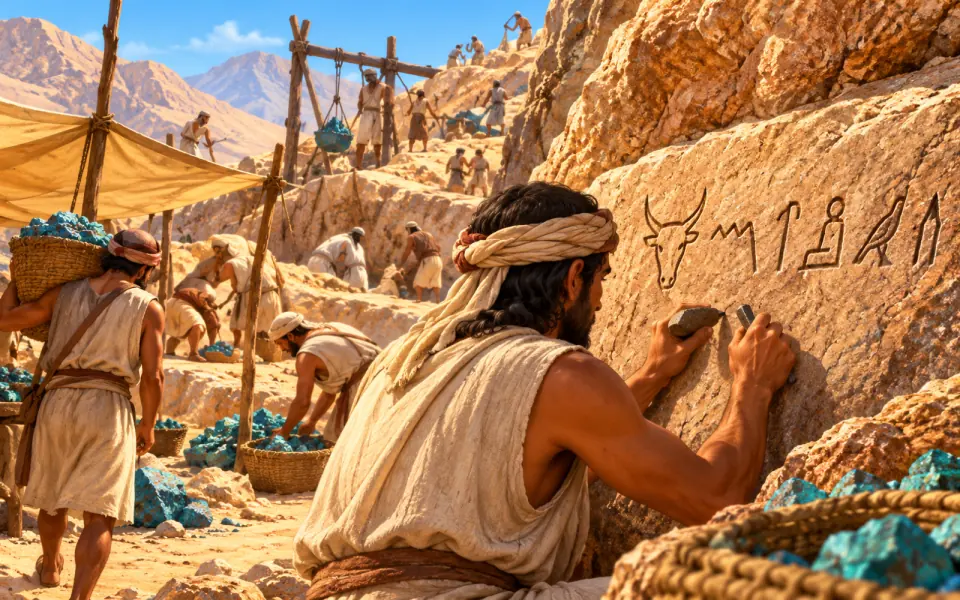 BeforeThe Proto-Sinaitic alphabetabout 1800 BC
 BeforeThe eruption of Theraabout 1600 BC
 BeforeThe nuraghi of Sardiniaabout 1600 BC
 BeforeThe gold mask of Mycenaeabout 1550 BC
 BeforeLinear Babout 1450 BC
- You are hereThe Lion Gate at Mycenaeabout 1250 BC
 AfterThe Iron Age beginsabout 1200 BC
 AfterThe Phoenicians spread outabout 1200 BC
 AfterPhoenician purpleabout 1100 BC
 AfterThe Phoenician alphabetabout 1050 BC
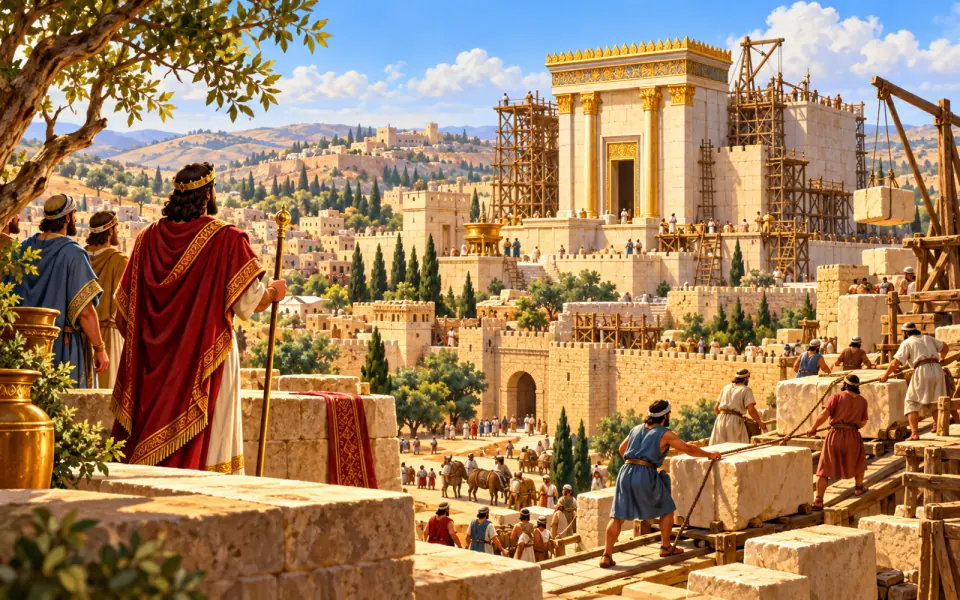 AfterThe Kingdom of Israelabout 1000 BC
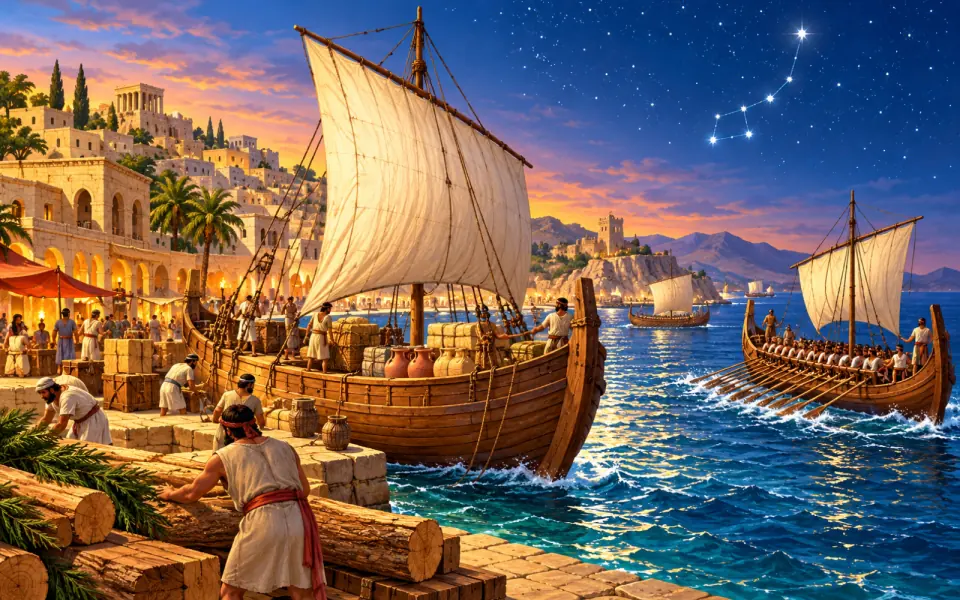 AfterPhoenician seafaringabout 1000 BC
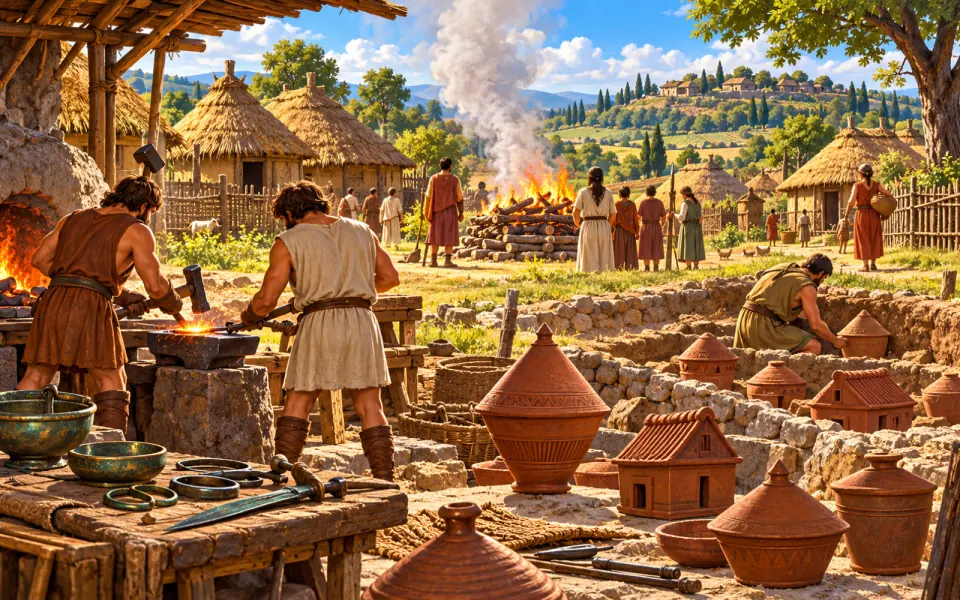 AfterThe Villanovan culture in Italyabout 900 BC
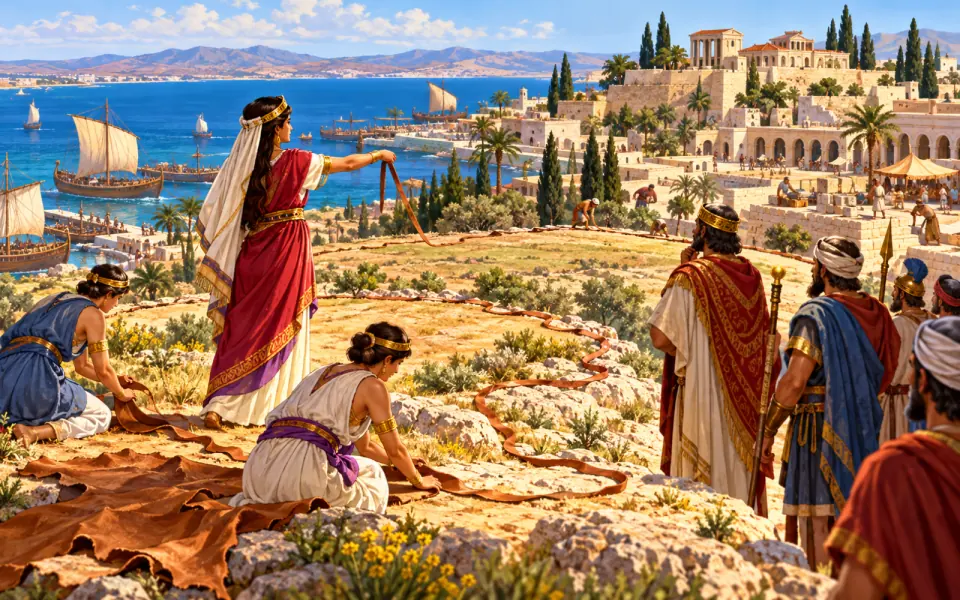 AfterTraditional founding of Carthageabout 814 BC
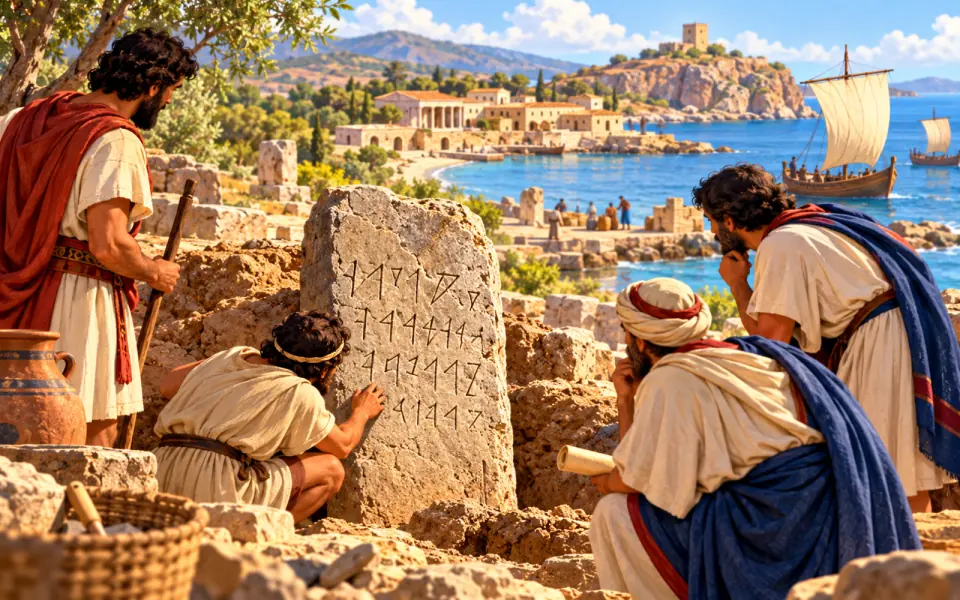 AfterThe Nora Stoneabout 800 BC
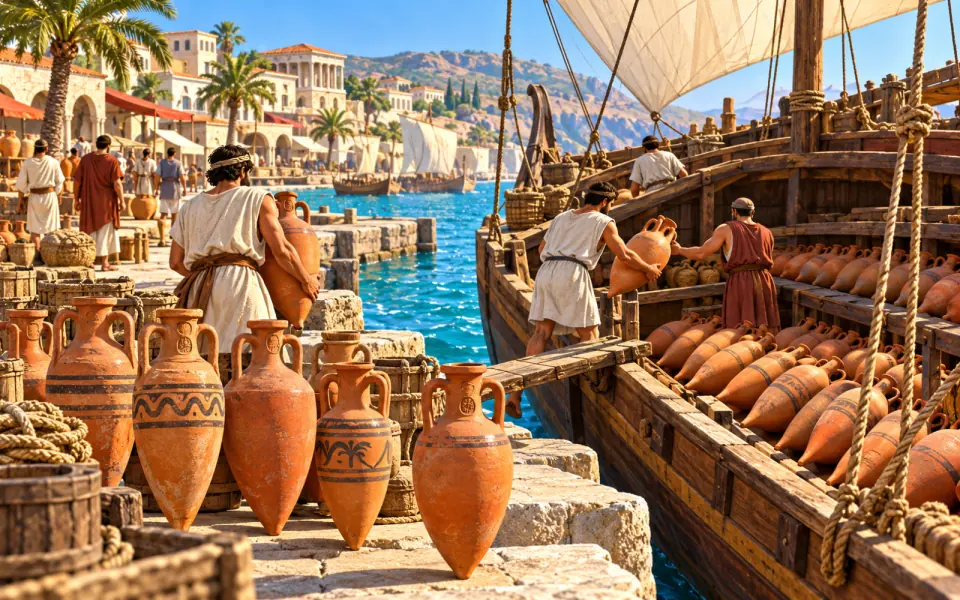 AfterAmphorae for oil and wineabout 800 BC
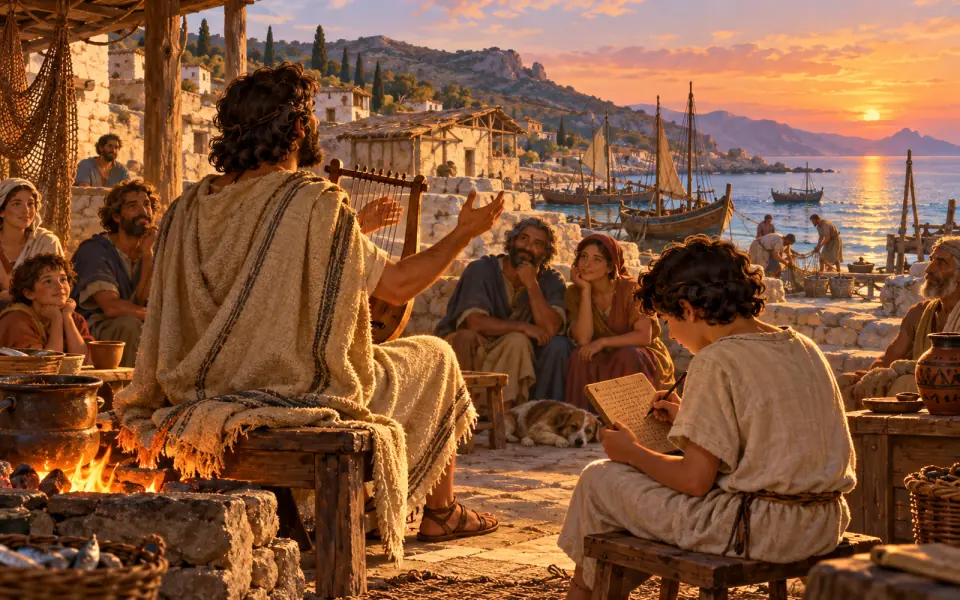 AfterHomer's poems are written downabout 750 BC
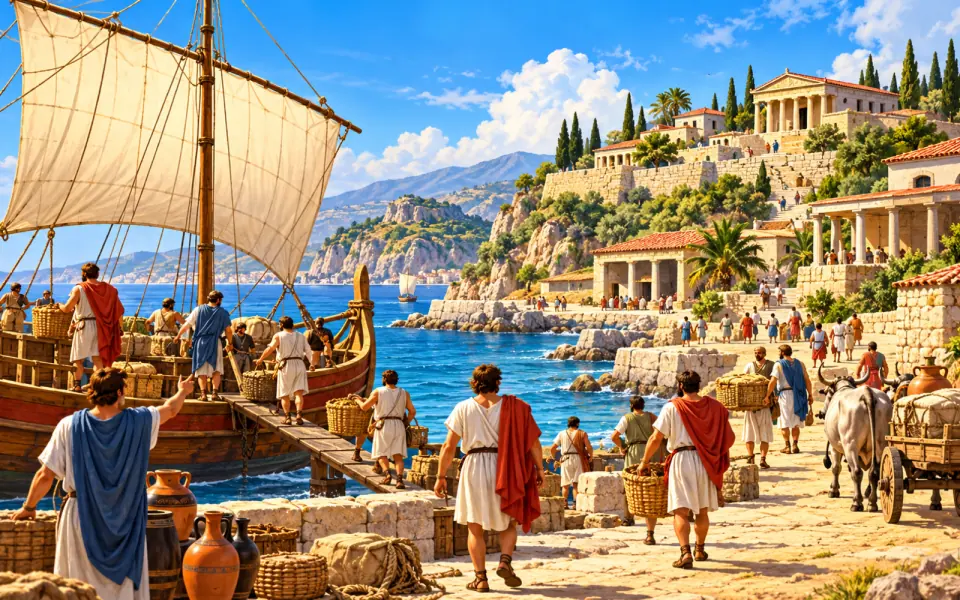 AfterGreek colonies in the Westabout 750 BC
 AfterThe Etruscans, lords of the Tyrrhenian Seaabout 700 BC
 AfterPhoenician glass spreadsabout 600 BC
 AfterCoins in the Mediterraneanabout 600 BC
 AfterThe Babylonian Exileabout 586 BC
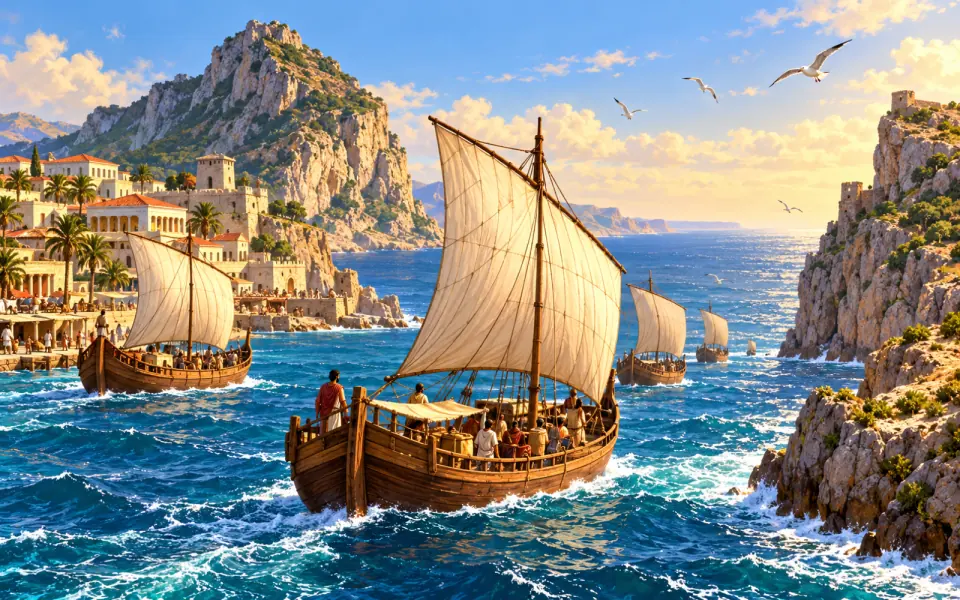 AfterSailing beyond Gibraltarabout 500 BC
Listen / Read next
- Music to read by: Cinematic JourneyEpic film-style music, no lyrics, by Ciro Simone IrmiciSpotifyYouTube Music
Meanwhile, elsewhere in the world
Other events of the era “Sea civilisations”
- Minoan civilisation on Crete
- The palace of Knossos
- The Proto-Sinaitic alphabet
- The eruption of Thera
- The nuraghi of Sardinia
- The gold mask of Mycenae
- Linear B
- The Iron Age begins
- The Phoenicians spread out
- Phoenician purple
- The Phoenician alphabet
- The Kingdom of Israel
- Phoenician seafaring
- The Villanovan culture in Italy
- Traditional founding of Carthage
- The Nora Stone
- Amphorae for oil and wine
- Homer's poems are written down
- Greek colonies in the West
- The Etruscans, lords of the Tyrrhenian Sea
- Phoenician glass spreads
- Coins in the Mediterranean
- The Babylonian Exile
- Sailing beyond Gibraltar
