The Etruscans, lords of the Tyrrhenian Sea
about 700 BC Tarquinia and Cerveteri, Lazio (Italy)
In short
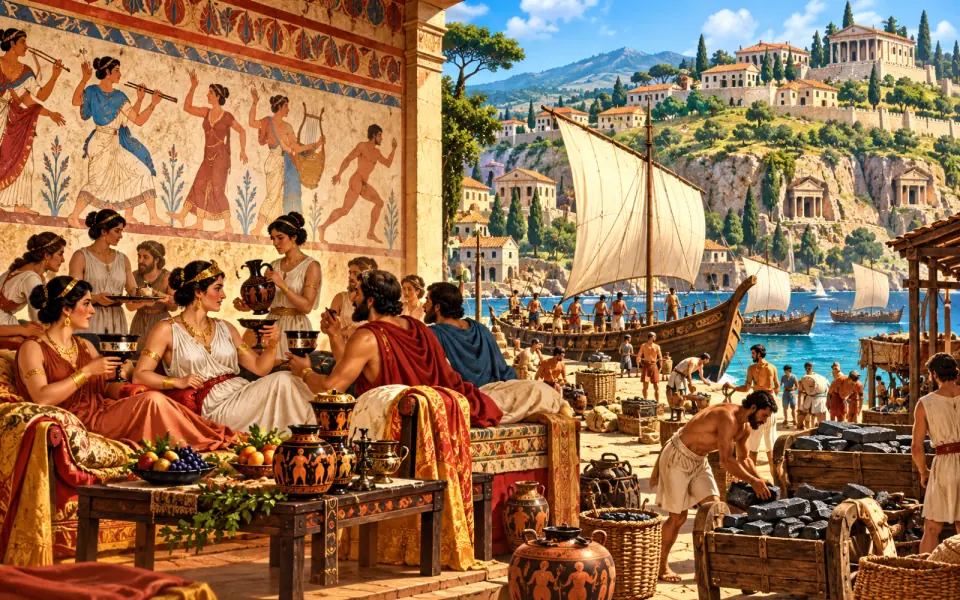
The Etruscans lived between the Arno and the Tiber, in today's Tuscany, northern Lazio and part of Umbria. Their cities, such as Tarquinia, Cerveteri and Veii, traded all over the Tyrrhenian Sea, helped by the iron from the island of Elba. The painted tombs of Tarquinia show banquets, dances, musicians and sporting contests. Etruscan women took part in banquets alongside the men, which greatly surprised the Greeks.
Why it matters The Romans learnt a great deal from the Etruscans, from the art of building to reading signs from the gods.
Source: UNESCO, “Etruscan Necropolises of Cerveteri and Tarquinia”
Study card about 5 minutes of reading
The story
The people the Romans called Tusci
Before Rome became great, central Italy was dominated by another people: the Etruscans. Their territory, Etruria, corresponded roughly to present-day Tuscany, western Umbria and northern Lazio. At the moment of their greatest expansion, around 500 BC, the Etruscans came to control the Po plain and parts of Campania as well. The Romans called them “Tusci”, from which the name Tuscany comes, and, it seems, the name recalled their reputation as experts in religious rites.
The Etruscans never formed a single kingdom. They lived in independent city-states, each with its own walls, government and territory. Ancient sources speak of a league of twelve peoples, the “duodecim populi Etruriae”, which met every year at a sanctuary, the fanum Voltumnae. On that occasion the head of the confederation was chosen, called in Etruscan zilath mechl rasnal. It was a religious and cultural alliance more than a political one.
Where did they come from?
About the Etruscans there is a question that the Greeks, the Romans and then modern scholars asked: where did they come from? Today most experts think they were an Italian people, born on the spot. Their civilisation developed around 900 BC from the Proto-Villanovan culture, and its first phase is the Villanovan, discussed in another card. The ancient tradition of an eastern origin is not shared by most scholars today.
Their language is hard to understand. The first Etruscan inscriptions date from about 700 BC, in southern Etruria, and use an alphabet derived from the Greek of the colonists from Euboea. We can read the letters, but we understand the meaning of the words only in part. It is not an Indo-European language like Latin and Italian: scholars link it to a small family of languages called Tyrsenian, which includes Lemnian, spoken on the island of Lemnos, and Raetic, spoken in the Alps.
Cities of the living and cities of the dead
Much of what we know about the Etruscans comes from the tombs, because the cities of the living have often been covered by modern ones. At Cerveteri, ancient Caere, there is the necropolis of the Banditaccia, which covers about 400 hectares in all, of which only about ten can be visited. There are about a thousand tombs, many under great round earth mounds, built between the 9th and 3rd centuries BC. The tombs are cut into the rock and imitate the houses of the living, with a corridor, a central hall and various rooms. Some are lined up along real streets. In the Tomb of the Reliefs, of the Matuna family, household objects are carved on the walls. Cerveteri and Tarquinia together have been a World Heritage Site since 2004.
At Tarquinia the walls of some tombs are painted, for example in the Tomb of the Augurs. The images are full of colour. Scholars warn, however, that those frescoes were probably painted by Greek or foreign artists, and so are not always a faithful picture of Etruscan life.
Women and social life
One aspect that struck the ancients, and still strikes us, is the position of Etruscan women. Funerary inscriptions often mention the mother next to the father, and women had a name of their own, not derived from their father's or husband's as in Rome. On painted or carved sarcophagi, married couples are shown reclining close together, in an affectionate pose. Greek and Roman authors, it seems, mistook this freedom for loose morals, but some scholars today think it was simply a different way of regarding women.
A wealth built on trade
The Etruscans grew rich through exchange: to the north with the Celts, to the south with the Greeks. The families of the great landowners filled their tombs with imported luxury objects. Power was in the hands of a few aristocratic families, and the richest cities were those near the coast.
The decline
Towards the end of the 4th century BC Rome began to conquer Etruria, city after city. In 90 BC the Romans granted the Etruscans citizenship, and in 27 BC the territory was absorbed completely into the empire. The people did not disappear suddenly: they slowly mixed with the Romans, and the Etruscan language fell out of use.
The Romans owed a great deal to the Etruscans. Scholars think that the organisation of the noble families, the class of the patricians and the office of dictator in an emergency may have an Etruscan model. Certainly, for the Romans, the Etruscans were teachers.
Why it happened
The Etruscans emerged from the Villanovan culture thanks to trade. The cities of Etruria were in a favourable position, between the sea and the interior, in a fertile region rich in metals, and they had contacts with the Greeks of the south and the peoples of the north.
With trade the wealth of some families grew, and they built ever larger tombs and bought luxury objects. Cities grew up around these groups of powerful families, and from the 7th century BC (the period called Orientalising) Etruscan civilisation took its mature form.
What changed
The Etruscans passed on many things to the Romans: building techniques, religious rites tied to the observation of divine signs, some public offices and probably the very idea of the organised city. Rome had Etruscan kings in its first centuries, according to tradition.
The alphabet also passed through the Etruscans: their alphabet, derived from the Greek of the colonists, was an intermediary for the Latin one. Words such as “Tuscany” and place names across central Italy still recall their territory.
Today the Etruscan necropolises, such as those of Cerveteri and Tarquinia, are among the most visited places. Italian and European museums keep many objects, and the Etruscan inscriptions, which we still cannot read completely, are an open problem for linguists.
Key people and places
People
- Matuna family
- A family of Cerveteri, owners of the Tomb of the Reliefs, with walls carved to look like a house.
- Zilath mechl rasnal
- The Etruscan title of the head of the league of cities, chosen each year.
Places
- Cerveteri (Caere)
- An Etruscan city with the great necropolis of the Banditaccia: about a thousand tombs, many under mounds.
- Tarquinia
- An Etruscan city famous for its painted tombs, such as the Tomb of the Augurs.
- Fanum Voltumnae
- The sanctuary where the league of Etruscan cities met every year.
Good to know
- Tuscany takes its name from the Tusci, as the Romans called the Etruscans.
- The necropolis of the Banditaccia at Cerveteri covers about 400 hectares in all.
- Etruscan tombs imitate the houses of the living, with a corridor, halls and rooms cut into the rock.
- On Etruscan sarcophagi married couples are often carved reclining close together, almost embracing.
- The Etruscan language is written with letters we can read, but we do not know the meaning of many words.
Find out more
- World History Encyclopedia, “Etruscan Civilization” worldhistory.org
- Wikipedia, “Cerveteri” en.wikipedia.org
- Wikipedia, “Tarquinia” en.wikipedia.org
- Wikipedia, “Etruscan civilization” en.wikipedia.org
Related events
- The Villanovan culture in Italyabout 900 BC · Sea civilisationsThe Villanovans were the first phase of Etruscan civilisation.
- Traditional founding of Romeabout 753 BC · Ancient RomeRome had its first kings from among the Etruscans, according to tradition.
- Greek colonies in the Westabout 750 BC · Sea civilisationsThe Etruscans traded with the Greek colonists.
- The Iron Age beginsabout 1200 BC · Sea civilisationsIronworking enriched central Italy.
- Birth of the Roman Republicabout 509 BC · Ancient RomeThe Roman Republic was born by driving out the kings.
Before and after, in the era “Sea civilisations”
Event 21 of 25
 BeforeMinoan civilisation on Creteabout 2000 BC
 BeforeThe palace of Knossosabout 1900 BC
 BeforeThe Proto-Sinaitic alphabetabout 1800 BC
 BeforeThe eruption of Theraabout 1600 BC
 BeforeThe nuraghi of Sardiniaabout 1600 BC
 BeforeThe gold mask of Mycenaeabout 1550 BC
 BeforeLinear Babout 1450 BC
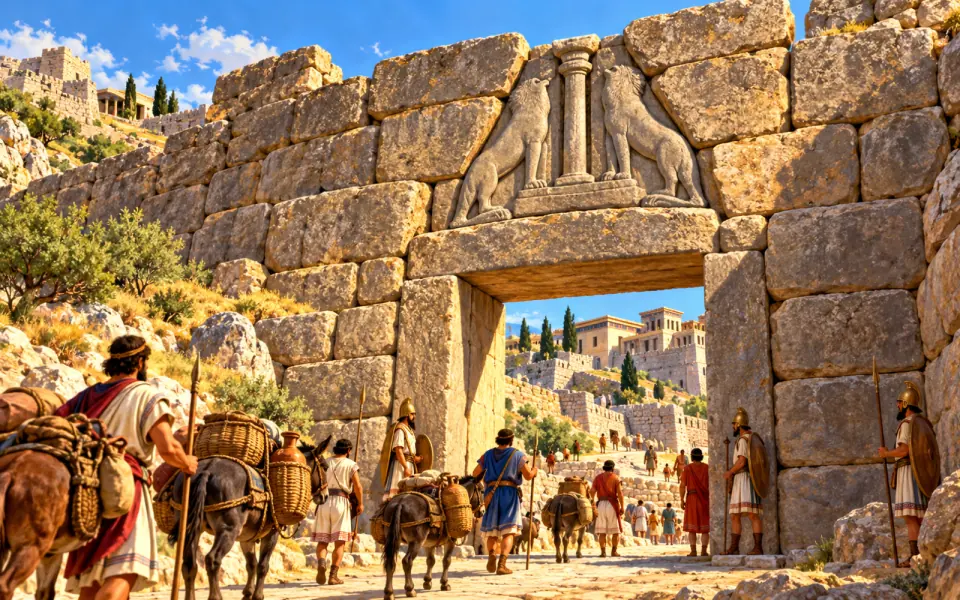 BeforeThe Lion Gate at Mycenaeabout 1250 BC
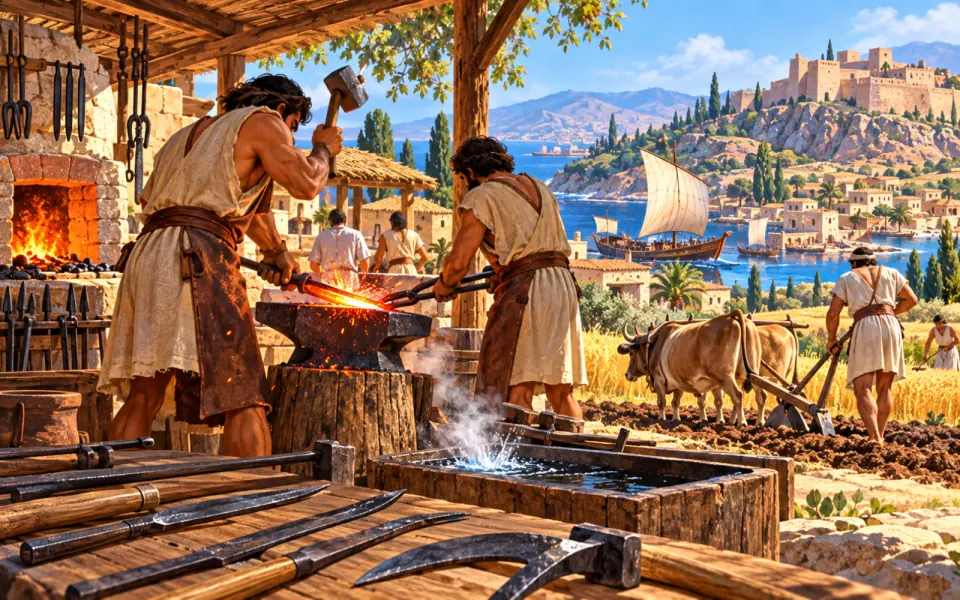 BeforeThe Iron Age beginsabout 1200 BC
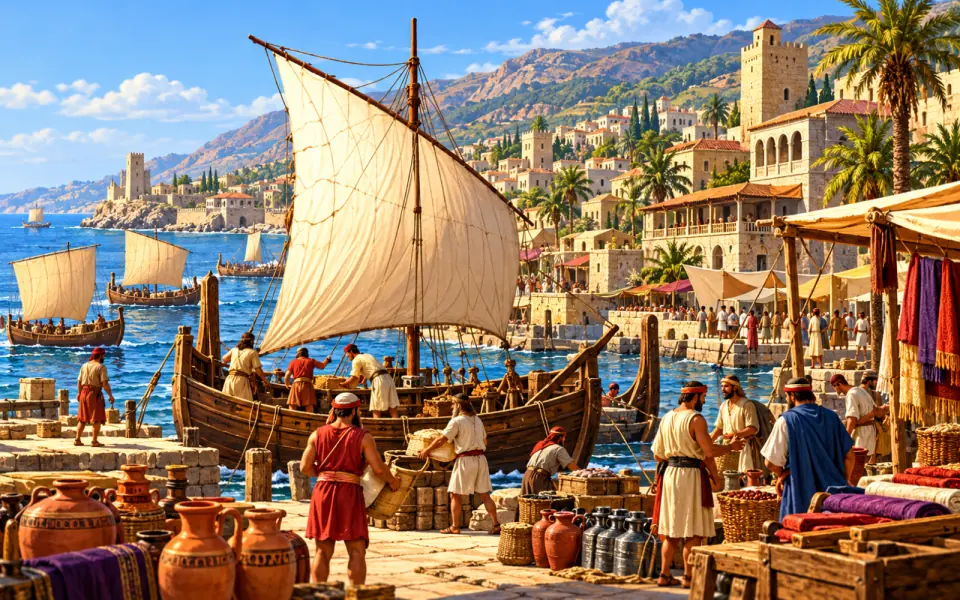 BeforeThe Phoenicians spread outabout 1200 BC
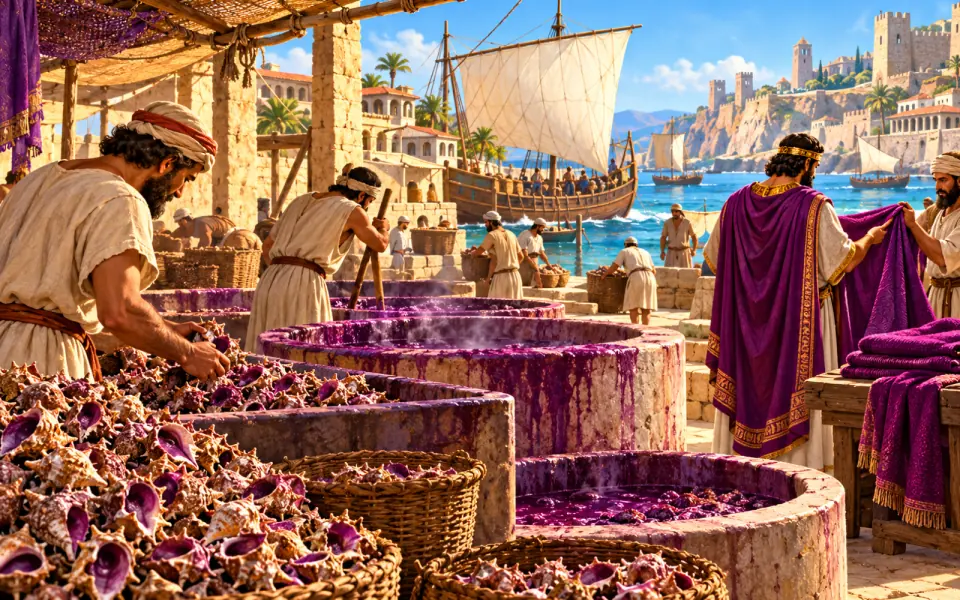 BeforePhoenician purpleabout 1100 BC
 BeforeThe Phoenician alphabetabout 1050 BC
 BeforeThe Kingdom of Israelabout 1000 BC
 BeforePhoenician seafaringabout 1000 BC
 BeforeThe Villanovan culture in Italyabout 900 BC
 BeforeTraditional founding of Carthageabout 814 BC
 BeforeThe Nora Stoneabout 800 BC
 BeforeAmphorae for oil and wineabout 800 BC
 BeforeHomer's poems are written downabout 750 BC
 BeforeGreek colonies in the Westabout 750 BC
- You are hereThe Etruscans, lords of the Tyrrhenian Seaabout 700 BC
 AfterPhoenician glass spreadsabout 600 BC
 AfterCoins in the Mediterraneanabout 600 BC
 AfterThe Babylonian Exileabout 586 BC
 AfterSailing beyond Gibraltarabout 500 BC
Listen / Read next
- Music to read by: Cinematic JourneyEpic film-style music, no lyrics, by Ciro Simone IrmiciSpotifyYouTube Music
Meanwhile, elsewhere in the world
Other events of the era “Sea civilisations”
- Minoan civilisation on Crete
- The palace of Knossos
- The Proto-Sinaitic alphabet
- The eruption of Thera
- The nuraghi of Sardinia
- The gold mask of Mycenae
- Linear B
- The Lion Gate at Mycenae
- The Iron Age begins
- The Phoenicians spread out
- Phoenician purple
- The Phoenician alphabet
- The Kingdom of Israel
- Phoenician seafaring
- The Villanovan culture in Italy
- Traditional founding of Carthage
- The Nora Stone
- Amphorae for oil and wine
- Homer's poems are written down
- Greek colonies in the West
- Phoenician glass spreads
- Coins in the Mediterranean
- The Babylonian Exile
- Sailing beyond Gibraltar
