Amphorae for oil and wine
about 800 BC Mediterranean ports
In short
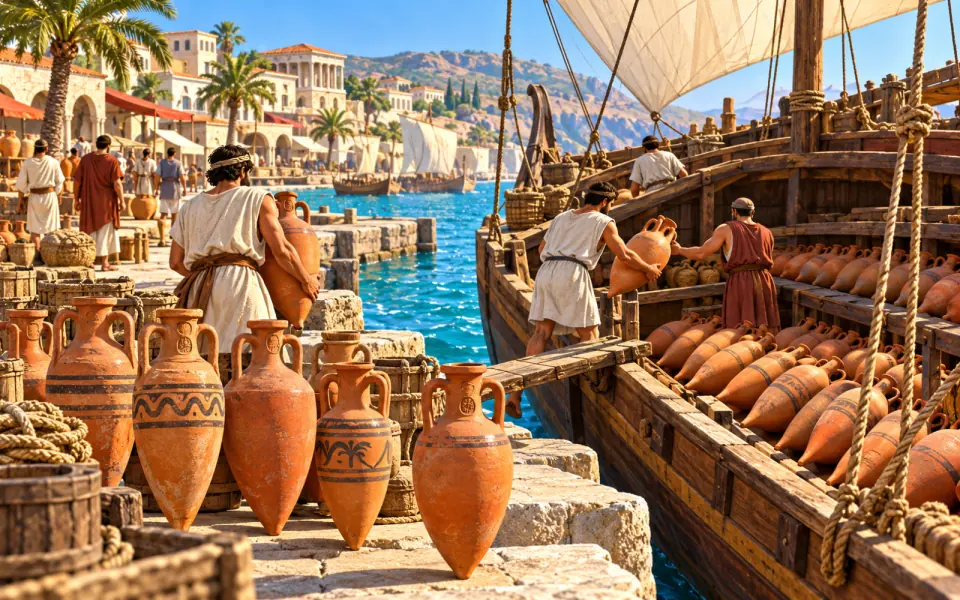
The amphora was a large clay jar with two handles and a pointed base, used to carry olive oil, wine and fish sauces. The point allowed amphorae to be wedged side by side in a ship's hold, or stuck into the sand. Each people and each region had its own shapes, and the handles often bore the maker's stamp. Whole cargoes of them still lie on the seabed, in the wrecks of sunken ships.
Why it matters By following amphorae, archaeologists piece together the trade routes and table tastes of the ancient world.
Source: Encyclopaedia Britannica, “Amphora”
Study card about 5 minutes of reading
The story
The container for everything
If today you want to carry oil or wine from one side of the world to the other, you use bottles, cans, barrels or tankers. In antiquity the container par excellence was the amphora. It is a terracotta vase with two handles and a narrow neck, and most have a pointed base. The name comes from Greek and means more or less “carried on both sides”, precisely because of the two handles. Vases of a similar shape already exist in prehistory, in the Neolithic, but it is in the ancient Mediterranean that the amphora becomes the universal container.
Why the point?
The pointed base seems awkward: a vase like that cannot stand up by itself. But it has a great advantage when loading a ship. Amphorae can be arranged side by side and one on top of another, in rows and layers, wedging the points between the shoulders of those below. This makes good use of space and the cargo does not shift, even in a rough sea. On land amphorae could be planted point-first in the sand.
Amphorae carried mostly wine, olive oil and garum, a fish sauce much used in cooking. Their sizes varied according to their use: most were about forty centimetres tall, but there were smaller ones, under thirty centimetres, and very large ones, up to a metre and a half. Another category of vessel, the pithos, was much bigger and was used only to store provisions at home or in warehouses: it was too heavy to be moved. It should not be confused with the amphora.
Every people, its own shape
Each region produced amphorae with a particular shape. An expert archaeologist can tell at once, by looking at the neck, the handles and the base, where an amphora comes from. This is why fragments are so valuable. If a sherd of a certain shape is found in a distant port, you understand that oil or wine from that region arrived there. By following amphorae, archaeologists reconstruct trade routes, which products were sold and what tastes the ancient peoples had.
The Romans made them on the wheel and marked them with a stamp, which showed the producer or the workshop. The scholar Heinrich Dressel classified them into types, and archaeologists still use his system today. When amphorae were empty they were usually broken and thrown away. In Rome, the sherds over time formed an artificial hill, Monte Testaccio.
Luxury amphorae and everyday ones
Not all amphorae were for transport. The Greeks made beautiful ones, painted with scenes of gods, heroes and battles, and used them in ceremonies and at funerals. The most famous are the Panathenaic amphorae: they were given as a prize to the winners of the games in honour of the goddess Athena and contained olive oil. Transport amphorae, by contrast, were plain and undecorated, because they only had to do their job.
The amphora in the sea
Even today, on the bed of the Mediterranean, whole cargoes of amphorae are found, left in the wrecks of sunken ships. They are a precious source: they tell us what was carried, where ships set out from and where they were going. A wreck of the 7th century BC discovered at Mazarrón, near Cartagena, in Spain, shows that already at that time ships travelled long distances along the coasts.
The end of the amphora
Production fell off around the 7th century AD. From then on, to carry liquids, people used more and more wooden barrels and leather skins, lighter and less fragile. But the amphora did not disappear altogether: some winemakers today still use it to ferment and store wine, rediscovering an ancient technique.
Why it happened
The amphora was born from the need to move liquids and foods over long distances, especially by sea. A terracotta vase is waterproof if well fired, costs little, does not spoil wine or oil, and can be made in large quantities. Wood and skins were harder to get and to work, and less suited to long voyages.
With the growth of trade, in the 1st millennium BC, the Phoenicians and Greeks spread ever more standardised models of amphora. More ships, more ports and more merchants meant a greater need for containers of known shape and capacity, so that everyone knew how much oil or wine they were buying.
What changed
Amphorae made possible a trade in everyday products as never before. Greek wine, oil from Italy and Spain, garum from the western Mediterranean travelled everywhere, enriching merchants and mixing the tastes of peoples.
For us amphorae have become one of the most important tools of archaeology. Their fragments are used to date digs and to understand which cities traded with each other. At many ancient sites, amphora sherds are the most abundant material.
Even today the word “amphora” calls to mind the ancient Mediterranean, and the idea of a standard container for transport is the basis of our shipping containers. Monte Testaccio, in Rome, is made almost entirely of sherds of olive-oil amphorae: an enormous rubbish dump of the past that tells us how much oil arrived in the city.
Key people and places
People
- Heinrich Dressel
- Scholar who classified Roman amphorae into types: his system is still used today.
Places
- Monte Testaccio
- An artificial hill in Rome, formed of olive-oil amphora sherds thrown away after use.
- Mediterranean wrecks
- Sunken ships with their cargo of amphorae, from which archaeologists read the trade routes.
- Athens
- The city where Panathenaic amphorae, full of oil, were given as a prize to the winners of the games.
Good to know
- The word “amphora” comes from Greek and recalls the two handles, “carried on both sides”.
- Transport amphorae had a point so as to wedge themselves well into the hold and into the sand.
- In Rome there is a hill made of olive-oil amphora sherds: Monte Testaccio.
- Panathenaic amphorae were given as a prize to the winners of the games and contained olive oil.
- The fish sauce called garum was carried in amphorae.
Find out more
- World History Encyclopedia, “Amphora” worldhistory.org
- Wikipedia, “Panathenaic amphora” en.wikipedia.org
- Wikipedia, “Monte Testaccio” en.wikipedia.org
- Wikipedia, “Amphora” en.wikipedia.org
Related events
- Phoenician seafaringabout 1000 BC · Sea civilisationsPhoenician ships carried amphorae.
- The Phoenicians spread outabout 1200 BC · Sea civilisationsThe Phoenicians exported oil, wine and other goods.
- Greek colonies in the Westabout 750 BC · Sea civilisationsGreek colonists brought wine and oil to the West in amphorae.
- The first Greek city-statesabout 800 BC · Ancient GreeceIn Greek cities the amphora was also an object of ceremony and prizes.
- Pottery spreadsabout 9,000 years ago · PrehistoryPottery was already widespread many millennia earlier.
Before and after, in the era “Sea civilisations”
Event 18 of 25
 BeforeMinoan civilisation on Creteabout 2000 BC
 BeforeThe palace of Knossosabout 1900 BC
 BeforeThe Proto-Sinaitic alphabetabout 1800 BC
 BeforeThe eruption of Theraabout 1600 BC
 BeforeThe nuraghi of Sardiniaabout 1600 BC
 BeforeThe gold mask of Mycenaeabout 1550 BC
 BeforeLinear Babout 1450 BC
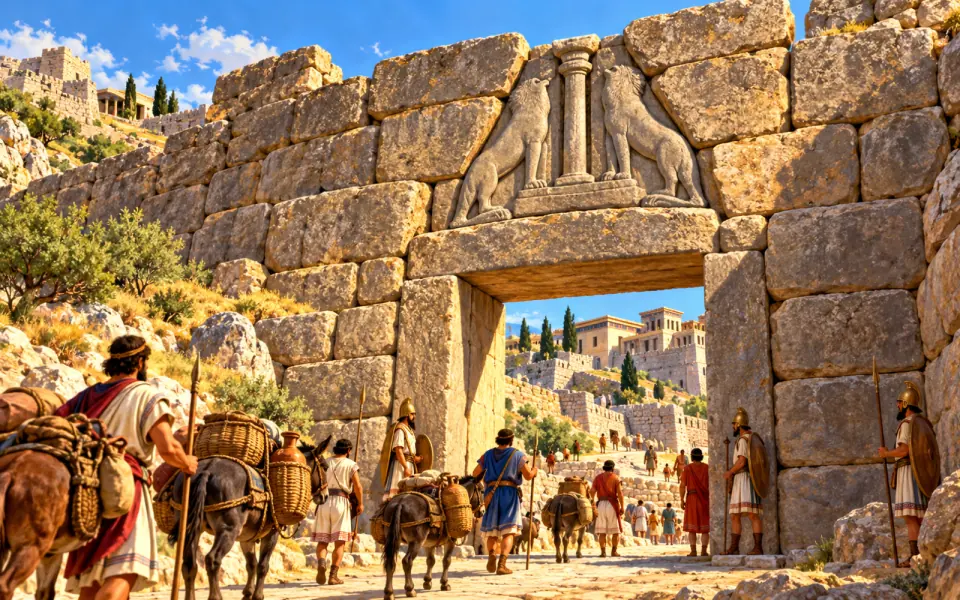 BeforeThe Lion Gate at Mycenaeabout 1250 BC
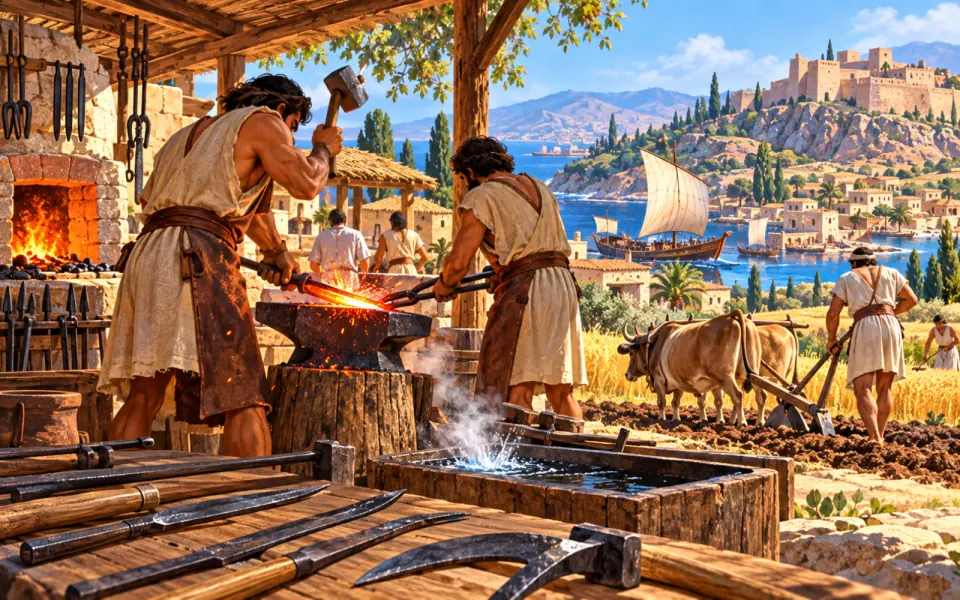 BeforeThe Iron Age beginsabout 1200 BC
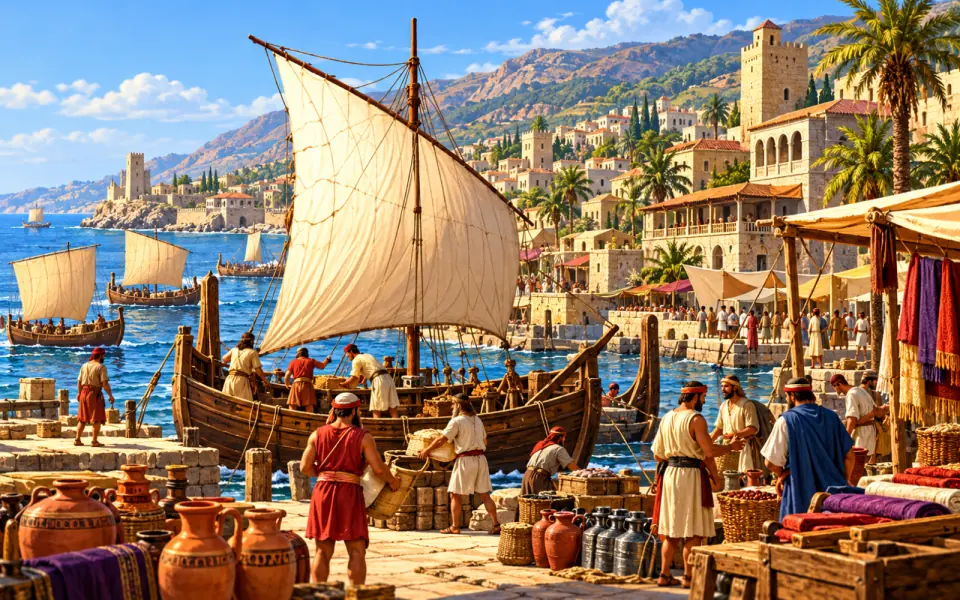 BeforeThe Phoenicians spread outabout 1200 BC
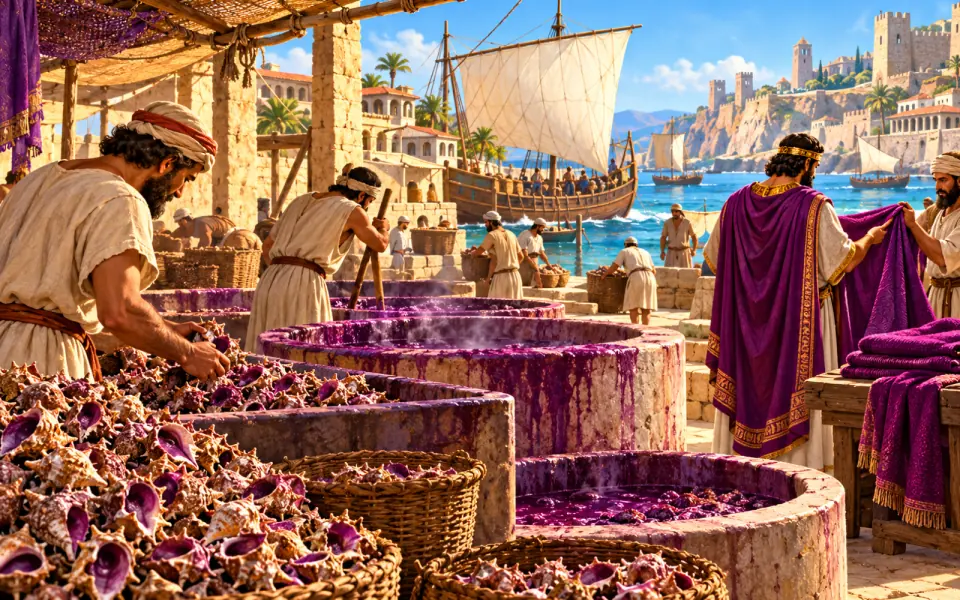 BeforePhoenician purpleabout 1100 BC
 BeforeThe Phoenician alphabetabout 1050 BC
 BeforeThe Kingdom of Israelabout 1000 BC
 BeforePhoenician seafaringabout 1000 BC
 BeforeThe Villanovan culture in Italyabout 900 BC
 BeforeTraditional founding of Carthageabout 814 BC
 BeforeThe Nora Stoneabout 800 BC
- You are hereAmphorae for oil and wineabout 800 BC
 AfterHomer's poems are written downabout 750 BC
 AfterGreek colonies in the Westabout 750 BC
 AfterThe Etruscans, lords of the Tyrrhenian Seaabout 700 BC
 AfterPhoenician glass spreadsabout 600 BC
 AfterCoins in the Mediterraneanabout 600 BC
 AfterThe Babylonian Exileabout 586 BC
 AfterSailing beyond Gibraltarabout 500 BC
Listen / Read next
- Music to read by: Cinematic JourneyEpic film-style music, no lyrics, by Ciro Simone IrmiciSpotifyYouTube Music
Meanwhile, elsewhere in the world
Other events of the era “Sea civilisations”
- Minoan civilisation on Crete
- The palace of Knossos
- The Proto-Sinaitic alphabet
- The eruption of Thera
- The nuraghi of Sardinia
- The gold mask of Mycenae
- Linear B
- The Lion Gate at Mycenae
- The Iron Age begins
- The Phoenicians spread out
- Phoenician purple
- The Phoenician alphabet
- The Kingdom of Israel
- Phoenician seafaring
- The Villanovan culture in Italy
- Traditional founding of Carthage
- The Nora Stone
- Homer's poems are written down
- Greek colonies in the West
- The Etruscans, lords of the Tyrrhenian Sea
- Phoenician glass spreads
- Coins in the Mediterranean
- The Babylonian Exile
- Sailing beyond Gibraltar
