The Pax Romana
27 BC – AD 180 Roman Empire, around the Mediterranean
In short
After so many civil wars, Augustus began a long period of peace inside the empire that lasted about two centuries. The borders were defended by the legions, while inside the empire people could travel and trade in reasonable safety. A shared currency, good roads and Latin as a widely spoken language united peoples who lived very far apart. There were still wars on the borders, though, and that calm was also kept by the strength of the armies.
Why it matters These peaceful years helped cities, trade and the exchange of ideas to grow from Britain to Syria.
Source: Encyclopaedia Britannica, “Pax Romana”
Study card about 5 minutes of reading
The story
Two centuries without wars at home
Try to think what it means to live in a place where, for generations, cities are not besieged, the countryside is not devastated by armies fighting each other and travellers can move around without fearing a war every day. This was, for many inhabitants of the Roman Empire, the Pax Romana, the “Roman peace”. The name was given to it by the Romans themselves, and it appears for the first time in a writer, Seneca, in the 1st century AD.
Historians mark its beginning with Augustus, who in 27 BC became the first emperor. How long the Pax Romana lasts depends on who is telling the story: the date most often used as its end is AD 180, the year of the death of the emperor Marcus Aurelius; other reconstructions make it end earlier. In any case, we are talking about roughly two centuries.
What this peace really was
When we say “peace” we think of a world without wars. The Pax Romana was not that. It was the end of the great civil wars that had drenched the 1st century BC in blood, such as those between Caesar and Pompey and between Antony and Octavian. Rome's rule and its system of laws “pacified” many regions that had suffered from the struggles between rival leaders. Inside the empire, citizens lived more safely.
But on the borders the fighting never stopped. Rome fought against neighbouring peoples and kingdoms, above all the Germanic tribes and the empire of the Parthians. A famous episode: in AD 9, in the Teutoburg Forest, in Germany, three Roman legions, the 17th, the 18th and the 19th, under the command of Publius Quintilius Varus, fell into an ambush set by the Germanic chief Arminius. They were wiped out, and Varus died. According to Suetonius, when Augustus heard the news he cried out: “Varus, give me back my legions!” After that defeat and the campaigns that followed, the Romans gave up conquering Germany beyond the Rhine, which for about four hundred years remained the north-eastern border of the empire.
For this reason the Pax Romana also has a less bright side. The peace was guaranteed by the strength of the legions, and for the conquered peoples it meant obeying. The Roman writer Tacitus puts a very harsh phrase into the mouth of a British chief, Calgacus: where the Romans make a desert, they call it peace. It is a speech imagined by Tacitus, but it shows that even among the Romans there were people who could look at their peace with a critical eye.
The signs of peace
The Romans liked to represent peace as a goddess, Pax, often shown with an olive branch and a cornucopia, the horn of plenty. She appears on the back of many imperial coins, for example on a coin of Vespasian with the inscription PAX AUGUSTI, that is, “the peace of Augustus”. In 13 BC the Senate decided to build a great altar, the Ara Pacis, to celebrate Augustus's return from an expedition to Spain and southern Gaul; it was dedicated on 30 January 9 BC and can still be visited in Rome. In 11 BC a statue of the goddess Pax had been ordered. Later the emperor Vespasian built the Temple of Peace, inaugurated in AD 75 after the victory in the Jewish war, near the Forum of Augustus.
An easier life
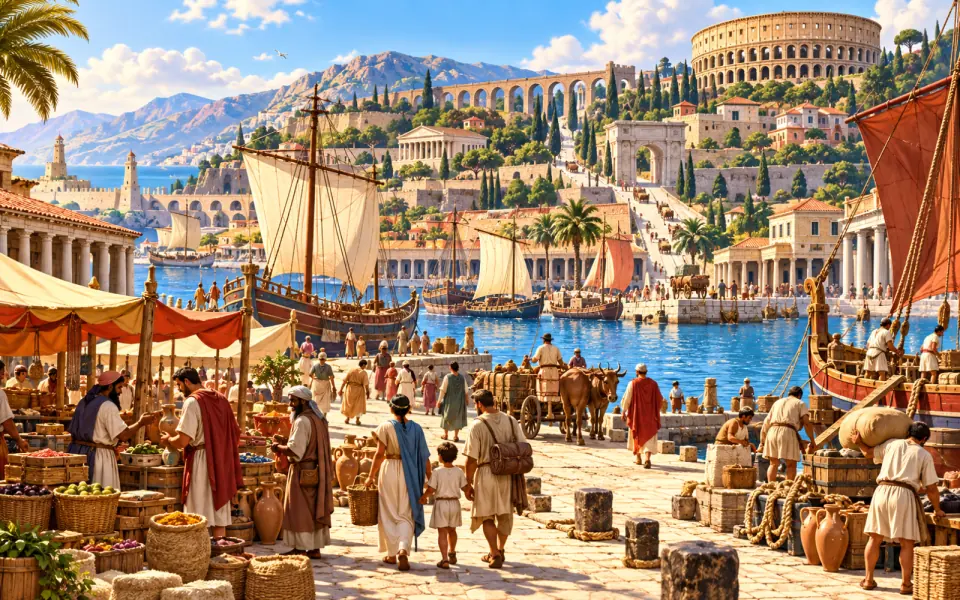
When there were no wars inside the empire, people travelled more. The roads, built for soldiers, served merchants. The Mediterranean had become, for the Romans, a great inland lake, the mare nostrum (“our sea”), and ships could carry grain, oil, wine and cloth from one port to another. A common currency and Latin, spoken by many people in the provinces, made trade easier. Cities grew, with theatres, baths and aqueducts, even far from Rome.
In AD 117, under the emperor Trajan, the empire reached its greatest extent. From Britain to Syria, millions of people were governed by the same law and paid the same taxes. For many, life was safer than it had ever been, and some inhabitants of the provinces became Roman citizens, and even senators and emperors.
How it ended
The peace, however, was not eternal. From the 2nd century on, attacks on the borders became more and more frequent, and according to one reconstruction the period of the invasions begins as early as 164. When Marcus Aurelius died, in 180, problems were piling up: wars along the Danube, epidemics, economic crises. A harder period for the empire began then.
Why it happened
The peace came from the end of the civil wars. With Augustus a single man controlled the army, the main provinces and the finances: no general could challenge the government any more with his legions. This removed the root cause of internal wars.
Organisation also contributed. The legions stood on the borders, not inside the empire. Governors chosen and supervised by the emperor administered the provinces, and the system of laws and courts applied throughout the territory. In this way many areas that had previously fought one another remained at peace.
What changed
The long peace allowed cities to grow and trade to develop. Latin and Roman culture spread through the provinces: Italian, French, Spanish and the other Romance languages descend from here. Many cities of Europe grew up on Roman settlements.
The Pax Romana became a model and an expression. Even today people speak of a “Pax Americana” or a “Pax Britannica” to mean periods in which a dominant power maintains a certain balance. The comparison also reminds us that a peace imposed by force has its costs, as Tacitus had noticed.
For us the lesson is twofold. On the one hand, peace favours culture, trade and well-being. On the other, we must always ask whom the peace is for and at what price.
Key people and places
People
- Augustus
- First Roman emperor. With him the civil wars ended and the Pax Romana began.
- Seneca
- Roman philosopher of the 1st century AD: the expression “pax romana” first appears in his writings.
- Arminius
- Chief of the Cherusci, a Germanic people, who in AD 9 led the ambush against Varus's legions.
- Tacitus
- Roman historian who wrote a famous criticism of the peace imposed by conquerors.
Places
- Roman Empire
- Stretching, in AD 117, from Britain to Syria and from Germany to North Africa.
- Teutoburg Forest
- Area of Germany where in AD 9 three Roman legions were wiped out.
- Ara Pacis
- Marble altar dedicated to peace, in the Campus Martius in Rome.
Good to know
- The phrase “pax romana” is first attested in the works of Seneca.
- The Temple of Peace was inaugurated in AD 75 by the emperor Vespasian.
- On hearing of the defeat at Teutoburg, according to Suetonius, Augustus cried out: “Varus, give me back my legions!”
- In AD 117 the empire reached its greatest extent, under Trajan.
- The goddess Pax appeared on coins with an olive branch and a horn of plenty.
Find out more
- Wikipedia, “Pax Romana” en.wikipedia.org
- World History Encyclopedia, “Pax Romana” worldhistory.org
- Wikipedia, “Ara Pacis” en.wikipedia.org
- Wikipedia, “Battle of the Teutoburg Forest” en.wikipedia.org
Related events
- Augustus, the first emperor27 BC · Ancient RomeAugustus, the first emperor, is considered the beginning of the Pax Romana.
- Pompeii buried by VesuviusAD 79 · Ancient RomePompeii and the other cities of the empire lived their best moment in these years of peace.
- Trajan's ColumnAD 113 · Ancient RomeTrajan's Column tells of the wars on the borders, while inside the empire there was peace.
- Galen, a doctor in Romeabout AD 162 · Ancient RomeIn time of peace Galen could travel and study from Pergamum to Rome.
- Fall of the Western Roman EmpireAD 476 · Ancient RomeCenturies later the peace ended and the Western Empire collapsed.
Before and after, in the era “Ancient Rome”
Event 15 of 25
 BeforeTraditional founding of Romeabout 753 BC
 BeforeBirth of the Roman Republicabout 509 BC
 BeforeThe Laws of the Twelve Tablesabout 450 BC
 BeforeThe Appian Way312 BC
 BeforeThe First Punic War264–241 BC
 BeforeHannibal crosses the Alps218 BC
 BeforePlautus and comedyabout 200 BC
 BeforeRoman concreteabout 150 BC
 BeforeThe Aqua Marcia aqueduct144–140 BC
 BeforeSpartacus leads the revolt73–71 BC
 BeforeCaesar crosses the Rubicon49 BC
 BeforeThe Julian calendar46 BC
 BeforeThe murder of Julius Caesar44 BC
 BeforeAugustus, the first emperor27 BC
- You are hereThe Pax Romana27 BC – AD 180
 AfterVirgil and the Aeneid19 BC
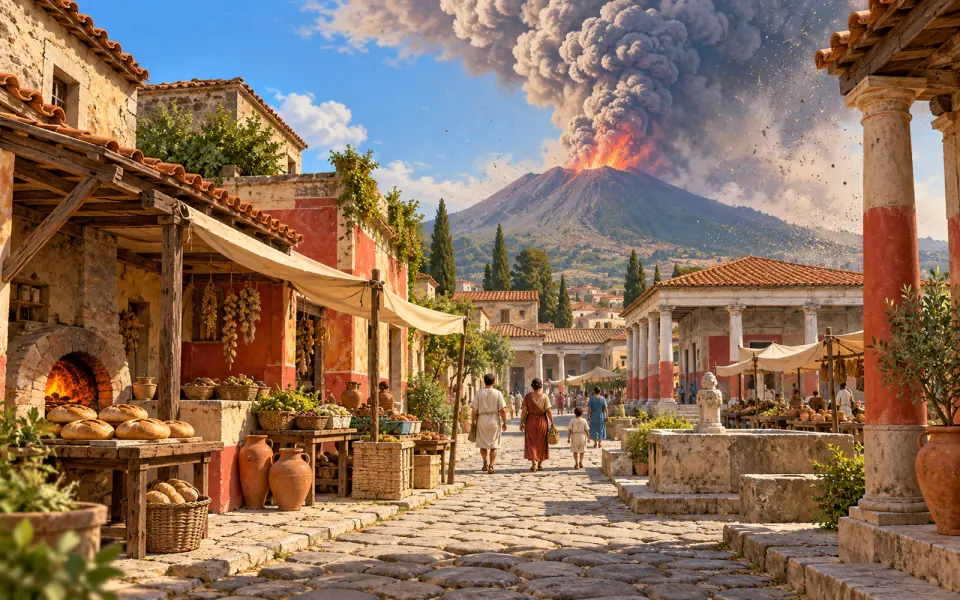 AfterPompeii buried by VesuviusAD 79
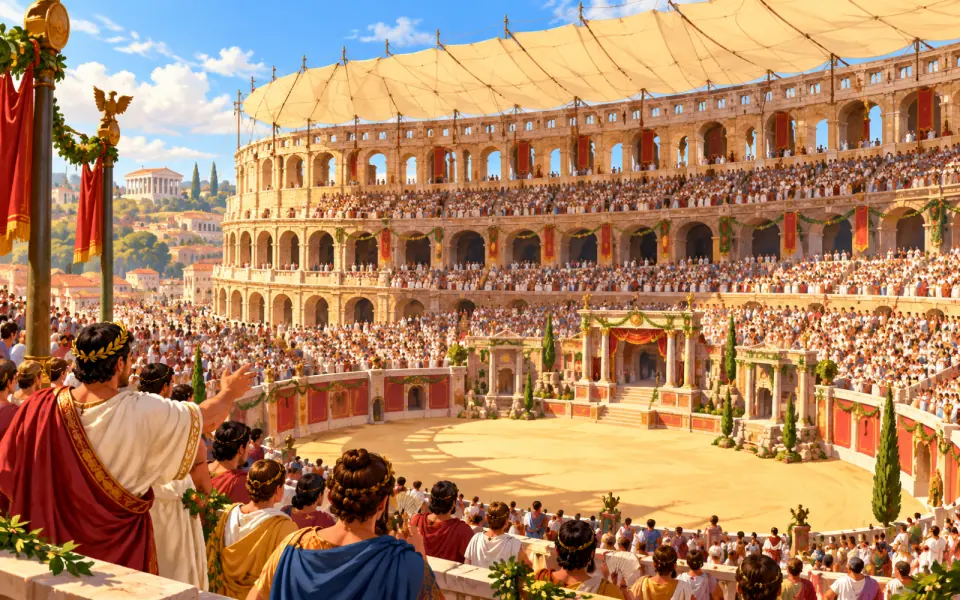 AfterThe Colosseum opensAD 80
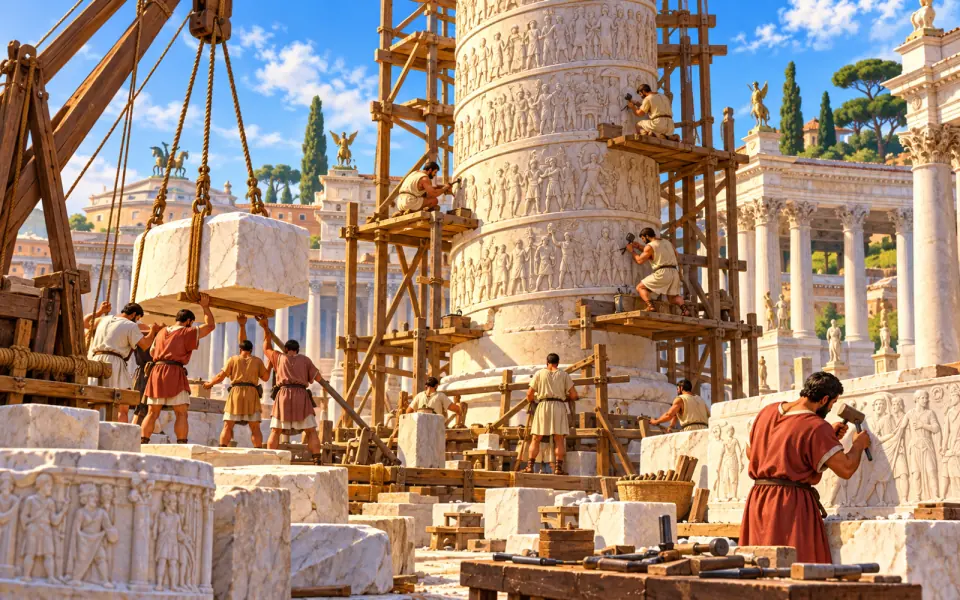 AfterTrajan's ColumnAD 113
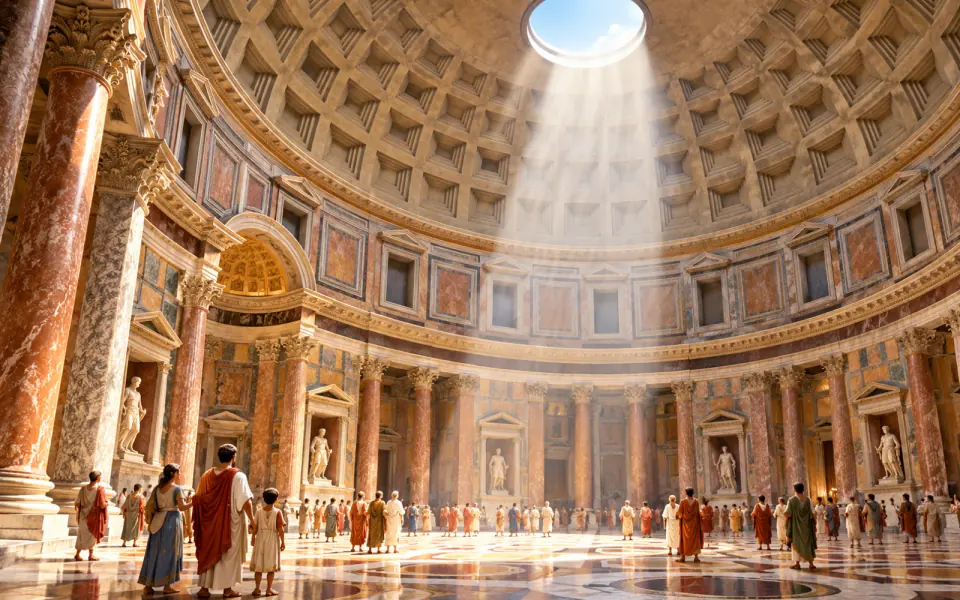 AfterThe Pantheonabout AD 125
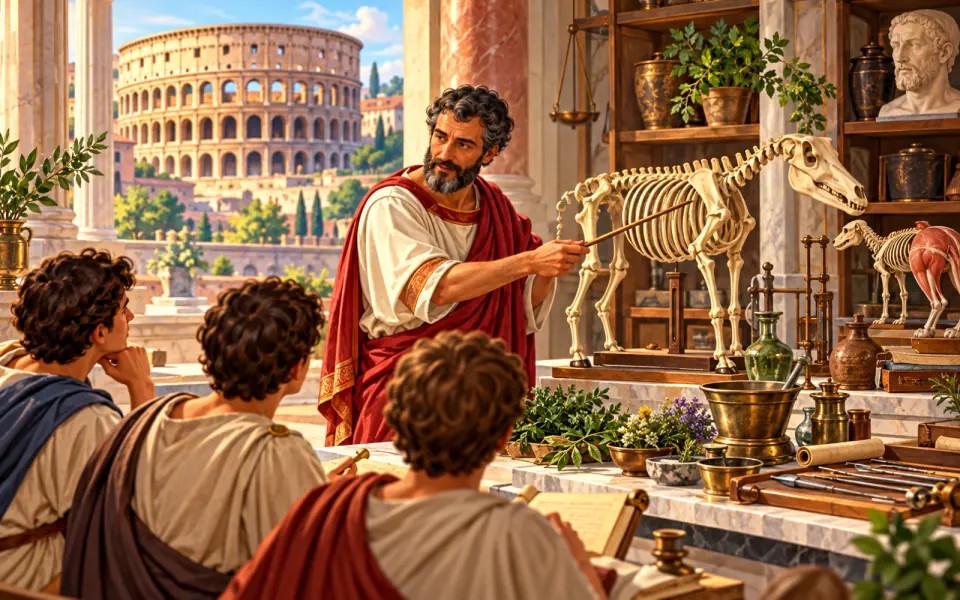 AfterGalen, a doctor in Romeabout AD 162
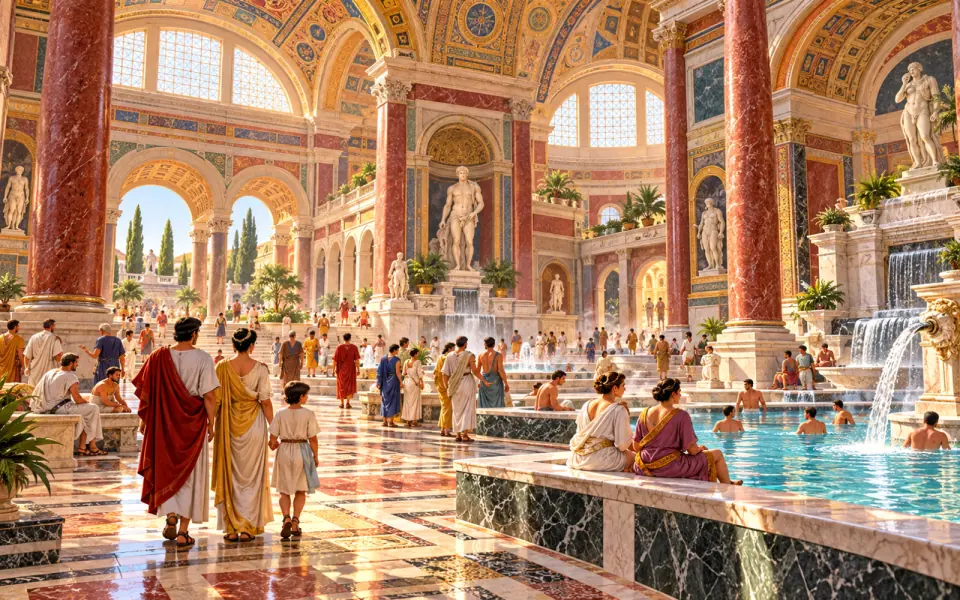 AfterThe Baths of CaracallaAD 216
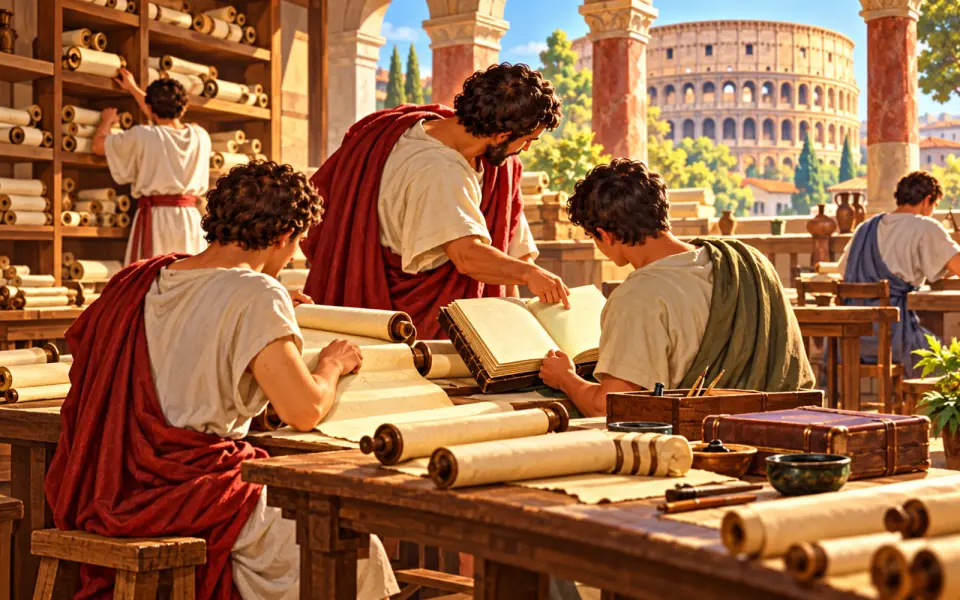 AfterThe book with pages (the codex)about AD 300
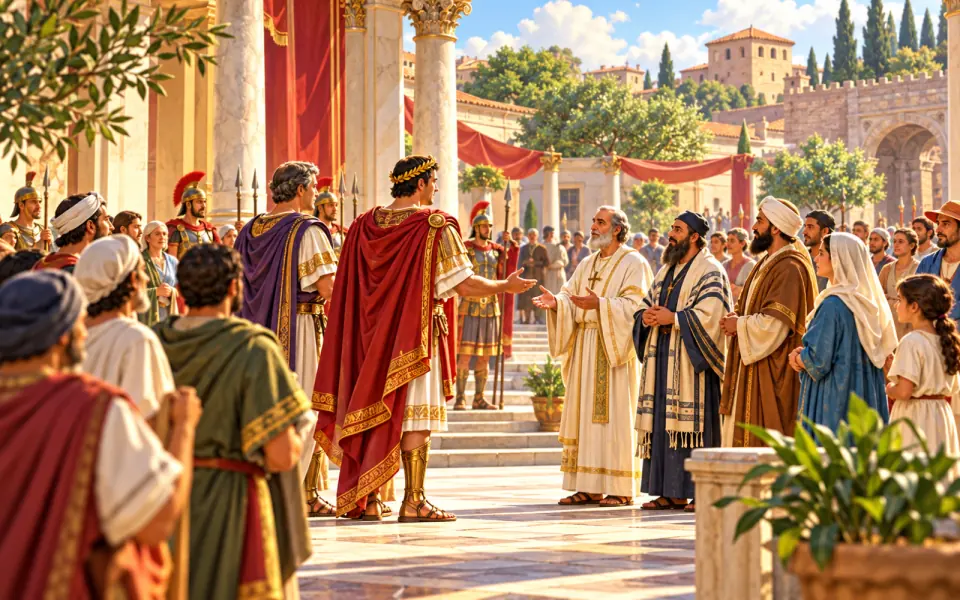 AfterThe Edict of MilanAD 313
 AfterFall of the Western Roman EmpireAD 476
Listen / Read next
- Music to read by: Cinematic JourneyEpic film-style music, no lyrics, by Ciro Simone IrmiciSpotifyYouTube Music
Meanwhile, elsewhere in the world
Other events of the era “Ancient Rome”
- Traditional founding of Rome
- Birth of the Roman Republic
- The Laws of the Twelve Tables
- The Appian Way
- The First Punic War
- Hannibal crosses the Alps
- Plautus and comedy
- Roman concrete
- The Aqua Marcia aqueduct
- Spartacus leads the revolt
- Caesar crosses the Rubicon
- The Julian calendar
- The murder of Julius Caesar
- Augustus, the first emperor
- Virgil and the Aeneid
- Pompeii buried by Vesuvius
- The Colosseum opens
- Trajan's Column
- The Pantheon
- Galen, a doctor in Rome
- The Baths of Caracalla
- The book with pages (the codex)
- The Edict of Milan
- Fall of the Western Roman Empire
