The University of Bologna
about 1088 Bologna, Emilia-Romagna
In short
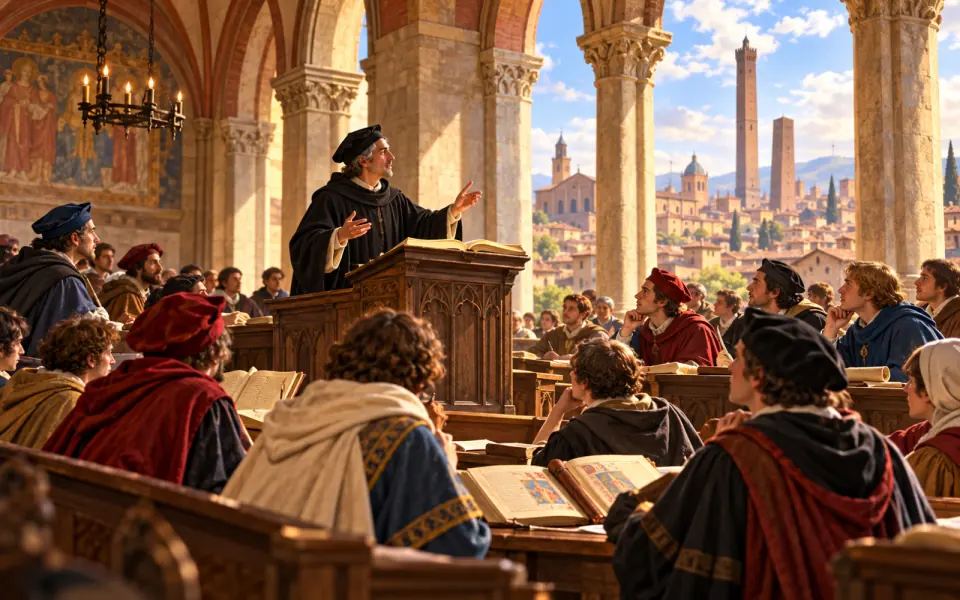
By tradition the birth of the University of Bologna, considered the oldest in the Western world, is dated to 1088. At first there was no building: students got together and paid teachers who were experts in law, such as Irnerius, to explain the laws of Justinian. Students came from all over Europe and organised themselves into groups by where they came from, called ‘nations’. The date of 1088 was chosen in the 1800s by a committee of historians led by Giosuè Carducci.
Why it matters The university model, with teachers, students and degrees, has spread all over the world.
Source: Università di Bologna, “La nostra storia”
Study card about 5 minutes of reading
The story
Learning from the ancient codes
In the Middle Ages, anyone who wanted to study usually went to a school near a monastery or a cathedral, where a teacher taught a small group of pupils. The subjects were mainly grammar, religion and a little logic. A place where you could learn law, medicine and philosophy at a high level did not yet exist, at least in the West.
Around the year 1000 a new interest in law began to spread. Towns were growing, trade was increasing, and lords and communes quarrelled over lands and privileges: experts in law were needed. The “Corpus iuris civilis”, the great collection of Roman laws ordered in the 6th century by the Emperor Justinian, was rediscovered and studied with passion. It ran to thousands of pages, hard to understand, that needed explaining.
Irnerius and the school of Bologna
In Bologna, a city in Emilia where important roads crossed, a teacher named Irnerius began, around 1100, to read and comment on those texts directly, writing short explanations in the margins of the pages, called “glosses”. For this reason he and his followers are called “glossators”. His fame drew students from all over Europe. In time a real school of law took shape, growing from year to year.
The date of 1088, remembered as the year the university was born, is not a documented date: it was chosen in the 19th century, in 1888, when a commission of historians, which included the poet Giosuè Carducci, decided to celebrate the eight-hundredth anniversary. Historians know that teaching in Bologna began gradually during the 11th and 12th centuries, with no founding act.
Students in charge
Something curious happened in Bologna: it was the students, and not the professors, who organised the university. Many came from elsewhere, were foreigners in the city and so had no rights and no protection. To defend themselves they joined together in associations called “universitates”, divided by country of origin, the “nationes”. They paid the professors themselves, and for this reason could control them: the professors had to keep to the timetable, finish the syllabus and not be absent without permission, and if they made mistakes they could be fined.
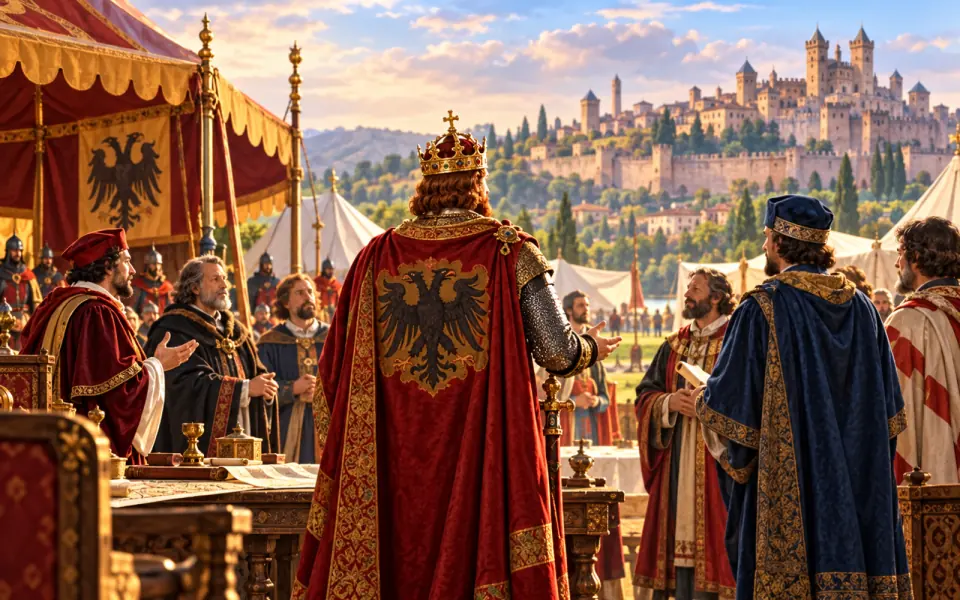
The students also stood up for themselves against the city. When they were not well treated, they threatened to leave for another city, taking with them the customers of their landlords too. To protect the travellers who went to study, in 1155 (the request) and in 1158 (the proclamation at Roncaglia, the most accepted date) the Emperor Frederick Barbarossa issued a decree, the “Habita”, which gave students and teachers special protections, including the right to be judged by their own teachers (or, for clerics, by the bishop).
A school for the whole of Europe
To the law lessons in Bologna were soon added medicine, the arts (grammar, rhetoric, logic) and, with a bull of 1360 and teaching beginning in 1364, theology. A famous jurist, Accursius, gathered the glosses together in the 1200s into a work, the “Glossa ordinaria”, which for centuries was the basic text for studying law. Lessons were in Latin, and the professors read the texts aloud while the students, who had no books of their own, took notes. Among the students of Bologna there were, perhaps, Dante (his presence is probable but not documented), and certainly Petrarch and Copernicus.
The students' life was not easy: rents were high, food was dear, and many needed money from families far away. From the letters that have come down to us we can see that they often asked their parents for money and books, and complained about it like students today.
Women, too, sometimes left their mark. In the 1700s Laura Bassi, born in Bologna, obtained in 1732 a degree in philosophy and a teaching post in philosophy, and in 1776 the chair of experimental physics, becoming one of the first women to teach at a European university.
Why it happened
The growing Italian towns needed experts in law to deal with lords, write contracts and carry on trade. Roman law, newly rediscovered, offered an orderly and powerful system, suited to regulating contracts and disputes in the same way for everyone.
The roads leading to Bologna made the city easy to reach. Foreign students, joined in associations, had the strength to organise a place of study.
What changed
The University of Bologna became the model for many European universities, such as those of Padua, Paris (with a different stamp), Oxford and Salamanca. Studying for years, listening to lectures, taking exams and receiving a degree are habits that began in that age.
The law studied at Bologna influenced governments, courts and public life across much of Europe. The jurists trained there worked for popes, kings and communes.
In 1988, nine centuries after the traditional date, many rectors of European universities signed the “Magna Charta Universitatum” in Bologna, dedicated to the freedom of research. Bologna is considered the oldest university in the Western world still in operation.
Key people and places
People
- Irnerius
- Teacher of law in Bologna (about 1050 - after 1125): he began the systematic study of Roman law.
- Accursius
- Jurist (about 1182-1263): he compiled the “Glossa ordinaria”.
- Frederick Barbarossa
- Emperor (about 1122-1190): he granted privileges to students and teachers.
- Laura Bassi
- Scientist from Bologna (1711-1778): in 1732 she obtained a degree and a post in philosophy, in 1776 the chair of experimental physics.
- Giosuè Carducci
- Poet (1835-1907): he took part in the celebrations of 1888.
Places
- Bologna
- City in Emilia where the oldest university in Europe was born.
- Archiginnasio of Bologna
- Sixteenth-century palace that housed the university and whose walls are covered with students' coats of arms.
Good to know
- The date of 1088 was chosen in 1888, to celebrate the eight-hundredth anniversary.
- In Bologna it was the students who paid the professors and fined them if they did not teach.
- Among the students of Bologna there were, perhaps, Dante (his presence is probable but not documented), and certainly Petrarch and Copernicus.
- The first comments on legal texts were written in the margins of books and were called glosses.
- In 1732 Laura Bassi obtained a degree and a post in philosophy at Bologna; the chair of experimental physics came in 1776.
Find out more
- Wikipedia, “University of Bologna” en.wikipedia.org
- Wikipedia, “Irnerius” en.wikipedia.org
- Wikipedia, “Medieval university” en.wikipedia.org
- Wikipedia, “Laura Bassi” en.wikipedia.org
Related events
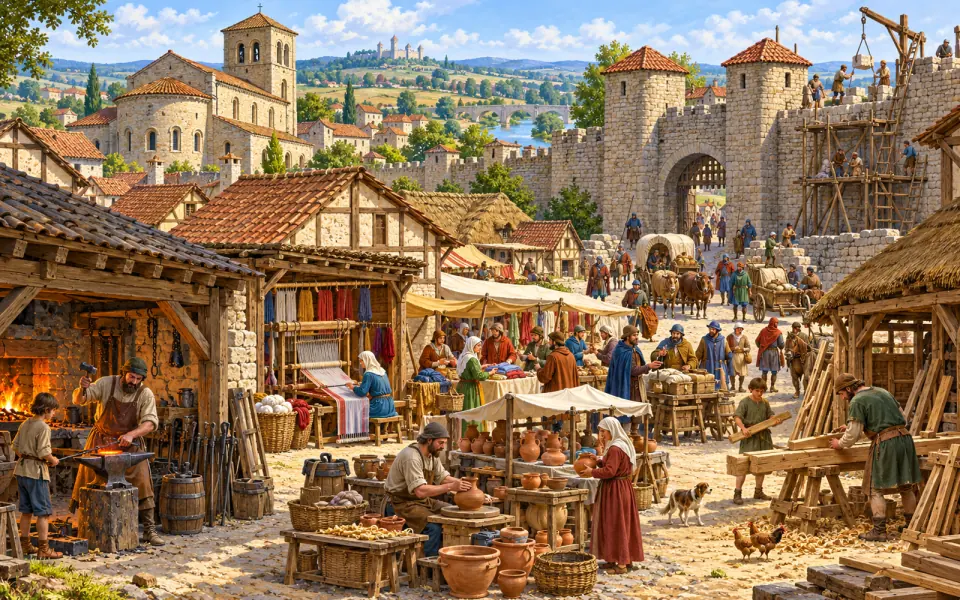
- The growth of medieval townsabout 1050 · Late Middle AgesThe growth of towns created a need for experts in law.
- The Italian communesabout 1100 · Late Middle AgesThe Italian communes employed the jurists of Bologna.
- Frederick Barbarossa1155 · Late Middle AgesBarbarossa protected students and teachers.
- Fibonacci and the Liber abaci1202 · Late Middle AgesFibonacci studied mathematics at a time when higher schools were being born.
Before and after, in the era “Late Middle Ages”
Event 4 of 25
 BeforeThe growth of medieval townsabout 1050
 BeforeThe East–West Schism1054
 BeforeThe Bayeux Tapestryabout 1070
- You are hereThe University of Bolognaabout 1088
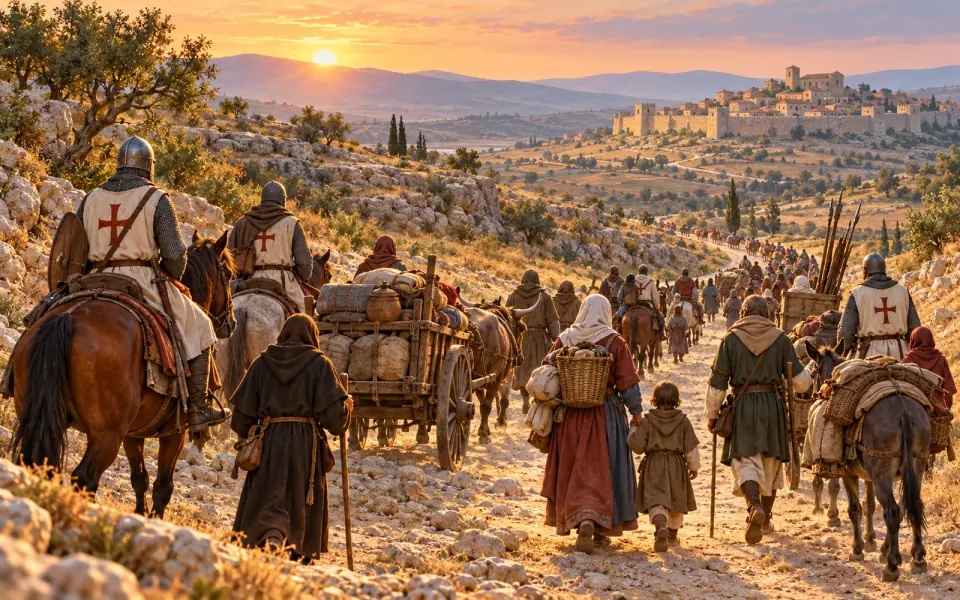 AfterThe First Crusade1096–1099
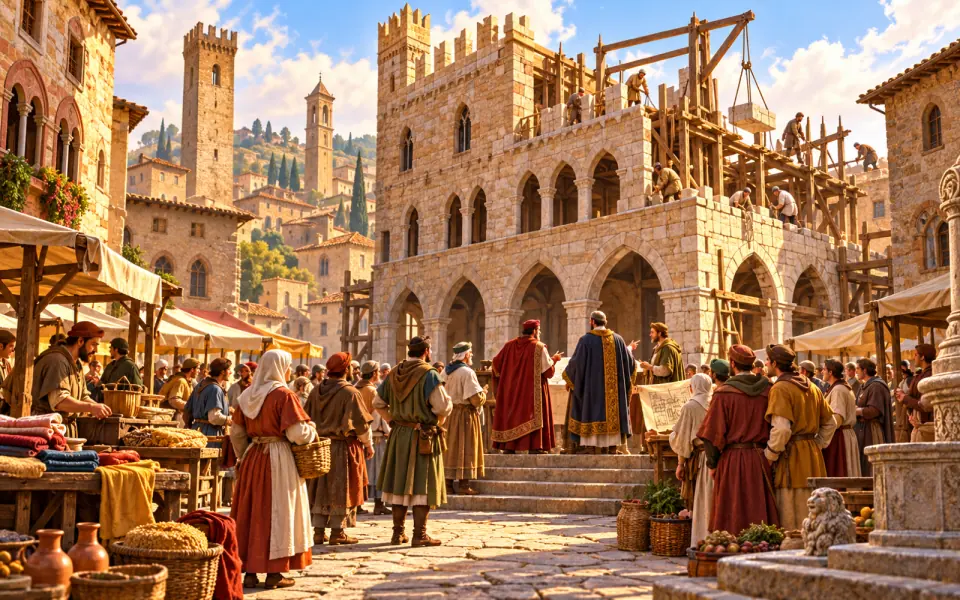 AfterThe Italian communesabout 1100
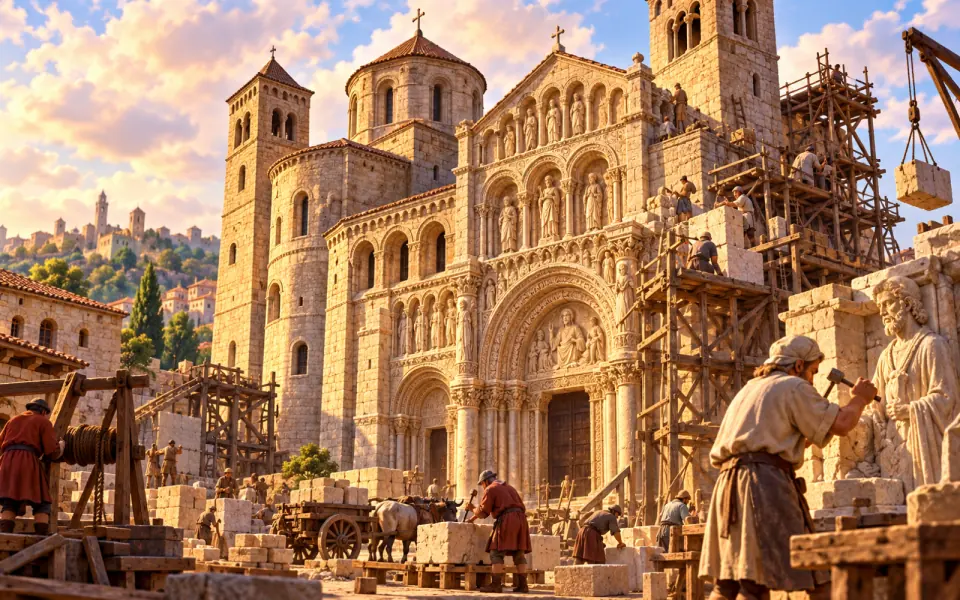 AfterRomanesque cathedralsabout 1100
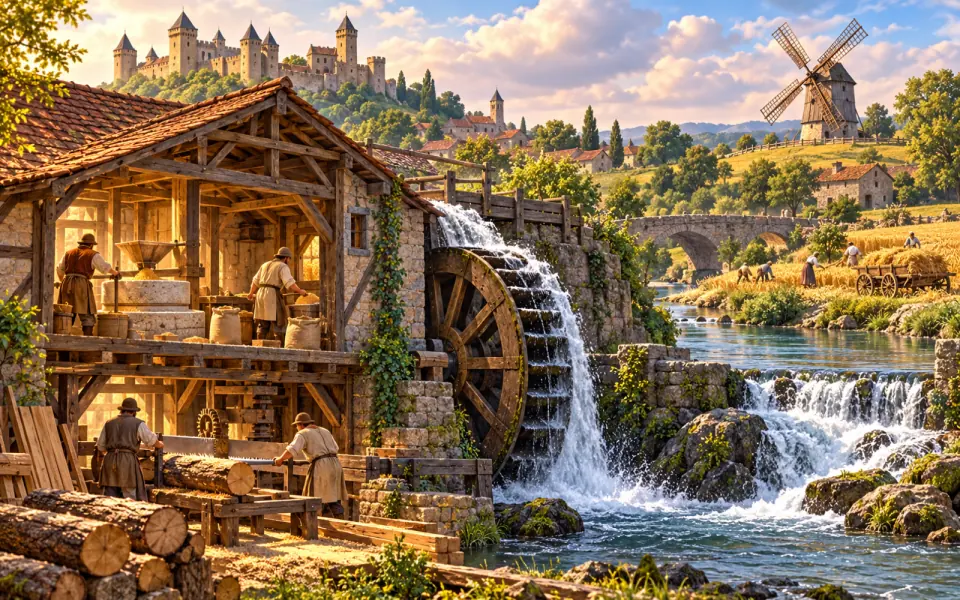 AfterWatermills and windmillsabout 1100
 AfterGothic style at Saint-Denis1144
 AfterHildegard of Bingenabout 1150
 AfterPaper arrives in Europeabout 1150
 AfterFrederick Barbarossa1155
 AfterFrancis of Assisiabout 1182
 AfterFibonacci and the Liber abaci1202
 AfterMagna Carta1215
 AfterThe gold florin1252
 AfterMarco Polo sets off for Asia1271
 AfterSpectaclesabout 1286
 AfterThe Hanseatic League and northern tradeabout 1300
 AfterGiotto paints in Paduaabout 1305
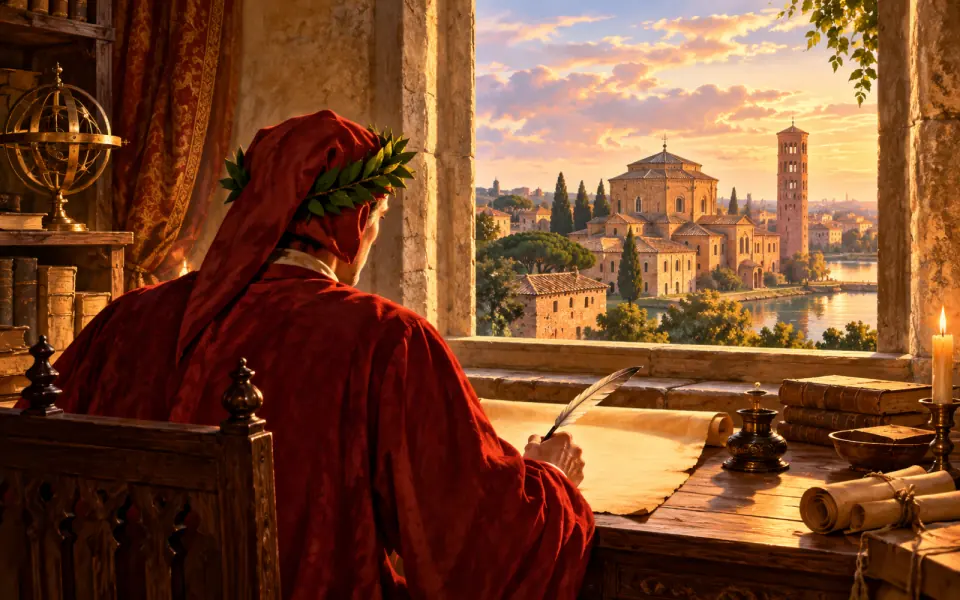 AfterDante begins the Divine Comedyabout 1307
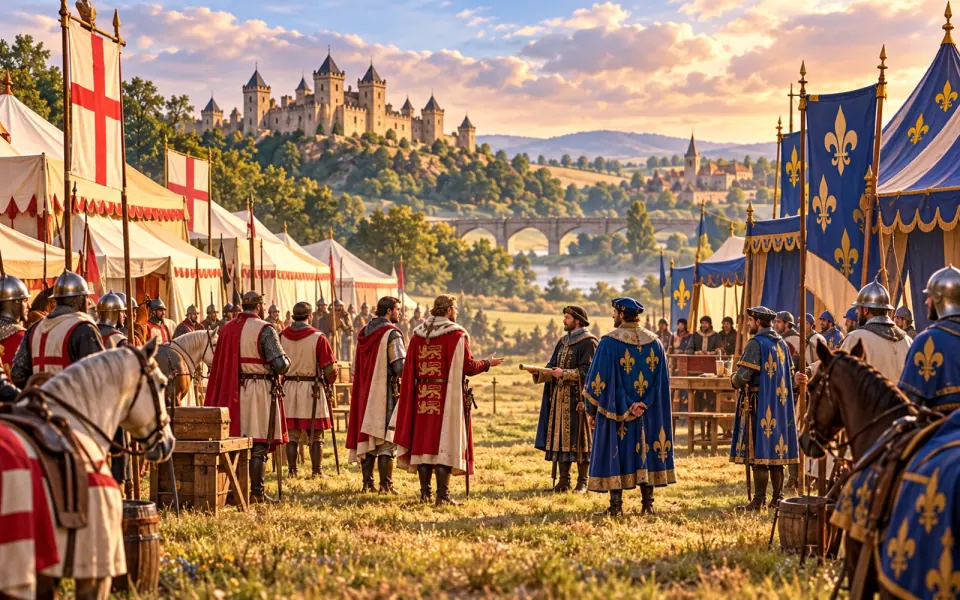 AfterThe Hundred Years' War1337–1453
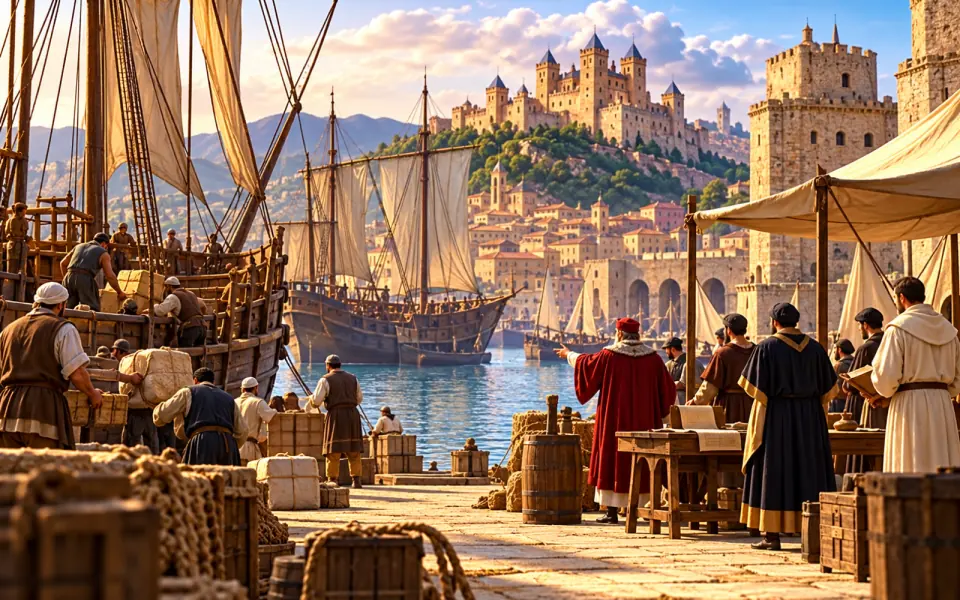 AfterThe Black Death1347–1352
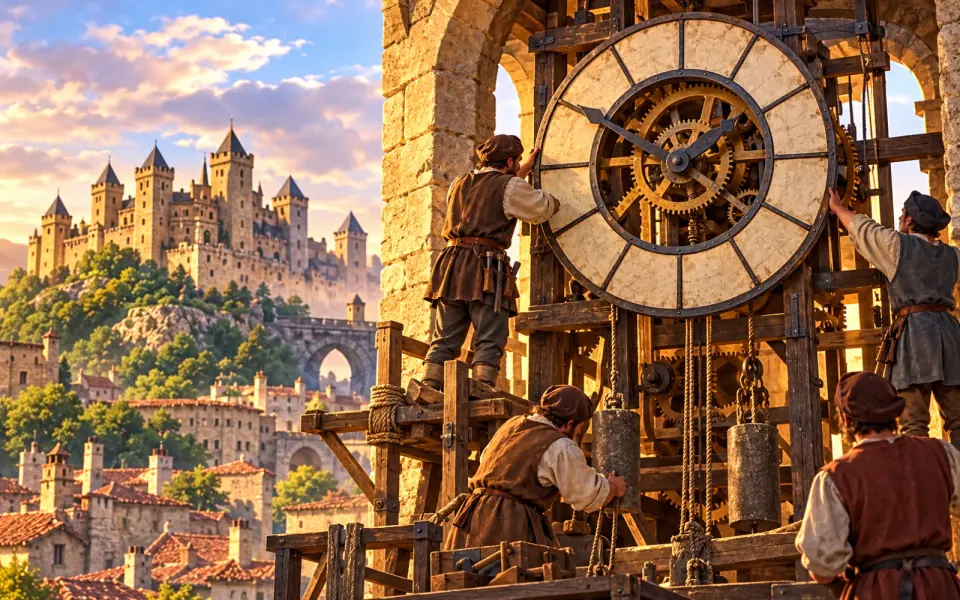 AfterPublic mechanical clocksabout 1350
 AfterJoan of Arc1429
Listen / Read next
- Music to read by: Cinematic JourneyEpic film-style music, no lyrics, by Ciro Simone IrmiciSpotifyYouTube Music
Meanwhile, elsewhere in the world
Other events of the era “Late Middle Ages”
- The growth of medieval towns
- The East–West Schism
- The Bayeux Tapestry
- The First Crusade
- The Italian communes
- Romanesque cathedrals
- Watermills and windmills
- Gothic style at Saint-Denis
- Hildegard of Bingen
- Paper arrives in Europe
- Frederick Barbarossa
- Francis of Assisi
- Fibonacci and the Liber abaci
- Magna Carta
- The gold florin
- Marco Polo sets off for Asia
- Spectacles
- The Hanseatic League and northern trade
- Giotto paints in Padua
- Dante begins the Divine Comedy
- The Hundred Years' War
- The Black Death
- Public mechanical clocks
- Joan of Arc
